Game Design reports and market data
Documents

Concrete Jungle Gym: Building Traversal in Marvel's Spider-Man
The development of traversal mechanics in Marvel’s Spider-Man centered on prioritizing player intent and cinematic fluidity over strict adherence to realistic physics.
- Developers replaced unreliable raycasting with a markup-based system using box volumes to ensure consistent, high-resolution attachment points for web-swinging.
- A weighted scoring algorithm selects optimal swing points based on player stick input and surface normals, prioritizing predictable responsiveness over strict physical realism.
- The system maintains momentum and prevents jarring transitions through invisible, real-time adjustments to gravity, simulation pivots, and web-line lengths.
How Games Control You - Compulsive Design in Games - Extra Credits
The primary purpose of this analysis is to examine how specific game design decisions inadvertently foster compulsive player behaviors that can detract from the intended gaming experience.
- Game design often inadvertently triggers compulsive player behaviors, such as item hoarding or repetitive movement, which prioritize mechanical efficiency over genuine narrative engagement.
- Players frequently fall into 'autopilot' habits, like searching empty corridors or using movement exploits, because game architecture signals potential rewards or optimization advantages that the player feels compelled to pursue.
- Compulsive play often stems from a loss of player agency, where individuals perform monotonous tasks to avoid missing content or to maximize character stats at the expense of personal aesthetic preference.

Panel: Best Practices in Design, Development & Distribution of Hypercasual Games
Hypercasual gaming functions as a high-velocity, data-centric sector of the mobile industry defined by accessible, single-mechanic gameplay and short session lengths.
- Hypercasual success relies on maintaining a positive spread between user acquisition costs and lifetime value, using metrics like cost per install and installs per mille to determine project viability.
- Developers must prioritize immediate player clarity by focusing on single-mechanic gameplay that is intuitive within seconds of the first engagement.
- The industry utilizes a rigorous prototyping framework that mandates the early abandonment of underperforming concepts to ensure resources are allocated only to high-potential titles.

Panel: What Makes a Social Game Truly 'Social'?
Social gaming has evolved from simple platform integration into a fundamental paradigm where games function as primary virtual spaces for human connection.
- Sociality is now a core design paradigm rather than a genre, where embedding cooperative mechanics and guild structures directly improves long-term player retention.
- The COVID-19 pandemic accelerated digital-first social interaction, driving consumer spending in the sector to $1.7 billion per week by early 2021.
- Success in modern social gaming is measured by social graph metrics, specifically the frequency of friend invitations and the formation of persistent player groups.

What Makes a Game Truly HyperSocial?
The gaming industry is increasingly shifting toward a "hyper-social" model, a trend defined by integrating real-time communication, personalized avatars, and collaborative mechanics directly into mobile gameplay.
- Integrating Bitmoji avatars into mobile games increases day-one retention by 20% and boosts ad views per active player by 60%.
- Snapchat’s platform, which reaches 500 million monthly active users, drives higher session durations by embedding real-time chat and voice features directly into HTML5 games.
- The hyper-social model prioritizes collaborative mechanics and personalized avatars to increase engagement, particularly within the competitive hyper-casual gaming genre.
How to Make Your RnD Rock!
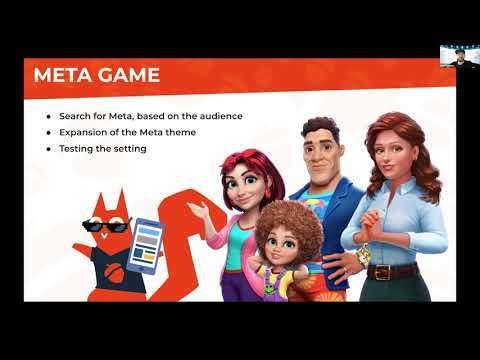
The research and development (R&D) department at Belka Games prioritizes speed, flexibility, and data-driven decision-making to scale mobile gaming products effectively.
- Belka Games utilizes a lean R&D team of approximately ten members to ensure rapid communication, high individual involvement, and the agility to pivot quickly when hypotheses fail.
- Projects are held to a strict six-month viability window, utilizing two-to-three-week development sprints to test specific features and performance metrics.
- The R&D process follows a top-down verification sequence, prioritizing core gameplay loops first, followed by retention metrics, and finally monetization.

Panel: Tools & Techniques for Game Economy Analysis & Optimisation
Successful game economy design requires a sophisticated balance between player progression, monetization, and content depth.
- Design game economies using a sources and sinks model to manage player time as the primary resource, ensuring progression remains rewarding while avoiding difficulty spikes that cause churn.
- Prioritize median values and high-percentile player behavior in data analysis rather than relying on simple averages, which often mask the nuances of diverse player segments.
- Implement hybrid monetization strategies, such as rewarded videos, to sustain engagement for non-paying users without compromising the experience for high-spending loyalists.
How to Maximise Engagement (& Fun!) Through Live Ops Strategies
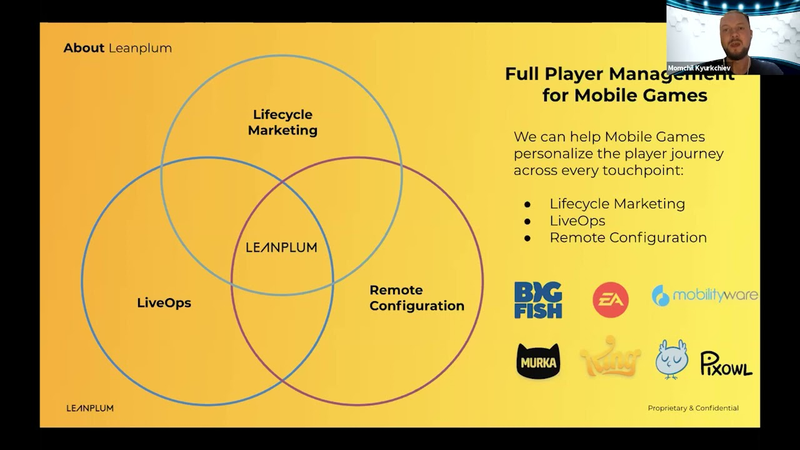
Maximizing player engagement and long-term retention in the modern gaming landscape requires a shift toward unified, personalized player journeys that integrate lifecycle marketing, live operations, and remote configuration.
- Transitioning from scheduled communications to real-time, behavior-triggered messaging can increase revenue by up to five times.
- Behavioral segmentation based on the recency and frequency of player activity consistently outperforms traditional demographic targeting and can double revenue per message.
- Studios should utilize remote configuration tools to test new events and game experiences rapidly, bypassing the need for full-scale development cycles or app store submission delays.

Panel: How to Optimise Revenue & Retention for Your Games
Long-term success in the modern gaming industry requires a fundamental shift toward integrating monetization and retention strategies directly into the core design process.
- Integrate monetization and retention strategies directly into the initial game design document to prevent post-launch reworks and avoid churn-inducing imbalances.
- Prioritize non-intrusive monetization methods, such as native product placements and in-game billboards, over disruptive advertising formats to maintain player retention.
- Establish a unified analytics framework that breaks down silos between monetization tools and player behavior metrics to create a data-driven operational backbone.

Superstar Speed Panel: Rethinking InGame Advertising
The gaming industry is undergoing a fundamental shift in monetization, moving away from intrusive, disruptive ad models toward immersive, non-interruptive integrations.
- The gaming industry is shifting from intrusive, disruptive ad models toward immersive, non-interruptive integrations to protect player retention and long-term revenue.
- Monetization strategies must be integrated during the early stages of game design rather than treated as an afterthought to ensure placements feel native to the virtual environment.
- Measurement frameworks are evolving beyond basic viewability metrics to prioritize meaningful engagement, attention, and tangible real-world impact.

Making A 3D Game Was A HUGE MISTAKE
Transitioning from 2D to 3D game development presents significant technical hurdles, particularly regarding character modeling, rigging, and physics implementation.
- Transitioning from 2D to 3D development introduces significant technical complexity in character modeling, specifically regarding mesh topology, UV unwrapping, and skeletal rigging.
- Implementing 3D character systems, such as head-tracking, requires precise adjustments to axis clamping and coordinate constraints to avoid animation glitches and erratic movement.
- Integrating ragdoll physics into 3D environments creates dynamic, unpredictable gameplay that can enhance the player experience despite inherent technical instability.
Can We Combine 4 Games Into One? | Game Dev Challenge
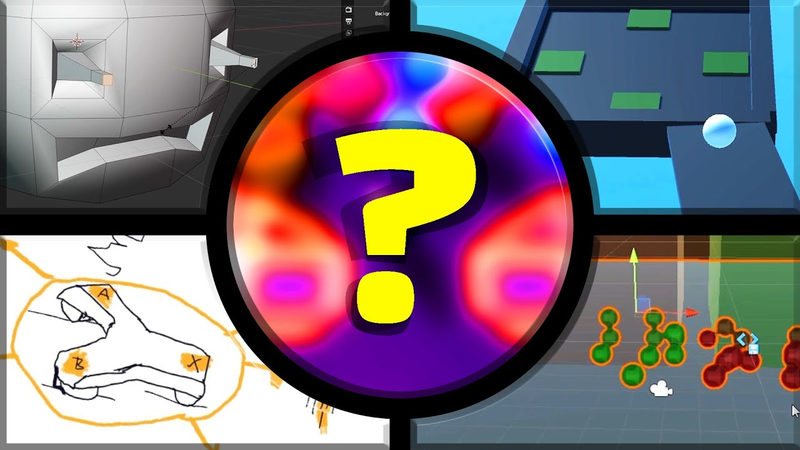
This analysis examines a collaborative game development challenge where a four-person team attempted to merge four disparate, independently developed prototypes into a single cohesive game within a 48-hour timeframe.
- Forcing the integration of four disparate prototypes into a single project within a 48-hour timeframe led to significant over-scoping and technical instability.
- The requirement to incorporate every initial asset—including a ball-rolling controller, 3D Halloween assets, physics-based sticking, and a music engine—created complex, difficult-to-debug code.
- Ignoring early warnings regarding control difficulty and physics stability resulted in a final product prone to soft-locking and navigation failures.