1 free read left. Create a free account for unlimited reading + AI research.
Create free account
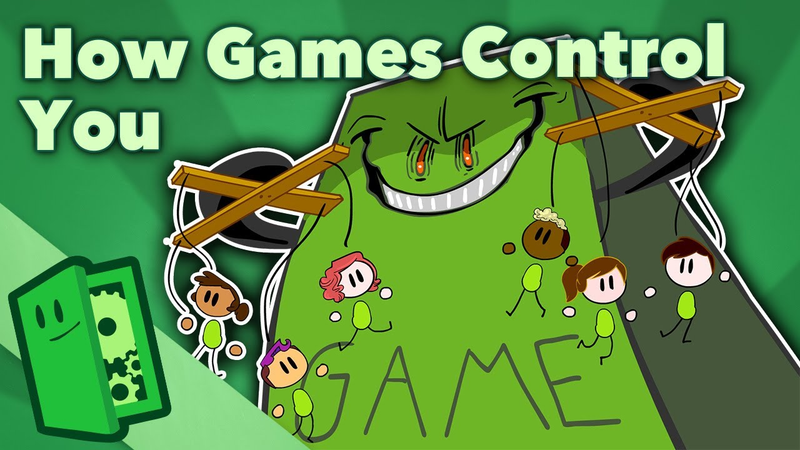
How Games Control You - Compulsive Design in Games - Extra Credits
Key insights
6 takeaways- 01Compulsive play often stems from a loss of player agency, where individuals perform monotonous tasks to avoid missing content or to maximize character stats at the expense of personal aesthetic preference.
- 02Decoupling item appearance from functional stats allows players to prioritize personal expression over the anxiety-driven need to optimize character performance.
- 03Game design often inadvertently triggers compulsive player behaviors, such as item hoarding or repetitive movement, which prioritize mechanical efficiency over genuine narrative engagement.
- 04Players frequently fall into 'autopilot' habits, like searching empty corridors or using movement exploits, because game architecture signals potential rewards or optimization advantages that the player feels compelled to pursue.
- 05Developers bear the responsibility to anticipate how environmental and mechanical cues influence player behavior, shifting the focus from system-driven compulsions toward intentional, meaningful gameplay.
- 06Designers can mitigate these behaviors by using invisible walls to discourage aimless environmental searching and by balancing movement mechanics to eliminate the need for mobility exploits.
Ask AI about this video
Transcript
we all know that video games are unlike any other medium out there because they offer something few other mediums can control you the player a member of the audience gets to determine something about the outcome of the experience it's such a special thing and one of the reasons there's so much to explore about games but sometimes even though you are in the driver's seat it's actually the game that might be controlling you [Music] thanks so much to raycon for supporting today's gaming discussion real quick up top please give a big thanks to the robots over at the youtube channel tail foundry for guest writing this episode keep making stuff up you fabulous machines when you have a controller in your hands it can be really easy to feel like you're in control heck it's right there in the name and everything you're choosing what the player character does you're the one interfacing with the game you're the one making things happen surely that's all a result of decision and agency right i mean why would anyone ever do anything they didn't want to do well let me ask you this have you ever
wasted precious working hours scrolling through feeds on your phone or procrastinated writing a report or a script until the very last possible second well if you're a human like me the answer is probably yes and the truth is that while i did choose to do the things i just mentioned they weren't really what i wanted to do they were compulsions urges to behave in a certain way despite my own conscious wishes and because of their nature as an interactive medium games are a hotbed for compulsive activity so for clarification in this episode we aren't going to be talking about the compulsion to play games or about harmful gotcha mechanics designed to keep compulsive players playing what we really want to explore today are the design decisions that lead to compulsions to play a game in a specific way for instance did you really want to collect all those bags of chips from every trash can throughout bioshock or did you check them all simply to make sure you never missed anything was it really your heart's desire for you to roll all the way across the world in an endless train of somersaults in ocarina of time or was it just a hair faster did you
dress like this in dark souls because this was the hero you had in mind or because you felt you needed the best possible stat combo for your build so if you ever noticed some of your behavior like the examples above that you didn't plan for in your gameplay that's what we're talking about here games teach us patterns both within the context of a single title and across the medium as a whole and usually that's intentional i mean design in a large part is meant to guide gameplay but there are also less useful behaviors that can emerge maybe like me a fellow human again with soft skin you needlessly hoard all of your health potions and single-use items in a game because you just never know if you're going to need them later or perhaps you've had that moment where you can tell if you go through the door at the end of the hall a cut scene is going to start and you'll end up in a new area without knowing if you'll be able to return so you better do all your exploring now or you might miss something or how you just know that sometimes the coolest stuff is in the weirdest places so you spend a half hour trying to crouch jump up onto a set piece just in case there's something cool up there and we might not even notice these play patterns most of the time
i mean to us this is just what playing the game looks like but under the hood there can be a small loss of agency occurring which just to be clear is not necessarily a bad thing but at the same time i know i've come away from the game feeling like i've spent hours on autopilot rather than engaging in the adventures challenge or story i originally set out to experience so there's definitely a give and take there now to be clear this is not the player's problem i think it's more our problem as game designers influencing the decisions our players make is an important part of design after all and there's plenty we can do to ease the burden of any unwanted compulsive play patterns we can recognize that when we put things in our games whether it be the ability to roll just a touch faster than you run or a random dead-end side corridor just meant to make the level look bigger signals are being sent to our players we're saying yes roll everywhere it's faster and yes do explore that dead end because maybe you can go there the player isn't being forced to do any of these things but if the play patterns these design decisions create lead to the players subconsciously choosing to perform frustrating or
monotonous tasks maybe those decisions are worth reconsidering for instance if you're not going to put a secret of some kind in that dead end corridor you could do your players a favor depending on the type of game of course and throw up some invisible walls that way instead of wasting time searching a space that you let them search they'll know upfront that there's nothing for them there and they can get on with the game that you designed them to play or maybe you could even go the opposite direction and do what they did in halo 2. adding those skulltastic little bonus treats for the players who are extra curious and end up exploring super hard also if you don't intend for rolling to be the fastest way for a player to get around the world maybe give it a little recovery animation that slows it down a bit you know to make it more of a combat action rather than a mobility option and from our gear example before maybe add a toggleable option to separate item appearance from functionality so that your souls born champion can fulfill both your style and power fantasies at the same time not while invading others worlds of course because i still want those visual hints the games we play are a collection of design choices that create an experience and which in aggregate can have
unintended consequences in the play behavior they encourage so as game designers it's important we take the time to anticipate the players responses to our decisions and to make sure they never feel bad when a game is influencing their play style and hopefully that means they get to spend more time on the content they're most excited to experience and feel even more freedom to play more intentionally and less compulsively and trust me if there's anything we humans which i am totally one of enjoy it's our freedom no programs telling this free-minded individual's totally squishy non-metal meat breaks breakfast brain what to do ah no sir and you know another thing i love about being a real boy is being able to pair my cybernetic chassis your smartphone seamlessly to my recon everyday earbuds good save while i've been going wireless for a while now jeff has been meaning to jump on the earbud bandwagon for a bit and the wireless everyday earbuds are a perfect entry point i like them because they come with a bunch of different gel tips so i could find a super comfy fit for my weird ear
shape and jeff really enjoys their low form factor because they don't stick out of his ears like an old-timey sci-fi movie plus they have a 32-hour battery life which is great on the go they stay in your ears no matter what babies or cats try to do to you and they start at half the price of other premium earbuds while still sounding great so whether you're listening to history and rpg podcasts like us or want to vibe out with your favorite youtube channels raycon's got you covered and if for some wild reason the testimonials of cartoons on the internet aren't enough for you raycon also offers a free 45-day happiness guarantee so you can be sure you love your everyday earbuds and right now raycon has a special offer for all you fine folks just click the link in the description below or go to buyrecon.com extra credits and you'll get 15 off your recon purchase so not only will you be saving some cash while joining jeff in the wireless revolution you'll also be supporting our channel in the process which we cannot thank you for enough thanks again a huge thanks to our legendary patrons oh reals one kyle murgatroyd joseph blame dominic valenciana casey muscha
alicia bramble and ahmed zion turk [Music] you
Summary
The primary purpose of this analysis is to examine how specific game design decisions inadvertently foster compulsive player behaviors that can detract from the intended gaming experience. The central thesis posits that while game designers aim to guide players, certain mechanics—such as movement optimization, inventory management, and environmental exploration—often trigger repetitive, monotonous, or anxiety-driven actions that prioritize efficiency over engagement. By identifying these patterns, designers can refine their work to ensure players remain focused on the core narrative and challenge rather than falling into autopilot-driven habits.
Key findings highlight that players frequently engage in "compulsive play" not out of genuine desire, but as a response to subtle design signals. Examples include the tendency to hoard items due to uncertainty about future needs, the habit of searching empty corridors because the game architecture implies hidden rewards, or utilizing movement exploits—like constant rolling—simply because they are marginally faster than standard traversal. These behaviors often stem from a loss of agency where the player feels compelled to perform tasks to avoid missing content or to optimize character stats at the expense of personal aesthetic preferences.
The analysis concludes that designers bear the responsibility for these unintended consequences. Recommended solutions include implementing invisible walls to discourage searching empty areas, balancing movement mechanics to prevent mobility exploits, and decoupling item appearance from functional stats to allow for greater player expression. By anticipating how players interpret environmental and mechanical cues, developers can reduce the burden of monotonous tasks, ultimately fostering a more intentional and enjoyable player experience that prioritizes freedom and meaningful engagement over repetitive, system-driven compulsions.
























Comments