Game Design reports and market data
Documents
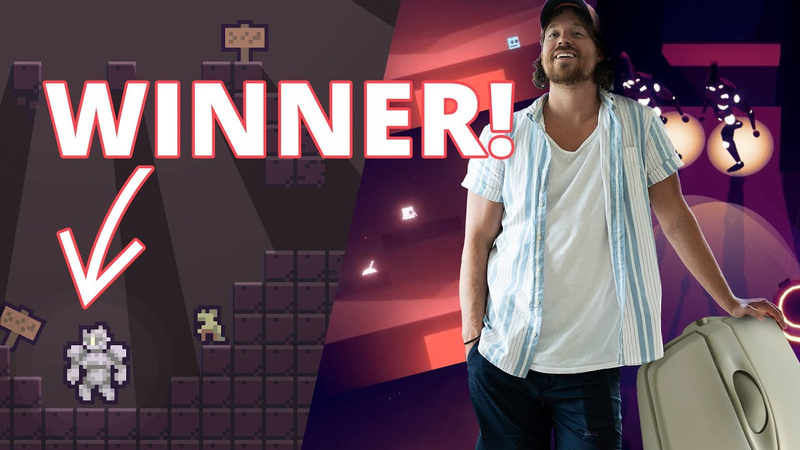
Playing My Students' Game Jam Games (Theme: The Golden Rule)!
This summary examines the outcomes of a private game jam conducted for the Full-Time Game Dev community, which serves over 2,500 students globally.
- The 'Full-Time Game Dev' community, comprising over 2,500 global students, utilized a game jam centered on the 'Golden Rule' to test rapid development strategies.
- The winning entry, 'Get Yeetin,' demonstrated that minimalist art and humor can effectively communicate complex themes by mechanically linking player actions to direct consequences.
- The second-place game, 'Are You Human,' utilized a creative captcha-style UI and shared damage mechanics to integrate its thematic puzzle elements directly into the user experience.
India F2P Games Conference | Aug 26, 2021 (Thurs @10AM - 2PM IST / Aug 25 Wed @9:30PM PST)
The Indian free-to-play (F2P) gaming sector is undergoing a rapid transformation, evolving from a low-cost outsourcing hub into a sophisticated, high-growth market capable of producing original, globally competitive intellectual property.
- The Indian F2P sector is transitioning from an outsourcing hub to a creator of original, globally competitive IP, driven by a mobile-first user base and a shift toward high-monetization midcore genres.
- Successful studios are adopting a 'craftsman' production model that prioritizes the granular deconstruction of global hits to master the mechanics of engagement and retention.
- Developers are increasingly treating games as 'live services' by utilizing backend-as-a-service solutions and CI/CD pipelines to focus resources on core gameplay innovation rather than foundational infrastructure.
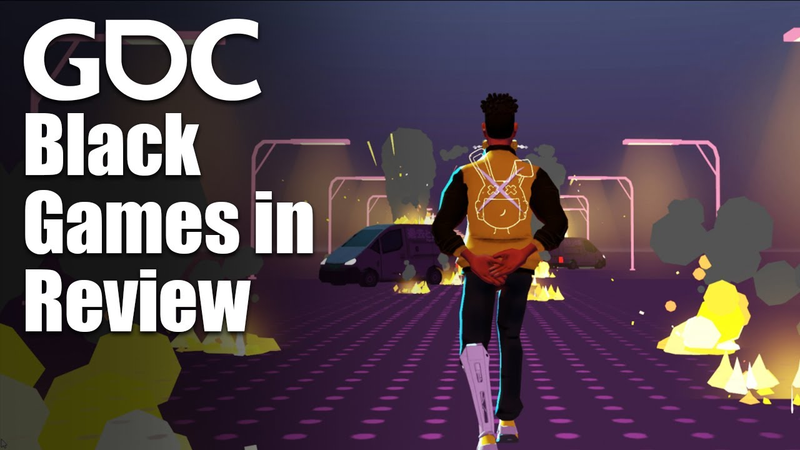
Black Games in Review: An Afro Future Flyby
This analysis explores the landscape of games created by Black developers, documenting the breadth of the field while addressing systemic barriers within the industry.
- A significant disparity exists between consumption and creation: while 83% of Black teens play video games—the highest rate among all ethnic groups—less than 2% of professional game makers identify as Black.
- Black game developers frequently adopt a 'solo' development model as a strategy to overcome systemic barriers to entry and limited access to traditional industry support structures.
- In the absence of established industry support, Black developers are actively building their own communities and networks, such as the Black Game Makers Association and resources like BlackGameDevs.com.

PocketGamer.Biz with Sunday, RoundTables - What’s the secret of a successful hypercasual game?
The hypercasual gaming sector operates on a foundation of rapid iteration, data-driven validation, and a relentless focus on marketability.
- Hypercasual success depends on communicating the core mechanic within a three-second video advertisement to minimize cost-per-install.
- Development teams should remain lean, typically consisting of three to four people, to facilitate rapid prototyping and agile market testing.
- Developers must prioritize data-driven performance benchmarks over creative intuition, pivoting immediately to new concepts if retention and lifetime value metrics are not met.
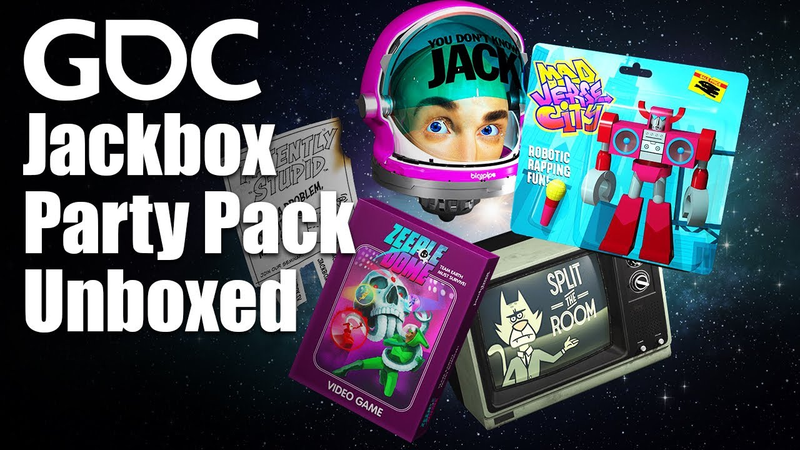
The Jackbox Party Pack Unboxed: How and Why We Make a Pack of 5 Games Every Year
Jackbox Games has successfully transformed its business model by pivoting from traditional freemium trivia titles to an annual, bundled release strategy.
- Jackbox Games maintains a sustainable business model by releasing a 'Party Pack' containing five distinct games annually, a strategy that prevents reliance on a single franchise and encourages creative experimentation.
- The company shifted its focus to the 'big screen' format after realizing that mobile-centric freemium games were often isolating, whereas their party games thrive on shared physical spaces and social interaction.
- The development cycle is highly compressed, with the company releasing a new pack every October and utilizing the remainder of the year for post-mortems, marketing, and early-stage prototyping.
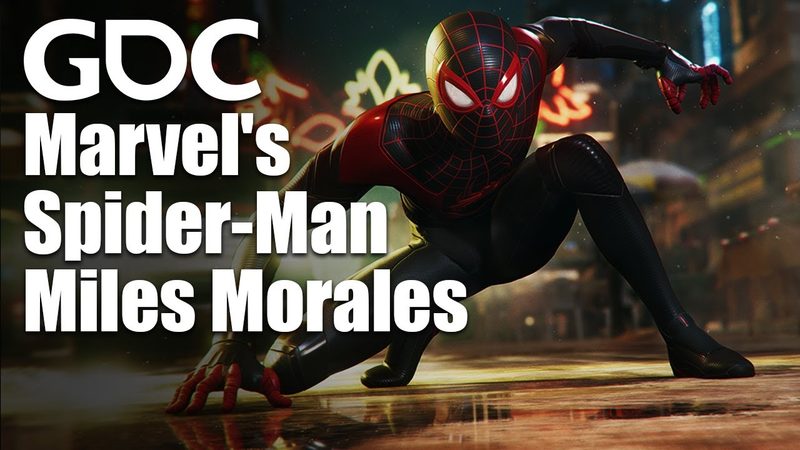
Marvel's Spider-Man Miles Morales: The Creative Journey
Marvel’s Spider-Man: Miles Morales serves as a definitive case study in character-driven game design, focusing on the evolution of Miles Morales from a supporting figure to a standalone protagonist.
- The development team established Miles Morales as a standalone protagonist by differentiating his gameplay through unique bioelectric and camouflage mechanics rather than relying on Peter Parker's established combat style.
- The project achieved an 85 Metacritic score by integrating PlayStation 5 hardware capabilities, specifically ray-traced reflections, haptic feedback, and 3D audio, to enhance player immersion.
- To maintain narrative cohesion during remote work, the studio utilized a slice-based development model and rigorous pre-alpha milestones.

5 Steps To Start Making Games (in 2021)
This guide outlines a practical, five-step framework for aspiring independent game developers to transition from novices to commercial creators.
- Shift from a purely technical mindset to an entrepreneurial one by prioritizing marketing strategies before, during, and after the game launch to ensure commercial viability.
- Focus on project completion by leveraging accessible tools and avoiding the trap of mastering every technical nuance, which often leads to project abandonment.
- Utilize the Unity engine for development due to its lower learning curve and robust capabilities for multi-platform porting.
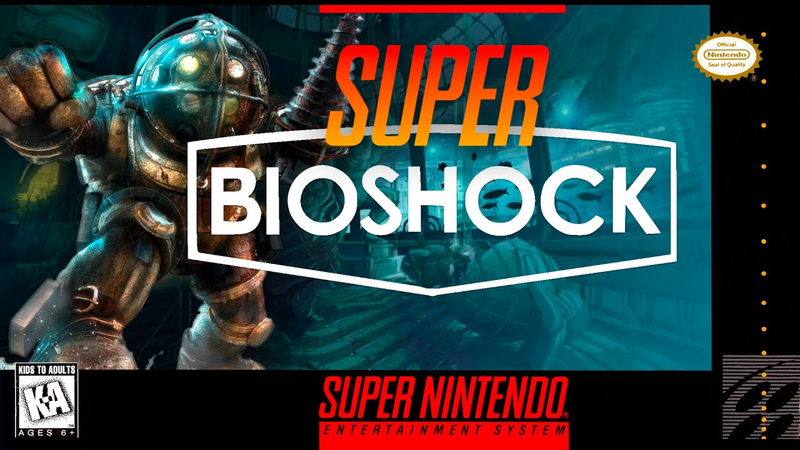
I made BioShock... BUT IT'S 2D
Recreating the iconic introduction of the 1995-era aesthetic for BioShock within the Unity engine serves as a practical exploration of game design, art direction, and the technical challenges inherent in translating 3D environments into 2D.
- Recreating a small fraction of the BioShock environment in 2D required eight hours of dedicated illustration and design, highlighting the significant labor investment behind seemingly simple art styles.
- The project successfully translated Rapture’s complex Art Deco architecture into 2D by utilizing layering, parallax effects, and strategic lighting instead of high-fidelity 3D models.
- Technical implementation in the Unity engine relied on 2D lighting systems, particle kits for environmental effects, and custom code to manage background movement.
I PLAYED YOUR GAMES! | Game Design Feedback.
Effective game design relies on the seamless integration of intuitive user interfaces, clear player feedback, and natural onboarding processes.
- Indie developers must prioritize intuitive UI, clear visual feedback, and natural onboarding to prevent complex mechanics from becoming obscured by poor design.
- Tutorials should be embedded directly into gameplay rather than relegated to external documentation to improve player engagement and retention rates.
- Technical innovation in hybrid genres is often undermined by user experience friction, such as steep initial difficulty curves or intrusive monetization strategies.

Beyond Game Design
In this 2019 GDC presentation, Ubisoft Toronto game director Richard Carrillo argues that the primary challenge for game designers is not technical execution, but the cultivation of a positive, collaborative design culture.
- Game design success depends less on technical execution and more on cultivating a collaborative culture that moves beyond the ego-driven 'I am the designer' mindset.
- Designers should replace directive, authority-based management with soft skills like inspiration, patience, and humility to foster team ownership.
- Negative team dynamics often stem from designer insecurity, manifesting as the dismissal of feedback or the demand for blind trust from colleagues.
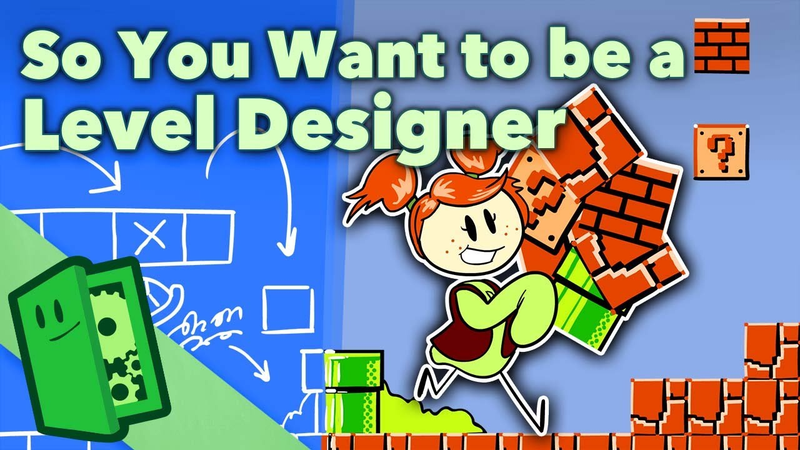
So You Want to be a Level Designer - An Introduction to Level Design in Video Games - Extra Credits
Level design serves as the foundational architecture of video games, encompassing the creation of spaces where players explore, engage in combat, and overcome challenges.
- Level design is a multidisciplinary role that integrates narrative, mechanics, pacing, and aesthetics to ensure the physical environment supports the core gameplay loop.
- Designers act as central conduits between departments like environmental art, lighting, and audio to ensure the project vision remains consistent across the physical space.
- The research phase typically involves gathering approximately 50 visual references to establish a consistent tone and evoke specific emotional responses through architecture and geology.
A Dark Mind: The AI of ""The Dark"" in BELOW
The development of the tentacle-based entity known as The Dark in the game BELOW centers on achieving a balance between fluid, animalistic movement and structured, readable combat mechanics.
- Capy Games developed 'The Dark' for the game BELOW using a 30-bone mesh tentacle system that combines bespoke squirmy idle animations with a kinematic chain controlled by an inverse kinematic (IK) tip target.
- To solve issues with poor animation blending caused by complex kinematic states, the team implemented a shape-casting system that rotates around a target to find unobstructed goal positions for the tentacle tips.
- The team transitioned from a rigid, order-of-execution rule system to a flat scoring-based architecture, allowing for configurable weights that make it easier to balance competing behaviors like avoiding the player versus hiding the tentacle base.