Game Culture reports and market data
Documents
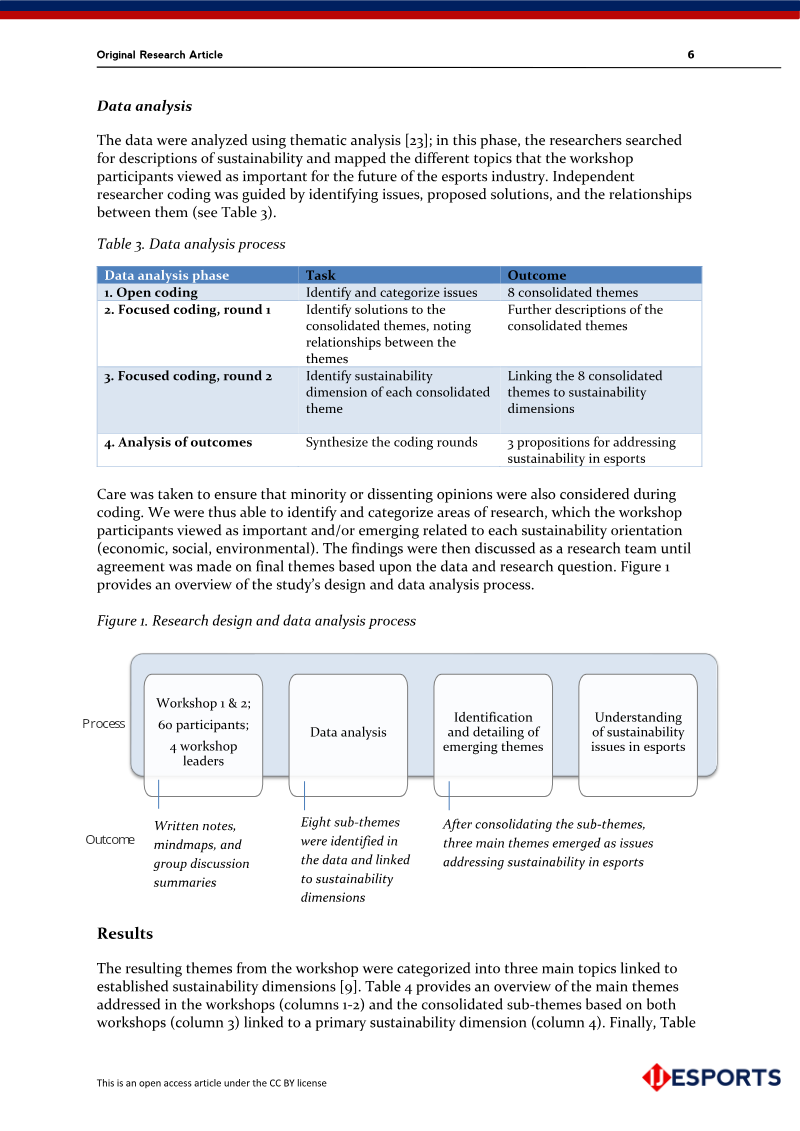
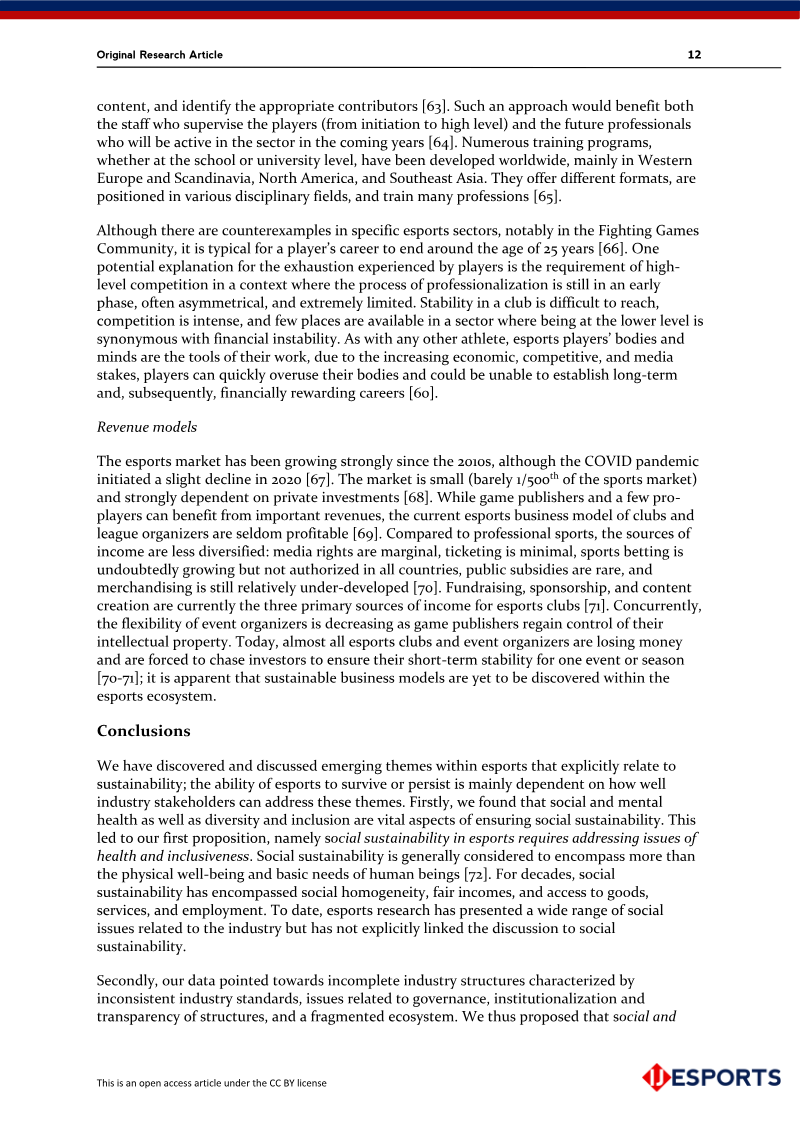
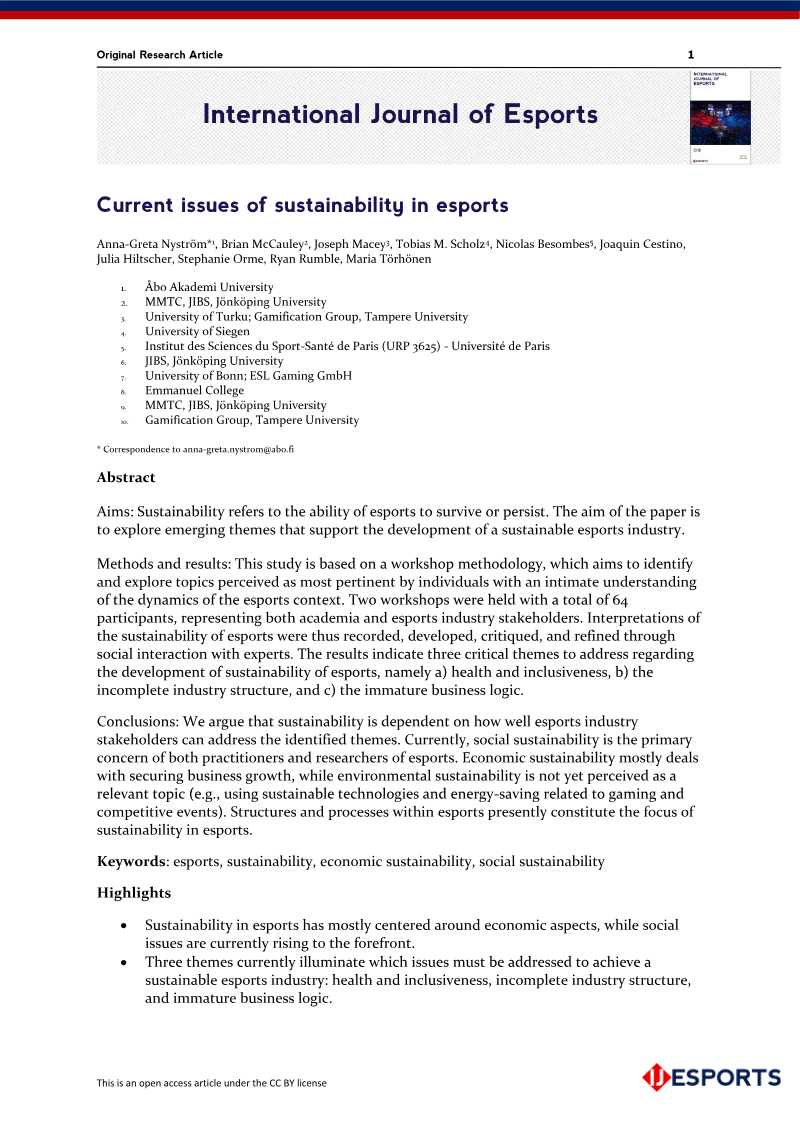
Current Issues of Sustainability in Esports
The study examines sustainability in esports across social, economic, and environmental dimensions, drawing on two workshops held in November 2019 (before COVID-19) with 64 participants from academia and industry.
- The report identifies social sustainability as the most pressing concern in esports, with three critical themes: health and inclusiveness, an incomplete industry structure, and an immature business logic.
- Women make up only about 6% of competitive esports scenes, and BIPOC, older, disabled, and transgender or non-binary players are similarly underrepresented.
- Player careers typically end around age 25, reflecting intense competition, burnout, physical and mental strain, and unstable club employment.

Intra-Active Play: What Do Video Games Have to Do with Quantum Physics?
Sonia Fizek's paper argues that the conventional understanding of players and games as pre-existing, independent subjects and objects is inadequate for digital play.
- Sonia Fizek argues that treating players and games as pre-existing, independent entities is inadequate for digital play; instead, players and games come into being only through the act of play, entangled in a mutual "ludic embrace."
- The paper proposes replacing the notion of interaction, a symmetrical flow of action between human and machine, with intra-action, a fluid entanglement of forces in which agency is distributed across human and nonhuman elements.
- Drawing on Karen Barad's agential realism, the author positions the work within the broader material turn alongside Latour's actor-network theory, Foucault's dispositive, Bateson's ecology of mind, and new materialism and posthumanism.
From Cyborgs to Digital Companion Species: Reimagining Player-Game Relations
This essay by Yu Hao argues that computer games can be understood as digital companion species, drawing on Donna Haraway's concepts of the cyborg and companion species.
- The essay argues that games can be understood as digital companion species, drawing on Donna Haraway's concepts of the cyborg and companion species, and proposes "techno-symbiosis" as a more radical framing than the earlier "techno-intimacy."
- The central claim is that this framing destabilizes anthropocentric views that treat games as inert objects separate from their players, emphasizing instead the vitality and relationality of games and gameplay.
- The argument moves conceptually from Haraway's cyborg (a hybrid of machine and organism) to the broader companion-species category, which troubles traditional biological boundaries.
Roleplaying the Future of Surveillance
This paper examines the use of live-action role-playing (larp) as both a research method and a means of public engagement with the ethics of machine vision and surveillance technologies.
- The paper's central case is 'Sivilisasjonens venterom' (The Waiting Room of Civilization), a larp that debuted in November 2021 at the University Museum of Bergen, Norway, set in a post-apocalyptic city-state governed by an AI 'Intelligence' where citizenship depends on being legible to video surveillance, facial recognition, and emotion recognition systems.
- The authors frame the larp as a way to cultivate phronesis (practical ethical judgment), placing players in situations requiring real choices about compliance, resistance, and exploitation of surveillance systems.
- The design draws on Nordic larp traditions emphasizing collaboration, unobtrusive rules, and heavy themes, as well as Emma Leigh Waldron's 'Performance-as-Research' approach and the authors' earlier research larp 'The Asylum Seekers'.
Final Fantasies: Final Fantasy III/VI Authenticity Hacks
This conference paper examines how fan-made ROM hacks of Final Fantasy III (released in North America as Final Fantasy VI, Square Soft, 1993 on the Super Nintendo) construct competing notions of authenticity.
- The paper argues that authenticity is paradoxical: though imagined as pure and unmediated, fan advocates actively plan and design it, producing an idealized reconstruction of the game built from perceived narrative and ludic essentials.
- The study focuses on three fan hacks of Final Fantasy VI (originally Final Fantasy III in Japan, Square Soft, 1993, SNES) that claim to offer a more accurate or complete version than the North American localization: Ted Woolsey Uncensored Edition, FF6: Brave New World, and Final Fantasy VI: Retranslated.
- The hacking scene around this title has produced over 200 modifications, making it one of the most heavily altered SNES/SFC games.
The Digital Game Analysis Protocol (DiGAP): Facilitating Transparency in Games Research
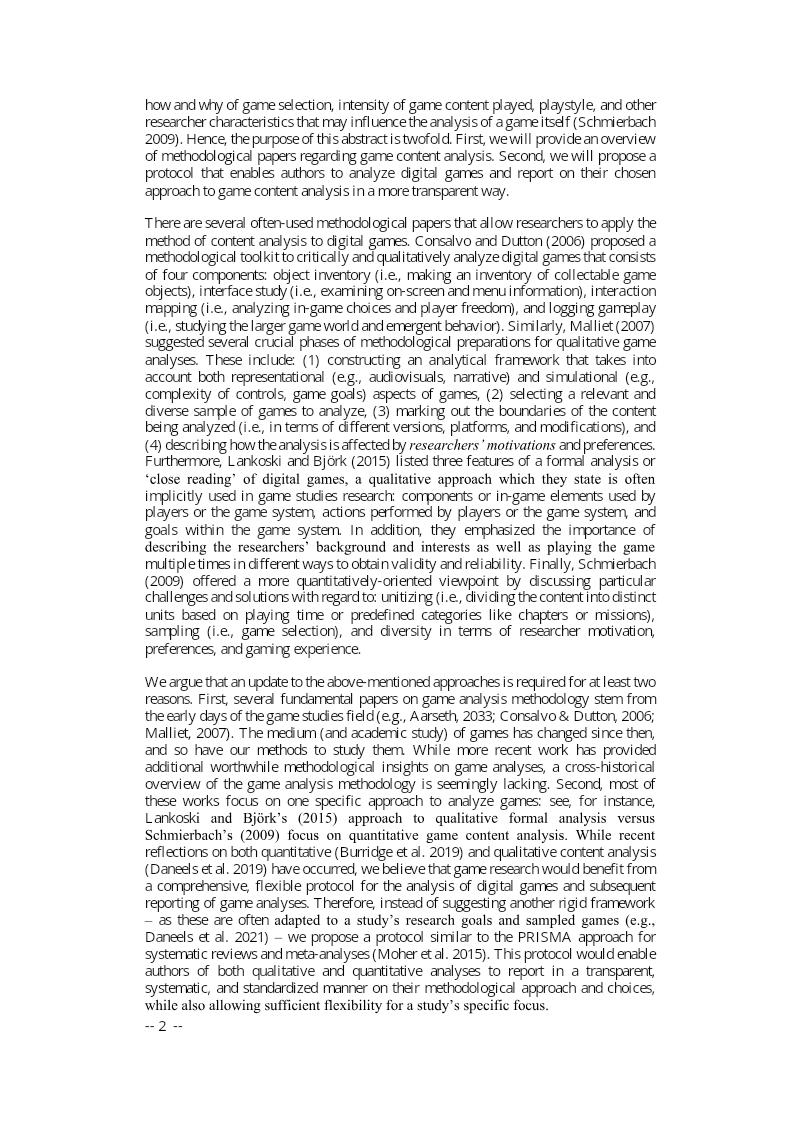
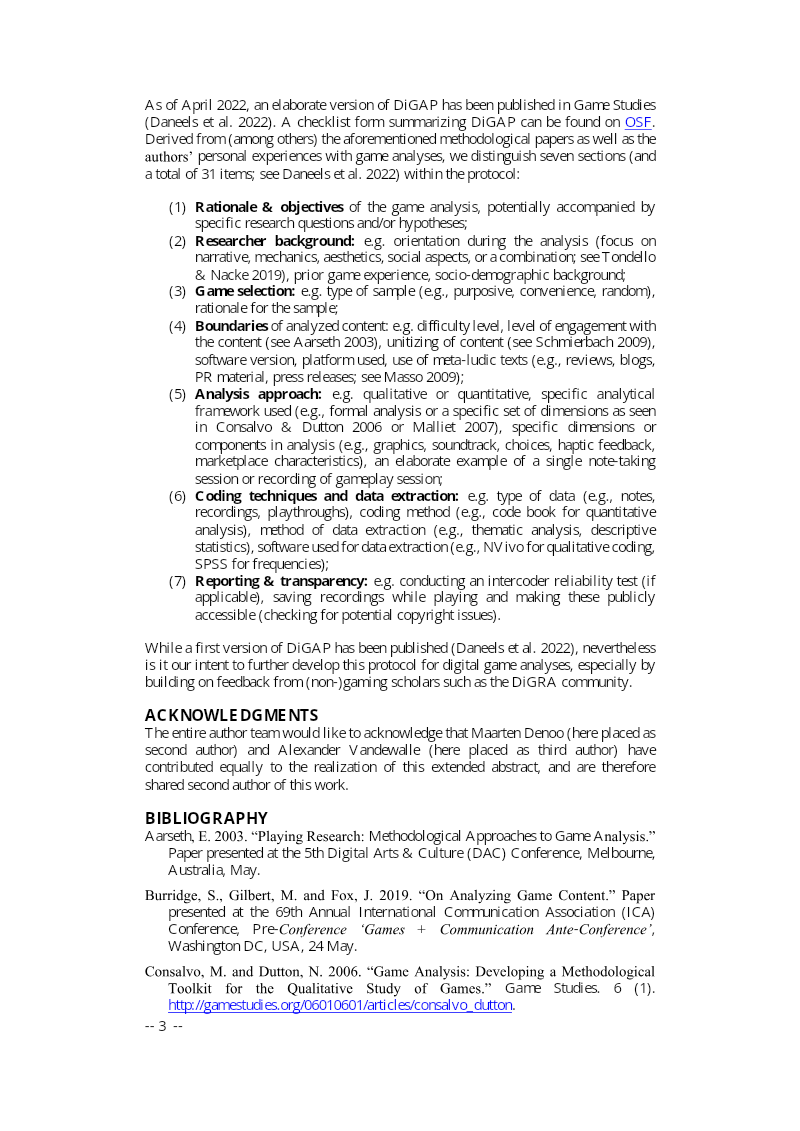
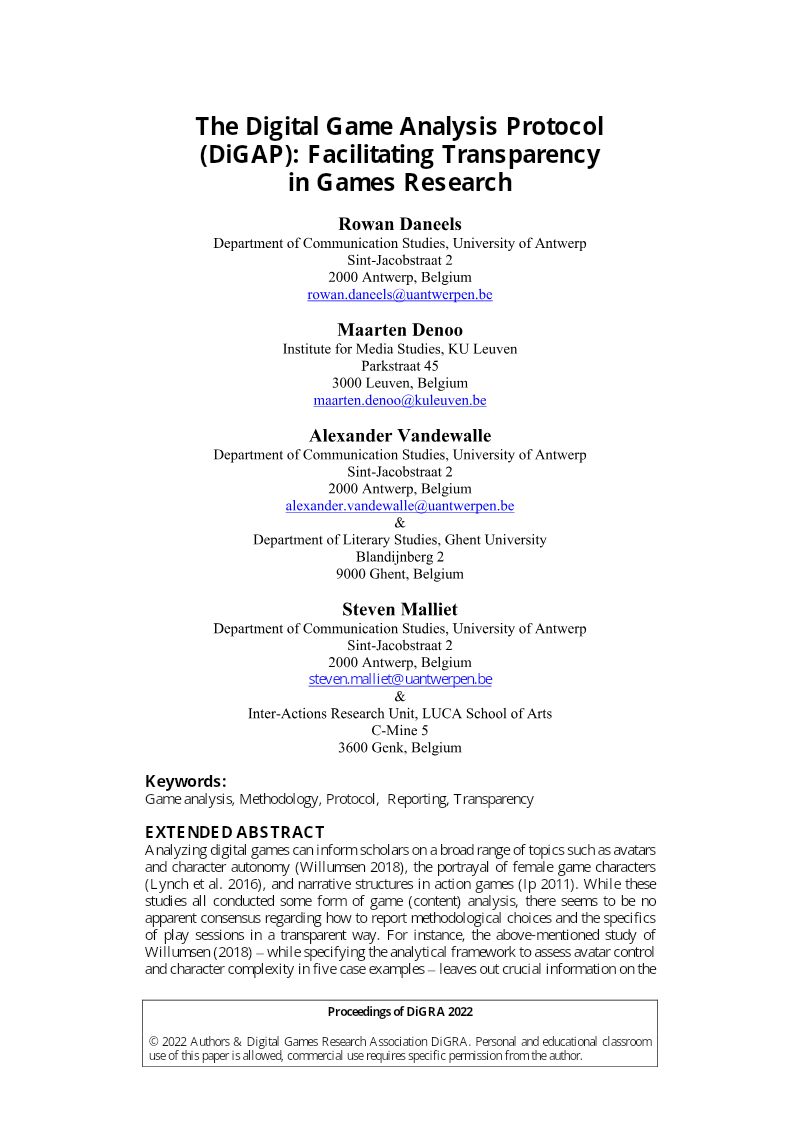
The Digital Game Analysis Protocol (DiGAP) is presented as a response to the lack of consensus in game studies about how methodological choices and play sessions should be reported.
- Many published game analyses omit key methodological details, such as how games were selected, how much content was played, the playstyle adopted, and the researchers' own characteristics, all of which can shape analytical outcomes.
- The Digital Game Analysis Protocol (DiGAP) is proposed as a flexible reporting standard for game studies that improves transparency without imposing a rigid analytical framework.
- DiGAP is modeled on the PRISMA reporting standard for systematic reviews and is organized into seven sections comprising 31 items.
Using Characterization Theory to Study the History of Video Game Characters
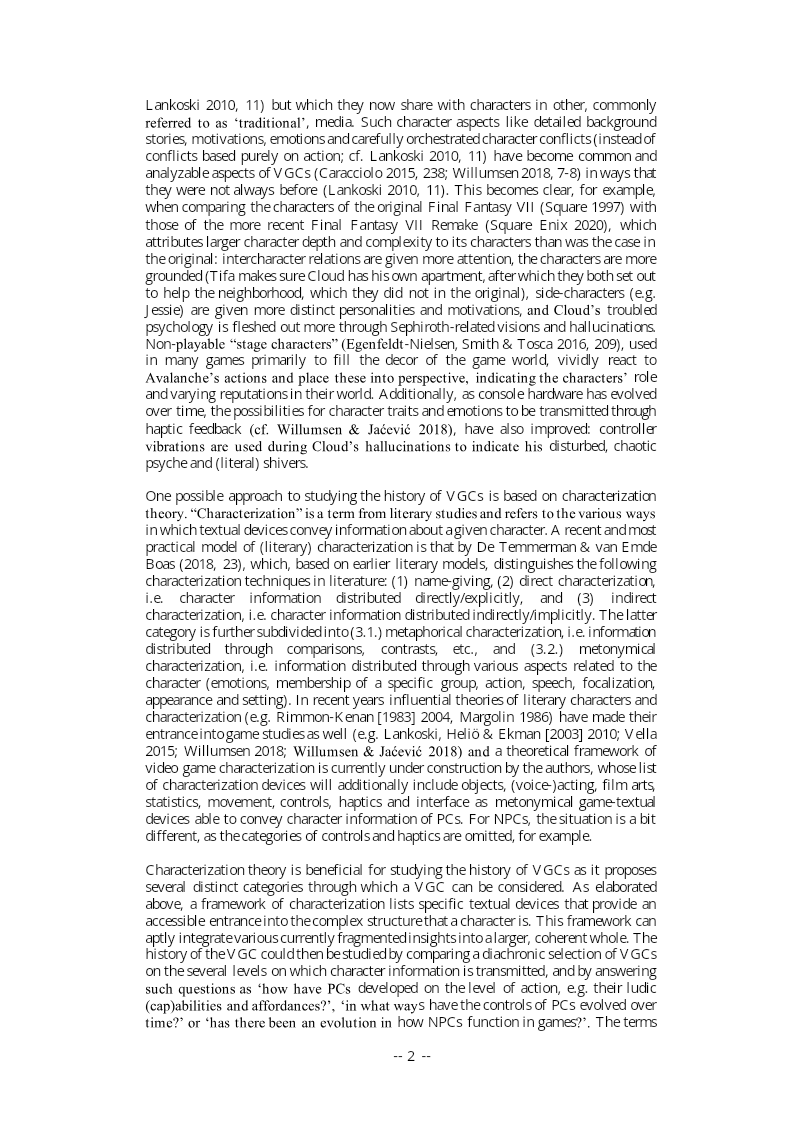
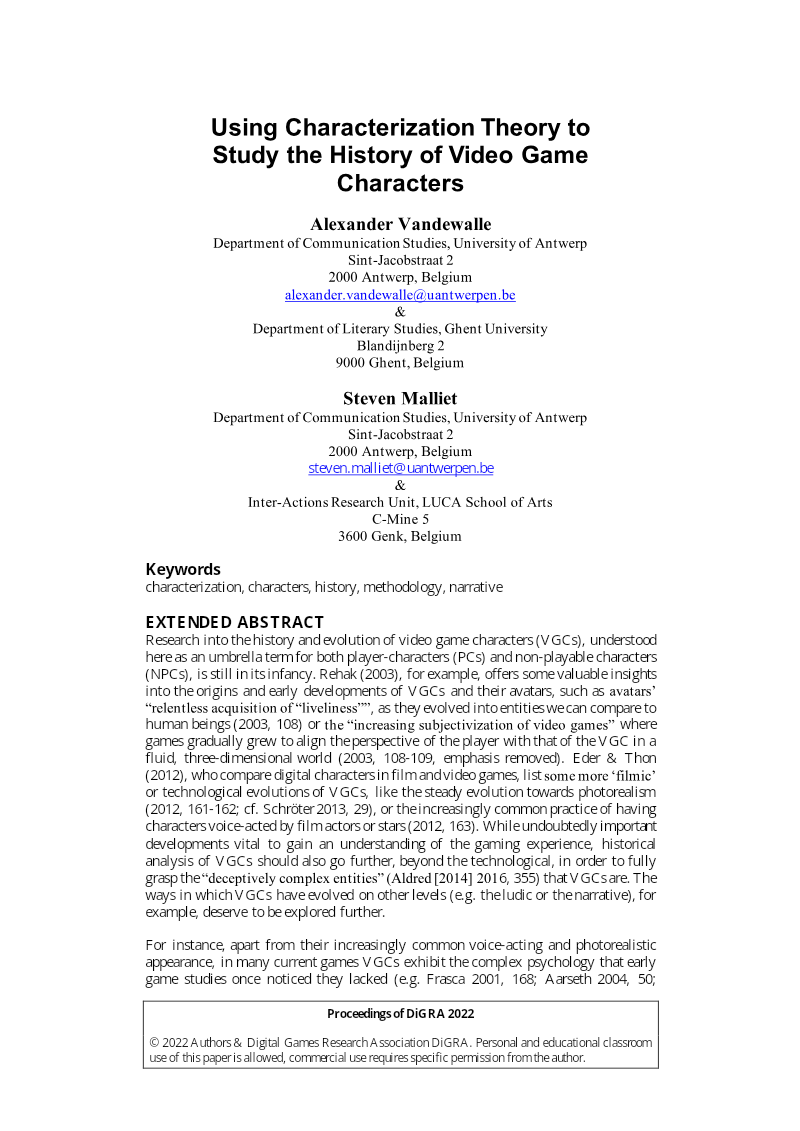
This paper proposes characterization theory, borrowed from literary studies, as a productive framework for tracing the history of video game characters (VGCs), encompassing both player-characters and non-playable characters.
- The paper argues that scholarship on video game history has focused mainly on technology and film-derived developments like photorealism and voice acting, neglecting the ludic and narrative evolution of video game characters (VGCs), which covers both player-characters and NPCs.
- It proposes adapting characterization theory from literary studies, specifically De Temmerman and van Emde Boas's model of name-giving, direct characterization, and indirect characterization (metaphorical and metonymical), as a framework for tracing VGC history.
- Hallmarks of contemporary games are identified as growing psychological complexity, detailed backstories, motivations, and orchestrated character conflicts, in contrast to earlier titles often criticized for shallow characters.
Gamechangers of 40k: Professionalization and Commodification of Warhammer 40,000
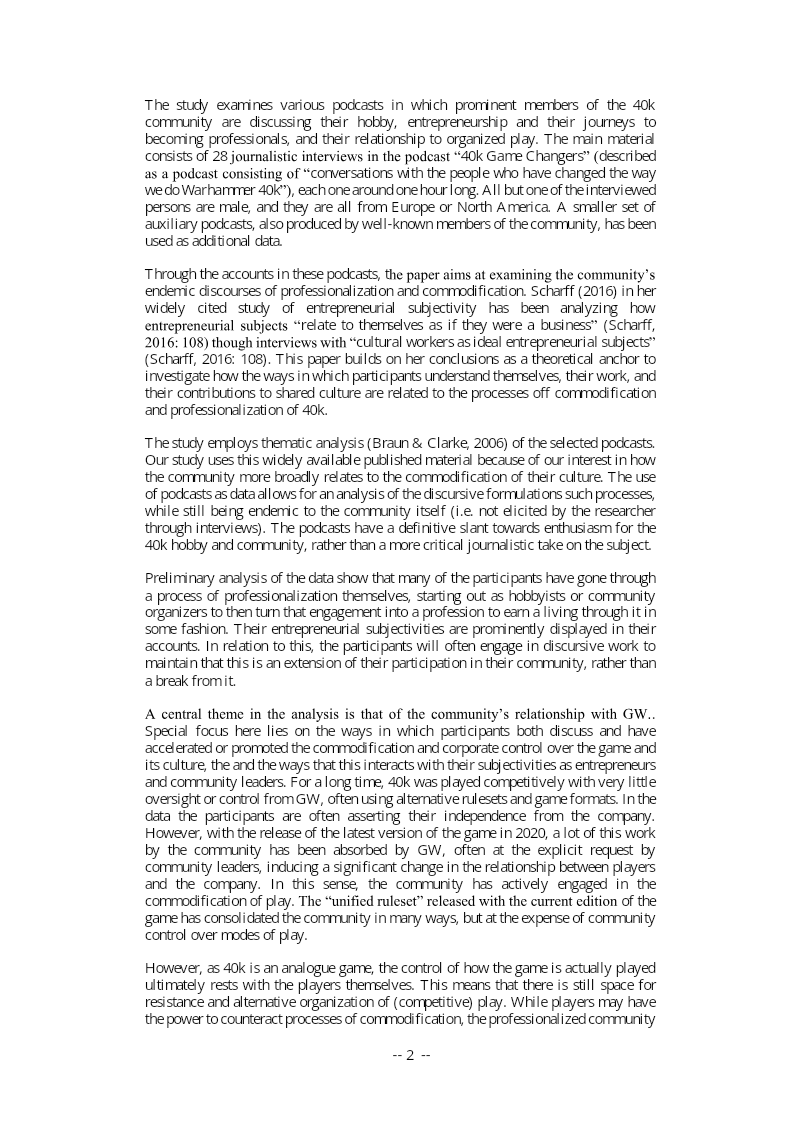
This paper examines how the Warhammer 40,000 tabletop wargaming community is undergoing professionalization and commodification, with players, organizers, and content creators increasingly turning their hobby into paid work.
- The paper argues that Warhammer 40,000's competitive community is professionalizing and commodifying, with players, organizers, and content creators increasingly turning their hobby into paid work, alongside rising sales and revenue for parent company Games Workshop.
- With the 2020 edition's unified ruleset, Games Workshop absorbed much of the competitive community's previously self-organized work on alternative rulesets, sometimes at the explicit request of community leaders.
- The authors interpret this absorption as the community actively participating in the commodification of play, consolidating the player base while reducing community control over how the game is played.
Questioning Alternative and Standard Game Controllers Through Hegemonic Models
This paper argues that discussions of alternative game controllers (altctrls) typically define them by contrast with a loosely described "standard" set of input devices, and that this framing focuses attention on hardware rather than on the broader social and political conditions shaping play.
- The paper argues that defining alternative game controllers (altctrls) by contrast with a 'standard' set of input devices focuses attention on hardware and obscures the broader social and political conditions shaping play.
- Its central proposal is to apply hegemony-informed models, drawing on Gramsci and Raymond Williams, to analyze the alternative/standard dichotomy and to examine how altctrls are produced and circulated.
- The author contends that altctrls work in synergy with changes in action mapping, display, metaphor, and interfacing, so input devices alone are an insufficient site for understanding difference, and calls for tracing sites and effects of difference via Haraway's diffraction mapping.
The Evolution of Cyberpunk Realia in Video Games
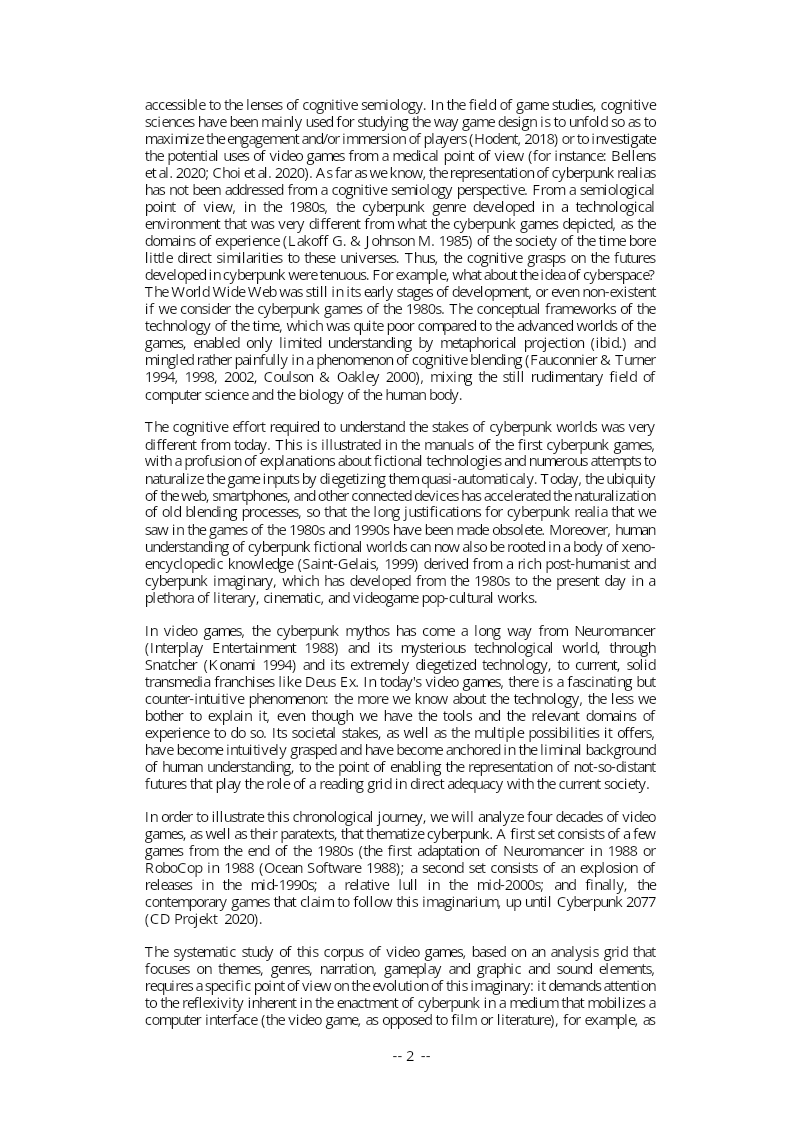
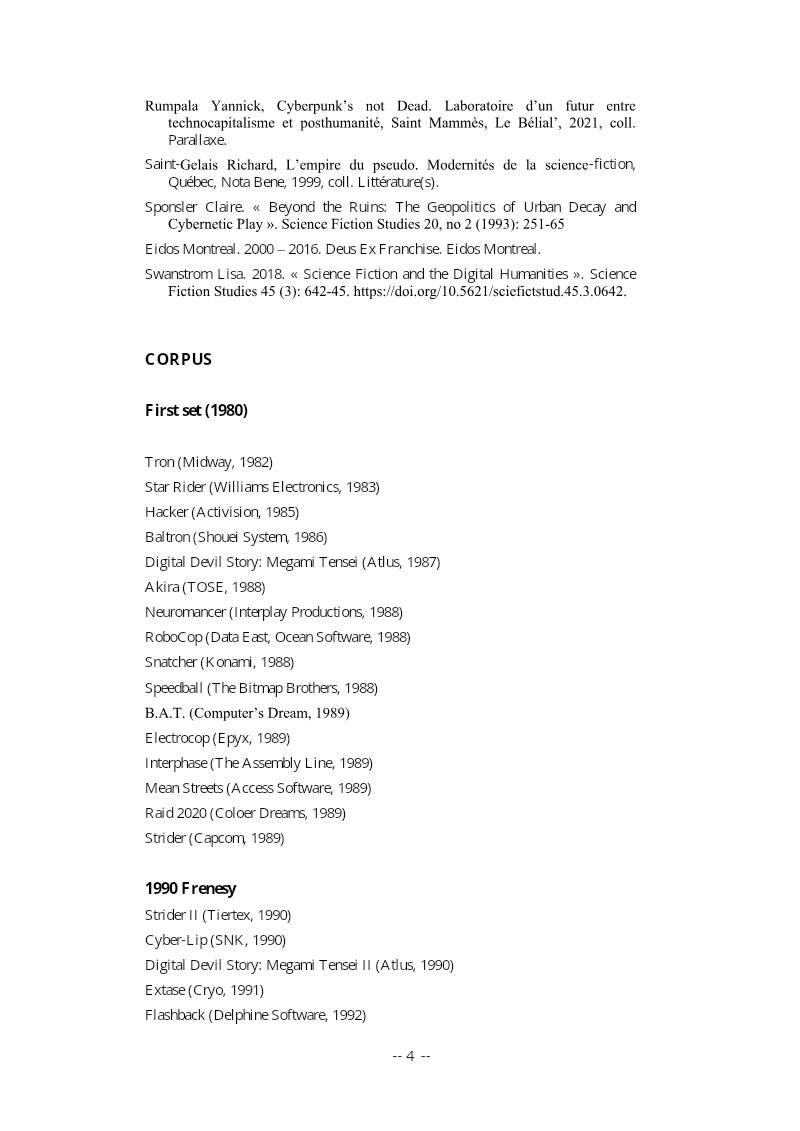
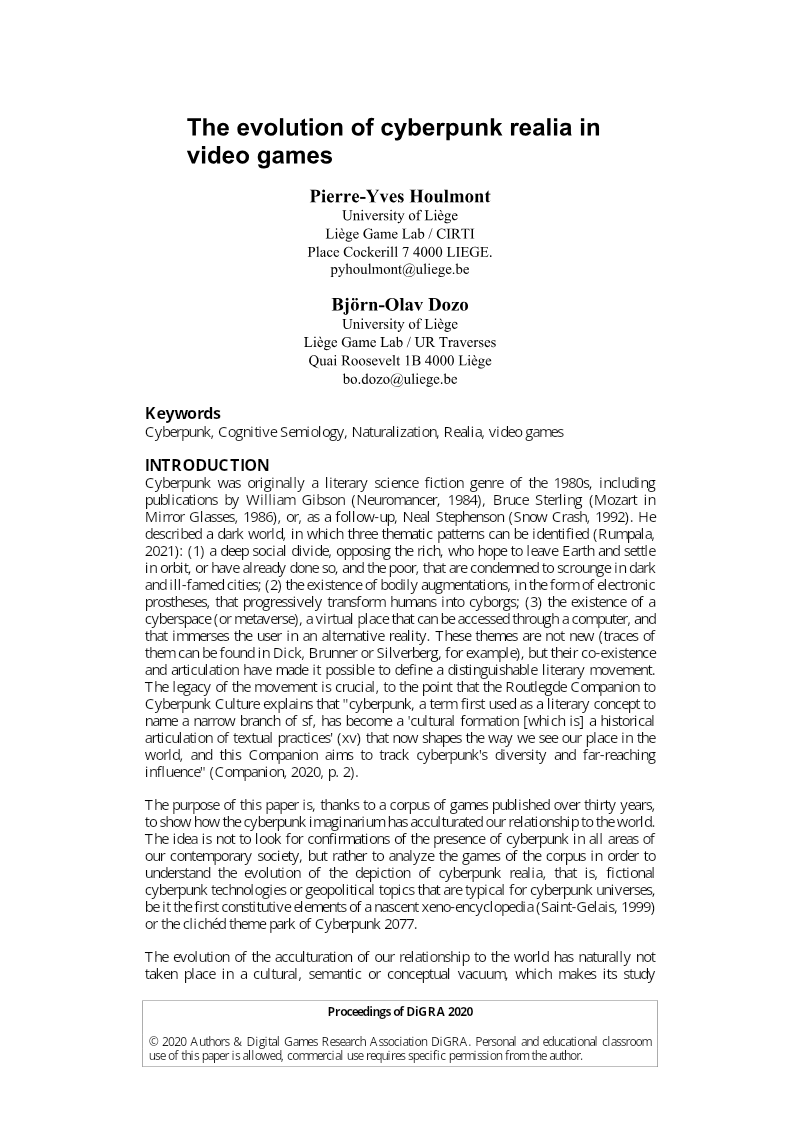
This paper traces how cyberpunk imagery in video games has shaped players' understanding of technology and society over roughly four decades, drawing on a corpus of more than one hundred titles spanning from the early 1980s to 2021.
- The paper's central argument is that the cyberpunk imaginary has become part of the shared background of human understanding, so games no longer need to laboriously justify their fictional technologies.
- Analysis of a corpus of more than 100 titles from the early 1980s to 2021 shows that games have shifted from heavy in-game and manual explanation of speculative technology (as in Neuromancer and Snatcher in the late 1980s) to presenting advanced technology with little or no explanation.
- The authors attribute this counter-intuitive shift to the ubiquity of the web, smartphones, and connected devices, along with a broader xenoencyclopedic knowledge built up through decades of literary, cinematic, and game works.
Exploring Relevance, Meaningfulness, and Perceived Learning in Entertainment Games
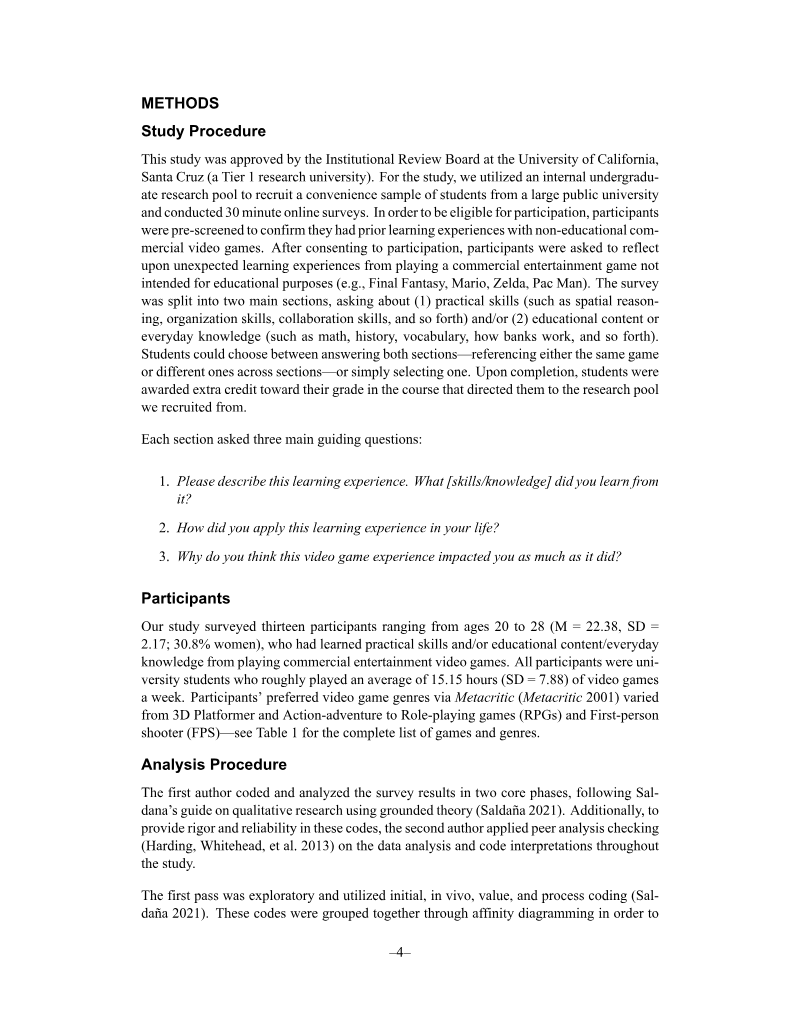
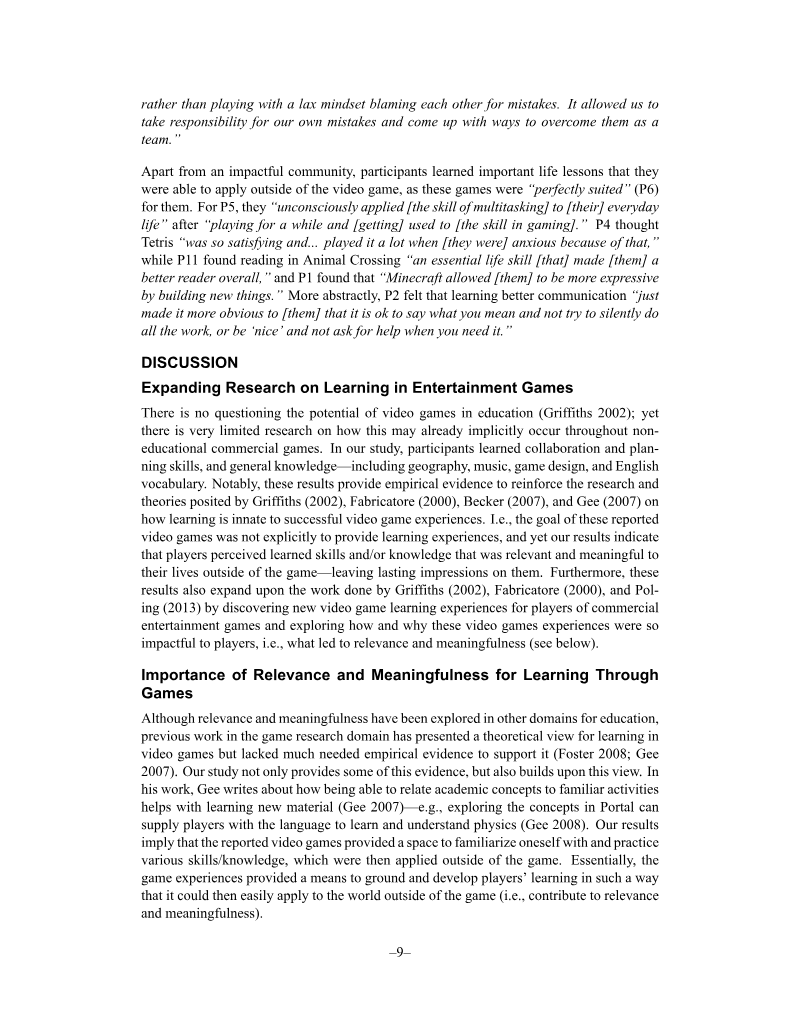
This study examines the unintended learning that players report from commercial, non-educational video games such as League of Legends, Minecraft, and The Witcher 3.
- Commercial, non-educational games such as League of Legends, Minecraft, and The Witcher 3 can produce unintended learning that players recognize as relevant and meaningful beyond the game.
- All 13 participants (university-aged adults aged 20 to 28, all heavy gamers) reported applying at least some of the skills they gained in games to their lives outside the game.
- Reported learning clustered into collaboration skills (communication, teamwork, leadership, emotional regulation), planning abilities (budgeting, resource management), and everyday knowledge (English vocabulary, geography, music, game design).
The Adoption of Multiplayer Online Battle Arena to Introduce Wayang Character
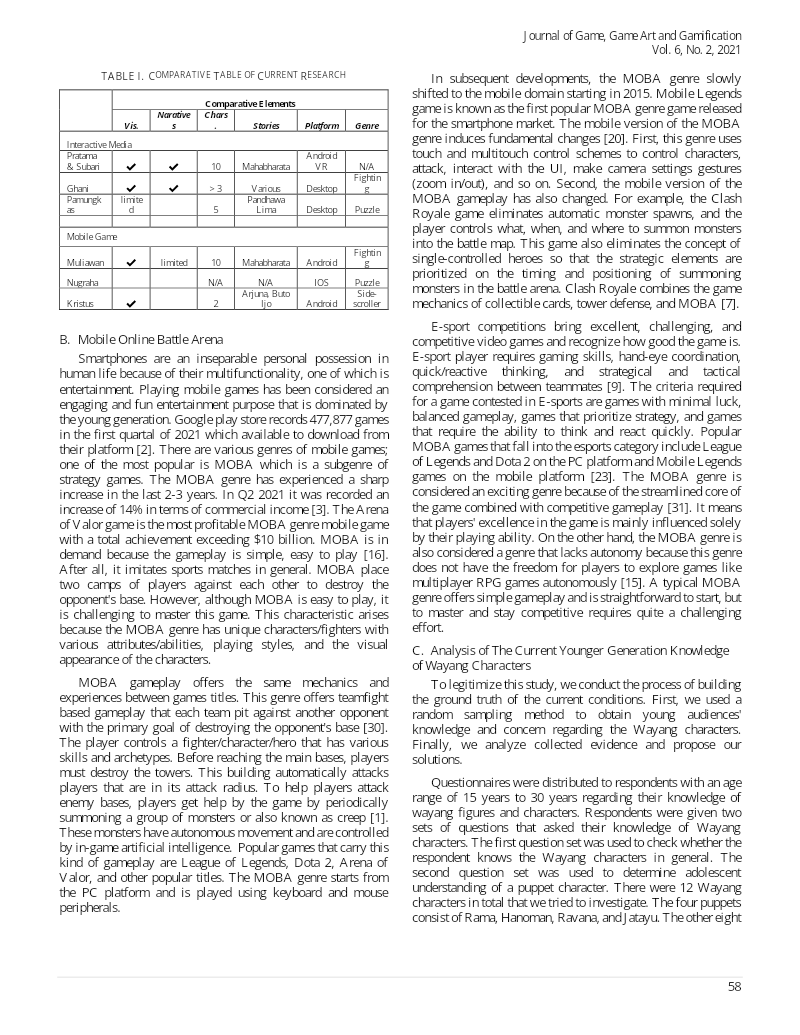
The integration of traditional Indonesian Wayang characters into the Multiplayer Online Battle Arena (MOBA) genre serves as a strategic intervention to revitalize cultural interest among digital-native youth.
- Integrating traditional Wayang characters into the MOBA genre significantly increases cultural literacy among digital-native youth, as evidenced by pre- and post-test evaluations.
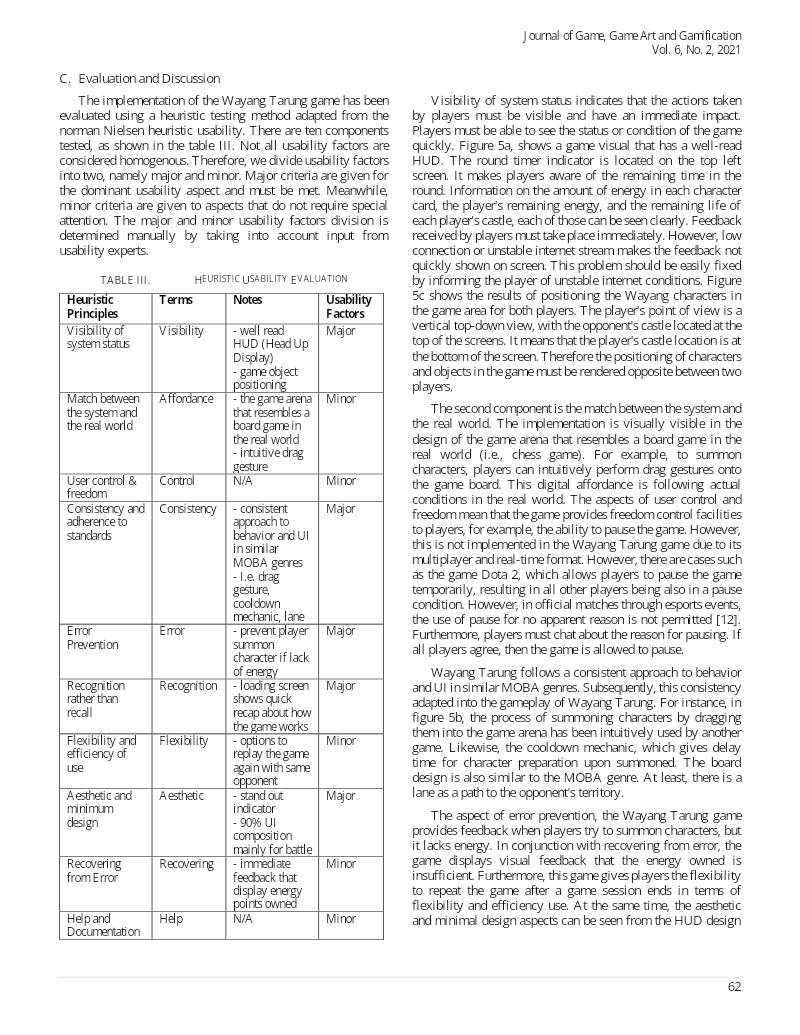
- The 'Wayang Tarung' project utilizes the Mechanic, Dynamic, and Aesthetic (MDA) framework to ensure cultural education does not negatively impact gameplay quality.
- Technical implementation of the game relies on a multithreaded server architecture to support real-time multiplayer interactions while maintaining character balance.