This paper traces how cyberpunk imagery in video games has shaped players' understanding of technology and society over roughly four decades, drawing on a corpus of more than one hundred titles spanning from the early 1980s to 2021. Its central argument, grounded in cognitive semiology and conceptual blending theory, is that the cyberpunk imaginary has gradually become part of the shared background of human understanding, so that games no longer need to laboriously justify their fictional technologies. The authors approach the material not by checking whether cyberpunk themes appear across society, but by examining how depictions of cyberpunk "realia," including fictional technologies and geopolitical settings, have evolved within the medium.
The analysis reveals a clear shift in how games handle their speculative premises. Early titles from the late 1980s, such as Neuromancer and Snatcher, relied on extensive manuals and in-game explanations to make unfamiliar technologies intelligible, reflecting a period when the real-world frameworks for cyberspace and computing were rudimentary. Because the public lacked direct experience with networks and augmentation, comprehension depended on strained metaphorical projection and blending of computer science with biology. By contrast, contemporary games often present advanced technologies with little or no explanation, a counter-intuitive development the authors attribute to the ubiquity of the web, smartphones, and connected devices, together with a broader xenoencyclopedic knowledge built up through decades of literary, cinematic, and game works.
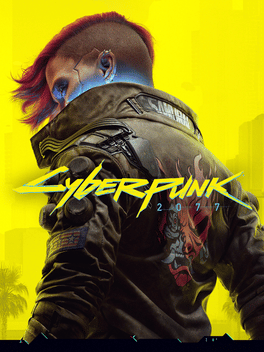
The corpus is organized into chronological sets: a first set centered on the late 1980s, an explosion of releases in the mid-1990s, a relative lull in the mid-2000s, and a contemporary set culminating in Cyberpunk 2077 (2020). The study uses an analytical grid covering themes, genres, narration, gameplay, and graphic and sound elements, and it pays particular attention to the reflexive, interface-mediated nature of video games compared with film or literature. This includes how the medium shapes the player's experience of mediated relationships with cyberpunk worlds, sometimes prompting reflection on the player's own condition.