1 free read left. Create a free account for unlimited reading + AI research.
Create free accountWhitepaper DiGRA
1 free read left. Create a free account for unlimited reading + AI research.
Create free accountWhitepaperDiGRA
The essay builds on Donna Haraway's concepts of the cyborg and companion species to reframe what games are.
This essay by Yu Hao argues that computer games can be understood as digital companion species, drawing on Donna Haraway's concepts of the cyborg and companion species. The author builds on existing game scholarship about virtual companion games, such as digital pets and bishōjo titles, and proposes "techno-symbiosis" as a more radical framing than the earlier notion of "techno-intimacy." The central claim is that this shift can destabilize anthropocentric views that treat games as inert objects separate from their players, instead emphasizing the vitality and relationality of games and gameplay.
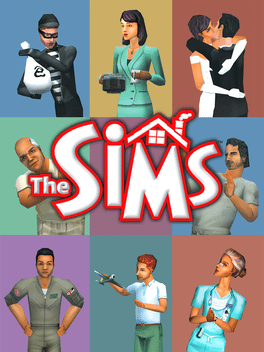
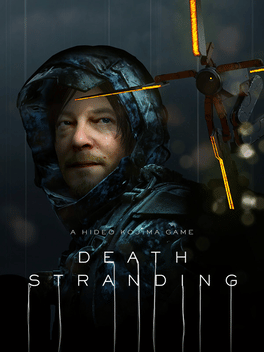
The argument proceeds conceptually rather than empirically, tracing how the cyborg, which posits a hybrid of machine and organism, gave way in Haraway's later work to the companion species, a broader category that troubles traditional biological boundaries. The essay applies this framework to several examples. Avatar-based games such as The Sims 4 and Death Stranding are presented as spaces where player and avatar form technosymbiotic relations, while even avatarless games like Tetris are read as sites of cooperation between skilled players and the game system rather than purely adversarial encounters.
The work positions itself within posthumanist and new materialist approaches to game studies, situating its contribution alongside prior scholarship on player-avatar relationships, cyborg gamers, and virtual pets. It does not present original survey data, sample sizes, or quantitative findings; its methodology is theoretical and interpretive, grounded in close reading of philosophical texts and illustrative game examples. The scope is therefore conceptual and disciplinary, aimed at game studies scholars rather than industry analysts, with the stated goal of opening new vocabularies for understanding what games are and what they can do.
DiGRA · 2026
Uniwersytet Wrocławski · 2023