1 free read left. Create a free account for unlimited reading + AI research.
Create free accountWhitepaper Japanese Association for Role-Playing Game Studies (JARPS)
1 free read left. Create a free account for unlimited reading + AI research.
Create free accountWhitepaperJapanese Association for Role-Playing Game Studies (JARPS)
Distilling the key insights…
The role of the Tabletop Role-Playing Game (TRPG) Game Master functions as a complex dramatistic agent, shaped by evolving rhetorical frameworks and shifting design philosophies. By applying Kenneth Burke’s dramatistic pentad to historical discourse—ranging from early internet forum debates to modern instructional guides—it becomes clear that the GM’s authority is not static but is instead a product of ongoing negotiation within gaming communities. This analysis reveals that the transition toward narrativist design has fundamentally altered the GM’s creative function, moving the position away from a traditional, preparation-heavy authority toward a more collaborative, dialogic practice.
To categorize these diverse interpretations, the GM role is defined through a fourfold typology: the Fan, the Challenger, the Grown-Up, and the Demiurge. These archetypes are distinguished by their varying orientations toward player-GM relationships, specifically regarding cooperative versus adversarial dynamics and monologic versus dialogic communication. This framework illustrates how different communities define the GM’s agency and purpose, providing a vital lens for understanding the socio-cultural tensions that define tabletop play.
This research encompasses the historical development of TRPGs, drawing on a multidisciplinary foundation of communication theory, sociology, and performance studies. By synthesizing these perspectives, the study establishes a robust rhetoric of the GM that explains how individual play styles influence both game design and the practical execution of sessions. Ultimately, these findings demonstrate that the GM is a central dramatistic agent whose evolving identity reflects broader trends in ludic culture, offering a comprehensive tool for researchers to decode the shifting power structures inherent in tabletop gaming.
Japanese Association for Role-Playing Game Studies (JARPS) · 2025
Japanese Association for Role-Playing Game Studies (JARPS) · 2025
Japanese Association for Role-Playing Game Studies (JARPS) · 2025
Japanese Association for Role-Playing Game Studies (JARPS) · 2024
Japanese Association for Role-Playing Game Studies (JARPS) · 2024
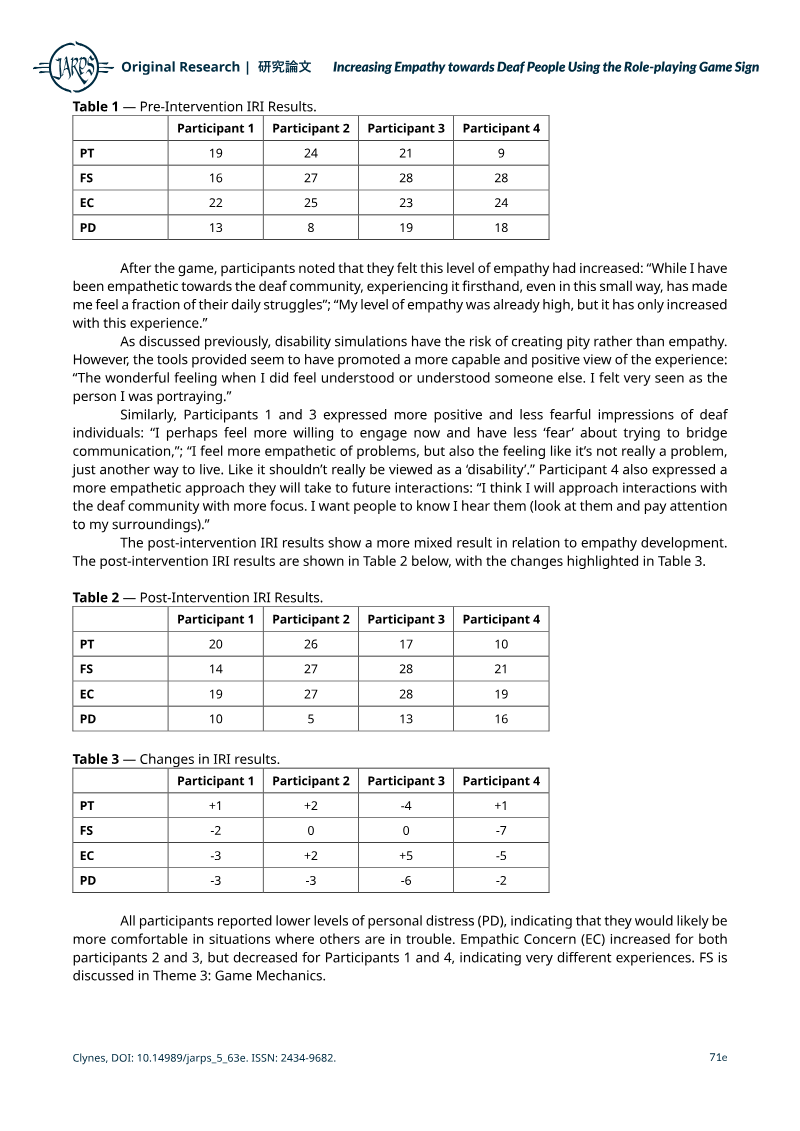
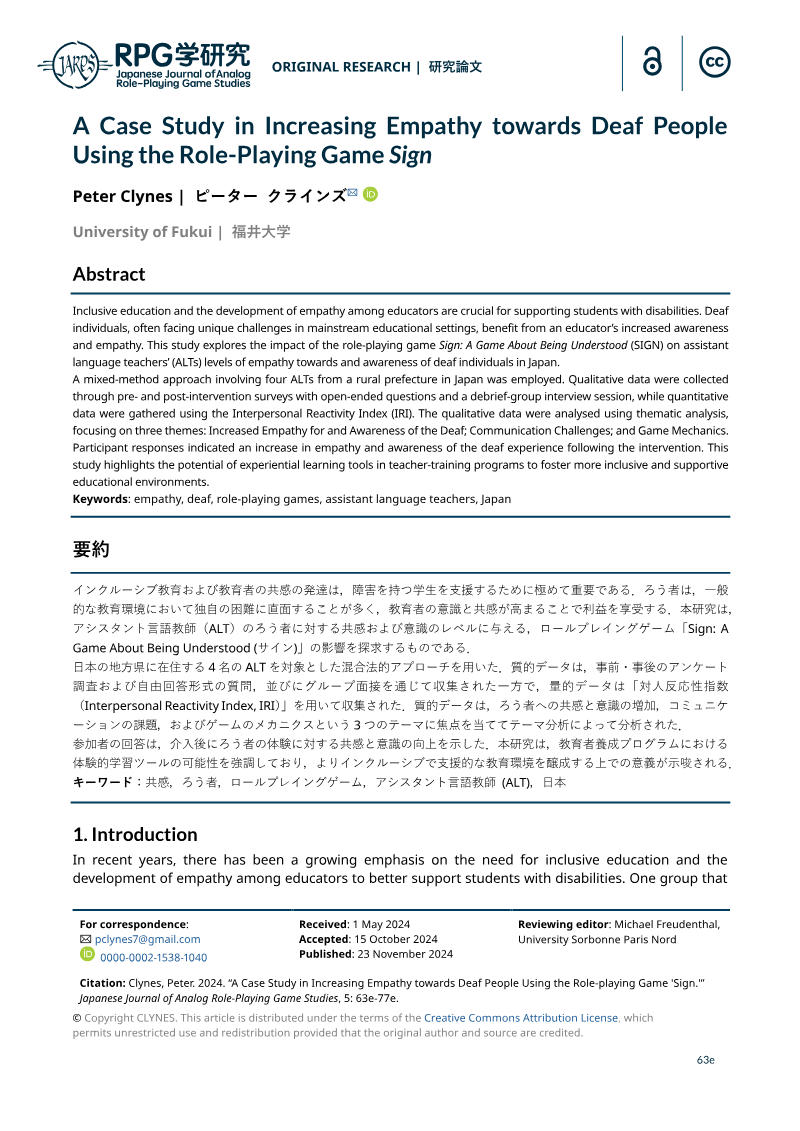
Japanese Association for Role-Playing Game Studies (JARPS) · 2024
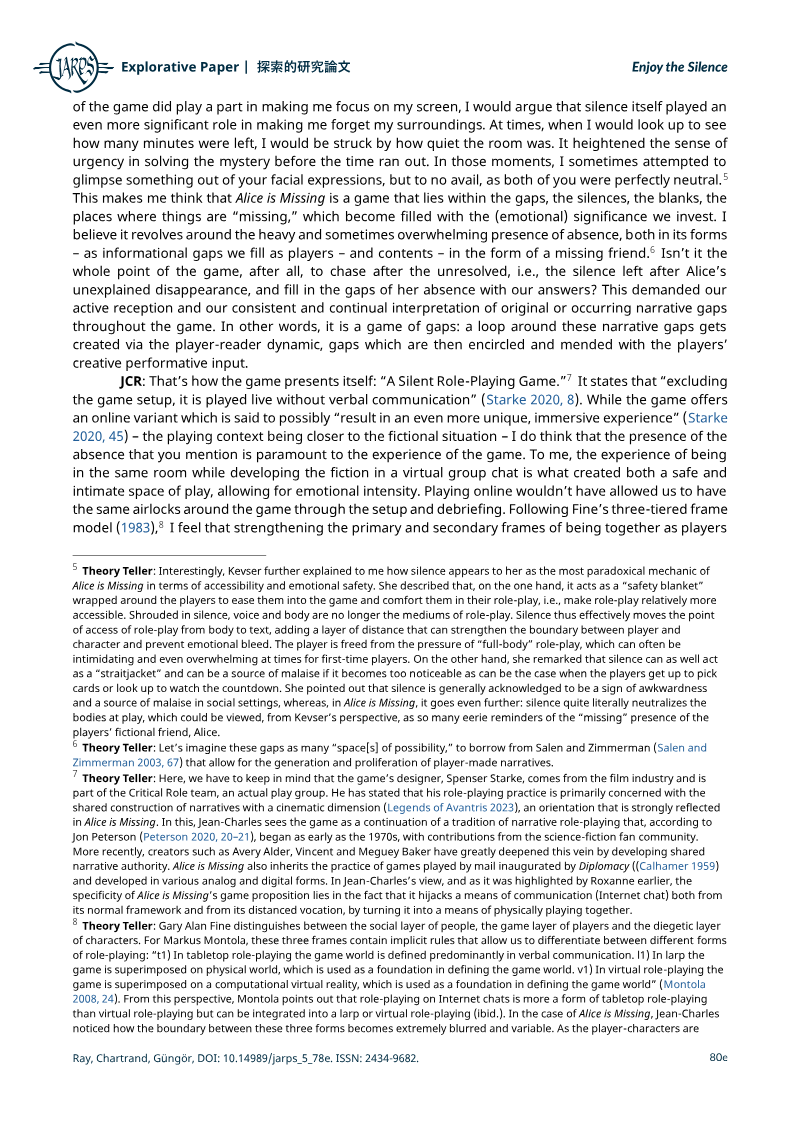
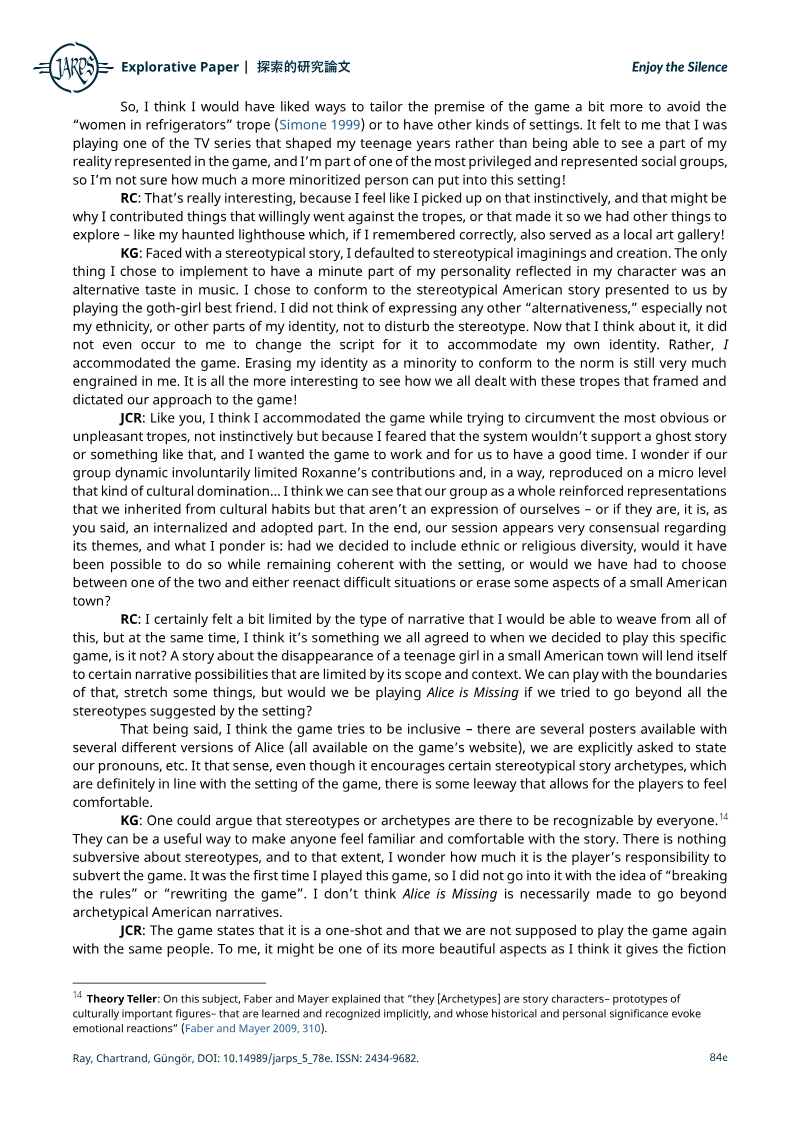
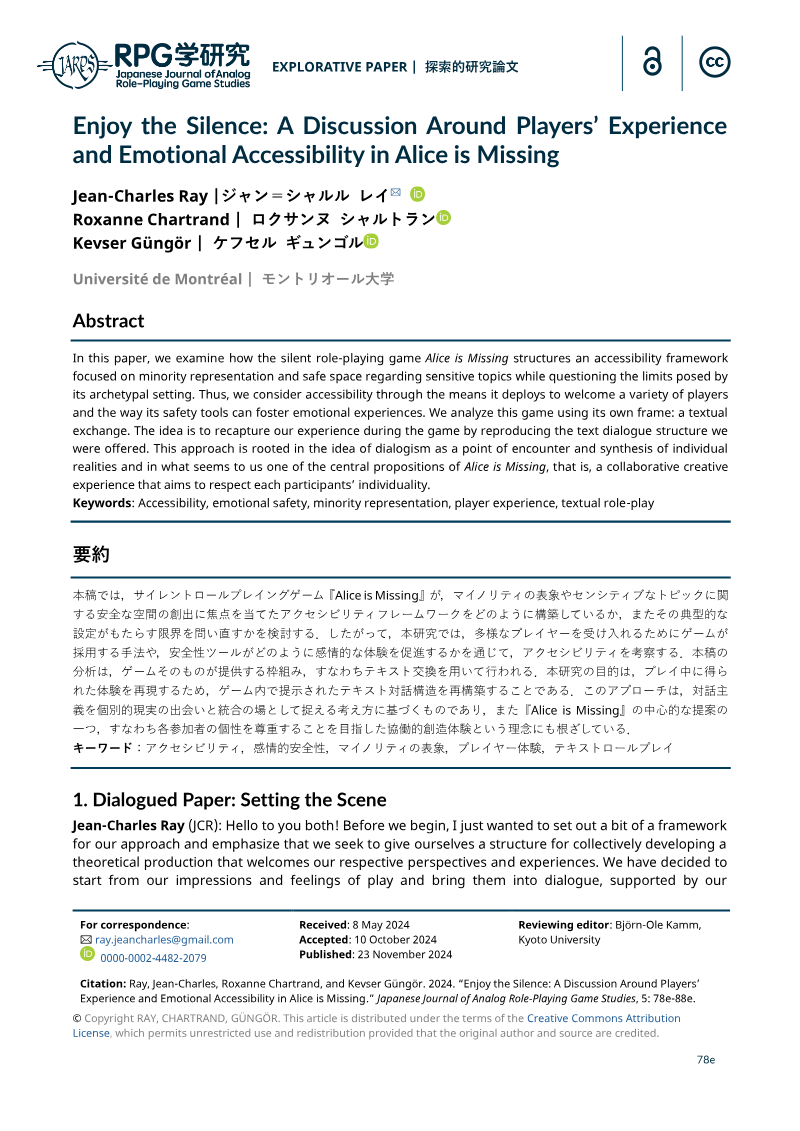
Japanese Association for Role-Playing Game Studies (JARPS) · 2024
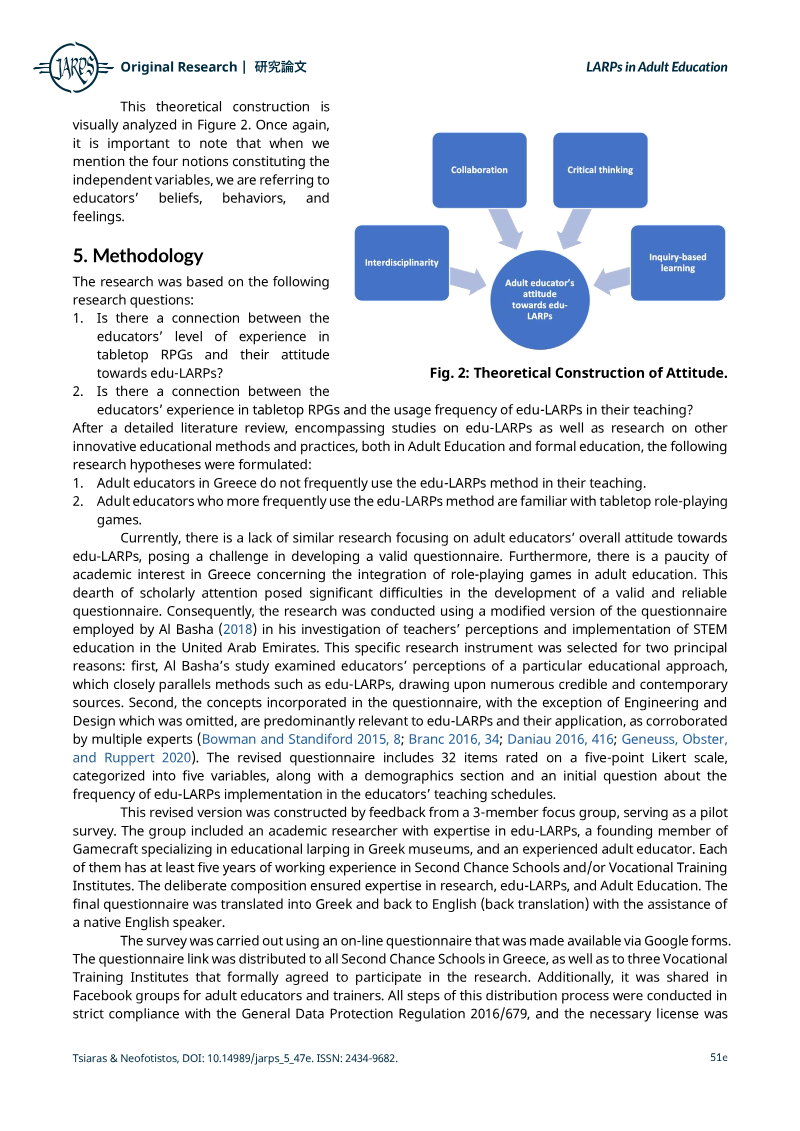
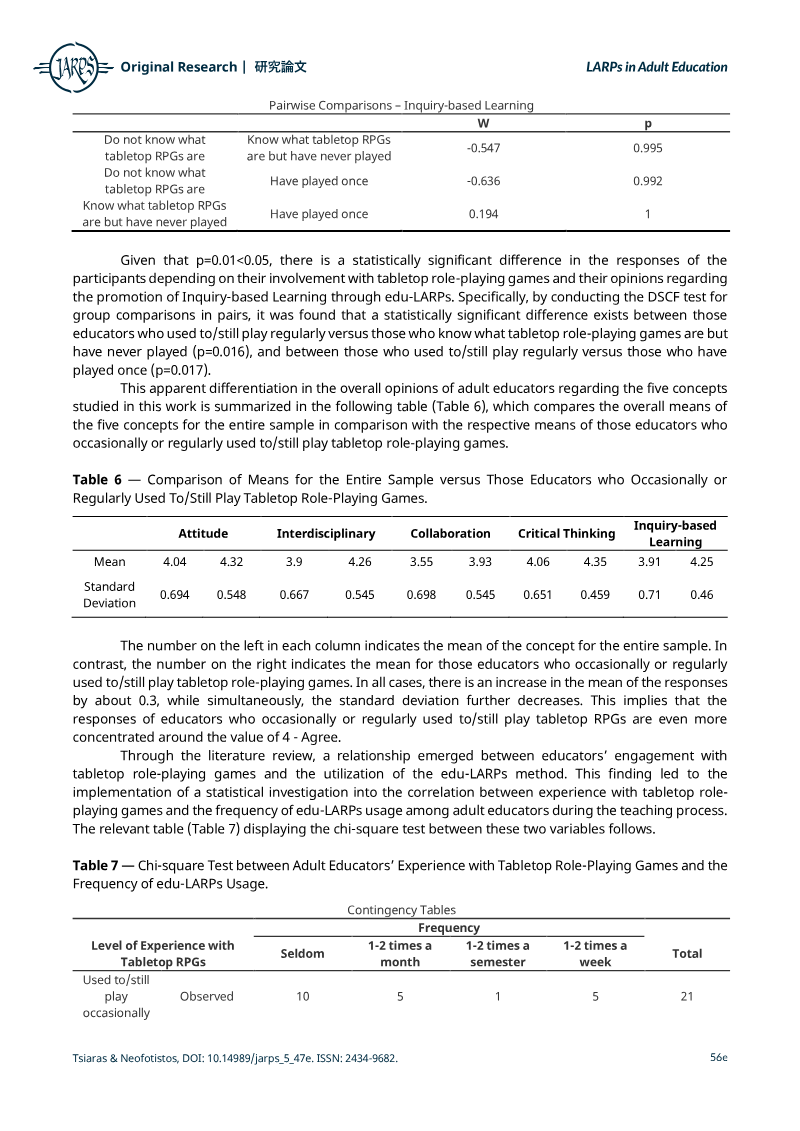
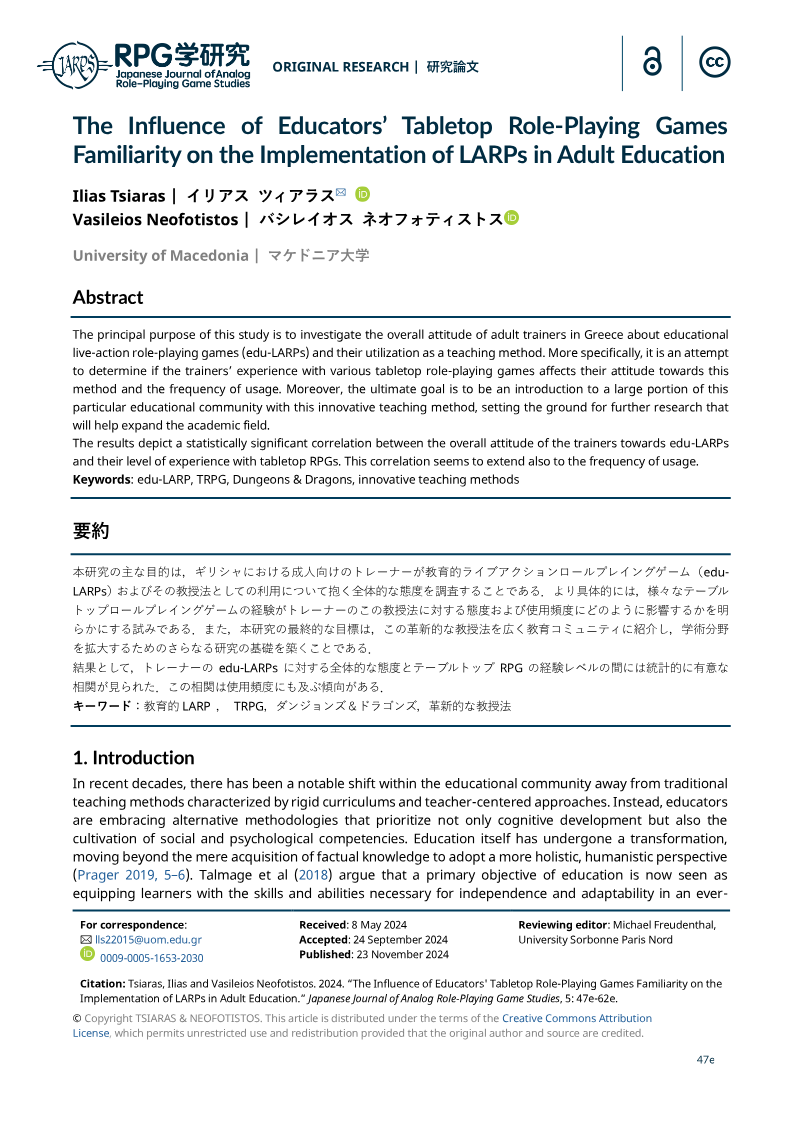
Japanese Association for Role-Playing Game Studies (JARPS) · 2024
Japanese Association for Role-Playing Game Studies (JARPS) · 2024
Japanese Association for Role-Playing Game Studies (JARPS) · 2024
Japanese Association for Role-Playing Game Studies (JARPS) · 2024
Japanese Association for Role-Playing Game Studies (JARPS) · 2024
International Journal of Role-Playing · 2026