1 free read left. Create a free account for unlimited reading + AI research.
Create free accountWhitepaper Journal of the Philosophy of Games
1 free read left. Create a free account for unlimited reading + AI research.
Create free accountWhitepaperJournal of the Philosophy of Games
This shifts the analytical focus to linguistic structure.
Think of it like a label on a reusable container, not the unique contents inside.
New definition:. Fun is a linguistic marker for habitual, repeatable activities.
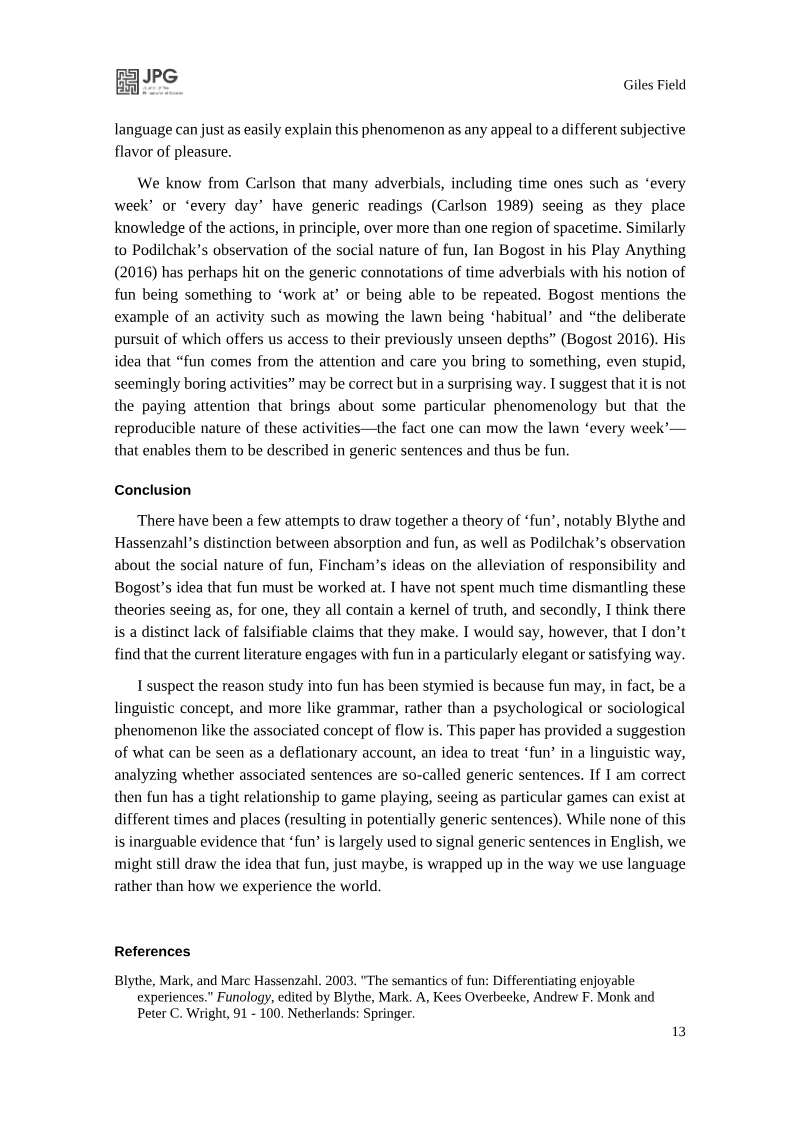
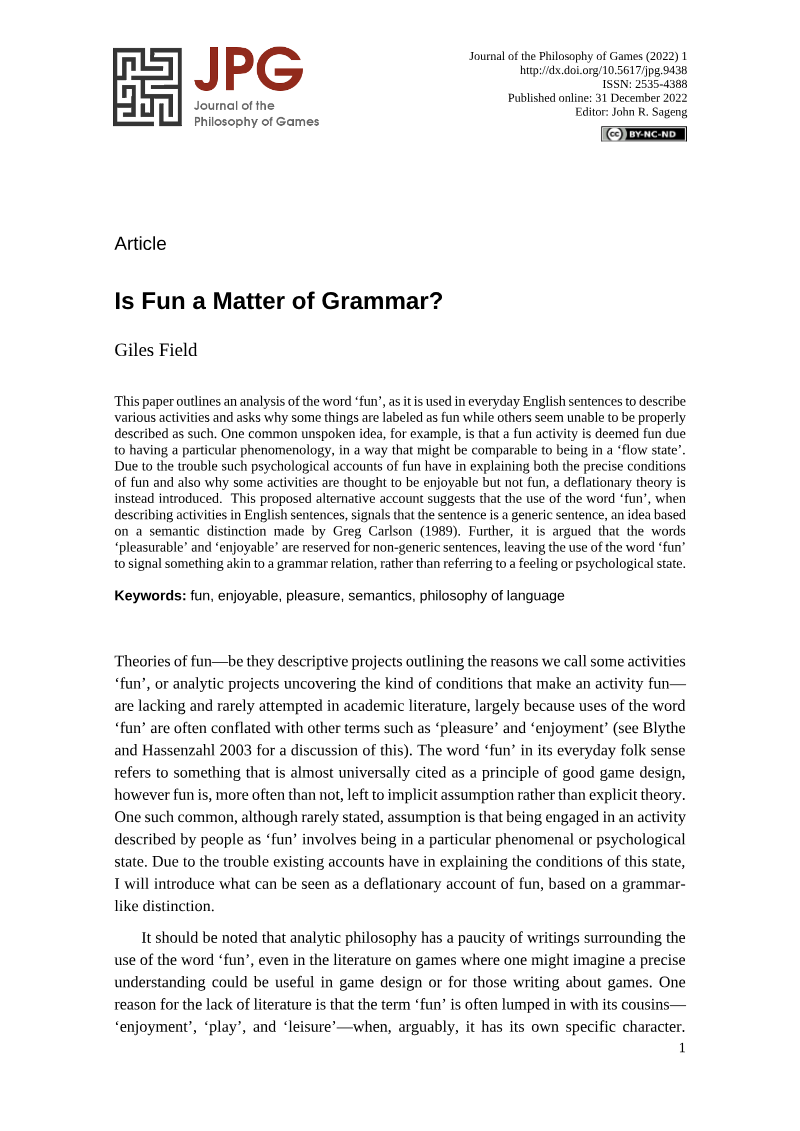
The concept of fun is frequently misidentified as a specific psychological state, such as the flow state, within academic and game design discourse. Rather than representing a unique phenomenology, fun functions primarily as a grammatical marker used to categorize generic activities. By shifting the analytical focus from internal human experience to linguistic structure, it becomes clear that fun serves as a descriptor for repeatable, habitual actions that transcend specific moments in time. This distinction separates fun from terms like enjoyable or pleasurable, which are reserved for localized, non-generic experiences tied to unique, one-off occurrences.
This linguistic framework suggests that the perceived quality of an activity is deeply rooted in how language frames that experience. When an activity is described as fun, it implies a capacity for reproducibility across various regions of spacetime. This semantic approach addresses the long-standing ambiguity surrounding the term, providing a more precise way to categorize the nature of engagement in interactive media. By moving away from the search for a singular psychological definition, researchers can better understand how players conceptualize their interactions with games.
Ultimately, the study of game engagement should prioritize the analysis of language over the pursuit of elusive psychological states. Because fun is inherently tied to the grammar of generic sentences, it is an essential tool for describing the habitual nature of play. This perspective offers a robust alternative to existing theories, suggesting that the industry’s preoccupation with flow and other phenomenological states may overlook the fundamental linguistic mechanisms that define how users perceive and discuss their experiences.
Journal of the Philosophy of Games · 2025
Journal of the Philosophy of Games · 2025
Journal of the Philosophy of Games · 2024
Journal of the Philosophy of Games · 2022
Journal of the Philosophy of Games · 2022
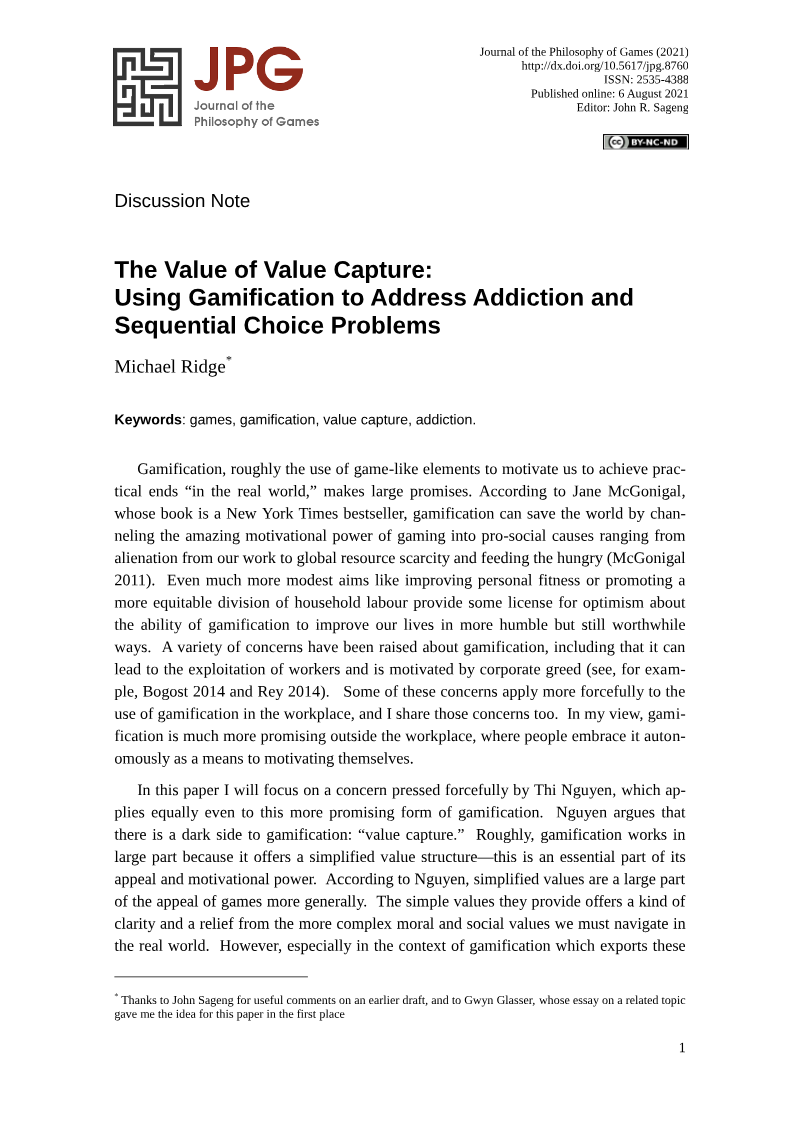
Journal of the Philosophy of Games · 2021
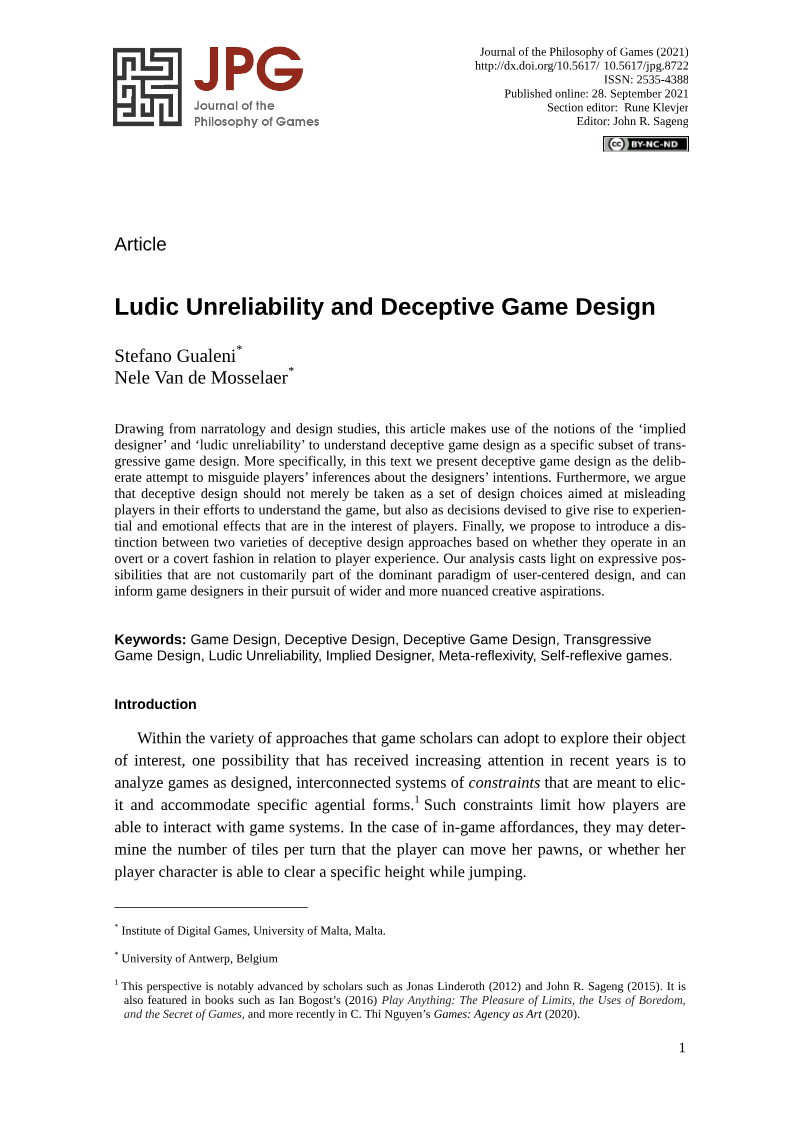
Journal of the Philosophy of Games · 2021
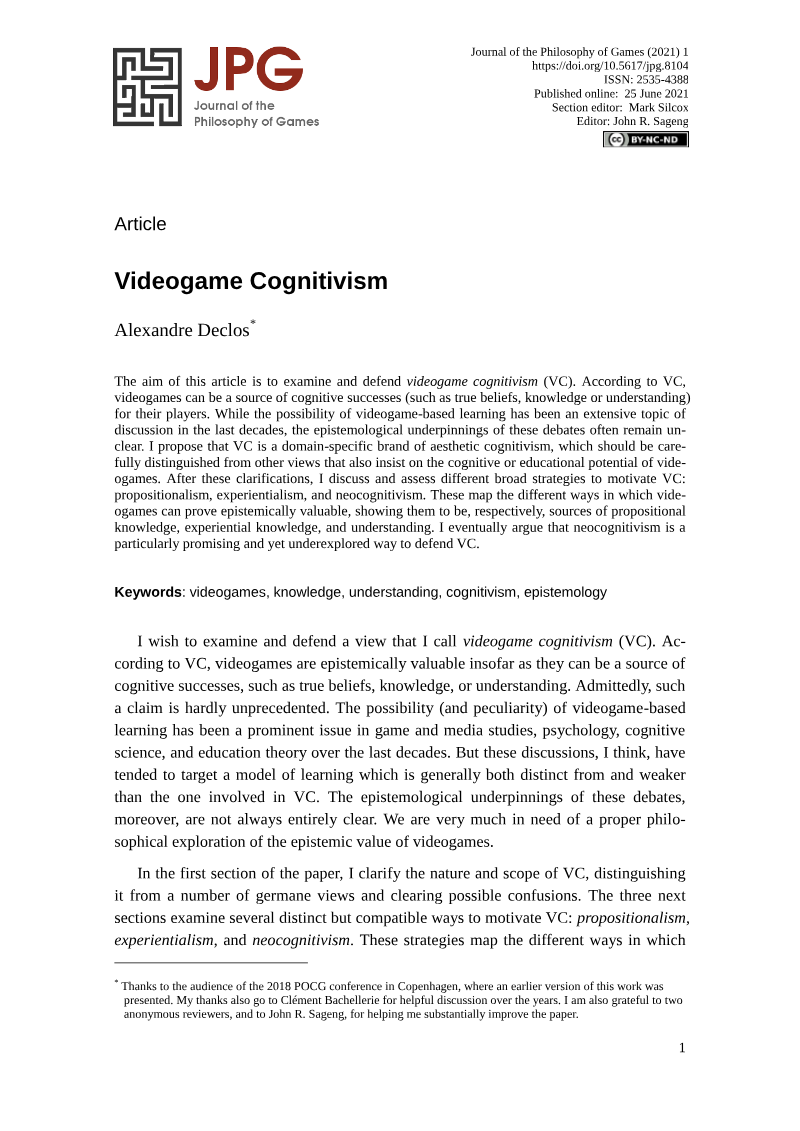
Journal of the Philosophy of Games · 2021
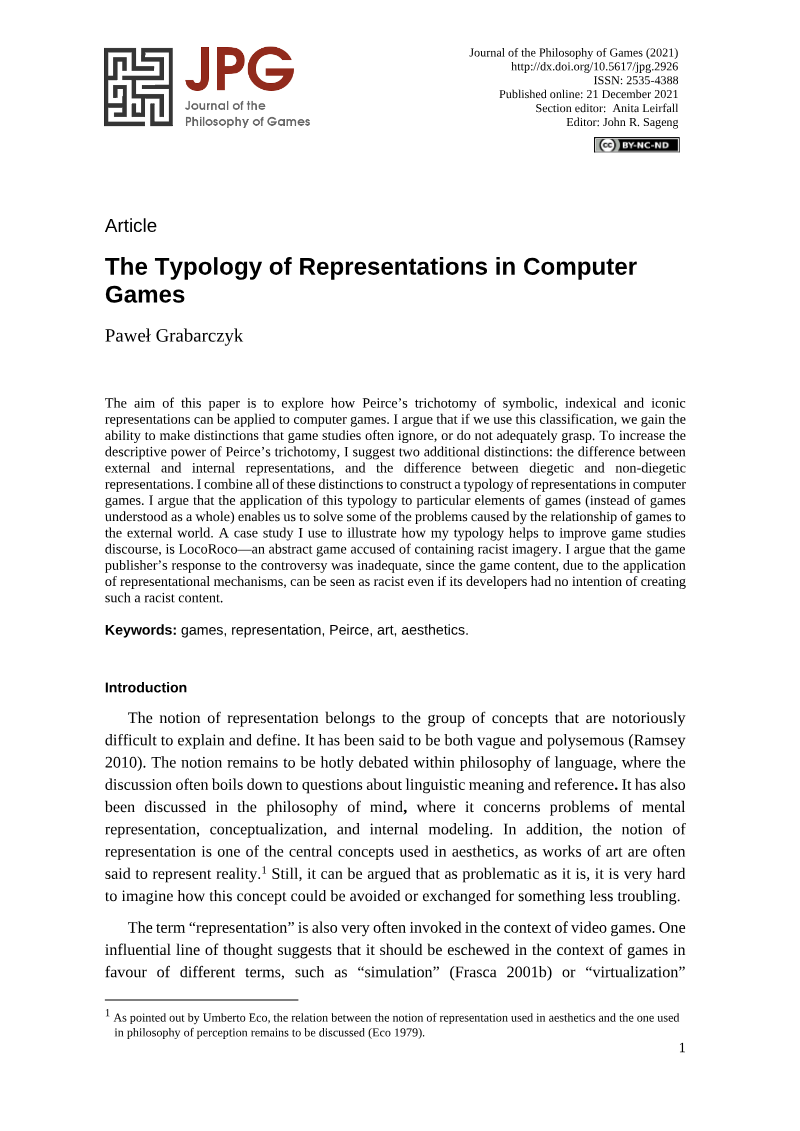
Journal of the Philosophy of Games · 2021
Journal of the Philosophy of Games · 2019
Journal of the Philosophy of Games · 2019
Journal of the Philosophy of Games · 2018
DiGRA · 2026