Game Culture reports and market data
Documents
Reimagining a Future for Game Studies: From the Ground Up
Nicholas T. Taylor's work argues that game studies should adopt a critical postdisciplinary orientation that looks down toward land, material relations, and social inequality rather than forward toward industry hype and technological trends.
- The report argues game studies should adopt a critical postdisciplinary orientation that looks down toward land, material relations, and social inequality rather than forward toward industry hype and technological trends.
- It frames games as systems materially entangled with colonialism, capitalism, and climate change, rejecting the claim that environmental collapse renders games meaningless.
- Its conclusions are primarily methodological and theoretical, drawing on anticolonial scholarship, and it offers no quantitative data.
History of Gamebooks in Japan
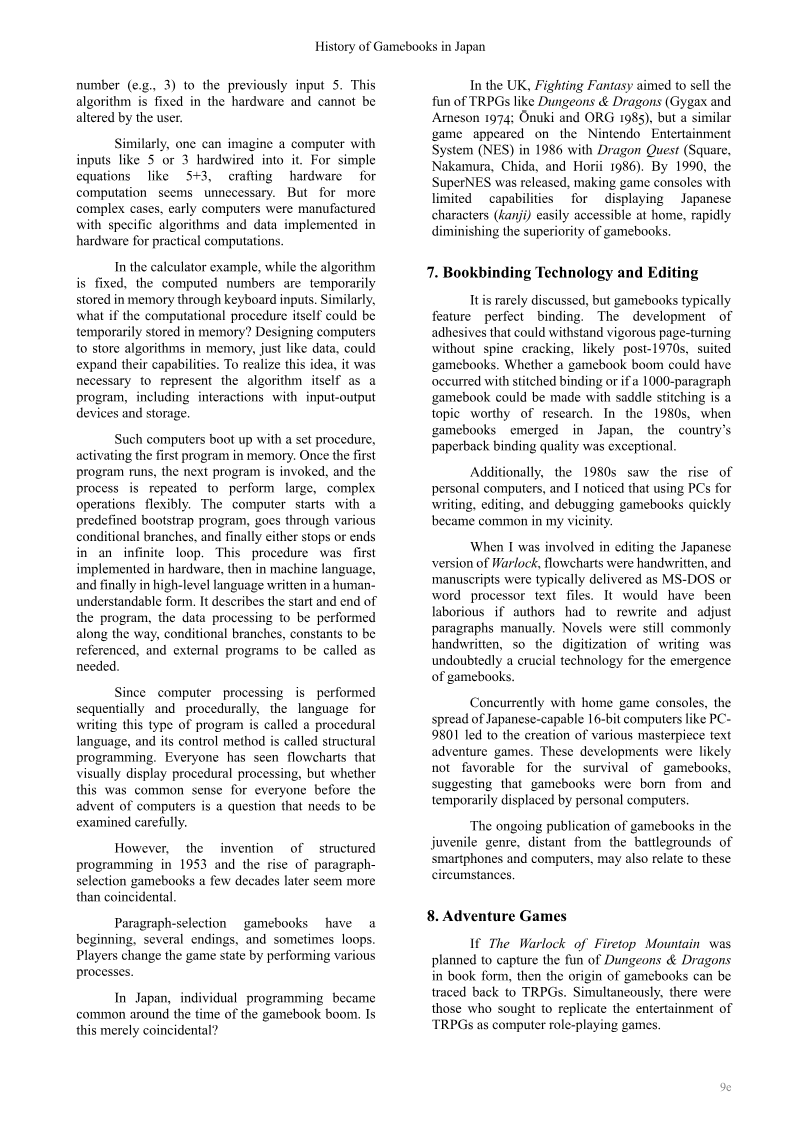
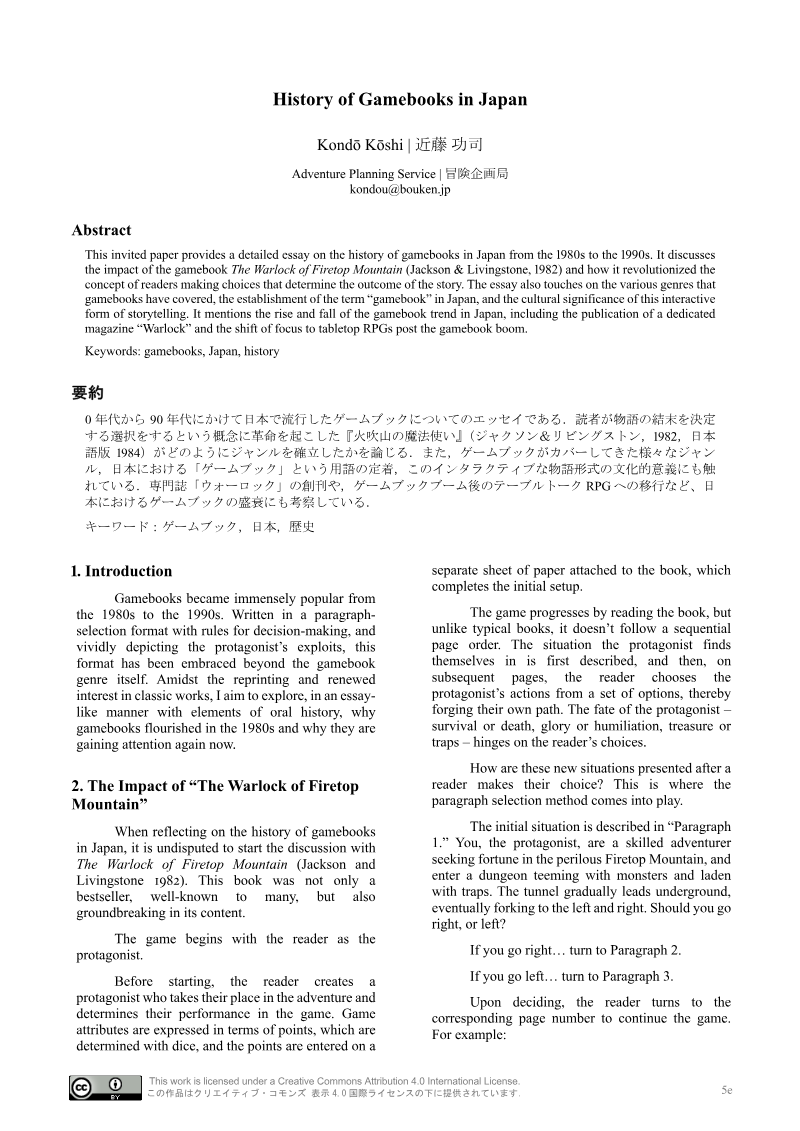
The Japanese gamebook industry underwent a transformative evolution between the 1980s and the 1990s, driven initially by the widespread popularity of imported Western titles such as The Warlock of Firetop Mountain.
- The Japanese gamebook industry originated in the 1980s, driven by the popularity of imported Western titles like The Warlock of Firetop Mountain and supported by dedicated publications such as Warlock magazine.
- Technological advancements in binding and the growth of the personal computing sector were critical in enabling the complex procedural writing required for paragraph-based interactive storytelling.
- The rise of tabletop role-playing games and home consoles in the 1990s caused a decline in traditional print gamebooks as audiences shifted toward digital formats.
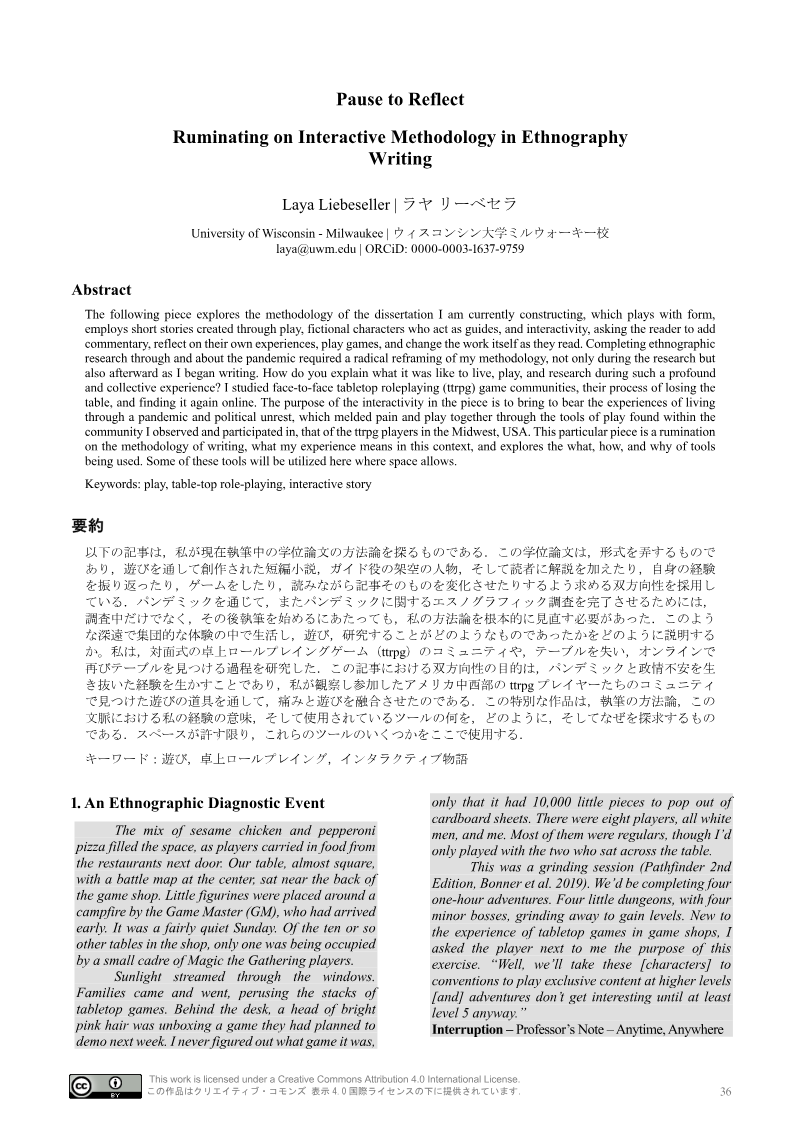
Pause to Reflect: Ruminating on Interactive Methodology in Ethnography Writing
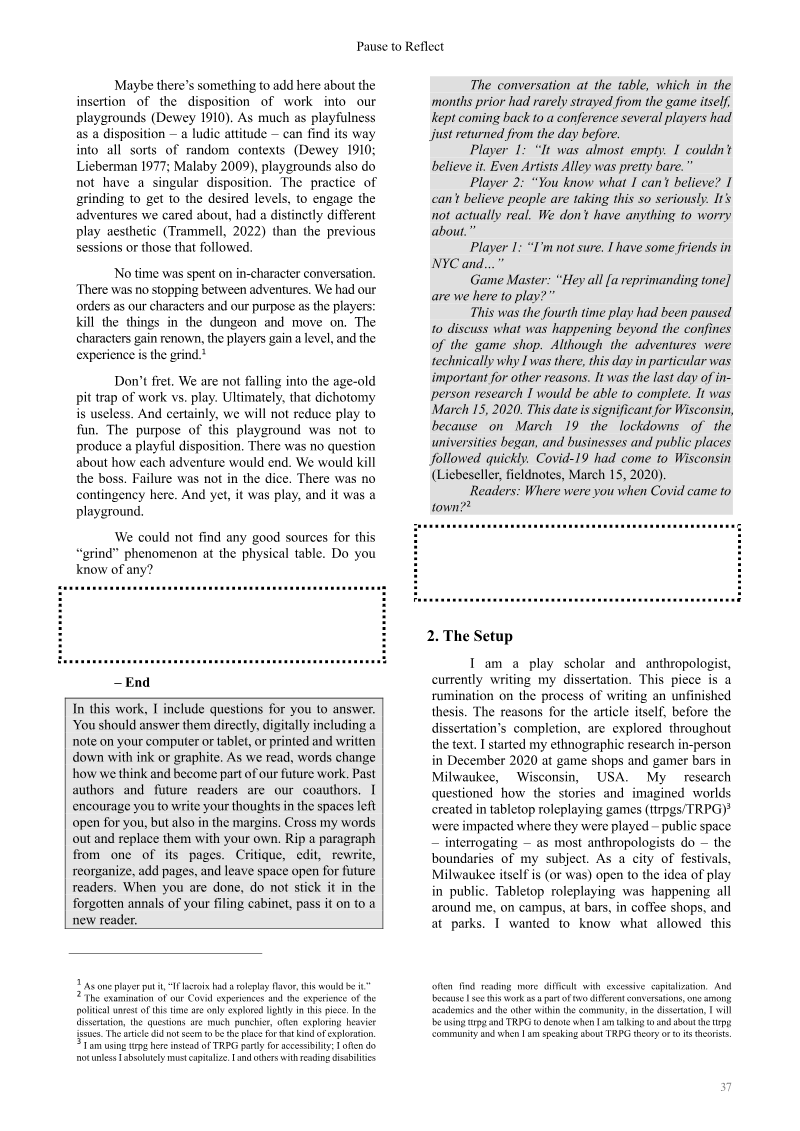
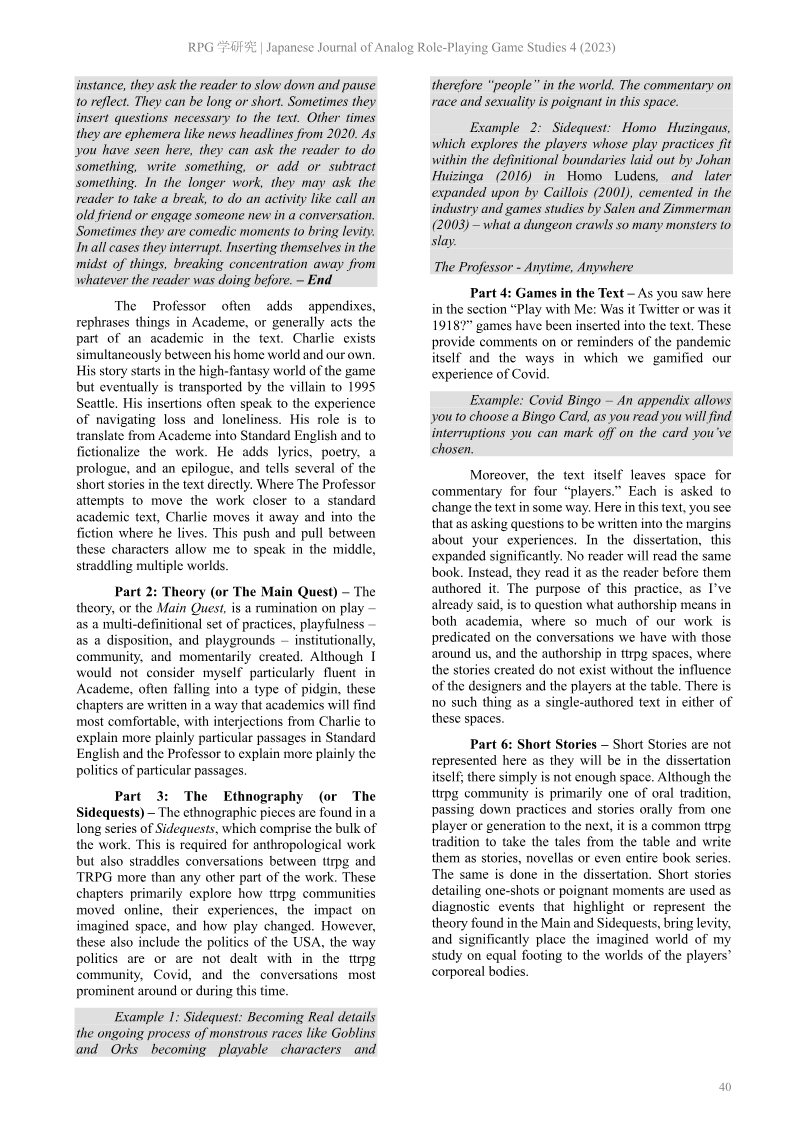
Tabletop role-playing game communities in the American Midwest underwent a significant transformation during the COVID-19 pandemic, shifting from physical gatherings to digital environments amidst broader social and political instability.
- The COVID-19 pandemic forced a significant migration of American Midwest tabletop role-playing game (TTRPG) communities from physical gatherings to digital environments.
- Traditional academic writing methods are insufficient for documenting the collective trauma and lived experiences of gaming communities during periods of social and political instability.
- The study utilizes an interactive, multi-modal methodology that incorporates TTRPG mechanics—such as storytelling, character creation, and play—into the research process itself.
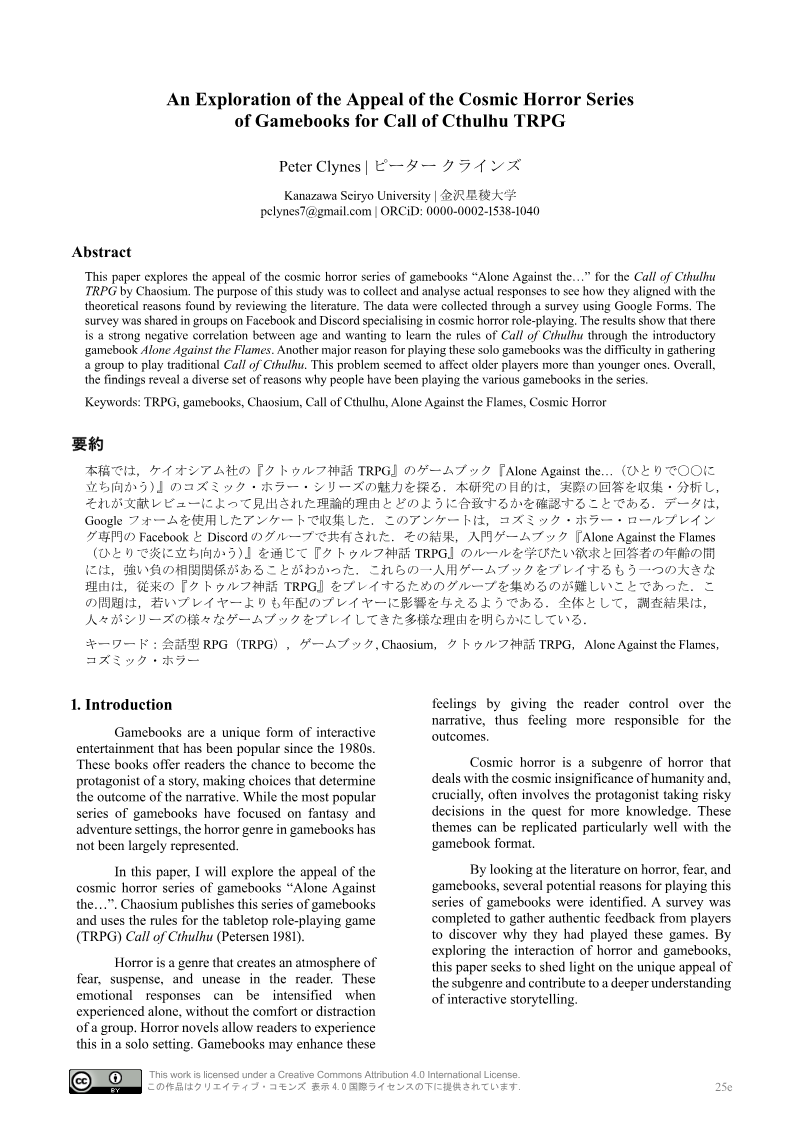
An Exploration of the Appeal of the Cosmic Horror Series of Gamebooks for Call of Cthulhu TRPG
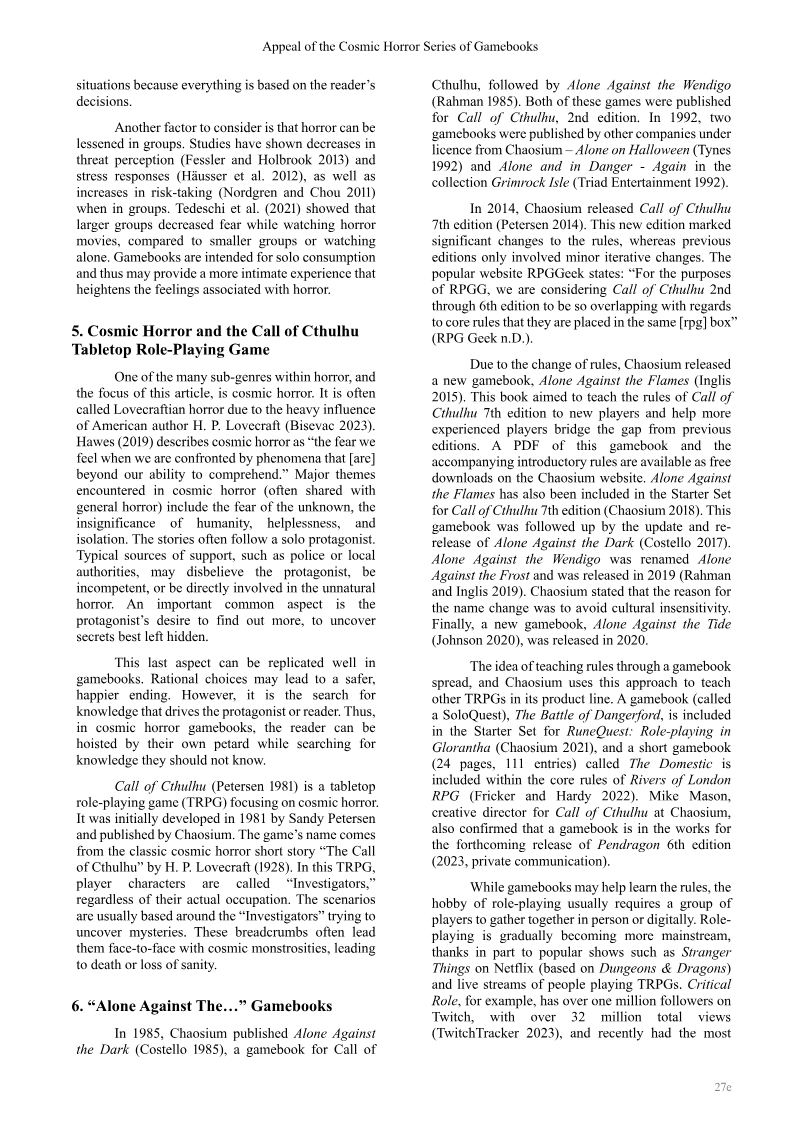
The Alone Against the… gamebook series serves as a critical bridge between traditional tabletop roleplaying and solo engagement within the Call of Cthulhu ecosystem.
- The 'Alone Against the…' gamebook series serves as a primary solution for Call of Cthulhu players who face logistical barriers to organizing traditional group tabletop sessions.
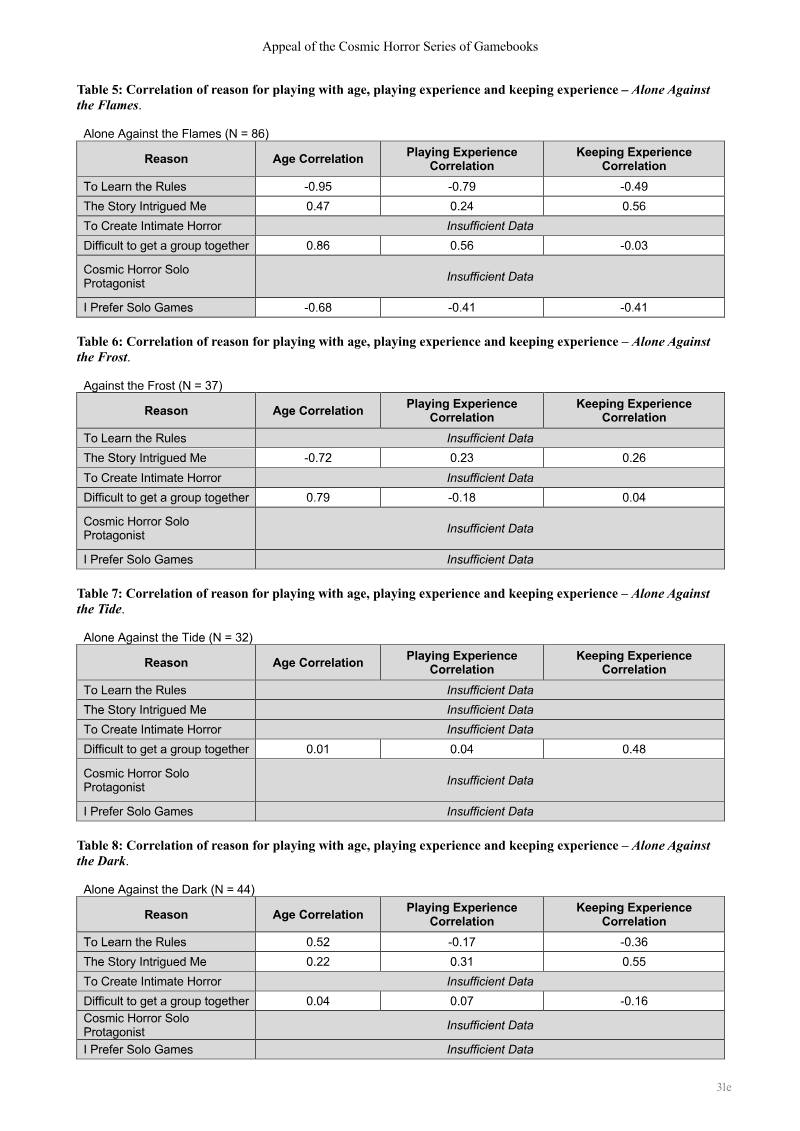
- Data from over 10,000 community members and player surveys identifies 'Alone Against the Flames' as the most prominent series entry, primarily due to its effectiveness in teaching complex rules.
- There is a distinct demographic divide in usage: younger players primarily utilize the series for system mastery and instruction, while older players use it as a functional substitute for the social tabletop experience.
Assessing Creative Awareness and Literary Writing Games in the Norwegian Context
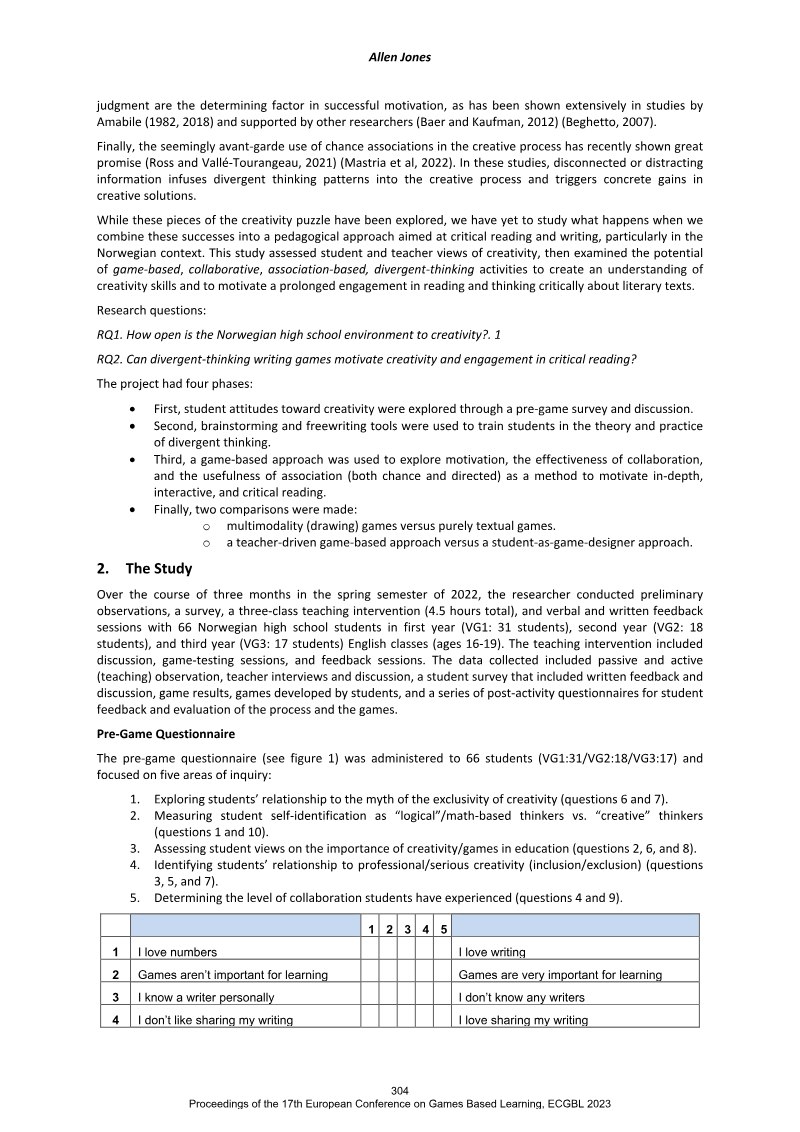
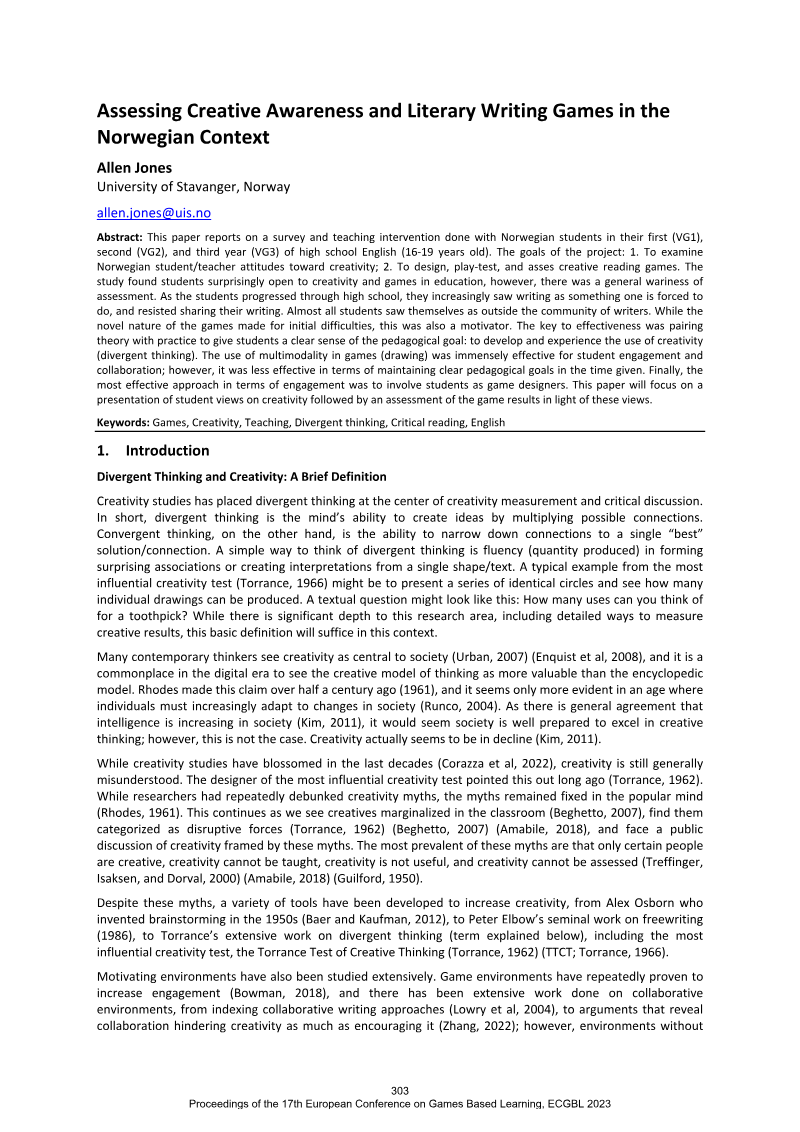
This study examines how Norwegian high school students in their first, second, and third years of English (ages 16 to 19, 66 students in total) view creativity and whether divergent-thinking writing games can motivate engagement with literary texts.
- Students were surprisingly open to creativity and games in education, yet strongly distrusted assessment and increasingly saw writing as a forced obligation as they advanced through their three years of English.
- Most students regarded themselves as outside the community of writers, and only about 1.5 percent knew a writer personally.
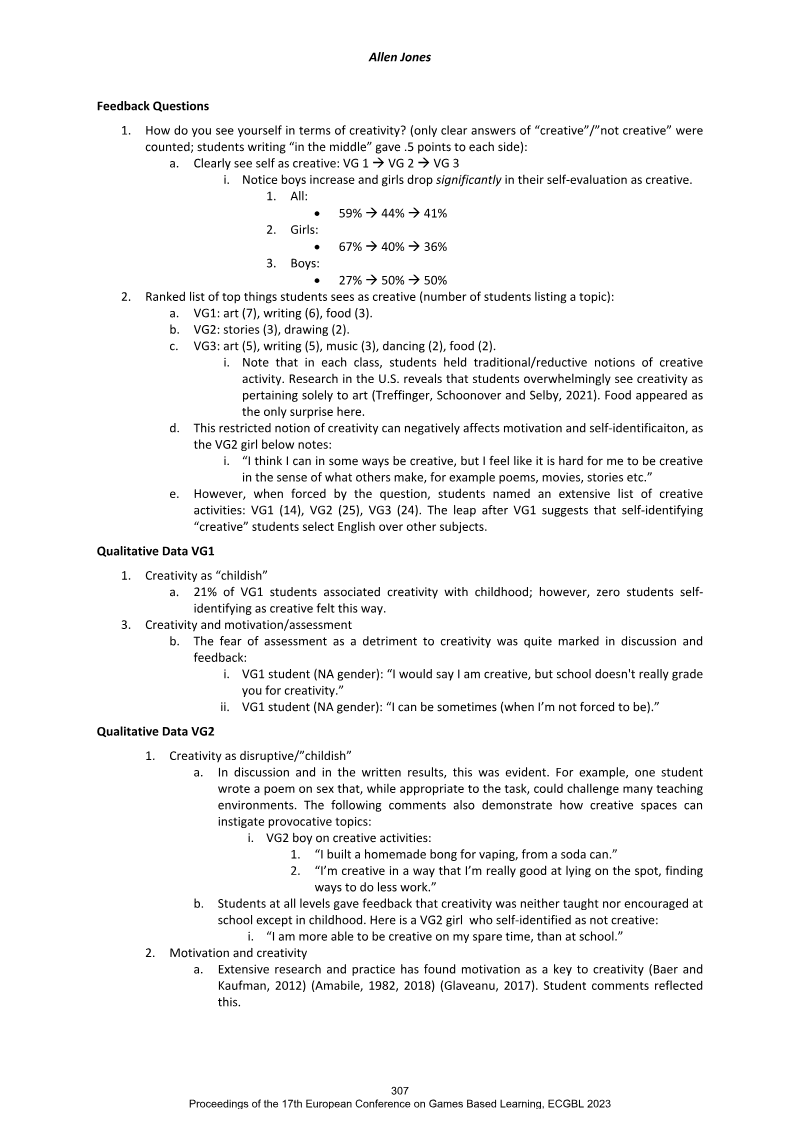
- Self-identification as creative diverged sharply by gender: girls' self-assessment dropped from 67 percent to 36 percent across the three years, while boys' rose from 27 percent to 50 percent.
Videogame Distribution and Steam's Imperialist Practices: Platform Coloniality in Game Distribution
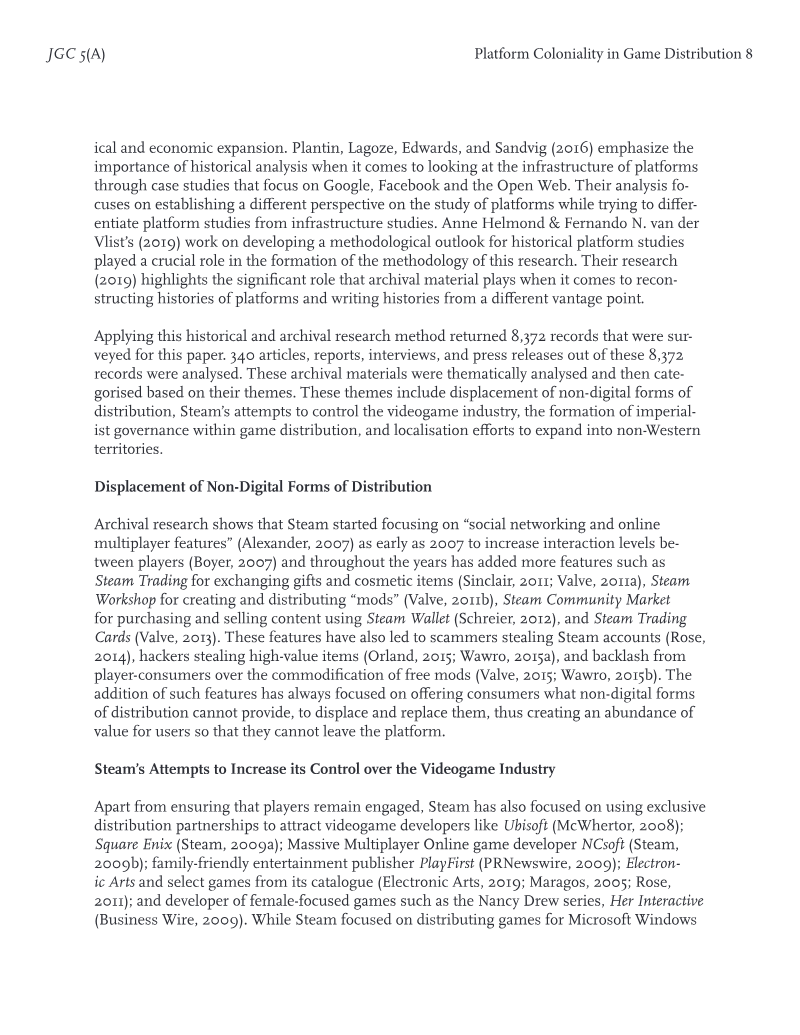
Steam operates as an imperialist infrastructure that exerts near-monopolistic control over the global videogame industry, effectively displacing local distribution networks and reinforcing Western-centric power structures.
- Steam functions as a near-monopolistic digital infrastructure that exerts centralized control over global videogame distribution, effectively displacing local retail and distribution networks.
- The platform’s operational model prioritizes Western-centric interests through standardized global pricing, constant mandatory updates, and a closed-system architecture.
- Steam’s expansion is characterized as a form of digital colonialism that marginalizes non-Western developers and consumers by enforcing a singular, standardized world-system of consumption.
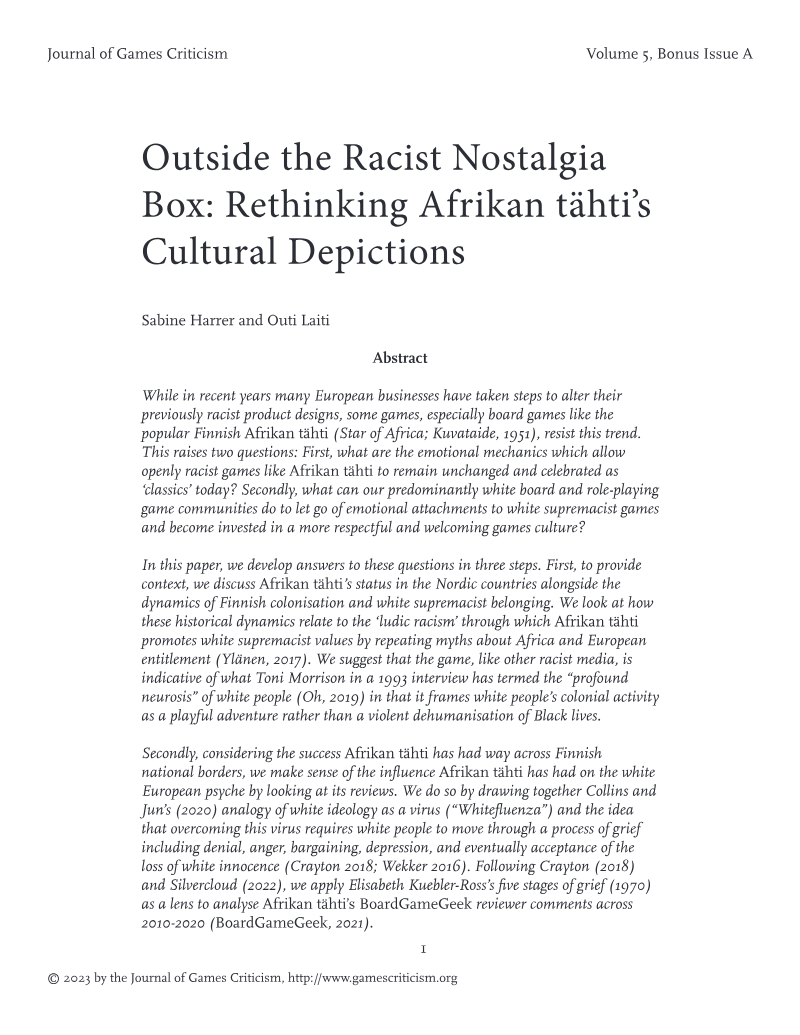
Outside the Racist Nostalgia Box: Rethinking Afrikan tähti’s Cultural Depictions
The board game Afrikan tähti serves as a primary case study for examining how ludic racism and colonial entitlement are embedded within European cultural artifacts.
- The board game Afrikan tähti functions as a case study for how colonial entitlement and Eurocentric ideologies remain embedded in game mechanics and cartographic design, even after the removal of explicit racist imagery.
- Public discourse surrounding the game often prioritizes Finnish national identity and childhood nostalgia, which serves to shield the product from critical engagement with its imperialist structures.
- Defensive reactions to critiques of the game mirror the Kübler-Ross stages of grief, where proponents use denial and bargaining to dismiss colonial underpinnings as irrelevant or anachronistic.
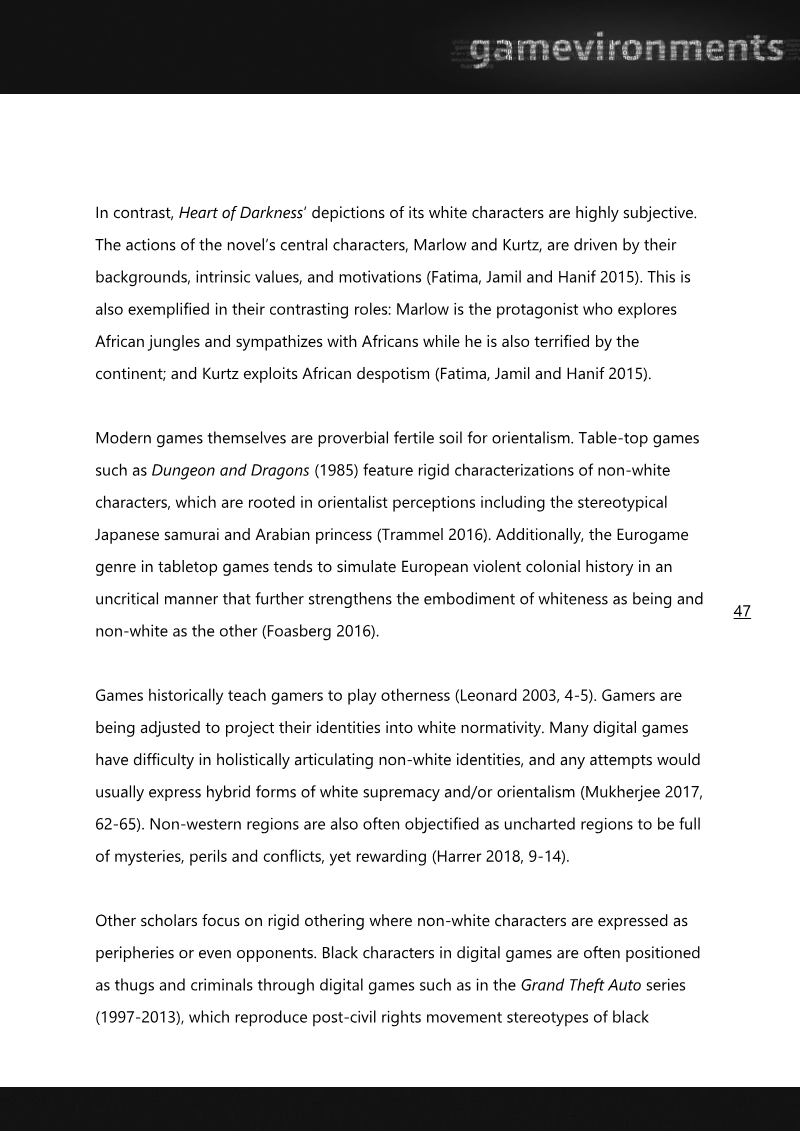

The White Peril: Colonial Expressions in Digital Games
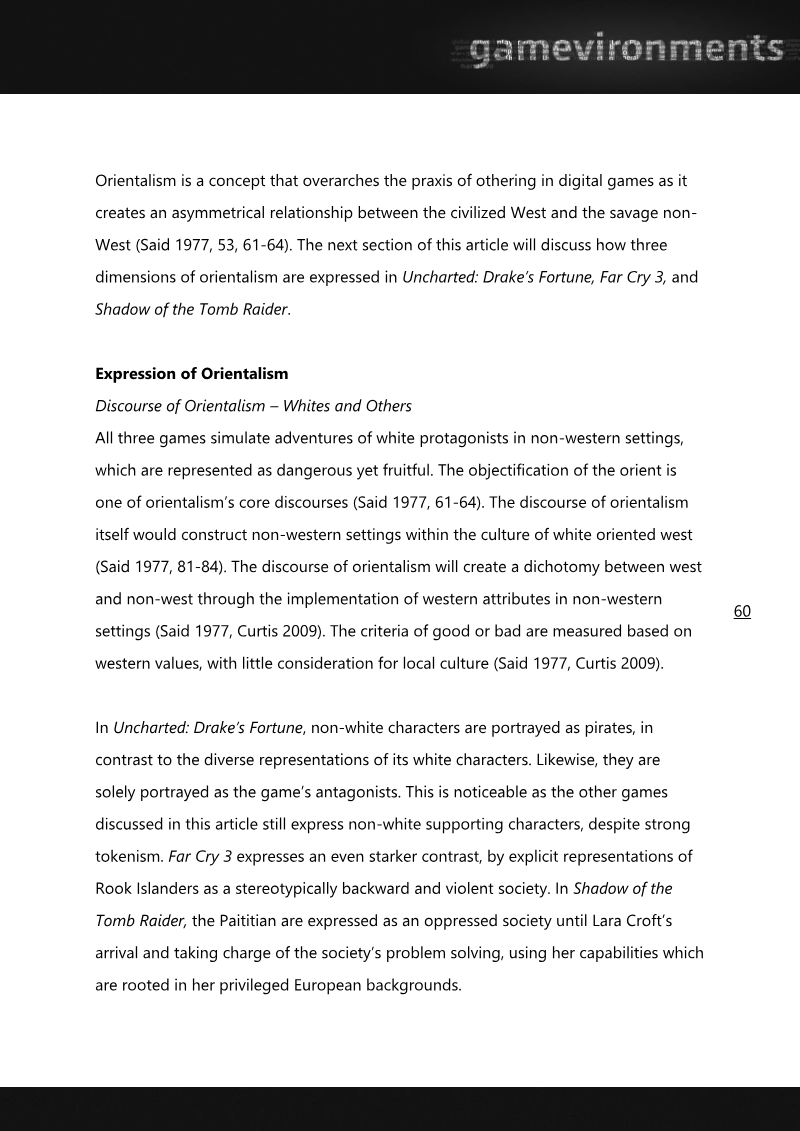
"The White Peril: Colonial Expressions in Digital Games" argues that colonialist values, rooted in orientalism and white supremacy, persist in mainstream action-adventure games through invisible defaults that position white protagonists as universal and non-white settings as exotic backdrops.
- The report's central thesis is that mainstream action-adventure games embed colonialist values, rooted in orientalism and white supremacy, through invisible defaults that treat white protagonists as universal and non-white settings as exotic backdrops.
- The author argues that games teach players to "be white" through embodiment, a mechanism presented as distinctive to the medium compared with other forms of media.
- The qualitative analysis centers on three triple-A titles, Uncharted: Drake's Fortune (2007), Far Cry 3 (2012), and Shadow of the Tomb Raider (2018), all set in South American or Southeast Asian locales.
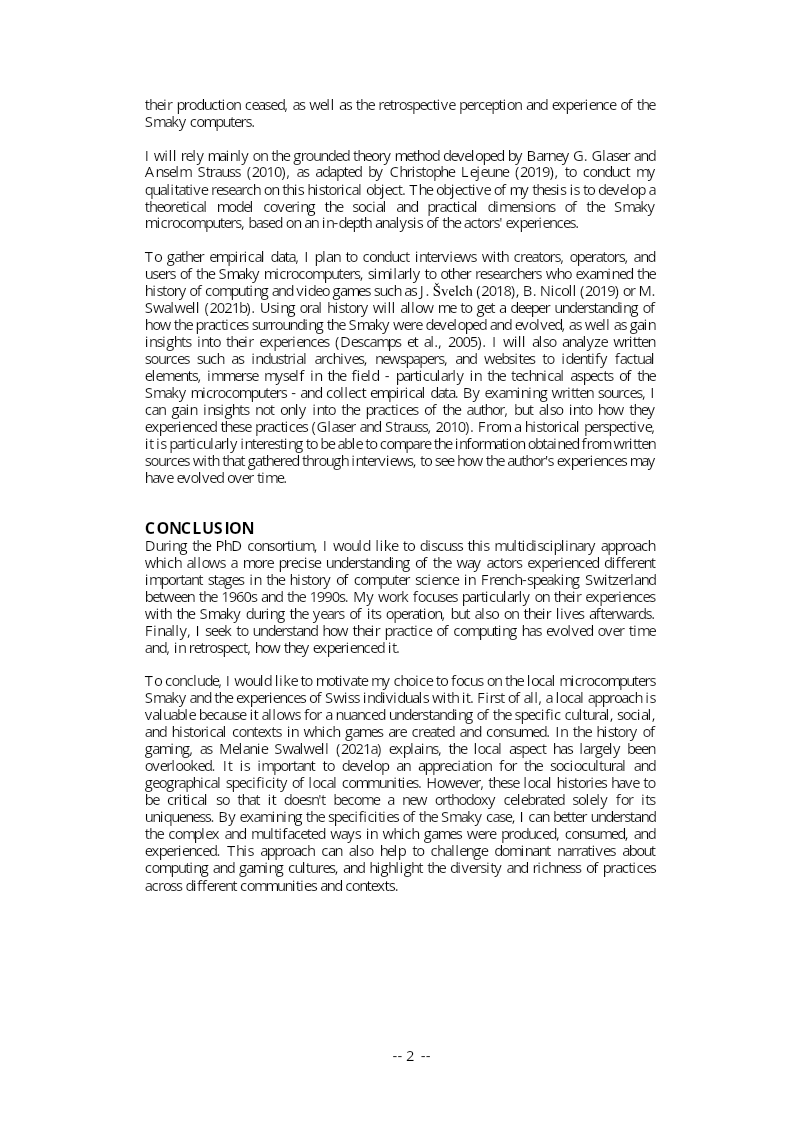
Smaky Story: A Comprehensive Approach of Computing in French-Speaking Switzerland
This doctoral research proposal, presented at a PhD consortium, sets out to examine the Smaky microcomputers, a series of Swiss machines developed in a laboratory of the Swiss Federal Institute of Technology Lausanne in the 1970s and marketed in French-speaking Switzerland until the late 1990s.
- The report is a PhD research proposal examining the Smaky microcomputers, a series of Swiss machines developed at the Swiss Federal Institute of Technology Lausanne (EPFL) in the 1970s and sold in French-speaking Switzerland until the late 1990s.
- The project addresses a gap in scholarship: the Smaky's role in Swiss computing and video game heritage has received little academic attention and currently rests mainly on enthusiasts, journalists, and former engineers.
- The research is framed as a four-year initiative called Confederatio Ludens, with PhD work beginning in February 2023.
(Un)known Polish Places: Strategies of Foreignization and Domestication in Polish Video Games
This paper examines how Polish video game developers deploy two localization strategies, foreignization and domestication, borrowed from translation studies, to position their products for international markets.
- Polish video game developers use two localization strategies borrowed from translation studies: domestication (standardizing gameplay, visuals, and narrative for global accessibility) and foreignization (preserving local places, languages, and historical references to stand out).
- A 2020 industry report indicated that roughly 97% of Polish studios' revenues came from foreign players, giving domestication considerable economic weight.
- The authors treat these strategies as production-level design decisions rather than purely linguistic ones, reflecting a tension between local cultural identity and a globalized digital market.

A Post Structuralist Understanding of Integrating Games in Education
This paper, written by Stamatia Savvani of the University of Essex and presented at DiGRA 2023, argues from a post-structuralist standpoint that the binary framing of games as fun and learning as serious limits how games are integrated into education.
- The paper argues from a post-structuralist standpoint that the binary of games as fun versus learning as serious is socially constructed and limits how games are integrated into education.
- The empirical basis is a qualitative interpretivist study of ten Greek language teachers trained in game-based learning, drawing on semi-structured interviews analysed thematically; the small sample and single national context limit generalisability.
- Teachers repeatedly faced a dilemma between wanting games to be fun and needing them to be educationally effective, questioning whether a game was "fun enough" or "educational as well."

Skillful Play Is Dependent on Rules: Notes on a Phenomenology of Skills in Games and Digital Games
This extended abstract, presented at DiGRA 2023, argues that skillful play depends on rules and that skills provide the epistemic access necessary for aesthetic and phenomenological study of games.
- Skillful play depends on rules, and acquired skill is what gives a player or scholar epistemic access to a game's form and potentialities, making it central to the aesthetic and phenomenological study of games.
- The paper identifies a gap in game studies: rules have been widely theorized, but practical skill has received comparatively little attention.
- Drawing on Hubert Dreyfus's account of expertise, the author argues that novices move from detached rule-following toward flexible, situation-specific play, with game-constitutive and tactical rules receding into the background of expert activity.