1 free read left. Create a free account for unlimited reading + AI research.
Create free accountWhitepaper Eludamos: Journal for Computer Game Culture
1 free read left. Create a free account for unlimited reading + AI research.
Create free accountWhitepaperEludamos: Journal for Computer Game Culture
The report argues that game studies should adopt a critical postdisciplinary orientation. It looks down toward material relations and social inequality rather than forward toward industry hype and technological trends.
Nicholas T. Taylor's work argues that game studies should adopt a critical postdisciplinary orientation that looks down toward land, material relations, and social inequality rather than forward toward industry hype and technological trends. Responding to the claim that environmental collapse renders games meaningless, the argument frames games as systems materially entangled with colonialism, capitalism, and climate change. Its conclusions are primarily methodological and theoretical rather than empirical, drawing on anticolonial scholarship and offering no quantitative data.
The central case study is Temple Run, examined through anticolonial and postcolonial lenses. The analysis contends that the game's colonialist imagery sanitizes plunder, and it traces how profits from the franchise helped finance the restoration of Montfort Hall, a former plantation mansion in Raleigh, North Carolina, now a boutique bed and breakfast in a historically white and racially exclusionary neighborhood. This example is presented as evidence that colonial patterns of wealth extraction and dispossession extend into the built environment.
The argument further situates game studios within neoliberal urban redevelopment, drawing on Bulut's study of "Game City" alongside the author's experience of gentrification in Raleigh. It also contends that monetization systems, such as Temple Run's ad network, participate in what Couldry and Mejias term "data colonialism," linking contemporary data extraction to the settler-colonial and slavery-based histories of the Raleigh site.
The scope is thus conceptually broad, centered on a single U.S. city and a single mobile franchise, while engaging global frameworks of platform capitalism and media infrastructure. The work's overarching aim is to reorient game studies toward critical, decolonial, feminist, and environmental commitments, aligning the field with justice-oriented projects rather than the shifting priorities of the games industry.
Each row is a game or company this document names, each column a document, oldest first. A mark means that document names it. Select a row to see those documents.
Eludamos: Journal for Computer Game Culture · 2026
Eludamos: Journal for Computer Game Culture · 2026
Eludamos: Journal for Computer Game Culture · 2026
Eludamos: Journal for Computer Game Culture · 2026
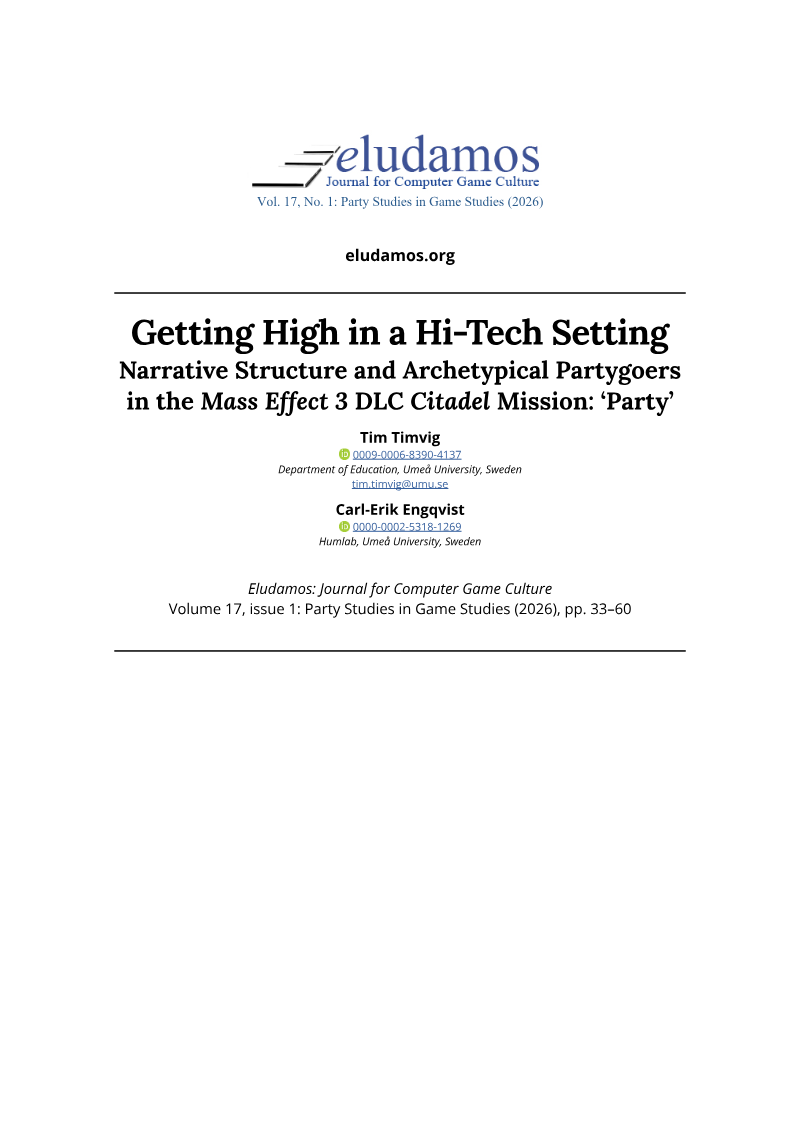
Eludamos: Journal for Computer Game Culture · 2026
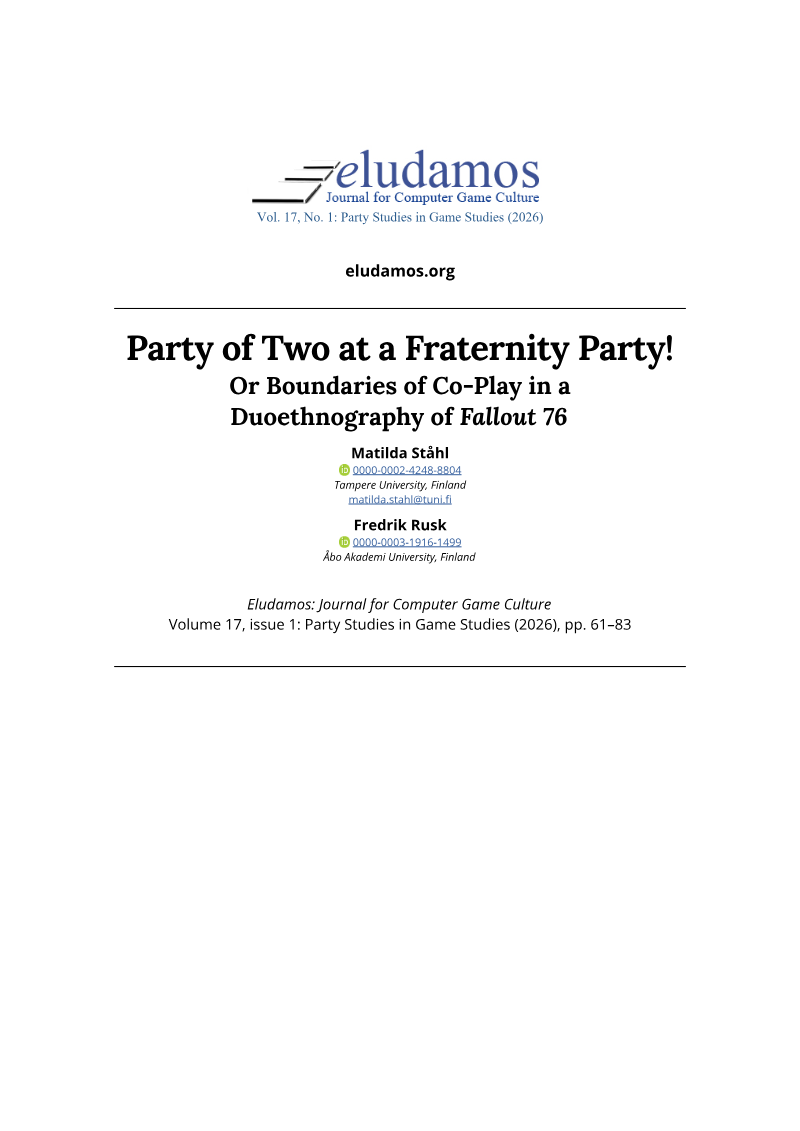
Eludamos: Journal for Computer Game Culture · 2026
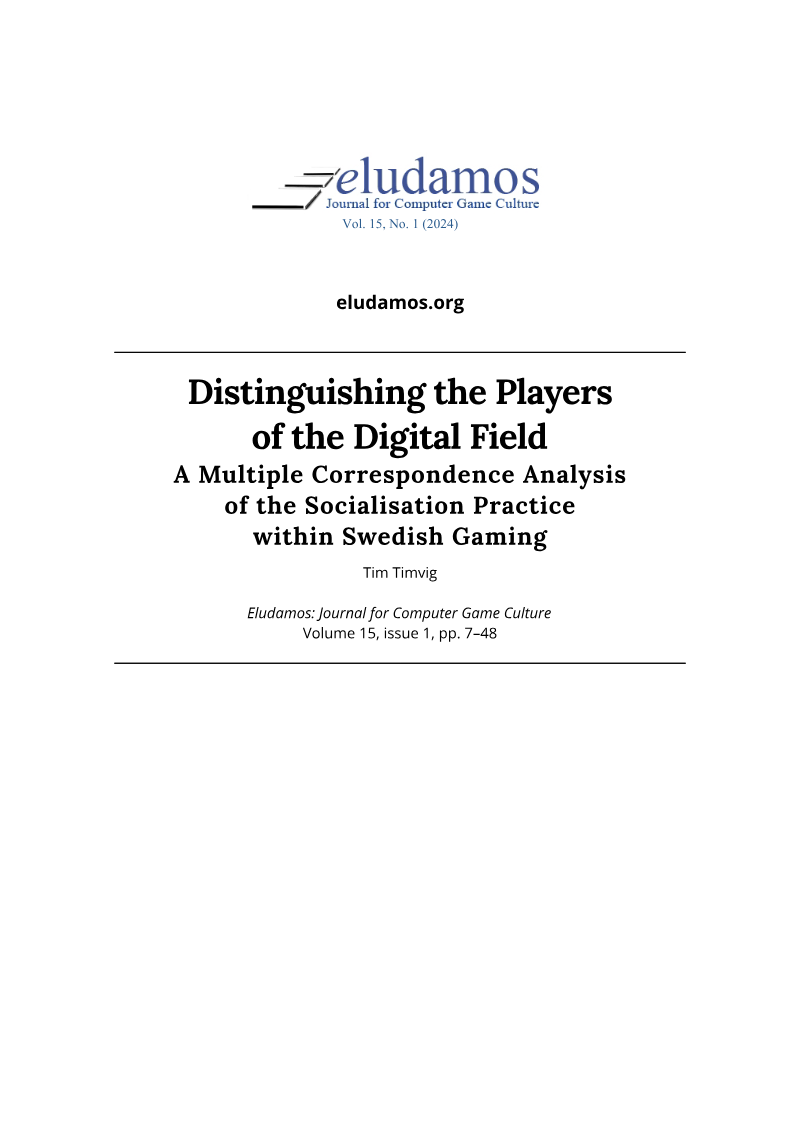
Eludamos: Journal for Computer Game Culture · 2026
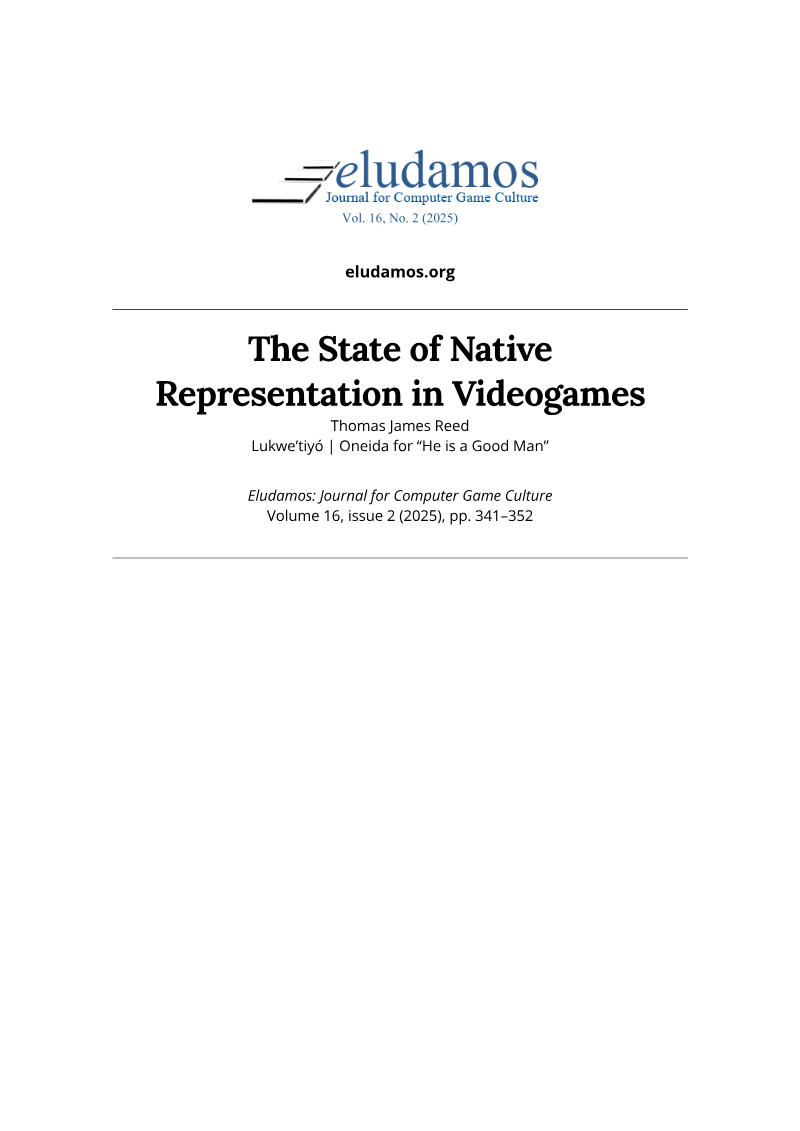
Eludamos: Journal for Computer Game Culture · 2025
Eludamos: Journal for Computer Game Culture · 2025
Eludamos: Journal for Computer Game Culture · 2025
Eludamos: Journal for Computer Game Culture · 2025
Eludamos: Journal for Computer Game Culture · 2025
DiGRA · 2026