1 free read left. Create a free account for unlimited reading + AI research.
Create free accountWhitepaper Journal of Games Criticism
1 free read left. Create a free account for unlimited reading + AI research.
Create free accountWhitepaperJournal of Games Criticism
Distilling the key insights…
Steam operates as an imperialist infrastructure that exerts near-monopolistic control over the global videogame industry, effectively displacing local distribution networks and reinforcing Western-centric power structures. By applying postcolonial and Marxist frameworks to the platform’s operational logic, the analysis reveals that Steam functions as a digital colonial force. This system standardizes global consumption through centralized pricing, constant layer-based updates, and a closed-system model that prioritizes the interests of the Global North while marginalizing non-Western developers and consumers.
The scope of this critique encompasses the global videogame market, focusing on the historical and ongoing expansion of Steam from its inception to the present day. The platform’s influence is characterized by a form of benevolent dictatorship, where economic integration and territorial expansion serve to subjugate diverse regional markets. By replacing traditional retail and local distribution systems with a singular, standardized digital world-system, the platform maintains a rigid hold on how games are accessed, priced, and consumed worldwide.
To address these structural inequalities, the analysis advocates for a shift toward decolonial platform studies and more robust oversight. The findings suggest that the current hegemony can only be challenged through the implementation of stricter antitrust regulations and the establishment of democratic, regional regulatory bodies. By empowering local developers and consumers, these measures aim to dismantle the platform’s colonial dynamics and foster a more equitable digital landscape. Ultimately, the research highlights the urgent need to re-evaluate the political economy of digital distribution to prevent the further consolidation of power within a single, Western-dominated infrastructure.
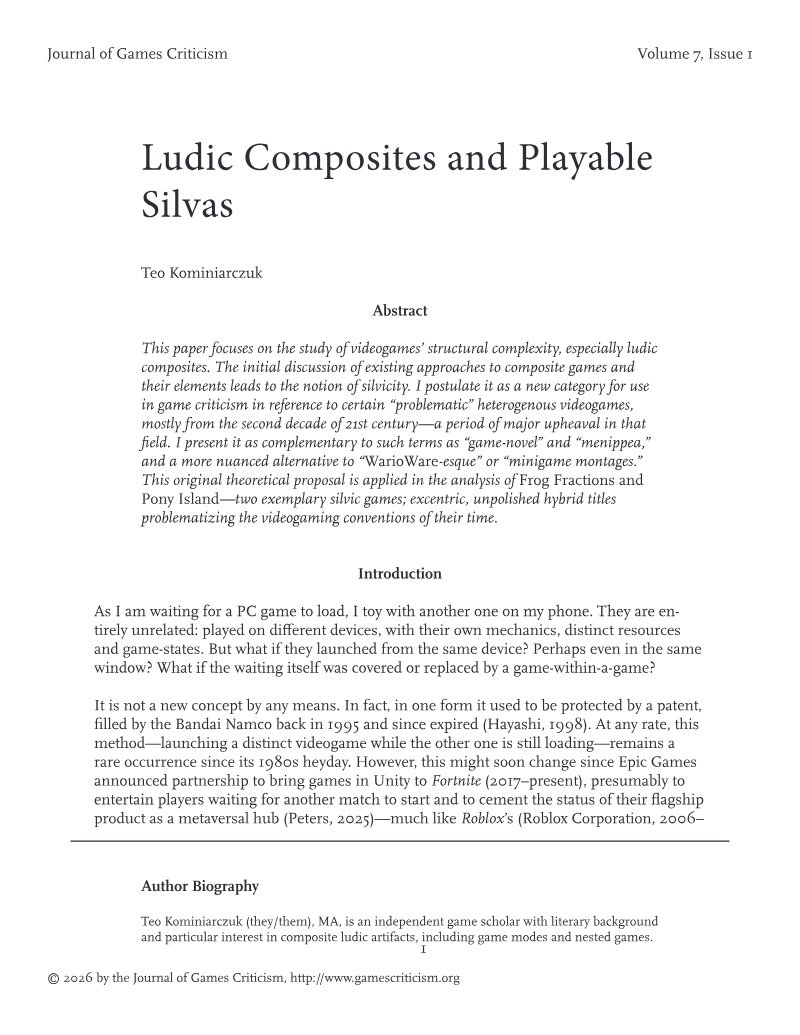
Journal of Games Criticism · 2026
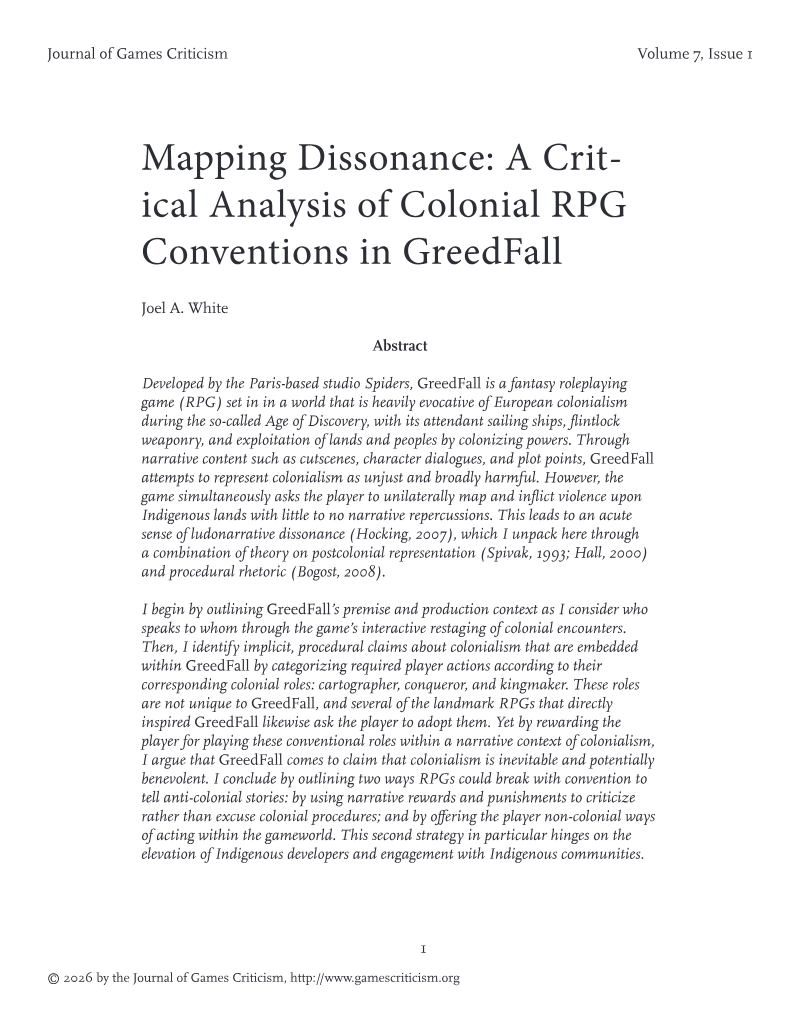
Journal of Games Criticism · 2026
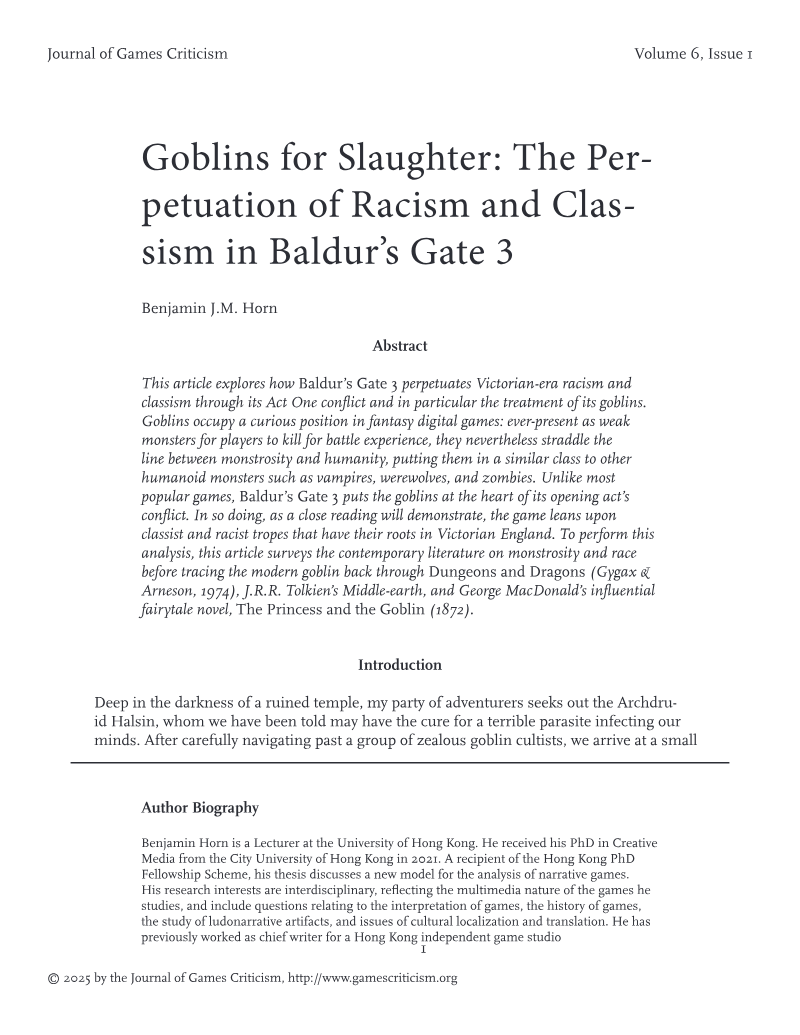
Journal of Games Criticism · 2025
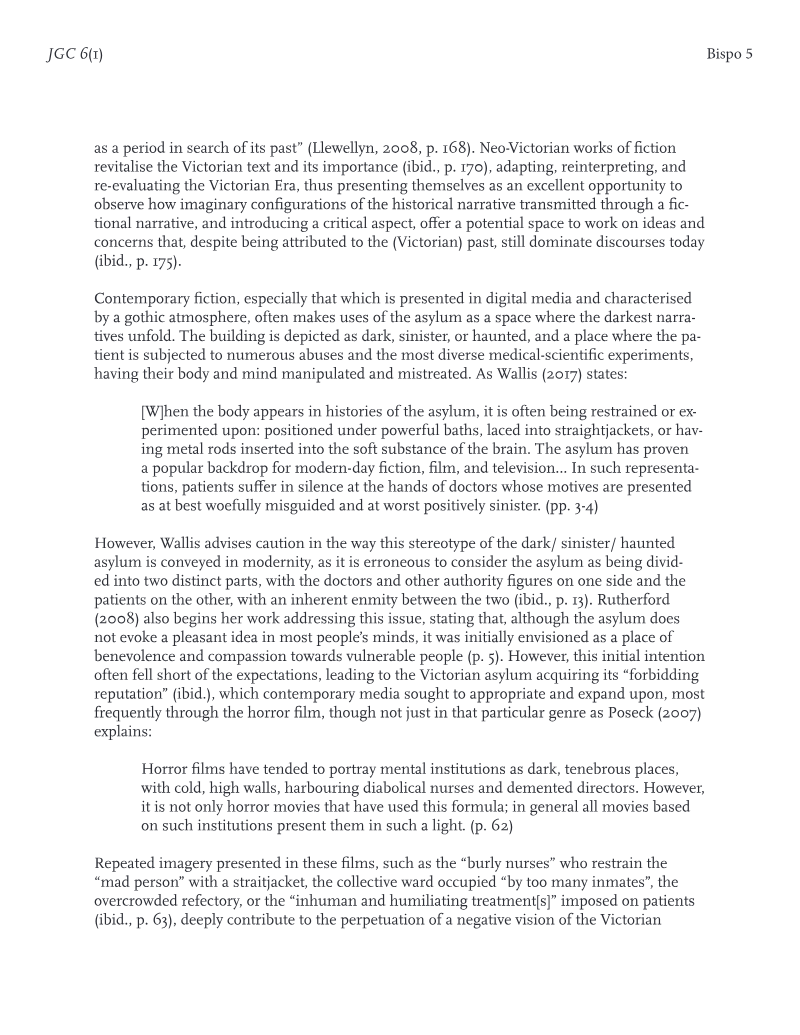
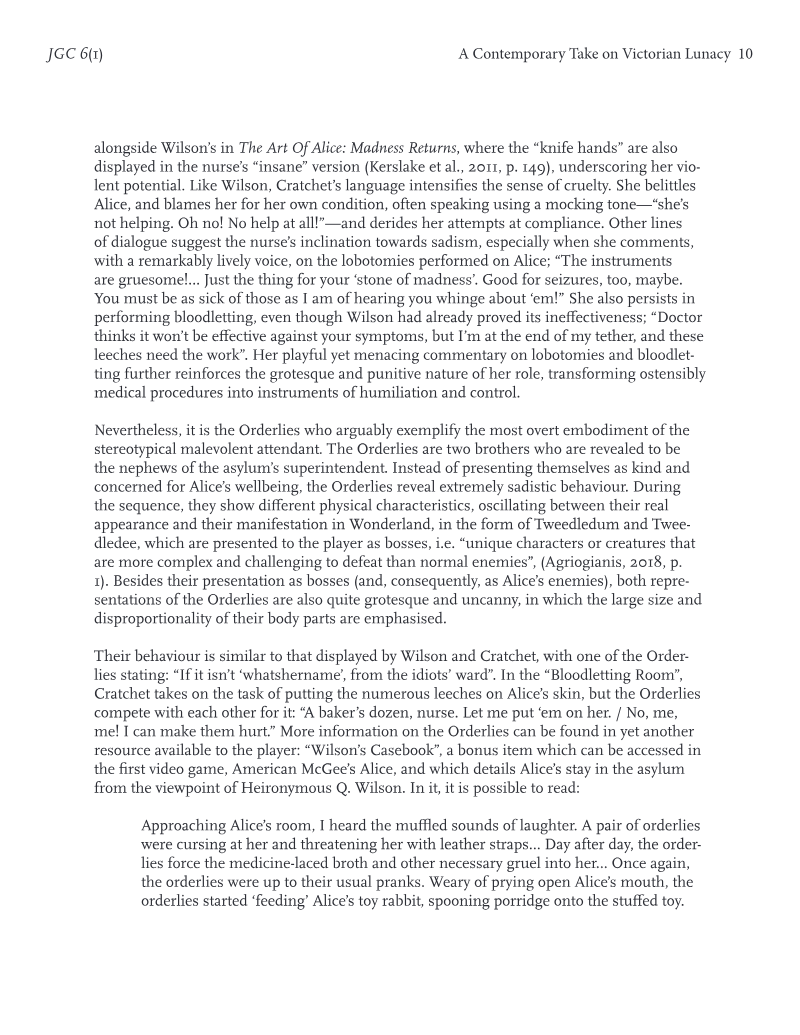
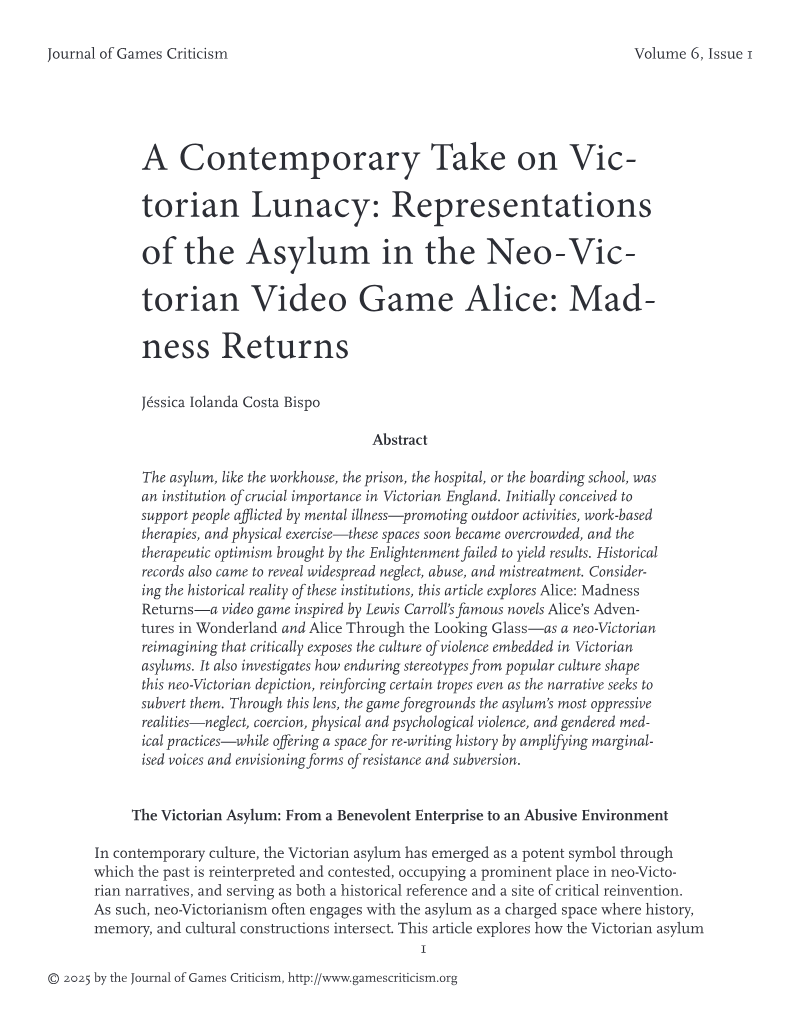
Journal of Games Criticism · 2025



Journal of Games Criticism · 2025



Journal of Games Criticism · 2025
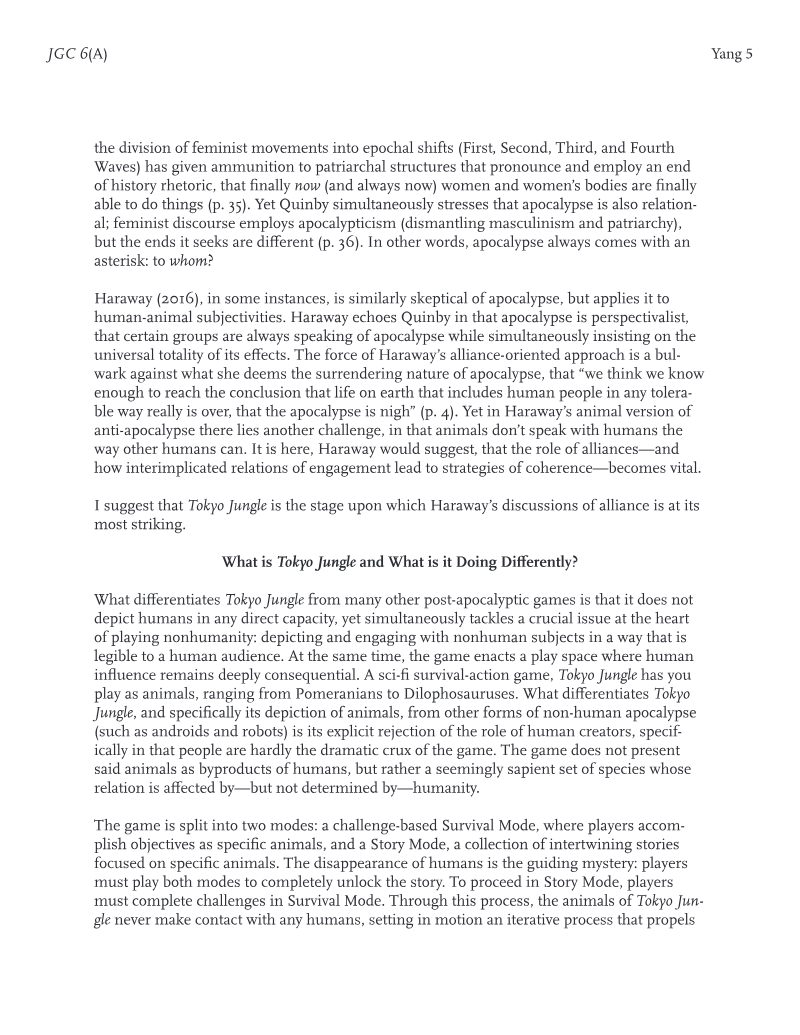
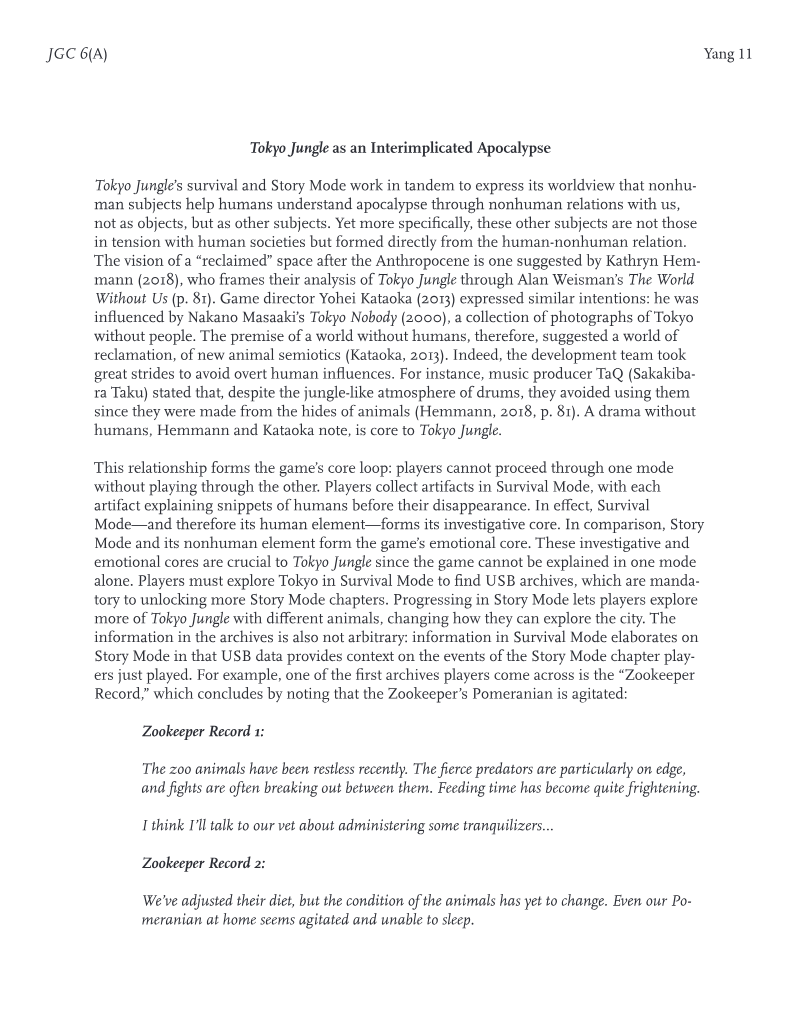

Journal of Games Criticism · 2024
Journal of Games Criticism · 2024
Journal of Games Criticism · 2024
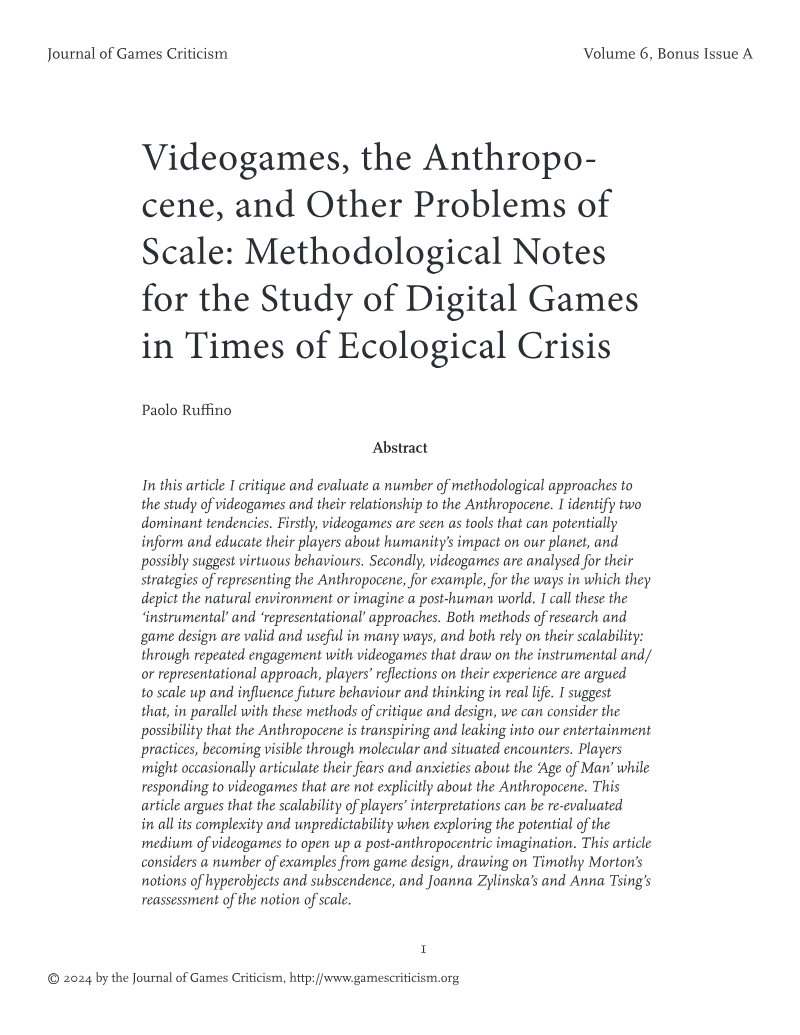
Journal of Games Criticism · 2024
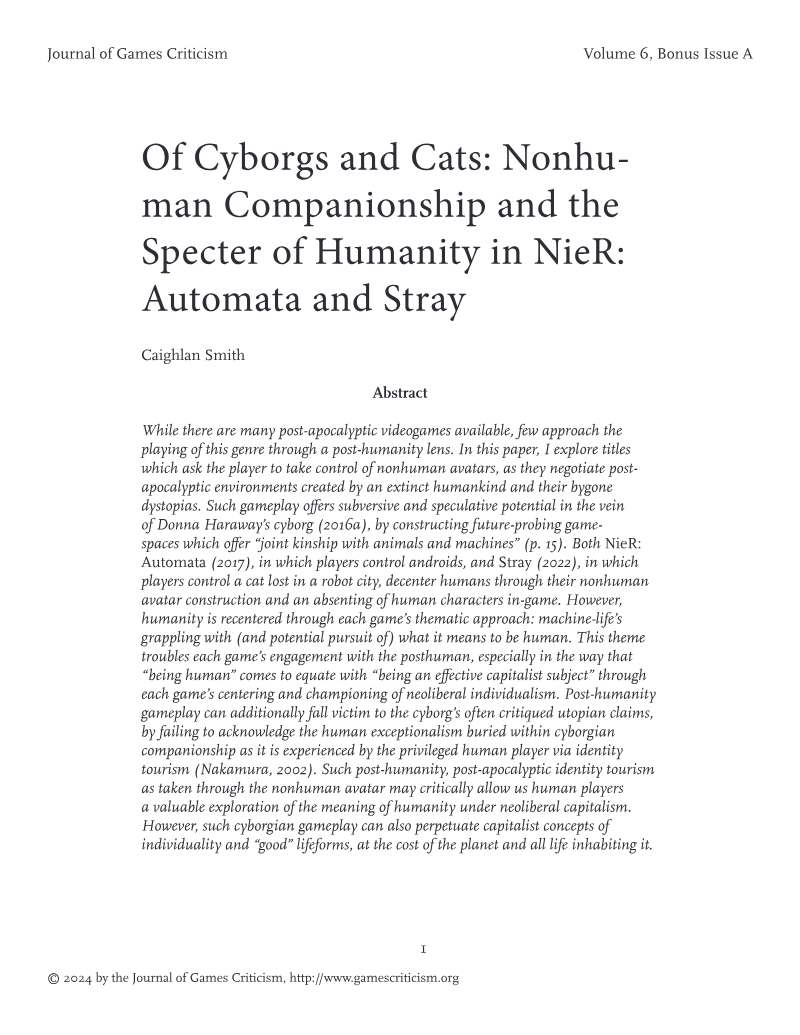
Journal of Games Criticism · 2024

Journal of Games Criticism · 2024

GameDiscoverCo · 2026