1 free read left. Create a free account for unlimited reading + AI research.
Create free accountWhitepaper Journal of Games Criticism
1 free read left. Create a free account for unlimited reading + AI research.
Create free accountWhitepaperJournal of Games Criticism
Distilling the key insights…
The board game Afrikan tähti serves as a primary case study for examining how ludic racism and colonial entitlement are embedded within European cultural artifacts. Despite the removal of explicit racist imagery in modern editions, the game’s mechanics and cartographic design continue to reinforce Eurocentric ideologies and white supremacist myths. By positioning the game as a cherished Finnish classic, public discourse often prioritizes national identity and childhood nostalgia over a critical engagement with the systemic imperialist structures that the game inherently promotes.
Public reception of the game frequently mirrors the Kübler-Ross stages of grief, with players often trapped in cycles of denial and bargaining. When confronted with the game’s colonial underpinnings, proponents frequently dismiss these concerns as anachronistic or irrelevant, thereby shielding the game from necessary scrutiny. This defensive posture reflects a broader European struggle to confront historical colonial legacies, as the emotional attachment to the game’s status as a cultural touchstone prevents a meaningful reckoning with its harmful messaging.
To address these issues, the implementation of sensitivity labels or discrimination warnings is proposed as a vital step toward fostering critical awareness. Rather than removing the game from circulation, it should be repurposed as an educational tool to facilitate a collective process of acknowledging and analyzing the colonial history embedded within popular media. By shifting the focus from nostalgic preservation to critical inquiry, the industry can begin to dismantle the normalized tropes that sustain these problematic representations, ultimately moving toward a more transparent understanding of how board games function as vehicles for historical and racial narratives.
Journal of Games Criticism · 2026
Journal of Games Criticism · 2026
Journal of Games Criticism · 2025
Journal of Games Criticism · 2025



Journal of Games Criticism · 2025



Journal of Games Criticism · 2025
Journal of Games Criticism · 2024
Journal of Games Criticism · 2024
Journal of Games Criticism · 2024
Journal of Games Criticism · 2024
Journal of Games Criticism · 2024
Journal of Games Criticism · 2024
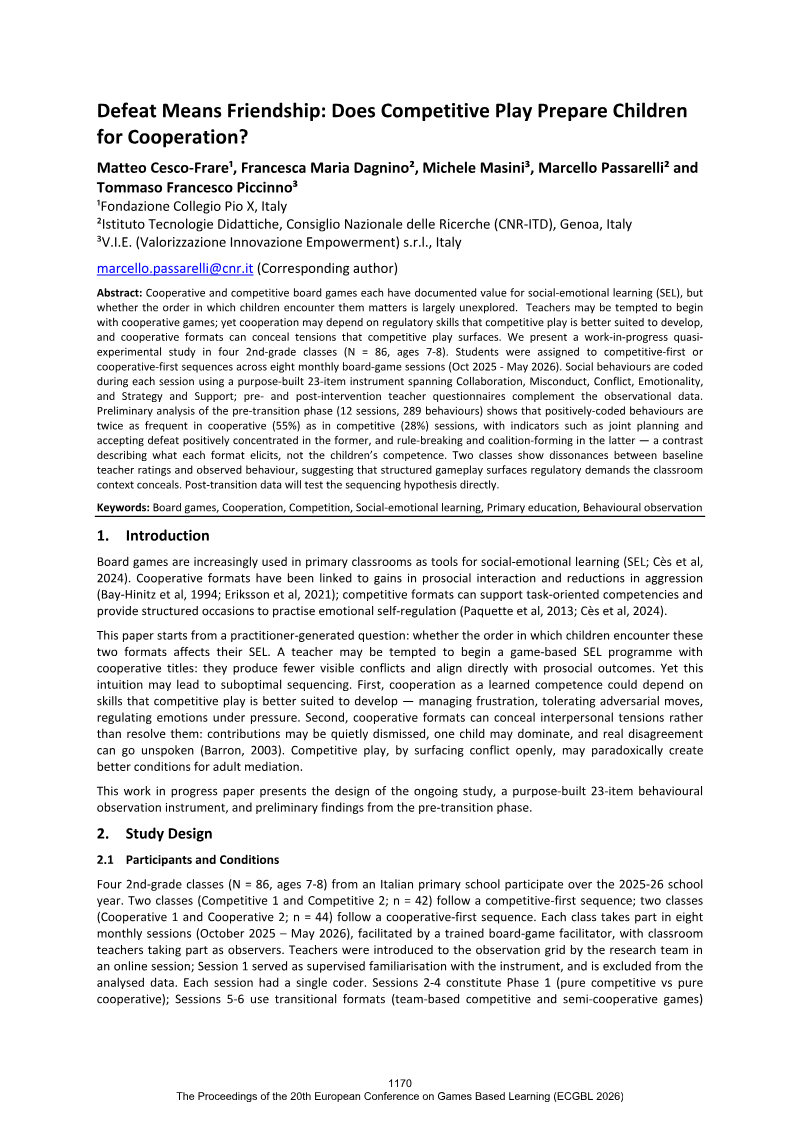
European Conference on Games Based Learning (ECGBL) · 2026