Funding reports and market data
Documents

Biz Daily: Why Vainglory dev Super Evil raised $26 million
Super Evil Megacorp has secured $26 million in new funding to pivot its mobile MOBA, Vainglory, toward an eSports-centric business model.
- Super Evil Megacorp raised $26 million to pivot its mobile MOBA, Vainglory, toward an eSports-centric business model.
- The company is prioritizing long-term ecosystem growth and user acquisition over immediate monetization to establish a spectator-driven experience similar to League of Legends.
- The strategy focuses on the Asian market, specifically South Korea and China, to leverage established eSports cultures.
Double Fine's James Spafford on the power and pain of Kickstarter
Crowdfunding serves as a transformative, albeit challenging, financing model for independent game studios, offering greater creative control by bypassing traditional publishers.
- Crowdfunding offers independent studios a pathway to retain intellectual property and creative autonomy by bypassing traditional publisher financing.
- Double Fine’s experience with Broken Age demonstrates that consumer-funded projects face significant risks regarding community expectations and timeline management when development cycles exceed initial projections.
- Transparency is the primary tool for mitigating backer mistrust; studios must document failures, budgetary challenges, and technical hurdles to justify the use of funds.

Finland's one bright spark, Kamcord's $15M and CCGs in China.
The mobile gaming industry experienced a period of strategic consolidation and investment toward the end of 2014, characterized by significant funding rounds and shifting market dynamics in key global regions.
- The Chinese mobile gaming market is projected to reach $6 billion in revenue by 2015, positioning it to become the world's largest mobile gaming sector.
- Kamcord secured $15 million in funding, led by GungHo Online Entertainment, to advance mobile gameplay recording and social sharing tools.
- Collectable card games (CCGs) currently dominate the Chinese market, accounting for approximately one-third of total mobile gaming revenue.

PG Connects London 2015, the power of Wither and bye-bye Keith
The mobile gaming industry in late 2014 is characterized by significant shifts in user acquisition strategies, data analytics, and monetization design.
- Facebook dominates mobile game user acquisition, accounting for approximately one-third of all industry spending on marketing.
- Major publishers are creating an inflationary cycle in user acquisition costs, where high-monetizing titles like King’s Candy Crush Soda Saga use aggressive spending to saturate channels and price out smaller developers.
- SimilarWeb has entered the mobile app analytics sector with $15 million in funding to provide developers with granular data on traffic sources, specifically distinguishing between organic, viral, and paid acquisition.

South Park's demonisation of F2P: let's blame Dungeon Keeper
The mobile gaming industry in late 2014 remains characterized by a persistent, polarized debate regarding the ethics and quality of free-to-play (F2P) monetization models.
- The mobile gaming industry is undergoing a structural shift toward service-oriented, co-development partnerships, exemplified by Scopely’s $35 million funding round.
- German developers are successfully transitioning from browser and PC markets to mobile, with Goodgame Studios scaling its workforce to 1,000 employees.
- Public perception of free-to-play (F2P) monetization remains polarized, with the 2014 mobile iteration of Dungeon Keeper serving as the primary symbol for criticisms regarding aggressive timers and exploitative mechanics.
Can crowdfunding move from rewards to an equity basis?
Crowdfunding serves as a significant capital-raising mechanism for the video game industry, though its utility varies based on the model employed.
- While video games represent only 8% of total projects on reward-based platforms like Kickstarter, they account for 50% of all campaigns that successfully raise over $1 million.
- Reward-based crowdfunding has a 35.6% success rate, with 72% of game campaigns failing to raise more than $10,000.
- Developers must treat reward-based funding as a business obligation rather than 'free money' due to significant operational costs and tax liabilities.

Opportunities and challenges when raising money for making games
The gaming industry is undergoing a fundamental shift in its financial architecture, moving away from traditional hit-driven development toward metrics-based, scalable business models.
- Investment criteria have shifted from hit-driven development toward studios that demonstrate operational maturity, deep user acquisition expertise, and advanced analytical capabilities.
- Institutional investors and venture capitalists now prioritize teams with proven track records capable of sustaining long-term player engagement over the success of individual titles.
- Studios are increasingly adopting flexible financial structures, such as project-specific revenue sharing, to attract capital while retaining long-term equity.
10 trends shaping the global mobile games industry
The global mobile games industry is currently navigating a period of significant structural evolution, characterized by shifting publishing models, changing platform dynamics, and the maturation of emerging markets.
- Free-to-play remains the dominant revenue model for mobile gaming, accounting for 70% to 94% of total App Store revenue.
- The industry is shifting from traditional publishing toward comprehensive 'publishing services' that integrate data analytics, cloud infrastructure, and monetization strategies.
- Rising costs-per-install (CPI) on iOS and Android are forcing developers to rely more heavily on aggressive user acquisition budgets and direct platform-holder support to overcome discoverability challenges.

Cursor's Jan Storgards on creating a passionate community of start-ups
The Playa program serves as a pivotal initiative for fostering a robust ecosystem of game developers and entrepreneurs in Finland.
- The Playa program has accelerated over 50 startups and supported hundreds of individual projects within the Finnish gaming sector over a two-year period.
- The program operates on a three-pillar framework consisting of 'heart' (passion), 'mind' (technical and business training), and 'body' (physical infrastructure and health).
- A core objective of the initiative is to bridge the gap between creative passion and professional business acumen to prepare developers for the global market.
Cursor's Teemu Saarelainen on boosting the games industry in Finland
The game industry in Southern Finland underwent a significant transformation between 2010 and 2014, driven by strategic support initiatives aimed at professionalizing early-stage studios.
- Between 2010 and 2014, the Game Cluster project utilized over 5 million euros in EU and regional funding to professionalize early-stage game studios in Southern Finland.
- The initiative established specialized development hubs in Kotka, Kouvola, and Lappeenranta, providing startups with critical infrastructure including motion capture technology and mobile testing labs.
- The project facilitated over 500 B2B meetings at major international industry events like GDC, Gamescom, and E3, directly contributing to increased publishing deals for Finnish developers.
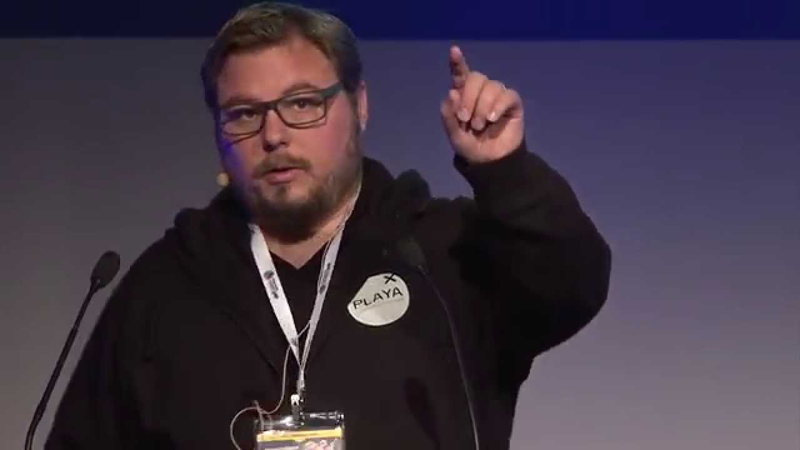
Cursor's Mikko Kähärä talks about encouraging innovation in Finland
The Start-up and Spinoff Factory, an EU-funded initiative based in Southern Finland, serves as a regional development program designed to revitalize the local economy by fostering a robust startup ecosystem.
- The Start-up and Spinoff Factory initiative supported 25 companies, with 50% of these being game studios, resulting in the creation of approximately 50 jobs.
- Participating startups successfully secured 8.5 million euros in early-stage funding through the program's intensive support and strategic guidance.
- The program focuses on bridging the gap between academic research and commercial viability by partnering with institutions like the University of Helsinki and Lappeenranta University of Technology.
Early Access - The Problem with Unfinished Games - Extra Credits
Early access programs on platforms like Steam offer a double-edged sword for the gaming industry.
- Early access programs lack standardized quality control and consumer protections, creating a marketplace where abandoned or unfinished products damage the reputation of digital distribution platforms like Steam.
- Early adopters often experience burnout during the development cycle, leading to fragmented player communities and a lack of critical mass for multiplayer titles at the time of official launch.
- Initial impressions formed during the bare-bones early access phase often permanently anchor public perception, as many players fail to return to re-evaluate the title after its final release.