Funding reports and market data
Documents

The golden rules for game devs looking to raise institutional funding
Securing institutional funding in the gaming industry requires a strategic shift toward free-to-play mobile models, as the top-grossing charts are dominated by a small number of large, established players.
- Institutional investors prioritize studios with a proven track record in mobile free-to-play development, specifically favoring teams that have previously placed titles on the top 200 grossing lists.
- Studios must appoint a dedicated commercial director to manage the intersection of game development, financial management, user acquisition, and business intelligence to satisfy investor requirements.
- Fundraising success depends on treating game development as a data-driven business, requiring internal expertise in monetization, marketing, and platform relations with Apple and Google.
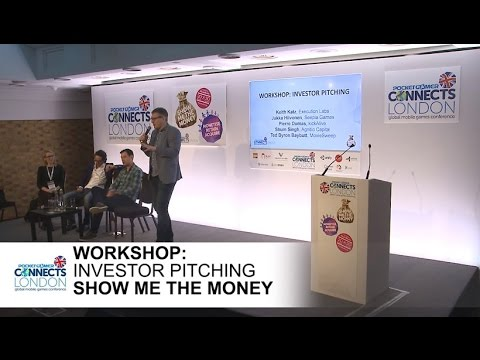
Pitching games to investors at Pocket Gamer Connects London 2016
Securing investment in the mobile gaming sector requires a shift in focus from broad market statistics to the specific strengths of the product and the development team.
- Investors prioritize visual gameplay demonstrations over text-heavy presentations, as the primary goal of a pitch is to secure a follow-up meeting by articulating a unique value proposition.
- Successful pitches must demonstrate a deep understanding of retention metrics, monetization strategies, and the operational realities of live-service games to mitigate the impact of high user acquisition costs.
- Founders should avoid focusing on exit strategies or early equity dilution, instead providing concrete performance data from previous titles and a realistic path to profitability.

Why VCs like IPC Ventures want to invest in teams not products
IPC Ventures prioritizes investments in cohesive, high-growth teams and sustainable corporate entities over individual game projects or single intellectual properties.
- IPC Ventures prioritizes investment in scalable, high-growth studios over individual game projects or single intellectual properties.
- Venture capital is intended for building sustainable corporate entities rather than serving as a mechanism for project financing, debt relief, or salary subsidization.
- Investors differentiate between 'lifestyle businesses' that are cash-flow positive and 'scalable ventures' that possess the necessary trajectory for significant market impact.

How to qualify for the Video Game Tax Relief scheme's Cultural Test
The Video Game Tax Relief (VGTR) scheme in the United Kingdom provides a significant financial incentive for game developers, offering a tax credit of 25 percent on qualifying core expenditure, effectively resulting in a 20 percent return on investment.
- The UK Video Game Tax Relief (VGTR) scheme provides a 25 percent tax credit on qualifying core expenditure, yielding an effective 20 percent return on investment.
- To qualify, a company must be UK-registered, the game must be intended for public supply, and the project must pass a 31-point Cultural Test administered by the British Film Institute.
- Applicants must reach a minimum threshold of 16 points on the Cultural Test, which evaluates cultural content, creative hubs, and the residency of key personnel.

How Pollen VC helps you accelerate your cashflow
Mobile developers frequently face significant cash flow constraints due to the standard 30-to-60-day payment cycles imposed by major app stores.
- Mobile developers face significant cash flow constraints due to standard 30-to-60-day payment cycles from major app stores, which trap earned revenue and hinder reinvestment.
- Pollen VC provides a mechanism to access locked app store revenue on a weekly basis, allowing developers to maintain consistent growth momentum.
- The operational model integrates directly with app store accounts to verify daily revenue accrual, enabling disbursements to bank accounts or ad networks every seven days.

Rockfish's Michael Schade on crowdfunding your game development
The primary objective of this analysis is to outline effective crowdfunding strategies for independent game developers, specifically drawing from the successful Kickstarter campaign for the space shooter Everspace.
- Crowdfunding success requires rigorous pre-campaign preparation and a disciplined adherence to a core product vision rather than diluting the game with excessive features.
- Building an audience before launch is essential; the Everspace team used Steam Greenlight to gather 70,000 votes to validate their concept and refine features like VR support.
- High-quality visual assets, specifically animated GIFs shared on platforms like Imgur, were instrumental in generating millions of views and driving traffic to the campaign.

Myriad's Barrie Dowsett on getting public money for your game
Securing public funding for game development in the United Kingdom involves navigating a complex landscape of grants and tax incentives.
- Developers can leverage non-repayable grants and tax incentives to de-risk projects, retain intellectual property, and avoid equity dilution.
- Innovate UK grants typically cover 40% to 65% of project costs for early-stage research and prototyping, while Horizon 2020 SME instruments offer up to 70% funding for commercialization projects.
- The Video Games Tax Relief (VGTR) provides a 20% rebate on production costs for qualifying British games, which can be claimed alongside other incentives.
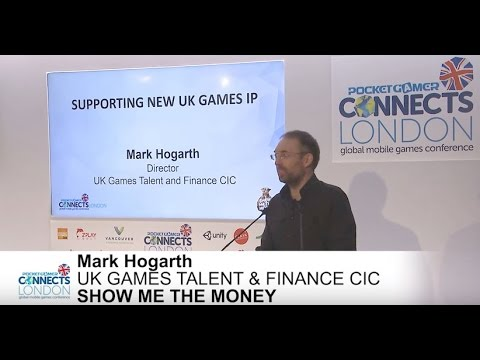
UK Games Talent & Finance CIC's Mark Hogart on supporting new UK games IP
The UK Games Fund, operated by the UK Games Talent & Finance CIC, serves as a government-backed intervention designed to stimulate the creation of original intellectual property within the UK games industry.
- The UK Games Fund provides early-stage grant funding of up to £25,000 for prototype development, with future plans to introduce a £50,000 tier for advanced projects.
- To be eligible for funding, applicants must be UK-based, own the intellectual property being developed, and focus spending on UK labor and employment costs.
- The program operates on a reimbursement basis, requiring recipients to possess sufficient working capital to cover initial project costs before claiming grant funds.
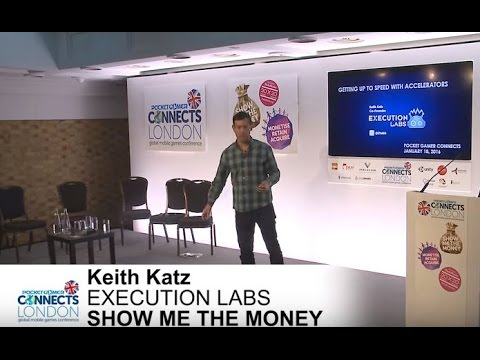
Execution Labs' Keith Katz on the value of game accelerators
Game accelerators serve as vital catalysts for early-stage studios, providing structured environments to scale businesses rapidly through cohort-based programs.
- Game accelerators provide intensive, cohort-based mentorship and networking, distinguishing themselves from incubators through shorter timelines and a focus on rapid business scaling.
- Studios should prioritize accelerators that provide direct financial investment in exchange for equity, as this aligns the program's incentives with the studio’s success.
- Generalist tech accelerators should be avoided in favor of gaming-specific programs that offer relevant alumni networks, industry-specific mentorship, and direct access to platform holders and publishers.
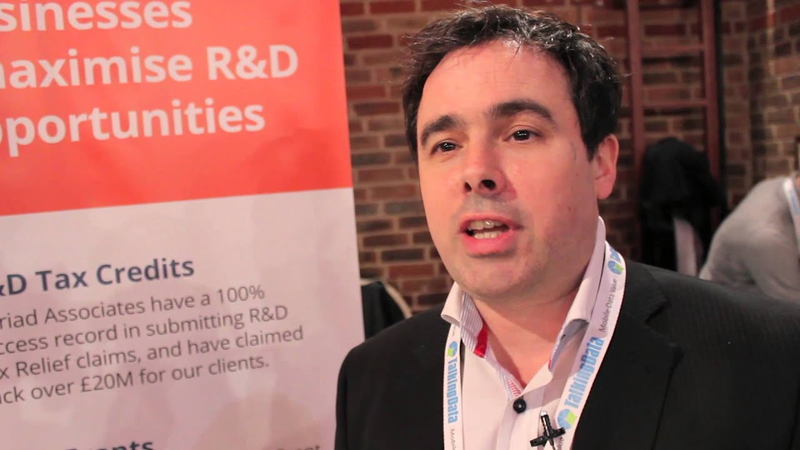
Myriad Associates' Barrie Dowsett on UK R&D tax credits
The United Kingdom offers significant financial support for game developers through R&D tax credits and the Video Games Tax Relief (VGTR) program.
- The UK government provides a 20 percent subsidy toward game production costs through R&D tax credits and the Video Games Tax Relief (VGTR) program.
- Tax relief is claimed retrospectively, meaning developers must secure private investment to fund the initial development cycle before accessing government subsidies.
- Independent developers often struggle with the administrative complexity of navigating requirements between the British Film Institute and HM Revenue and Customs.

LVP's Paul Heydon on investment, eSports, mobile MOBAs, and Europe's advantage
The mobile gaming investment landscape in 2016 is characterized by rapid growth, with mobile emerging as the fastest-expanding sector within the broader gaming industry.
- Europe is a net exporter of mobile gaming revenue, leveraging lower overhead costs and competitive salary structures compared to Silicon Valley to achieve superior capital efficiency and higher returns on investment.
- The mobile gaming sector is the fastest-expanding segment of the industry, driven by the successful monetization of mobile MOBAs like Clash Royale and the emergence of professional mobile eSports leagues for titles such as Vainglory.
- High-profile acquisitions, including the deals for Supercell and Activision-King, have validated the sector's profitability and are expected to fuel further reinvestment into game development.
10 Years of Funding and Networks: The Finnish Game Industry 2004-2014
The Finnish game industry experienced exponential growth between 2004 and 2014, evolving from a niche sector into a cornerstone of the national economy.
- The Finnish game industry’s annual turnover grew from 40 million euros in 2004 to 1.8 billion euros by 2014, accounting for nearly 20 percent of the nation's total ICT sector turnover.
- Industry employment expanded from 600 to 2,500 workers over the decade, demonstrating the high-productivity potential of an intellectual property-focused, born-global business model.
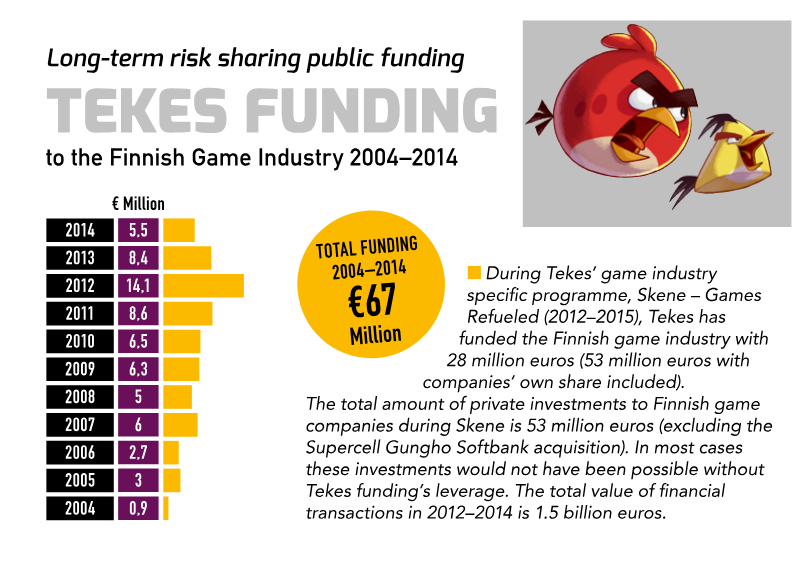
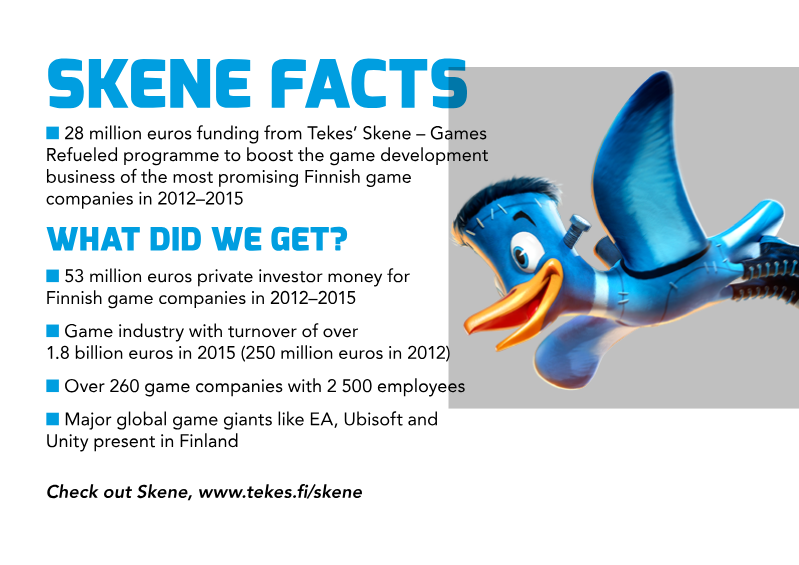
- Public funding through the Tekes Skene program provided 67 million euros in total support between 2004 and 2014, with 28 million euros specifically allocated between 2012 and 2015.