1 free read left. Create a free account for unlimited reading + AI research.
Create free account
Opportunities and challenges when raising money for making games
Key insights
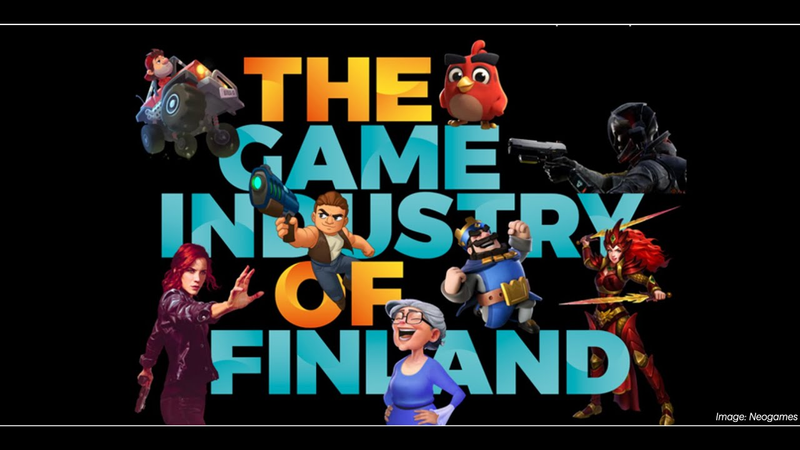
6 takeaways- 01Government grants remain a vital foundation for early-stage development, with regions like Finland serving as a primary example of this support model.
- 02Institutional investors and venture capitalists now prioritize teams with proven track records capable of sustaining long-term player engagement over the success of individual titles.
- 03Investment criteria have shifted from hit-driven development toward studios that demonstrate operational maturity, deep user acquisition expertise, and advanced analytical capabilities.
- 04Studios are increasingly adopting flexible financial structures, such as project-specific revenue sharing, to attract capital while retaining long-term equity.
- 05The industry is experiencing a 'flight to quality' where consistent performance in top-grossing charts is directly tied to a studio's technical proficiency and data management.
- 06Rising barriers to entry, particularly in the mobile sector, are forcing developers to balance creative vision with the machine-like efficiency required by modern institutional investors.
Ask AI about this video
Transcript
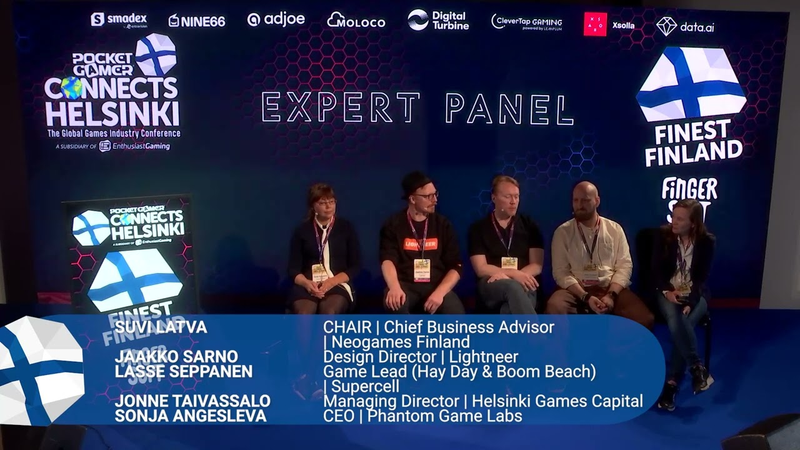
we have um some a developer who's kind of done funding of a certain level we have people from kind of government kind of organizations that do funding as well and uh so kind of different range of of kind of skills and I guess not all questions will be appropriate to all of you so you know I'll try and kind of direct my uh my my kind of angle um and of course if anyone has has has a questions stick your hand up we'll take those as a priority I mean I guess um maybe as as the as a developer it' be interesting to you because we've obviously had these kind of talks and they're very detailed there obviously kind of a lot of kind of um kind of Hoops to jump to I don't know if you encouraging us to go to Silicon Valley or not we we had to not run out of money and not be profitable as well as far as I can make out but but I mean you guys have are very successful as a developer and you've also done some funding so maybe if we start with you if you want to sorry if you want to explain who you are first and the developer and then maybe talk a bit about your kind of your funding and how you kind of look to do do funding
okay it should be now yeah okay okay good yeah I'm toal fanm of Tri flame a uh developer over here in in Finland um we started out like five years ago uh then we did some first uh boot strapping at first and um then we we raised a a small amount of Venture cap funding from Angel and a smaller Venture cap we're talking of hundreds of thousands of Euros uh also since we're in Finland we obviously use these uh uh the government funding versions to to uh increase that a bit uh after that we have been several years without uh or we haven't raised more funding for the company itself uh but we did U we did raise money for one of our games uh our Benji Bananas game
we got money out of Vision Plus which invested specifically into the IP of that and I guess we can go into further details on that if you're interested just quickly we've got you because obviously you've been very successful with with some of your games so why one why did you need why did you want to take funding for that specific game because could you have funded it internally or what was we couldn't at the time because we have been very successful with that game and obviously we got the funding for doing that game before we had that game finished okay okay that's that's pretty good so so you kind of mentioned um there kind of the Nordic region is very well known for kind of it's kind of government funding I guess indirect Government funding so I guess do you want to kind of introduce yourself and say what tchas is and talk maybe about you lots of things but funding is I guess a fairly significant part of of it for companies okay so te is the Finish funding Agency for Innovation it's used to be for uh technology and Innovation but now it's
for Innovation and we've been funding uh games industry since the early 2000 I think the first game that we talked about or video gaming uh was funded in 98 actually but now the gaming industry has really been booming so Tas is the uh government uh based uh fund so we we Finance our uh R&D in Finland both universities and companies R&D projects so and our budget is 600 million euros annually so and for gaming industry we have now uh launch we have had our two years time SK games refed a separate program with a budget of 70 million euros and in terms of how much funding can you give any one company and from a from a UK point of view it seems fairly easy to get funded but presumably there's some okay you need to do to get fun the purpose of is to uh in a way
uh we work uh in know early in a seed funding phase mostly like our we are lacking VCS in Finland and uh business angels they don't uh pretty much uh put money to gaming industry or startups technology startups so that's why uh Tech funding is needed so our funding can vary from feasibility studies like there are 30,000 to up to even 1 million EUR so that's a really big project but so we come in in different phases of the company but in a seed phase it's usually 50,000 30,000 so Greg you're kind of looking at the much wider kind of I guess the whole Nordic Arctic I don't know there's a lot going on in North North po so introduce introduce yourself and what you guys do and obviously you're looking at much WI than games so how how do you we've been
talking about games specifically how do you see the broader kind of funding kind of community at the moment for startups I guess many Tech right right so um I'm from Arctic startup and hopefully it's a familiar name for most of you out here but uh we write about startup news in the Nordic and Baltic countries and that has meant a lot of gaming news lately and um just looking big picture at the the funding in the nordics I mean it's it seems like there's more and more money coming in in general when you're uh looking at startups in general but um we're also seeing like just like some crazy uh funding rounds going into the seed stage with like these earlier stage companies like with well there's uh like boom Lagoon and uh next games and it seems like these kind of all these little spin-offs are just raising huge rounds and they're being really Hush Hush about like what they're actually doing so it seems like a new generation of finished fundraising right now you calling it a bubble I'm not calling it a bubble I mean your M we'll talk about it yeah okay go to the bubble later then
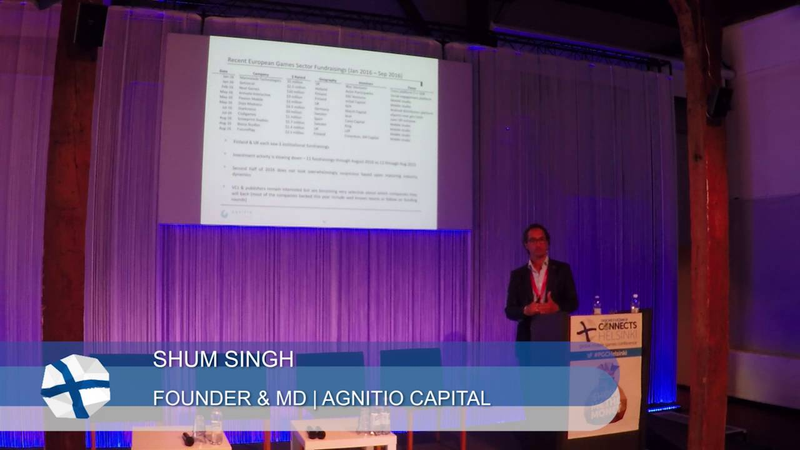
and I guess um SE kind of start if you want to introduce yourself as your the of any person we've not come to yet and I mean you have a slight different take more kind of the legal kind of side well not legal actually uh uh we I run an investment Bank focused on games um you know recently completed a couple of transactions what I would include also as probably alternative sources of funding uh you mentioned Silicon Valley uh so what uh certainly our firm has done is Tred to marry a lot of Asian uh larger gaming Publishers making Investments uh into European Publishers so a few weeks ago uh Nexon um announced an equity uh and Publishing deal into social Shel which we advised uh and then probably more interesting for uh the audience here at the end of last year uh we advised Ocean View games um on a fundraising from game bille at at a seed stage as well so but you you guys aren't investors so much as kind of deal makers kind of thing or can you do bit both a bit both yeah so I also have a personal
investment in Ocean View and also in solders real and I know you've done some work in the UK with future G of London and theof deal so I mean is do you do you see the kind of Finland Nordic regions as being the the hot area in Europe or is it just lots of stuff happening that we maybe just not writing about so much I I guess Germany I don't you have any the moment as well I I think that one thing certainly Finland benefits from is um just you know two of the pioneering Mobile gaming companies uh sua and uh uh Mr good living so I think a lot of the senior staff from those two companies have gone on to do pretty impressive things uh Marcus Pula and U Grand crew I mean obviously yapan and then left uh after Digital Chocolate bought them and then set up supercells so you know and obviously a lot of senior staff from roio are are both from SAA and Mr good living so there is this clear Heritage um of multiple gaming expertise so I think it's it's bound to happen I think for me the one advantage of the Finnish industry is it tends to stay in fin I think probably the UK and
US tend to move around a lot more around the world whereas people start in Finland they seem to stick in Finland so um I I could waffle on for a while but I guess people have questions I'm going to keep coming back to you in the hope that someone will have a question my questions but so start thinking about questions you kind of seen the range of experts we have here um any hands looking down at your feet Okay so we've been talking about kind of obviously kind of games and funding and different aspects of it i' I've always been under the view that and I guess maybe some of you've touched on this that games are almost entirely the worst things in the world to to fund because you have games and you have games companies and the two are not very synonymous and most games fail so any anyone can can jump in here but I guess maybe David Jordan you haven't spoken yet I mean do from a Silicon Valley Point VI do you think games you know games are hot now but are they really good things to fund because not many games are going to get to this 100 million kind of dollar stage maybe the kind of kickstarters are kind of actually better for games because certainly for small stage mobile games
there's a kind of like a a nice mix there that we're not going to all be Kings or C I'm happy to jump in you yeah so traditionally if you look uh Silicon Valley doesn't fund a lot of games a lot of gaming companies if you just look back in time and the reason that they don't like gaming companies is really what you've been talking about John is that even though a VC itself is hit driven right they try to find these unicorns uh they don't like to invest in hit driven types of uh types of products so for example for the longest time if you were a games company you would go to LA because there's more in common between games and movies for example than there is between a Silicon Valley company which is um you know going to be more technology focused and then you're just trying to find a very broad market for it and then uh and so you know you can think of Google or Facebook it's not a hit right it's something that has
staying power for a very long time and you're just engaging a lot of people for a very long time it's not some people for some time and then you know that kind of becomes p and then you have to come out with something new so you have to constantly be Reinventing what has happened though is with Zinga even though Zinga you know it's sort of a mixed bag what what they brought forward is this whole idea of metrics and they really Chang the entire perspective within Silicon Valley about how to look at a gaming company and the um you know the approach that they used in terms of having tremendous amount of metrics in terms of building a stub of a game and then using the AB testing uh to take the games to the next level and build it out for the audience and then build the monetization into the game that and then kabam's model of you know having successful games and then reskinning
them and then taking them into crossplatform so they become much more like a machine uh in terms of a business and so that has continued to make Silicon Valley investors excited about the opportunity but you have to have some core IP there has to be something that's there to start with um in terms of either the team is capable of producing something really important or you're starting with something that has uh um like a movie right it's going to be some title that people know and and so you can get it started so that would be my my perspective on it it always strikes me in general that the reason games I found personally find them intellectually interesting is there this combination of kind of content and technology in this kind of weird Synergy and it's very difficult to know obviously what's going to be successful same in any industry but it's very difficult to kind of see the combination of great technology with bad game is as bad as game bad game good technology I mean it's which often why kind of think
why VC shouldn't invest in games because it's even those Us in the industry haven't really got a clue which I guess is why people invest in teams more I mean David you talking about the kind of the where do you see the the kind of crowd funding thing going because it's kind of certainly as a journalist body it's kind of seen as now kind of like damage Goods even though some games have been very successful in terms of raising money but if you got a kind of view on where that should go because it does seem like a very now thing to do to you know and it does seem like Equity funding is the next kind of obvious thing but it sounds like you were suggesting it's going to be kind of bit stillborn really well I think uh yeah and as Jordan suggested a moment ago um you know Kickstarter and uh and other crowdfunding sites could be the place for you know for uh you know where game companies really get launched because it is difficult to make the pitch to an Institutional Investor to a a VC investor um in many cases and I would say actually and this is a bit of a Divergence but um I personally am interested to see see now that we have a
number of game companies that have gone public or that have achieved some you know large amounts of uh of resources through uh Acquisitions um you know is it in fact the case that an operation that has a lot of money that's well funded that's well managed uh perhaps Global is it in fact the case that an organization like that is going to be more likely to produce compelling games and that's a really fundamental question and maybe some others here have uh have some opinions on that maybe they don't think it's quite so uh so interesting a question I to me anyway I don't I'm not sure that the answer to that yet has emerged and I think uh when and if the answer to that comes out and it's going to depend I think on you know what happens with companies like king um perhaps Zinga perhaps supercell and others companies with a lot of resources and these are relatively recent phenomena um you know how will these companies
perform relative to you know to the small companies which they all once were and is this uh really just a total random hit driven environment or is it the case that you can kind of uh predict uh there's some way to predict what companies are going to be successful and which ones aren't G has a question do you want to just say say your name where you excuse me is that uh hi sorry uh my name is Tyler York I work at granu um recently I've seen a I've just been talking to a number of larger Publishers now um notably roio UGA a couple of others in Europe that actually take the small Studio approach in a large company so they have like 300 people but they're broken into teams of like 10 to 20 uh do you think that that maybe can help both
diversify the company and then also and sort of like the risk of multiple products and then also uh keep it small and maybe go towards that hypothesis that smaller studios are better at making compelling stories games I think you know probably Ila's maybe somewhere around but uh you'd be the first one to say he's kept his team size at you know 130 140 people and he can consistently wants to maintain that small company approach and maintain the small sales you know within within that company and I think that's going to be his his firm Mantra you know for for the next 300 years as he's publicly stated U you know so I think that certainly in Finland a lot of the companies um you know maintain that small kind of very intimate team type of approach and I think it's a great way to diversify and have different teams you know working on completely different titles if of course you have the DNA that that you know is is relevant for those different types of category genres of games well I'd
actually love to follow up on that because it kind of ties into um so I disagree with you by the way that uh it's a bad investment field I think there is a DNA type that really consistently produces good games could you in maybe other panelists speak to what that might be that that that's A $64 million question I don't know what I mean uh personally I think it's just passion I think you got to have you know real passion um C I've I've done a lot of personal Investments and a lot of them have failed um but certainly when I look at uh you know I'm sure all the panelists can add you know tons to this but you know team uh U you know hopefully a track record hopefully prior experience launching games uh marrying every possible function user acquisition to marketing to analytics to metrics to launching getting relationships with apple Google um I mean there's just so many different facets of of making a game successful right now so I mean but I think it just Wells on
passion I guess that seems to be the interesting thing where I think previously you could had quite have quite small teams who just making a game and it went into a retail box There's issues around that but now the whole games as a service thing is something that a lot of people now see as killing the I I don't really count supercell as a small company with 130 people but I know what you mean but you know companies now have to have it's not just making the game it is all these other kind of facets and I guess that's why the maybe the bigger VCS now are looking at can you do the analytics platform can you do the kind of huge in sales I mean you guys as as a I guess you're a pretty tiny developer really on a super sales scale of things how how big how big are you as a where about 10 people 10 people and and you've gone through this kind of like product product funding kind of thing rather than Equity because yeah we we've done both oh you done both okay so would you do both again in future or do you is the product one so I should explain because so the The Vision Plus model is they invest in product and they take a revenue share is that correct yes so so we we made one game or by not now
two since we made the sequel uh the principle was that uh we sold them a share of the IP of an upcoming game okay uh and um they don't have any any stock in our company they they do not have any uh board of directors and no shareholders agreements and and all of this stuff that we have with the investors that invested directly in our company but they do own a share of the the IP of one spefic game and uh then obviously on on on the follow-ups on on that one because it would be really stupid of them not to not to demand those followup SQL rights and it's been been working out great for for both of us uh the the game has been been doing great with some 40 to 50 million downloads by now and we're at at the SQL and we have like uh SAS and candy and and we're we're taking that to multiple markets by now so um um it works great
uh at least in our case and it's a lot more lightweight than than getting someone to own shares in your company and we are a lot more free with our other ideas I guess the balance is one it's not going to be the hundred million Revenue stream or the1 billion dollar company from one game well it it is if the game happens to be angry birds or or Clash of Clans yeah but I I guess the other thing is funding wise a lot of people take on funding not necessarily for the money when I talked to people who raised vast sums of money they always go oh we didn't need it but we wanted this guy on the board we wanted we wanted access those VCS so F I guess funding is more than just I think sometimes we look at funding we go it's about money and and actually in most cases it's is about money but there are lots of other things packaged onto it yeah they certainly helped us uh get in contact with Publishers with a lot of this merchandising stuff I mean one of our investors is uh who used to be the CTO of Nokia and he
certainly has a lot of contact it that helps so Greg looking at the I'm using you as the kind of The Wider kind of litmus paper of games and everything else I mean I I won't put the word bubble in your mouth but I mean do you see the kind of funding that you early stage games companies having in in this region to be disproportionate because that it's such a hot Market at the moment compared to say medical companies or wearable tech companies or well it it is very hot and it's also kind of like what what we've been talking about is like it all comes down to the team and I think right now there's been so much kind of like knowledge churning that uh a lot of great teams are spitting out of like uh roio and supercell and these other gaming companies which has been happening in the past and in the past so um but it seems like right now I I'm kind of cracking up every press release I get that's in the few Millions it's kind of some new game company I haven't really heard of and they're like from uh you know they're from supercell or they're from roio and they're building a character driven freet toplay iPad first
game and I'm like well of course it's like in the millions here I don't know just kind of I don't know if it's irrational because I mean obviously there are some a lot like the Nordic seem to be hit makers right now but at the same time it is kind of like okay this is a new era at least at least for what I'm seeing I me I guess so I get press releases about games all the time you probably get press releases about funding rounds all the time so yeah a bit off the subject but what what what what press release about funding is now exciting to you because obviously everyone say everyone's raising a couple of million to do something but is there anything particularly that uh when it comes is is the interesting thing for you well I I think I well yeah writing uh funding stories is a little bit boring a little bit repetitive you can kind of be like this happened by because of this and this but when it's like these these kind of out of nowhere companies raising a couple million you're kind of like what's what's going on here because you're asking them like okay what's your first game about or what's the IP if they're like oh it's character driven you know like so I've had those interviews yeah yeah you're like come what's I don't know that that gets me at least that that makes me want to follow a company and then um also
like the crowdfunding rounds as well like that kind of shows that there's already some sort of traction that Grassroots kind of you know excitement around a game that uh that's pretty exciting to write about or to be a part of too so so not ask you many questions so obviously this is kind of the game side I'm talking about kind of um established companies who are kind of refreshing people and doing startups but you guys do kind of student funding as well or you do how establish does the company have to be to get kind of funding with you is it just a good idea and I think we Finance we can uh finance companies that are in different phases like usually we discuss with the companies then they come to discuss to us that they have only the idea so it's a different different kind of companies and do you I mean do you take equity in the companies or how do structure deals okay so no we don't take no we take no equity and uh when we are starting this uh uh U
Venture funding so we are we we are funding only uh funds so targeting our uh funding to the to the funds and not make any direct Investments but we don't take any Equity do you get money how do you get do you get any money back yeah it's U more jobs and then they how the effect on the total economy so for us uh gaming companies have been the easiest one because we launched a program uh in uh in early 2000s for for the software industry and the gaming companies was the really the most hotest one and the companies that really were booming the in know total industry and We Gather most of the projects from gaming companies and that's why we have now launched the uh separate gaming program that's only dedicated for gaming so gaming has always been the easiest one because the companies are they're very Innovative they have this passion they
always want to do something something new and they want to grow so they want to make something big and that's not the case and you look at the companies in a total so so the games companies in Finland are the ones with the ambition that's good to me yeah so kind of kind of coming to the end I'm sure your stomachs are rumbling do we have any anyone else with the burning issues someone picking their nose I think is that hand no just picking okay so we kind of wrapping up I'll give everyone kind a chance to kind of kind of sum up so I guess you all have different kind of companies but is there any kind of Trends you see in in your from your kind of personal kind of line of work what do you see for the next kind of six months will be something like a takeaway that people can that surprising trend for me it's let uh I'm G to pass this on why you no you can't pass it on everyone has to answer come on well I don't know I I think um in the next few months like I'm I'm really excited to see uh what's going to happen um with super super knuts by Grand crew
and if like if they can get a huge worldwide release where it where we can get like three top games in there like from Finland you know with robio with supercell with now Grand crew that's gonna be really exciting to see so that's that's what I'm excited about uh I would say we're on obviously on on mobile app store Google Play uh that market has stabilized a lot in the last few years as you likely know uh I think it's going to be interesting to see for instance all all of these companies that you you've been talking about raising these multi million dollar rounds once they start getting out their games like for instance Grand crew and so forth are they able to break into this currently very stable top top chart yeah yeah I think um what has been pretty clear in the investor circles is that there's been a real maturing of the gamer and so at the very beginning if
you go back three four years when there was this huge expansion of the amount of Gamers because of social gaming people were just clicking on something they weren't really playing a game right they're just clicking on something that seemed to be fun and then there's some reward well that uh that gamer is learning how to become much more engaged with what they're playing and they're looking for more engagement and so there has been this move to Mid um and the midcore and the hardcore players monetize a lot better and there's a lot more engagement that you can do in terms of story and terms of the art and um and so there's there's uh a real motion towards making the whole gaming Market uh that is uh you know this midcore and and and hardcore Market much larger than it was before so I think that's pretty exciting the point of view of the investors I think it comes back from what you said the
Zinger analytics now we get this horrible word segmentation I think segmentation is something that a lot of people looking precisely where to place their games right um the good news is that every forecast you read from pretty much every independent research analyst out there indicates Mobile gaming just continuing to grow at Fantastic if they're all saying that it's probably going to going to flop isn't it well I mean I mean given that I mean that's that's great for the industry in general however I think that um you know some of the panelists already alluded to the fact that you are seeing a sort of uh barrier to entry to enter into the top three 400 grossing charts whether it's Apple or Android so the Indie hits are going to get a lot rarer um and so I think there will be a flight to Quality and you will have investors who only will support or invest teams who have tons of experience track records who published uh top grossing titles so you will see this
this change certainly uh I think the next six months we're going to see some some real development in the area of uh Equity crowdfunding both in the US uh the SEC has to release the regulations in the next six months and also in Europe where we're seeing a um a real move to unify and create a pan European model for Equity crowdfunding I think more greater games for tablets and uh all these I think we will see this uh like a in the console gaming it's very difficult to enter the market but for tablets when you are developing these uh core games and U for like or photo realistic uh im images and 3D all this kind of kind of stuff so there will be more finished players on that play crowd as well and then uh so I think the mobile is the is the future
good well thank you very much for the panelists we will give a big round of applause and then off to lunch [Applause]
Summary
The gaming industry is undergoing a fundamental shift in its financial architecture, moving away from traditional hit-driven development toward metrics-based, scalable business models. Venture capitalists and institutional investors now prioritize studios that demonstrate operational maturity, deep expertise in user acquisition, and the ability to leverage advanced analytics. While government grants remain a vital foundation for early-stage development, particularly in regions like Finland, the broader investment landscape increasingly favors teams with proven track records capable of sustaining long-term engagement rather than relying on the success of individual titles.
This evolution is largely driven by a maturing player base that demands higher-quality storytelling and more complex, midcore to hardcore experiences. As barriers to entry rise, particularly within the mobile sector, studios are adopting more flexible financial structures, such as project-specific revenue sharing, to attract capital without sacrificing long-term equity. These strategies allow developers to maintain the agility of smaller teams while scaling operations to meet the rigorous demands of a competitive, data-driven market.
Ultimately, the industry is experiencing a distinct flight to quality, where consistent performance in top-grossing charts is increasingly tied to a studio’s technical and analytical proficiency. While crowdfunding remains a viable pathway for niche or independent projects, the broader trend suggests that future success will be defined by the ability to balance creative vision with the machine-like efficiency required by modern institutional investors. This transition underscores a broader industry maturation, where the capacity to manage data and scale operations has become as critical to survival as the quality of the games themselves.