Funding reports and market data
Documents

End-of-Year Learnings & 2023 Industry Predictions - The Metacast by Naavik
The global gaming industry is currently undergoing a significant structural correction, transitioning from a period of unsustainable pandemic-era expansion toward a more disciplined, efficiency-focused operational model.
- The global gaming industry is shifting from pandemic-era expansion to a disciplined operational model, prioritizing sustainable business practices and efficiency over growth-at-all-costs strategies.
- The 2023 console market is expected to rebound strongly as semiconductor supply chain constraints resolve and a dense calendar of high-profile AAA titles launches.
- The mobile gaming sector faces ongoing revenue declines and rising user acquisition costs, exacerbated by privacy-related tracking limitations that force developers to seek new audience reach strategies.

Living the Dream or Surviving the Nightmare: Making Commercial Indie Games as a Professor
The integration of academic tenure-track roles with commercial indie game development offers a unique pathway for creators to pursue experimental projects while enhancing their pedagogical efficacy.
- Academic game developers should prioritize securing exhibitions, awards, and grants over commercial sales figures, as these metrics carry significantly more weight during tenure and promotion evaluations.
- University-based game development requires a modified production pipeline where projects are designed as extended, long-term experiences to accommodate the high turnover and limited availability of student collaborators who typically contribute only 10–15 hours per week.
- To ensure project coherence when working with students, faculty should adopt a 'key-frame' workflow where the professor handles core design and animation, then delegates in-betweening or specific feature implementation to students based on their individual talents.

Kress's Corner #2 How do gaming venture capitalists really work?
Venture capital in the gaming sector is currently undergoing a strategic shift, moving away from the speculative content-heavy investments of the 2020–2021 bubble toward more sustainable infrastructure and middleware solutions.
- Gaming venture capital is shifting away from speculative game studio investments toward B2B infrastructure and middleware solutions to build more defensible, sustainable market moats.
- Investment strategies are currently prioritizing strict valuation ratios and high-quality operators over the trend-chasing behavior that characterized the 2020–2021 market bubble.
- Venture firms operate on a 7-to-10-year fund lifecycle, focusing on rigorous deal filtering and 'smart capital' partnerships that provide founders with strategic guidance rather than just liquidity.
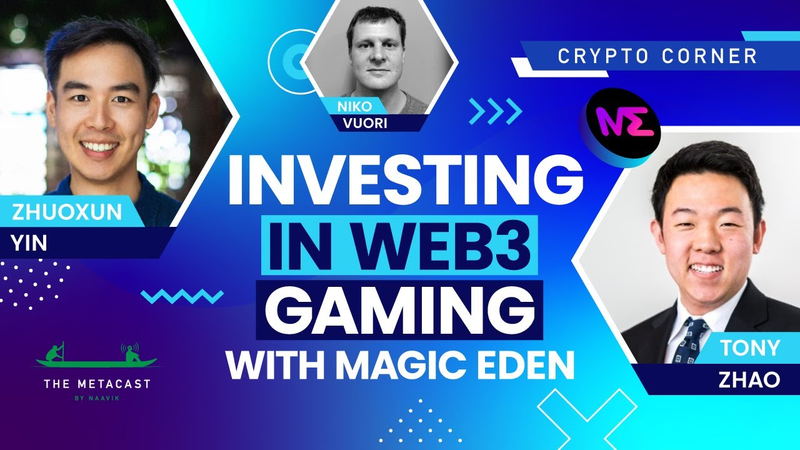
Investing in Web3 Gaming with Magic Eden - The Metacast by Naavik
Magic Eden has transitioned from a niche Solana-based NFT marketplace into a comprehensive gaming infrastructure provider, leveraging a $1.6 billion valuation to bridge the gap between traditional gaming and decentralized ecosystems.
- Magic Eden has evolved from a Solana-focused NFT marketplace into a comprehensive gaming infrastructure provider, currently valued at $1.6 billion.
- The platform aims to solve industry-wide distribution and discovery challenges by providing developers with launchpads, secondary market tools, and direct equity investments.
- The industry is shifting toward a 'Web 2.5' model that prioritizes fun, content-driven gameplay over the volatile, financialized 'play-to-earn' structures of the past.
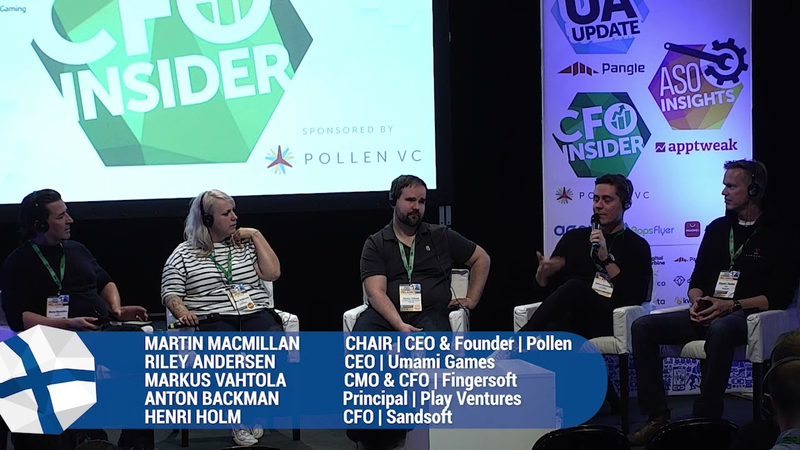
Panel: Weathering the Storm Insights From Mobile Gaming CFOs
The mobile gaming industry is currently undergoing a significant transition, moving away from experimental growth models toward a framework defined by operational rigor and fiscal discipline.
- Investors have shifted priorities from rapid, speculative expansion to companies that demonstrate financial resilience, sufficient cash runways, and measurable returns on ad spend.
- Rising user acquisition costs, driven by macroeconomic pressures and privacy regulations, have forced a transition toward operational rigor and fiscal discipline.
- Studios must now prioritize shorter payback periods and provide realistic, data-backed roadmaps to secure capital in a cautious market.
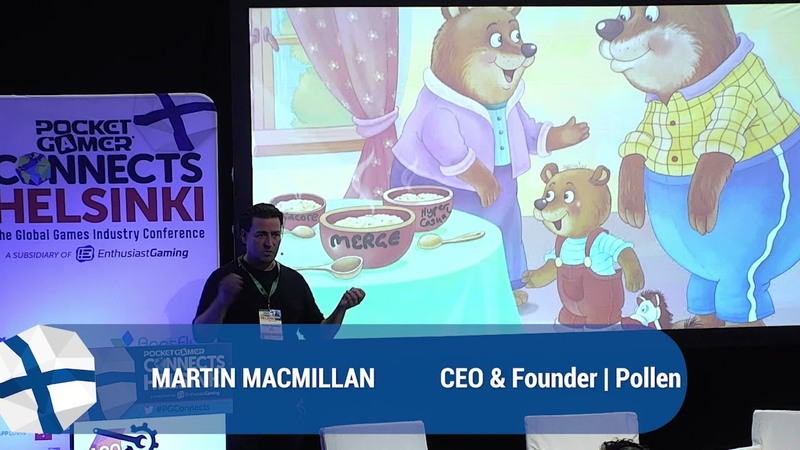
How To Measure & Compare Financial Returns on UA Spend - MARTIN MACMILLAN, Pollen VC
The primary objective of this analysis is to improve the financial literacy of gaming studios by establishing a standardized framework for measuring and comparing the financial returns of user acquisition (UA) investments.
- Studios should adopt a monthly Return on Investment (mROI) framework, calculated by dividing lifetime profit (LTV minus CAC) by acquisition cost and annualizing based on the time required to reach break-even.
- UA strategies vary significantly by genre, with hyper-casual games achieving break-even within 30 days, while mid-core and merge titles may require 270 to 400 days to recover initial investment.
- Relying on third-party publishers for UA funding is negatively correlated with acquisition potential, making self-publishing a vital milestone for long-term business viability.

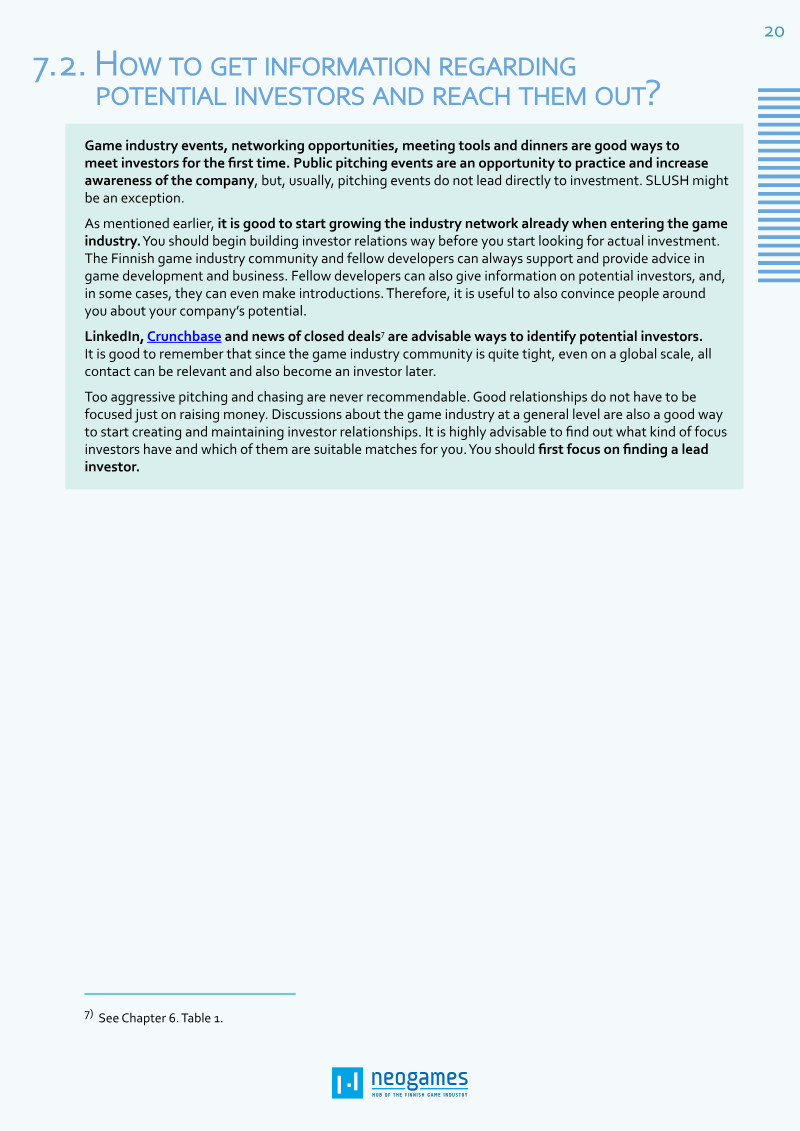
Best Practices for Young Game Start-ups to Rise Private Investments: A Case Study for the City of Helsinki
The Finnish game industry has reached a stage of significant professionalization, necessitating a strategic shift for early-stage startups seeking private capital.
- Startups must demonstrate a scalable business model capable of delivering a minimum 3x return on investment to attract private capital.
- Investors prioritize teams that balance creative technical expertise with rigorous business acumen, specifically requiring a clear growth trajectory and a realistic exit strategy.
- Founders should position their ventures as robust growth companies rather than development studios by emphasizing corporate governance and meticulous documentation to streamline due diligence.
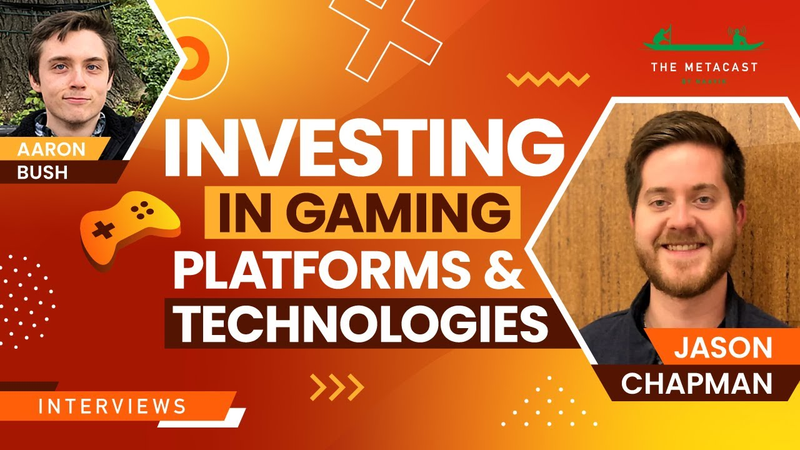
Jason Chapman: How Konvoy Ventures Invests in Gaming
Konvoy Ventures operates as a thesis-driven investment firm focused on the foundational infrastructure of the global gaming industry.
- Konvoy Ventures manages approximately $270 million across three funds, focusing exclusively on gaming infrastructure rather than content studios.
- The firm maintains a consistent investment pace of roughly 11 deals per year, screening approximately 700 potential deals per quarter.
- Investment strategy prioritizes 'picks and shovels' technology that supports the global population of 3 billion gamers.

Panel: Funding & Financing: How To Accurately Value Your Studio
Valuing a game studio is a multifaceted strategic exercise that requires balancing immediate capital requirements with long-term operational autonomy.
- Valuation should be treated as a strategic partnership tool rather than a static financial figure, as unrealistic early-stage valuations can create long-term hurdles for future growth and exit planning.
- Founders should aim for a threefold increase in studio valuation between funding rounds, contingent upon demonstrating consistent proof of concept and operational execution.
- Early-stage valuation is primarily driven by subjective assessments of the development team and the total addressable market, whereas mature studio valuation relies on data-driven metrics like player retention, revenue, and lifetime value.

Emily Greer: Lessons in Entrepreneurship, Scaling, and Culture
The modern gaming industry has transitioned from a volatile, hit-driven landscape into a mature ecosystem defined by sustainable games-as-a-service models and robust venture capital support.
- Modern game development requires applying e-commerce-style analytical rigor to game design to move from volatile hit-driven models to predictable, sustainable games-as-a-service revenue streams.
- Scaling a studio successfully requires transitioning from centralized decision-making to a model of autonomous units to maintain operational integrity and creative execution.
- Administrative organization and deliberate communication structures are core components of a studio's ability to execute its creative vision, rather than mere back-office functions.

Don't Make My Job Easy: Effectively Pitching to Publishers
Securing a publishing partnership requires developers to treat the pitch process as a high-stakes sales funnel where initial impressions dictate long-term viability.
- Publishers evaluate pitches using two modes: the 'thinky brain' (analytical/logical) and the 'feely brain' (emotional/instinctual), with the latter being the primary driver for initial interest and excitement.
- Pitching is a marketing exercise where the goal is to trigger an immediate emotional response, as many publishers decide whether to pass on a game before even opening the pitch deck or playing the demo.
- Avoid front-loading technical or financial data; instead, lead with the game's core identity, such as a high-quality GIF or a 60-second trailer that immediately conveys the game's unique aesthetic and 'vibe'.
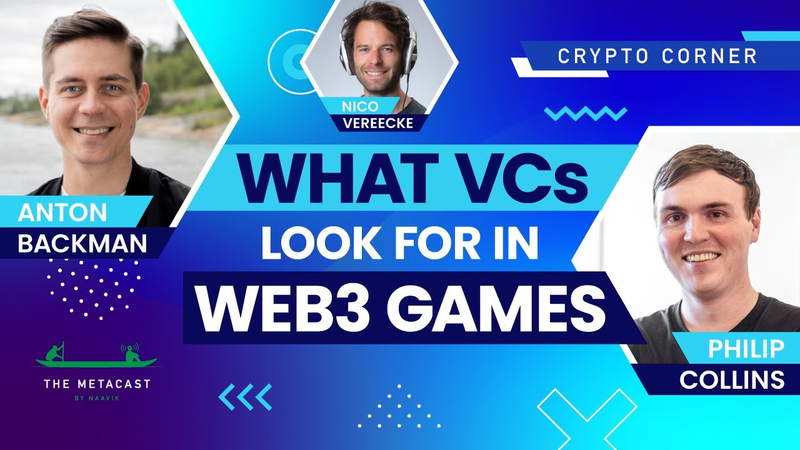
What VCs Look For in Web3 Games - The Metacast by Naavik
The Web3 gaming sector is undergoing a fundamental transition from speculative financial models toward a gameplay-first philosophy.
- The Web3 gaming industry is pivoting from speculative play-to-earn models toward a gameplay-first philosophy where core engagement loops function independently of financial incentives.
- Blockchain technology is now positioned as a tool to enhance metagame design and provide digital ownership, effectively transforming traditional in-game purchases into liquid assets to improve player lifetime value.
- Mass adoption depends on the emergence of a high-quality, hit game that scales organically, as content quality is currently prioritized over infrastructure improvements.