1 free read left. Create a free account for unlimited reading + AI research.
Create free account
What VCs Look For in Web3 Games - The Metacast by Naavik
Key insights
6 takeaways- 01Infrastructure development is shifting away from proprietary, studio-built tools toward third-party solutions that bridge the gap between Web3 and traditional mobile gaming standards.
- 02The sector faces a significant scaling hurdle due to a lack of sophisticated user acquisition and data analytics tools, as on-chain data is currently insufficient for precise player targeting.
- 03Investors expect critical improvements in wallet functionality and on-ramp accessibility to occur over the next 12 to 24 months to support the industry's maturation.
- 04Mass adoption depends on the emergence of a high-quality, hit game that scales organically, as content quality is currently prioritized over infrastructure improvements.
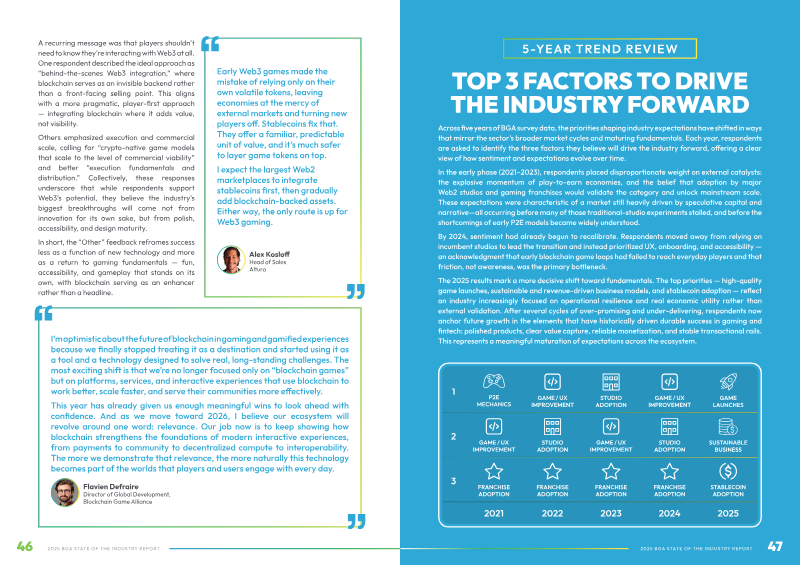
- 05The Web3 gaming industry is pivoting from speculative play-to-earn models toward a gameplay-first philosophy where core engagement loops function independently of financial incentives.
- 06Blockchain technology is now positioned as a tool to enhance metagame design and provide digital ownership, effectively transforming traditional in-game purchases into liquid assets to improve player lifetime value.
Ask AI about this video
Transcript
[Music] gm friends and welcome to the metacast brought to you by navic my name is nico today i'm joined by my friends philip collins and anton backman and in this episode we plan on having discussions between you know the people that don't build the investors um what we're looking for in web 3 games and we're we're gonna share our takes on where we think or what teams we think will win or what approaches we think will win so should be a very interesting um discussion um and i've been looking forward to this one first let's do like very very short intros so philip can you tell us a bit more about yourself yeah for sure so i'm phillip collins i'm part of the investment team at convoyventures which is a gaming dedicated visa vc fund based in denver colorado we actually particularly focus on platform infrastructure and tech in the gaming world but have done a lot of
a lot of work in web 3 and have had a little bit more of a content heavy focus especially back in 2021 so excited to be talking to taniko and anton about this and for those of you who don't know me and phil we talk weekly on air during our fog dao the future of gaming weekly blockchain gaming roll up that rules of the tongue we need to find a new name for that man anyway i'm i'm shocked you're willing to to have another conversation with me every week it rolls up it rolls up off the tongue there we go that is the perfect intro for our friend anton who has the driest humor of anyone i've ever met but anton please feel free to tell us more about yourself than that yes aside aside from my dry humor i'm a person i'm a principal of play ventures uh we're also an early stage gaming fund with a global focus investing in both content and tech in the game industry um now with a couple of funds up and running including uh including a crypto games fund called the play future fund which i run
together with with one of our partners kendrick uh and um yeah very excited to be here and also i just gotta chime in as you guys mentioned the the fog now that i have i have a pitch for you guys an idea for or for fog it's um and i'm happy to be included in that one as well so the idea is the fog of war podcast uh and that is a podcast where where the guests don't hear each other but the host hears everyone and then trying to have an asking discussion so um so if you need volunteers then hit me up it's that that's an experiment um and i feel like this is a terrible way of doing things specifically for the host because or yeah i don't know um maybe maybe you can join and you can host and i'll just be the audience just blindsided just listening to you um good um great intro also did you mention that you're also like a podcaster extraordinaire anton oh oh yeah that's that's true so i also i also co-host a tokenomics podcast a shameless plug
here here now which is uh which is the crypto segment of deconstructor fun uh a gaming podcast i'm sure many many listeners of this podcast also know so so tune in there uh to to to hear more when when me and me and ethan lieby uh deconstruct things that that are happening in the crypto games world and also some some good pun or good punch man i feel they're good uh yeah yeah that that's what all the guys i'll leave you to decide yeah good highly recommend good stuff there all right so while phil was talking i am i remembered something and i'd love to have your take on this that i've been noticing in the space so as some of you might know i'm like so whenever a deal comes into bitcraft and it's it's just a weird deal they send it to me you know i'm i'm into to like non-traditional kinds of deals and so i'm speaking to a lot of builders a lot of game developers who are looking to do weird stuff on chain right to like you know so a lot of games
most games actually they have the game logic exist you know on aws servers and then the assets live on the blockchain and that is considered a web3 game and we can have a discussion about should that be called web 2.5 game um but i'm looking at teams and and and games that have more of the logic happening on chain and so what i've been seeing and i'm actually kind of liking this but i would love to have your taken as well is um a lot of these games so they don't really know what so they're actually looking to build tooling and infrastructure but they don't really know what will be needed and so what they do is they they just build the game first and then they see oh we need this to build this game and to to actually make this vision come true um and then you know that then i guess that's the way they're they're starting uh thinking about this it might that be phil why you've invested heavily into content as well or might that be a reason to start doing that more as well yeah it's interesting because i do think that in order to fix that chicken and
the egg problem of the tooling that exists versus the games that can be built on it we've started to see a lot of content teams go for the infrastructure angle as well and i think a lot of the times we see other groups that are infrastructure focused trying to build the underlying tools that will eventually be available for licensing by game developers and i think a lot of the times we view it as a little bit of a distraction for a lot of content teams because just knowing what's coming down the pipeline in terms of the tools that will be available to them over the next 6 12 18 months i think there will be a broader availability of the tools that you need to build fully on chain or partially on-chain games and i think generally from our perspective and granted we are more infrastructure focused funds we like to see the content teams focus on the content just knowing what is going to be available to them soon to just drop in there because um so i'll try to avoid naming names and naming chains here but um one of the teams we've invested in is also building
um you know really on the bleeding edge of of on chain uh out there and so they chose um a layer two solution they wanted to build on but that layer two solution over-promised when the main net would go live and so for that reason like so basically they were like the game was kind of getting ready but then the chain on which it should live was not ready and so they had this counterparty risk or this third-party risk that they had to manage and so that's why i guess you know i would be that would be like a counterpoint to what you just mentioned right um if you assume that the tooling will be there but you don't have any control over it um you're putting yourself kind of at risk for sure and and i think it's also evolved too like we're investors or early investors in sky mavis and of course they've built ronin and they've built axionfinity to date i think in the past it's made more sense where the velocity of infrastructure being developed was not happening at the same rate as it is today and so businesses that have been building over the last three four years it does make sense that they've had to create their
own tools i just think that that mindset is shifting a little bit as the space continues to evolve and as more infrastructure continues to come to market i think it'll become less of a necessity whereas you know sky mavis viewed ronin as more of a necessity for them to achieve their goals um i think i think moving forward there will be more third-party availability for those developers so it's it's an evolution from necessity to you know ease of use from from third-party functionality just dropping in there i think i think this is a very interesting discussion in terms of kind of the whole chicken and egg problem between content and infrastructure and um maybe i i think i think the common consensus i usually see is that you know you want to have the infrastructure companies building out the infrastructure then the content will sort of come and the content will follow but i don't necessarily agree or at least a hundred percent with that i think there's a bit more nuanced nuance to it um plus it's also i mean it supports the narrative also vc in general because most vcs prefer to invest in
infrastructure uh that than going directly into content investing obviously we're all here in a lucky position that we're industry focused and we can take more portfolio approach to everything that's happening in the industry but but if a generalist vc investing in gaming is usually an infrastructure because they have a hard time warranting two or three studio investments per fund vintage but but going back to that discussion on kind of how does content come first or infrastructure there i think and again i'm not saying that history repeats itself but but it often rhymes i think i think it applies to this as well uh where um if we look at some of the bigger gaming infrastructure companies many of them started also as our tech infrastructure they usually start at studios from the get-go and building infrastructure solving for their own problems not necessarily they didn't become big game studios but they became big tech companies so obviously looking at discord which was a moba studio in the beginning looking at slack who were trying to build an mmo looking at even unity started out as a content developer and they eventually spun out unity studios to a separate
entity which didn't become obviously nearly as big as the uh the game engine company uh i know and and also if we look at unreal engine it's mostly a result of of them building their own solutions for their own games obviously there's some there's a lot of merits i think the philips comment about what the cadence of new technology is right now uh given that small teams they can plug in every sas product there is and then they can spun up spin up new tech with smaller teams all the time so you just generally have a much bigger abundance of of tech where i may maybe where my concerns lie there is that i'm not always sure if these um game gaming technology developers really understand the needs of the content developers and it potentially also if you rely too much on on on that um gaming infrastructure which mainly tries to emulate status quo and what's now possible in the market and trying to do incremental improvements uh does that stifle the innovation also
of the content developers so even if we see more and more uh apis being plugged into more and more sdks also being used and obviously of the distribution platforms as well i think we still see a number of custom tooling that is being built by these content teams but let's say they don't need to go through all of that rudimentary tech anymore but but i think that all of this actually also amplifies their ability to focus on that specific tooling they need to really figure out new things and when they figure out when when those that handful of studios that are out there in each kind of cycle if you will figure out figure out new things to do with games figure out completely new new types of games that's also that's when i believe the infrastructure developers look at okay what are these guys doing and let's let's start now now there's been a tech leap but then they kind of globalize or democratize that tech in a way for all the other developers to use but but there again i think in gaming i
think the con in many in many instances the content developers also spearhead a lot of the new technology that is coming along yeah and i think it is a it is a really interesting point and i think maybe to extend what i was saying before i think the degree of innovation that the infrastructure a content studio is trying to bring to the table really does matter where i think a lot of times my first point might have been referring to technology that's being a little bit more standardized and already being worked on a lot like a wallet for an example um it's not necessarily changing the game it's not changing the content they're able to create and they're kind of iterating on things that already exist and their time just may be better spent elsewhere however there are definitely a lot of really interesting gameplay changing infrastructures that can be built by a content studio and make something that was impossible possible i think that to your point anton is where it gets really interesting and you know then it's not just a misuse of time it's it's a requirement to build what you want to build and i think that is a very powerful tool and it's been interesting
too to see the flip of what we were talking about where we've actually seen a lot of infrastructure providers building games now and building out like a games team to show off the capabilities because sometimes these these infrastructure capabilities are so unique that no one's really ever seen it before and so they're building out their own games teams to have the proof of concept and show off what they're actually able to do with it which is an interesting flip of the content team's building infrastructure man there's like four things i want to dive into um one of the things that i wrote down was um it seems like there's old tooling or like a difference in all tooling versus new tooling and with which i mean tooling to solve a problem that we know exists and then tooling that will be used to solve problems that we actually don't even know that exists or will exist because i had a conversation with uh one of the the growth team members that are responsible for growth at sky mavis today and he told me that um one of the biggest so he
comes from the traditional um hyper-casual publishing space uh he worked at voodoo and so he one of the insights that he got is that within web 3 there is nothing like um like nothing built around ua that as it exists within the web 2 gaming space within specifically the mobile uh gaming space and so you know this is something that they're working on quite hard um and it is something that has like you know gives them a like it's something that they're quite a lot ahead in or with because one they have this it's it's it's being built it's being built we have been also women also looking into into this place and also it i think it's just just a quick note there because i think this is super interesting uh up like a subject and also when we look at um mobile free to play which is uh where arguably the the relationship between the player and the developer is very different uh from web3 where every if in web 3 we're building in public everything is super transparent we
always see where everything is going but in mobile free to play the the closest you get to your users are in a spreadsheet uh and sort of you see you see what their ltv is what the cpi was all the attribution data etc you understand everything about those players from that perspective and then are able and then you're able to to act to get players at scale when you when you nail that model correctly uh but that's maybe to the merit of of web 2 gaming and and free to play is that is what the level of the level of data sophistication that these companies are dealing with at a high level and how well they understand their users and this this is more or less completely absent still from the web 3 space which which maybe is a is a in in the beginning maybe a bit counter intuitive given the amount of of also open data that these companies can be dealing with but now there's just a bunch of raw data out there uh i don't know what the exact solution is going to be but uh but just starting from from kind of the
the way of kind of building up building an id or connecting one id to multiple wallet accounts etc and trying to get smarter about you know what the spending of these wallets are that are for example in the polygon ecosystem and then building targeting uh retargeting uh different kinds of uh ways to attract players with with airdrops sending sending nfts directly based on based on previous wallet activity i think these are kind of the this is the wet daydream of many many founders right now many game developers and when vc is included and trying to sort of get to the uh be the first ones to kind of figure that out at scale yeah it's been it's been interesting to see where i think most teams that are going after the ua issue i haven't heard a single one say that they're going to be able to fully rely on on-chain data they always need the direct relationships with the studios or content producer to match up that data with the on-chain data to go one layer deeper and really provide the quality of insights that warrants a standalone
business that helps you focus on air dropping to the highest value customers and knowing who these players are and what their capabilities and resources are so it has been interesting where it goes almost like maybe full circle eventually to the to the web 2 gaming world where you have to have the direct proprietary data insights from the studio even though you might think on-chain data is this great open source of information and it is but on its own i just really haven't seen anyone view that as sufficient um so i i do wonder if the strategies will will mirror what we've seen historically and just have an added layer of open web 3 data but haven't haven't really seen it quite yet yeah 100 and and i think i think most of most of the key problems we'll actually solve will be sold off chain on on the ui layer uh on just just how we interact with let's say let's say um let's take an example of i'm gonna give i'm a game developer i develop forex games uh and
um i want to target wallets uh of other players that also play forex games because they're likely my best look-alike audience uh to to to go after so i want to target them with or i want to get to them with targeted airdrops of assets in my game if they come into my game and claim them sort of they get that asset and that's the uh strategy but right now if i send if if i send an nft to someone which is unwarranted it's gonna if it's openc it's gonna go to the hidden tab uh and um how we're gonna get find that how am i gonna trust this this random game that sends me an ft what if it's a phishing attempt so and and i think the best possible way of doing any messaging is that you you include you include a text message in the metadata that hey come and claim this at this url uh and then just trust us you know and come come play the game so you're anyways going to be after trusting on the word of mouth uh layer there layer there as well but imagine a wallet which kind of where you
could read the wallet interface could read from the metadata that that sort of it it it would show you in your wallet a banner out of that game and some key information about that game how many players what this game is about and then there's a more more ux friendly way of actually accepting that nfd and then jumping directly into the game obviously given that it's running in the browser or or even directing you to the epic game store or whichever storefront allows the distribution of your game but um but yeah still a lot to do on that front but luckily we're seeing we're seeing teams who are kind of thinking couple of steps ahead from from only only focusing on the stuff that is now happening in the market and trying to optimize for you know does this wallet interface look good but you know just keep it allow people to play this play game for free and then try to figure as much stuff in the background as possible so it sounds like you know a lot of teams are trying to figure out this this ua problem which i would consider already an advanced problem when it comes to web3 because there are some you know
more self-evident issues that are still not solved um like you know just like an on-ramp right just before the recording anton tried to mint and he didn't have any soul for him and so he tried to use moon pay but his finnish banks didn't like that so he couldn't get any soul to his uh to his wallet um and so you know the home wrap is an issue waltz is an issue um and so when but you also witnessed when i was saved by the community you were safe buddy it's beautiful but three so wholesome positive some i love this i gotta i gotta i gotta i got an emergency drop of saul in my phantom and i was enabled it's amazing yeah i wish i had friends like that or a community like that um out please make it happen anyway um what i was going to ask is i wanted to have your thoughts on um when what's the time frame you consider some of these basic needs basic toolings to be like solve problems where you don't have to ask a um a game developer that's coming to you
and with their pitch deck about like you know how is your own reps going what what is your unwrap going to look like and what's your wallet solution and etc um some of these basic principles when you expect um those to be solved problems i feel like we'll see the first iteration of solving those problems within the next kind of 12 months and again emphasis on first iteration i think we'll continue to see people build on top of wallets and these other core infrastructure layers that are necessary for blockchain gaming but i've definitely started to see more consensus around what's the best on-ramp out there right now what wallet should i be using and we're still seeing a lot of innovation in products that will be coming out over the next one or two years i do feel like within the next year we'll continue to see the release of a v1 of that so still i think a long way to go to get it to where it ultimately needs to be but i think the consensus will start to form on the optimal tools to build the game on top of a sooner rather than later
i think i think it's going to be i think it's going to be at the point where there's a decent game in the market i think that's when the next gear will kick in with this infrastructure because i still think that most most of these teams are building as i mentioned they're they're kind of trying to solve problems that they don't even potentially know yet about uh i think some of the europe because some of the early criticism i got from some of our content developers when i was when i was asking for their opinion on on certain infrastructure that i was seeing in the market is that they felt that that yeah there are some nice to haves but these are still quite shallow uh in in terms of and then then you were seeing a bunch of a bunch of similar solutions being being built in the market but i think i think they're all suffering from the same same challenge that that i'm not sure if they are i'm not sure if they know that they aren't potentially building for the right challenges yet uh and um and they're right i think it's it's it's the same answer i have for when when people ask for what chain do i think is
the best one for gaming it's whichever gonna be the one that has the first hit game at scale uh because because then probably other developers also flock to that chain probably not for the right reasons or or who knows but but i think that's still the most important catalyst for everything in this space is to have a game that that sort of scales in a healthy manner where you have players in my opinion that are paying for entertainment value obviously you have all of this other stuff also in place to kind of enable this display or driven economy but finding a game which is appealing for for players who are willing to pay for entertainment value at scale that's what i will be the most important catalyst also for for then taking another look okay when are we going to see this as as philip mentioned sort of this way of infrastructure being ready uh and then there then they'll again start looking at new new challenges to to build solutions for yeah and there will be a lot to sort out
too i think something that might go unnoticed in general is just how many people are going after the same problems right now and how many wallets there are being built how many different layer ones honestly are being built there's a lot of people going after the same problems and so i think anton's point is a good one that popularity will eventually start to start to really be important to adoption from from other developers and builders and who knows like i don't know if i buy into uh the first really really good blockchain game being out in a year i think that'll potentially depend on web two games pivoting into web 3 versus native web 3 games that are going to be ready because i do still feel like a lot of the top quality web 3 games that i've seen come through our office they still have you know two to three years of development time left and so the first web 3 native game might not be ready and then the first great web 3 game might not be ready in the next year but you never know who's going to enter the mix and bring it bring it forward you invested in the wrong game studios
bro um yeah i think it is an interesting discussion and it seems like the the network effects are like way stronger than anything we've ever seen because of this concept of composability and interoperability where you know if one chain starts gaining traction they have um they start getting player liquidity people start building these tools can be reused so people like get drawn there it almost it to me at least it feels like if the eth ecosystem the evm ecosystem has kind of won already um it like you know if a very very very good game would come out on a blockchain like maybe flow or bind in smart chain or whatever they're called now do you guys think that then you would these chains would have potential all of a sudden yeah i think i i think they would attract a certain amount of developer activity obviously also depending on how what the revenue numbers look like uh and i think specifically for maybe developers which
would be most mostly developers out there who who either don't care about crypto yet uh or or are are a bit undecided on on on what they would build on because i i think there is kind of a what's this what's this bias called survivorship bias uh also in a way uh that that they see that okay because again if it's something like flow or something that's a bit more walled walled garden-ish type of a solution it's also easier to solve for ux uh in a big way and um and obviously if there's a hit game and then you generate a lot of wallets in the background that might be hosted in the beginning but when you teach the player that players retain for a longer time you might want to present the option to like you know take control of your own wallet and that's how you potentially i would view that as yet another conversion event where you see that that player that user is even more vested into your ecosystem uh and it's it's a bit like it's all a bit like having an apple id as well uh
and then you're kind of invested into the app store ecosystem in a way uh so so if let's say and and this now specifically also for majority of users that aren't now not aren't yet onboarded to with to crypto and web3 uh but um but i think it can be it can it can be a strong catalyst for that as well and then they do own those users in a different way even though uh the purists might might not consider that being a kind of a true true crypto solution yeah i mean i definitely think the quality of content will eventually determine success for a lot of these infrastructure layers and i think that's why groups have relied so heavily on business development so far and basically buying content and i think it's been something that polygon has done incredibly well and one of the reasons for their lead is they've they've invested in a ton of content creators they they have this massive stable of content that's bound to come out and the more content you have the
more quality content you have the higher likelihood of hitting that success and so i feel like this bd effort from them has been to position themselves with the best content with the highest likelihood of hitting because eventually it's not going to just be about throwing investments all over the place and getting all these studios on it's going to be having the beacon of content that attracts everyone there it's like fortnight to the epic game store like that is the beacon of light that brought people in and i think i think that will be key to the strategy so i think today money is almost a proxy for game quality and eventually that game quality will take over as the the ua case for for the infrastructure so this brings us very naturally to the reason why we're here together the three of us so a little bit of context we were the three of us interviewed by a friend of ours or mine at least avihai um who wanted to write a piece about how vcs gaming vcs look at what's happening with the bear markets what they're
looking for and so one of the quotes in the piece which might be out once this goes out we'll see about that was um around you know who will be this beacon of light that draws into players and what's what's the main innovation that they will they will bring to two games um or to well where will the main innovation within their game come from and so the question is a bit will this do we expect this to be at the games level or will we expect this to be at the top economics level um and so anton i you had a thought there and i'd love to have your taken and we can now we can discuss it yeah yeah i know i think this is uh i think we've been we've been discussing this a few times as well with nico previously or potentially uh and um yeah i'd say if i have to choose between one of those uh now again i don't think it i don't think it's that black and white and now i have to double check what i answered in that report uh but it was a very thoughtful answer answer anyhow but um i think
i think it's definitely gameplay first in my world at least uh but this but this all this also depends on the audience but i'll get to that i'll get to that in a bit but i think what initially draws someone to play a game uh is that kind of core loop that's on the core mechanic that you find interesting or it might be the idea of you know playing with friends or something but the reason you come back the same day or the next days because you find that core gameplay being enjoyable and i'm not yet sure how how much of an impact uh things being on chain can have to that specific type of core gameplay there is though a genre of games where that has an impact uh and um i'll we'll hopefully also get into that a bit uh but um but um but having that sort of core core piece of of you know basic actions that you do in the game is what you find interesting it might be it might be tab targeting based combat in a in an mmorpg it might be it might be an fps game might be a top down shooter it might be
might be kind of the isometric i can slash pressing your mouse your mouse button in and running around slaying demons whatever or tapping uh setting up your bases attacking someone in clash of clans that's the fun part and that's that's that's kind of the reason those kind of tactile uh experiences that kind of light up all of the all the brain fluids and and get you going uh that um those are the reasons that you come back for those games daily uh because i think that's kind of the spark for why you find the game interesting and and but why you stayed to play that game for years now that's a different matter and that's obviously where the meta game design comes in and and sort of what are these kind of long-term goals and and other other other sort of key things that keep you in place it's a social network you build in the game uh it might be long-term goals that the game is setting uh to you uh and there i think the on-chain design has a bigger part to play uh and especially as we
sort of you know we're gamers everyone in in in in in in this call i think we understand what it means to to feel that sort of there's economic value to or sort of at least there's entertainment value emotional value so we also find that i think the economic value is kind of a proxy or their proxy far for their being economic value also within these assets and and that's something where i believe on chain is is better to emulate when we talk about larger masses of players who necessarily don't find real value in in in game in game elements being being on chain and just before my monologue gets a bit too long uh i also want to go back to my previous point of of of where i where i think on-chain game design does make sense and um i want to take us back a couple a month a month and a half we were having coffee with nico in tribeca the only good black coffee i had in new york during that week but um there i i had a dream about on chain games i
told this to nico that i finally found out which audience or there is i believe that actually the unchained games like dark forest and for example what what playment is building uh which is which is a shared investment that uh between play and witchcraft with which bitcraft led uh led earlier uh and um i think that's those are the games that are is the only one yet within crypto that have fun product market fit because um or especially dark forest because we're looking at a game where people don't really make any gains but everything is everything is happening on chain uh you're stimulating fog of war for example with with with privacy tech uh in crypto and i think i think that it's sort of um those kinds of games are mostly played by developers and really big like industry enthusiasts who enjoy they truly get i believe they truly get entertainment value of knowing that these things are happening on chain
and they're happy to play they're happy to pay for it and they're happy to do that without having to earn money uh from doing it and that's why that's why i find those super interesting and i had had my doubts of of that specific subgenre of crypto games previously but uh maybe i don't know if this insight or or this this thought holds sort of holds water but i i believe it does to a certain extent and i believe that's actually we're looking there at the first audience with encrypts against where we have found prod market fit uh i think crypto gains a spectrum on depending on how much on-chain elements you incorporate in your game development but now that's a super interesting sub segment at the moment and seeing where that could grow by by finding that core audience and seeing how how far that core audience could extend there was a bit of monologue but um but if i missed any of any of the points and uh if you think i had any other good pointers in that report niko then please uh please point them out
no i mean i think i i totally agree on the on the gameplay versus tokenomic side gameplay definitely comes out on top there i think the fundamental bar that i use for that is that gameplay can exist without tokenomics and tokenomics i don't believe can exist without gameplay i think the last 20 30 years have shown us that gameplay on its own can stand alone um if you asked people this a year ago i think there would have been a more controversial conversation around tokenomics versus gameplay where a year ago we were still exploring the origins of blockchain gaming and play to earn and what it meant to have financial rewards coming from playing a video game and so i think there was there was more conversation around how a successful tokenomics model and we saw this with with the axi example could really drive an audience forward and be the core attraction i also just think that over optimizing for tokenomics in a game will inevitably be a negative for for studios where as of today you're just attracting the wrong audience and i think that's the audience that will bounce around to whatever
tokenomics model serves them best not even is the best model but gameplay aside you're there for the earning mechanism and so i think over optimizing towards gameplay enables you to have a a more lengthened uh a lengthened experience for players and really act as what we've historically seen from from traditional games which is a source of entertainment a source of enjoyment and the ability to create an ip that that survives the test of time and brings uh brings in cash flow for for years or decades um so i i think it's this this fundamental gameplay can survive without tokenomics but i don't think tokenomics can drive a game forward meaningfully if it doesn't have an engaging core loop that brings players back for the right reasons so if i would try to summarize what i hear you guys say it would be that successful game will have a
fun non-crypto related core gameplay loop and there's a sort of meta economic layer around that which just deepens the game and makes it um more fun to replay over the long term would that be fair i think from a tokenomics perspective yes but i do think there is an angle as well and we've talked about this in the fog discord about how nfts like set the traditional view of like tokenomics aside how you can leverage blockchain and nfts to impact your core gameplay loop kind of like that choose your own adventure example where the way that you play the game might shape the way that the future core loop interacts with you and so there's a lot of cool things you can do there but i think purely from a tokenomics perspective i would agree with what you're saying okay yeah i think again there's um it's not black and white in a sense that it's one piece of this and it's one piece of that but it's a it's a it's a result of constant iteration uh it might be that you know something on chain will will affect the
core loop now i don't know what that's going to be uh but i think you just have to ask you know who is my audience who am i building this for uh and um do they care do they find this fun uh and then the end result is a mix of it's a mix of something like that and here again maybe i thought that i sometimes get criticized for but i i do think that um there is a lot to learn from free to play uh when also building uh building these games because these are also down here these are these are games that have been also or especially if we look at games that have had deep economies before uh but instead of you know the developer being the central bank now it's an open market more in a way so bringing more challenges but potentially also much much deeper retention hooks also in a way because i think players ultimately feel more vested in these games and in these economies when you free it up up to other players but i think some of the basic rules still stand
there is a loop there is a behavioral loop when you log into the game and what what you want to do there uh and uh that gets you interested because again the attention that we're living in the attention economy uh get pop-ups left and right what we should do what we should try uh and i mean like like e-commerce sites are competing for the same screen time as any mobile game or any in pc game or netflix for that matter so it has to it has to be engaging what you do when you come in and relatively effortless or i mean not effortless but effortlessly enough you gotta find the you have to find the flow state of something being fun in that game but you know that thing is only going to be fun what couple of days and there needs to be kind of long-term stuff the metagame which also exists in a lot of the kind of very economy driven free-to-play games uh and the social aspect but these are all kind of these are all building on top of that super fun experience that you have when you when you play the game and sort of
come into the game for for the first couple of times and that's what made and then the other part is what makes you stay for those uh for many years not to say that you know game free-to-play is i'm not saying that they're vis-a-vis with uh with crypto games obviously it's going to be we've already seen that with teams that come from free to play and kind of are struggling to to kind of reinvent not reinvent the wheel but so think outside of the uh the kind of boundaries are free to play and just just try and forgetting those old rules and really thinking about something new but but there is a lot to i think there's there's always a lot to learn from previous paradigms and then i think that's that's made my main point with we're thinking that or i would say the difference between mobile free-to-play games and single-player role-playing games on console is bigger than what what i believe a big category of web 3 games uh and between and free to play games will look like let's put it that way uh because you're still at the heart
you're still dealing with that with sort of a deep game economy in both of these instances and i do think they speak to the same player base especially when we start looking at growing outside of outside of small sort of core player base and also and also because um i promise i'll shut up in in in a second but but also from the perspective of of um what people are generally what we look at the western markets what players are generally willing to spend on uh if we look at that kind of archetypal gamer which i believe all of us were at some point the sweaty uh 14 year old playing world of warcraft league of legends cs go hearthstone etc um we hate uh pay to win like it runs deep it runs deep in our hearts we hate pay to win and we're not we're not afraid of being vocal about it so we're not going to pay for something that affects gameplay but if you look at gaming revenue-wise
where that spending is happening it's happening in the paid sort of pay-to-win mobile games where you're paying for progress you're you're you're paying for time skips uh because you don't have time to play so you're you're substituting with paying and there's a big audience for it so revenue-wise it's very very very important for gaming and also for games businesses uh and um because of that behavior exists in western markets within those genres that's why i find those genres super compelling also for for um games that have on-chain elements as i believe that those players can become even more vested and and and spend even more time and their resources in in playing these games and get even more enjoyment out of it now that we we unlock the next level for them to be actually part of the game economist they have been playing for years interesting and you know you shared that you were not afraid to put some uncontroversial uncontroversial or controversial thoughts out there sorry um so i'll do the same i'll um so we we've had discussion phil probably
already knows what i'm going to say right but i um i think so what i've seen over the past year is that um the fact that you build an open economy around games can actually has a risk of negatively impacting that core gameplay loop that's fine um and i think that in the short term is what's gonna make most of the iterations around this fail um i do believe that in the long term the biggest game so the biggest game ever i think will happen within the next decade and it will be a massive um mmo where you know oh that's completely open it's going to be incredibly well designed and it's going to be a design around the fact that the economy is open but before i think before that exists and i also think we'll see a lot of failures among along the way because i think designing a game a good game with a metagame that has an open economy aspect is way harder than doing the same
with the closed economy um and so we're going to see a lot of failures but what i'm personally then looking for is um you know things like playment we just discussed payment it's a company they're building a fully enchained game um it's looking amazing by the way and we'll we'll get you know some of the founders on pretty soon here to to discuss more in depth what they're doing but um it is i'm actually looking for games where blockchain actually impacts the core gameplay experience um and i think you know those in the short term will do better because most games that have like try to access this open economy this meta layer will be over financialized and will um and that will impact the the core gameplay loop no it's been interesting over the last i mean call it 12 to 15 months where we went through this really big but really fast cycle where blockchain gaming hype really started with play to earn once played earn came up we started seeing more people flock to fiat on ramps and then we started seeing people
flock to general blockchain education eventually we got towards a big wave of of gameplay first pitches and i'm sure you guys have seen this as well and it's been interesting how the the industry kind of catches up to itself where like month by month i was seeing the same trends come from a bunch of different founders where everyone was moving in the same direction um and it kind of went from that that that start was play to earn the financialization and earning capabilities from games to the game play first mentality and i think once we hit gameplay first that's when we really started to see nico's point of we need to see the blockchain functionality enhance the core game loop because if not like who cares right i think that's what a lot of traditional gamers say is it doesn't do anything like why does this matter and i think that's where blockchain gaming does have an interesting opportunity to stand out where it's not just core game loop with nfts as cosmetics there there is are these interesting ways to reward
creators impact the core loop of the experience and all these other things that i think will be really critical to getting buy-in from people that are currently saying who cares and for them to try it out because there's something truly novel and unique about the upcoming experiences that we're going to start seeing and then i just want to quickly repeat my previous point that that again i built i do believe this spectrum of how much unchained function elements you include in your game and also a reason why we invest also investors employment and also we we want to hit the best teams tackling each part of this segment i just believe these audiences are different uh i believe there is an audience for all of these spectrums and those are potentially very high value audiences and we want to be targeting students building for all of these parts and kind of getting getting exposure to the to to the whole kind of plethora of different games that are going to be out there uh but but when i think about you know what could be interesting for that uh
more casual web to a mobile gamer but that spill still spends a lot of money on games because revenue wise that's a very interesting audience today in gaming and i'm trying to figure out how to get or or what's kind of what's the way to get them into the space in a few years time they might hopefully sort of drift more toward towards those games where there is innovation on a core gameplay level and including stuff uh on-chain currently they still bring to current they still bring some amount of complexity and arguably these players that i'm talking about are necessarily not going to be try out those games but um but i think looking at this as a timeline i think i think the next step is really unlocking that new premium in ltv by by inducing the idea to players that they act that they actually own the things in the game and i think that that will unlock a premium on spending that we haven't seen uh in in more mass-market games previously yeah i
remember one one interesting comment on that that i'm aligned with i think i saw a tweet like a year ago and it was talking about how the fact that a player shouldn't want to spend 500 000 plus dollars on a game is a flaw in game design and i think that's something where spending capabilities and willingness to spend is going to increase through ownership because it's not a sunk cost once you purchase something it is a true asset and so while 500k granted is a massive number i think the the sentiment behind it does make sense and aligns with anton's comments about ltvs where true ownership does matter because it's it's not a consumption cost it's it truly is an asset that i own and if i move to something else i can swap it for something that is higher value to me so it'll be interesting to see how that impacts game monetization but i do think it does tune things to enable whales to become even bigger whales when they when they
enter this world yeah definitely and i mean and all of these even speculation plays its part here in terms of of what what what are the different components that affect someone spending behavior uh in these games i hope it's going to be a much smaller part in the future than it is right now but i think it will always be present in some way but but if as long as the entertainment value trumps that sort of speculation value uh then then i think we're headed to the right direction because again i think a funny example if we go into confession mode here just real quickly before nico needs to jump uh but um world of warcraft's game i've spent by far the most money on like by far been subscribed for 14 years i bought trading card game items from from from third party sites i bought wow called i bought power leveling i bought the whole thing i've spent so much money on that game and the the game i must spend second most money on by far is crypto raiders because i spent like just a bunch of money off the bat on those on those characters when i started playing like my league of legends skins don't come
near that that level of spending but there was the powerful primitive like i actually okay obviously it was new and cool and things but which still that sort of that powerful primitive owning that stuff really uh and being able to if i want to get rid of them then i can get rid of them etc but again it's very like yeah sorry i'm example it feels like we could probably keep this discussion going for another hour i i would love also to have a discussion once about what's giving players resellability means for developer revenues or publisher revenues because no one seems to talk about that and that is something that i don't know we need to discuss what it means anyway um this was amazing yeah so so so so we're gonna do this we're going to make this a trilogy we're going to call this a new hope the second one is ants on strikes back and then and then it's return of the fall return of the fog in in the last episode love that love that good anton phillip thanks so much for joining uh listener uh thank you for listening too if you made it here really
appreciate it if you liked what you heard feel free to let us know you can join the discord you can also subscribe to the navic newsletter and if you want to have some really really deep insights way deeper than what we just discussed you can also subscribe to navic pro with the code medicals there all right guys thanks for this um it was a good episode i really enjoyed this um yeah that's it and uh look forward to speaking to you in the next one cheers [Music] you
Summary
The Web3 gaming sector is undergoing a fundamental transition from speculative financial models toward a gameplay-first philosophy. While early iterations prioritized tokenomics and play-to-earn mechanics, the current industry consensus emphasizes that sustainable growth relies on engaging core loops that function independently of financial incentives. Blockchain technology is now viewed as a tool to enhance metagame design and provide true digital ownership, which transforms traditional in-game purchases into liquid assets. This shift is intended to increase player lifetime value and foster long-term retention by prioritizing entertainment value over short-term speculation.
Infrastructure development remains a critical focus, though the industry is moving away from the necessity of proprietary, studio-built tools. As the market matures, third-party solutions are increasingly addressing the gap between Web3 and traditional mobile gaming standards. Despite this progress, the sector currently lacks the sophisticated user acquisition and data analytics capabilities found in Web2 environments. On-chain data alone remains insufficient for precise player targeting, creating a significant hurdle for developers attempting to scale their titles effectively.
The ultimate catalyst for mass adoption is expected to be the emergence of a high-quality, hit game that scales organically. Investors argue that while infrastructure improvements in wallets and on-ramps are essential over the next 12 to 24 months, these tools are secondary to the quality of the content itself. By attracting top-tier developers who utilize blockchain primitives to create unique, decentralized experiences, the industry aims to move beyond financialized gaming. Success will be defined by projects that meaningfully integrate on-chain elements into the player experience, thereby validating the underlying infrastructure through genuine user engagement rather than artificial incentives.