1 free read left. Create a free account for unlimited reading + AI research.
Create free account
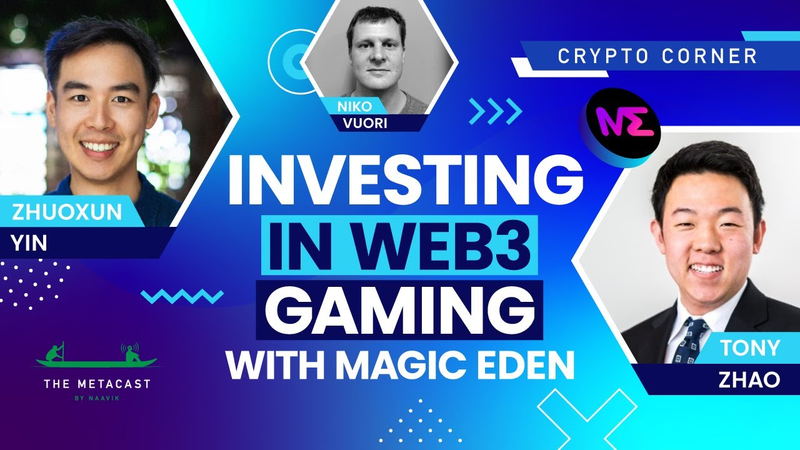
Investing in Web3 Gaming with Magic Eden - The Metacast by Naavik
Key insights
6 takeaways- 01Magic Eden has evolved from a Solana-focused NFT marketplace into a comprehensive gaming infrastructure provider, currently valued at $1.6 billion.
- 02The industry is shifting toward a 'Web 2.5' model that prioritizes fun, content-driven gameplay over the volatile, financialized 'play-to-earn' structures of the past.
- 03The platform aims to solve industry-wide distribution and discovery challenges by providing developers with launchpads, secondary market tools, and direct equity investments.
- 04Developers are actively reducing onboarding friction by removing complex wallet requirements and implementing strategies like delayed minting or free NFT passes.
- 05The sector's success over the next 6 to 12 months depends on the ability of developers to prioritize player experience while managing decentralized economies.
- 06The ongoing debate regarding creator royalties is acting as a catalyst for studios to develop more creative, game-specific monetization strategies.
Ask AI about this video
Transcript
[Music] hello and welcome to the medicast crypto Corner brought to you by navic I'm your host nickovori today I am very excited to invite a couple of special guests to the Pod um they're from Magic Eden they occupy a uniquely interesting vantage point in my opinion at least in the web 3 ecosystem for those who don't know yet magic Eden is the largest by far nft Marketplace on Solana and I know that they have some pretty ambitious plans to give openc a run for its money as well and go across chain uh in its last round of funding the company was valued at 1.6 billion dollars and it's barely a year old so there's been some crazy growth and some really exciting initiatives that we're going to talk about they have in the past at least said that they are cash flow positive and profitable and have been since day one maybe we can get a confirmation or denial at some point in this pod um whether that's still true and I know that they have about 85-95
percent market share depending on what day you look and what period you look over in Solano so basically long story short the companies come a very long way in a very short space of time uh they have their fingers and a lot of Pies they do a lot of interesting things in the in the ecosystem and so our first guest today I'm going to introduce to you I really hope I get the pronunciation correct we practiced it at the start or Zed for short we'll be calling him Zed after this um welcome to the show yo thanks Nico really appreciate it man uh great to have you here all right um what is uh and we'll get to Tony in a second but what is important in my mind to to know is that magician actually wasn't the first um Salon nft Marketplace I don't think they maybe even weren't the third um but they very very quickly grew to overtake the other um marketplaces and in my opinion and you can correct me if I'm wrong here uh it's because it's been a Relentless focus on user experience iterating moving fast trying different things out uh tweaking what's not working um being very public sometimes
apologizing for things which I I really appreciate and being very open and transparent and I think that's built a lot of trust at least it has with me um and I know a lot of other devs uh in that space as well um one of the things that they've done really interestingly in my opinion and are one of the best at doing so far at least uh obviously things move at a million miles in crypto Twitter and in the world web 3 is um they very early on invested in gaming and that's really what we're going to talk about here on this pod um they started out of course helping um all nft projects but Game launch pads as well they've got the eating games portal which showcases different you know games in the ecosystem and most recently and this is why we're going to get to Tony they've started investing making Equity Investments and other kinds of Investments directly into into web through gaming companies um and so that's what we wanted to have Tony Tony Zhao on the show as well uh on on the Pod um Tony came to Magic Eden from tencent and now he leads games investing at Magic Eden Tony welcome to the pod great
to have you here hey thanks Nico awesome so great all right well with that out of the way uh let's dive into the episode so the first question I have for you is going to start basically from my thesis in my gaming career and I'm going to just kind of see see how you guys feel about it so um in my career my main thesis has always been whenever there's this big movement um of technology and culture consumer culture that kind of changes people in in an interesting way uh gaming oftentimes emerges as a big use case for that particular kind of moment and culture or particular use case that's emerged so what I mean by that I got my start at Zynga Zynga of course was building games on top of social networks and it was a way for casual gamers to play in the middle of the day in the office for the first time and brought a lot of players who otherwise wouldn't be Gamers into gaming mobile of course opened up you know uh time and place you could play Anywhere um and you know again unlocked new use cases and of course gaming group has grown to be the biggest use case and the
biggest Revenue drivers certainly in the mobile ecosystem and so I'd be interested to hear and Tully is actually on the record saying that he sees you know founder of Solana when the founders of Solana is on the record of saying that he sees gaming as potentially a driver of mass market adoption of blockchain and so I'm and I certainly believe that otherwise I wouldn't be doing what I'm doing as my day job um do you do you share this view do you see blockchain as this uniquely compelling technology that kind of opens up um gaming to a new type of gamer does it open it up at all or or is it the same type of gamer but just playing in a different way I'm curious to hear your guys's thoughts said maybe we start with you on this one yeah for sure yeah I appreciate it Nico this is uh it's gonna be a fun chat no I think we absolutely believe it too I mean we wouldn't I think be having this conversation if uh if we we also were not in this boat the thing that we've always found very very exciting about it is that I mean the reason we started magic Eden in the first place was because we felt like there had to be a
much better way for creators communities to interact with one another and um drive a lot of that growth in a way that we haven't seen before that's ultimately what I think nfts generally are about and even if you look back at the history of crypto it's all very very tribal very Community Driven uh very very inherently social right and when we started this company we thought to ourselves hey like what does this mirror and it obviously mirrors a lot of things that we see in traditional camping right where people Gather in communities people are online a lot um they're having a lot of fun and I think that's inherently very very complementary to to what we what we saw and what we observed with nfts so very naturally I think that it makes a ton of sense that game developers are some of the more experimental folks that will come and actually try the stuff like people like yourself Nico so we we definitely believe this I think the second Point patio question around what
types of players will this attract I think the early adopters will be a different type of player we've already started to see this right the ones that have experimented with some of the more like crypto native and web3 Native games they that is a very very web 3 native audience so far and I do expect that uh that's probably the audience that initially will drive a lot of the early adoption here but over a a long sort of not even a long Arc but you know over a a certain time Horizon and we start to see more developers come and experiment with with web3 as a new business model we expect more traditional types of games to obviously uh proliferate too and that you know if that plays out well and that hopefully is really beneficial for people like like yourself and and us as a Marketplace we would expect to see that that is the moment that drives a lot of mass uh adoption into crypto and nfts but it's not necessarily like a you know
crypto kind of thing or or not crypto thing it's more this is a different kind of business model for games and um we want to be here as a as a Marketplace and a platform to be able to serve that movement towards this new business and we're really excited about it awesome I mean a lot of things there resonate very strongly with me different kind of business model that's one of the things that I've always almost excited by also different kinds of game designs you know different types of gaming experiences are opened up because of blockchain I mean to me at least blockchain Technologies it's not necessarily about crypto at all it's just about having a different type of tool set to develop different kinds of experiences and unlock different kinds of economies and of course that drive different kinds of Revenue models so so great to hear we we have a really shared view there um you obviously you were very early uh to open up gaming as a as a I want to call it a portal but uh you know a use case for nfts in your Marketplace um and and you've been driving that since not relentlessly or maybe relentlessly you drive everything
relentlessly but um what do you see the magic Eden role being for gaming in this ecosystem obviously nft Marketplace launch pad sure those are a great place to start um where where else does it go like what is your kind of vision for how does um gaming fit in with the overall magic Eden strategy as you move forward to the next phase Yeah official it's a great question uh uh I'll kick off and then I think Tony might have some thoughts I think the generally in Magic Eden we we think about the market uh as more about categories rather than I think a lot of people think about crypto and nfts is like what chains will you be on we kind of think about it from like a a category and vertical standpoint and we've always felt that um for a category like gaming it requires a different kind of mindset and a different kind of product to hopefully showcase the best of what's being built by a bunch of you know really Innovative developers and we felt that in the early
days we should focus on basically two areas one is Collectibles which is kind of what everyone saw was the thing that got product Market fit with nfts in the early days and then the second thing which we think will drive a lot of the future growth is is in gaming and you know the reason we made that decision was because um number one yeah kind of to the to the reasons earlier around it being a very very complementary to uh how people think already about nfts and we decided at a very early stage to separate these things from a product standpoint too and we felt that uh what is the thing ultimately that that game developers are looking for if they're coming to build in web3 there's probably two things at the highest level one is like they want to know how to do it all right they need there's there's so many it's almost like a Pandora's box of questions right it's like what change should I be on what Marketplace should I use how do I mint an nft there's all these kind of questions that come flooding to the fore and we wanted to simplify that Journey which is why we basically built uh first
of all like a primary Market this is the launch pad um that you mentioned earlier and obviously a secondary Market which is um uh either a first party or magic Eden or something that can be white labeled and uh games can build their own Marketplace using our infrastructure so all of these things are kind of just call it you know broadly in the bucket of uh infrastructure and tools that game developers can can access via VIA working with magic Eden and this this can extend for much further Beyond and those two things too and I think we're we're starting to work with games a lot more deeply on a bunch of other uh Integrations that require smart contracts and other that power a bunch of game mechanics right so it sort of extends Way Beyond just the the marketplace um that's number one then the second area I think is more around distribution and Magic Eden today marketplaces are a very natural kind of um meeting point right between uh at least from a from an nft standpoint between collectors and creators and the
same I think is going to be very very true on the the game side in that we think that magic can be a very very natural portal between players and uh games game studios game developers and this is why we sort of built out from a very early stage a very very um you know uh a very focused Discovery portal that's specific for games so so the players can obviously discover what um what is hopefully the best web3 uh gaming content and then they can experience it they can play it they can do a whole bunch of things without even necessarily buying or selling nfts and that's actually I think a very very important distinction and then secondly it gives away for developers to to surface what they've built right and give them Discovery and give them the the ability to basically attract act uses to come and try that game so we're really excited about that there's obviously a very very long roadmap around this but at the highest level those are the two areas that I think magic even can really play in the gaming ecosystem when it comes to web 3.
yeah distribution you said the magic word um that's one of the hardest problems that I think for all game devs right now or any developers any creators you know how do you how do you get distribution how do you get Discovery there's a proliferation of of great content and it's just oftentimes really hard to find um you know in web 2 or certainly free to play mobile gaming which is where I most recently came from um you know there's this incredible tool stack that exists you know you've got your analytics you've got your attribution you've got your UA channels you got your ad networks you've got your publishing players you know there's all this this whole ecosystem that's been built out and there's absolutely and I bet you Tony's got some thoughts on this um there's absolutely nothing really uh so far in in the kind of blockchain web3 enabled gaming ecosystem in fact it's kind of goes the opposite direction where there are no advertising identifiers you know there's like you could be anonymous and that's kind of part of being in web3 is is the Anon d-gen kind of character right and so it's just a really interesting interesting that you said that because that is absolutely in my mind one of the biggest problems I I'm going to Probe on
that a little bit for actually Tony do you have any thoughts on that how do you because you've obviously done a lot of games investing um previously would love to hear your thoughts on how you see this kind of distribution um role that Zed's talking about for magic Eden how do you see um you know as the games guy at Magic 8 and how do you see that evolving that distribution Challenge and and solution tool set that you guys are looking to build um so kind of you know jumping audience here once he said right um what two games today you know have all the tools they need right on engine like all the tool set for UA games you know whatever they can think of and you know people are building VR uh it's another you know hot subject of the you know metaverse right um but ultimately these guys are innovating on gameplay right from a web 2 standpoint the tech tech is there to engines there everything is there right when they come to web3 that's not that's not the case right because all these the the things that they kind of have it for
just end up in their hands right they focus on building quality gameplay they don't they need to build it themselves right you know they need to think about how do you build a smart contract for example right when back in the web too all you think about is hey I'll just slap it on Steam I'll take it to Apple Google and I'll run my back end with whatever right AWS right um here there's no kind of that hand holding for you right and we want to be platform that really essentially you know burdens some of these uh these you know tasks for the game developers right because ultimately for the whole industry to grow game quality has to be on par with web 2 right um and for that to happen the game developers need to focus on making quality games yeah and now focusing on these other stuff yeah Hallelujah is all I say to that I don't want to have to deal with the distribution problem the attribution problem the analytics problem the UI problem like I just want to focus on making games you know building great fun content and just thinking about that and not worrying about okay uh how do I you
know do I airdrop into this wallet is that is that how I show an ad like because that's what people were talking about like you know that's not a it's an interesting topic to talk about certainly and I I you know I love the uh the quirkiness of the challenge in many ways but at the same time you know for my day job I just want to focus on making games and I I know almost all developers feel the same way they're like they make games because they like making games and they're good at it they don't want to be solving all these other problems as well so um great to hear that you guys are thinking about this and and recognizing this as a as a big problem and a you know a problem that magic Eden can play a pretty big role um in solving for um you may have mostly answered this but I do want to pick on this a little bit um why did you focus on games so early on um you know you talked about hey Collectibles that made sense that's where all the action was and and still is mostly um and you know gaming yes I agree with your thesis on that um you know at both at the high level and at the detail level but I'm just curious like as a as an early stage startup again you're barely a year old
did you celebrate your one year birthday like a couple of months ago something like that I think it was about four weeks ago four weeks ago that's what I'm talking about and so you know typically uh people tell you know any investor you talk to or or you know ex-founder or startup founder they'll tell you like focus focus focus is you got to be relentless about that uh and yet you took on gaming as essentially an entirely different product um I mean obviously tied to the marketplace I get that but but a different product and certainly a different problem to solve kind of a different customer as well so super curious to hear like why did you go so early into gaming I'm glad you did because you know um it's helping us a ton but um you know there was there weren't that many games at the time most of the games that were there were super early or weren't even completed most of them still aren't completed you know under development gaming Cycles are long you know 12 18 24 months so you took a bet on gaming very early on without a ton of Market data out there just want to pick on this a
little bit further I want to understand your thought process for why did you go so early into this vertical yeah with the same animal right we both went in very very early no I think there's probably two two reasons at a high level one is we we obviously think it's a massive massive Market um that that you know that goes without saying I think I think the second reason is that when we were on the Journey of starting this company myself and my co-founders we obviously talked to a lot of uh creators that were in the ecosystem right we wanted to understand what their pain points were and we just kept running into game developers um and not just any game developers it was it was really really high quality people from traditional gaming that were we're looking at this as a as a massive next wave kind of opportunity and when you see that this is the old sort of um you know the the the the thing that VCS always say right it's like you want to follow where the developers are and
we really felt that and felt that very very early um and when we released magic Eden and we released um you know the marketplace first then then a launch pad to help create us launch their collections uh I think in the first couple of months um maybe like 20 25 of the the applications to use that Launchpad were actually also gaming related and one of the first launches we did was Mini Royal Nations uh back in December last year which is uh yeah yeah you know then you go the amazing amazing guys kind of a traditional gaming building you know free play um kind of like shoot a casual shooter right and we still just saw a lot of teams like that that wanted to use a lot of the infrastructure that we had built and we thought to ourselves like hey actually there is a huge opportunity here because there's no other Marketplace that is really trying to serve this cohort of developers and honestly if we believe that nfts um as a as a fundamental like layer or
technology is going to expand rapidly over the next you know call it three to five years uh you want that technology to be adopted by the largest uh Industries or verticals and um it's sort of almost like a let's put our money where our mouth is right we think that gaming is is absolutely going to be a huge part of that and if this cycle is gonna you know that development cycle is a long cycle 18 24 sometimes longer months um we may as well start early and build start building those relationships early and start finding ways to to partner with them um and very very glad we did because I think you know I would say even now after a year we are even more excited about it even in the bear Market um that's generally affected crypto and many many asset classes um one of the most robust categories that we see still today is that developers that are building games uh full steam ahead and we were still seeing a lot a lot of appetite for them
to to launch uh nfts you know obviously launch their games and um we continue to be really excited about it yeah likewise I wouldn't be doing it otherwise um the uh kind of latest evolution of your relationship with games and you know kind of helping out the the gaming ecosystem is investing directly in companies and full disclosure um magic eating is a minority investor in uh block Stars which is um a company that that I'm a co-founder of um what criteria are you using to evaluate gaming Investments actually let's take one step back when did you make the decision that hey we want to be making these Investments directly into certain you know picking winners so to speak um you know pick picking winners is is can be risky um and it's one of those things where if it pays off it's great and obviously you can kind of raise the entire ecosystem if it if it doesn't um you know there's a risk that I
certainly don't share this with you but there's a risk that you would be you know if there are big successes people might say Hey you know a Marketplace is picking winners like is that is that okay how does that feel you must have had conversations around this internally and I don't know the answer to this so I'm generally curious um uh was it an easy decision to go into hey we're going to make these investments in gaming we're going to hire Tony to do this like he's one of the best in the business he did it for 10 cent at a huge scale or was it a controversial decision internally um to to start doing this how did this evolve at Magic Eden as a conversation yeah yeah I can I can kick off and then I'll head up to Tony to talk about sort of the thesis and how we think about it um it was actually a very very easy decision to make internally because um once we decided we wanted to serve our game developers we basically laid out what are the things that that they need right and there's a whole spectrum of things you know around Tech infra you know we talked about distribution uh there's a
bunch of product stuff around that obviously um and then obviously the other thing they need is that to make the transition for a lot of traditional um developers in web 2 to come across the web 3 they also need Capital to get funded right and we are lucky to be in a position where we're well capitalized but we also have a very strong network of um investors that we know in web3 as well as gaming and we thought hey let's let's be a true partner for game developers and partner with them on every stage of that journey and we may as well start to do that at the very earlier stages and for us we we kind of think about it as not so much a we're not a traditional fund uh we're not a VC fund by any means um but we want it back and work with uh developers who are who share the similar sort of long-term thesis that we do um yeah yeah so I I wouldn't say as much about picking winners right because gaming as an industry overall is a very Dynamic industry meaning the games of you know
today you know if you look in three years might not be the game of you know everything changes so fast new games are coming out so you know kind of we want to stay relevant right to stay relevant meaning we want to you know work with the creators that are like you you are building the next generation of games right if you look back at the products that came out during the bull market right uh I don't think that's gonna be the case for the next full Mark area because right now developers are building enough not really what three native games but they're all thinking about building web 2.5 or you know some elements of incorporating Mass market right and to do that the gameplay itself is going to change dramatically right going from you know the traditional play to earn which was invented in the last full recycle to more you know to more to a more our battery system where players are incentivized right to for the fun and games are more like game sensitive D5 products um and for us really you know the the
fund is not really more of a fund right it's more of uh hey like a investment from like magic Eden itself it's not like a venture fund um what we really want is we want to work with our partners right and the partners want to work with us uh because you know hopefully that the solutions and tool sets we're building is going to power a lot of their pain points in the future right and so that kind of deep level partnership is something that we want to be building here has a Marketplace um obviously uh has a marketplace right where you know this you know concept of neutrality right I I I mean if you look at all the gaming marketplaces right there's no neutrality steam is a game developer epic is a game developer right so it really it just became a more of a distribution Channel really driven by strong content creation initially I mean the true you know platform partner Apple charges an arm and leg uh they just
yesterday reaffirmed that it's oh yeah or ptfo so that's their official stand right there they're not voting yeah I'll share as well um when we decided to do this I actually have to give credit to um one of our investors Sean from from Lightspeed I said to her like Hey we're thinking about spinning this up um who's the who's the best who who should we go get to go lead this thing and Sean said you should get Tony from tencent and uh we met and I thought this is this is the guy so we uh it very it felt very natural in that we had come to that internal decision ourselves to do this and then we also happened to meet the right guy um and it it uh happened pretty organically so we're very happy to be in this position awesome I love that story um the um you can't invest in every company obviously every gaming company um you must have some criteria for how you evaluate gaming invest maybe this is more for Tony this question but how do you guys look at the ecosystem and say
okay here here are you know the bats that we want to make so to speak you know I get it you're not picking winners and I appreciate that I think that's you're you're raising the ecosystem and if all goes well that's you know what we will all say like yes this was you know Rising tide lifting all boats and you know magic Eden playing their part in it um but again you can't invest in every company um even good ones I'm sure you have to pass on so how do how are you guys thinking about Investments how what criteria are you using do you have a framework in mind um is it purely you know content plays I.E what I just call good games um or do you invest in picks and shovels infrastructure anything kind of gaming adjacent um curious to hear your your thesis around what you're looking at and how you you pick the the ones that you invest in yeah I think first thing that comes to my mind is you know work together right uh for us and the gaming Partners we want to be partners right and the investment is not a standalone investment per se it's a way for us to really realign our interests
um and to build that strong connections between each other so you know on the content side obviously uh I think I speak for all the gaming team here and Zia has done a great job of hiring Gamers uh for the gaming team right so we we all just we think that the next wave of you know what three games is going to come from high quality game driven by high quality gameplay right and at the end of the day if the game is not fun like why would you play it right you know that's why I I don't view play to earned you know games has games but more like a D5 product because I tried it I was I pulled an Excel spreadsheet and I was like okay this is I'm gonna do some some quick maths there uh from my finance background and I have never really done that for any other games right and uh other every other game is me being frustrated be like oh okay I'll put some money in or be like oh I want this uh rare skin okay buy it um and the drive is mentally is very
different right and I think that I think that same mental Loop right regardless of you know what you call up to mobile PC web3 it's gonna have to be the same right and I'm really just looking for that same kind of mentality that has a player when I play the game the thrill we feel you feel right um and that's what's so exciting about gaming industry um and you know in terms of what do we really look at right besides the content right we also look at a lot of our infrastructure Partners right because all I mean I like as he said you know we want to build these tools and infrastructure toolkits for developers right uh you know and but other people are doing the same I think know rather than you know kind of those close Walled Garden approach of what too uh we want to partner with you know key partners that hey like let's speed up the process hey let's build different things that we're really good at right these kind of conversations I think are really going
to speed up the whole no the the infrastructure development of the whole ecosystem um and you know ultimately right people say like web3 you know the end goal of web3 right the end goal of web 3 is really just to convince the web two Gamers right which have been very negative about the notion of nft in you know the last two years or so for them to be like and you know gamers are very very hard to police to begin with right for them to come to the table and say oh this is awesome right and that's when you know like you've truly built a great ecosystem you know Tony you've done games investing at a presumably order of magnitude um bigger check size certainly uh when when a 10 cent and obviously you know those games uh are different to what what you're looking at right now um other than the check size um what else is different about you know investing in web 3 gaming and whatever we're calling it I'm using
web 2 but I don't really mean you know what I mean by web2 is like everything that's not web3 really so you know PC console mobile um those kinds of games that are are usually you know closed economy um you know free to play mobile games um you know or pay to acquire a game you know pay 49.99 on steam or whatever um you know what's what's different about this kind of investing in web 3 where you know it's much more of a nascent ecosystem um you know the the business models are certainly less proven you know some developers are building open economies versus closed economies and tokenizing their in-game currency and these are all exciting things and fun things to experiment with um but but how do you kind of weed through that how does that compare to investing at 10 cent versus what you're doing right now at Magic Eden yeah I think um the traditional gaming Market is more uh established right meaning you know like I said you know what people look for is a new type of gameplay that can
really you know for example Battle Royale that really kind of drove you know a new huge wave of you know consumer adoption to Epic um and you know pubg pubg mobile and Call of Duty mobile right and then kind of industry shifts towards that uh I think it's for web 3 right the exciting part about what we're we're at right now is there's no Playbook right there's no established Market there's no dominant players it's just a bunch of you know hard-working uh creative young minds or awesome Minds trying to look into the space and say like how do we build something that has never been done before right you know versus web 2 um you know every game has sort of like as a cycle of like you know old game kind of phase new game comes um and that cycle right it's you know it repeats itself right and web3 there's not even cycle one right
anyone's like what's a great what three game you play like two just random people on the street I bet they probably look at you very blankly and be like huh if you ask them what their favorite game is they could probably answer that question in like two seconds right so and because then partly because everyone is this nice thing about gaming right um everyone plays games right uh especially uh you know kids nowadays they're on Roblox or Minecraft mine was a Minecraft generation and each generation has its own set of games like Warcraft Diablo or Starcraft or you know Doom for some of the older folks um and that cycle right has it's been proven in web 2. um it's just you know we're trying to start a new gaming cycle here on web3 and that's why we're building everything from scratch yeah that's such a great Insight the the notion that you have this kind of wave of creativity um that then informs the next generation of game developers
um you know you start with with you know puzzle Bobble back in the day and then you get to uh Bejeweled and then you get to Candy Crush and you know and and it's it's there's like this this successive waves of better and better games that build on top you know the shoulders of the Giants so to speak build on top of a very basic simple concept you know which was great for its time and then just gets evolved and evolved and evolved by developers and and just improved you know we're seeing it now on mobile with Hyper casual we're seeing it on mobile with uh you know the merge category of games like there are these incredible um evolution evolutionary so you get a new genre or a new uh cycle gaming cycle that you talk about Tony and it starts with something basic and simple and then it evolves from there into something huge again we haven't seen it yet but what are the what are the most promising category that you're seeing Tony or or use it like you're both looking at the space What are you seeing that's that's most exciting to you uh where's the Nugget of of this next cycle looking like it's coming from or or have you
seen anything yet um I think it's well if I I need the answer to that I I probably would go all in right so I don't uh vote like I think it's gonna be right I mean if you look uh at the immediate term right people are saying look these car playing ccg right or RPG games right you know if you were looking at say hey what's the most practical way to integrate nft into your games right that's kind of one way of thought of like hey you know that you know it's more like a really direct match right of usage of nft right and the other way of thinking is like Hey how do you eat you know use the existing web 2 games right and start start from some you know Foundation or existing player big existing titles and then try to you know convert into one three like right try to make them better using what three elements right that's another way of thinking and some are just you know are thinking more like hey um what if we you know experiment just
you know starting from you know just pure web 3 elements um and then we kind of layer it with like some you know more gameplay Focus right more uh starting from more tokenized you know that kind of economy Focus I think add game elements to that as well so there are I think it's you know there are a lot of thoughts right in the market um whether who whether who's right or which which which school of thinking is gonna you know end up you know winning the largest number of users and you know the strongest number of you know community members right because ultimately um you know for each game in the end there's just a core group of Hardcore Gamers right um and I've I I don't know right um but I think well I think is these groups all have in common right versus the previous generation you know earlier adapter of life3 is they're thinking bigger right they're thinking more about how do I really do because the web 3 market today is probably like this and
this is web tube right how do we get the the bigger slice of the pie how do we make this more consumer friendly how do we interact with like real Gamers right and I think that's like an awesome change because we're expanding the ecosystem um and this is you know why ultimately at the end of day you know what we want to do here at Magic Eden is we want to expand the web three gaming ecosystem I had a a great pot a couple of weeks ago I thought it was great I enjoyed enjoying the conversation with John Oswalt uh who's the president of games at gala games and of course Gala is one of the big big players um on Ethan was there pretty early Founders um one of the founders is Eric shearmeyer who was also co-founder of Zynga um we had a really uh interesting conversation around how do we bring the mass Market to web3 gaming um and I'm not expecting to listen to that episode but uh Curious to hear your thoughts on um what is going to bring the mass market to web3 I know this is not a specific magic eating question but but
yeah we're talking about went through gaming we're talking about you know Rising tide let's all boats we're talking about magic Eaton's role in that um you know where is where's that wave of of mass Market Gamers coming from we've already talked about Atlas got to be great games they've got to be fun that's kind of table Stakes I feel like at this point but but um are there other tactics um and are there things that you guys are thinking about it magic Eden for driving that mass-market adoption getting that flywheel going you know with with more and more developers better and better content more and more users more and more players are happy they tell their friends more and more developers more money to be made like that flywheel needs to get going um and you know we're seeing it start and we're all playing our part in getting that that going um but where does that that mass Market flywheel um how do you guys think about that yeah I can I can I can kick off I think it's very it's like a very multi-faceted solution uh this is the Crux of kind of what we're all working towards but I think part of it is like product and onboarding part of it is obviously
content um and then part of it is like uh where I think our role as magic Eden comes in aside from all the stuff that we've already talked about around you know infra and then distribution it's it's also this like notion of cross-pollinating users right and you know what I hope will be the case is that okay in uh you know not not too distant future um we'll have basically most of the as an industry I mean most of the onboarding issues kind of work done which is the the way that someone on boards into a wallet should not be you have a seed phrase in your face right that's like definitely one thing two is that you know we shouldn't Force users to buy things out the gate I think that the experimentation we're starting to see around uh large sort of um free drops of entities better aligns uh player players and games um and their incentives a lot better right versus a traditional you know 10
000 item profile picture to drop right that doesn't feel like the right model necessarily for games and it's cool to see that there are now ad we did a launch with azra recently where they launched a bunch of free entities and these are going to be player passes and I think that that's that's cool we're really supportive of that and then the third area where we fit in I think is you know there's obviously a lot of users a lot of people that come to Magic even to discover uh different kinds of nfts today and I think one of the things that we can really help with is uh make sure that they're also seeing and discovering um a lot of the really cool content from a gaming standpoint and making sure that there's easy ways for them to try out and and get going in these ecosystems and the better we can do that the more we can kick off or help to kick off that flywheel too which is hey if you're building a game come to Magic Eden you can uh get a lot of the eyeballs that you need to kind of kick things going and then after that uh the word of mouth
kind of thing gets going as well right and that starts that initial loop it's not the total Loop obviously there's a lot more kind of retention all these different kinds of things that traditional gaming developers are pretty used to but there is some web3 version of that that I think is really interesting and you know I think there'll be many teams that work on this but I think those are some of the elements at least or building blocks that I think will be really needed to Kickstart a lot of the ecosystem but I think right now we're at the stage where a lot of this is being built out and in parallel to the content and the content also is still being built out so our expectation is that probably in the next six to 12 months is when things will really start to hopefully heat up and we're excited about it not just on the Salata but on on some of the other chains as well so uh yeah I don't know if what do you think yeah I mean let's use an example right like for example pubg right you play you somehow you know found an awesome game
um and you're like this is awesome I want to play with my friends right um like she said right on the infrastructure side there needs to be super easy onboarding experience for users right and you know for them to you know for the flywheel no organic flywheel effect you kick and that user experience is key right and after they they also you know user starts to come in right if you think about like the whole gaming Journey they need to have good back-end service good social service right all of these complementary products like in the unity Discord Reddit right they all need to kind of function and you know really to make this a social and ultimately at the end of their social and Community experience right so that's what we're really aiming to get at uh with you know our on the infrastructure side right and to make it as easy as possible for developer but once user starts coming in then they can you know then like you said the tool sets for web 2 you know know you know
that that Playbook that they've uh looked at for the past 10 15 years or so you know they want to use that Playbook somehow right or at least you know learn what's a new playbook uh because people look at the industry today right it's and then they're they look at their like how do I how do I do this how do I launch a game how do I you know tell players about it how do I build a community right like they these guys like where's the big ad Channel that I can just put money into where's the Facebook Google duopoly when you need it right we complain about it all the time incessantly in web 2 and now when we really need it ah it's missing I want it I know I know game devs and Gamers uh we're always complaining about something um so one of the reasons I said you guys occupy a uh in the intro a unique um vantage point in the ecosystem uh is because now you're not just investing you know in games uh you're not building tools just you know um doing the financial investment like VCS do of
course there's a there's a you know a number of web 3 focused gaming funds and um you know a lot of traditional VCS are are you know cutting those checks and of course they have great teams and you know ex-gamers and you know industry professionals who understand the space really well but they're not in the weeds right they're not building tools and and you know talking to the devs every single day and that's where why I say your position is quite unique you know you are the largest nft Marketplace you're you're putting in money from the top level down making Investments cutting checks and then from the bottom up you're building all these tools you're co-developing features you're asking developers on a daily basis like what would make your life better what tools you need how does how can we help your particular game genre or your particular game designed to to you know work better and so um the reason I say all that is um there have to be some Trends you mentioned a trend which I've noticed as well a very recent Trend I don't know if it's actually we can even call it a trend yet but you know doing free nft drops um treating them more as battle passes you know and not as actual like in-game characters or skins and I I'm not
charging people up front again I don't know if it's a trend yet but uh um we're you know we're seeing some of that kind of nascent emergent Behavior that's different to what was certainly the The Meta like six nine twelve months ago when it was like 10 000 um project you know charge a mint and then you know um those are your kind of playable characters your skins what other trends like that are you seeing from your unique vantage point of both looking top down and seeing a lot of different companies and then Bottoms Up seeing a lot of these like individual features you know our our audience is a um you know really interested in obviously in gaming and Webster gaming in particular um and so a lot of this stuff that feels like it's really in the weeds it's actually really really valuable information um these like little insights like oh free drop doing as a paddle pass like I'm not sure everybody even knows about that yet and again not sure if it's yet a trend but it might very very well become one so yeah question again what what are you seeing that's similar to that those like little things that others might Overlook um that aren't like the mega trends that
are relatively easy to talk about it's the little things sometimes that are the most juicy nuggets I'll I'll share one that's like top down and one that's like bottom up the top down one I'll say is that we often see this dichotomy I think between games that want to be within the evm ecosystem so they're like kind of ethereum and evm compatible ecosystem and games that um and games that don't so that's like one Trend we're kind of seeing on that front we're seeing from a uh from a size of developer standpoint we're also seeing that the really really big ones uh exploring doing everything as an entire full stack uh you know everything from the chain all the way up to yeah everything that's end user facing versus like in smaller Indie developers uh obviously wanting to use as much you know infrastructure that's already out there um from a Bottoms Up standpoint one thing uh I think is really interesting is that the the last sort of six to 12 months a lot of the the story or
um um problem that developers have been trying to solve has been always it's always been very very binary in the sense of do I do things like really web 2 or do I do things like fully fully web3 and that has always been a I think uh this caused a lot of consternation right in developers Minds because they're constantly thinking about how do I what is the best way to go to market with this thing and do I need to go all the way web3 which then obviously makes some go to market things harder or there's some trade-offs around it right one thing we're seeing now is that more more and more we're seeing this I think Tony mentions before there's like 2.5 kind of model where you know maybe it's minting initially you do a big drop and it's like uh free for everyone right that's all on chain and then um within the game you try and keep things off chain and um for some people that is like a
philosophical kind of thing they want to avoid so ideologically they want to keep everything on chain but for many many practical developers we're seeing that they may want to actually do a lot of the initial like whether it's loot boxes or some other thing um it's all just delivered to the user off check and then at some point these things get minted where that point is I think is like up the debate and I think it's going to be different depending on the gameplay but um we think that's a really interesting Evolution at least in in the mindset because it sort of starts to you start to realize that there is no right way to do this kind of stuff right it's just a matter of whatever is going to work best for onboarding the user ultimately and my personal opinion we don't really have a view on this as like magic Eden as a company my personal view um uh and mainly because we want we're happy to support developers whichever way they want to do it but my personal view is that basically the more that you could reduce that burden Upfront for
users uh and then and then create the on-chain experiences once there's like a some kind of benefit or exciting moment that's the right time to do it that's like that's when the user feels the magic right and I think we haven't had many of those magical moments yet in gaming up to this point uh these free drops is kind of another version of that I think where users feel like suddenly like oh this is cool like I just get this thing for free like that's amazing uh if there's more moments like that that we can create and simplify that Journey at least the beginning I think we'll start to see a lot more interesting uh adoption of some of these games um yeah what do you think um yeah I mean I think each genre is different right so kind of you know the magic moment or you know how I how games get me to buy stuff you know in web 2 in traditional gaming right it's always be like a out of frustration or B out of excitement um and I don't I never think about the price or uh you know is this like
something like you know again my money return on you know XYZ um and I think so each I think you know for tradition the ones that are you know more practical right they follow the standard you know land sale or nft sale right but some of the new ones right for example uh you know like for example first person shooter right how do you monitor you know how do you create the magical moment with skins that's a question that you know that didn't even didn't even get solved in web 2 right like Ryan invented uh you know uh Freedom play you know game cosmetic monetization and the whole industry just kind of you know at some point a copied or adopted a lot of his principle and game you know monetization strategy or when epic invented the battle pass season season pass right and the whole again right I think there has to be something that you know player feels like they get to bang out the buck right if you're you're talking you know you're appealing to a more group of rational more return
driven folks right they are a they have to believe that this Project's been awesome that's why they're supporting it um but B I mean more importantly is they feel like do by by supporting it or buying you know uh whatever assets right they're part of the community right they're part of they're part of the journey and they're also thinking like hey like by being early I'm like I get something out of it right there is you know recognition or anything it's like a crowds-funding Kickstarter same kind of principle right and then maybe later down the line right people can then think about at what point can you make the uh user monetization you know super super awesome and it will come cohere in a way that it doesn't disrupt their user experience and it also adds you know just a new type of monetization system to the game developers you know what whether what that is I mean I don't know I I want to uh actually I'm very curious
about it so we'll see yeah a lot is still to be solved so um watch the space I guess is is the is the tldr on that um we only have a few minutes left I know you guys have a hard stop but I'm going to ask you a very quick question about Creator royalties and how they relate to gaming in particular um you know there's obviously this kerfuffle going on uh we realize as an ecosystem that Creator royalties weren't actually enforceable on the smart contract or at least aren't yet I know that's and there's conversations around that I know this is a Hot Topic right now by the time this pod airs uh who knows what what developments will have will have emerged but I'm very curious to hear your thoughts um not so much on the kerfuffle we should go watch um that is on the Unchained podcast excellent really interesting episode that was all dedicated entirely to Creator royalty so I'm not gonna do that work on on this pod we're all about gaming here after all but I do want to um hear your guys's thoughts how do you think this matters or does it matter for game
developers this Creator royalty either way so let me let me give you a quick um what I mean by that question um if there are no creative royalties at all um and and or they're not enforced you know game developers will naturally build different ways of monetizing I mean that's you know what game developers do so to me personally as a game as a game developer the Creator royalty piece is not that interesting or not that important I actually think it would make it worse in some ways as a game developer to have the Creator royalties be um enforced at the protocol level because that's kind of forcing players payers to like pay this tax essentially to the Creator the game developer benefits the game developer a little bit but it feels weird as a player as I'm trading assets to be paying the game developer like a second time if you know what I mean so um I'm still forming my view on this it's evolving um and I'm sure it will continue to evolve but that's really where my question is coming from how do you think this matters if at all for gay game developers if it's either not enforced
at all or it's not even a thing anymore or it is enforced and it actually happens at the protocol level yeah this is the hot topic of the day no joke I think it does it It ultimately does matter but I think it's to varying degrees depending on who you talk to that's what makes this topic so heated or controversial is that there's no one-size-fits-all answer whether it's in gaming or outside of gaming on the gaming side specifically I would say that yeah I would Echo your your views Echo that um very much game developers will figure it out whether it is a different way the monetization that's one way of handling this or they figure it out in the sense of they find Innovative and interesting ways to uh enforce it right through through some sort of incentive right I mean when we when we announce the optional royalties on on Magic Eden immediately we had a couple of um Studios come to us and say hey uh is
there a way for us to at least know which entities do not pay the royalties and we can then change some of the things that happen in the game as a result whether that's a carrot or a stick and that sort of immediate that was within you know 12 hours of of us making that announcement already developed game developers were thinking about what to do um so uh I I do think that ultimately royalties is not really good for the ecosystem I really believe that and that position has never changed on the magic Hidden Side I think that we just felt uh I think a lot of people felt a lot of the to your point of player side or the the buyer side really felt that uh ultimately it was not enforceable then there's always going to be folks that try and skirt around it so so this conversation around how do we enforce what are the ways to do it what are the ways to encourage or discourage certain behaviors
um how do we incentivize people to pay royalties all that kind of stuff I think is just some product and Technical Innovation that has to happen and then I I think game developers are actually the the most well-equipped to deal with it in the sense of they're already thinking about all the different ways uh to run different business models and ways to um you know incentivize users in certain ways so um hopefully this is something that does not cause too much disruption for for game developers and I think based on the feedback so far we haven't haven't seen too much of it um but ultimately it doesn't matter whether it's royalties or not magic hidden you know our hope is that we're here to effectively serve developers creators uh in in whatever they uh it is that they want to do so whether it's royalties or not like we we're happy to actually get pretty involved and make sure that that you guys have what you need to effectively uh run run run your game run your business Etc awesome yeah yeah royalties just never felt they were like an added bonus for
us but we never thought like oh royalties that's an interesting business model for a game um I think for some games it probably can be right there's probably game designs where it actually works quite well but um but yeah for us it was almost like okay uh I guess we'll do a five percent royalty like sure why not right kind of thing so we literally spent like 30 seconds thinking about that number it was like what number do we want to put in there because like that's what everybody does like and so I I actually think it's interesting because we're all going to have to think a little bit harder now so in my mind this is actually a good thing that this is happening because we're all going to have to collectively figure out okay what are the what are the right Solutions and what are the paths forward so um anyway I know you guys are out of time so uh we'll wrap it up here um said thank you so much for coming on Tony thank you so much for coming on this is a great conversation you are welcome back anytime um and uh would love to maybe follow up in this in the not too distant future on on what Creator royalties situation looks like and how maybe gaming
um is either helping to solve it or um is uh impacted by by whatever the decision is to whether it's enforceable on the protocol level or not so thank you and thank you thank you so much thanks awesome and a huge thank you to of course all our listeners we will be back next week as always with more interviews more insights more analysis from the weird and wonderful world of web3 so until next time friends stay crypto curious and feel free to send questions guest recommendations and comments to me my email is Nico navic dot Co and you can find me on Twitter at nicothefin uh DMS are always open thank you [Music]
Summary
Magic Eden has transitioned from a niche Solana-based NFT marketplace into a comprehensive gaming infrastructure provider, leveraging a $1.6 billion valuation to bridge the gap between traditional gaming and decentralized ecosystems. The core thesis centers on solving industry-wide distribution and discovery challenges by positioning the platform as a vital portal for developers. By offering launchpads, secondary market tools, and direct equity investments, the company aims to alleviate the technical burdens that have historically hindered high-quality game development in the Web3 space.
The current industry strategy prioritizes a "Web 2.5" model, which emphasizes fun, content-driven gameplay over the volatile, financialized "play-to-earn" structures of the past. Developers are increasingly adopting hybrid approaches that minimize onboarding friction, such as removing complex wallet requirements and utilizing delayed minting or free NFT passes. This shift reflects a broader maturation of the sector, where the focus has moved toward building sustainable, long-term player engagement rather than relying on speculative market cycles.
While the Web3 gaming landscape remains in an experimental, nascent phase, stakeholders are actively building the foundational infrastructure necessary for mass-market adoption. The ongoing debate surrounding creator royalties is viewed not as a setback, but as a catalyst for innovation, pushing studios to develop more creative, game-specific monetization strategies. By aligning financial investment with social and distribution tools, the industry is working to establish a sustainable growth flywheel. Over the next 6 to 12 months, the success of this sector will depend on the ability of developers to prioritize player experience while navigating the complexities of decentralized economies.