Esports statistics and market reports
Documents

Tech Infrastructure for Multiplayer PVP - How To Reduce Latency for Competitive Games?
Competitive multiplayer gaming hinges on the mitigation of latency and packet loss, as these technical inefficiencies directly correlate with a three-fold increase in player churn.
- Technical inefficiencies like latency and packet loss are directly linked to a three-fold increase in player churn for competitive multiplayer games.
- Developers should prioritize a server-authoritative networking architecture to effectively mitigate security threats such as DDoS attacks and cheating.
- A common cost-performance strategy is the hybrid model, which utilizes cloud platforms for backend services while hosting game servers on bare metal to avoid high egress bandwidth fees.



A Rising Market: Southeast Asia
The esports market in Southeast Asia is experiencing rapid growth, characterized by a mobile-first ecosystem and increasing institutional support.
- Southeast Asia's esports audience is experiencing rapid expansion, with year-over-year growth reaching as high as 18.2% between 2019 and 2024.
- The market is defined by a mobile-first culture where 82% of the online population plays mobile games and 39% identify mobile as their primary gaming platform.
- Three mobile titles—Mobile Legends: Bang Bang, Garena Free Fire, and PUBG Mobile—accounted for approximately 50% of all global esports hours watched for those specific games on Twitch and YouTube Live in the first half of 2021.

Panel: Healthy Growth Tactics for Esports
The modern esports landscape is shifting from a reliance on established titles like League of Legends and Counter-Strike toward a more diversified ecosystem that includes sports simulations and Olympic-sanctioned digital competitions.
- Esports growth is shifting from a reliance on legacy titles like League of Legends and Counter-Strike toward a diversified ecosystem that includes sports simulations and Olympic-sanctioned digital competitions.
- Sustainable esports development relies on prioritizing core gameplay, spectator tools, and matchmaking infrastructure rather than forcing competitive structures onto games prematurely.
- Esports currently functions primarily as a high-level marketing tool for publishers rather than a direct revenue driver, necessitating a focus on long-term viability through franchise models.

Panel: Are Influencers the Future of Game Marketing?
Influencer marketing has transitioned from a supplementary tactic to a foundational pillar of modern game promotion.
- Game marketing strategy has shifted from prioritizing raw follower counts to focusing on a creator's ability to drive measurable actions within niche audiences.
- Successful campaigns now utilize a hybrid model that balances large-scale celebrity partnerships for initial visibility with long-term micro-influencer relationships for sustained community growth.
- Publishers are increasingly integrating influencers early in the development cycle to move beyond transactional product placements toward authentic, collaborative content.


Esports Rising: State of the Global Esports Market
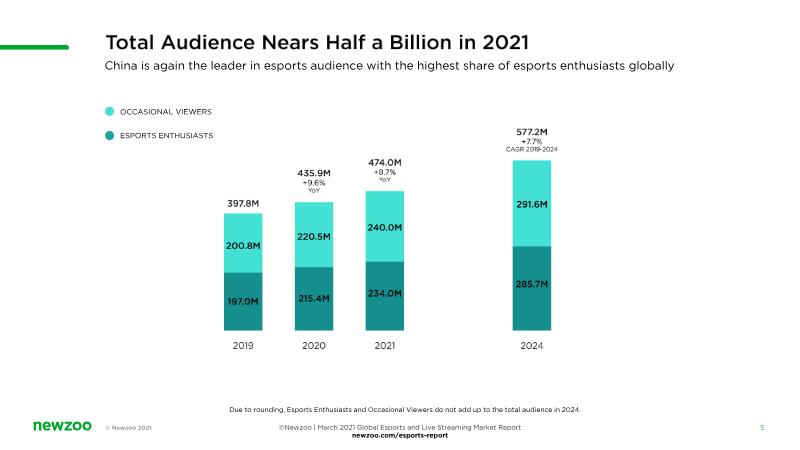
The global esports market is experiencing a period of robust expansion, characterized by double-digit growth in both viewership and revenue.
- The global esports market is projected to reach $1.08 billion in revenue by the end of 2021, marking a 14.5% year-over-year increase driven primarily by sponsorships and media rights.
- Total hours watched on major streaming platforms like Twitch and YouTube surged by 76% in 2020, with the global audience expected to exceed 577 million viewers by 2024.
- China remains the dominant market leader, holding the largest share of global esports revenue and the highest concentration of enthusiasts.

How Killer Queen Built an Esports Scene on an Indie Budget
The development of a national esports scene for the indie arcade game Killer Queen demonstrates how small studios can foster competitive communities through grassroots engagement rather than high-budget marketing.
- Killer Queen Arcade built a national esports scene by leveraging a five-on-five team design that mandates physical proximity, forcing players to interact and form local communities at arcade venues.
- Developers can foster community ownership by releasing source assets like logos and sprites, allowing fans to create their own merchandise, event posters, and marketing materials.
- Consistency in event scheduling, such as the '5v5 Fridays' at NYU, is more effective for community retention than sporadic, high-effort events because it lowers the barrier to entry for regular participation.

How the Speed Cubing Community Turned Rubik's Cube into a Competitive Genre
Speed cubing has successfully transitioned from a niche hobby into a structured global competitive sport by prioritizing community-driven governance and standardized performance metrics.
- The speed cubing community transformed the Rubik's Cube from a stagnant 1980s toy into a competitive sport by establishing the World Cube Association (WCA) to standardize regulations and event formats.
- Competitive speed cubing utilizes an 'average of five' scoring system, which discards the fastest and slowest times to mitigate the impact of luck-based scrambles and ensure fair performance comparisons.
- The sport is categorized as a 'low-trust' game with parallel play, meaning participants solve puzzles independently without direct interference, fostering a collegiate and friendly environment.

Global Gaming 2020: Sector Report
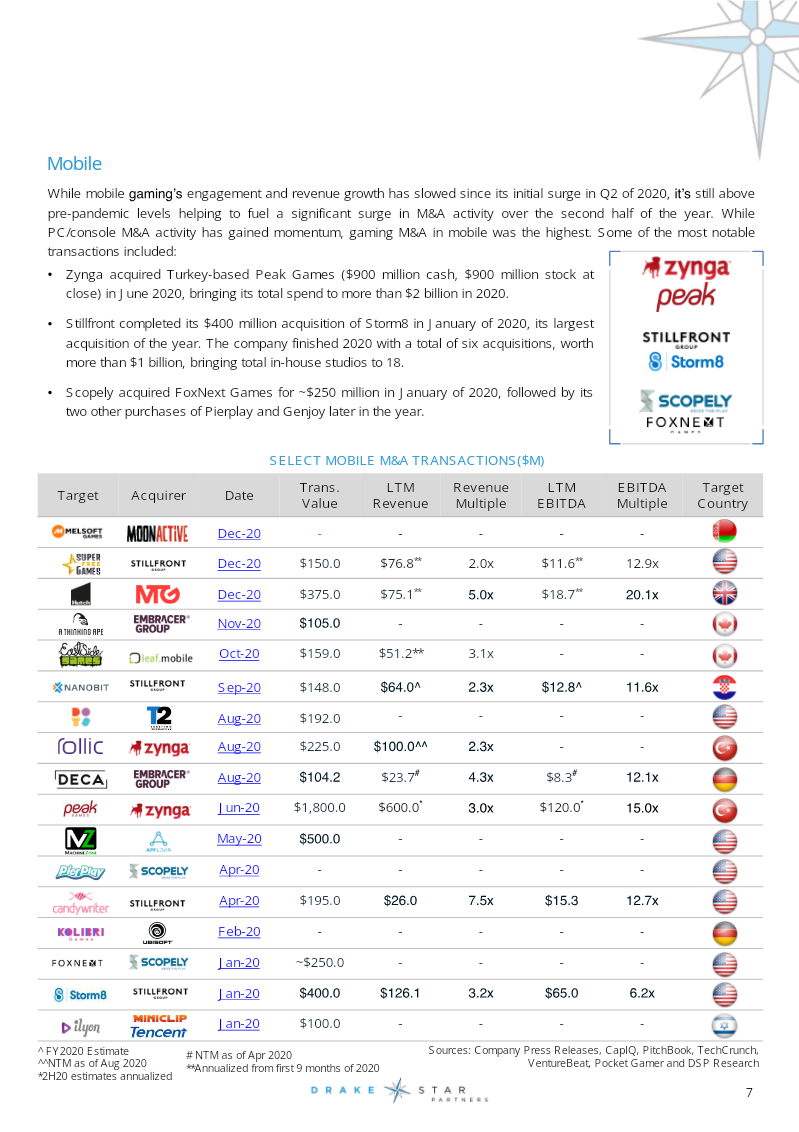
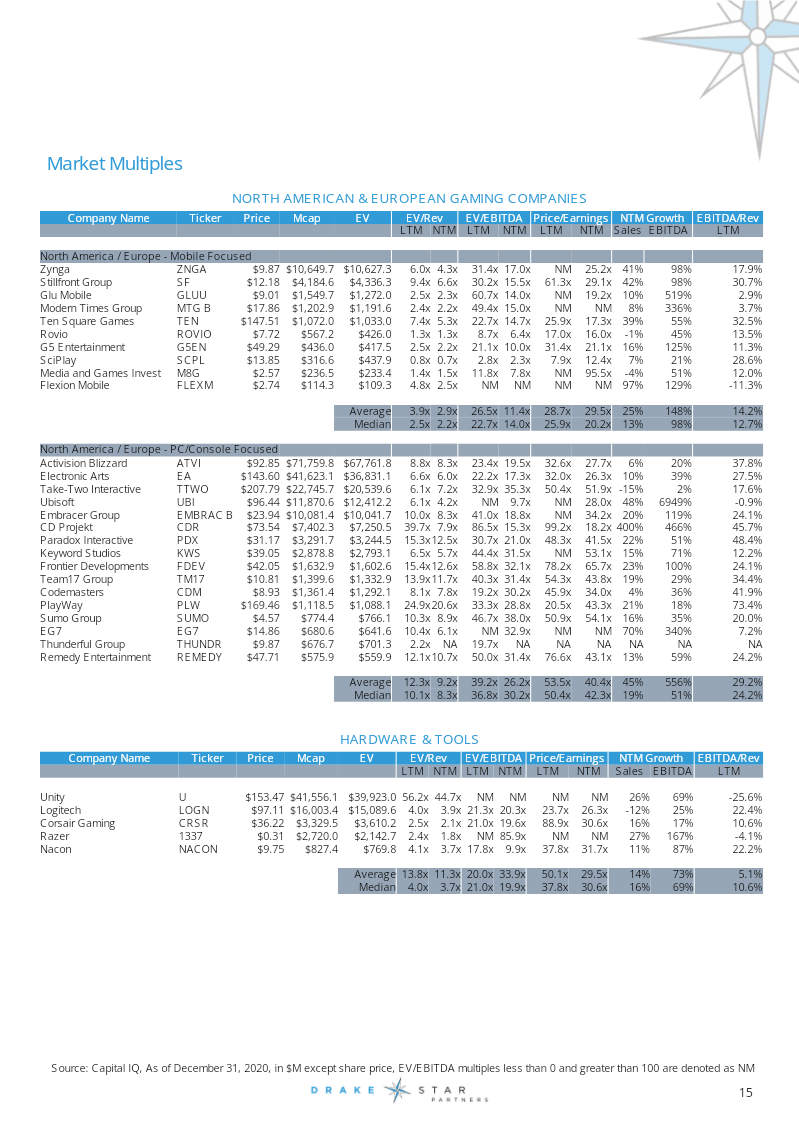
The global gaming industry experienced a transformative period in 2020, characterized by unprecedented growth in consumer engagement and financial performance.
- The global gaming industry outperformed the S&P 500 by a factor of four in 2020, driven by pandemic-induced surges in mobile, PC, and console engagement.
- Total deal volume in the gaming sector increased by 25 percent in 2020, highlighted by major transactions such as Microsoft’s acquisition of ZeniMax and significant funding rounds for Epic Games.
- The industry leveraged diverse financial vehicles for expansion, including a surge in initial public offerings and the strategic use of special purpose acquisition companies to access public markets.


Europe's Video Game Industry: Key Facts 2021
The European video game industry serves as a significant economic and social pillar, generating €23.3 billion in annual revenue while supporting a workforce of nearly 100,000 professionals across 4,600 studios.
- The European video game industry generated €23.3 billion in annual revenue as of 2021.
- The sector employs nearly 100,000 professionals across 4,600 studios.
- The industry reached 124.8 million players in 2021, accounting for 52 percent of the total European population.


Video Game Streaming Trends Report: 2021 Yearly Report
The report establishes that video-game streaming has solidified its position as a core element of global pop culture, with 21% year-over-year growth in watch time during 2021—an increase that, while lower than the 81% surge seen in 2020, still reflects a substantial expansion of audiences worldwide.
- Video game streaming grew 21% in 2021, with Twitch leading the market at 6 billion hours watched and a 31.4% year-over-year increase.
- Facebook Gaming experienced significant momentum with a 59% year-over-year rise, while YouTube Gaming saw a 15% decline in live-stream hours despite growth in its VOD ecosystem.
- Mobile titles including Garena Free Fire, PUBG Mobile, and Valorant accounted for 32% of total viewership, totaling over 5.6 billion hours watched.


La Guía de los Esports
The esports industry represents a rapidly maturing global phenomenon characterized by significant economic potential, technological innovation, and social influence.
- The esports market is projected to grow from under $1.1 billion in 2021 to over $1.5 billion by 2024, maintaining a compound annual growth rate (CAGR) of 7.7%.
- Global esports viewership is expected to reach 577.2 million people by 2024, up from 435.9 million in 2021.
- Market potential is heavily concentrated in regions with high-speed broadband infrastructure, specifically East Asia, Northern Europe, and North America.



Guida agli Esports: Italia
The analysis positions esports as a rapidly expanding digital sport that, in 2021, generated $947.1 million in revenue and attracted more than 215 million fans worldwide, with total direct earnings approaching $1.1 billion.
- The global esports market reached $947.1 million in revenue in 2021, with total direct earnings approaching $1.1 billion and a fan base exceeding 215 million.
- Market growth is primarily concentrated in regions with advanced broadband infrastructure, specifically East Asia, Northern Europe, and North America.
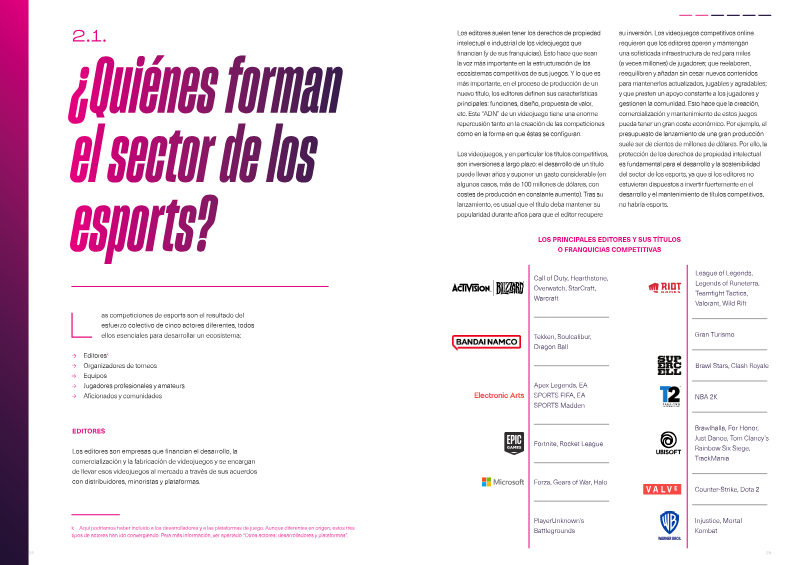
- Game publishers hold exclusive control over competitive ecosystems, often investing over $100 million per title to manage updates, balance changes, and essential broadcast rights.