The European video game industry generated €23.3 billion in annual revenue as of 2021.
See it on page 13The sector employs nearly 100,000 professionals across 4,600 studios.
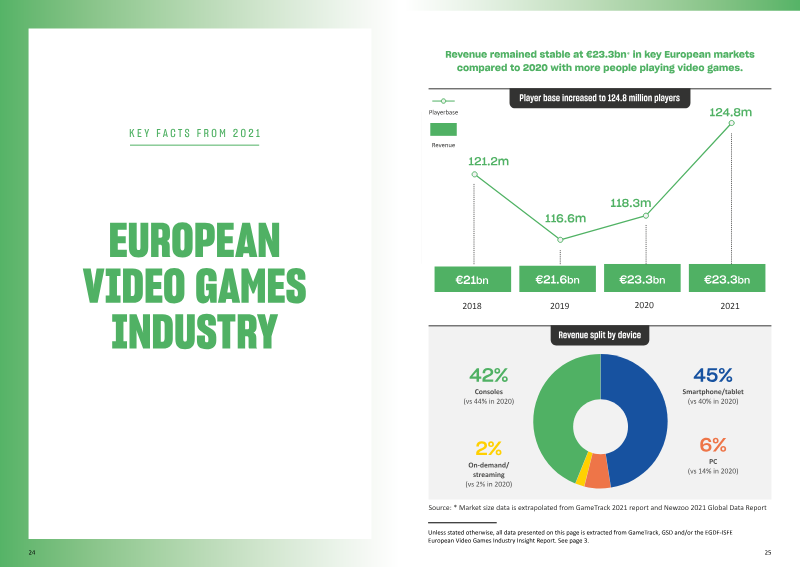
See it on page 2The industry reached 124.8 million players in 2021, accounting for 52 percent of the total European population.
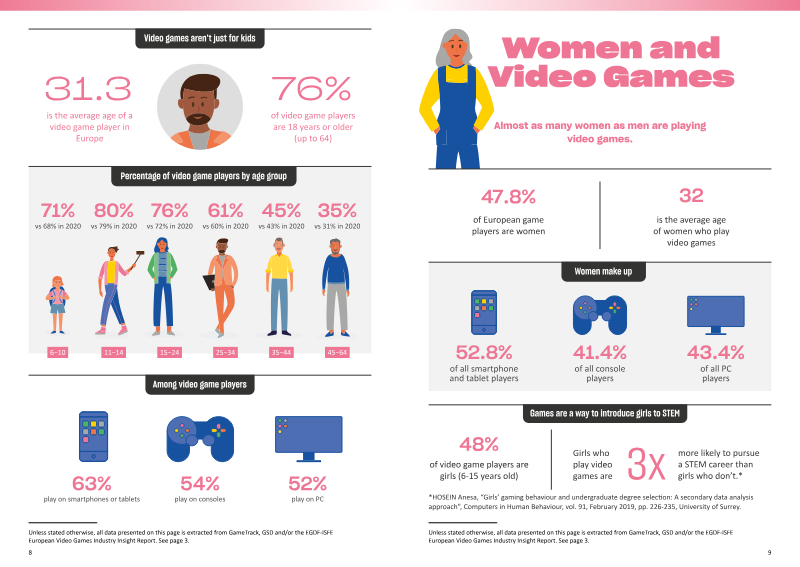
See it on page 13The player demographic is highly diverse, with women representing nearly 50 percent of gamers and the 45–64 age bracket serving as the fastest-growing segment.
See it on page 5Industry bodies including the ISFE and EGDF are coordinating efforts to achieve climate neutrality, with most companies in Germany already implementing formal sustainability programs.
See it on page 18Consumer safety is managed through the PEGI rating system and integrated parental controls to ensure age-appropriate gameplay environments.
See it on page 11The European video game industry serves as a significant economic and social pillar, generating €23.3 billion in annual revenue while supporting a workforce of nearly 100,000 professionals across 4,600 studios. As of 2021, the sector reached a broad audience of 124.8 million players, representing 52 percent of the total European population. This demographic is increasingly diverse, with women accounting for nearly half of all gamers and the 45–64 age bracket emerging as the fastest-growing segment. Beyond its financial contributions, the industry functions as a vital social and mental health resource, fostering connectivity and engagement across age groups.
Commitment to consumer safety and ethical standards remains a core operational priority. The industry maintains rigorous oversight through the PEGI rating system and comprehensive parental controls, ensuring that gameplay environments remain responsible and age-appropriate. These efforts are complemented by a broader push toward social responsibility, including the integration of gaming into educational frameworks and the promotion of diversity initiatives within the workforce.
Environmental sustainability has also become a central strategic objective for the European market. Major industry bodies, including the ISFE and EGDF, are actively coordinating efforts to achieve climate neutrality. This transition is evidenced by the widespread adoption of carbon measurement and offsetting practices, with a substantial majority of companies in key markets like Germany already implementing formal sustainability programs. Supported by a robust network of national trade associations, the industry continues to leverage its collective influence to drive policy development and long-term growth within the European digital ecosystem.