Esports statistics and market reports
Documents


Benefits of Video Games in K-12 Education
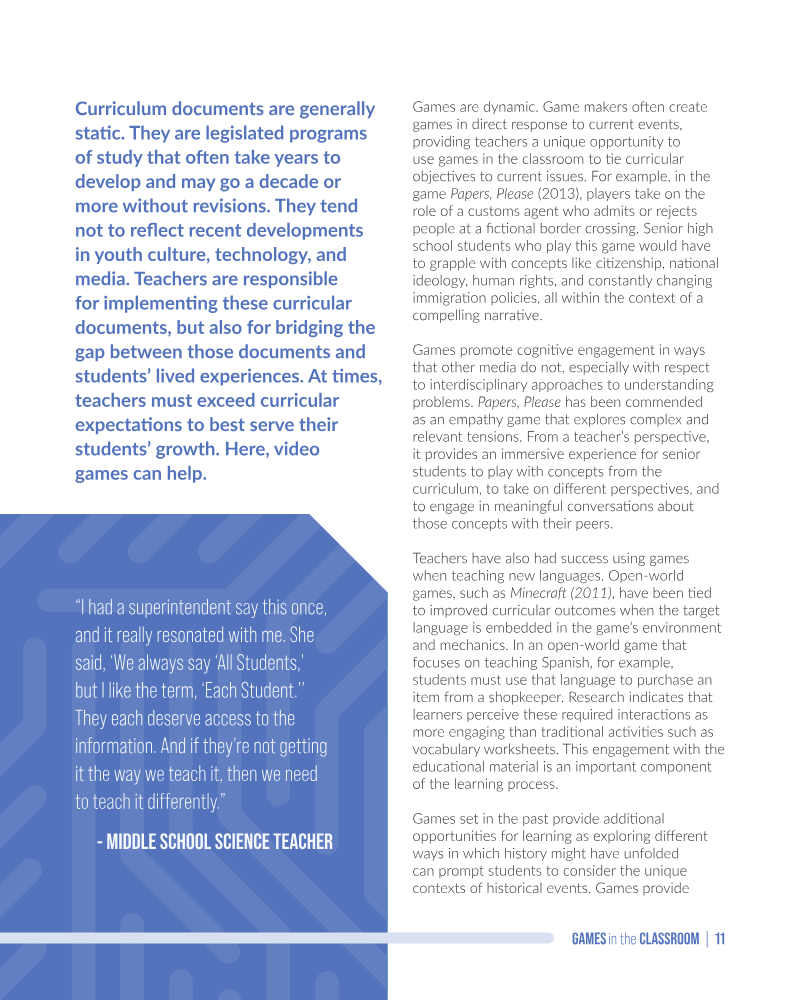
Video games function as transformative pedagogical tools within K-12 education, shifting students from passive recipients of information to active participants in their own learning processes.
- Video games shift K-12 students from passive information recipients to active participants, fostering critical thinking, complex problem-solving, and resilience.
- Effective implementation requires strategic pedagogical integration rather than superficial gamification, utilizing short-form game segments aligned with specific learning objectives.
- Game-based learning accommodates diverse learning styles and provides personalized pacing, bridging the gap between rigid academic standards and student experiences.

Live-Streaming Trends Report: Q1 2026
Live-streaming has solidified its position as a primary pillar of global entertainment, reaching a total of 17 billion hours watched during the first quarter of 2026.
- Live-streaming reached 17 billion hours watched in Q1 2026, with TikTok Live accounting for nearly 50% of total volume.
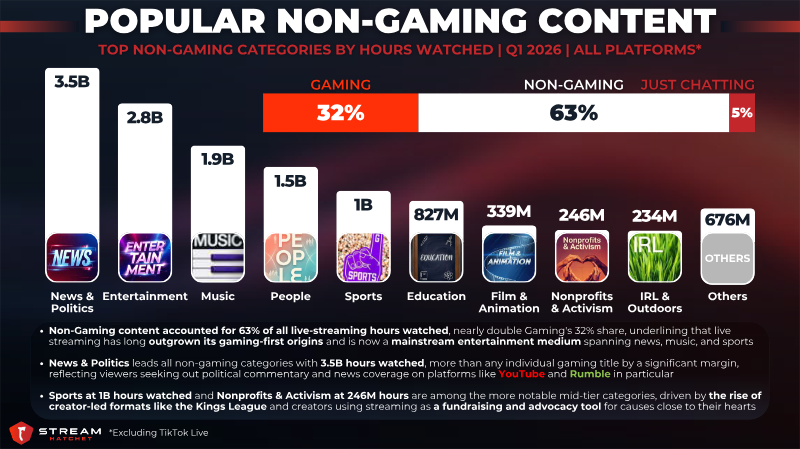
- Non-gaming content now dominates the ecosystem, representing 63% of total viewership with News and Politics as the leading category.
- Gaming engagement is shifting away from traditional esports structures toward mobile-friendly, community-centric, and creator-led events.
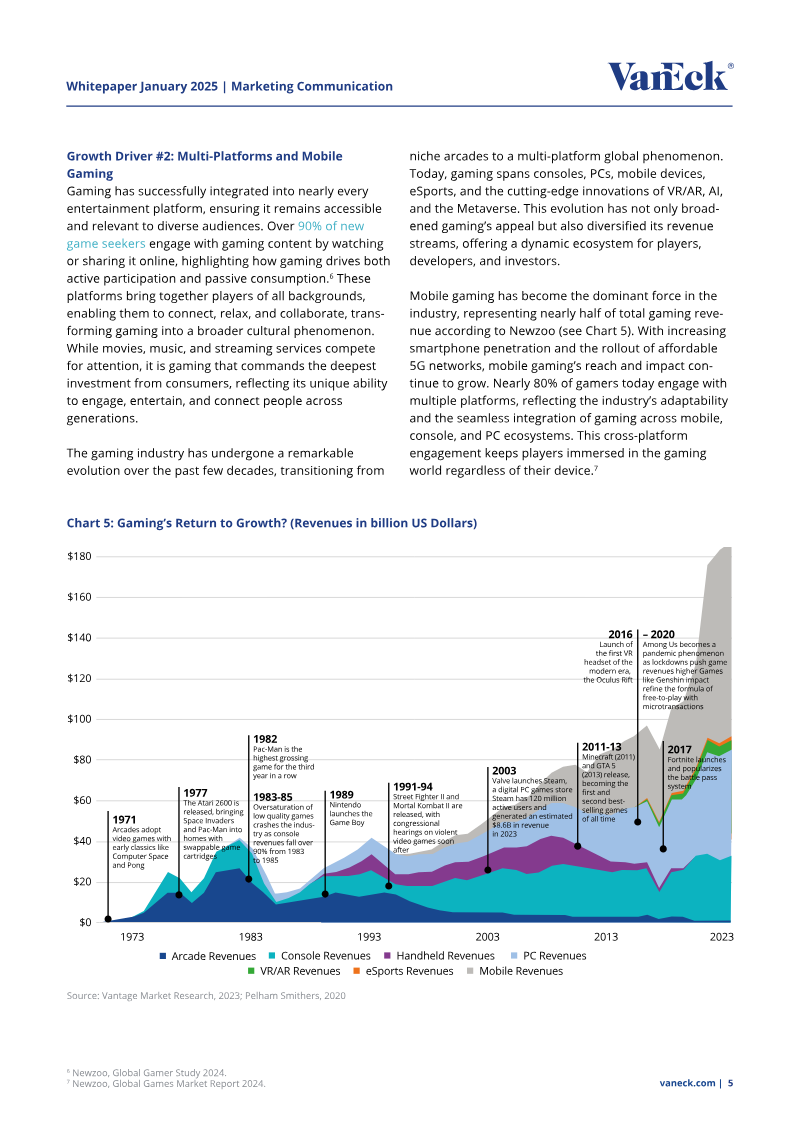
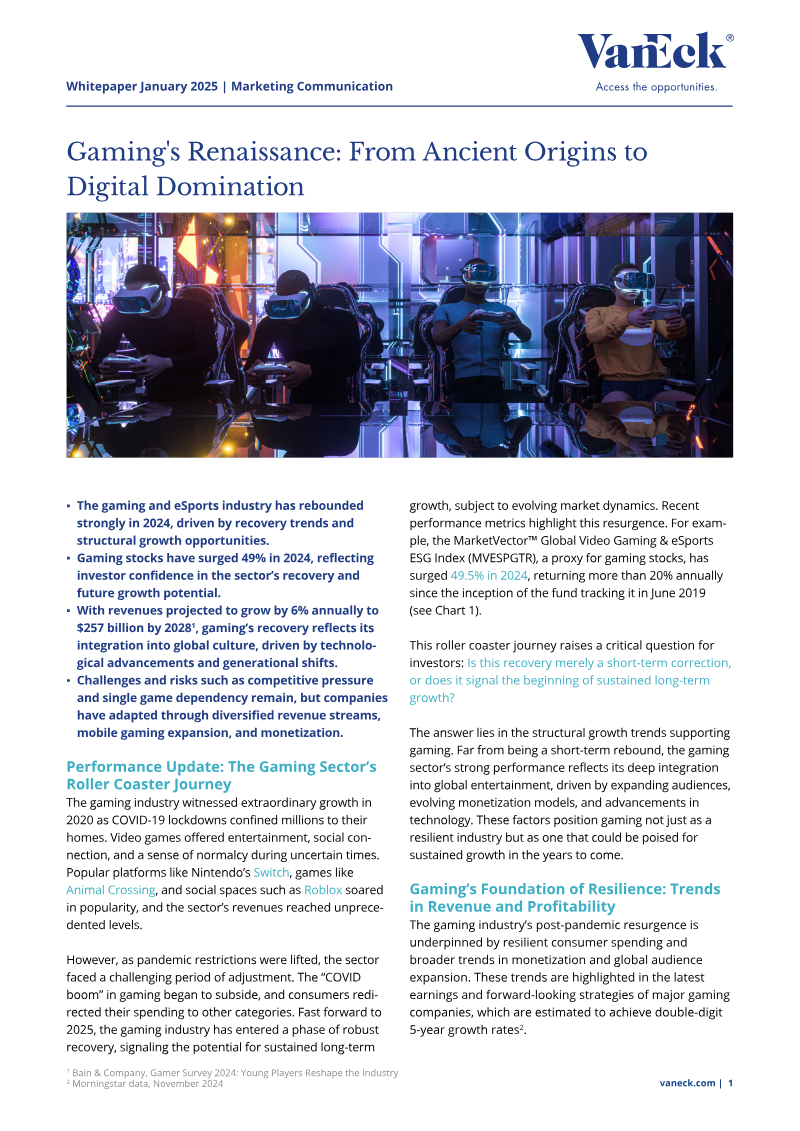
Gaming's Renaissance: From Ancient Origins to Digital Domination
The gaming and eSports industry has entered a phase of robust recovery, transitioning from a post-pandemic adjustment period to a trajectory of sustained long-term growth.
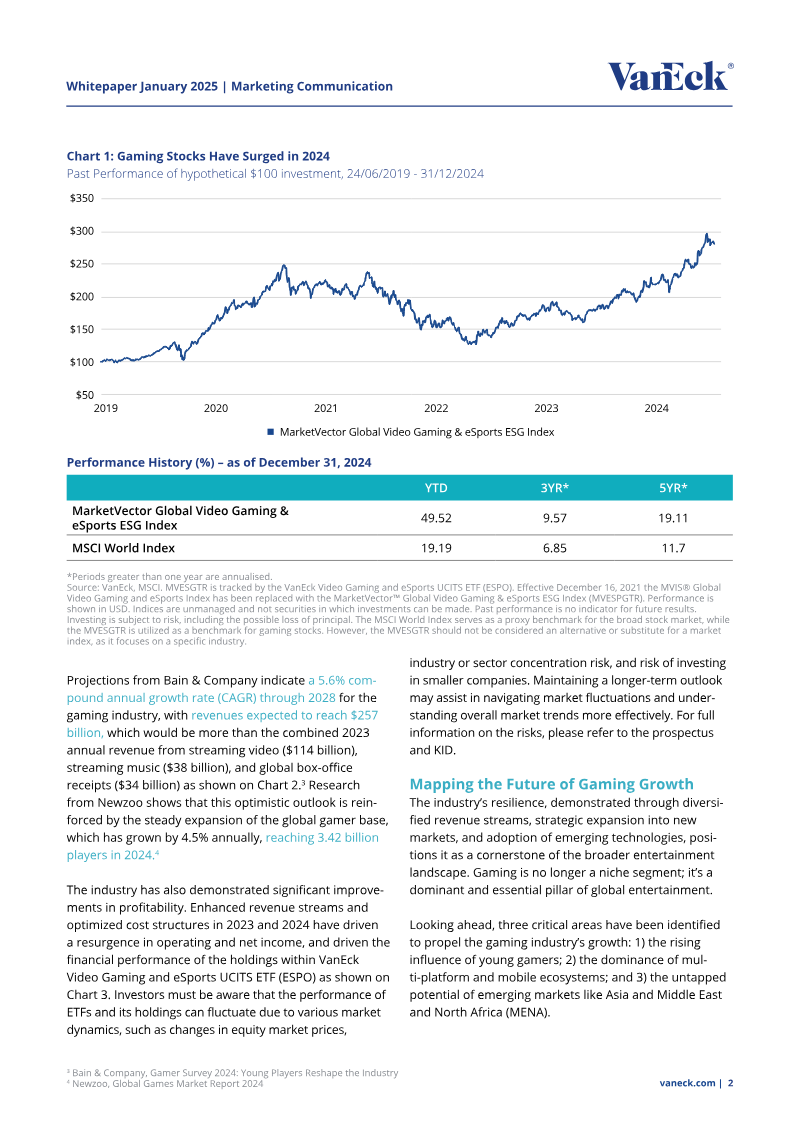
- The gaming and eSports industry is projected to reach $257 billion in annual revenue by 2028, reflecting a sustained 6% annual growth rate.
- The global gamer population reached 3.42 billion in 2024, cementing the sector's transition from a niche market to a pillar of global entertainment.
- Investor confidence in the sector has surged, with the MarketVector Global Video Gaming & eSports ESG Index recording a 49.5% increase in 2024.
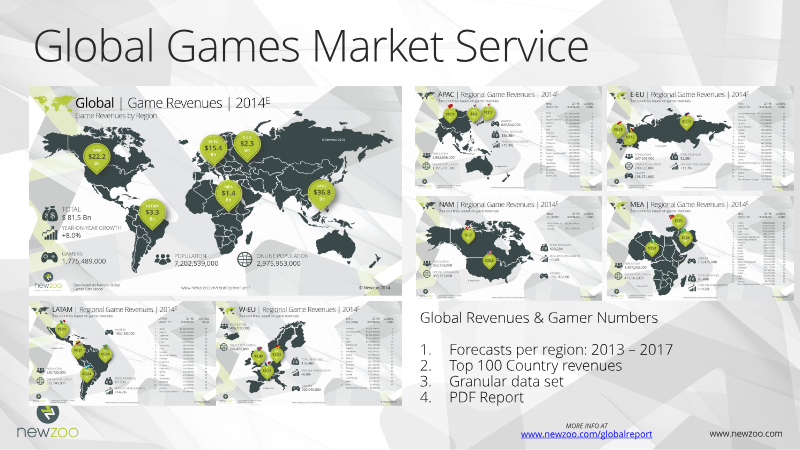


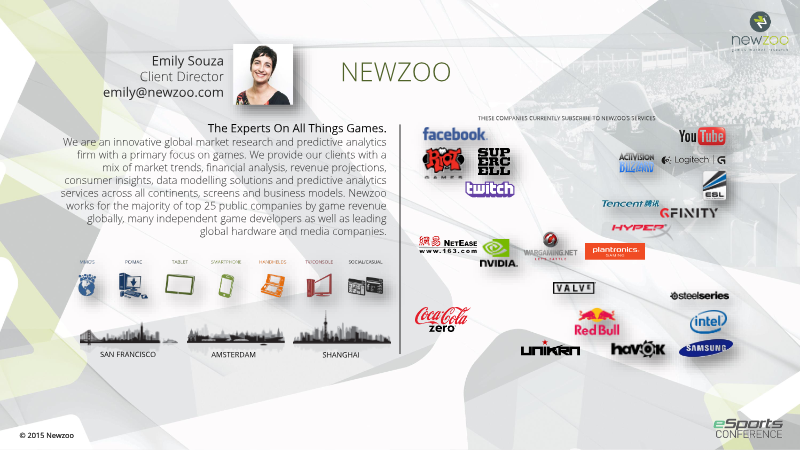
Newzoo Introduction: Matching Your Priorities With Our Services
The global games industry relies on sophisticated market intelligence to navigate rapid shifts in consumer behavior and financial performance.
- The global games market was projected to reach $81.5 billion as of 2014.
- Analytical coverage tracks over 200 variables across 18 key countries to provide a comprehensive view of the gaming ecosystem.
- Specialized tracking services monitor the performance and player profiles of 100 global game franchises.


The eSports Industry to Date: The Drivers Behind Current and Future Growth
The global esports industry is undergoing a rapid transformation from a niche gaming subculture into a significant, multi-billion dollar economic force.
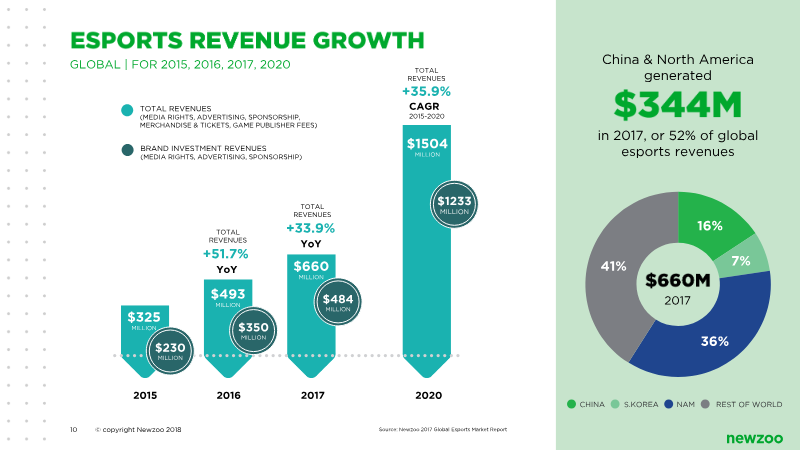
- The esports industry is on a trajectory to grow from $252 million in 2015 revenue to a $1 billion economy by 2019.
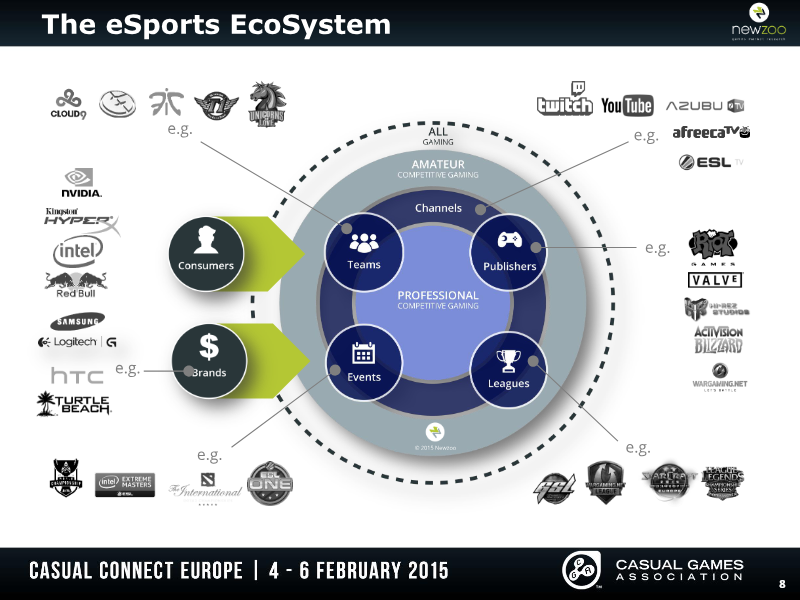
- Industry growth is driven by high engagement on streaming platforms like Twitch and a transition toward mainstream professionalization.
- Significant capital is entering the market, evidenced by a $26 million venture capital investment in Super Evil Megacorp.

The eSports Economy: Trends, Audience and Revenue Growth Towards 2017
The eSports economy is experiencing rapid expansion, driven by a fundamental shift in how consumers interact with gaming content.
- The eSports enthusiast base is projected to exceed 100 million by 2017, maintaining a 20% compound annual growth rate between 2012 and 2017.
- Approximately 40% of eSports viewers are spectators who do not actively play the games they watch, indicating a shift toward viewing as a standalone entertainment medium.
- Streaming platforms are central to the industry's infrastructure, exemplified by Twitch reaching 100 million unique monthly viewers in 2014.

Sizing & Profiling eSports' Popularity: The West
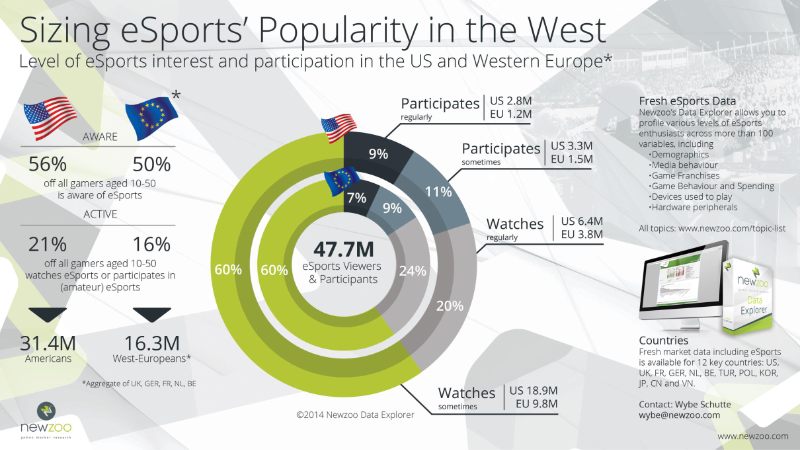
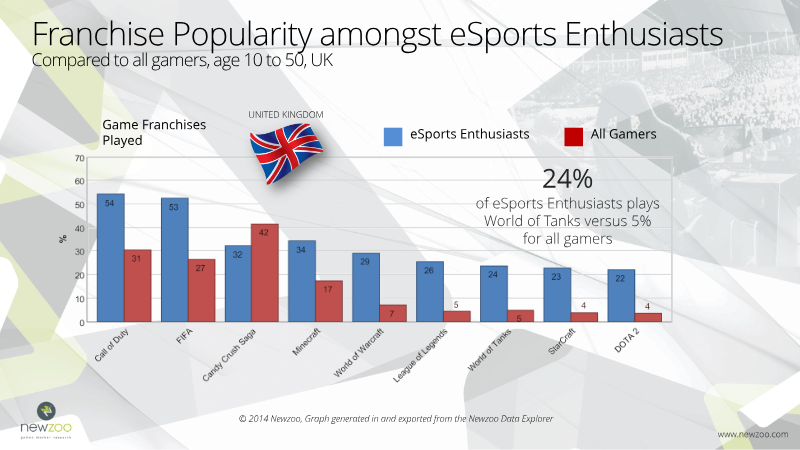
The rapid expansion of eSports in Western markets represents a significant shift in the gaming industry, driven by the rise of free-to-play titles such as League of Legends, Dota 2, and World of Tanks.
- eSports viewership is doubling year-over-year, with the average viewer watching over 10 times per month for an average session length of 2.2 hours.
- Total eSports prize money increased by 350% over the four-year period ending in 2013, with top events like The International 2013 awarding $2,874,381.
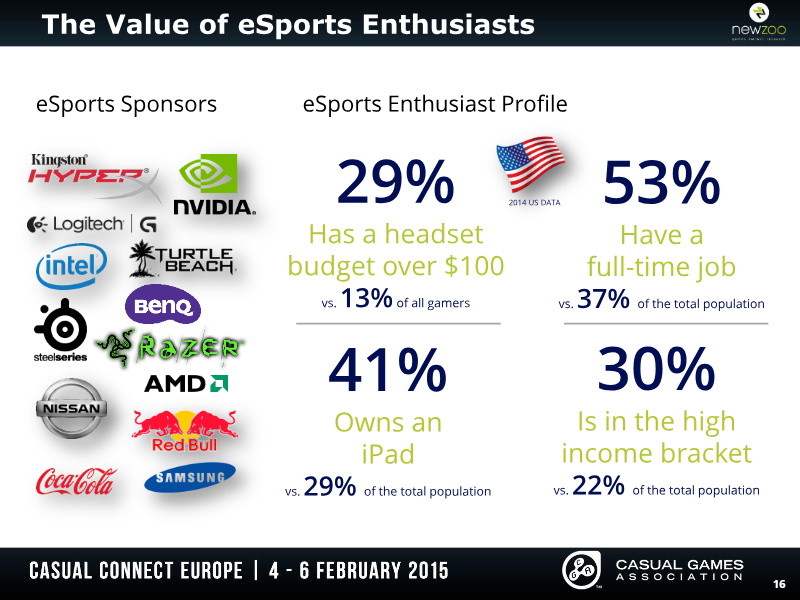
- eSports enthusiasts are significantly more valuable to publishers than the average gamer, with 22% of enthusiasts identified as 'big spenders' compared to only 8% of the general gaming population.
The Role of Mobile in Esports: The State and Future of Mobile Esports in Asia and the West
Mobile esports is undergoing a period of rapid global expansion, establishing itself as a distinct and influential pillar within the broader gaming ecosystem.
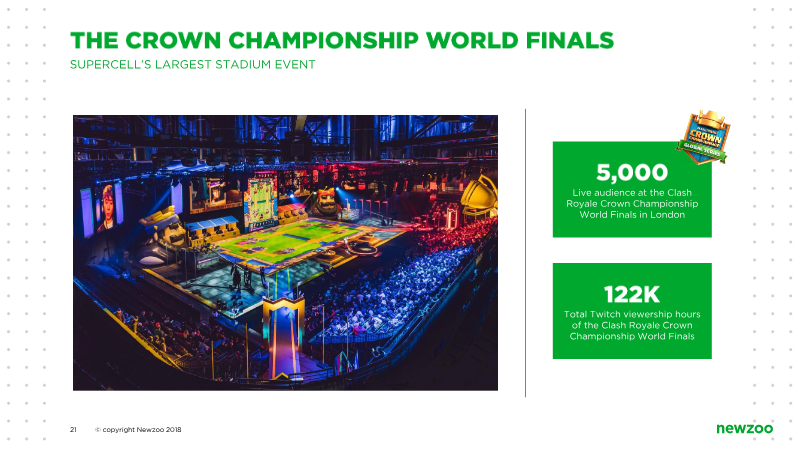
- Asia has successfully mirrored professional PC esports through large-scale stadium events and structured leagues, while the Western market continues to treat mobile competition primarily as a grassroots and amateur-focused endeavor.
- India is projected to become the world’s fourth-largest mobile gaming market by 2020, representing a significant geographic shift in the competitive mobile landscape.
- China currently serves as the primary engine for global mobile esports growth, though the industry is increasingly expanding into emerging markets.


Esports in the Americas: Sports, Spanish, and Spending
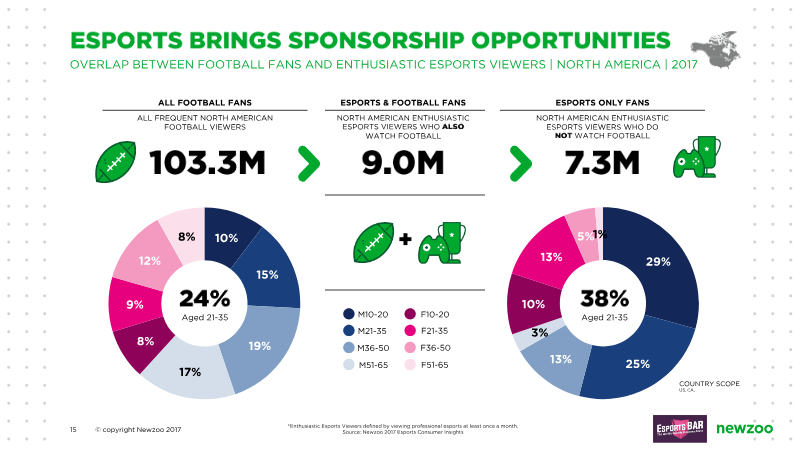
The Americas represent a critical hub for the global esports industry, accounting for 25% of the worldwide audience and 40% of total industry revenues.
- The Americas represent a major global esports hub, accounting for 25% of the worldwide audience and 40% of total industry revenues.
- Nearly 50% of the regional esports audience speaks Spanish or Portuguese, necessitating localized strategies rather than a unified approach for North and Latin American markets.
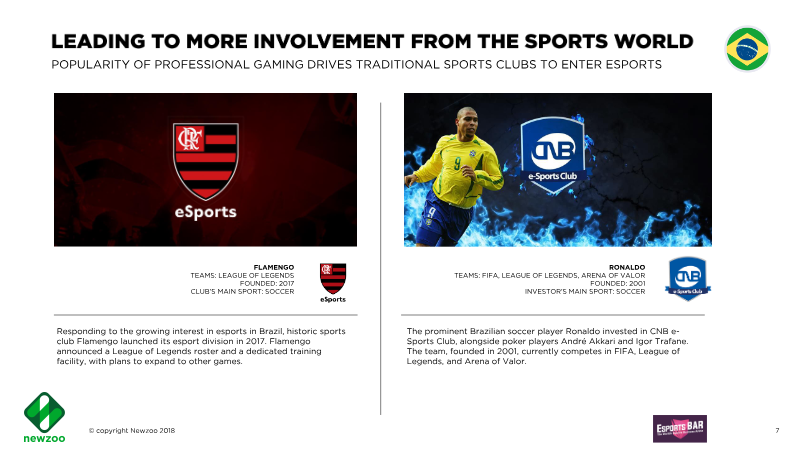
- Traditional sports organizations are increasingly acquiring esports teams to diversify fan engagement and reach younger demographics across both continents.

Esports in Brazil: Key Facts, Figures, and Faces
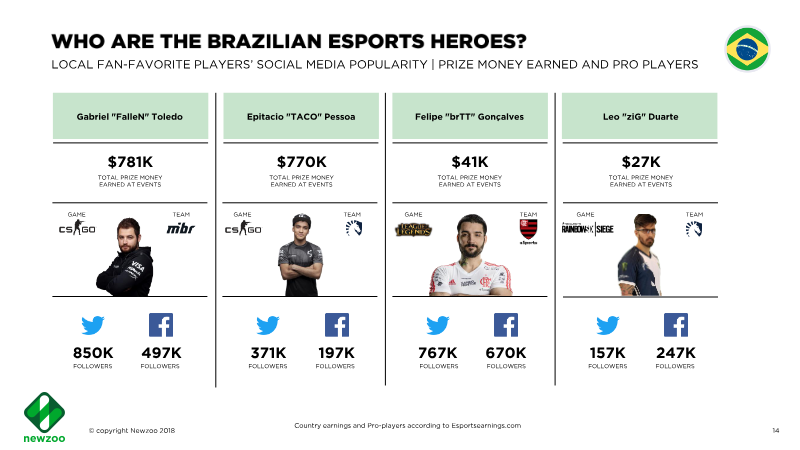
Brazil has emerged as a global powerhouse in the esports industry, ranking third worldwide with 7.6 million esports enthusiasts as of 2018.
- Brazil is a top-tier global esports market, ranking third worldwide with 7.6 million enthusiasts as of 2018 and a projected audience growth to nearly 30 million viewers by 2020.
- The Brazilian gaming market is supported by a large base of 75.7 million gamers out of a 210.9 million online population, generating $1.5 billion in total game revenues.
- The audience is exceptionally young, with 43% of enthusiastic viewers falling within the 10 to 20 age demographic.

How Brands Can Use Data to Be Successful in Games & Esports
Brands must move beyond viewing gamers as a monolithic group, instead adopting data-driven, segmented strategies to navigate the complex gaming and esports landscape.
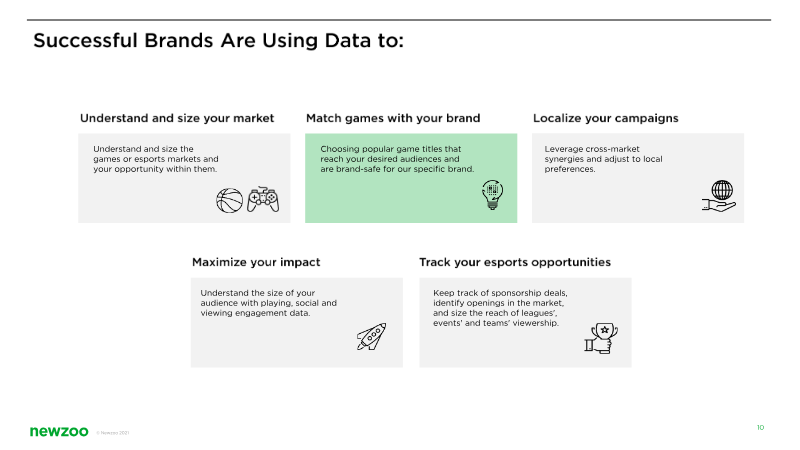
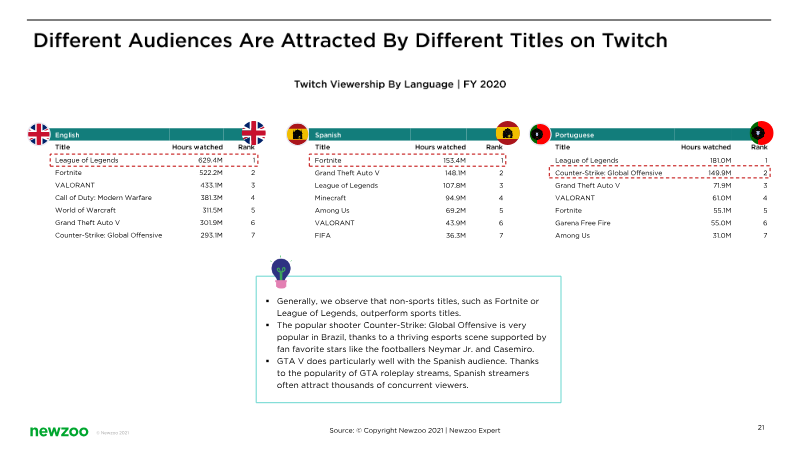
- Brands must abandon the monolithic view of gamers and instead use granular consumer data to segment the audience by specific titles, demographics, and regional cultural preferences.
- Successful market entry requires moving beyond simple player counts to analyze multi-platform metrics, including social sentiment and viewership trends.
- Data-driven strategies should be used to identify authentic partnership opportunities with professional teams and influencers rather than relying on speculative investments.
Esports Trends Report 2025
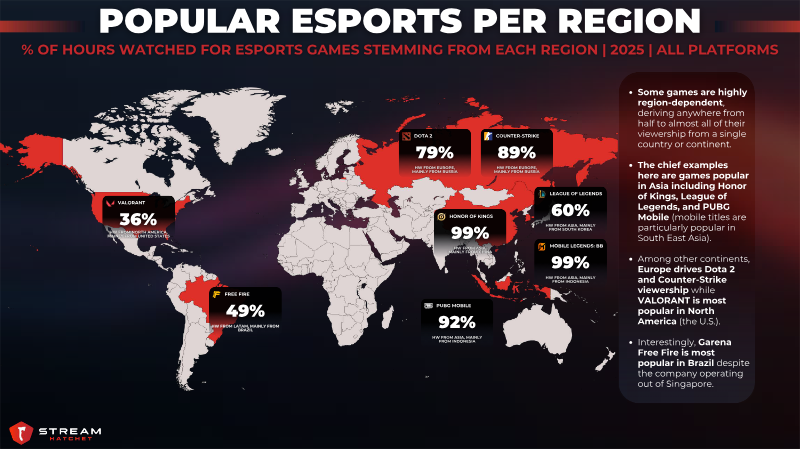
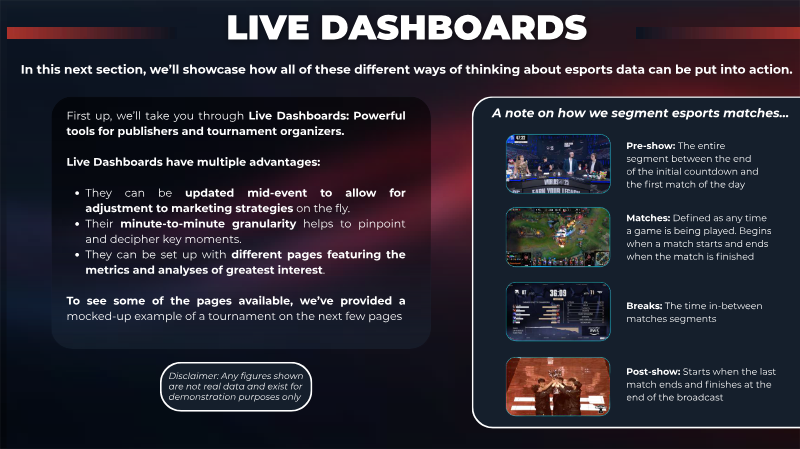
The 2025 Esports Trends Report provides a comprehensive analysis of the global esports landscape, focusing on viewership patterns, platform consolidation, and the evolving role of creator-led content.
- Co-streaming has become the dominant viewership model, accounting for 51.2% of all esports hours watched and highlighting the critical role of creator-led content.
- The esports market remains highly concentrated, with League of Legends and Counter-Strike generating nearly 45% of the total 2.7 billion hours watched across 2,000 tracked events.
- Twitch and YouTube Gaming maintain a combined 84.1% market share of total viewership, though mobile esports tournaments are achieving higher average viewership per event than non-mobile titles.