Esports statistics and market reports
Documents
The Holy Grail of Multiplayer Level Design: Casual and Competitive Maps
The design of multiplayer maps requires balancing the distinct needs of casual and competitive players, a challenge often referred to as the pursuit of a "holy grail" map.
- Successful multiplayer map design requires balancing the needs of casual players, who seek recreational play, with competitive esports players who prioritize strategic depth and tournament viability.
- Designers should categorize player skill progression into layers: basic mechanical movement and shooting, map-specific tactical knowledge, and high-level meta-game strategy such as character bans and team compositions.
- Casual-friendly maps often rely on 'single-scan' layouts that allow players to process the entire environment quickly, whereas competitive maps require complex, multi-option layouts that prevent stale gameplay.
Superstar Session: Navigating the Current Esports Environment PG Connects Digital #2
The esports industry currently occupies a valuation between $1 billion and $1.6 billion, representing a high-growth segment within the broader $150 billion video game market.
- The esports industry is currently valued between $1 billion and $1.6 billion, positioning it as a high-growth segment within the $150 billion global video game market.
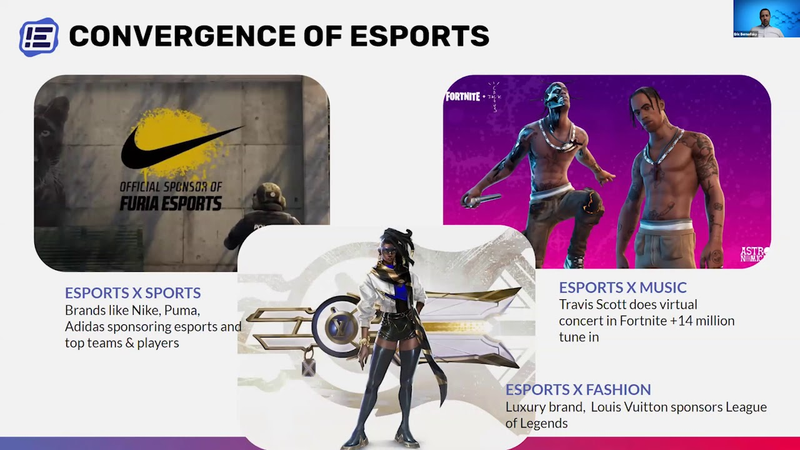
- Non-endemic brands, including luxury fashion houses and global food chains, are shifting from simple logo placement to comprehensive strategies involving custom content, merchandise, and integrated media.
- Esports is successfully capturing Gen Z and millennial audiences by utilizing influencer-led strategies and cross-platform entertainment that traditional media channels struggle to reach.

Panel: How is Esports Filling the Gap of the Olympics? PG Connects Digital #2
The global sports landscape is undergoing a fundamental transformation as esports emerges as a primary alternative to traditional athletic competition.
- Esports has surpassed traditional professional sports leagues like baseball and hockey in the United States in terms of market penetration.
- The esports industry maintains a resilient, continuous competition model that operates independently of the rigid four-year event cycles characteristic of the Olympic Games.
- Esports successfully captures Gen Z and millennial audiences through an egalitarian, community-driven approach that prioritizes direct engagement over traditional media consumption.
Rise of the Player-Fan: The Growing Opportunity of Mobile Esports in Asia
Mobile esports has emerged as a primary driver of player engagement and revenue across Asia, signaling a shift from traditional PC and console dominance to a mobile-first competitive landscape.
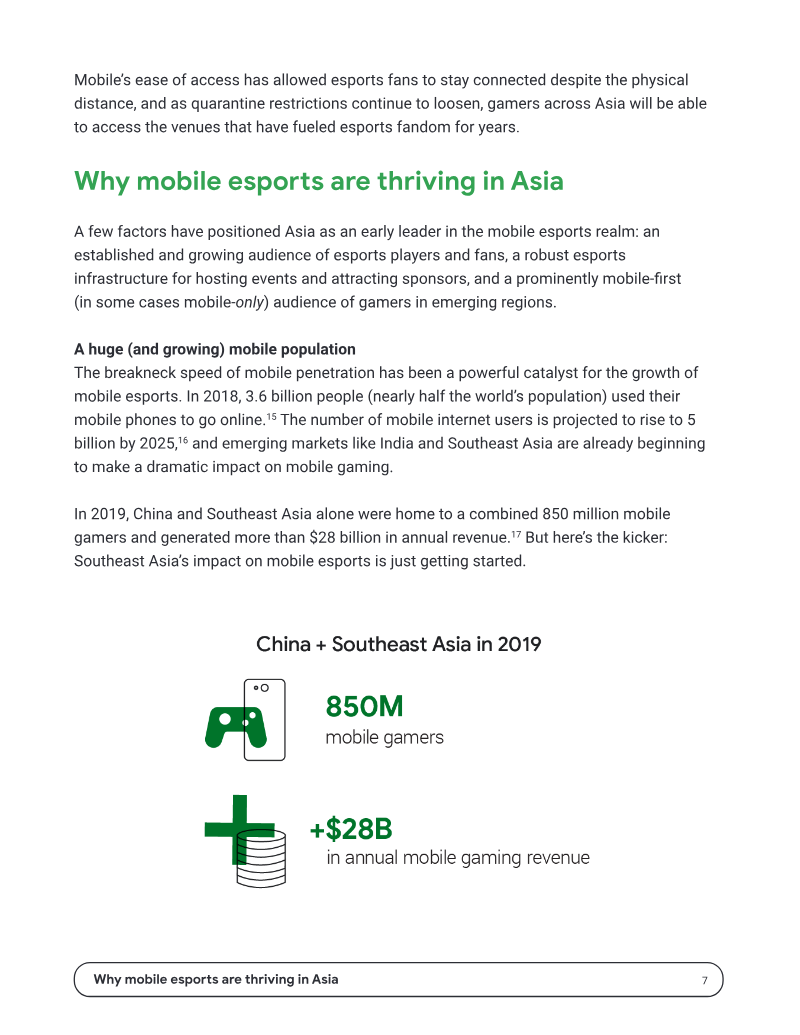
- Asia dominates the global mobile esports landscape, accounting for 68% of the $19.5 billion in total global mobile esports revenue generated in 2019.
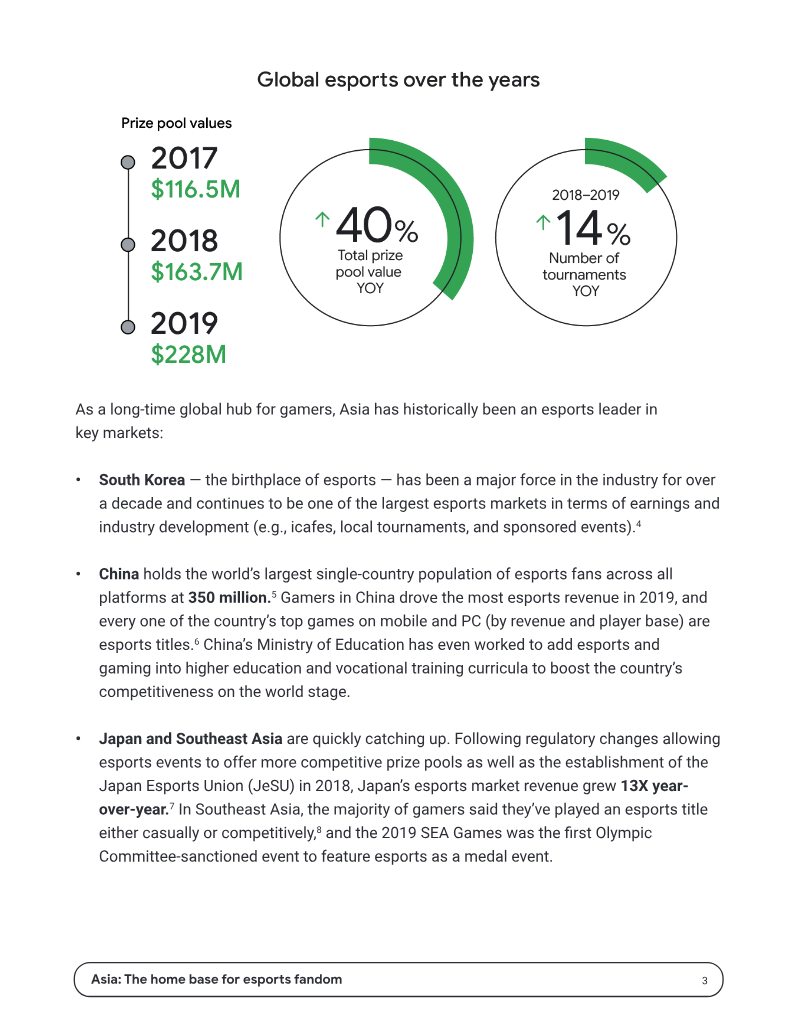
- China is the world's largest esports market with 350 million fans, while Southeast Asia experienced a 244% surge in tournament prize values between 2018 and 2019.
- Global esports prize pools grew by 40% between 2017 and 2019, reaching a total valuation exceeding $228 million.
Skill Progression, Visual Attention, and Efficiently Getting Good at Esports
The mastery of competitive esports relies on the psychological concept of affordances, which are the perceived possibilities for action within a digital environment.
- Player skill progression in competitive games follows a trajectory where mechanical skills, such as camera control and ability usage, show a steep initial learning curve before plateauing, while strategic meta-level skills continue to develop as players gain experience.
- The theory of 'affordances' explains that expert players perceive the game environment differently than novices, identifying specific opportunities for action—such as tactical positioning or resource management—that remain invisible to less experienced players.
- Visual attention in esports is divided into exploratory actions, which gather information about the environment, and performatory actions, which execute specific game-winning maneuvers based on that gathered data.

CoVID 19 Updates, Magic Leap Scam, Stadia, VR, PS5, Valorant CS GO | Game Dev Unchained Episode 223
The global game industry is currently navigating a period of significant transition, characterized by the normalization of remote work environments and a critical re-evaluation of high-profile technological ventures.
- The industry is shifting away from speculative, hype-driven hardware models toward sustainable, content-led growth, as evidenced by Magic Leap’s failure to meet consumer expectations and its subsequent pivot to enterprise applications.
- High-quality, first-party exclusive content is now the primary driver for platform adoption, superseding artificial marketing hype in securing long-term consumer engagement.
- Virtual reality is reaching a maturation point, with titles like Half-Life: Alyx successfully driving hardware adoption for platforms such as the Valve Index and Oculus Quest.

BITKRAFT Summit LA 2020 | Jeff Chau on The Promise Of Mobile Esports
Mobile esports has ascended to a position of global dominance, currently generating more revenue than PC and console gaming combined.
- Mobile esports is a primary driver of global gaming growth, contributing significantly to a $14 billion market that saw a 16% increase in value, with titles like Free Fire and PUBG Mobile ranking as the most downloaded games globally.
- Mobile esports titles exhibit exceptionally high fan engagement, with top players achieving engagement rates of up to 22% on social platforms, significantly outperforming the 10-15% average seen in traditional PC and console esports.
- Regional dominance is highly localized; for example, Mobile Legends in Indonesia recently hit 476,000 concurrent viewers, rivaling the global viewership of the League of Legends European Championship.
Panel: Is Esports Ready to Mature?
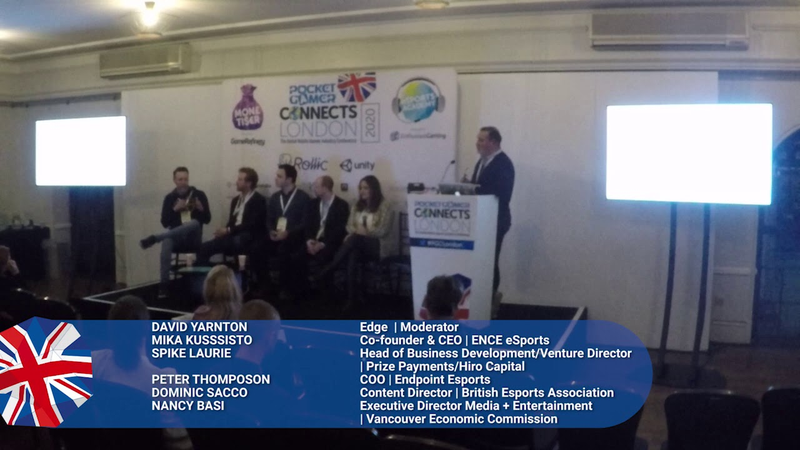
The esports industry currently stands at a critical juncture, transitioning from a volatile, high-growth phase toward a more sustainable economic model.
- The esports industry must transition from speculative, high-cost franchise models toward sustainable, grassroots infrastructure to ensure long-term economic viability.
- A lack of formal education and professional development pathways for players, including life skills and post-career planning, contributes to behavioral instability and limits the sector's maturity.
- The absence of an independent governing body to standardize professional conduct and player treatment remains a critical structural hurdle, especially as publishers retain total control over their intellectual property.

Esports - The Brand Opportunity.
The esports industry represents a significant and rapidly maturing opportunity for brands, provided they approach the space with authenticity and long-term commitment.
- The esports audience reached 433 million viewers by 2019, with an additional 1.7 billion people aware of the sector.
- 60% of the esports fan base falls within the 25 to 39 age demographic, which is characterized by high disposable income and a preference for digital platforms over linear television.
- Brands must prioritize adding value to the fan experience through deep integration—such as custom algorithms or interactive content—rather than relying on superficial logo placement to avoid community backlash.

Investing in Esports – The Current Meta
The current esports investment landscape is characterized by significant growth potential tempered by structural immaturity and a lack of standardized valuation metrics.
- The esports sector currently lacks a proven, replicable business model, leading to consistent profitability struggles for most entities outside of game publishers.
- Institutional investment is hindered by a lack of standardized valuation metrics and a scarcity of companies prepared for Series A funding, despite a robust early-stage seed ecosystem.
- Market valuations are frequently inflated by speculative investments in franchise slots and team ownership rather than being driven by sustainable technology or platform growth.
The Reality of Esports Teams
The esports industry functions primarily as an entertainment sector, where the core value proposition for teams lies in audience engagement and storytelling rather than purely competitive success.
- Original graphic and video content production is a primary driver of engagement, increasing audience interaction by 50% compared to non-original material.
- The esports industry functions primarily as an entertainment sector, where long-term viability is driven by audience engagement and storytelling rather than competitive success alone.
- The market currently suffers from fragmentation and a lack of consolidated data, creating a 'market for lemons' scenario that makes it difficult for stakeholders to distinguish high-quality organizations from ineffective ones.
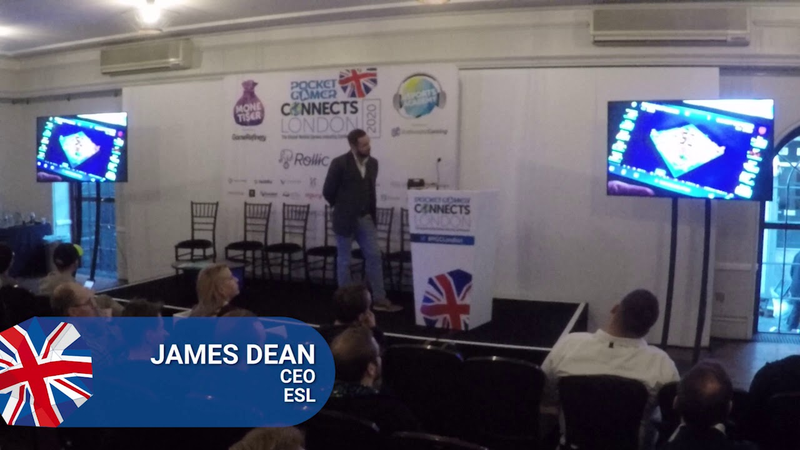
Furthering the Esports Eco-system Through Monetisation and Physical Space
The esports industry faces a critical challenge in transitioning from a high-growth, high-viewership sector into a sustainable, profitable ecosystem.
- ESL is developing a government-funded, scalable B2B framework to transition esports from a high-viewership model to a sustainable, profitable ecosystem.
- The initiative focuses on replacing traditional, ineffective media rights models with direct consumer engagement strategies to unlock new revenue streams.
- Advanced digital tools, including mobile apps, VR, and virtual studios, are being built to provide real-time predictive analytics and data-driven content to viewers.