ReportNiko Partners
Rise of the Player-Fan: The Growing Opportunity of Mobile Esports in Asia
1 Jul 202012 pages~17 min full read
Mobile esports has emerged as a primary driver of player engagement and revenue across Asia, signaling a shift from traditional PC and console dominance to a mobile-first competitive landscape. The central thesis posits that Asia is the global epicenter of this evolution, fueled by a massive population of 1.5 billion gamers and a robust infrastructure of internet cafes, local streaming platforms, and increasing 5G penetration. By lowering hardware barriers to entry, mobile technology has transformed casual players into "player-fans" who both compete in and spectate high-stakes tournaments.
Key data points highlight the scale of this growth, with global esports prize pools increasing 40% between 2017 and 2019 to exceed $228 million. In 2019 alone, mobile esports generated $19.5 billion in global revenue, with Asia accounting for 68% of that total. China remains the largest single market, boasting 350 million esports fans, while Southeast Asia saw a 244% increase in tournament prize values between 2018 and 2019. The COVID-19 pandemic further accelerated these trends, with gamers in Asia spending up to 75% more time playing and viewership in China doubling during lockdowns.
The scope of this analysis covers major Asian markets including China, South Korea, Japan, India, and Southeast Asia, focusing on the period between 2017 and 2020. It examines industry segments ranging from hardware manufacturing and 5G infrastructure to specific game genres like MOBAs and Battle Royales. Methodology relies on primary data from Niko Partners, including consumer panels of over four million users, executive interviews, and market modeling to provide a comprehensive outlook on the region's competitive gaming trajectory.

Niko Partners · 2026
Niko Partners · 2026
Niko Partners · 2026
Niko Partners · 2026
Niko Partners · 2026
Niko Partners · 2026
Niko Partners · 2026

Deconstructor of Fun · 2026

Niko Partners · 2026

Niko Partners · 2026
Niko Partners · 2025
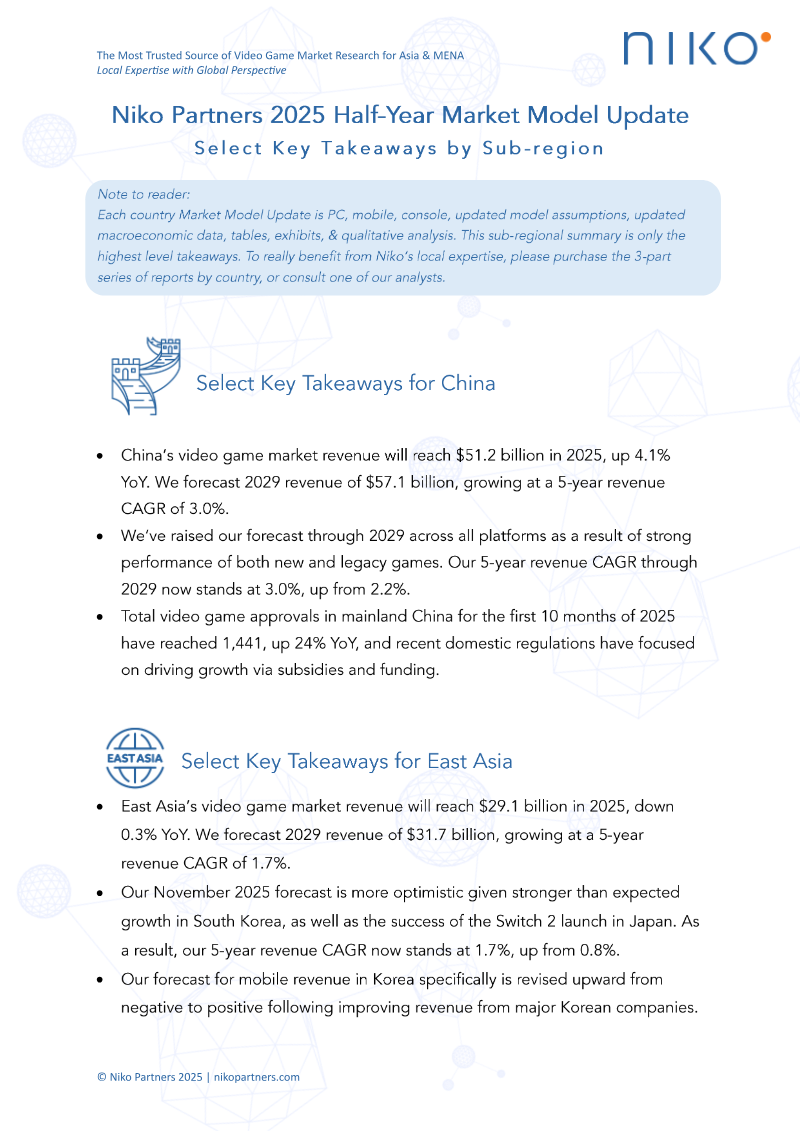
Niko Partners · 2025
GamesBeat
GamesBeat · 2026

Stillfront Group · 2026

Shorooq Partners · 2023
Niko Partners · 2023
Niko Partners · 2023

Niko Partners · 2023
Newzoo · 2022
Newzoo & Pangle · 2021

Sensor Tower · 2021
Sensor Tower · 2021
Newzoo · 2021