Employment reports and market data
Documents
Think Global, Create Local: The Regional Economic Impact of the UK Games Industry
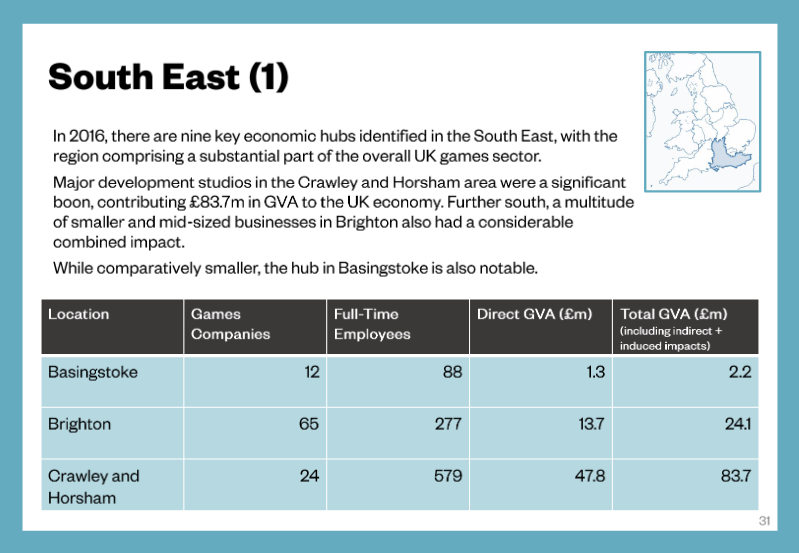
The United Kingdom games industry functions as a high-productivity economic engine, generating £1.35 billion in direct gross value added and supporting 16,140 full-time equivalent positions as of 2016.
- The UK games industry generated a total economic impact of £2.87 billion in 2016, including £1.35 billion in direct gross value added.
- The sector supports 16,140 full-time equivalent positions and is characterized by a high-productivity workforce.
- Small-to-medium enterprises dominate the industry structure, accounting for 99.5 percent of all businesses.

Build Your Brand as a Digital Artist with Ryan Kingslien | Episode 212
The digital art industry is undergoing a fundamental shift that necessitates a transition from traditional technical specialization to a more entrepreneurial, brand-focused career model.
- Digital artists must transition from technical specialists to entrepreneurial brand-builders, as software-specific skills have a short half-life due to rapid advancements in AI and machine learning.
- Long-term career stability requires viewing professional output as a business entity, prioritizing the mastery of cash flow, market competition, and strategic personal branding.
- Artists should adopt a reverse-engineered approach to professional development by aligning their training directly with the specific, practical requirements of target employers rather than relying on traditional academic frameworks.
Our story in Games Development
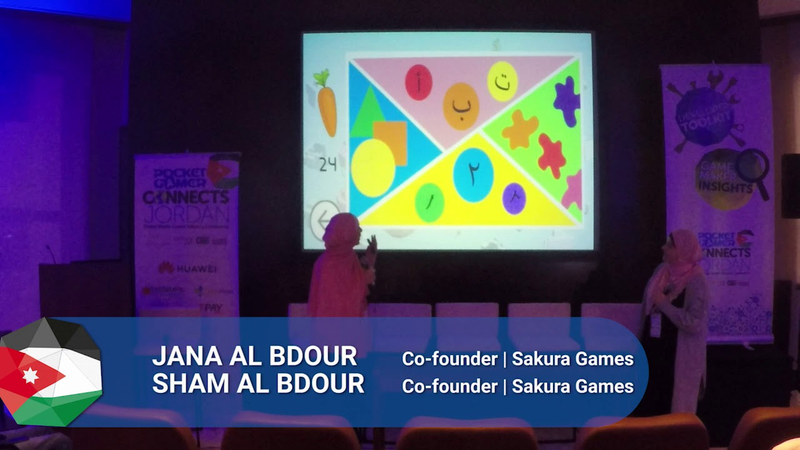
Sakura Games, founded by teenage developers Sham and Jana Al Bdour, focuses on the development of edutainment software designed to integrate interactive learning into school curricula.
- Sakura Games, founded by Sham and Jana Al Bdour in Jordan, develops edutainment software using the Unity engine and Autodesk Maya to integrate interactive learning into school curricula.
- The studio targets the underserved MENA market by creating specialized educational tools, such as the award-winning language-learning game Crimson, to address gaps in traditional schooling.
- The founders prioritize pedagogical value over standard gaming tropes by drawing design inspiration from the animation and film industries rather than traditional gaming sectors.
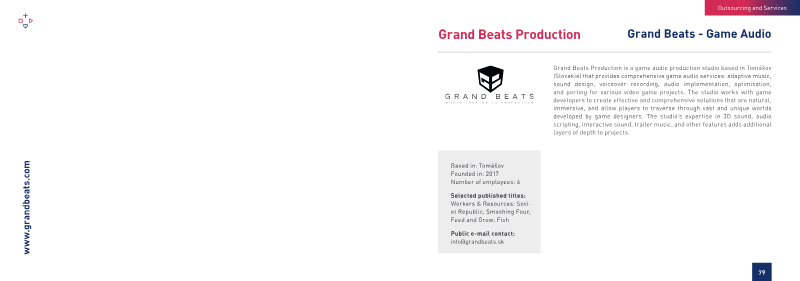
Slovak Game Industry Annual Report 2020/2021
The Slovak game industry represents a resilient and rapidly maturing sector, characterized by a robust ecosystem of independent studios that generated approximately €51 million in turnover during the 2019 fiscal period.
- Slovak game development includes studios like Tater Games (founded 2019, 7 employees, released Nunu Spirits, Cyber Forge), Atomic Realm (founded 2019, 4 employees, released Magnet Run, developing Squabble), and Fatbot Games (founded 2015, 6 employees, released Vaporum).
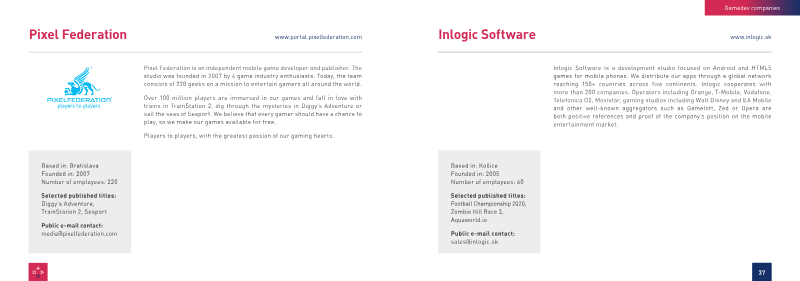
- Larger studios include Pixel Federation (founded 2007, 220 employees, titles like Diggy's Adventure, TrainStation 2) and Inlogic (founded 2005, 60 employees, titles like Football Championship 2020, Zombie Hill Race 3).
- Several studios focus on specific niches: Incidental Minds (founded 2018, 6 employees) develops 2D illustrated story-driven and strategic games, while Neutraworks (founded 2018, 6 employees) is an independent studio.
Economic Analysis of the Audiovisual Sector in the Republic of Ireland
The Irish audiovisual and radio sectors represent a vital component of the national economy, generating over €1 billion in gross value added and supporting 16,930 full-time equivalent jobs as of 2016.
- The audiovisual and radio sectors contributed over €1 billion in Gross Value Added (GVA) to the Irish economy in 2016, with Film, TV, and animation accounting for the largest share at €692 million.
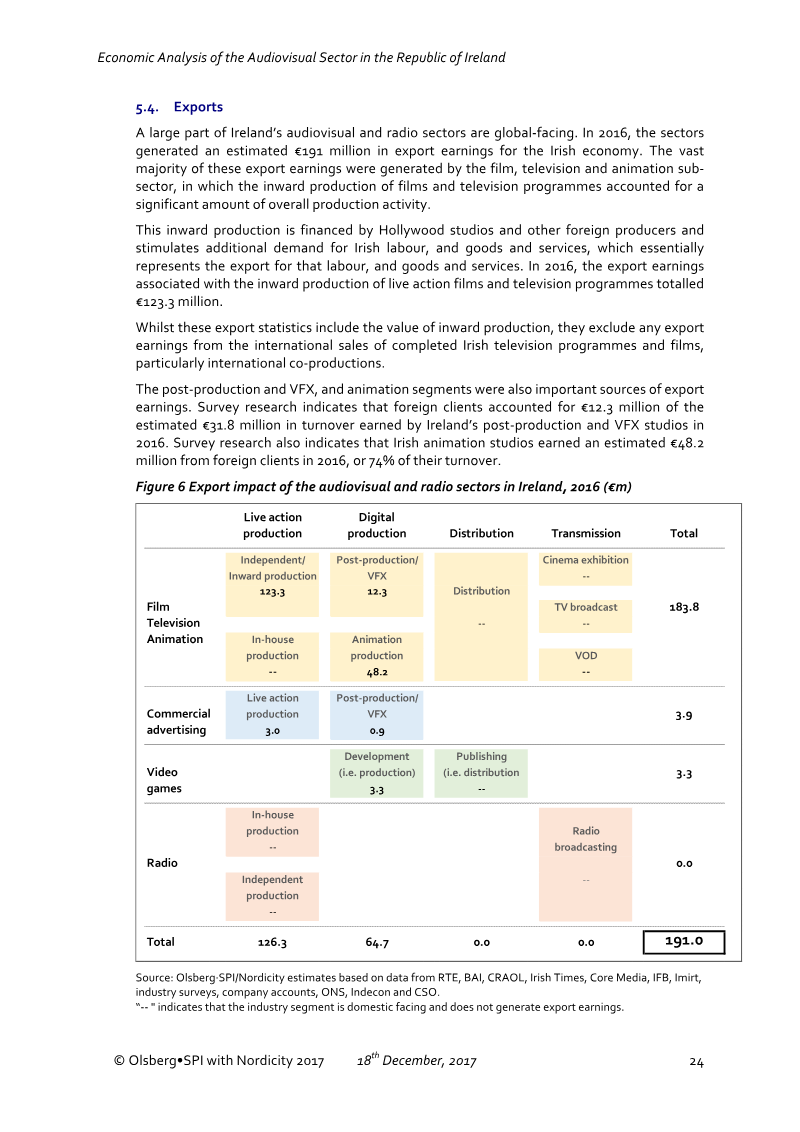
- The sectors generated an estimated €191 million in export earnings for Ireland in 2016, primarily from film, television, and animation. Inward production of live-action films and TV programs alone contributed €123.3 million to these export earnings.
- Irish animation studios earned an estimated €48.2 million from foreign clients in 2016, representing 74% of their total turnover.

Baromètre Annuel du Jeu Vidéo en France: 2020
The 2020 Annual Barometer of the Video Game Industry in France provides a comprehensive analysis of the sector’s economic health, production landscape, and educational ecosystem.
- France ranks as the second-largest global hub for video game development, trailing only the United States.
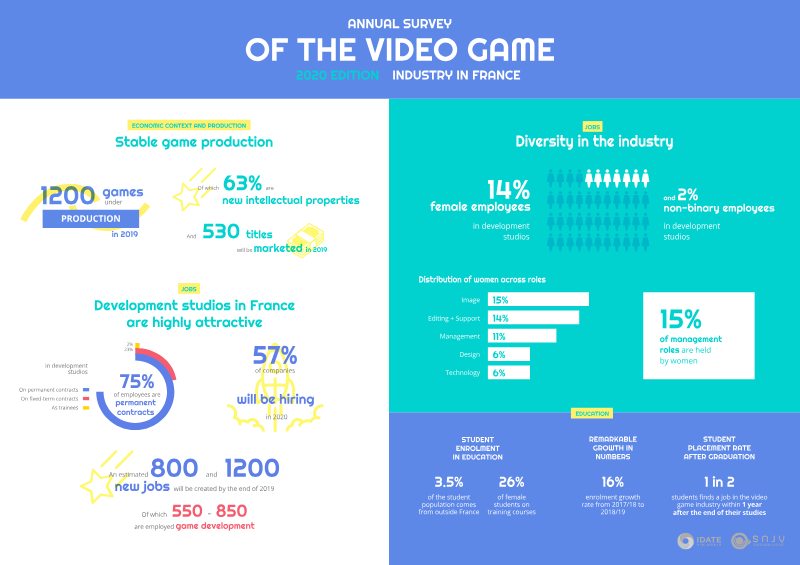
- The industry is primarily composed of independent development studios, with 93% identifying as independent and 74% focused on creating original intellectual properties.
- International markets are a primary revenue driver, accounting for 44% of total studio income.
The Video Game Industry in France: 2020 Edition Economic Context and Production
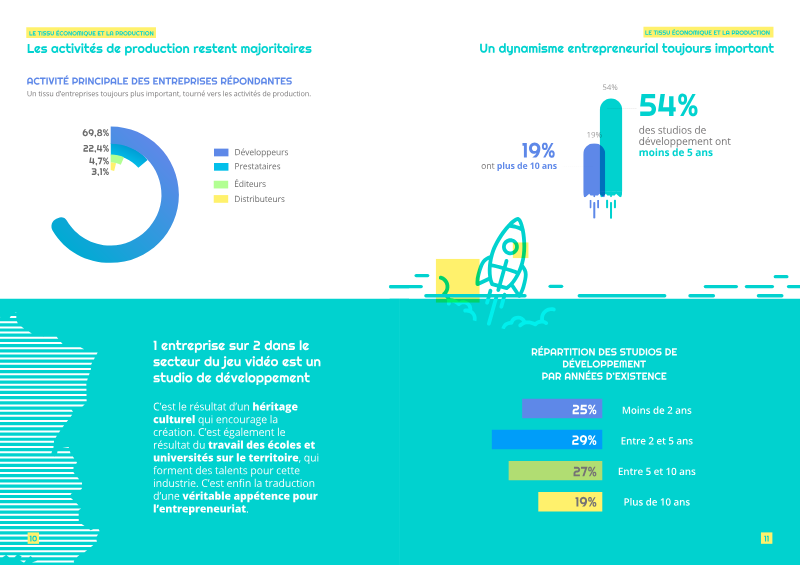
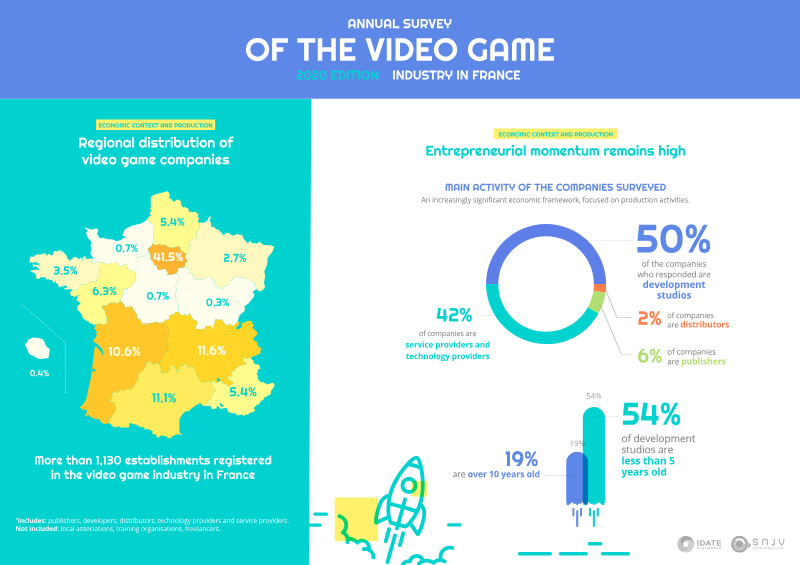
The French video game industry demonstrates robust entrepreneurial momentum and a strong focus on production, characterized by a diverse ecosystem of over 1,130 establishments.
- The French video game industry comprises over 1,130 establishments, with development studios representing 50% of the sector and service/technology providers accounting for 42%.
- The industry demonstrates a strong commitment to original content, with 63% of the 530 titles marketed in 2019 based on new intellectual properties.
- Employment is characterized by stability and growth, with 75% of the workforce on permanent contracts and projections for 800 to 1,200 new jobs created by the end of 2019.
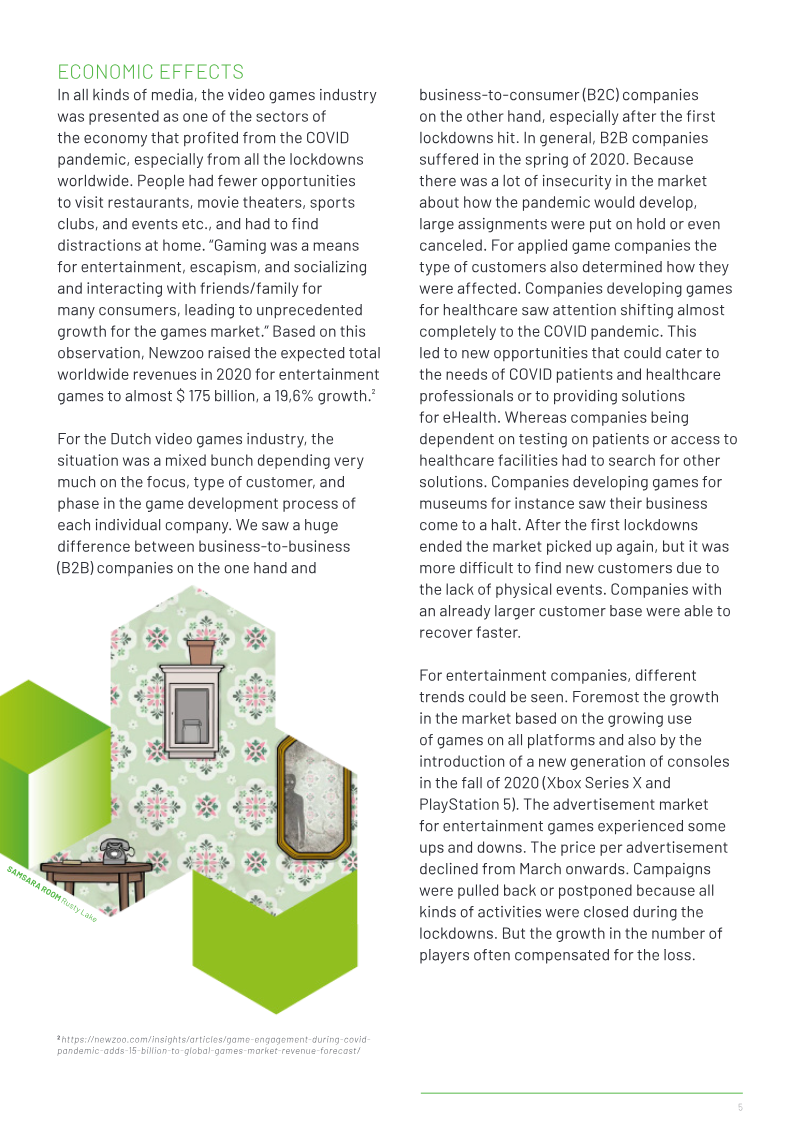
Games Monitor: The Netherlands 2020 Update – COVID Impact
This update provides an analysis of the Dutch video game industry’s performance during 2020, specifically examining the operational and economic impacts of the COVID-19 pandemic.
- The Dutch video game industry grew from 575 companies in 2018 to 615 by the end of 2020, supporting approximately 4,000 total jobs.
- B2C entertainment developers experienced increased consumer demand during the pandemic, while B2B and applied game developers faced project cancellations and delays.
- Operational productivity remained stable despite the transition to remote work, though nearly 50% of industry professionals reported increased stress levels.
Game Developer Index: Sweden 2020
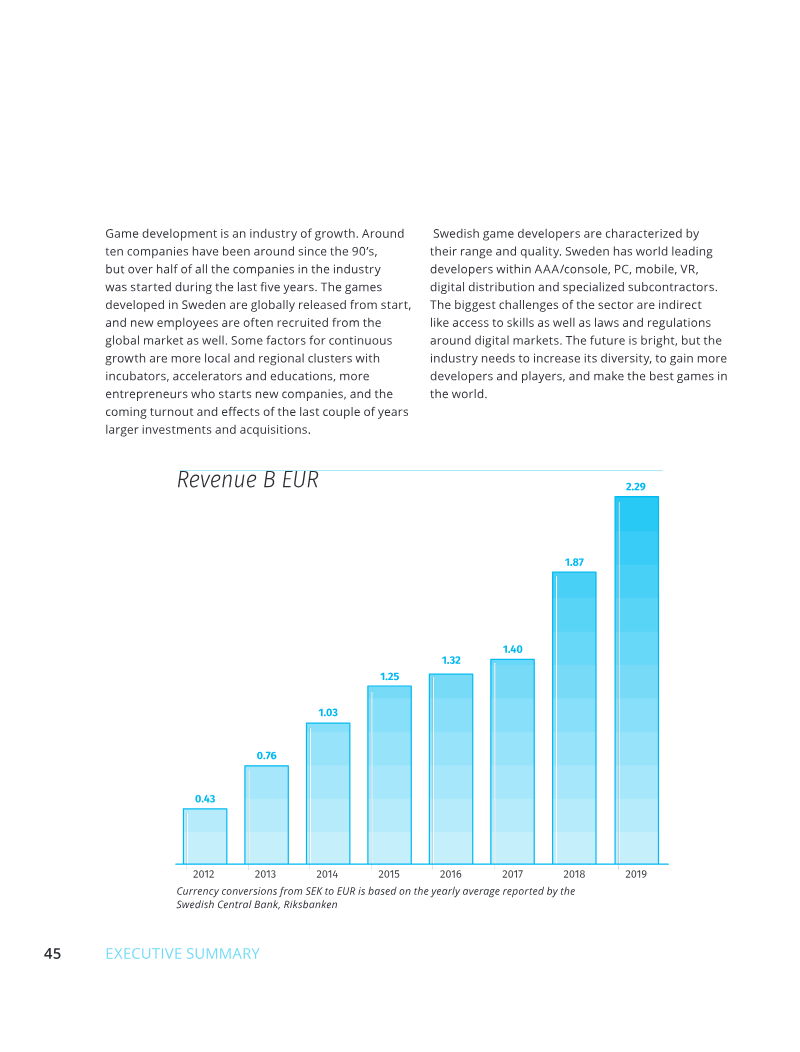
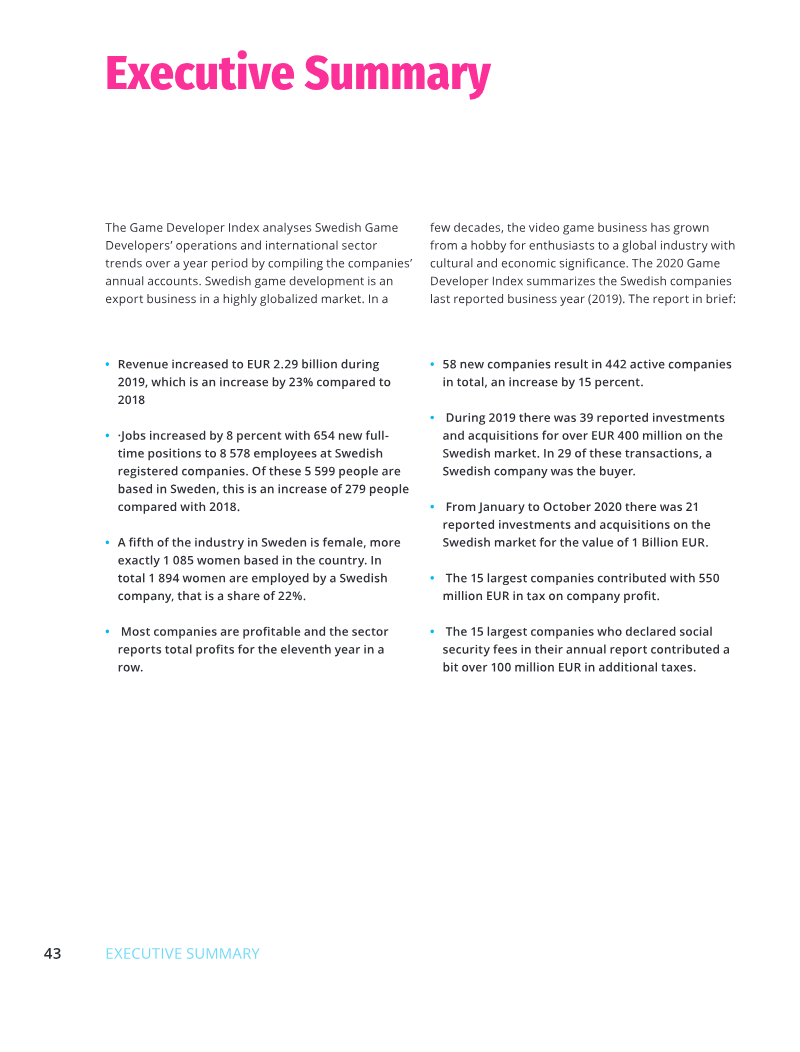
The Swedish game development industry demonstrates robust economic expansion and sustained profitability, functioning as a highly globalized export sector.
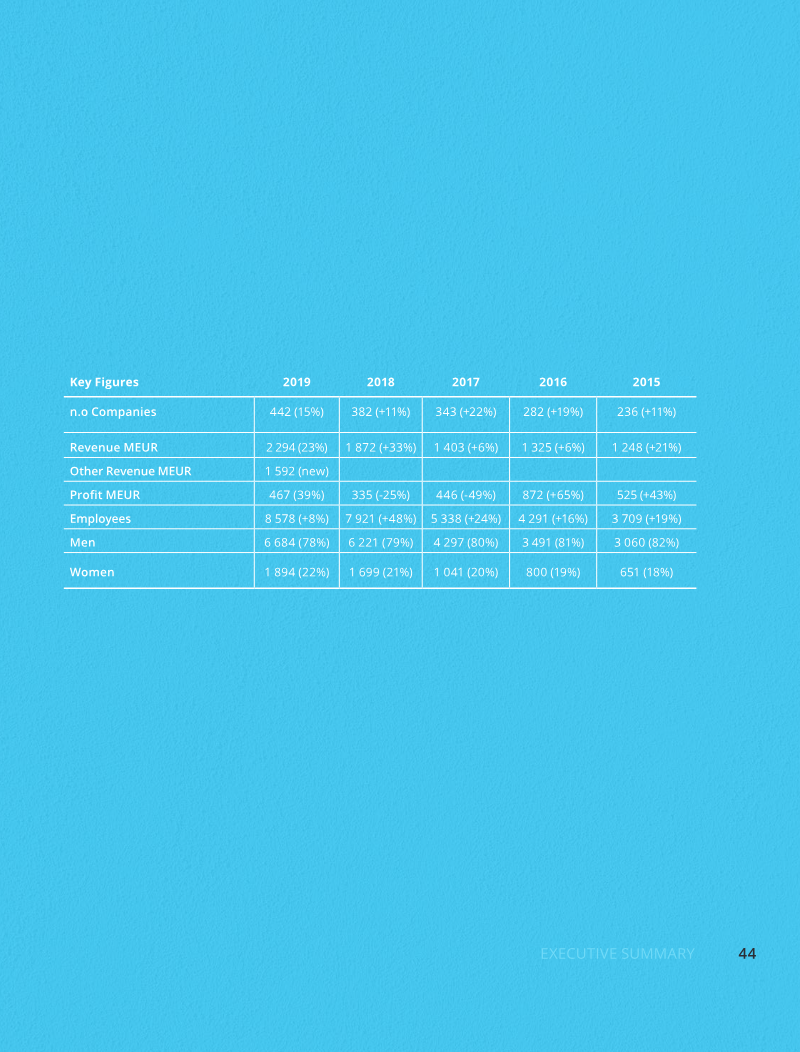
- The Swedish game industry generated EUR 2.29 billion in revenue in 2019, marking a 23 percent year-over-year increase and the eleventh consecutive year of sector-wide profitability.
- Investment activity surged significantly, with 39 transactions totaling over EUR 400 million in 2019, followed by 21 transactions valued at EUR 1 billion between January and October 2020.
- The industry workforce grew to 8,578 full-time positions by the end of 2019, with 5,599 of those employees based in Sweden and women representing 22 percent of the total headcount.


Gaming Industry Report: Serbia 2020
The 2020 assessment of Serbia’s video-game sector presents a rapidly expanding ecosystem that has moved beyond a modest, paper-based association to become a central hub for nearly one hundred companies.
- Serbia’s video-game industry reached over €100 million in revenue in 2020, marking a 20 percent year-over-year growth across 120 development teams.
- The sector employs approximately 2,100 people, with women accounting for one-third of the workforce and a majority of firms planning to increase staff in 2021.
- Educational infrastructure expanded significantly with new programs at the University of Kragujevac and the University of Arts in Belgrade, supported by partners like Epic Games and Nordeus to serve over 1,500 students.


Catálogo de Servicios – Desarrolladores: España
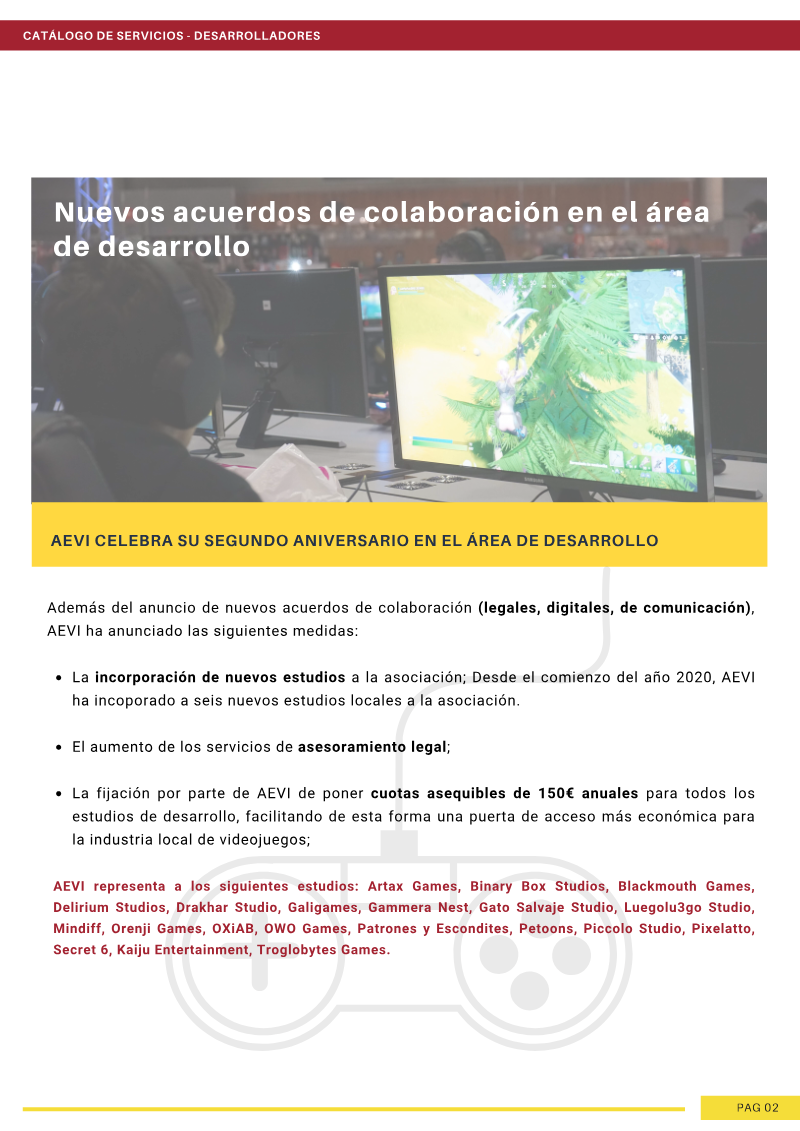
The catalogue presents AEVI’s strategy to strengthen Spain’s video-game development sector through a suite of collaborative services and targeted initiatives.
- AEVI has expanded its development division to over 30 member studios since 2020, including firms like Artax Games, Binary Box Studios, and Blackmouth Games.
- The association provides direct financial support through a €10,000 grant programme and maintains a low barrier to entry for small firms with an annual membership fee of €150.
- Members receive specialized professional services, including free initial legal consultations from Bird & Bird and blockchain-based IP protection via Tutelio.
Games Industry 2019/20
Germany stands as Europe’s largest video-game market and the world’s fifth-largest, a position reinforced by a robust developer community, flagship events and a policy framework that actively subsidises production.
- Germany is the largest video-game market in Europe and the fifth-largest globally, generating a record €4.4 billion in 2018 with a 9 percent year-on-year growth rate.
- The German government supports the industry with €50 million in annual non-repayable grants, which cover 25 to 50 percent of project costs for developers.
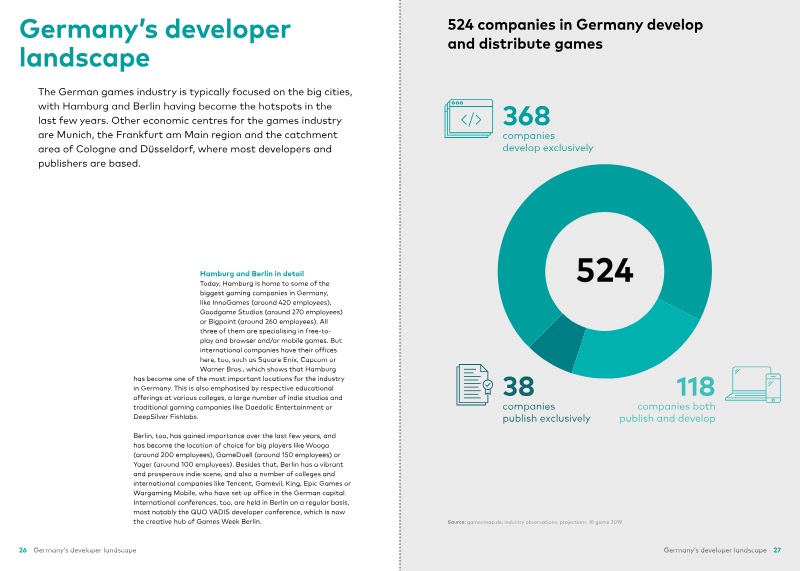
- The sector comprises approximately 524 game-related firms, including 368 development studios, employing 11,000 staff directly and nearly 28,000 when including ancillary roles.