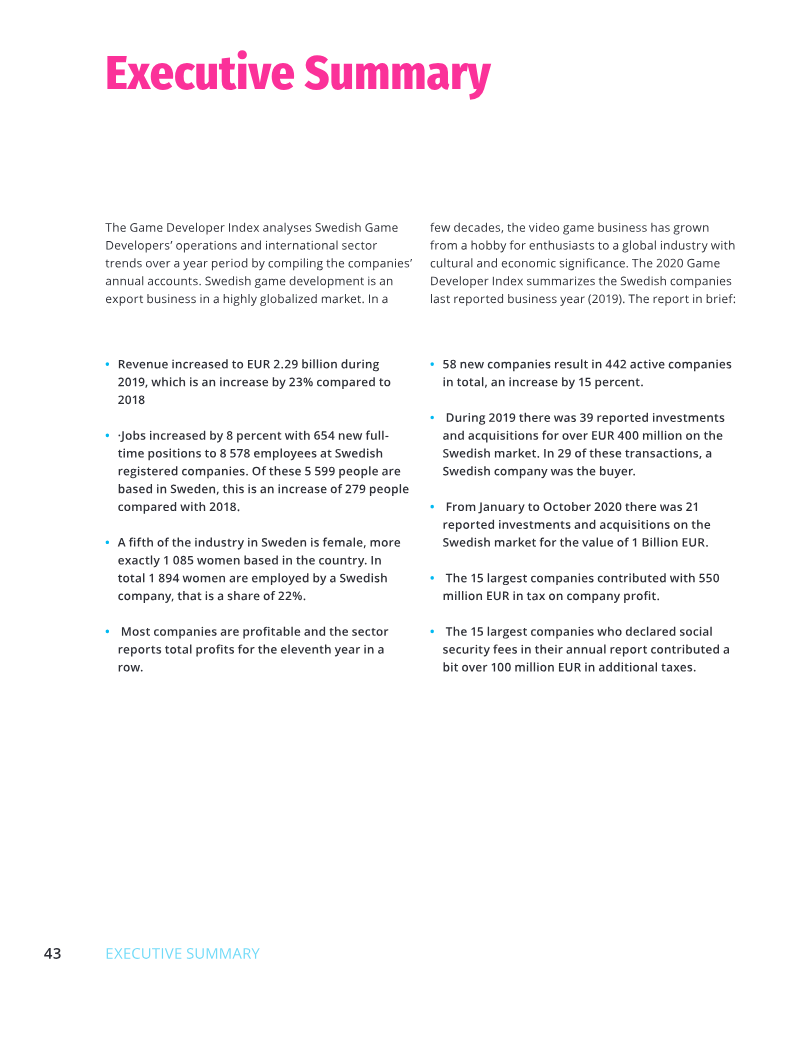
The Swedish game development industry demonstrates robust economic expansion and sustained profitability, functioning as a highly globalized export sector. By analyzing annual accounts from Swedish-registered companies, the industry reports a significant revenue increase to EUR 2.29 billion in 2019, representing a 23 percent growth over the previous year. This marks the eleventh consecutive year of total sector profitability, supported by a 15 percent increase in the number of active companies, which reached 442 by the end of 2019.
Employment trends reflect this upward trajectory, with the workforce growing by 8 percent to a total of 8,578 full-time positions. Of these, 5,599 employees are based within Sweden. While the industry continues to scale, gender diversity remains a focal point, with women comprising 22 percent of the total workforce. The sector’s economic impact extends to significant tax contributions, as the 15 largest companies alone provided EUR 550 million in corporate profit taxes and over EUR 100 million in additional social security fees.
Investment activity highlights the industry's maturity and attractiveness to capital. During 2019, the market saw 39 transactions involving investments and acquisitions totaling over EUR 400 million, with Swedish firms acting as the primary buyer in the majority of cases. This momentum accelerated into 2020, with 21 transactions recorded between January and October valued at EUR 1 billion. Despite these successes, the industry identifies ongoing challenges, particularly regarding the access to specialized talent and the navigation of complex digital market regulations. Future growth is expected to rely on regional clusters, incubators, and a continued commitment to increasing workforce diversity to maintain global competitiveness.
Dataspelsbranschen · 2026
Dataspelsbranschen · 2026
Dataspelsbranschen · 2026
Dataspelsbranschen · 2025
Dataspelsbranschen · 2025
Dataspelsbranschen · 2025
Dataspelsbranschen · 2025
Dataspelsbranschen · 2024
Dataspelsbranschen · 2024
Dataspelsbranschen · 2024

Swedish Games Industry · 2024

Dataspelsbranschen · 2024
Game Developers Conference · 2024
Swedish Games Industry · 2022
Dataspelsbranschen · 2021

Swedish Games Industry · 2019
Dataspelsbranschen · 2018

Modern Times Group · 2026
Modern Times Group · 2025

Thunderful · 2025
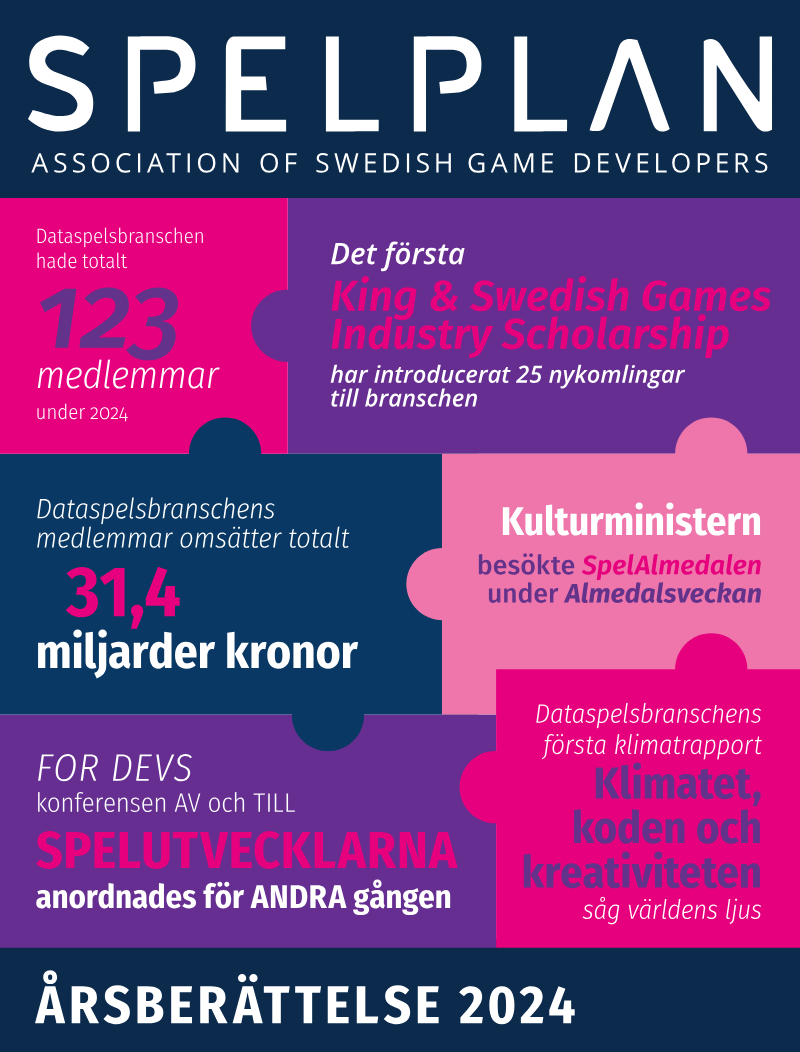
Spelplan-ASGD · 2025

Duamentes Gaming · 2025
Kreativ Sektor · 2025
CESA – Computer Entertainment Supplier's Association · 2025