Employment reports and market data
Documents
Netherlands Games Monitor 2024
The Dutch games industry is currently navigating a period of maturation and consolidation, characterized by moderate financial growth despite a challenging global economic climate.
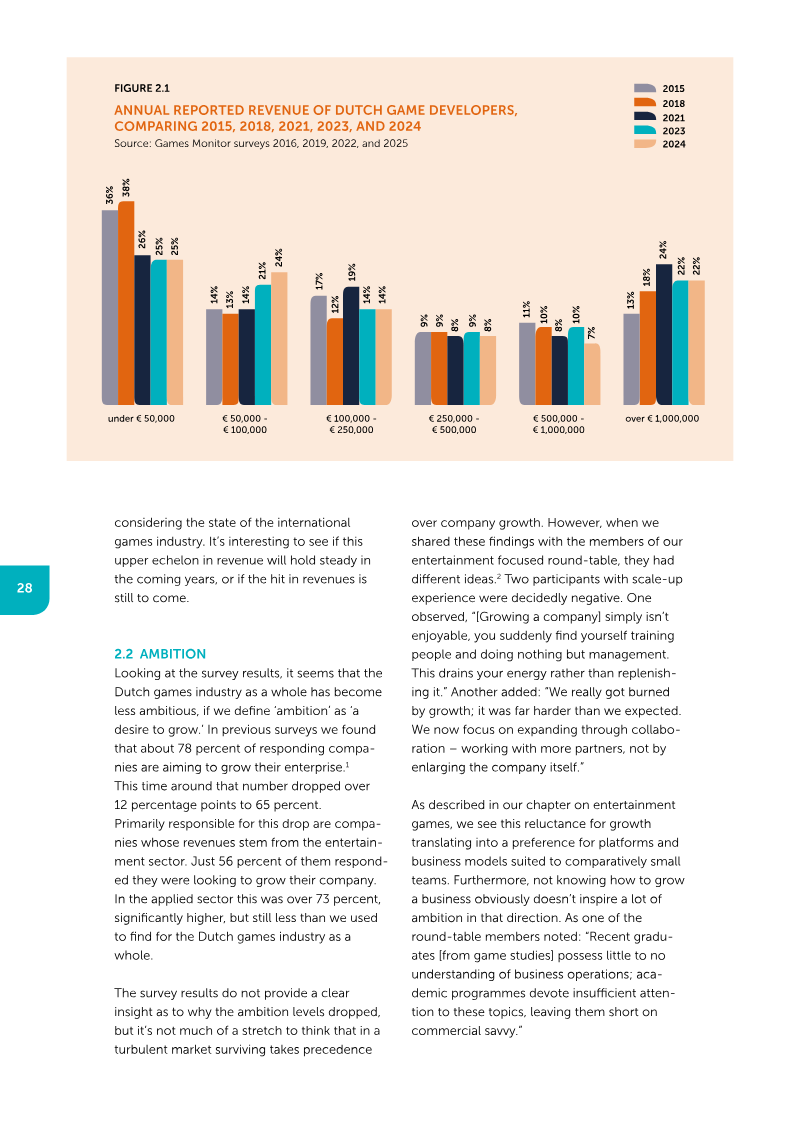
- The Dutch games industry employed 4,291 people by the end of 2023, a decline of 269 persons compared to 2021, with employment decreasing by 3% per year between 2021 and 2023, though revenue increased by an average annual rate of 10.5% to €763 million.
- The percentage of female workers in the Dutch games industry is rising, reaching 23.2% currently, aligning with broader European and North American industry averages.
- Applied games studios are adopting generative AI faster than entertainment studios, using or testing it for localization, dialogue, training content, and audio, with clients open to custom AI-enabled solutions, while entertainment studios are more hesitant due to potential player backlash.
Company Profiles: Slovakia 2024
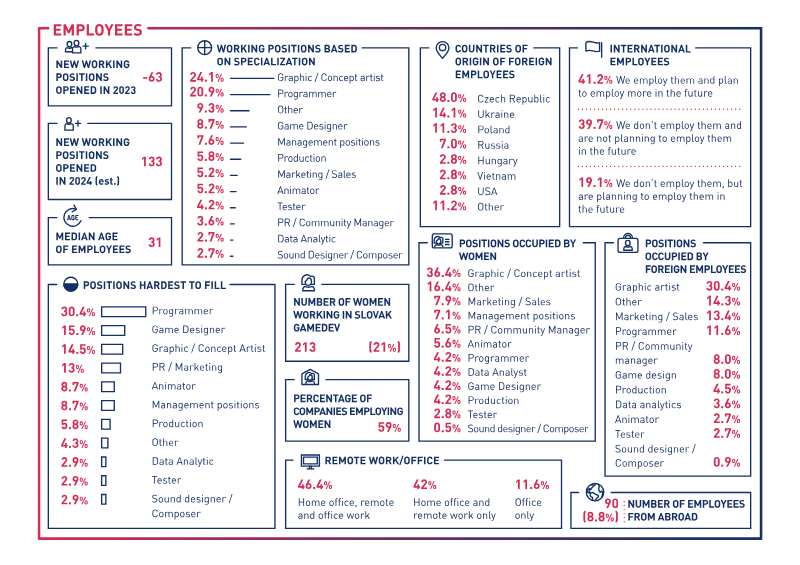
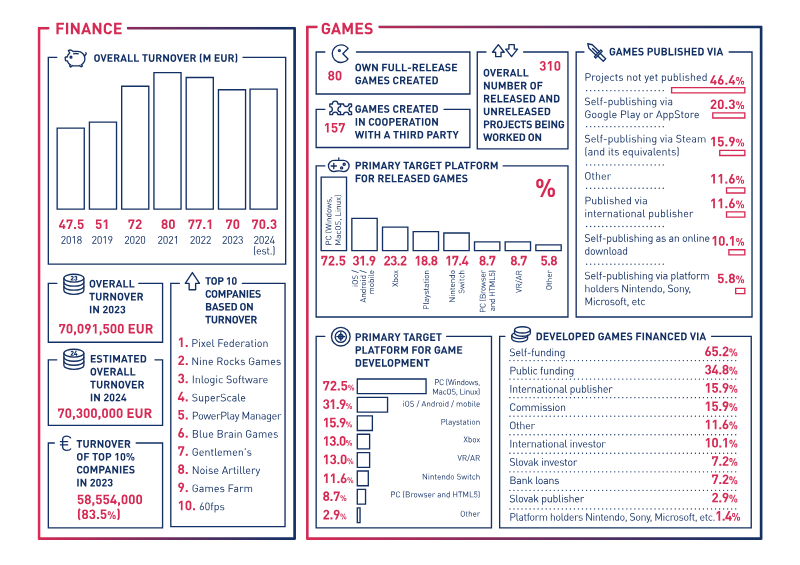
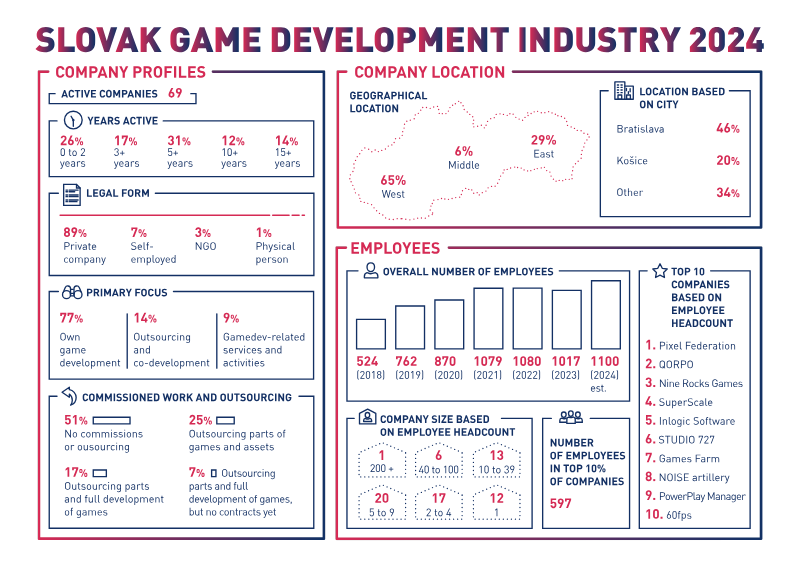
The Slovak game development industry in 2024 is characterized by a stable ecosystem of 69 active companies, primarily concentrated in the western region of the country, particularly Bratislava.
- The Slovak game industry is highly concentrated, with the top 10% of companies—including Pixel Federation and Nine Rocks Games—generating 83.5% of the sector's 70 million EUR annual turnover.
- The industry consists of 69 active companies, 77% of which focus on original game development rather than outsourcing services.
- After a slight contraction in 2023, the workforce is projected to reach approximately 1,100 employees by the end of 2024, with a median age of 31 and 21% female representation.

Behind the Screens: The Salary Stats in Gamedev
This research, conducted by 80 Level in January 2024, examines the global compensation landscape and financial well-being of professionals within the video game development industry.
- The game development industry is highly stratified, with nearly 40% of professionals earning under $40,000 annually and only 11% earning more than $150,000.
- Geography is a primary driver of income disparity, evidenced by 36% of U.S.-based professionals earning over $150,000 compared to 54% of developers in India earning under $9,999.
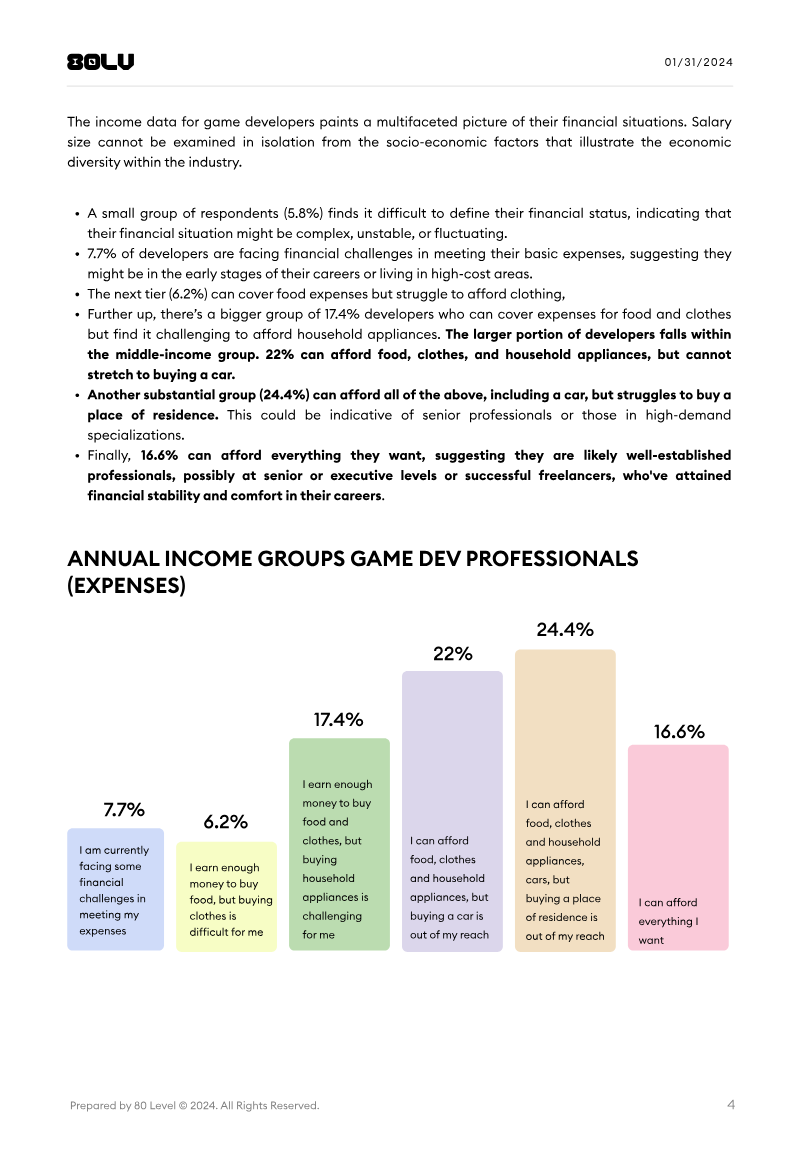
- Financial instability is prevalent, as 24.4% of the workforce can afford a car but cannot afford a residence, while only 16.6% can afford all discretionary purchases.

The Game Industry of Finland Report 2024
The 2024 overview of Finland’s game sector presents a comprehensive assessment of an industry that remains a global technology leader while confronting a tightening financing environment.
- Finland’s game industry currently employs approximately 4,300 individuals, representing about 3,800 full-time positions.
- A significant decline in private risk capital and publisher funding has forced studios to pivot toward B2B subcontracting, co-development agreements, and increased reliance on EU and national public R&D programs.
- The ecosystem remains anchored by major players like Supercell, which employs over 800 staff and has produced seven global hit titles, alongside diverse ventures like the mental-health game developer Soihtu DTx, which recently secured a $4.2 million seed round.



ゲーム開発者の就業とキャリア形成 2024
The 2024 Game Developer Survey for Japan provides a comprehensive snapshot of compensation trends among the nation’s game development workforce, focusing on individuals with formal vocational-school or university education.
- Over 80% of game developers with formal vocational or university education in Japan received a salary increase in 2024.
- The trend of rising earnings is consistent among full-time employees, with approximately 80% reporting wage growth over the past year.
- Formal academic credentials serve as a significant predictor of wage growth, as employers prioritize these qualifications when determining compensation adjustments.



The Austrian Game Industry 2024
The Austrian game sector is portrayed as a youthful, fast-growing cluster of predominantly small and micro enterprises whose economic relevance has expanded dramatically over the past six years.
- The Austrian game industry generated €92.8 million in revenue in 2023, marking a 285% nominal increase since 2017.
- Direct employment in the sector grew 128% over seven years, rising from 474 jobs in 2017 to 1,080 in 2024, with a total economic multiplier effect supporting 2,260 jobs.
- Projections for 2029 estimate industry revenue will reach €149 million and the workforce will exceed 1,500 employees, even assuming a significant slowdown in growth.


Czech Gaming Industry Report 2024
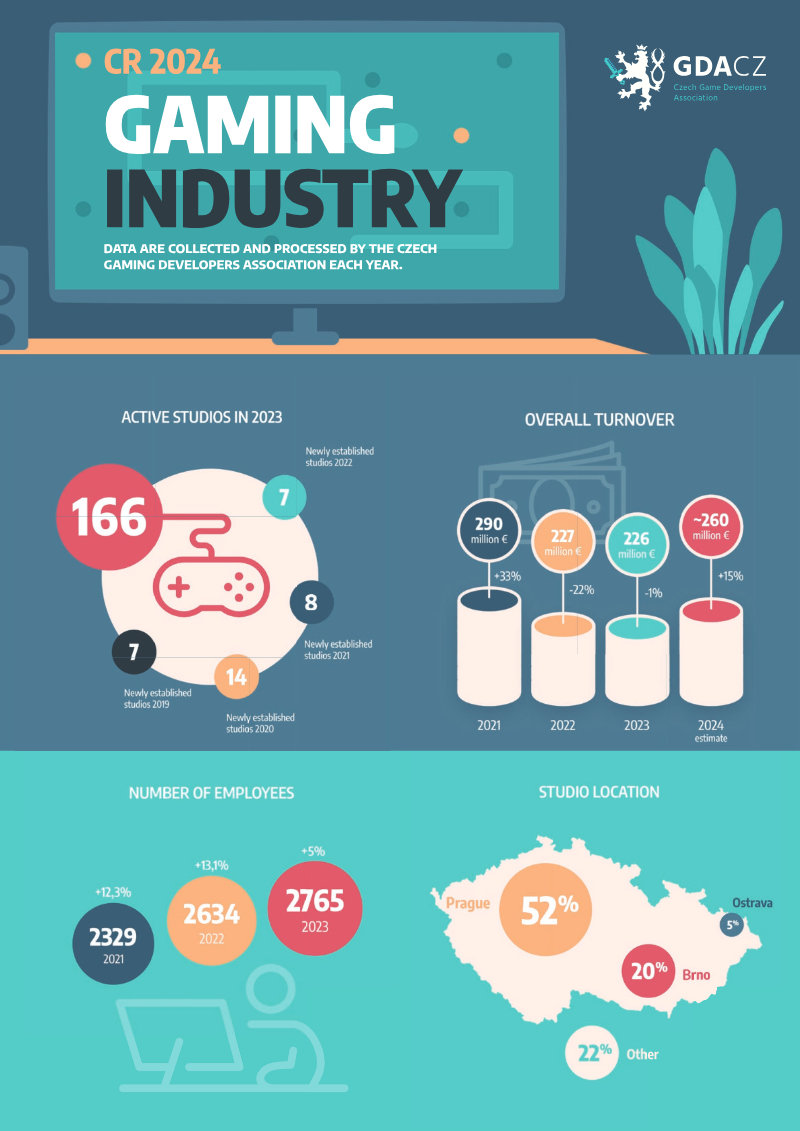
The Czech Gaming Developers Association compiled an annual industry overview to map the sector’s economic performance, workforce composition and structural trends for 2023 and early 2024.
- The Czech gaming industry reached a total turnover of €226 million in 2023, representing a 33% year-over-year growth.
- Total employment in the sector grew by 12.3% to 4,165 staff, with over 430 new positions created throughout 2023.
- The industry released 39 total projects in 2023, consisting of 29 new titles, 10 early-access projects, and 10 DLCs.



L'Industrie du Jeu Vidéo au Canada
The 2024 Canadian video-game sector is presented as a mature, high-value industry that contributes $5.1 billion to national GDP and sustains 34 010 full-time-equivalent positions, with an average compensation of $102 000.
- The Canadian video game industry contributes $5.1 billion to the national GDP and employs 34,010 full-time equivalent workers with an average annual compensation of $102,000.
- Industry spending reached $4.8 billion in 2024, an 11% increase since 2021, with labour costs now accounting for 72% of total expenditures.
- The sector is increasingly dominated by foreign-owned companies, which now account for 88% of total industry employment.
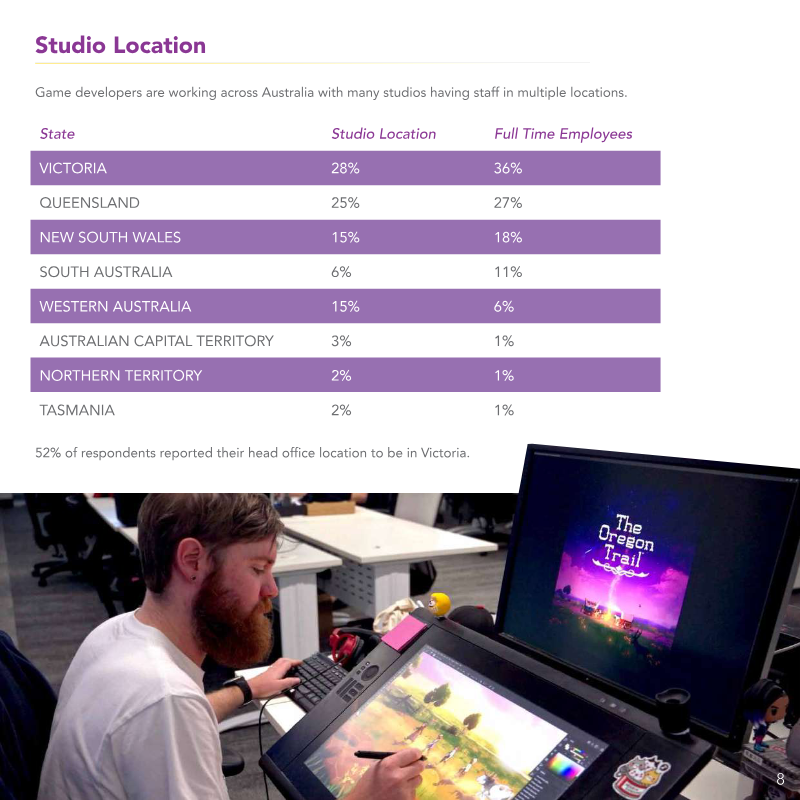

FY2024 Report: Australian Game Development Survey
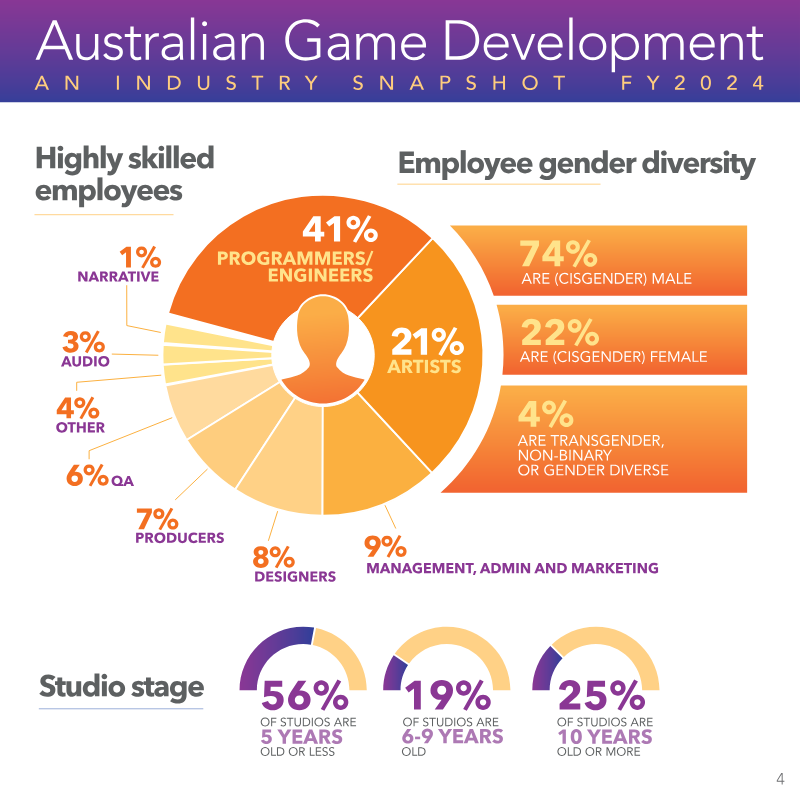
The Australian game development industry demonstrated resilience and stability during the 2024 financial year despite significant global economic headwinds.
- The Australian game development industry generated $339.1 million in revenue during FY2024, reflecting a minor 1.9% year-over-year decline despite global economic headwinds.
- The sector is highly export-focused, with 93% of total revenue derived from international markets and 85% of studios prioritizing the development of original intellectual property.
- Employment remains stable at 2,465 full-time equivalent workers, with 61% of studios planning to increase their headcount in the coming year.
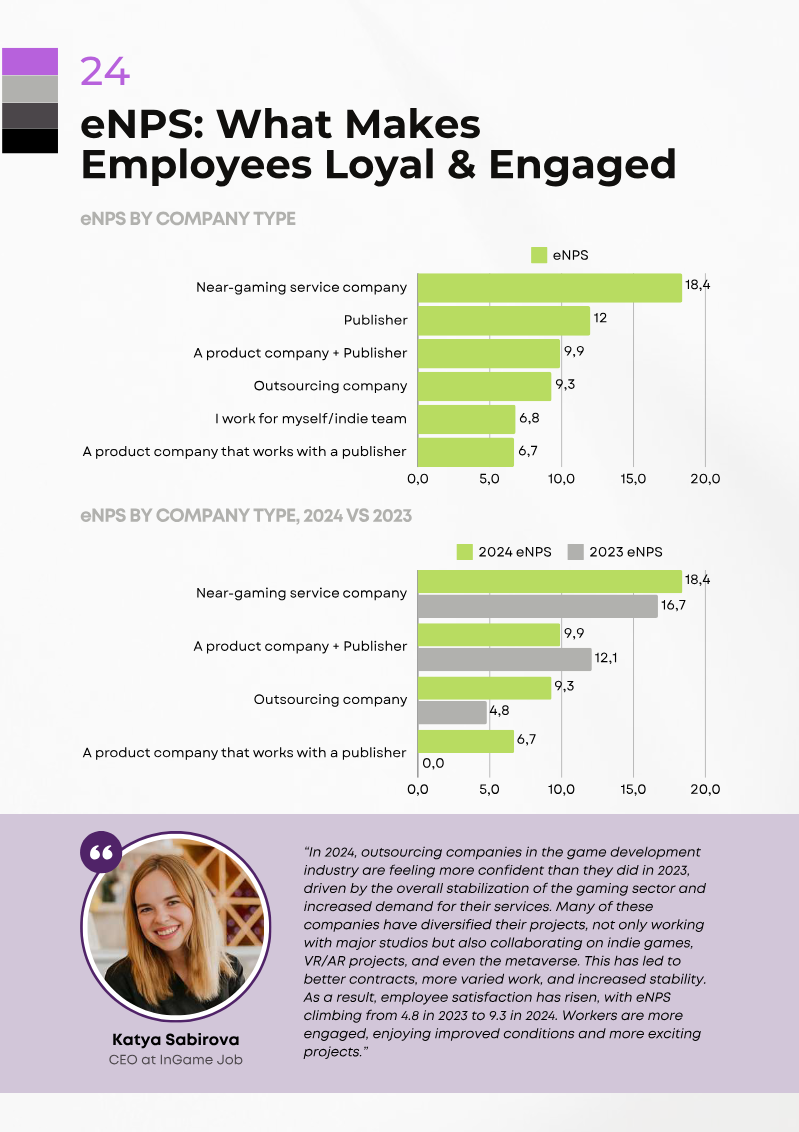
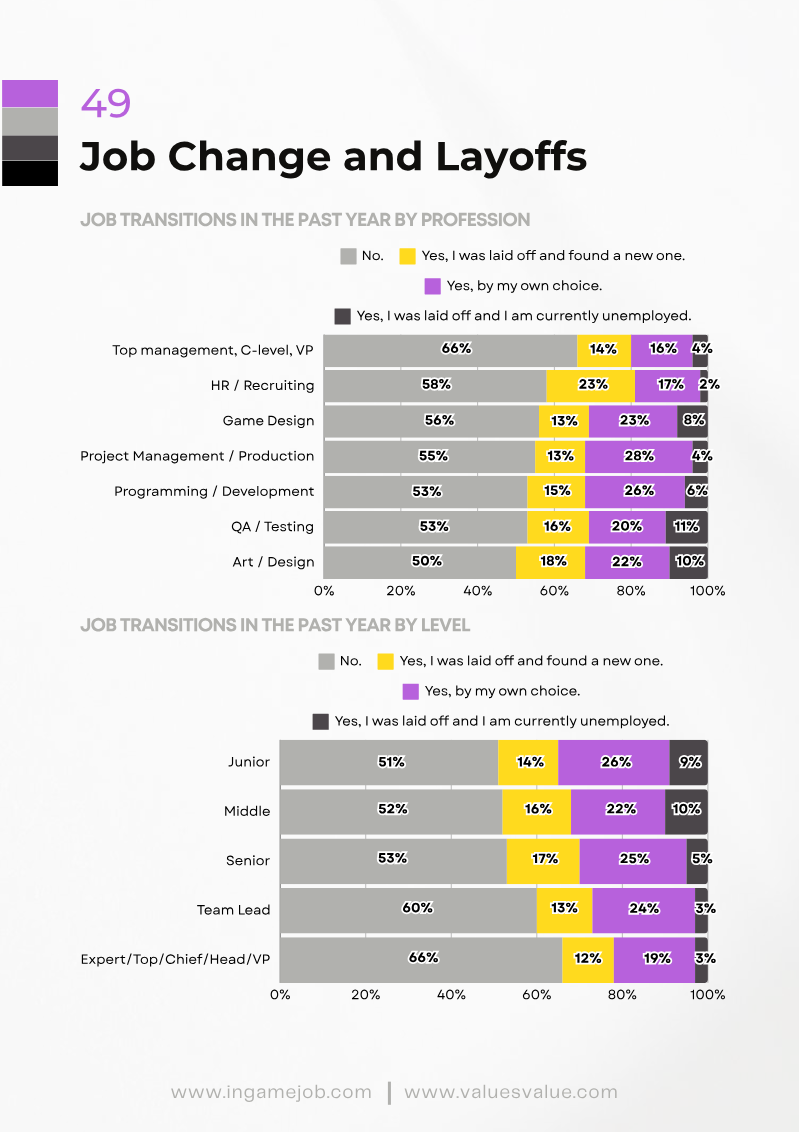
Big Games Industry Employment Survey 2024: Salaries, Compensation Trends and State of the Games Sector in Europe
The European games industry in 2024 is characterized by significant volatility and structural transformation, with 15% of the workforce experiencing layoffs and 10% exiting the sector entirely.
- The European games industry faces significant instability, with 15% of the workforce experiencing layoffs and 10% leaving the sector entirely, disproportionately impacting junior professionals.
- AI adoption has surged by 17% year-over-year, with 54% of industry professionals now integrating these tools into their daily workflows.
- Systemic workplace issues persist, as 32% of respondents reported gender-based bias and 26% cited ageism, contributing to a gender pay gap rooted in a lack of female leadership and technical representation.

State of the Game Industry 2024
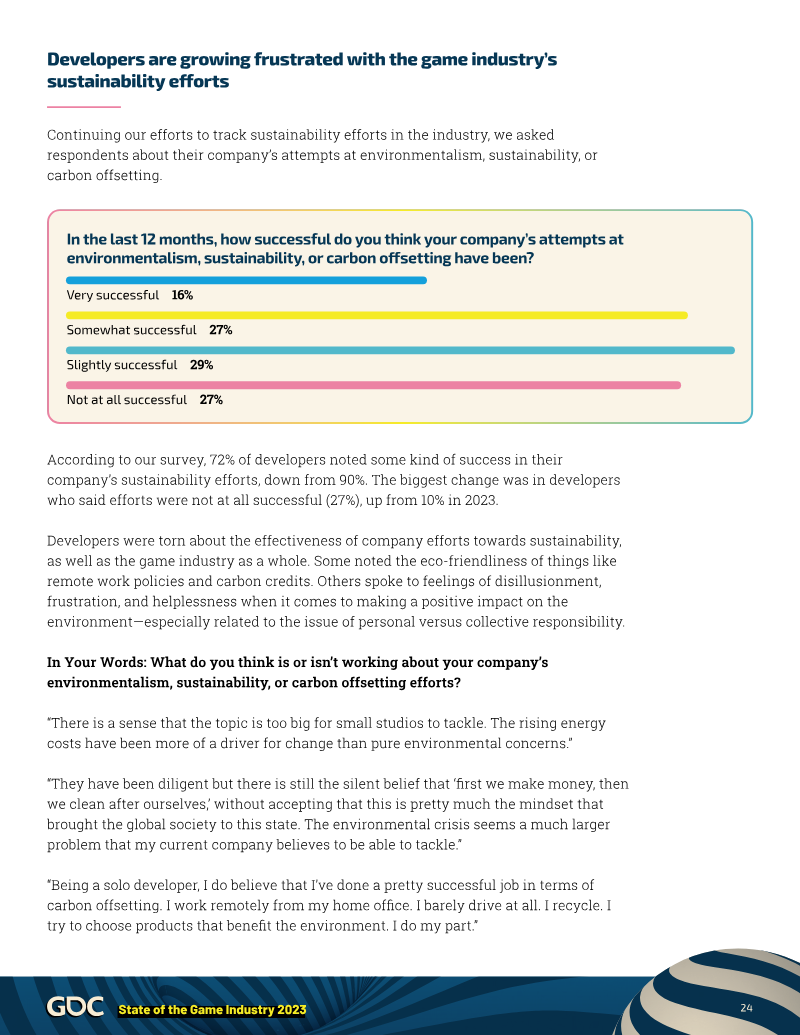
The global game industry entered 2024 in a state of profound volatility, defined by a painful market correction following post-pandemic overexpansion.
- The industry is undergoing a severe market correction characterized by widespread layoffs affecting one-third of the global workforce and a surge in studio closures.
- Support for unionization has reached 57%, driven largely by younger professionals (ages 18–24) facing economic instability and dissatisfaction with corporate management.
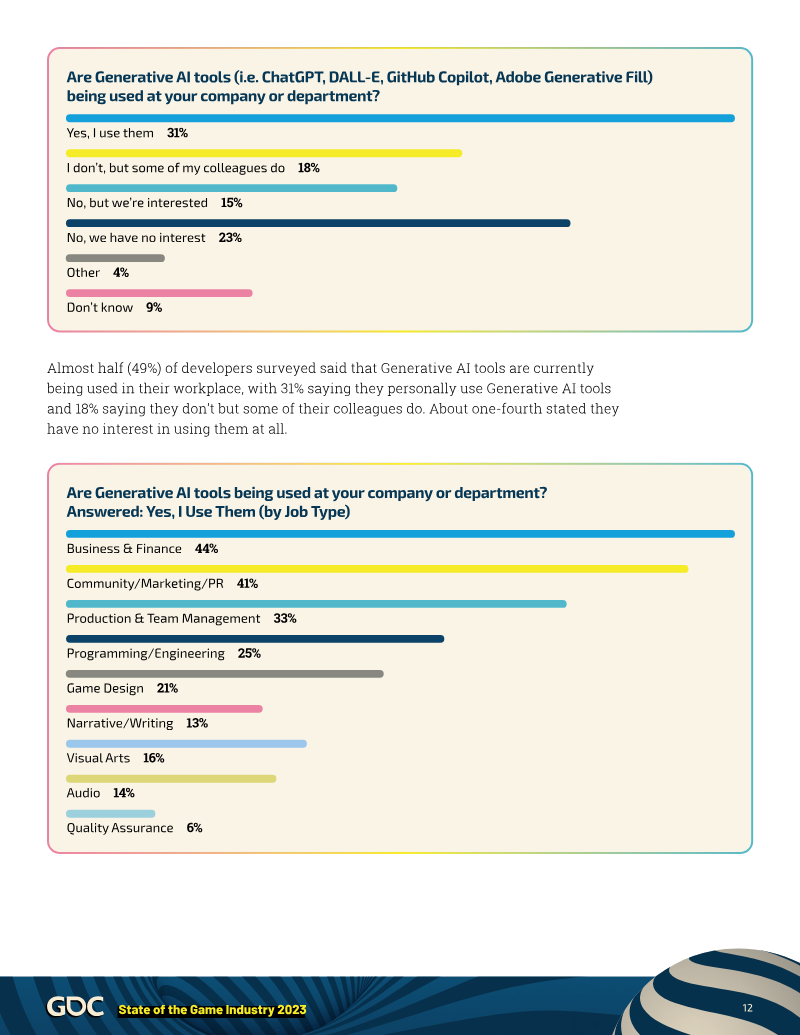
- While 49% of developers have adopted generative AI, 84% of the workforce reports significant concerns regarding copyright infringement and potential job displacement.
Assessment Games
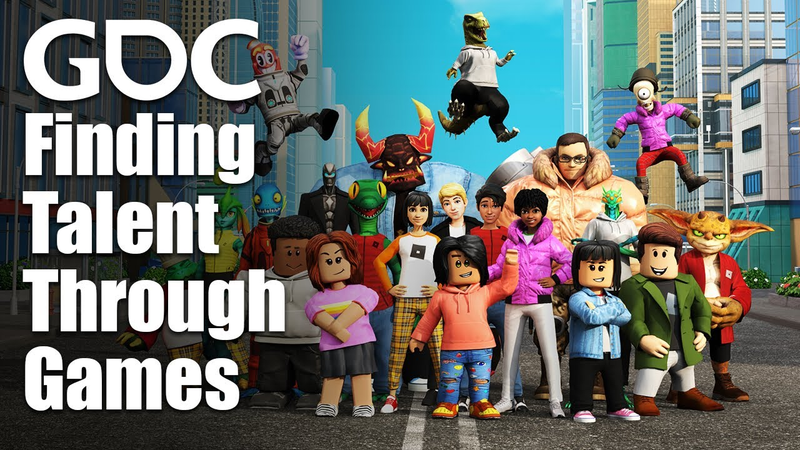
Roblox leverages interactive 3D puzzle-strategy games as a specialized, objective hiring tool to measure cognitive competencies such as systems thinking and creative problem-solving.
- Roblox utilizes interactive 3D puzzle-strategy games as a formal hiring tool, achieving a high psychometric reliability coefficient of 0.93 for measuring cognitive competencies like systems thinking.
- Unlike commercial entertainment games, these assessments prioritize data precision and scoring accuracy over player retention or monetization mechanics.
- To ensure standardized evaluation, designers strip away complex elements like procedural randomness and avatar movement, focusing instead on UI-driven, controlled environments.