Employment reports and market data
Documents
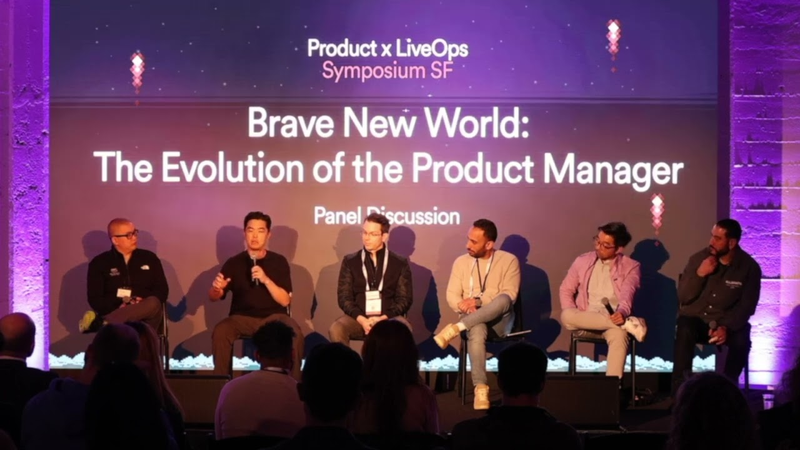
The End of Companies As We Know It: AI and the "Organizational Meta"
Artificial intelligence is fundamentally altering the landscape of corporate structure, necessitating a shift away from rigid, traditional hierarchies toward more fluid, adaptive models.
- Traditional organizational structures with rigid, vertical hierarchies and fixed roles will lose competitive advantage to more fluid, adaptive models.
- AI will subsume both low-level repetitive tasks and high-level complex functions, leading to the compression of traditional roles like product management, engineering, and art.
- The 'Organizational Meta' concept suggests that companies must constantly evolve their team structures, capabilities, and workflows to remain maximally effective, similar to how game metas shift.
What Does a “Good Game Studio Culture” Actually Look Like in 2025?
The modern game studio landscape is characterized by a fundamental misunderstanding of organizational dynamics, where the focus on abstract concepts of culture often masks a failure to implement effective institutional policy.
- Organizational health in 2025 is driven by structural design, reporting hierarchies, and incentive systems rather than abstract cultural values or team-building exercises.
- Effective studio leadership relies on clear, codified policies regarding performance, hiring, and firing to dictate behavior, as culture is an emergent outcome of these institutional rules.
- Investor confidence is currently prioritized toward leadership teams with proven track records rather than novel technologies, reflecting a broader skepticism toward high-risk ventures like AAA Web3-integrated shooters.

Nintendo Piracy Site Takedown, Subnautica 2 Lawsuit & A New SAG Contract! | Gaming News
The video game industry is currently navigating a period of intense legal and labor-related volatility, characterized by aggressive corporate enforcement and shifting power dynamics between publishers and developers.
- SAG-AFTRA members ratified a new interactive media agreement with a 95.04% approval rating, securing essential protections against the unauthorized use of artificial intelligence.
- Krafton is facing a lawsuit alleging it delayed the release of Subnautica 2 until 2026 to avoid paying a $250 million earn-out compensation package to former Unknown Worlds leadership.
- Nintendo has escalated global anti-piracy efforts against Switch 2 leaks in collaboration with the FBI and Dutch authorities, though these actions have triggered consumer rights investigations in Brazil.
Why Did Microsoft Cut 9,000 Jobs This Year?
Microsoft’s recent workforce reductions, totaling approximately 15,000 positions across 2024, signal a period of significant instability within its gaming division.
- Microsoft cut approximately 15,000 positions across its gaming division in 2024, representing roughly 4% of the company's total workforce.
- The layoffs are attributed to a systemic management failure and a strategic pivot away from hardware toward a reliance on Game Pass and third-party partnerships.
- The acquisition of Activision Blizzard is identified as a primary catalyst for the current crisis, as the company struggles to generate sufficient returns by forcing high-value intellectual properties into a subscription-based model.
Stop Killing Games, Nuance, and Jobs! | Gaming News | Games For Breakfast
The video game industry is currently navigating a period of profound instability characterized by widespread corporate layoffs and a strategic pivot toward artificial intelligence.
- Microsoft has laid off 9,100 staff members as part of a broader industry-wide post-pandemic correction that has led to the cancellation of multiple high-profile projects.
- Consumer spending among the 18- to 29-year-old demographic has declined by 25%, driven by macroeconomic factors such as student debt and reduced disposable income.
- The 'Stop Killing Games' initiative has successfully triggered a formal review process within the European Union to address consumer concerns regarding the permanent loss of access to purchased digital software.

TWIG #338 Apple’s Cat-and-Mouse Game, Xbox's Doom Loop, and Splitgate 2’s $100M Misfire
The gaming industry is currently navigating a period of profound instability characterized by widespread workforce reductions and the failure of high-budget projects to capture market share.
- High-budget game launches are increasingly failing to gain traction, exemplified by the $130 million Splitgate 2, which failed to match the concurrent player counts of its predecessor due to a market dominated by entrenched titles like Fortnite and Counter-Strike 2.
- Microsoft’s strategic shift toward Game Pass and third-party hardware is creating a 'doom loop' that devalues its intellectual property and alienates its core consumer base.
- Long-term revenue stability is still possible through rigorous lifecycle management, as evidenced by Rainbow Six Siege generating $300–$400 million annually a decade after its initial release.
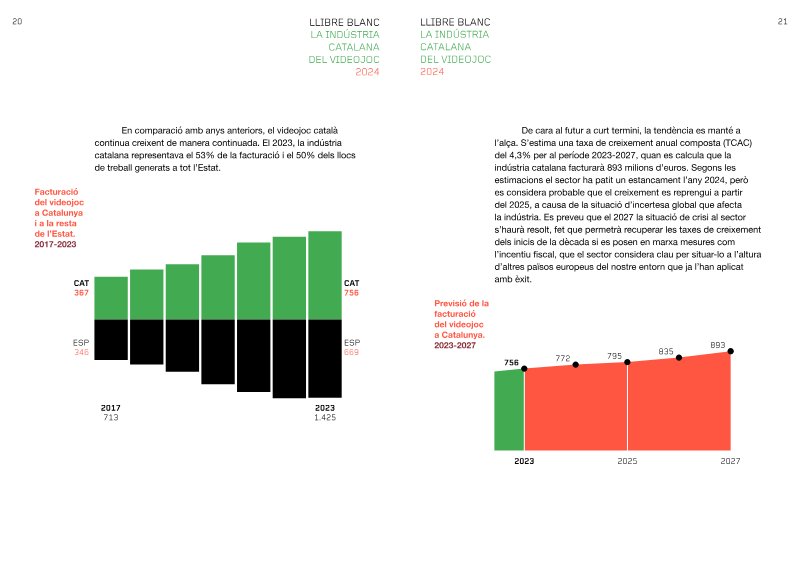
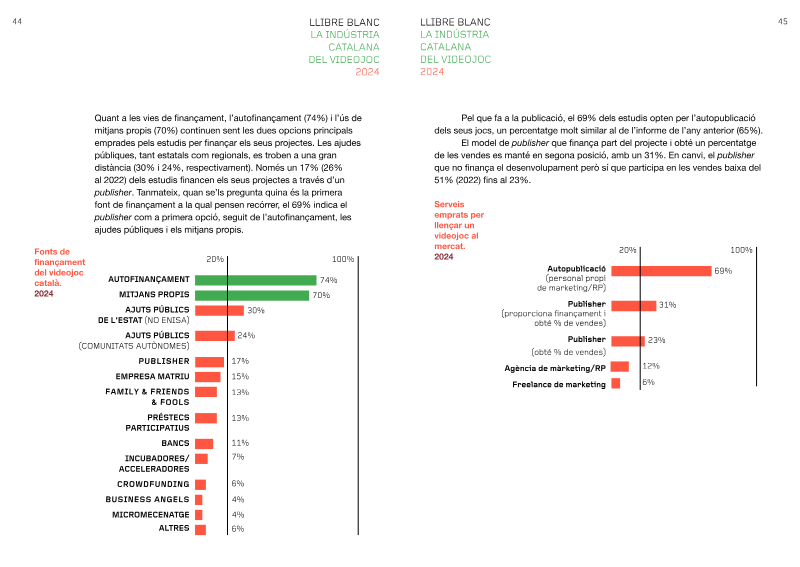

Llibre Blanc de la Indústria Catalana del Videojoc 2024
I’m ready to combine the section summaries into a cohesive overview, but I’ll need the remaining sections to capture the full scope, key data points, and conclusions of the 2024 Catalan video-game industry analysis.
- The Catalan video game industry generated €756 million in 2023, representing 53% of Spain's total revenue and a 6.6% increase from 2022. It employed 5,174 professionals, accounting for 50% of the national total.
- The industry is projected to reach €893 million by 2027, with an estimated compound annual growth rate (CAGR) of 4.3% for 2023-2027, despite an anticipated stagnation in 2024.
- In 2024, there were 262 video game studios in Catalonia, with 161 formally constituted as companies, a 10% increase from the previous year.

“We need our studios to believe they can grow again” – Ukie
The United Kingdom’s video game industry is undergoing a strategic pivot toward long-term sustainability and economic independence, supported by a new government-backed growth package.
- The UK government is launching a strategic growth package for the gaming sector, featuring £10 million in startup funding and the establishment of a dedicated UK Video Games Council.
- The industry is pivoting toward long-term sustainability by decoupling gaming from film and television to establish it as an independent economic and cultural pillar.
- Workforce development is being prioritized through the Game Skills Network, which focuses on apprenticeships and leadership training to foster high-quality intellectual property as a defense against AI-generated content.

Week in Mobile Games E57 - The solitaire gold rush and Finland's new immigration rules bite
The mobile solitaire genre has undergone a period of rapid expansion, with global player spending climbing to $470.2 million in 2023, nearly double the figures recorded in 2019.
- The SAG-AFTRA strike in the games industry has ended with a deal that includes a 15.17% pay increase, guaranteed minimums for digital replica use, and protections regarding AI-generated voice and performance work.
- Mobile solitaire games generated $470.2 million in gross player spending in 2024, a figure that has roughly doubled since 2019 despite a slight decline from the 2023 peak of $564.7 million.
- Disney Solitaire has significantly outperformed Candy Crush Solitaire in revenue, generating $25 million compared to $8 million despite both titles sharing a similar download volume of approximately 7.7 million.

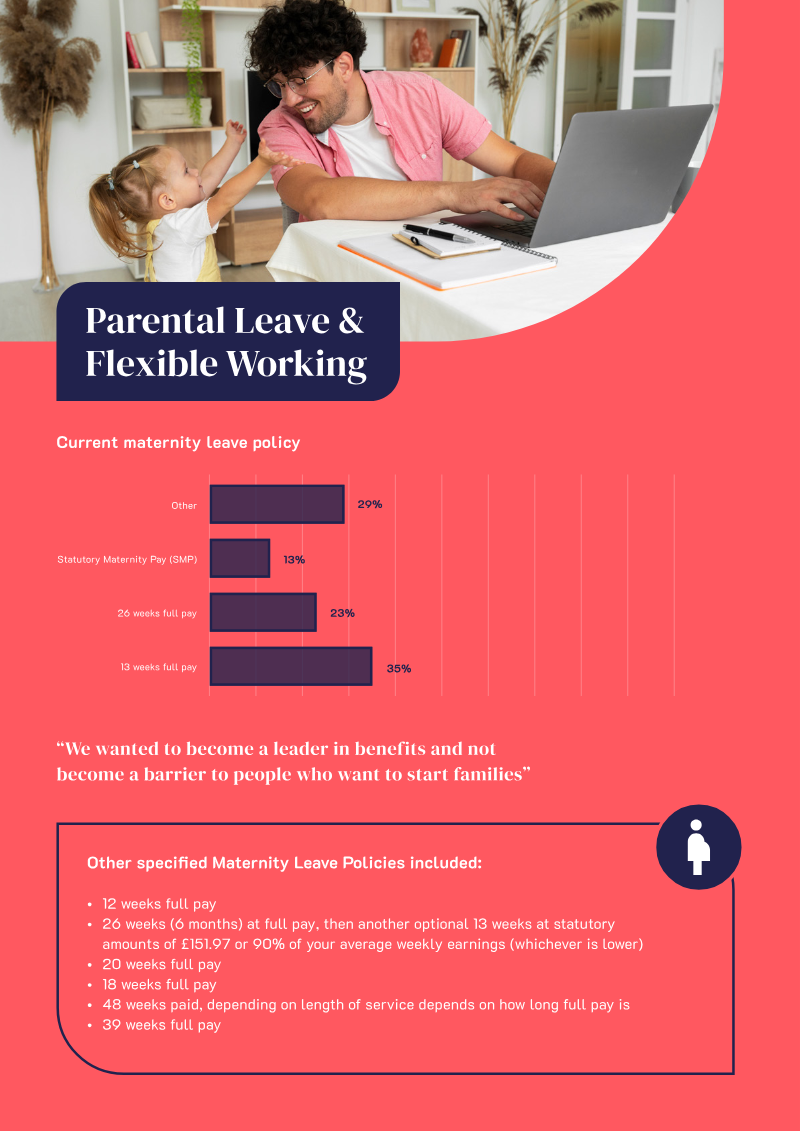
Employee Benefits Report: UK
The 2024 Employee Benefits Report provides a comprehensive analysis of the benefits landscape within the UK games and interactive entertainment industry.
- Budget constraints are the primary challenge for 67% of UK games studios, forcing a shift toward cost-neutral or strategic benefits to maintain talent competitiveness.
- Wellbeing is the top priority for 67% of organizations, with 80% providing health insurance and 77% offering mental health support.
- Communication of benefits remains inefficient, as 77% of firms rely on email rather than dedicated platforms to inform staff of their entitlements.
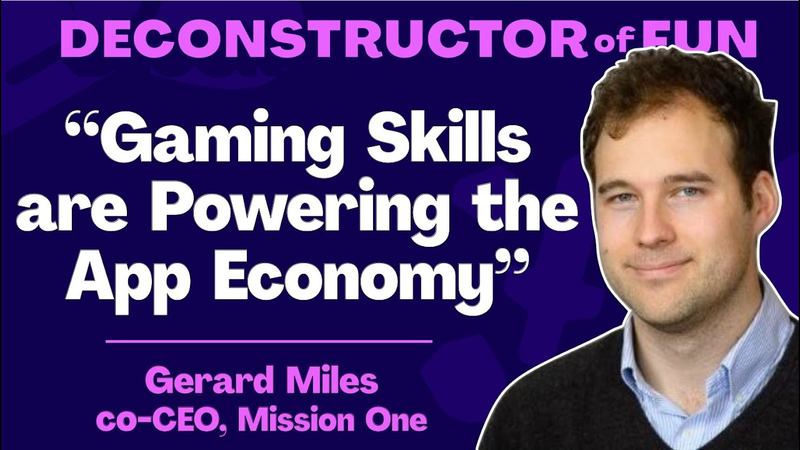
What Gaming Taught Them—And Why App Companies Are Hiring Them Fast with Mission One's Gerard Miles
The gaming industry is currently serving as a primary talent pipeline for the broader consumer application sector, including fitness, education, and AI-driven platforms.
- Consumer application sectors like fitness, education, and AI are aggressively recruiting gaming veterans to replace failing traditional performance marketing with high-retention engagement strategies.
- Gaming professionals are enabling non-gaming firms to pivot from rigid subscription models toward flexible, high-retention frameworks rooted in live operations and monetization expertise.
- Successful application development is shifting toward immersive, narrative-driven experiences built on technical frameworks like Unity, prioritizing long-term user value over short-term revenue extraction.
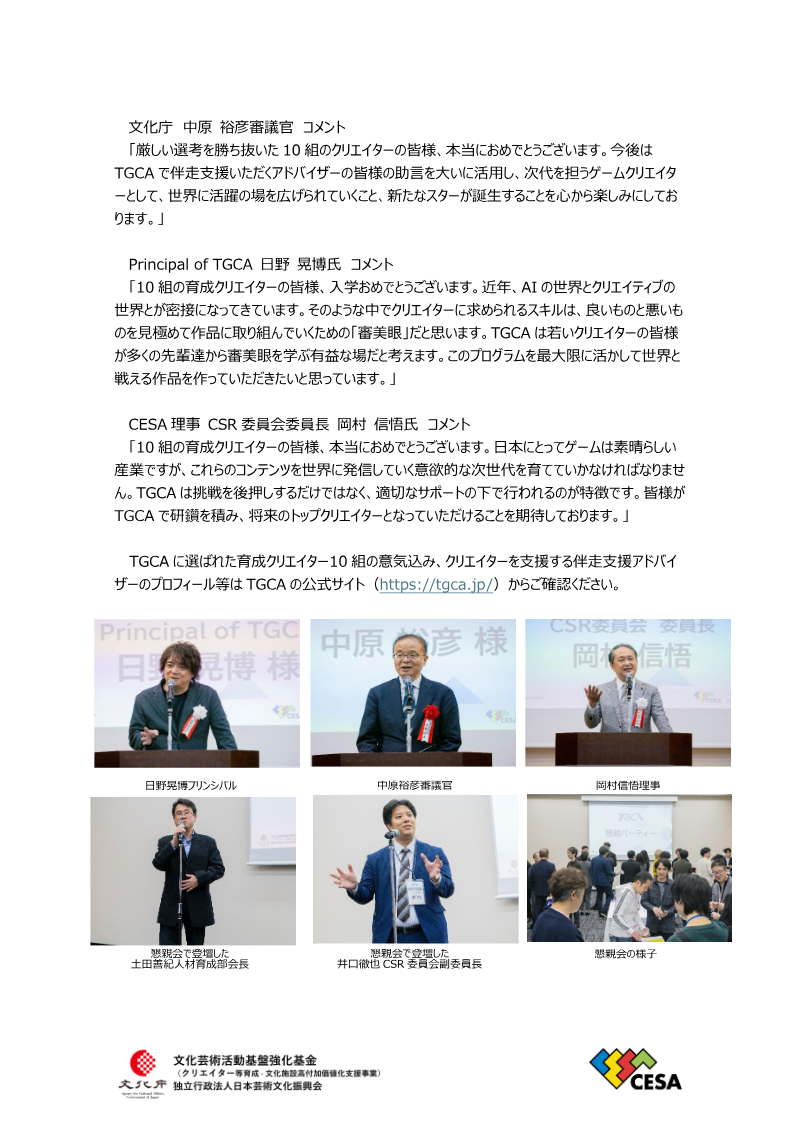
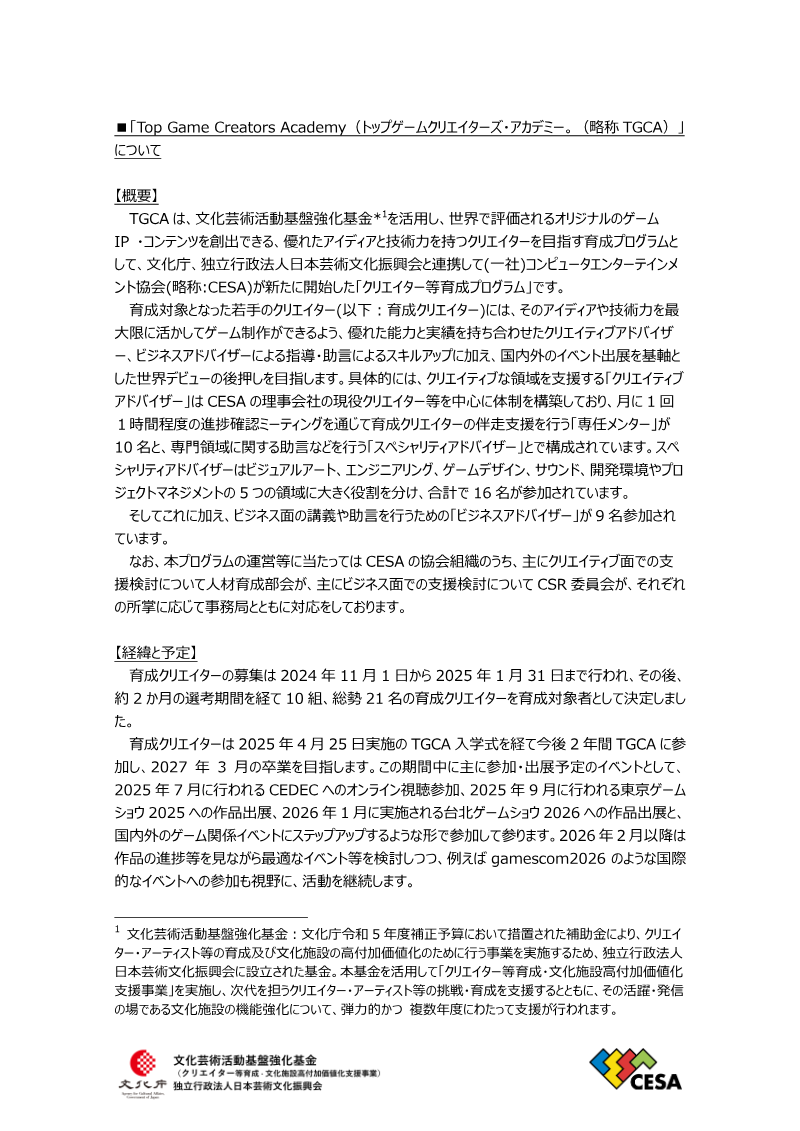
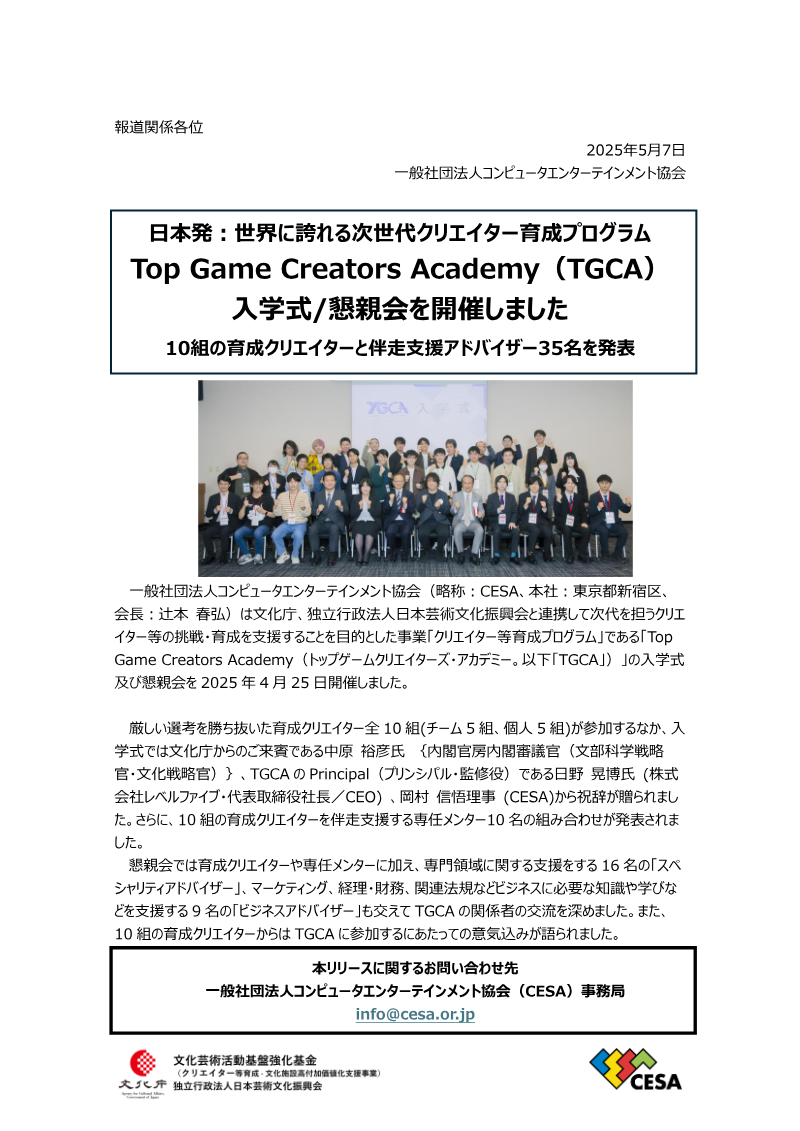
Top Game Creators Academy: 入学式/懇親会を開催しました
The Top Game Creators Academy (TGCA) was inaugurated on 25 April 2025 as a joint initiative of the Cultural Agency, the Japan Arts and Culture Promotion Agency, and the Computer Entertainment Association (CESA) to cultivate next-generation game creators capable of delivering original IP that can compete globally.
- The Top Game Creators Academy (TGCA) launched on 25 April 2025 to develop globally competitive original IP through a two-year intensive mentorship program.
- The cohort consists of 10 teams—5 groups and 5 individuals—supported by a network of 35 advisors, including 16 specialty experts and 9 business consultants.
- Mentorship is provided by industry leaders from major studios, specifically Bandai Namco, Capcom, and Square Enix.