VideoDeconstructor of Fun
TWIG #338 Apple’s Cat-and-Mouse Game, Xbox's Doom Loop, and Splitgate 2’s $100M Misfire
3 Jul 202563 min video
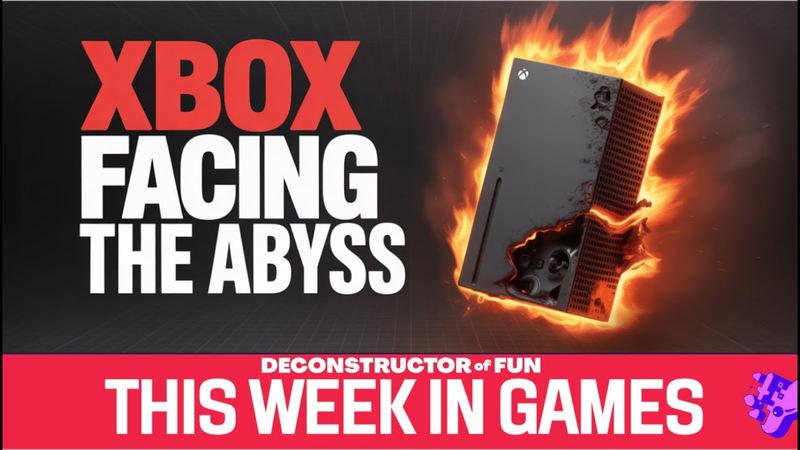
[Music] Hey, are you building a game, launching an app, or considering an acquisition? Well, in that case, Deconstructive Fund Consulting is here to help you out. We do everything from market research to go to market strategies to live ops optimization and due diligence. were trusted by some of the most beloved game development companies, makers of tools and tech, as well as some of the most renowned investors. Now, if you are building, launching, or buying, don't do it alone. Do it with us. Connect by emailing to consulting at deconstructorof.com. Game devs, here at Heroic Labs, we know that great gameplay is what players love. But integrating metagame features like challenges, progression, and rewards is crucial for retention and monetization. But coding them is a tedious and timeconuming process. That's
why top studios have turned to Hero from Heroic Clouds. Hero provides a complete suite of battle tested metagame features that are quick to implement, letting you spend more time on the core gameplay experience. Ready to ship fully featured engaging games? Check out her today at heroiclabs.com. [Music] Welcome everybody to this week in games podcast segment. It's all boys and uh this is going to be a fun one. So today on the podcast we got Phil Black Mandizations are I thought we'd start with Eric Crest. I'm taking back my seat, baby. The boys club, dude. No rules rules. Yeah, man. Eric Crest, strategy and investing and yours truly, Mishki Katkov, friend of the founder. So, in this episode, we got a lot of stuff we're going to go through. So, we're going to talk about Xbox, of course, once again. We're going to talk about Apple adding new fees to
the EU app store in their never- ending battles. We might touch upon the article that we're always trying to touch upon which is the private equity versus venture capital when, how, why. And then on the game side, o, we got a bunch of stuff. Eve online. We got pretty derby horse racing girl. Is that a real pretty derby horse racing girls? Okay, we're going to talk about that. We're going to talk about Marvel Mystic Maym. We are going to talk about Rainbow Six Siege X. Okay, Rainbow X. Rainbow Six Siege. It took the X out of X Defiant. Yeah. So, Phil, let's talk about what's going on in Sweden. So, this is from Binie Erlingson. He is a principal at Behold Ventures. And Behold Ventures just closed their overs subscribed first fund focusing on investments in gaming and especially in the Nordic region. So, Binie wrote on LinkedIn, "My heart goes out to everyone in Stockholm game
industry going through layoffs this month." King, Tokaboka, Cult of the North. I'm also going to assume Mojang, just a brave assumption. We are talking about three of the top five revenue studios in Stockholm along with one of the best funded and promising startups. That is Cult of the North funded by A16Z shut down today. Probably around 150 to 200 strong people without jobs in one go. That's like half of the Stockholm. It was really rough for the Stockholm game. Iceland That's that's all Iceland. It also doesn't feel fair. Funding and corporate strategy going AI is a big factor here. There's an arms race. In an arms race, there are always innocent bystander. And the post continues. But Phil, you're there down on the ground. Tell us what's going on in Stockholm. I don't know if these numbers are true. I would say the Swedish games industry is really good at publishing a yearly report on employment levels. And I don't have that in front
of me. And I'd love to look this up next week as we follow up on this, but I don't feel like this is a large share of the industry. And it's been growing. Like all these studios have been growing. The startup scene has been growing. They captured a lot of the money. Like we've talked about Embracer, Stillfront, these roll-up companies. Say whatever you will about them. MTG, like they're here. They're here in Stockholm. They're here in this like small Nordic country. So I don't know. Is this like a punch? Sure. But I don't know. It's a Goliath and it's only growing. it's sucking up whatever is left of Finland, you know, it's just absorbing it back into the kingdom. So, I don't really know what he's talking about. And he also says that AI is potentially a reason for this. And I'm not sure what he's talking about. I don't know any founder that cited that for any of these companies. This just looks like Microsoft made cuts like Cult of the North. I don't know why he's mentioning that one. That was an A16Z company, but they were a relatively low amount of headcount. And if you just have a lot more companies, it's very
easy to find a few that may be laying off things. So, you know, I don't know. I think you got to compare it against the general games industry. I think we've weathered it pretty well. Good take, more measure take. I think Benny is excited about being a venture capitalist and fund. So excited AI just threw Mojang under the bus. That's pretty Swedish VCs, man. Don't let the American VCs crowd you out. Yeah. Yeah. All right. On the shilling front, so Gamescom coming around the corner. We have one and a half events. Let's put it that way. So, first of all, there's Heroic Labs. They're doing their 10-year anniversary event. We're in there planning this together with them. It's going to be probably the most awesome event you've been at at Gamescom. You got the rooftops, you got the DJs, you got the casinos, you got arcade machines. So, it's going to be really fun. And then the second one is whiskey tasting. Whiskey water tasting. Third time in a row we're doing this. Last time it was a blast. the the first year was a blast. This year it's going to be a blast. Follow ECOS fun newsletter or
check out the description below for signups. So that's for the show. Sounds awesome. I'm still thinking about coming, but it's getting harder and harder. But I might be able to get a event there to help pay. Anyway, so quick like update. This is not a correction, but Microsoft did start their layoffs as Jason Shriers predicted. They say that they will cut about 9,000 jobs or about 4% of its workforce across all kinds of teams, roles, and geographies. This follows on another layoff of 6,000 people that were was announced in May. So, so far all we've seen is about 200 people from King. 10% of that workforce have been laid off. And there's some rumors about Zenamax. We just got word, breaking breaking news, baby. They canled one of their MMO projects in development. Bethesda. That sucks. I love MMOs. I wish there would be more of them. What are you talking about? What What happened to all your genre analysis? Just goes out the window. I want MMO.
No, Philippceland. No, it's Finland and Iceland. It's the cooperation. Anyway, so we should get more details in the next week about what the actual implications are. the head of Xbox wrote a note or letter to their staff that, you know, these are big changes, sweeping changes across Microsoft and and gaming will be impacted almost every every every area. So, we shall see as Microsoft continues to deteriorate. Microsoft also has 230,000 employees. So, just for context, I think it's good to understand. Do you remember when Phil Spencer said that mobile was why they bought King Blizzard Activation? Do you remember when he said that? That was such [ __ ] I loved it. All right, sorry. Continue. Okay, moving on. So, more Xbox stuff. So, a founding Xbox team member, Laura Frier, who has been on YouTube for a while. She basically helped launch the Xbox and produce the original Gears of War. She spoke out on YouTube like a few days
ago, right after I wrote my little piece, basically suggesting that Xbox hardware is dead and that, you know, Microsoft's lost its interest or ability to build hardware. Instead, they're rejecting, you know, all their focuses on Game Pass and partnerships and third party hardware like the Rogue Ally. She's being very blunt, but very nice about it, but she thinks that this really sad. and what she built has been eroded by the current management and that these like rogue type things, these all these things that they're doing are really just have little attraction to the customers. Now, obviously Laura's making the same argument as me. So, I think she's right, but she's certainly a lot nicer about it, you know, and the fact that the Xbox Anywhere is kind of the wrong strategy, which is kind of what I've been saying, but particularly from the Game Pass perspective. But anyway, what her point really is, and one of the points I want to make, without new hardware and like a reason to buy the Xbox, they're just putting this whole platform at risk. Like their identity is going to dissipate. And
that's the big challenge. And so I think some of the push back I would get on my article as well as what Laura would get is that we are just too old school and that we don't want things to change. And that's super fair. I agree with that. But I still would make the same argument that Microsoft has basically been on a losing strategy for this entire generation. And the Game Pass is the primary means why that is. And that's not necessarily their fault. It's basically the way Microsoft has been pushing them. But they are absolutely getting annihilated by Nintendo and Sony. There's no denying that. So something needs to change because where they're going right now is not happening. But I think it's worth listening to her talk about it from an insider perspective because she was part of the organization and part of the people that brought the Xbox to the masses. So, is there a way for Microsoft to correct or is this a doom loop that they can't get out of? Well, it's kind of a doom loop and the and the further they go down that loop, they're just not going to be able to pull themselves out of until, you know, that's the way it seems anyway because this is not the right strategy. I'll admit though, like
even if they were to do what I'm suggesting, I'm not saying that they're going to be successful with that. I think that's very very challenging to compete head-to-head with Sony and Nintendo on content and hardware, right? But I think that has at least more potential for success than where they're headed right now. And do you think the Activision acquisition was a mistake given like what has happened since? I've said that way back then. It was the worst thing for the industry. Absolutely the worst thing for the industry to have for Xbox. It didn't make sense because it was basically bringing this all this great content to a money losing subscription, right? So, it just devalued the entire content library of Activision. And again, we're going to just see a death of a thousand cuts. It's going to be continual reductions in headcount and damage to all these IPs, you know, including Call of Duty most likely. Do you think they will change the leadership at some point? Well, I Yes. Phil Spencer's time has come and gone, right? He should have been out a while ago. He's a really nice guy, but
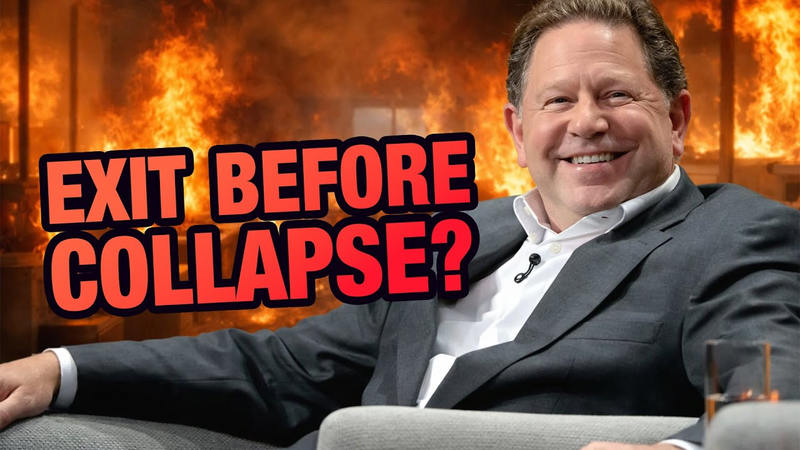
he's not suited to manage this type of complex organization. I think they Yeah, they definitely need the leadership. Um, but maybe they don't because, you know, he's just going to do what the Microsoft overlords want. I mean, that's what he's been good at, right? Yeah. I always remember because because like not a long time ago, Phil Spencer kind of showed his playing times. It was like 917 hours over 82 games that he played. He's beloved. He is absolutely beloved. He's a real gamer. Absolutely. But that's not the type of person you need to be leading Xbox right now. You need Bobby Cotch is what you really need. Someone like that. You know, you should bring him back. Get him back out of retirement, dude. Cuz this is what this is that that's the type of person you need in order to get these guys back on track. That's what And he's chomping at the bit like that. He wanted to acquire Tik Tok like he's Bobby Kotek. Yeah. Yeah. Yeah. He was on on some podcast talking about that. Yeah. Yeah. He's down in some mansion just thinking about
how he can come back with a vengeance. Tell Tell me this though. Let's say I'm a buyer. I'm looking to make acquisitions. Do I just wait like as a vulture to see to see what carcass is left by Microsoft? Do I actively approach Microsoft and start making offers for things like if you're savvy? I mean, why? Yeah. Why can't I stay? I would like to make an offer for Halo right now. I mean, why why not? Like, they already have Pokemon. Like, why not add another jewel to the gauntlet? Microsoft won't sell it in pieces. No. You don't think so? No. Do you think it's worth throwing an offer out there? Like, you think they're going to start accepting feelers? I think what it'll get down to is that they're always stalking these BD guys. you won't be a able to acquire teams or IP, but you could acquire cold teams out of Microsoft, right? So, so a Bethesda team, Call of Duty team, like I think that's definitely possible in the medium term, like in the next two or three years that that's going to it's going to get so bad that they're going
to have to do that, right? Since they're really not taking care of their teams or their IP. That's possible, but you still don't get Call of Duty. You don't get any of the the actual IP own Blizzard stuff, whatever. You know, we saw this happen at Blizzard. This is not like when big companies acquire other companies, it doesn't necessarily work. Like the entire creative organization around Blizzard left within like four or five years after the acquisition, you know. All right, let's move on to another amazing subject. So, Apple responded to the DMA and holy [ __ ] did they like I mean I I don't know if I can even do this justice, but actually there's some good and bad in this. So, I'm going to just give you kind of a high level what they actually laid out here, but this is clearly not what the DMA wants and Apple's just playing their game as they do. But it is really interesting what they're saying. They're basically saying that there's going to be a series of fees associated with any type of activity outside the
store, right? There'll be a 2% initial activation acquisition fee on new installs, right? A 5% tier for basic features on the store, which no one will ever do because there's like no updates, no reviews, no marketing whatsoever. The second tier is going to be a 13% fee for fullfeatured access reduced to 10% for small developers and there's going to be a new 5% core technology commission on external purchases. So that is replacing the 50 cent per install fee. So in essence, what the [ __ ] is this? In essence, developers can externally link, but they will be getting a 5% core technology fee from Apple. And on top of that, they will have some kind of like be careful what you're doing type big message that will probably be less egregious than it was, but still pretty bad. Okay, but in essence, they are reducing the fee. I
mean, they're going for big. This brings it down from 30 to really to 15%, right? And then 5% on external transactions, right? So, this is actually kind of good for the big if you think about it, right? Because it does inherently reduce the fee. What it does not do, and this is what the people are really pissed off of, is it doesn't change the fact that Apple still has a strangle hold over this entire ecosystem, right? They're involved in every transaction because they get that 5% fee, but the challenge of actually complying with these type of rules is going to make it very, very, very challenging for the small. And this is the whole thing. This is all capture for the big because the complexity around this is just too complicated for a lot of the small. And so this not necessarily good for the small at all even though in essence it's reducing the fee but the complexity around it's going to cost a lot of money to do it. So of course the big guys spoke out particularly Mr. Sweeney who said this is malicious compliance that Sweeney told Apple in response
cynical workaround that undermines fair competition by quietly taxing any dev daring to link out. He still is labeling this hot garbage arguing that Apple's deliberately kneecapping rival payment systems. The Spotify guy says, "This is deliberately confusing, unacceptable, and illegal." They claim again that Apple's new fees ignore the spirit and the letter of the DMA, which I have to 100% agree. Like, this is not what the DMA wanted, right? The DMA wanted to open up the platform so that third parties can transact. Now, as I said, I think this is actually kind of good for the big. Like if you see what the actual implications are, you're basically reducing the fee from 30% to 15% and only paying 5% for external. That's actually pretty good. And I'm sure Stash is going to come back at me and and and debate this with a this is not good for Stash or Exola or Appcharge at all. Right? Because in essence, you're going to make the decision about
whether to set up a whole new system and try to comply by these type of rules and then only really getting I don't know hardly even anything cuz you're not going to save much more than 15%. Right. Right. Maybe 5%. I don't know. It doesn't seem worth it to me, but I don't know. I'm sure Archie will have something to say about that. I don't think you're right about this. I think the EU will probably get ahead of this and have more aggressive legislation. Well, hold on. I didn't say that this was going to pass. I'm saying as the rules is set right now, like what it mean? That's fair. That's fair. I would say the 15% reduction is really interesting. Like if we think about what Epic is charging, they're charging 12% on EGS. So to your point, like fees have been reduced, but remember they had all this trickery about you having to switch terms and then once you switch terms, you can't go back to the old terms. Like they're still doing that level of [ __ ] which I would expect the EU to solve. I don't think they'll be able to capture that 5% external payments. I find that hard to believe they would survive like
any EU regulatory challenge. And I would say if you haven't looked at it right now, Stash has this new UX flow. I'm not quite sure how they've done it. And I'd love to hear more from them, but it feels native. Like it's it's a huge update to how you make payments. Like a lot of things are pre-filled out. It's not you going to a new web view. It has an inapp in window view which lets you complete a purchase. So like I would say I don't know. I've moved my priors more towards like pro web stores. Like I do agree the fee reduction does threaten them as an alternative, but I think this is going to be so seamless. Like maybe they can capture 100% of the market. Maybe it's not 50% of total IEP flows. Maybe they can get way higher. Maybe they can get to 70 or 75 depending on how good the flows are and how seamless it is. I'm actually really confused about what you're talking about. Like so there's a difference between web payments and web stores, right? Web payments are basically the same exact flow as buying it with the Apple system, right? That's what the Tips Sweeney lawsuit kind of allowed people to do, right? And so like yes, certainly Stash
and others are going to be doing that. It's going to be absolutely seamless, right? Having said that, all these apps are still embedded with the ability to purchase on Apple, right? Right. And so you're going to have like the dual type of transactions allowed either through alternative payments or through Apple on the same page, right? I don't think there's any instance in which any developer will actually go full web payments from a third party. I don't think we know that to be the case. Like what I'm pointing out is the technology is so good that it's so seamless that there's a world in which you can imagine removing Apple alternatives altogether because you can match that level of frictionlessness. And so what I'm arguing is that the TAM for this might be higher than we initially expected. No. No. Because they've gotten 100% no. I disagree because the fact is if they are reducing it, if they come down to this 15% level, there's no reason to do that. There's no reason to do that. Why would you do that? No one's complaining about the
service of transacting on Apple. They're just complaining about the 30%. Right. True. And this still gets you 15% through Apple's IP, which again is a bigger reduction. But if I can get that down to like let's say 5% and not give up any conversion, go for it, Apple. I don't think you're going to be able to get it down to that. That's not a good business if it's only 5%. Cuz the transaction fee itself, I don't disagree, but I think like there are other plays once you own payments that I think are really interesting. There's so many other things you could leverage this to do once you control payments. Like that's never been a bad thing to have access over. Okay, that I will concede. I agree. If you have the ability to have much more flexible in terms of gouging the customer, sure. If you I think owning those rails are important. I think we can agree on that. I just think if they actually do go through, if they're willing to capitulate, forget this for a moment. If they're willing to capitulate a 15% fee on transactions, I think there's a huge part of the population of developers and
publishers that were are not going to do any app store off app, right? Yeah. You think this will like quiet the crowd, feed the people? Again, really good for the big too. So, does this expect balance sheets now? So, like if I'm scoping, do I update my P&L like right now? No. No, because this is just the DMA. This is not US. This is not Okay. We're planning an episode around this. So I talked to Axim who was the chief business development officer. He's been on the podcast a couple times. Chief business development officer for plays. He's coming back on the podcast to discuss how do you basically calculate the effect you get from a web shop because there's a lot of nuances there. Did you talk to him already? Yeah. Yeah. Yeah. Oh, it's already done. It's not done. But he came up with this thing. He was like, I'm not sure. Should I talk about it? There's a lot of issues here. Like what do you think? And I was like, that's a great question. Make sure you ask him. In a world in which Apple is charging 15%, how does that change the calculus of moving off the app store? All right, good. All right, let's move on. Let's jump over. Let's not talk
about private equity and VC. Let's just go directly into games. Does that make sense? Well, we'll never we'll never touch this article again. So, this is your last chance. All right. [ __ ] it. All right. So, if you want if you want to say something, say it. Just just say it. I don't want to say anything on this. I had a ganachola gaming focused private equity. So I guess it makes sense to kind of just open up the differences between private equity and venture capital. So private equity it has made massive moves as of late. Savvy acquiring Scopi and Niantic. We got CVS acquiring Dream Games. EQT acquiring keywords. Havlli investments act you know acquiring essentially candyore and making big investments in behavior interactive. So I think it makes sense to talk about what privy equity is since they are making a lot of big moves in the games industry. So overall private equity takes lower risks than venture capital. They aim for steady returns through operational improvements, cost cutting and or market consolidation. On
the other hand, when VCs do investments, they take really high risks because they go for higher rewards, meaning they invest early pre-products. Sometimes just when you have a team, they would put their first money in. And because of that, most of their portfolio companies fail to return and that is why they rely on a few big winner to return the whole fund that they have and even more. So, private equity in meaning they invest in mature companies. Those are established businesses with stable revenues or underperforming assets needing restructuring. Typically in gaming, they have been focusing on established business, not so much on restructuring. Private equity often takes majority or full ownership. We're talking about 50% or more. And this is what happens. They may install their own management team to drive the turnaround to drive the growth. So they don't just sit down in the in the board but they make actually very operational moves. They do the
large deals between tens to hundreds of millions often using leverage meaning depth. And that is why sometimes you know private equity not sometimes that's why private equity has a has a bad rep is because they can settle down the the profitable companies with debt. And those are the the horror stories of like some American, you know, mom and pop chains that have grown to like 300 locations going under despite being profitable after being acquired by private equity is because they've been saddled with debt. The way private equity exits is pretty much same as VC. So IPO or sale to a strategic buyer, but what they are trying to do is they acquire the asset, they improve the performance and then sell it. But oftent times bigger private equities are also very happy with milking dividends if those are big. So they can wait. They're not in a rush. They don't have the same type of window that venture capitals have. So in short, venture capital is early stage growth
bets with minority stakes and private equity is mature stage control and improved plays with financial engineering. And the reason why they're coming to gaming is because the valuation meaning the asset prices have come down significantly. We talk often here about the the price of for example Niantic that was three and a half billion but just a while back it could have been six seven we talked about apploving selling the portfolio of games to triple dot for peanuts they were trying to sell that at what 2.4 4 billion they ended up selling it with like weird restructuring for like 800 million. That all shows that the valuations come down and that's when private equity comes in and at the same time VCs are leaving because the valuations come down because they rely on those big outrageous returns rather than you know incremental but significant improvements. So mature and predictable businesses that's also mobile gaming. So there's a recurring cash flows. They can use debt financing.
Before freeto play, that wasn't. So it was a very hit-driven business. It was hard for private equity to come in and kind of trust that the next game from this studio unless it's a, you know, Call of Duty or some existing franchise will be good. And improvements on the business are viewed as positive. But often when I talk to private equity, again, I don't do that that often, but I do talk to them periodically. And for them, the way they're seeing is they're seeing very stable revenues from games that have been in the market 8 9 10 years. And they do ask about what we can do to improve. But when they calculate their paybacks from the investments, they see the improvements as a bonus. They're just seeing as is how much is this val value of this asset over time. Also, gaming has gotten IPS now. So that's a defensible asset that increases the want from private equity to enter. There's efficient digital distribution and the market is still to somewhat fragmented. It has been consolidating but it's still quite fragmented. So there's not a dominant
single player, single platform or a single publisher. There are several big ones and that means that they can utilizing the rollup strategies to build platforms like we've seen in the case of Liftoff. I think that's owned by Black Rockck. So overall is private equity good or not? I don't think that's a that's a yes or no answer. The operational excellence that they bring is of course a plus to a gaming company. There's a cost control, there's KPI rigor, they do bring in the strategic focus. They do have experts who work from them. Like let's say you open up Havi Investments. If you look at the team, there are a lot of people from gaming companies, the zingas of the world, the VCs of the world who are now working for private equity. So they bring in that expertise and they are experts at rollup meaning M&A and they are experts at growing companies by acquiring more and more and using scale and synergies which is the name of the game in a mature market. And finally of course founders and investors get liquidity because private equity are
taking part of this game as as investors. So that's my spiel on private equity and venture capital. Mr. Crest, you talked to private equity a lot. I have actually a few times but you know the fundamental problem is that gaming by its nature is not very private equity friendly right because hit driven business ups and downs I mean similar to YP makes no sense for venture capital particularly AAA but you're right mobile is an exception to this rule and there have been some big deals I don't know how savvy and scoply and niant have anything to do with private equity well savvy is private equity oh I I mean that's a little bit different like these pure like CBC dreams yes keywords yes I'm I'm yes they are private equity I I don't know really know what the hell they do with behavior but Savvy is more of a roll up like let's get into gaming like it's the Saudi money right it's not like it's not like some independent PE firm from like
New York right that's doing some roll up so anyway but anyway generally speaking like private equity again is a tough sell for gaming. It's a really hard to find investments that make sense that are cash flow positive because at the end of the day, you have to be profitable in order to feed the debt, you know, just to pay for the debt that usually is used to finance the stuff. But a lot of these guys are so flushed with money that they're not even they're using less debt. They're just using pure equity because they have so much cash, right? So anyway, it really is an interesting business and it's super lucrative if you get a good deal done and and turn it around and stuff. So those guys make there will be more. Do you think there's going to be more private equity? I think Blackstone was the one that invested in or acquired Murka Games. That was the uh there's just not a lot of targets, right? Like that fit their criteria and so it's going to be tougher in gaming than other places. Like I think they go for more like cash flow businesses, you know, like retail and restaurants and factory
like things like you know like really like Yeah. predictable cash flows. Let me final question. Would you think that private equity would, let's say Microsoft gets spins out Xbox, would that be a private equity target? Uh, wait, let me think about this for a second cuz there's a lot of things you can restructure to make it efficient. Actually, it's possible. There's a lot of franchises that are defensible. Yeah. I mean, if they get rid of the subscription [ __ ] and the law subscription, maybe they could form like another company and they could sell their assets to that company. Maybe put it in the EU. Maybe give it to some French brothers. Okay. He's joking. In today's hyperco competitive digital landscape, understanding your app's journey from discovery to download isn't just insightful. It's the difference between scaling and stagnating. Enter Appslier, the undisputed leader in
mobile attribution and marketing analytics. They've mastered the science of making every ad dollar work harder by revealing exactly where your players come from and how they interact with your app. Their platform transform mountains of complex data into clear actionable intelligence that separates winning campaigns from budget draining experiments. And I know that many of the top game companies leverage Appslier and a are a key partner in their success. Appslier, where your app's potential meets performance. Stay ahead of the competition with Sensor Tower, the trusted source for mobile marketing intelligence. Whether you're tracking trends, benchmarking performance, or scouting the next big hit, Sensor Tower delivers the data that drives strategy. Dominate the charts with Sensor Tower web stores. You've seen what good looks like, but have you seen great? App charge is the direct to consumer platform backed by the likes of Supercell and built by monetization pros
from Moonactive, Platika, Huge Games, and others. People who know the difference. App charge powers over half a billion dollars in transaction a year for top studios, optimizing every detail. Deeply personalized web store offers, custommade design, industryleading monetization features, in-game payments SDK, and more. 70% of top grossing games already have a web store, but the one scaling fastest, they're doing it with AppCharge. Learn more at appcharge.com. [Music] All right, let's talk about games. So, there was a really interesting report about Eve Online, which has I would say almost like this mythic understanding in gaming and based on perfect world, which is looking to sell their stake, it sounds like in the Icelandic company, which I'm curious about. I don't know if anyone can understand how A16Z gave them
money. Based on this potential sale, we found out they're only doing 60 million in annual revenue, which is much lower than I thought and like definitely reduces I would say like the mythical status. I mean, don't me wrong, they've been going for 10 years doing 60 million. Good for them, but that's just a lot lower of a number than I expected. They said around 400,000 subscribers. Yeah, that's a lifestyle business, right? That's not Yeah, that's a nice house in the Icelandic countryside. Can I just say one thing? Like you guys know ultra human the email that every VC uses. I thought it was superhuman. Yeah, super human. Sorry, superhuman, not ultra human. Ultra human is the ring that the VCs use. Superhuman is the email that they use and they got sold just recently to Grammarly. That was a 1 billion valuation email client and it came out like how many subscribers they had? 45,000. Oh my god. Had a billion valuation. Anyway, talking about lifestyle businesses.
Okay, next update is from Uma Musame Pretty Derby. Remember, this is the horse racing game from Japan that has launched in the United States. How did it do? We teased its release last week. All right, let's just start with a little bit of perspective right here. This has done over a billion in life-to-ate revenue, which is incredible. But the game has basically been in straight decline ever since it launched, which is shocking shocking to look at. It looks like it's stabilizing, although I find that potentially hard to believe with these type of games. That being said, I'm pretty early into it, but I think this game is radically different than a lot of other squad RPGs that I've played. In fact, I don't even know if I call it a squad RPG. There's a lot of strategy that you have with the uh the girls, like in terms of you launching a particular match. you can have a strategy for them about how they'll race. It also like plays a video of them racing. Like this is exactly what is on the tin. There's no playing
around like these girls are going to race and by the time you're done with the fatoule, they also break out into a K-pop dance routine. So this is like everything that was advertised. The other thing that was really unique about this is that Steam is actually doing remarkably well for them. So they did 160,000 DAU according to Video Game Insights on Steam alone. Now, don't get me wrong, that's low compared to the 1.2 million active users Sensor Tower is estimating, but that's still something like a 10% bump, which I think is not bad at all. And again, it speaks to this dual SKU strategy. I mean, who wouldn't want,000 DAU on Steam? That sounds pretty good to me. The number of US downloads are awesome. It's pretty decent bump in terms of just straight downloads. They've also stabilized the United States on both iOS and Google Play chart, which is good to see. you you know normally these things go off a cliff but when you kind of look at the active users by country the problem that they're having is that those DAU increases are mostly from I would probably argue reactivations people
coming back to the game ever since they released it in the west and so I have a hard time imagining that that's going to have a lot of retention in terms of revenue in the long run and not only that remember we were looking at the big picture they're down so so much from where they were it's hard to believe that this is going to have any impact on and the bleeding that's happening right now. Anything from you gentlemen? Haven't played this game? No. I don't know what to say. Bacon Japan. It It's a really interesting economy design. I definitely want to like talk about in the future. I do wonder if the decline in revenue is related to that. I haven't had a chance to look into like Elder Game things, but it's certainly unique. Okay, so this is another release that we've been tracking, which is Marvel Mystic Mayhem. This is an RPG from Neti is releasing on mobile. They're calling it like a tactical focus is being added to the game. So, there's real-time combat very similar to Clash Royale. So, what will happen is that you drag cards
onto a hex grid that triggers special abilities and attacks based on the squad that you brought in. And uniquely, you're only bringing in three of your heroes into a match. And as we know, like squad RPGs traditionally need really wide and deep syncs. And so only having three characters is completely antithesis to where squad RPGs have been going where they're adding more and more characters that you bring into matches. Like if you remember Capital Games and their Galaxy of Heroes, like you now put heroes on ships and you were bringing in ships. So they were just like a deepening the meta collection mechanic. And so this shores this up and tries to add a lot more of this real-time combat. I found it strange because you still have autoplay which is the the way you're going to play the game 99% of the I mean, I want to talk about Widow Defender again, which is a huge [ __ ] problem with this right now, is that you don't have autoplay. It just ends up playing like a normal Squad RPG, which I think ends up cheapening their thesis. The art is beautiful. Maybe they'll get away on that, but more than anything, I wanted to spend just like a moment and
talk about like where Marvel games are entirely because this one has fallen off the download cliff. I don't know what NEI was trying to do here. It had a decent launch in the United States. They definitely boosted it to number one, but we're looking at, you know, only 5 days later and that it's pretty much fallen off of every country's chart, which tells me that they're starting to shore up UA, and they didn't have like a particularly high UA to begin with. And so, if this shortens, DAU is eventually going to fall rather rapidly, and I don't think they have enough here to be able to set this to a sustainable way. Yeah. Yeah. It's really falling quickly. You had some charts showing the other Marvel games. God damn it, there are many. Marvel Snap, Contest of Champion, Future Fight, Strike Force, Mystic Mayhem, Puzzle Quest. Totally. It's like what do you benchmark against? And I think the thing that actually stood out was was two two interesting points here when we look at all the Marvel games. First of all, Marvel Puzzle Quest, if you remember Demarge out of Cambridge, Massachusetts, this game has been going for [ __ ] ever, I think. Well, they got bought by Sega and I don't know
what's happened to the game since. I don't know if Demerge is on it anymore. That game is actually the steadiest out of all when it comes to daily active users. But the ones that have suffered the most have been Marvel Strikeforce, which Scopely had, which they bought from Fox next. And there's still bleeding in Marvel Snap. Like the amount of bleeding that's happening in Marvel Snap has been crazy. And I used to talk about it more. And it is continuing to decline in terms of revenue. It is actually the worst when it comes to the change between their launch revenue and where they are now. 26 months after launch. This is the key one. This is looking at all all Marvel games and the amount of revenue they make monthly. Wow, that is crazy. Now, you can tell a story about web stores for I would argue Marvel Strikeforce, which is I'm sure what Scopely would tell. I think the key to whether or not there's web store activity is usually to look at downloads because your LTV should be adjusted and you should be able to spend more in equilibrium on UA. And so if I don't see increases in downloads, I have a hard
time believing web stores made that much of an impact. They haven't been b in terms of downloads. Like it really depends on when you benchmark Strikeforce. Like year to date, things look awful for Strikeforce, but like you look on it on like a little bit of a broader time scale, it's not as bad as you would imagine, but they have some some problems yearto date. And the game is at its lowest point in terms of active users. And I think that just mirrors overall problems in squad RPGs in general. And I think Mystic Mayhem doesn't have a whole lot to offer here. They could have offered it. They could have offered it with this real-time gameplay [ __ ] but they decided not to by just putting on autoplay, which no one solved. I'm sad to see this. And Marvel Snap is Look, I'm not going to diss the autoplay thing cuz autoplay is how people play games in the West, right? But I'll just take a step back and it's like the amount of money that was spent to build this game is insane. Like the quality of this game is ridiculous. Beautiful. The art is unbelievable. Yeah. compared to like Marvel Snap. No offense to those guys, like look, that took quite a bit of engineering and development, but this is like a completely different level. And
the fact that they're making literally zero money on this game is pretty frightening. Well, this is not the first game. You remember Marvel Super War, Barnettes? Oh my god, there's so many the graveyard. Remember the MMO? The mobile graveyard. Yes. It's the same company. They're like, "Guys, four years later or 5 years later, here's another game for like 30 million down the hatch." You wonder why NIS got out of this business, right? They pulled all their investments, right? Because Marvel Rivals is doing well. No, no, it's not. No, no, no. Marvel Rivals is an awful place. We haven't covered this, but it's DA decline has continued since last we talked. They saw the writing on the wall like a lot of the these really costly development processes and then they're just not making any money, right? So like big loss for them. This game is beautiful. I think the turn-based RPGs, this is antiquated. I don't think people are really playing them as much anymore. I think a lot of that shifted to more 4X style games. Well, I have a thesis around that with Mr. Adam Smart. We'll be having a podcast soon. And I think that the general thesis is like, did 4X
eat Squad RPG faster than Squad RPG could eat 4X? Because that was the direction that like Elder Game Squad RPG was going anyways. And I think they just got beat to it. Yeah. Oh my god, I'm looking at this game. This game is absolutely gorgeous. It's like hiding. The animations are good, too. The art is original, but still pays homage to the Marvel art style. Yeah, there's original storylines, which are actually pretty deep narrative stuff. Breaks my heart. When games like that fail, that's that's so disheartening. I don't understand the low downloads. Like, they should have dumped more money into this. I they should have sustained their app store ranking for at least a couple days afterwards. Yeah, it slipped so quickly. Well, we'll keep tracking. We'll come back to it. Yeah. Okay. Are we ready? X going to give it to you. Going to give it to you. We haven't covered this. We absolutely should. It's one of the biggest franchises ever. We're 10 years into Rainbow Six Siege. X has been their most recent update for the 10th year
anniversary. Remember, 3.8 8 billion in lifetime revenue and I think they're doing around 3 to 400 million annually. The lifetime number is from Ubisoft itself by the way and that 3 to 400 million. That is 50% year-over-year after year 8 in FY24. So like game not in an awful place been around for a really long time. We can also see that in this the the PSU numbers which we'll take a look at an example in a moment. This is a huge update. I can't like understate like how big this is in terms of the things that are added to the game. So, they finally have freeto play. There is a free-to-play on-ramp. If you remember, there was this really weird thing that Ubisoft used to do that they've experimented with for a really long time. And that is this starter edition which they had where you would still have a paid point into the game, but you would have a longer time to unlock some of the operators because the earn rate for one of the currencies was lower. So, they've been experimenting with on-ramps to get
players into the funnel. If you remember, famously, they're one of the people to really engineer free weekends at the start of every season launch. So, right now, we're looking at Steam PSU numbers throughout the 10 years that they've been around. And you can see these FW markers. These are free weekends, and these are when the game will have these seasonal updates. So, they've timed things very well, and they've been able to maintain a really, really long lifetime of a service. That being said, you know, it's not a service that's grown over the 10 years. It's pretty much stabilized from where it's been around 2019 to where it is now, but they've added so many interesting features to this game, and a lot of those have really shined in Siege X. So, the thing they'll have not only is this free-to-play version, which we're talking about right now, and you spend about $20 to unlock tournaments and ranked, but they also have 75 operators in this game to play around with. Those are those main characters that you play as. So, Super Smash Brothers has about 90 characters. That's a [ __ ] ton. And so what they're trying to do in CX is that they're adding a lot more pace to the game. So they added this new 6v6 mode
where there's respawns and you have attackers and defenders. You're doing both on the map. So your team will split up and try to do one each, which is really interesting. It creates these mind games of which lane you want to take. The animations are way better. Crossplay, cross progression. There's some movement improvements like being able to repel around a building rather than having to repel down and repel up the next part of the building. PV onboarding, ping wheel, rebalance of the economy. They have a $50 cosmetic bundle called the masterpiece that's launched with this. They still have loot boxes, by the way. I don't want to forget that. Like Rainbow Six Siege still has loot boxes. And not only that, remember we covered their peer-to-peer marketplace a long time ago, which has gone under the radar. And so that has now opened up to everyone who plays the game. And so when you look at for instance the PSU shooter top list on Steam, you know, all of Valve's titles, Siege, Delta Force, PUBG, War Thunder, everyone has these peer-to-peer marketplaces now, which I think is super interesting. And so despite all the things I just said, when
we look at the bump that this game has had, it is not that the much. It's basically doubled its daily active users. And by the way, we're looking at Steam and Xbox here. We had Video Game Insights, which just released console data. We don't have PlayStation yet. So, we include both of those here. And so, despite that, it's had a 2x bump, but it's already coming back down to reality. And for such a big update, I think that has to be a disappointing showing. This is not the original skew. This is an additional skew, right? It's the original entitlement. They just updated the original entitlement, so you didn't have to download something new. Oh, okay. Got it. So, it's a new game mode inside the existing game. So, it is an update to the .exe. So, when you launch it, it's Rainbow Six Siege X, and it feels like a new skew. Oh, interesting. Interesting. So, they just updated the graphics and a lot of other elements. It brought a lot of users back and now it's getting back to where it started for from in couple of months. Yes. Unfortunately, this game is pretty cool. I It can sustain itself with a
really small user base like from where it was. So, I'm sure this actually will be positive for Ubisoft for the quarter or the first half of the year. My son plays this game a lot too. So like I definitely familiar. Oh, it's amazing. It's very very very hardcore though. Like very It's not something for the slight of heart. It's not like something you could pick up and play. It's kind of something you have to master the maps and stuff like that. I think this new mode is another attempt to open up the funnel because there are also respawns in it. I think Fortnite was actually pretty successful at this when they played around with some of their mode stuff when they got rid of let's say the build the no build mode. Interesting. All right, so let's talk about another another shooter. Another shooter, Splitgate 2. So, there was an interesting article that came in on Navic's newsletter this Sunday and they were looking at two different shooters. One was Splitgate. So, I've followed
Splitgate relatively closely because the founder Ian Pru actually joined the podcast the day they announced the $100 million round. I think that was in like 2020 or 2021. If you haven't listened to that podcast, just search on Splitgate in the Constructor Fund podcast library and you'll find it. I definitely remember having in several kind of like a wait what type of moments in the podcast because like they just raised and you know it's a crazy big raise but they also were talking about their plans to scale by 70 people in about like 3 months and felt like the CEO at that point was making a lot of the calls so you know very busy person and you know they were fully remote team they didn't have that documented culture or values or stuff like that that would kind of you know you need when you're scaling so past and overall it felt like, you know, now that they have the money, they're just going to hire the best people and that's how they're going to execute this vision that they have with Splitgate.
When I was talking about the podcast and everything, it divided investors into two different groups. There were ones who were saying that this is the most charismatic founder they've met and they're really happy to support him or would have wanted to support, but the value of the deal was really high. And then there was another group of investors, it was like 50/50 that were saying that this is reckless and like one of the most reckless investments they've seen. So it was very interesting just the conversation that was happening behind it. So let's talk about Splitgate 2. So here you can see the numbers of Splitgate 1, which has currently about, you know, 100 players and it peaked at 68,000 concurrent players. So it was a viral hit about four years ago. And then Splitk 2 launched not so long ago in the beginning of June. It actually peaked at 26,000 players, so significantly less than during co times. Surprise. And let's talk about Splitgate 2 launch in context. So Splitgate 2 is
self-published and it's a followup to the 1047 games which is the company viral 2021 shooter. It was backed by $130 million in VC funding. You got Lightseed, you got Inside Partners, you got Lakesar, you got V Games, you got the biggest names in the business. The studio scaled from about 30 people when I did the interview to 175 people in a span of a of a year after funding and this is a fully remote team and it's also important to understand that the founder is young, charismatic person. This is the first company that he's running. So it's not like, you know, these are ex Call of Duty or, you know, you name it type of guys. Does that include codev and like outsourcers and stuff or is this contractor? This is FT. This is just people FTES. What the [ __ ] Yeah. So managing that type of organization for the first time must have been really difficult especially remotely. The sequel is arena style portal-based firstperson shooter much like the first bump with about 100x the budget. It's also competing in the same
highly saturated and concentrated market. And when we're talking about the market, it is a tough market. So free-to-play games dominate the Steam's concurrent user base, up to 50% of engagement, but it's also incredibly consolidated. Like you get the Counter Strike 2 alone accounting for 25% of concurrent players on Steam. And of course different platforms, you got Call of Duty there, etc., etc. When we're looking how this game is tracking compared to other entrance like the finals, shout out to Stockholm, Sweden from Invar Studios. Hey, hey, that's stabilized. That's still going. people wrote that moderate success but they didn't write back this is in line it's like tracking one to one spectra divide and spectra divide is another extruder game that launched by a heavily VC backed company $86 million in funding A16Z was my speed at that point by the way the team was really solid have done shooters before I think Apex Legends people were on it and then after a couple of updates they didn't sell the
company it was shut down entirely and this game is tracking one to one when it comes to concur current user base. So, it's lacking the finals. It's very much Spectre Divide. The launch was hampered by technical issues. They had some monetization controversies, some expensive skins. I'm I'm not very familiar with this, but apparently there were some talk about this. Yeah. And the CEO blamed a former Call of Duty PM on No, no, on one of us is an assault on all of us. Yeah. This CEO hung out one of the monetization PMs to dry. So, they had an $80 cosmetic bundle, which of course Reddit complains about as Reddit does about everything doesn't matter. And you remember the original Splitgate, by the way, had loot boxes, which also went underneath the radar, which I think give you new IP, new expectation. Anyways, and so the CEO went on to blame and really oust this what he called former monization called 2D PM, which by the way, for a CEO to like do that to an employee to like hang them out to dry is just so inappropriate. And not only
that, he goes on to talk about the fact that like they signed off on these things or like they just didn't realize it. Like just a bunch of [ __ ] Yeah, it was it was one of the weakest like as a CEO everything is your fault and I would never want to work for him again. As Imagine any monetization person be like, "Why do I want to work for you? You just going to hang me out to dry when like Reddit gets in your face?" Well, let's talk more about that. So, they paid big bucks to launch this game on Summerfest. And actually somehow I accidentally saw the launch of this. He was on the stage holding some kind of a big weapon or some kind of a cosplay thing and he was wearing a hat that says make FPS great again. And uh that was another uh hit and this time it there was nobody left to to blame but himself. So that created some controversy amongst the player group. And he of course he had set the presidents that you hung out to dry the people are at fault. But nevertheless, he came out, apologized, did mean no harm, issue correction, blah
blah blah. I don't want to even talk about that. I I thought it was silly that people attacked him for that cap. But nevertheless, he got a lot of hate. And so at that point, where we are right now, the funders are not taking any salary. They have initiated layoffs and they're managing the burn, which I assume is gigantic because you have 175 people hired from the top companies making shooters. Like he talked openly on the podcast. I was going to spend the money to acquire the people that made Halo and Call of Duty like whoever has the big name in the resume. If you're a Call of Duty PM on Monization, you're in. So, so essentially that was that was the case. So, what are the implications for 1047 games here? Shortterm, they got to have they got to stabilize. Do we care? Can we just skip through this? They're dead. They're dead. They're dead. They're gone. Rest in peace. Let me talk about this. Let me talk about this. There are scenarios. short term, stabilize concurrent player base, get your player engagement up quickly, or you face deeper cuts, and your cost
structure is most likely pretty expensive if you're out there in the US and hired for big money. There's no VC funding for this anymore. Your current valuation is insane. It has to be at a billion dollars. So, no additional VC will drop a dime on this. If the st st st st st st st st st st st st st st st st st st st st st stabilization occurs you have the options of publishing deal just because they probably don't have any more money to market they could get that they could get that let me be positive especially if larger player looking in could you know publish this game or or even make an aqua heart I think they're wearing capes around New York you just look at it I don't know so if but if they fail to stabilize this game and and the current user base is already really really low there could be M&A but not really so it's most likely a full shutdown because of the amount of money they've raised and the high burn that they have. You know, worst case scenario for this team, nevertheless, worst case scenario, what I believe is that they cut the team to a bare bone. They get back to like 30 people and they
will still have like, you know, 10 15 million in the bank and they will just rally around Splitgate 3 and they will spend the next three years working on this game. They will release a Hail Mary. Splitgate is dead as a franchise and an idea. Yeah, but I'm talking about the worst case scenario and they will stay maybe alive for one more year and call it a quit. So, they kind of go into a fullon cockroach mode. That's the worst case scenario. But Crest, tell me tell me what do you think? You know, Arc Raiders is coming out from the finals guys and it's getting a little bit better pressed and it has a lot more potential. It seems like a lot is invested in this. That's the one to watch to see if that can actually get any traction. But generally speaking, like these software as a service games that were kind of like all put into motion in in you know the dot days was all kind of a bad idea back then and it was just fueled by a bunch of VCs that don't know anything about gaming and they were just going for software as a service and trying to find things to throw money at and and you can see by the list of investors exactly that. So
I'm not really too surprised. Like I think there's just not a big market for these type of services. I think there's niche followings that you can try to leverage, but there's just a lot of people playing a lot of big games and they're trying things, but they're not making moves, you know, particularly for cosmetic based economies, particularly for shooters. I don't know. It was a tough market to try to get into from the get- go. And so, we're just kind of seeing the aftermath of all this crazy investments in 2020, 2021. Yeah, that's what's happening 100%. You know, the market was totally different as we can see that the first Splitgate one, you know, 100th of the budget had way more concurrent users, like 3x of what the Splitgate 2 had that was launched on Summerfest. In their defense, look, Fortnite absolutely destroyed it, right? So, everyone was trying to get on the Fortnite train and try to build something that would compete with Fortnite and take some of that user base and monetize it. So, like there was a thesis there. As I've said a million times on this podcast over the last six years, cosmetic economies only work for
big, like lots and lots and lots and lots of users, right? I don't disagree with you, but they wouldn't even have the numbers that they have now, even if they had like triple the ARP Dow to be able to build a sustainable company. Like their problem was not that they didn't know how to monetize. I mean, look at they had loot boxes. They had an $80 bundle here. It's not like they weren't getting out there and trying things. The problem here is that the game exploded. its PSU numbers in like two seconds. Like you can't build a business on that. Like even in the best ARP scenarios, they're not even close to where they need to be. They don't even have an aggressive thesis. Like make FPS great again. What did that mean in the product? Okay, so they added a battle royale mode 10 years late. They also reduced the amount of portals in the game. That was their key differentiating feature. Like it is not enough to have one key differentiating feature anymore. Like that used to be enough. That's not enough anymore. Like this market is getting harder and harder to crack. Like the equilibrium game that people are playing is getting better and better. Like Fortnite is literally like adding
like new appendages of modes. CS:GO has never been higher. Valerant is doing really well. Overwatch is like you're preaching the choir, dude. You're preaching. You got to be more aggressive. Like choosing an arena battle royale shooter is like that is a 10year-old design. Like if you're going to take a stab here, like no risk it, no biscuit. This was not a risk it. You don't follow up a failure with this. This is not how you decide on sequels. New thesis after Splitgate One died. Should have recognized his idea was spoiled. This is sometimes what I see as like founder narcissism, especially at the creative level. I don't dis I'm not going to go over this whole argument again. This is a battle of the big. You know, these small developers are going to really have a tough time getting into this world in which people's expectations are so high. It's just the exact same thing as the MMO thing where World of Warcraft just spoiled it for everybody. But see, I I don't I don't think that's fair. I don't think that's fair at all. Like, look at Ready or Not, like that's a game we haven't talked
about, which is a tactical shooter from a small team, I think, in Ireland that's done really well. Like, there are box products on Steam, FPS's, which have moved units. No, they're not live services in the traditional sense. That's a lifestyle business. I would agree with that. I think there's some scalable stuff out there that people aren't tapping into. Well, not when you're investing 1110 million at a billion dollar valuation. No, no, we agree on that. Okay, let's get real. The burn rate on this studio must have been like, if I just calculated based on 175 employees actually did this, it has to be somewhere between 30 to $50 million a year. And so if they've been developing this in 2021, like it could be that they would be running out of money cuz they've raised 130. And so if this closes down, this is going to be the most VC backed company that closes down. No, no, the the Build a Rocket Boy is still number one. Yeah, this will be like a Build a Rocket Boy. So, all right, let's let's hopefully we have better news next week. Yeah, the news is coming out about the Xbox layoffs as we
speak, but hopefully that will be the only bad news next week. Yeah. And then Archie is going to kick my ass for completely misrepresenting what happened with the Apple deal with the DMA. But I be look forward to that feedback. Well, all right. Thanks everybody for listening and on to the more fun news next week. Bye-bye everybody. You did it. You made it to the end of the episode. As a fan of the show, it would help us out if you'd subscribe and leave us a review on the podcast service of your choice. Those stars and likes while in small action on your part mean a lot to us and help to grow the show. More importantly, are you a member of the Deconstructor of Fun Slack group? If you have 5 years or more of games industry experience, go to deconstructorofund.com/slack and apply to join. Join the games industry best professional community filled with peers always willing to lend a hand or subscribe to our newsletter to get all the latest insights from the deconstructor of fun content creators.
Thanks for listening.
Auto-generated captions from YouTube — names and numbers may be misheard.
The gaming industry is currently navigating a period of profound instability characterized by widespread workforce reductions and the failure of high-budget projects to capture market share. Microsoft exemplifies this volatility, as its strategic pivot toward Game Pass and third-party hardware has created a cycle of devalued intellectual property and alienated core consumers. Simultaneously, the mobile sector is witnessing a shift in investment dynamics, with private equity firms increasingly targeting mature, cash-flow-positive assets to capitalize on lower valuations, contrasting with the high-risk, venture-backed failures seen in recent studio launches.
Market saturation and shifting player preferences have created a challenging environment for new titles. The squad RPG genre is effectively collapsing, with high-production titles failing to compete against established games and the rising popularity of 4X-style mechanics. Even significant capital investments are no guarantee of success; the launch of Splitgate 2, backed by $130 million, serves as a cautionary tale. Despite its funding, the game failed to reach the concurrent player counts of its predecessor, struggling against a hyper-consolidated shooter market dominated by entrenched titles like Counter-Strike 2 and Fortnite.
Conversely, long-term stability remains achievable through rigorous lifecycle management. Rainbow Six Siege continues to generate $300–$400 million annually a decade after release by utilizing seasonal updates and strategic free-to-play on-ramps. However, even these successful titles face growth ceilings in a crowded landscape. Meanwhile, regulatory pressures continue to reshape the mobile ecosystem, as Apple’s complex fee structures under the EU Digital Markets Act reflect a persistent effort to maintain control over its platform, creating a landscape where only the largest developers can effectively navigate the evolving financial requirements.

Deconstructor of Fun · 2026

Deconstructor of Fun · 2026

Deconstructor of Fun · 2026

Deconstructor of Fun · 2026

Deconstructor of Fun · 2026

Deconstructor of Fun · 2026

Deconstructor of Fun · 2026

Deconstructor of Fun · 2026

Deconstructor of Fun · 2026

Deconstructor of Fun · 2026

Deconstructor of Fun · 2026

Deconstructor of Fun · 2026

Modern Times Group · 2026
Thunderful · 2025

Deconstructor of Fun · 2026

Deconstructor of Fun · 2026

Deconstructor of Fun · 2026
Deconstructor of Fun · 2026

Deconstructor of Fun · 2026
Drake Star Partners · 2026

Aream & Co · 2026

Deconstructor of Fun · 2026
Deconstructor of Fun · 2026
Deconstructor of Fun · 2026
Comments