VideoThe Game Business
“We need our studios to believe they can grow again” – Ukie
26 Jun 202557 min video
Transcript
Hello and welcome to the game business show with me, Christopher Ding. This week, the UK government has pledged more support for the video game industry. There are more layoffs happening across the industry, and we've also seen some big sales figures for new games such as Rematch and June Awakening. Before we get to that, I'd like to introduce our co-host for this week, someone I've wanted to have on the show pretty much since day one. He's an author, consultant, and the editor of the brilliant video games industry memo. It's George Osborne. Hello, George. Welcome to the show. Thank you very much for having me along. It's a pleasure to be here. I love the video games industry memo. It is uh a superb. Um so I actually found out according to Substack only 15% of my subscribers overlap with yours. So for all those who are listening, you need to subscribe to the video games industry memo. I love it. It goes into that world of politics and games and tells the stories from that world in a way that no one else does really. Um how do you even go about I'm going to ask about it. Tell me about it. How do you even go about finding those stories? Where is it? How do we even go? Well, so the big advantage I've got is
that I've worked at the intersection of politics and games for quite some time. So I I've always been a little bit of a political animal anyway, just in terms of personal interest, but I used to work at at Yuki uh the UK video games and shoe trade association, which I know we'll be talking about a little bit more in the context of this week's news. Um and as a result of that you just learn the places where these kinds of news stories pop up and you know it'll be the little things like on a Thursday or a Friday the week before parliament always publishes its order of business for the next week coming. So you'll occasionally spot like a select committee uh is taking place and you're like oh god then I'll cover that. Um all the other thing as well is just simply politics and video games. I I find like the cultural differences between them hilarious because you you go to a friend who works in games and you'll ask them what what have you been working on for the past four years and they'll go I can't tell you I'm under NDA that's just simply wouldn't do it. And then you go and talk
to a political official and they're like oh yeah we got this white paper coming out next week. Do you just want to see all the text now? And they just pass you your phone and just start scrolling through this technically confidential document. And I I think politics, you know, that there is a world around it where there is a greater game being played and people want to flush stories out once they realize that actually, especially with the newsletter, quite a lot of um policy makers and people who work in that world read what I do. So, it's kind of become a bit of a a self-fulfilling prophecy really. Um, and the other side to it as well is when you're writing a book as I am about the uh way that video games and politics are beginning to intersect to uh lead to geopolitical influence. Turns out that a lot of your research just really has a habit of digging stuff up that you go okay that's a newsletter. We'll go and do that. Wow. I the one I I read them all but I remember the one that sort of struck me made me go panic. panic was the one you did back in April around the uh changes to the EU monetization rules
that had been covered elsewhere. It had been talked about elsewhere, but it was you very much put a spotlight on it and sort of shared why this was such a in a way that no one else had at that point. It was a funny one because I I actually missed the story the first first time it came out cuz I'd just gone out to GDC. Yeah, that was it. someone texted me about it and and I looked at it because I think I'd covered it just as a bullet point and then I was looking through it and it was a fascinating thing because the these um proposals which were put out by uh basically the consumer protection authority representing all of the bodies across across Europe they put out a press release about an enforcement action against the game and it had been very much by the numbers we're looking into this thing but we also double down on our commitment to transparent price and yada yada yada And it was only when you clicked through to the PDF that you realized that the CPC who who were the network responsible for it um had actually proposed some really big changes to what they considered to be fair practice uh in the way that games monetize. So like you should always have
a real cash value next to an in-game currency. You shouldn't use more than a single in-game currency in a game. And you know you should ban terms and conditions that allow you to change the economy after launch. So these are things that would really fundamentally change uh the way games work. So I just started proddding about a bit and yeah it turned out that um the CPC along with um various other people who had been involved on a department called DG just had essentially been trying to push this forward ahead of something called the digital fairness act that the draft of it is due to be published this year. Um, and they were trying to essentially sort of set the terms of the debate to say this is what games should be doing across Europe, but they had deliberately cuffed out the trade associations and not spoken to anyone in the industry. So, it was that perfect combination of um surprisingly interesting and surprisingly naughty. uh because especially when it comes to the European context, everything is done by by the book by
numbers like you know the whole passage of like an act you have to do things like fitness checks and publish it and you have really set timelines. So the idea that the bodies who are semi-responsible for that would jump in the gun. um you know irrespective of what you're thinking about where we stand with video game monetization, it's not a great look for policy makers to not follow the processes that they set about doing. So yeah, really interesting stuff and I know know for a fact it's still causing plenty of panic uh in the European game sector. So it's going to be very interesting to see where that nets out the digital fairness act hopefully gets into draft form in the next few months. Wow. Yeah. Well, I'd say you should definitely get sign up to the video the video games industry memo to uh to follow all of that. Um, also I suspect you'll be writing about this. I don't know. This is our big story for the day. The UK government is investing $30 million, which is just shy of $41 million into the UK games industry via a games growth package. And that will
involve 10 million uh pounds over the next three years to support startups in video games and involves expanding the UK games fund to help young developers and early stage studios to bring their games to market. In addition, there is the there is a a UK video games council being formed that will give uh the games industry a direct line to government and the creative industries council which is quite a big deal. Um the UK game skills network which has been going for about a year and was formed following research from from industry veteran Gina Jackson has been formally recognized and is all about and that's all about tackling skills gaps and creative jobs pathway creating and jobs pathways into video games. And finally uh the London Games Festival was receiving additional financial support with the aim of doubling the value of investment made at that event to 30 million per year. Now, before George and I delve into this, I caught up with Nick Paul, who is the George mentioned Yuki, CEO of Yuki, which is the one of the big UK video game trade bodies. Uh Yuki has been campaigning for more support for games from government for a while now, as as indeed as the other trade body, Tiger. Um, and I wanted to get Nick's position
on what's happening, what's what more needs to be done, his hopes, uh, and concerns about the future of the UK games industry. So, uh, here is my chat with Nick. I know that you've been calling for this additional government support for some time. To recap, why does the UK games industry need this extra support? As you know, we have amazing strength in the UK industry. You know, we both domestically terms of our grassroots kind of Indian and kind of on up industry and also internationally, we've got very major players that are are based here, which is great, but it also means we're in a super competitive landscape. you know, we've seen really attractive incentives announced in other territories kind of seeking to draw some of that talent away from the UK. And so we set out a case government that basically said, look, we have a really, really strong industry. We had Hollywood on our shores when it comes to building games. We need to fight harder to keep it. So that's why we launched the press start on growth campaign. That's why we essentially benchmarked a lot of the recommendations against what was going
on elsewhere in the world. And we are absolutely delighted that the government's listened and given us the tools we need to go out and say the UK continues to be, you know, if not the best, one of the best places in the world to make games. Is it enough? Are you satisfied with the level of support? Ah, well, there's a reason why we called it press start on growth. It's a fantastic start. you know, the the recognition of the UK Games Fund and their impact on on prototyping, the encouragement for the British Business Bank to support scaling, you know, these are all really important steps in in the right direction. Um, but no, we need to go further. Um, so we know that a lot of the measures we were calling for on tax reliefs, this wasn't going to be the moment for those. We know that's coming later in the autumn with the next fiscal event. So, we're continuing to put press home, you know, the argument around why we need more competitive tax release for the the UK games industry. But more than that, what this is is is a recognition that games aren't a subsector of TV and
film. You know, that we're not just an adjunct to other screen industries. We're an economic and a cultural force in our own right. I think the argument we've long been making is we're right at the beginning of exploring the potential of that. So this is a brilliant start, but uh there is so much further we'd like to go with it. What part of this is the most important for Yuki? I mean, what bits were you really lobbying for? Cuz I imagine there were other people involved in this. There's a kind of cascade. So just maybe to explain a little bit about what's been announced cuz I know people there's a lot of moving parts with this. So um for the first time really in a very long time, the UK now has an industrial strategy. We we have a vision for how we're going to set out our stall in a global digital economy. So that in itself is a really important step. Previously we've had kind of short-term initiative after short-term initiative. This is a long-term plan for industrial and economic growth. So that that's really important. Then I think recognizing that one of the UK's global strengths is creativity. Uh so the fact that we have a creative industry sector plan that
speaks to how we're going to take UK IP, UK innovation and kind of sell that out to the wider world. That that is a really big moment. And then for us it was always the poor relation question. You know we were seeing investment that was running through film. We were seeing uh you know regulation that was born somewhere else being applied into games. And so the real landmark for us is recognition as an industry in our own right. Games are a unique intersection of creativity, technology, and community. And we don't want to be legislated for as an afterthought to anyone else. We never want it to be and games. And what these announcements do is they put games really front and center in that as a what they're calling a frontier industry with an agenda all of our own. So once we've secured that recognition, we need to make sure it's safe, you know, beyond the lifetime of just this parliament. And then we need to look at how we build on that for regulatory and financial support to the industry. The industry needs to meet this halfway, right? It needs to it
needs to come out. It needs to invest. It needs to develop some things. It needs to attend the London Game Festival. It needs to do these sort of things that on you to make sure that the uh the industry lives up to the to the recognition it's received. I think we can be we can be a really strong partner in it. I mean I think there's a couple of things about the kind of postcoid and post layoffs landscape that that are really important to think about. So the first one is there's a lot of capital in the system not being invested. There's a lot of money accumulated in investment vehicles that that investors are sitting on because they've had a fright basically that they don't see the kind of VC returns they were seeing six seven eight years ago. And so part of this is about us reaching out to investors and saying look the government has backed the industry. This is a big vote of confidence and so we need now to go out and encourage investors to meet that backing with their own investment. And we know I' I've been out in Dubai, China, elsewhere talking to investors. We know there's a lot of interest in
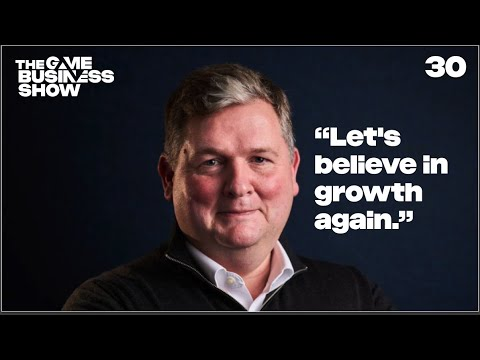
placing good bets in in the UK because we've got such a strong industry. The other thing though which I think we can help with but it's really on every single small developer aspiring studio codev studio is we need a growth mindset. We we need to believe that we can scale these businesses. So this only works if we go from, you know, the small to mediumsiz enterprise, the the kind of 12 to 15 people making a moderately successful game and we start to aspire to build 50 to 100 people teams that are making globally successful IPs and franchises. And so I think the big dialogue we want to have with the industry is what's our scaling journey look like? How do how do we move from the very cautious approach I've heard a lot in the industry recently about you know I want to build a studio and create great games but keep it at this level to let's believe in growth again you know let let's start to aspire to growing these studios and I think that's the next big conversation we need to have there's a video games council and a game skills network
is that on you as well what's the process there so I I pitched the video games council with Nick button brown to the minister and we are really really delighted that he's turned around and taken up that that challenge. So yeah, so Yuki and Tiger have been working together to suggest people to be on it kind of the shape of of the council. What's it going to do? How often it's going to meet that's now with the ministerial team at DCMS and invitations are going out as we speak. And again, you know what that gives us is a regular direct dialogue that's just about games. So previously a lot of the conversations I've been having are about the wider creativity creative industries and games or about film and TV and games. The council is going to be games, you know, through and through and and what do we need? How can we help? What's our our role? So we're really pleased to be working with Tiger shaping that. There's some really great people coming through and I think that is a direct signal that we've got the year of government now. So we need to
decide how we're we're going to use it. Game skills network. Similarly, we set up really as a a sort of open voluntary network in response to some work Gina Jackson had done on on skills in her skillful report that's actually been running for about a year now as an informal network that's been coming together. And so this is now a formalizing of that existing network into something that's going to develop a workforce strategy for for government. So, you know, the great thing about that is we can have some conversations about more flexible approaches to apprenticeships, entry- level roles, how we support incareer training, leadership development. We've just come fresh from some really positive conversations with the mayor of London's office, the deputy mayor of London about the skills investments they're they're putting together. So suddenly it kind of opens a door into how do we build a real skills pipeline for the industry that's going to help this recovery and the future grow. I used to obviously cover the UK exclusively really when I was part of MCV but I still follow the UK very
closely and it felt to me like the last post pandemic you know a lot of our top studios were acquired by foreign businesses which I don't really it's not a problem but when they start cutting I guess it becomes a problem. What do you want to see happen in the UK over the next decade? Where do you want it to recover to? There's a place I want to go and there's a place I don't want to go. Right. The place I really really want to go is a really strong games ecosystem that that really recognizes the strengths of being an ecosystem. So that we see you know a proper scaling journey from very small indies up to kind of double AAA developers and that we bring the worlds of kinddev and xdev and work for hire into that ecosystem in a really sort of equitable way and that we also have you know the very large players who see real strengths in having a strong UK ecosystem that feeds IP and talent and and so on. So where I'd like to get us to is is where we act as an industry,
where we have identifiably shared needs, we're able to lobby for our collective interests, that we use things like evidence and data to make the case for what we're doing. So really, you know, acting and behaving as an ecosystem. A lot of the work we're focusing on at the moment is the positioning of mobile in that ecosystem. How do we make sure that we recognize the huge strengths the UK has in mobile and even starting to explore, you know, some of the relationships with the kind of UGC social platform developers, Discord, Telegram, conversations with Roblox and and so on. So, you know, I'd like to see us come together as a really coherent industrial and economic force that that behaves like an ecosystem. Where I don't want to get us to is the race to the bottom. The AI powered reductive agenda of churning out endless clones of things because they were economically successful once where where I think we really excel is positioning the UK as a place of quality to make globally successful IPs and great innovative technologies and solutions that people
want to deploy all over the world. So, I want us to raise our ambitions in terms of the quality and the innovation of what we're presenting and not simply be part of the race to make as many games as possible for as little as possible that monetize as fast as possible. You know, I I think we can aspire to something that genuinely feels like the future of a medium that really plays to our strengths as a place of quality because there are fewer big companies and the ones that are left in the UK, you know, and uh then the ones that are left almost entirely foreign owned with their own global agendas, right? And I might be reading this wrong, but I think that makes make it really hard for UK to go, we need to do this for the UK. When perhaps some of your biggest members are going, actually our parent company doesn't want you doing that because it, you know, it might impact some of their wider plans or whatever. I don't realize I didn't even ask a question there. But is my reading of that a little bit correct or or has that limited Yuki's ability to drive change in the UK? I asked myself the same question when I
got this job is is can we reconcile these things? I've come to discover over the years it's actually a massive strength but we have to be really open and communicative about you know where we identify agendas that lift all boats basically. So, you know, when we go out and talk to ministers about the strengths of the UK industry, they're super exciting about visiting the very large players, seeing the games they're working on, you know, being part of kind of the global franchises. They're also really, really excited as members of parliament about, you know, the innovation that's going on in their doorstep in in grassroots indies. And what I think we're really hitting now is a bunch of maturity where we can tell the story of the industry as reconciling all of those different players in something that is truly innovative, truly creative, advancing boundaries. So, you know, one of the big campaigns we're looking at for next year is around how video games are breaking out to have a huge impact on other industries. So from health to education to TV and film production, manufacturing, huge range of
applications of game tech and and game innovation. And in telling that story, we've got an amazing story to tell about, you know, companies like Glitches up in Scotland that are doing amazing work on assessment in in the health sector. We've also got amazing stories to tell about sort of global mega franchises and big launches that may or may not be happening next year or I think they are officially now happening next year. So our job I think at Yuki is to weave all of that into a story about the impact of games and the power of play and the way in which play could be impacting on the wider economy. So we've I'd thought it might be but I've never found it a constraint. I think there's an opportunity there to showcase that we are much stronger when we move together as an industry that has all of those pieces in it. So that was Nick Paul there the CEO of Yuki and he seemed optimistic and delighted with the news but George how did you feel? How does support measure up? Actually you look at what the global industry is offering. Is it comparable? It's good. It's a really good package of measures. I think I mean
is it comparable? I think part of the problem when we look at this is whenever you look at it now, you have to look at Saudi Arabia strategy and having the crown prince of Saudi Arabia writing the forward for the strategy and then investing $ 38 billion into it does set something of a of a different bar in terms of what what most people would expect. But actually like when you think about what are the kinds of things that a video games cluster needs to grow, what does it need to survive? And it's like there's a few common pillars that everyone looks at which are funding, it's looking at skills, it's looking at what the overall policy environment feels like both in terms of the wider rules and regulation, but also cultural vibes towards games. Is it good vibes, bad vibes? Cuz if it's bad vibes, it's going to be hard. And when you look at this package, I think what you see is that everything has been ticked in the right places, right? So the games fund goes up, which I think is really important because the games fund
typically targets developers who are not fully early stage. You know, we're talking about prototyping and content funds, but you're saying kind of to the tune of up to 150,000 quid, which somewhere in the region of 250k dollars. I don't know. We we'll get a currency conversion thing to flash up, I'm sure. Um, but it's it's a really useful cash injection into a part of the industry that I know has been really struggling to find funds, you know, especially in terms of what people have been telling me about how publishing cash has dried up. So, that's really good. But actually, I kind of feel like the other elements are potentially more important. like the UK Games Council, there hasn't been a really credible arms length body that features games representatives um basically ever present. and to actually have one and a commitment to meet it regularly with all of the relevant stakeholders. I think it's opening us up to a world where there's going to be a really good effective body that can represent the industry's
interests without and I think Nick mentioned this in the interview without getting rolled and bundled up into the right wider screen sector. So that's really important. Um, and then I I just think even the other small things like cash into London Games Festival is great for boosting the events ecosystem and you know there's money going to Metro Mayors where I think they'll probably put money towards similar initiatives and yeah and even the skills work as well where it's like saying look we have a problem with developing domestic talents let's come up with a plan to fix it. I I mean all round it's it is a really great package and kind of makes me feel a bit jealous we were never able to do this when I was at UK. Honestly, it does feel a lot like when your ex has had a really nice glow up and you you actually have to just sort of quietly envy them. Go, you know, fair play. You got it this time. It was I mean, there was a few We could talk about a few other things there. It's £24,000, by the way, is the uh £150,000. Um the uh uh the quick Google there in the middle of that that um or George, you could you have done on this sort of thing before.
How do they even pull this stuff off? This is perhaps a bit inside the baseball, but I'm just interested in in how that even process works. Yeah, it's it's a really fascinating thing. I mean, what I would say is to break it down. Um, there's pretty much three things that you need to do to go and try and get a policy either changed, amended, or put into place. So, first of all, you need to have what everyone always calls the ask. What is the thing that you're actually asking for, right? Are you asking for more money? Are you asking for a change to the immigration rules to try and get more visas? sorted. Whatever it is, you start there. The next thing that you need is kind of like the evidence there's a problem. And it can be hard to find the evidence because the policy world is quite slow moving, but it's things like we've pulled 200 games industry leaders and they've said this or we've looked at what this country over there is doing and they've just given a load of money so why haven't we got this? Um and then the final thing that I think often gets ignored in a lot of this world is like what's the solution? you know um governments are
increasingly especially in western democracies underfunded overstretched and I think frankly they they have so much responsibility now that if you're able to go and we also can tell you which law we think should be amended to do this or what kind of measure we think that we can already exist that we can just tack this onto the end to what that does is that builds you the base for you to go and get something done and then what you need to do is you need to show a few other things. Like the first thing is you need to show that there's that wider support for it. You know, going in by yourself to ask for a policy to be changed is is hard, but being able to demonstrate that there's like wide support amongst an industry or even across you know various industries a lot about Epic Games and competition matters. It's not just Epic Games. It's also been Spotify. It's also been the dating app provider that strengthens the case. The next thing is then knowing the officials and the civil servants who actually write the rules and have to do
the work. Because if you're speaking to them and going, "Look, this is the thing that needs to be done." They're the ones who often will do the the sort of potentially tedious but really important work of writing the papers, the recommendations, putting those things in front of ministers. And then the final thing is, yeah, going and talking to those ministers and getting the political will to actually do something. And and you know, I think just on that point in terms of Yuki, like it was a funny thing. It was back in 2023, so it was after I'd left Yuki, I was hanging out um over at a place called Here East, East London. Um and that's where the offices of of Sports Interactive are based, bumped into the UK policy team with Jonathan Reynolds. Jonathan Reynolds is the minister who's just signed off this announcement. So he was not in government at that time, but they had obviously taken him for some sort of visit around the Football Manager studios cuz I heard he's a big fan of the game. And so, you know, they've managed to build the relationships over the long period of time to essentially get this kind of thing done. And I think
that's it. It's that combination of you need to build a policy that's really robust and deliverable, but you need to have the right relationships and contacts to actually encourage someone to to come to your side. because if you get it wrong, you're not going to get the policy passed. And if you don't read the runes right of what's going on politically, it's never going to happen either. It's it I I'm I'm obvious I used to work for um and I've mentioned on the podcast before, I used to work for MCV magazine and that was a UK business publication. So I used to cover basically the UK market exclusively. When I joined Games Interopers, that changed and shifted. And so when I left, I don't say I left the UK market. I still write about it a lot. But there but but when I basically took a step away, the UK seemed to be in a pretty strong tax breaks are relatively new still and there was a lot of exciting growth and big games were launching and yet in and I know this is true of the whole games industry globally but it does seem to be that the UK seems taken a bit of a step backwards and I think some of that's the globalization of the games industry.
There used to be a time when the heads of the UK or most of the European head offices were based in the UK, some in Germany but most of them were head based in the UK and they all had quite a bit of influence. um independence, a little bit of independence from their parent um their US offices or Japanese offices. That's not really the case anymore. So, I always I think that we we I always feel that there's not enough happening in the UK market. I also see so many of the big games that that are coming out of the UK either are games that we're co-developing as as a the UK is co-developing as a country or it's worked for higher games like based on IP that aren't that from from other places and other countries. And there's nothing particularly wrong with that, but I think if the it's not what the UK game dev scene, which is seen as one of the homes of the games industry um was sort of known for. And I and I get the impress talking to you what what Nick said there that there's a there's a hope to to get back on track if anyway in many regards. Maybe I'm being harsh on it, George. You've covered this a lot closer more closer than I have. Well, I got to
be honest. I I tend to agree actually more more with with your sense on where the industry's been frankly because I was watching a lot of it happen right though I mean especially during um you know the start of the kind of the covid pandemic era is that obviously had major positive repercussions in terms of the wider industry in terms of overall global growth but it happened to happen at a time where the UK had basically just seen all of its assets written down by about 10 15% as a result of Brexit finally ly baking into the system. And you know, I don't think it's a massive coincidence that a lot of the very big acquisitions in the UK games industry happened just after Brexit had essentially finally gone through because that provided some solidity in terms of the investment and in terms of the the wider environment that was going on. And so I think the UK had partly due to frankly an idiotic referendum vote managed to put itself into a position where it willingly devalued an enormous
amount of its its business assets and opened it up to that kind of internationalization. Um and I think as a result of that it also has meant that the industry in the UK has felt a lot of the problems within the global industry a bit more harshly than other places. Um, and I think kind of an interesting parallel was actually Australia where I went there last year for for a research trip. Um and you know the Australian industry was decimated during the global financial crash because it was essentially an outsource base for the US industry and as soon as the Australian dollar hit par with the US dollar it was time to abandon ship and you know essentially all of the Australian studio studios got shuttered and so a combination of the local states the national government managed to create an entire funding ecosystem to support a load of developers who were coming up from the grassroots. And so what it meant is that when these waves of layoffs were hitting around the world, the Australian industry did still get hit. It has still been affected, but
a lot of companies just had a much much more secure base of government funding to build upon. They were a bit smaller, a bit more independent, so they were less likely to be cut by a parent company going there's a cost to go. Um, and also like very conveniently the first payouts from the Australian digital gains tax offset. I think they they started to land in m in 2024. So, you know, people were literally starting to get cash into their bank account just as the rest of the industry hit that, you know, sort of the work cycle. Um, and so I think Australia built resilience after the financial crash, whereas I think the UK industry lost some of its resilience during that kind of pandemic buyout era. And I think it is really important. I do agree with Nick about the idea that the ambition to build up independent, influential, creative UK businesses in the game sector from from the bottom up is is really what should be aimed for. And I think it's really commendable. But I think there is also that question of if
we live in a truly globalized games industry, especially where production is done on this global basis as you know part of a global supply chain, you know, what is Britain's role ever going to be? because Britain is ultimately only ever going to be somewhere between the sixth to 10th biggest consumer market, sixth to 10th biggest nation in the world. Um, so how do you use policy to try and uh essentially counteract geopolitical gravity? I think to be fair to Yuki, the package of measures announced this week, fantastic, but you know, it may prove more difficult than that in the long term. Mhm. Wow. It's a I I still think UK's got a lot of talent in it. It's still got a lot of great um game studios that do lots of great things. A lot of them owned by foreign um games companies companies these days. Um and I don't know I always like to see I think one of the Nick talks about this about um companies with a bit of a growth mindset. The amount of games companies I interview these days that go yeah we're happy with the size we are right. We're
not looking to we're not looking to grow anymore. and he quite openly says in that chat he's like we need we need people to have a bit more of a growth mindset again which is that's is quite a scary thing to have to want to do in a market as competitive and as challenging as the one that we're all living in on a global level let alone a UK level. Um I'm a little bit pleased that there's some money going to London Games Festival. I I I've obviously worked on on video game events in the UK for quite some time. I'm always frustrated at how small our events are in the UK generally like from a consumer perspective and a business perspective. Um like I think our biggest business events like 3,000 or 2 and a half thousand attendees. Um and you know we there's an there's a history here and this is before my time in the industry when the ECTS and GameS Stars live or something like that went to war with each other. um which basically killed both events and the whole the B2B side of the European games and she went over to Germany and there's
just this um London game Festival is pretty good. It's obviously it's got um your friend and my old boss Michael French runs it. Um so um I'm I'm a big fan of it. Uh it it had EGX res as part of it which is a cool indie consumer games event which um doesn't exist anymore. It's got BAFTA as part of it which is globally recognized. Um, but I always think they just need to how could we how can it go up that next level and how can it attract even more things. There's always good The B2B stuff's always great. Um, the receptions they do, some of the cultural stuff they do is really cool. Um, but how can it, you know, how can it take that next step and hopefully a bit of um, investment here can trigger a bit of that. Yeah. And I think as well the the other thing that I hope it triggers is more investment from UK businesses and some of the some of the UK stakeholders as well because you know I think why I particularly like the growth package was it was this recognition that it's not just money alone that grows a sector
that you have to have everything underpinning it and I think events I think are crucial for developing connections but developing community but you know I I know we've definitely talked about this before. I know lots of people have talked about it too about what happens when you don't have like a wellfunded trade press. What happens when you don't have well humor press? Because I think the games industry I think has too often wrapped itself up in the idea that these things have to have like a very clear end product like you pitch to the consumer games press because it sells your game or you pitch to the business press because that gets you a hire, right? You know, whereas actually it's like the reason why you want reviews in the consumer press is that it burnishes the reputation of your game. You know, when you are listing it on Steam, when you are putting stuff on the on the front of a box, the review matters because it provides credibility. That's that's the thing that helps drive the sale. And in the same way like with the business environment like you want to support it and you should be funding uh things like I don't know great substack newsletter um because
because it's actually about pumping oxygen into the room. It's about saying giving people space to talk people to talk about what they want to do influence the conversation drive it in the direction that your business wants it to. And I think investing in those kinds of things like events, like newsletters, like the media just in general is so important for supporting the overall health of the ecosystem. So yeah, I I think money towards things like London Games Festival is fantastic. Yeah. And the industry does need to come out for it. And I'm I'm an advocate for this. You say we it was George, we were part of a B2B media scene in the UK that was absolutely ridiculously buzzing, right? You know there was there was MCV coming out every week that they and they al we did I think event every every month effectively um which small events big events all sorts of events you had games indig which was at the time a pretty big publication and it's a little sorry it's a big publication but at the time it was a very UK um orientated
publication and um had a and was doing things all all across trying to do things in Newcastle all over the place. Yeah, pocket game. Pocket game is still going, but it was it was it had everything. And then and then it's just the support stopped. And MCV used to get like it's tra trade title, right? The the ROI on MCV because you booked an ad in MCV with the idea that game might stock your product, right? Which worked for some products, but Activision Blizzard did not need to advertise an MCV to get people to to to to, you know, put Call of Duty on their shelves. That was happening anyway, but they still did it. And I think it's because they they like be they like the ecosystem that MCV created and it was they they like being part of that world. And I think as we as an industry becomes increasingly ROI driven we sometimes you know I think the death of E3 the amount of companies big companies that tell me it's a shame of what happened to E3 and but you pulled out you pulled out of it. Oh yeah my CFO wouldn't let me and I'm like but it's there's a there's a is an ecosystem um here. Um, right. Absolutely. And and I
think as well like if you're looking if you're looking more widely too and just seeing what happens in in the rest of the world, the rest of the economy, like one of the things I find really interesting is about how do you tell your story to the wider world and you look the reality is you get some fantastic games coverage in places like Bloomberg. Like the FT is actually really good on on business stuff as well around games at the moment and the BBC's been doing more stuff, but let's let's be real like the majority of the stories there are about the same companies that that we always hear from because understandably they've got a lot of cache. But so if you want to be able to start landing your story and you want to be able to start doing things that could potentially make its way into the mainstream conversation, you need to find places to land it. And the reality is is that for the most part a lot of the places that games companies like to sink their budgets like into influencers particularly so porn video and Twitch
they actually don't cut through into that traditional space. If you're trying to make bigger corporate stories around the games industry thing, if you're trying to deal with reputational challenges or you know these big policy issues right around this EU set of EU monetization rules if ultimately courts agree with the interpretation of the CPC, I think that could decimate the European games industry and decimate anyone selling into it who happens to operate a free-to-play or games as a service model. you should be looking to fund your trade media so that you can actually support and energize these conversations and arm people with the arguments they need to be able to push back against some of this stuff. Um, so I think it's really important to do and I think the other side to it is that it's probably never been a better time to do it because I mean frankly I think a little bit of money in the trade media is going to go a long way. So, you know, I mean, this is I promise not just me making a massive pitcher, uh, get people to sync ad cash with me, but but I think it's it's a genuine point of saying you have the quality of the community and
the debate that you invest in. And if you don't invest in it, you can't be surprised when it's got gaps or it's fragmented or it's difficult to understand. And I think as a modern mature industry, you want to be in charge of the story. So, invest in the outlets that help that happen. There's our advert. You got to snip that out and run it in every episode from now on in. Um, I think there's so much talk about this subject. I guess we could talk about it all day and I'm conscious of the time. Was there anything else uh George that you thought was that jumped out at you from all this? Um, I don't think there was anything else. I think in particular, I mean, aside from the fact that, um, I think going back just briefly to that point around where the industry had felt like it was going is I I do feel like this has injected some really interesting energy into the sector again. And I think you can sense that there's excitement. I think the things I'm I'm really just going to be interested in are the practicalities. You know, what is this UK Games Council going to to look like? Will it unite the Montigus
and Capulet of Yuki and Tiger who traditionally have often been a loggerheads with one another? Um, what exactly will that money for the UK games fund look like? Is it going to be more of the same funding or are we going to see some interesting things like projects that need a million quid getting cash? You know, like it could be sort of quite significantly different depending upon what what's chosen. So, I think I'm interested to see how the great news translates into practical action. But I I think broadly speaking, yeah, Kraken package. Yeah. Well, uh, you know, it's a great game development scene. There's a big also next year is a big moment for the UK games industry. GTA 6 obviously is is um is is coming out. Um, Fable um from Playground Games. There's probably others. You probably got on the top of your head. Um, that's coming out from the UK scene that's going to have a sort of global noise to them. Um, so yeah, we'll uh we'll keep an eye on that. Obviously, um, and we're running out of time, but there is actually just enough time to delve into some market data around some recent game
releases. And I and as and as I try and do every week, this is I'm trying to bring this back, George. In my previous podcast, we had a section called what do the numbers mean? This is basically that section. What do the numbers mean? Um, it's been a real mix of news and games this week. Uh, we had uh Hypixel Studios closed down. The firm couldn't get its game Hightail into the state they wanted, and they've come to the end of the road. Um, we've also seen Build a Rocket Boy uh announce layoffs. They didn't specify how many, but IGN says upwards of 100 employees are facing redundancy. Um, actually, have you been tracking Mind's Eye, George? That that story is a bit crazy. Yes, I mean, I've mostly been seeing the I've got to say withering critical consensus towards it and around the the state of the release, though. Um, yeah, it's very difficult times it seems for Bill Rocket. There was a big flag in the bill. We talked about this last week a little bit. last week. I think it was last week a little bit. Um it was um we had one of the co-CEOs, Mark Gohard, suggest people being paid to say negative things about
it. Um I don't think it was necessary meant critics, but certainly the comments. Um there was uh uh the game's reveal was really odd. It's the first initial video for it was did not show the game in very good light at all. Um uh the trainers got better. The game did not. Um but let's let's have a look at the numbers. Um it's it's had 150,000 players on PlayStation actually according to Ampair. Their numbers it's early numbers. Their numbers might be slightly out but um which is uh which is by far the strongest platform. Um and that's unsurprising. GTA style games do very well on PlayStation. The PC version which is important because Mind's Eye unique component isn't the fact isn't it the fact it's looks like a cheap GTA game. Um, it's the user generated content mode that it's got uh where you can build your own levels. That is only available on the PC version. So, you can't create games on the PlayStation and the PC version. And the PC version has just shy of 35,000 players according to Ampair. So, that is that is troubling for me. Xbox and second spot with 61,000
players. So, we're looking at just under 250,000 players for Minds Eye. It's bad. It's not Concord bad, but it's um but it's it's I've seen lower numbers. Um but but Minds Eye was meant to be a huge ambitious project. You know, Builder Rocket Boy is like 400 plus, 450 people. And so say the reviews haven't been great. They're pledging to support improve the experience, but I say those PC numbers, they worry me. They worry me a lot. Yeah. I mean, especially when you're thinking, uh, who's who's a major user generated content rival? Could it be Roblox with it 97.5 million daily active users? That's a bit of it's it's a little bit of a mismatch at the moment, I'd say. Well, I think I think for them as a way it's a bit of I talked about this a little bit last week, but um it's this is supposed to be the grown-up Roblox, but then Fortnite beat them to that. Um and and and Fortnite's not it's not been an easy road for Fortnite. They've not been able to compete with Roblox as figures, but it certainly and I think that's the reason why maybe they they focused on the game rather than the UGC platform. But we'll see what the future holds for that. I I
do I keep still hearing rumblings of trouble um to come. Um, the other slightly negative story, I mean it is a negative story, but it's it's not quite as severe, is um, 1047, the US studio that just released the free-to-play game Splitgate, um, they've also cut an undisclosed number of employees. The founders of the studio, the founders of the studio have also stopped taking a salary. Now, Splitgate 2 isn't in quite the same state. It's a free-to-play game, and according to Ampair, it's had around 4.9 million players across Xbox, PlayStation, PC in its launch period. It's done especially well on Xbox 1.76 um players. That's because there is in-game benefits. If you're game pass subscriber, you get in-game stuff uh included in that. Um PS5 though is not far behind 1.68 million and then there's been 1.4 million players on PC. It doesn't sound terrible, but obviously it's free to play and if you compare it to so Splitgate is like this Portal meets Halo style game. It's it's it's got it unique element to it. But if if you look at Delta Force, which is also a recent free-to-play shooter, that game launched with bigger numbers than Splitgate 2 slightly, 5.2 million in
December 2024. But that game was PC only. I didn't have any console versions. And it struggled a bit since then. It's now on 2 million players. So whether that 4.9 million for the Splitgate 2 is good enough or it will depend if how people stick around. And it's got some challenges. The reviews are mixed. Both the critical reviews and the and the consumer reviews. um microtransactions haven't been well received. There was some controversy around the hat the guy wore on stage at um uh at Summer GameFest. So, there's definitely work there to do. Um it's not quite as doesn't seem quite as dire as mine mind's eye, but um um yeah. Yeah, exactly. I feel like the Build a Rocket Boy situation is is very tricky to to recover like that. Whereas, at least in terms of the Splitgate numbers, it suggests there is an audience. there's an understanding of the premise. Um, and you know, if we think about first person shooters as well that have particularly had sort of an interesting trajectory, I always go back to Rainbow Six Siege as an example of a game that was really well reviewed on launch, but it just
didn't initially get that audience. But then over the course of time and with the right iteration and the right support, it's become, you know, one one of the real Ubisoft reliables which the company has really desperately needed. So I I would say it doesn't sound terminal yet for Split Game. It's what happens next, isn't it? I mean, Rainbow took Ubisoft examples. Rainbow Six Siege obviously launched I think like is it two weeks after the Paris terror attacks and so they didn't market it. They they were very quiet on it. But yeah, it found an audience and grew over time. Whereas in contrast, X Defiant, their big live service game they released last year, found an audience at the start and then lost it. Um, so it's it's it's it's just it's just it's what happens next really. Um and actually so many of these sort of layoff stories now they're slightly different to before. So it used to be about oh we've had to make redundancies because of changing player behaviors postco or we've changed our strategy due to where the market is and so really people are being laid off for absolutely no fault of their own. It's just a fortune where the wind was
blowing. And I don't know if this is easier to accept or not, but a lot of more of we're still going to get some of those, by the way. That's not going away completely, but but a lot more of the the layoffs and the redundancies we're hearing about today are often because a game has not done what was supposed to be, whether it was it's it's it's a tough market. It's underperformed and they've had to react to that. Um, again, I don't know if that's easier to swallow or not, but it's certainly um um certainly a little bit more um um understandable, I think. Yeah. And I wonder as well if a couple of them have been related to potential structural changes within the wider business that maybe just haven't fed through. So, you know, Chinese room for example, um there was um news this week about layoffs occurring there. you know, people posting about it on LinkedIn, but um I think it was Chris Kerr, a game developer, who was emailing all of their comm's team at Sumo and didn't get through to anyone cuz the whole comm's team has been laid off as a result of the wider Sumo restructure. And I think the Chinese room were essentially saying, look, something's going to
happen soon. But I think it's that that question of when exactly it's going to happen and has it just not happened in time. Um, but I I I also think like it's an interesting thing because going back very briefly to the UK story and Hypixel, Hypixel was essentially Northern Ireland's biggest game developer and and I was out there literally about a month ago and people were talking about what do we need to do to support the ecosystem. Well, one really good bit piece of news is we've got Hypixel, loads of jobs, lots of experience, great for the market. Shut down. And so, you know, it's a really interesting thing to say you can do all of the right things as well in the policy landscape, but actually if you lose potentially a big developer and they're not really sure where they go or what they found next and whether or not they go and set something else up, it can can have pretty big repercussions. So, it's yeah, it's interesting times. Yeah, it's it's an art form ultimately as much as it is a business. So, it's um it can be, you know, there's no guarantees. Those are negative stories. There are positive stories. Um I there were there's some other games we might talk about in the future episodes. Games
like um uh uh Fire Break from Remedy which has had a tough start as well, but um we'll talk about that if time. But we've had some successes. So um one of them is the football/s soccer game depending on which part of the world you're listening to this podcast. Rematch from Slow Cap and published by Kepler. This is Kepler's second hit really uh in as many months cuz they also published exhibition 33 which we've covered quite a bit. So since it's released on June 19th, this is official numbers they put out. Rematch has sold 1 million units and reached 3 million players. That this a five versus five online multiplayer football game. It is available in game pass, hence that high player number. Um Ampair estimates that 1.58 million are playing on Xbox, which means that actually it has broken out beyond game pass. There's a lot of games that have done very well like that um uh that rebellion title and stuff, but it's so much focused on Game Pass and but there's sometimes a game breaks down other platforms. So the PS5 version is on around 800,000 players. PC versions on around 1.1 million players. Again, these are estimates, so it's not completely correct, but um the game is closing in on 2 million sales
potentially now. So, that's a great result of that game and it's getting some good press as well. And I think it's um this gets Yeah, it's fascinating. I'm I'm I'm a very big football video games fan and then briefly had an expertise in it in the mid mid well, I'd say about 10 years ago, I was I was considered that expert. And so the thing that I find funny about rematch is rematch is probably the football game that most feels like you're actually playing football. But to get to this point, what we had to have was Rocket League invented because Rocket League felt more like playing football than EA Sports FC did. Because EA Sports FC, it feels like you're playing like a TV broadcast of football. Whereas Rocket League, you were thinking, where's my car going? I've got to think about my positioning. and then to have then evolved that back into rematch where it's like, "Oh, and now you're just playing soccer ball again." I mean, you know, it's just like the arc of video game development. Yeah. Sometimes twisted, but it leads us all always on to progress. I I I do I I do enjoy that. The biggest complaint according to the internet to people who play rematches, people that hog the ball and I'm like, "Oh, it's actually like
being in the playground and playing football." And genuinely, it is the thing that makes me most annoyed when I play five side on a Tuesday. So, it's it's great to see that it really is capturing the true football experience. Um, also a big hit is Gene Awakening. The Fun Kong game has been I mean, this game's been development for some time. This is about 6 years. It's a big survival multiplayer game, so there's pressure on this. It's going to have a big budget against it. Um, it's not launching alongside the June um uh movie uh uh at all. Um uh but uh so there's pressure on this. Um, it's launching into a competitive ecosystem, but good news, it started well. Uh, it's managed to sell 1 million copies or at least have 1 million play. They use the word 1 million players, 1 million sales interchangeably. It's not a subscription game, so this isn't Game Pass GC numbers. Um, AE actually has the number over 1.2 million now. So, June is an interesting one. The brand has been building on the back of sort of those two hit movies and had a TV show which I think's done well enough to get a second season. Um, and it's one of those IPs
that uh I'm not I don't follow too much, but seems to have a a really great following. So, it's a good start for Jean. Yeah, I I've got to say I I expected it to flop. I don't know why. I just had flop vibes all over it. So, I've genuinely been really happy to see it do well and I've been seeing lots of really great footage of it popping up on my Tik Tok account cuz uh Tik Tok knows I love video games and also Ram wins. I I suspect it's got I suspect it has high targets on it. It's obviously they're comparing it to their Conan game which is you know to try and I don't know if that's the benchmark but it's certainly their benchmark which is so it's it's done very well. Um and actually I'm going to talk about this one final game that's done really well is Peak. Um I'm not I don't spend too long talking about sort of these occasional indie games that really break out but I like talking about them if I can. Um this is a game from Agro Crab and Landfall. It shot to the top of the Steam charts. It's now done a million copies with some really great reviews. That's the official number. Ampair actually puts the sales over 2.2 million now. Um, it's a climbing co-op game. It's got that classic, you know, silly characters sort
of novel multiplayer concept. You can play with friends. Um, works well with like YouTubers and streamers and content creators generally. It's it's less than $10, you know. Um, some of the big hits in the last few years have sort of been similar. Even like Repo, which is obviously the big one a couple of months ago, um, Lethal Company, those sort of games. So, um, uh, so yeah, and that's and that's that's wonderful to see as well. It does feel like the classic multiplayer Steam hit game. That one. I've not played it, but um I'd look into it for this. Again, I've I've not played it, but I have seen a Tik Tok video of a group playing it where someone fails to cling on to the side of the mountain and then does a full Hollywood style scream as they're tumbling down to to their inevitable demise. And I mean, it generated a laugh. And I think to be honest, a lot of games that can say it's going to cost you 10 bucks and it's gonna make you laugh, that actually is a compelling pitch and I think that'll get plenty of people on board with it. Yeah. Yeah. Well, so yes, there are troubling stories around video games always stories is I to George about
18 months ago I wrote a story for GI which was and I spoke to a lot of investors and seuite game people particularly public companies um who were telling me that you know this challenge that we're going through as an industry is going to be we're probably minimum two years of pain is the word that someone used to me and um I wrote a story on this and you know in the story was more nuanced than that but that was the headline and I got a lot of stick from people in the UK games industry and I they viewed it as me being negative and discouraging investment and but actually I thought was I think we need to prepare ourselves for a new normal here rather than expect things to turn around. I think there some people think it would turn around by GDC. Um and um and what I also put into that story was the fact that yes 2024 is going to be brutal. 2025 is also going to have a lot of upsetting and depressing and miserable stories, but there will be positive stories. We're not going to go from everything's amazing, everything's awful, everything's amazing. That's not the journey of it. We're probably going to go into a world of some things are
really successful, some things are doing really well, new IPs, new companies that are doing incredible things and doing having excellent success. And there will be these other negative stories as well. And I think the last week sort of highlights that there are potentially rumors more there's some big games coming um that um that could do very well. There's some interesting games coming that could do very well. But also there's stories like there's rumors about Xbox about to make some more cuts as well. So um yeah, positives and negatives in the games industry. Yeah. And you know, I I'll end by saying my hope is is that there's someone someone out there who's taking advantage of um the challenging times to smartly put some counteryclical money into the sector because I think if you want to find great people who can make great games and do it at a lower cost than you've previously done. So, this is actually probably a pretty good time to be making that bet. And I think, and this is, you know, this is based on absolutely no conversations. This is just pure blind optimism. Um, but my
hope is that someone's going to be making that bet, uh, quietly in the background. There we are. Those are the words of leading games consultant, uh, George Osborne. That was it. Thank you so much for your time, George. Thank you for joining us this week. It's been lovely to have you on. Hopefully we can have you back um to talk some of this stuff um in the uh in the in the in the weeks and months to come. Yeah, it' be an absolute pleasure. So everyone at home uh please join us next week. We have a big interview on Tuesday with Sega and in next week's news analysis show unless something happens between now and then. We're going to be looking at the economic situation in the US market. Sign up to our newsletter at www.thegamebusiness.com. Do people still do www. should I say the gamebus.com? Sign up at forgamebusiness.com to make sure you don't miss a thing. Until next time, thank you for tuning in. [Music]
Auto-generated captions from YouTube — names and numbers may be misheard.



















Comments