1 free read left. Create a free account for unlimited reading + AI research.
Create free account
Because Games Matter - Abraham's Story - Extra Credits
Key insights
6 takeaways- 01Specialized roles, such as the Gaming Technology Specialist at Children's Hospital Colorado, utilize diverse platforms including VR, AR, 3D printing, and robotics to improve patient quality of life.
- 02Virtual reality is being used in clinical settings as a functional substitute for anesthesia during medical procedures.
- 03Gaming technology is being integrated into clinical environments as a therapeutic tool to provide distraction, pain management, and emotional support for hospitalized patients.
- 04Adaptive controllers are employed to ensure patients with limited physical mobility can participate in gaming activities, fostering a sense of agency and normalcy.
- 053D printing technology is utilized within hospital settings to create legacy items that provide emotional comfort to grieving families.
- 06The Child's Play charity currently supports this integration by providing funding and equipment to approximately 180 hospitals worldwide.
Ask AI about this video
Transcript
As we close the door on 2020 and lock it very firmly behind us, we wanted to sneak in some last-minute positivity by continuing our tradition of sharing stories from members of our community, reminding us of the positive and sometimes unexpected ways that we can all be affected by games. So, because games matter, we're going to start with a story from Abraham. Once again, we'd like to shout out the great works being done at the Child's Play charity. If you'd like to help kids in hospitals all over the world this holiday season, click the link in the description below. Hi there. My name is Abraham, and I'm the gaming technology specialist at Children's Hospital Colorado in Denver. My job is to utilize various technologies, including video games, VR, 3D printing, and robotics to help hospitalized kids and augment existing medical treatments. This includes things like using VR instead of anesthesia for procedures, administering AR interventions for bandage changes, facilitating telepresence robot visits
for patients on isolation precautions, 3D printing custom adaptive solutions, as well as providing kids with games as a recreational distraction. And my passion for video games helped me get to where I am today. It all started when my family purchased our first desktop computer. My dad set it up in the middle of our kitchen, and for the first few months, we used it to send emails and play solitaire. But one night, I snuck out of my room, tiptoed down the stairs, and sat myself in front of the screen. After a few clicks, I happened to come across Wolfenstein 3D, a first-person shooter that pits you against an army of Nazis. It was awesome. For weeks, I played in secret, sneaking down to the computer each night after my parents had gone to bed, and I would play all night, stopping just before sunrise so I could get ready for school. Sure, I was exhausted during the day, but it was worth it. Then one night, as I slowly inched my way down the stairs, I came around the corner to see my mother sitting at the computer waiting for me. I froze, terrified that I'd been found out and my all-night gaming sessions
were about to come to an end. Instead, my mom gestured for me to sit down next to her and said, "I know you've been coming down here every night to play games. Can you show me? I'd love to learn more about it." I was shocked, unsure if this was a motherly tactic to get me to confess my disregard for bedtime or if she was generally interested in what I was playing. Either way, I sheepishly sat down and booted up the game, glancing over at my mom's face as I fought waves of bloodthirsty Nazis. After a few minutes, my mom turned from the screen, put her arm around me, and said, "Well, it's a little violent for my taste, but I get it now. I can see you have a real passion for this stuff. But, how about we play during the day so you can get some rest?" When my mom surprised me by genuinely accepting my love for games, it opened my eyes to the fact that video games can create connection, encourage empathy, and inspire new ways of thinking. Also, I no longer felt I needed to keep gaming to myself. It was something I could be proud of and became a means of getting even closer with my family. As I grew up, my mom would still sit with me as I
played video games, commenting on the beautiful graphics or investing yourself in the characters and their various trials and tribulations. And her interest in games not only brought me closer to her, but pushed me to start looking at them as a mechanism for delivering riveting narratives and exploring the complexities of the human condition. Eventually, it was time to head off to college, art school in Chicago, to pursue a degree in creative writing and graphic design. And there, I met other people who were as interested in gaming as I was and that revered it as an art form as opposed to just a way to pass the time. This environment continued to expose me to the world-changing possibilities that gaming could have and set me on a path to explore the ways in which video game technology could shape our lives for the better. Then one night, my senior year of college, I received a phone call from my sister telling me that our mom was sick and I needed to come home immediately. I jumped on a plane that night. Our mother had been diagnosed with stage four cancer and didn't have much time left, but she wasn't interested in staying at the hospital and wanted to spend her last days at home. So, my
sister and I took her back to her apartment and became her primary caregivers, staying with her 24 hours a day and doing our best to keep her comfortable. One evening, after my mom and sister had gone to bed, I went into the living room and began to play a video game to unwind. And honestly, this was the best I'd felt since my mom had gotten sick. And this was another lightbulb moment for me. If it was helpful and therapeutic for me in this time of crisis, then it must be helpful and therapeutic for other people, too. So, I began using video games as a coping mechanism and they helped give me the strength to take care of my mother when she needed it the most. And sometimes, when she was feeling well enough, my mom would even come sit next to me on the couch and watch me play like she'd done all those years before. Of course, this time commenting on Max Payne's fashion choices or swooning over Kratos, but it made me feel like a kid again. But a few weeks later, after a truly valiant and hard-fought battle, she passed away. After her death, I dove headfirst into researching ways that video games could be used therapeutically and even began designing
and developing my own video and VR games in hopes of providing others with the same relief that I experienced while caring for my mother. A few years later, I started hearing about how games were being incorporated into children's hospitals across the country, funded by awesome gaming charities like Child's Play and Gamers Outreach. And then I came across a job listing for a gaming technology specialist at Children's Hospital Colorado. I thought to myself, this can't be real. It was the exact role I dreamed of. I went in for my first interview and a few weeks later, I was starting my new career as one of the first gaming technology specialists. And I'll never forget the first patient I had the privilege of working with. He was a young man in his mid-20s named Jason, who was suffering from a genetic disease called spinal muscular atrophy. He also was an avid gamer and like me, found great solace in video games. However, due to his disease, he could only move one of his big toes, and that made it nearly impossible for him to play. Over the next several months, I saw Jason every day, and we collaborated on the best way for us to play games
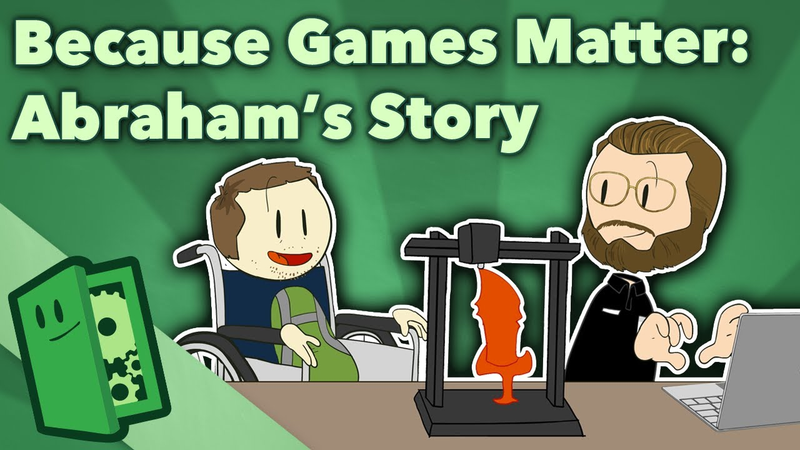
together. After some trial and error, we set up a custom button configuration using the Xbox Adaptive Controller, which allowed him to control his character while I helped out on a regular controller. And as we co-op'd our way through the cowboy life in Red Dead Redemption 2, he turned to me with a big smile and told me this was one of the first times he was able to play video games in years, and how he hadn't felt this good in a really long time. In fact, these sessions were so helpful to him that we began scheduling our gaming around his wound dressing changes as a means of alleviating some of the pain from the procedure. Many games later, Jason's condition began to rapidly decline, but we continued playing together as a way to get his mind off of his illness until he became too sick to play, and he passed away not long after. On the day of his passing, his family invited me to help create a legacy item that they could remember him by, and another light bulb went off in my head, just as it had all those years before when I was caring for my mother. See, in addition to playing games, Jason and I had done 3D printing projects, and now I wanted to use that same technology to
help honor his memory. So, using my 3D scanner, I captured images of each member of his family holding his hand, turning them into a 3D printed sculpture that his loved ones could use to help preserve Jason's memory. To this day, I credit him with helping me create a new way of using technology to engage with patients and develop a new means of providing legacy items to morning families. Thanks so much for that, Jason. Throughout my journey as a gaming technology specialist, I continue to learn new things every day, but I always try to show everyone I work with how powerful, therapeutic, and transformational video games truly are. Thanks so much, Abraham, for sharing your story with us, and thank you for using your talent and love for games as a positive force in the lives of others. B.J. Blazcowicz would be proud. And if you at home would like to brighten the lives of children in need, we urge you to check out and support the Child's Play charity. Not only does Child's Play provide annual monetary donations to 180 hospitals worldwide to help purchase technology and equipment
needed to enhance the patient experience, but they also give the gift of games and toys through their phenomenal wish list program. And with your generosity, they can continue to improve the lives of even more children in hospitals and domestic violence shelters through the power of play. So, if you're able, please donate toward this worthwhile cause and help make some difficult days for children a little brighter. Did you all know that Ahmet Ziyad Turk, Alicia Bramble, Casey Muscha, Dominic Valenciana, Gunnar Clovis, Kyle Murgatroyd, and Orioles One were all legendary patrons? Thanks, everyone.
Summary
The integration of gaming technology into clinical environments serves as a powerful therapeutic tool, capable of augmenting medical treatments and improving the quality of life for hospitalized patients. This practice, exemplified by the role of a Gaming Technology Specialist at Children's Hospital Colorado, utilizes diverse platforms—including video games, virtual reality, augmented reality, 3D printing, and robotics—to provide recreational distraction, pain management, and emotional support. By facilitating these interventions, healthcare providers can offer patients a sense of normalcy and agency, even in the face of severe illness or isolation.
The therapeutic potential of gaming is rooted in its ability to foster connection, empathy, and cognitive engagement. Clinical applications range from using virtual reality as a substitute for anesthesia during procedures to employing adaptive controllers that allow patients with limited mobility to participate in gaming. Furthermore, technology such as 3D printing can be used to create legacy items for grieving families, demonstrating that the impact of these tools extends beyond the immediate medical treatment to provide lasting emotional comfort.
This approach is supported by charitable organizations like Child's Play, which provides funding and equipment to approximately 180 hospitals worldwide. By facilitating access to games and toys, these initiatives help mitigate the stress of hospital stays for children and families. Ultimately, the professional application of gaming technology transforms digital entertainment into a vital component of holistic patient care, proving that games serve as a meaningful mechanism for delivering comfort and human connection during the most challenging life experiences.