Console reports and market data
Documents


Power of Play 2025: Global Video Games Report
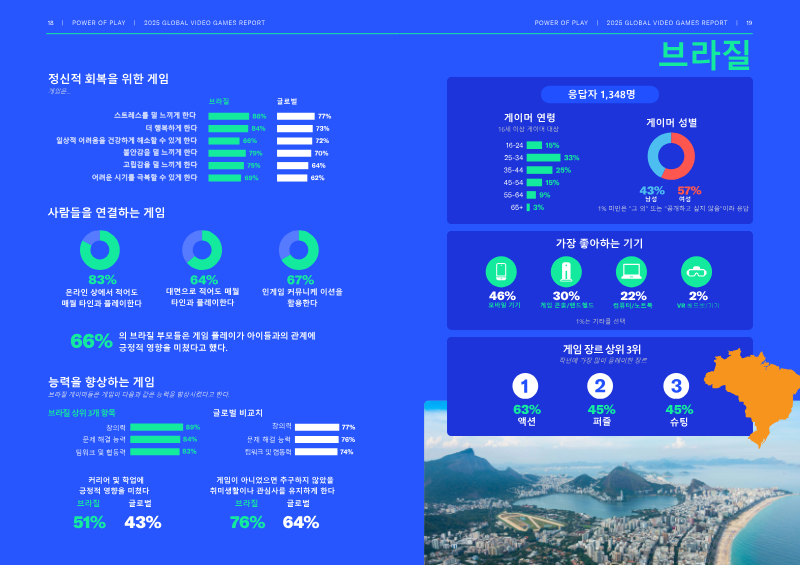
Video games have evolved into a fundamental cultural and social phenomenon that extends far beyond traditional entertainment.
- The report analyzes data from 24,216 gamers across 21 countries to establish gaming as a primary tool for mental well-being, stress relief, and mitigating social isolation.
- Mobile devices are currently the most preferred platform for gaming, driving widespread accessibility and consistent social interaction.
- Gaming is increasingly utilized as a professional training mechanism in high-stakes fields, specifically medicine, aviation, and emergency response.
EA Goes Private and Playstation State of Play Review | Roundtable News | 369
The gaming industry is undergoing a fundamental structural transformation characterized by a shift toward private equity ownership and a retreat from experimental development.
- The potential acquisition of EA by a consortium including Saudi Arabia's Public Investment Fund, Silver Lake, and Affinity Partners is valued at approximately $55 billion.
- The gaming industry is experiencing a significant shift in development talent and cost efficiency, with Asian developers increasingly producing high-quality, competitive titles that challenge the dominance of Western studios.
- Major publishers like EA are facing intense scrutiny regarding their lack of recent hit titles and the ongoing impact of widespread industry layoffs on their workforce stability.

An oral history of how PlayStation 1 conquered Europe
The PlayStation 1 achieved dominance in the European market during the mid-1990s by fundamentally repositioning video games as a sophisticated lifestyle product rather than a niche hobby for children.
- By mid-1996, the PlayStation 1 achieved an 8-to-1 sales lead over its primary competitors in the United Kingdom.
- Sony successfully repositioned video games from a niche children's hobby to a sophisticated lifestyle product targeting the 15-to-30-year-old demographic.
- The company utilized a decentralized operational model that empowered regional teams to execute 'global localization' strategies tailored to specific European markets.

How Balatro Became a 7-Million-Copy Indie Hit | Harvey Elliott, CEO of Playstack
The success of the poker-themed roguelike Balatro, which has surpassed seven million units sold, serves as a primary case study for a publishing model that prioritizes niche community engagement over mainstream marketing.
- Balatro has achieved commercial success with over 7 million units sold by prioritizing niche community engagement over traditional mainstream marketing.
- Publishers can scale resource-constrained indie titles by focusing on games that combine an immediate, compelling core loop with long-term strategic depth.
- The publishing model for Balatro relies on organic discovery through social media and specialized forums to reach target audiences without aggressive, short-term promotional spending.

Pokemon BDSP: Play Like A Designer Episode 3, Onward to Oreburgh!
Pokémon Brilliant Diamond and Shining Pearl exemplify a dual-layered design philosophy that balances broad accessibility with significant mechanical depth.
- Pokémon stats are not universal; different species level at different rates, meaning a single level-up provides inconsistent stat growth across the roster.
- Combat buffs, such as those from 'Power-Up Punch,' persist across sequential battles until the Pokémon is swapped out, allowing players to stack advantages against multiple opponents.
- Move categories are distinct from elemental types; physical attacks (red burst icon) and special attacks (blue circle icon) are determined by the move's classification rather than its type.

Market Update: UEFN Monetization, Meta’s Vision, and the Future of Consoles
The gaming industry is currently navigating a period of structural transition, characterized by a shift toward platform-driven economies, hardware innovation, and evolving financial models.
- Epic Games is expanding UEFN monetization to empower creators, though the long-term impact remains uncertain regarding whether this revenue is truly additive or if it cannibalizes existing Fortnite store spending.
- Meta is prioritizing an entertainment-focused strategy for its hardware, exemplified by the $799 price point for its latest AR glasses, which aims to attract early adopters to build an app ecosystem despite current limitations in user comfort and content depth.
- The gaming investment landscape is shifting toward specialized financing models, such as UA (user acquisition) financing, which allows companies to raise capital specifically for scaling growth rather than relying solely on traditional equity rounds.

Borderlands 4 Leaks on Consoles, Stan Lee’s AI Ghost & What is Prior Art? | Games For Breakfast
The current gaming landscape is defined by a growing tension between corporate monetization strategies and consumer trust.
- Nintendo is attempting to disqualify game mods as prior art in its legal dispute with Palworld, a move that threatens the legal standing of community-created content.
- Microsoft has increased Xbox console prices despite a weakening hardware value proposition, reflecting a broader industry trend of permanent price hikes driven by macroeconomic pressures.
- Developers are facing significant backlash for aggressive monetization strategies, including day-one DLC and forced repurchasing requirements seen in titles like Escape from Tarkov.
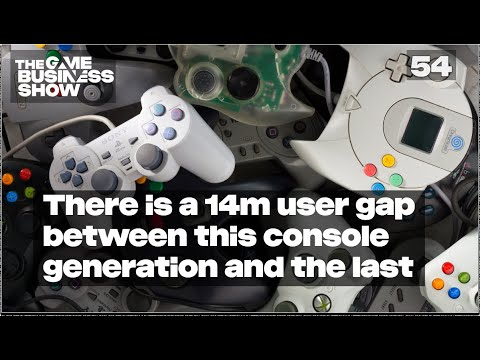
Are video game consoles in trouble?
The video game industry is currently undergoing a structural transformation characterized by the erosion of the console’s status as the primary gateway for new players.
- The console is losing its status as the primary gateway for new players, leading to a decline in unit sales and a demographic shift toward an older, more affluent consumer base.
- Younger demographics are increasingly migrating toward accessible, casual platforms like Roblox, effectively pricing them out of the traditional console ecosystem.
- Major publishers are shifting toward multiplatform strategies that prioritize PC and mobile distribution to ensure long-term viability as the hardware-centric business model loses dominance.
Why Warframe (and Other AAA Shooters) Struggle on Mobile
The mobile gaming market presents significant challenges for established PC and console shooters, as evidenced by the performance of titles like Warframe.
- The global games market reached $188.8 billion in 2025, a 3.4% year-over-year increase, though the mobile segment is experiencing a slowdown in the Asia-Pacific region.
- While the number of paying players rose 5% to 1.6 billion, the average spend per payer is declining, forcing developers to navigate higher user acquisition costs and shifting monetization dynamics.
- Porting complex, hardcore shooters like Warframe to mobile has proven ineffective, as these titles often fail to achieve market fit or the necessary polish when outsourced to smaller studios.
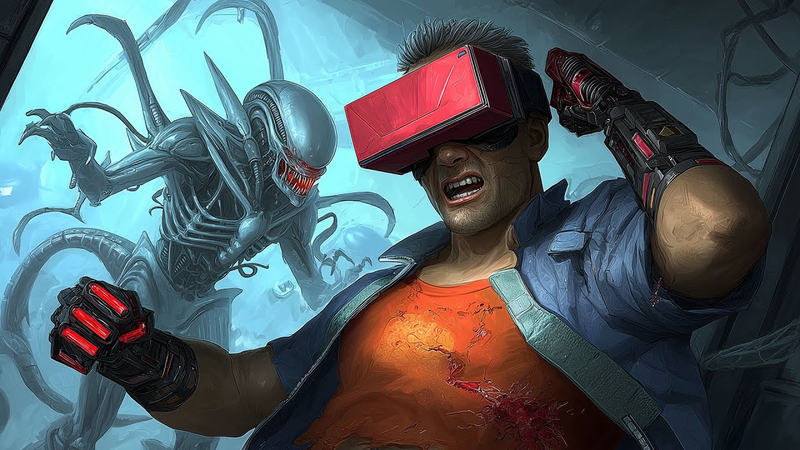
Alien: Rogue Incursion | Bridging VR and Flat Screen Experience with Ross DeVito | 366
The development of Alien: Rogue Incursion represents a strategic effort to bridge the gap between immersive virtual reality and traditional flat-screen gaming.
- Adapting VR titles for flat-screen platforms requires implementing subtle aim-assist trajectory modifications and recoil curves to replicate the immersive feel of VR movement while accounting for the higher precision of mouse and keyboard inputs.
- The development team for 'Alien: Rogue Incursion' utilizes in-house 'flat screen' (FS) terminology to distinguish non-VR ports from native virtual reality experiences, focusing on optimizing gameplay for traditional console and PC hardware constraints.
- PlayStation 5's DualSense controller features linear haptic motors that function similarly to audio speakers, allowing developers to map sound waves directly to physical vibrations for enhanced tactile feedback.
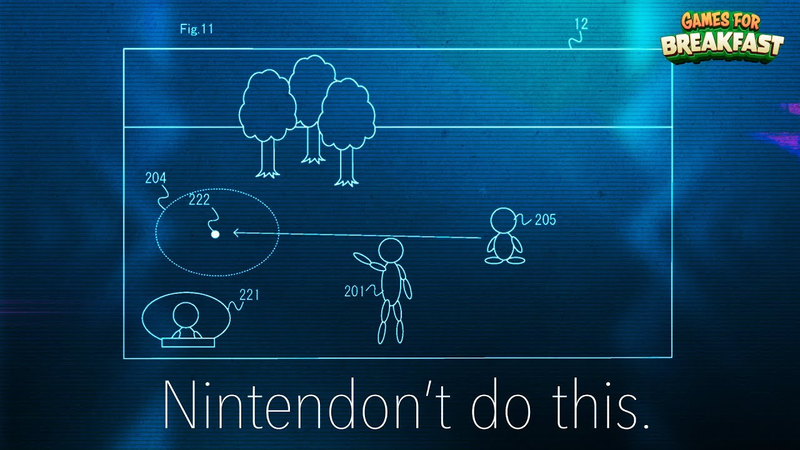
Pokemon's Patent Problem, Virtual Boy Returns, and Borderlands 4's PC Launch | Games For Breakfast
The contemporary gaming landscape is currently defined by a tension between legacy preservation, aggressive monetization, and the disruptive influence of emerging technologies.
- Nintendo is facing backlash for aggressive monetization strategies in the Pokémon franchise, specifically the use of subscription-gated content and time-limited competitive seasons.
- Nintendo has secured a broad U.S. patent for core summoning mechanics, raising industry concerns that the company may use the filing to stifle independent developers through litigation.
- The PC launch of Borderlands 4 suffered from significant technical instability, serving as a prominent example of the risks associated with releasing underbaked software.

What Does it Mean to be Indie in 2025? | Design Club
The definition of an independent game in 2025 has shifted from a rigid classification based on financial independence or team size to a fluid descriptor of creative philosophy and operational culture.
- The term 'indie' lacks a singular definition, but is most accurately described as a developer-led studio that operates independently of a publisher's authority.
- Budget and team size are unreliable metrics for defining indie status, as small teams often rely on extensive external support from contractors, localization teams, and platform representatives to ship their games.
- The 'indie' label has evolved into a genre or aesthetic tag, leading to confusion where high-budget games with specific visual styles are misidentified as indie, while some small-team projects with massive funding or corporate backing occupy a gray area.