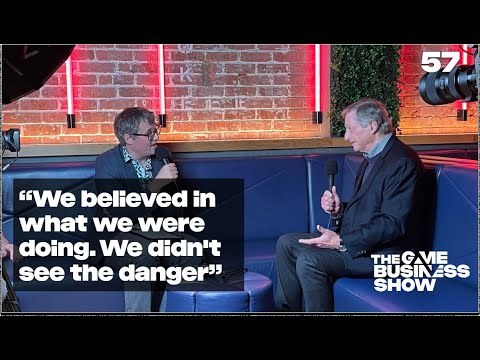
Transcript
That was a challenge like oh my god we don't want to embarrass Sony.
I don't think you can underestimate the influence on the brand of Wipeout. That fed a lot of what made the initial launch of PlayStation so cool. Without sigosis it would be very difficult to see how PlayStation would have understood the market for video games correctly. I was under no illusion that we were going to crush Sega. Hello and welcome to the game business show with me, Christopher Ding. We are celebrating the 30th anniversary of PlayStation in Europe. And we're here at an unofficial party to celebrate that. And we have some proper PlayStation legends here today. People that launched the PS1 in Europe, including the likes of Chris Dearing and Jim Ryan. We're going to be speaking to as many of them as we can to find out their own experiences of launching that first PlayStation machine. If you are a paid subscriber to the game business, we have an extended version of this video. So, please do watch the extended version if
you want to hear all the unedited interviews. If not, enjoy what we have here for you today.
I am joined by PlayStation royalty in the form of Chris Daring who ran PlayStation Europe at the launch of PS1.
How you doing?
I'm doing fine, thanks. Now Chris, I know you were part of the Sony empire already when PlayStation came calling, but uh although you'd worked in Europe in the past in other roles and you worked with European retailers, you weren't actually in Europe at the time, were you?
It became evident that there was something cooking in the game space.
And I done a little bit of distribution for Nintendo and Sega cartridges as part of a, you know, distributed line for the video company RCA Columbia International Video. So Sony said, "Hey, would you like to get involved in PlayStation?" And I said, "Yeah, that sounds great to me." And they said, 'Oh, that's good because you could live, you know, I was working in LA at that time. They had moved us to
there. We've been over in Santa Monica. I said, "Well, what about Europe?" Was they said, "Well, you know, Europe's small by comparison to the US." And I said, "Yeah, yeah, but I mean I can do the US, but really I don't think there's any other people could do Europe better than than I because I know how to get product into retailers in Europe." I think that Nintendo and Sega have been using distributors who played games with each other against each other, cross shipping, and didn't have a,
you know, consistent marketing image, marketing strategy, communication strategy. So anyway, they said, "Well, okay." Uh, and I said, I tell you what, I think we can be as big as the US, you know. Oh, wow. And and uh
so I said, if we're not as big as as the US in 5 years, then you can make your decision after that. But I know, of course, I didn't know we'd even be here for 5 years cuz we hadn't launched yet.
But PlayStation was the new kids on the block, right? You mentioned Sega and Nintendo. They were the established um powers in the water. So, what did you
see as the biggest challenges, the biggest obstacles to getting it established?
Well, I saw it as an opportunity. Of course, we didn't know if the market was big enough for all three, but the market had been even in the US, you know, the Nintendo had a a big initial run and then Sega came along with the Master System and Mega Drive.
Uh, and and so the the market was not totally unified. You know, there were big players, but there was space. Technically there was space and I felt that Sony would a lot of credibility to the concept of a console in Europe because in Germany in particular consoles had a bad image. They were seen as bringing those arcade machines from the funny places down by the train station
in the home. And the parents were really quite concerned about not letting other parents see a game machine under their TV.
Yeah. So that's why for example Game Boy went so big in Germany and and you got a
similar kind of thing was happening in Korea too you know anyway I thought Sony would help overcome that that that barrier to expansion. I also felt that
the positioning of the game machines especially Sega was mostly you know sort of rock and roll uh pirate radio
um not for everybody um and probably not for the smaller kids. And so I felt that Sony would make the console legitimate for smaller kids and for product categories that weren't just uh driving, shooting, and and uh and arcade type games. So
I was I thought it was that was going to be an opportunity. The challenge was really just you know I would say muscle in but come in as a as a new new refreshing way to think about consoles and we didn't know how the console would be received. We know that the first year
did very well in Japan, but that was Japan, you know. So, uh there was some uncertainty and try to predict how it would go and how fast it would grow and how many units would be sold and what the ratio of software to hardware would be. And I think uh the first plan over the three years was over 3 years we were going to do maybe I think 3 million units of hardware and maybe 14 million units of software and I said wow
seemed like a lot when you don't when you're not selling any you know so that was the challenge like oh my god we don't want to have
we don't want to embarrass uh Sony and we don't want to you know disrupt the market in an unfavorable way But it was mostly just get on with it. You know, we luckily I had some contacts in the countries around, not just the UK, France or Germany. So
I had thing I had people I could call
right away.
There were people in the company from Sony Electronic Publishing and which was you know sort of run under Snosis.
Mhm. And that was a big advantage to having that let's say relationship with how to manage the relationship with public with de developers.
Mhm.
And manage a relationship with licensed product or second party product or even third party product in a way. Um, and so we had it was a small but mighty team and it was just around the corner down here in number 13 great Marbor Street.
And it was uh we we had about 9 months uh you know when we started the original planned launch date was September 9 to go out the same day as the US.
Yeah.
Uh and we got down to the final wire. you. There was understandable little snags in terms of the PAL system because we were different TV, a different chip.
And uh some of the games were a little bit late and we were just setting up all the distribution in all these countries. It wasn't just one country like the US market.
So we ended up uh delaying it for 20 days. But I mean that wasn't really too bad considering we you know instead of the 20th we or the 9th we went to the 29th.
Yeah.
And I remembered like it was yesterday you know and we went down on Kingly Street to a little place called the two floors which I think is still there. It wasn't until about a month ago and we had a little celebration and it wasn't a big you know big blast of a party. It was like well got out you know
um and then we had some parties after that but I mean uh that that was you asked how did it start that's how it started
some of the marketing at least in the UK was quite edgy at the time was that was that was that did that go down well with Japan that was quite I always got a different impression of Sony
well I knew about it you know it was a
pirate t was a pirate radio you know and and the US had a very edgy positioning. Um, I wasn't afraid to be adventuresome. I wasn't afraid to be challenging, but I didn't want it to look like it to parents like it was not for all ages and it was not for the girls and as well as the boys. So, we I wouldn't say we deliberately stayed away from that edgy positioning. We had some edgy kind of ads, but um it's we just the the the brief we gave to Simons Palmer, which was the ad agency at the time, is to make it um aspirational or, you know, almost seductive, you know, and and they came up with this uh
it was cool, I think.
Yeah. that it it it it was a place not the anti-placist society against
PlayStation sap
and they were basing the whole positioning on this movie back in the 50s or 60s called griefer madness
and it was trying to tell the kids that they were telling the parents that it was like a drug and they it was going to twist their mind and they were going to be addicted
but it was all done in in in a light-hearted way
and it had the Sony name and we went out with a game called Mickey's Wild Adventure with Mickey Mouse and it was it had a little movie at the beginning of it.
Yeah.
From the original Steamboat Willie and it just had kind of a retro feel for that for the parents and um so from the beginning there was
there were products for the Nintendo kids.
Yeah. Yeah. Why do you think PS1 won over Europe so it's still is PlayStation still king in Europe. What was it about that and what you did that won over the market? Well, I mean, we had we didn't have the best uh first party studio group. We had very good first party group. It was small. There was a couple
in Japan, which one was Polifany, which became a a monster company.
Their first game was Moto Tune Grand Prix. It was like a little Mario Kart
2D. Uh we had I would say the we were able to show the benefit of uh CD sound which had been available I think in the 3dio or a couple of other systems but you know uh so we could have real soundtrack you know not just bleeps. Um, and we had two or three tent poles that made it uh stand out and one was Snosis Wipeout, you know, which was fantastic. Another was a Snosis version of Formula 1.
Mhm.
We had good support from EA and and but I say the real drivers in the very first year or so were the Snosis titles which included Destruction Derby.
Yeah. and the Mickey's Wild Adventure and Namco, you know, Tekken. We we didn't really have any big Japanese products in Japan. They had Final Fantasy, but and we did eventually do quite well with Final Fantasy, but that wasn't
a console product and it wasn't as well known at the time. And the next thing was that we Ken Kuragi and Phil Harrison who was involved with us at the time uh both recognize that we should be friends with p developers and not enemies enemies. Nintendo and Sega has always treated the third parties as a you know reluctant partner. The the their own studios were always concerned.
Yeah. Eventually our own studios got a little bit concerned too, but you know they they demanded minimum orders that were much very high pay upfront. uh they they were slow to slot the
releases in of the third party products and we took the other other approach was to be friendly and welcoming and and considerate of uh what we call third parties or licences including the big ones like EA and and especially Ubisoft the European one.
Mhm.
There were some around the UK and then of course Cumra came along.
Yeah. Yeah. So eventually, you know, we we had a little crank of the of product scarcity or diversity. We didn't have at the very beginning, but by the second Christmas, which is 1996, we had the bases covered. Well, I think we were able to tap into the culture and the creative mindset and the user base of Europe that we're used to products being developed in Europe, especially developed developed in UK, but some in France, Rayman, etc.
and some in Germany. So, we serve we served the European market like a company that knew what they were doing in the European market.
Yeah. You felt like a European company. I always felt PlayStation felt like eur I think in America it felt like an American company in Europe it felt like a European company in Japan it felt like a
I don't think it was PS1 but I the one thing I really am happy that we did was go off of the Champions League uh sign boards
and I think they're still doing it. I had experience with that marketing concept at Gillette which was basically American company but doing 60% of its business overseas and the the US people in in Gillette said why are you spending all that money with FIFA you know because soccer football was just not a big thing but there's no better way to reach people you know like the Hinekin reaches of places others can't find
uh putting the name up especially in the early days was like the legitimizing
factor. We were up there with Heineken and Master Chart
and you got so many like Sunday Sunday morning newspaper shots with a goal being scored in the PlayStation name behind you know serendipity happens and and I think
that a combination of that and the relationship of the third party developers or publishers
and the distribution uh understanding and skill and and a lot of passion and and then in the UK Hey, we did some crazy stuff with Jeff Bendetting who
he will come. He will come. He'll tell me all about that. Yeah.
And uh yeah, Jeff had it was amazing, you know, and I even I credited him and Ray Maguire in the early days of, you know, setting the setting the tone. And you talk about edgy. We were pretty edgy.
Yeah. Yeah. They were pushing the
roach clips. They did
with a statement that said more powerful than God.
Yeah. Yeah.
I'll ask one more question. Um, and if
you don't have an answer for it, that's fine. Is there something about the launch of PS1 or the thing of PS1 perhaps uh people might many people might not know?
Um, well, you know, one of the big features we had was uh the what we call IDO IDUs, interactive display units.
Mhm. they had existed to some extent with Sega but and Nintendo but we really um pushed that and with Jeff Glend Denning in particular we put those into a lot of places and that was one of the other big let's look like a real company and we had we had those IDUs or the display units which it's trial units in the store I was playing Richard Benson
um and where we really put them in was like in the chill out rooms of the rave clubs.
Yeah.
And that just got the word out. You know, there was an there was a very big underground aspect to launching the PlayStation, but it wasn't done on TV
with edgy ads. It was done on the ground shaking hands, buying drinks for the right people. It wasn't pola, but it was just out reaching out and and we were very lucky to have
the kind of people that like doing that. Yeah.
And we're anxious to work 24/7 to do it. So, it was a it was a team effort and and we were very lucky to have the team we had. I hired some of them, but some of them
just came along. You know, the the product was infectious.
Indeed. Well, thank you, Chris. Thank you so much for your time. I really appreciate your stories and enjoy enjoy the rest of your drinks.
I will. Thank you. Take care.
We have now Jim Ryan with us, the former president of PlayStation. Jim, I'm going to ask you the same question I asked Chris. Who are you and what did you do on the start of the PlayStation?
So, I'm a now an aging retiree. Um, uh, I left Sony 18 months ago and, uh, I'm loving it. Uh, but I I joined in 1994 in
July and it was, I guess, just a little more than a year before the launch um of the of the first PlayStation. Um, and my my title um was international finance officer. is a magnificent title. I I'm sure you'll agree. We had about 20 or 30 people in London, maybe a bit more.
Mhm.
But really very little in continental Europe.
Um and my job uh was to kind of build out the infrastructure in continental Europe. You know, we had a handful of people in France,
a couple in Germany, um, sister companies in some places, but my job was to form companies, find offices, dedicated PlayStation offices, hire more people,
systems, processes. So, it was um
buying the furniture in Germany, was it?
Yeah, you I probably bored you with that story. Uh, yeah. So, I mean, it was that that sort of stuff. And it was like um it's like a real real startup but without any equity the times. Was it
IKEA you had to uh
It was IKEA in Frankfurt. Yes. And we uh we we did have um serious discussion about whether we had enough money to have them come and assemble the desks or whether we would have to do it ourselves. But uh happily we we we came up with a few I guess it was Deutsch marks at the time and somebody was able to do it for us because I'm not very good at that sort of stuff.
Is PlayStation was the new kids on the block, right? there were no one you know what did you see when you came in as the biggest challenges or the biggest obstacles to to making it work? I think lack of no lack of experience. Um and there's you know we had a few refugees from Sega Nintendo um but a lot of people who had never worked like me who had never worked in the industry before
um and kind of faced with this um incredibly difficult challenge of bringing um a a new console, a new platform um to the European market in just over a year. And you know, Chris
Darren, who who you've met with, was amazing in terms of rallying everybody around and making a really kind of strong coherent uh team out of us all. And it was great. I mean, that year was was incredible. And one of the strange things was that, you know, we sort of built up to the launch and we spent a year, 15 months getting ready for the launch and then huge sigh of relief and parties when we had the launch, but then a realization that we hadn't done anything yet, right? We it was day one um and we had a zero install base, you know, a nice launch and lots of events and all the rest of that
but the real work lay ahead of us and we had, you know, five or six years of of then going on to um try and build something that was successful.
What did you think when you first saw it? So it was a secret project when you joined and then you finally see the product and
of the hardware or the software? Oh, I guess the whole thing it was.
Yeah. I mean the the software I mean obviously when you um Phil Harrison showed that um uh those Namco demos
ridge racer and uh and tech are just amazing. You never seen anything quite like it before. And at that point thinking h this could be pretty good. This could be cool. Um hardware came later and um I liked it but uh you know it was really the it was really the software that was most exciting. It's, you know what I love the most is when we we did an interview a few years, maybe it's about 5 years ago now, and I asked you what it was about PlayStation that's made it so successful. And I honestly your answer was a very obvious one, but I hadn't thought to me Paul. You said it was cuz it's cool. You said PlayStation is cool. And I guess it was from day one it was kind of cool. Was that always the strategy or do you think it was sort of a natural combination of all the things? I I think it was um it was a desire and an aspiration.
Whether you would use the word strategy, I'm not sure, but but certainly to make ourselves a bit different and to break out from the the kind of you know
position that video games had the time had at the time have been something oh something for children or or were perceived as been something for children. And I think we we wanted, you know, there was the the marketing, there was the whole Ministry of Sound thing, um, which, you know, obviously got a lot of, um, a lot of traction in the media. Um, and and I think kind of taking the position of gaming from something that was perceived to be in the kind of 8 to 15 year old and taking it to 15 to 25 year old. I think that was a big part of our success.
What do you think it was about PlayStation though in for Europe? because it obvious it really dominated in Europe and I know you ran Europe for a while. What was it about the brands or the games or the the PS1 that really won over uh the continent and UK?
Maybe because we were new, but we paid um we paid attention to Europe in a way that I don't think um any of the incumbents did at the time. practical things like localization, you know, localizing games into European
languages, Italian, Spanish that often hadn't had it in any real meaningful degree before. Um, so I think that was a part of it. I I think our marketing seemed to resonate. you know, a lot of the marketing that other people had done was were simply an extrapolation of a global campaign where as our campaigns, as you know, were campaigns that were developed in in Europe for European audience.
Um, and I I I think Europeans appreciated that. We also had strong local presence. you know these companies that I set up by the people built on um and but very very strong um local distribution presence in UK, France, well UK obviously France, Germany, Italy, Spain, Benelux, you know, Austria, Switzerland, Ireland, the list, Scandinavia, the list goes on and on and on and nobody else had that to that degree at the time.
It was obviously so big in Europe. It was a huge thing in Europe. But didn't you tell me once that Ken Couturagi wasn't always impressed with what you
were doing in
Well, yeah. Yeah, he kind of struggled to understand some of it, I I think. But at the end of the day, Ken is a very smart
Yeah.
smart guy and he just kind of look at the results and um you know, realize what we were doing relative to other people at at the time and think, well, you know, I might not understand it.
Um but
he found it inefficient.
Yes. Yeah. Well, yes. Yes. But, you know, the nature of Europe is that it's kind of different and a bit inefficient and you've got to um
uh and it was even more inefficient in 1995. You know, different currencies, different VAT. I mean, it was on and on and the list went. It was uh it was tough then.
What do you think were the defining moments in those early days of PlayStation in terms of making the PS1 really become the console everyone had to own?
Uh I I think you know having a successful launch was
um obviously important. Um, I would say that games like Tomb Raider and Resident Evil were were really, you know, the It's one thing to have a marketing
aspiration to appeal to 15 to 25 year olds. It's another thing to have real substance behind that. And I think games like that, which were massively successful,
um, really kind of, you know, put some, um, substance behind, uh, what what we were trying to do. Who are you and what did you do uh at the birth of the PS1?
I'm Juan Montes. I was the general manager uh VP for development uh internal development and third party development. And I was a producer employee number 23 hired in 1984. I worked on everything from the first seven years of PlayStation and ended up signing Guerilla Games and Evolution Studios. Oh wow. So, and also just a couple of sentences, what were you doing before PlayStation?
Before PlayStation, um I was new to the games industry. I was working for in the database uh industry uh for a company uh that are competitors to Oracle. So, I was a great learning you know coming
into the industry for me. So, uh, I did a degree in biology and then got a job, uh, in Virgin Mega stores or actually Virgin Video Games as a training manager and then, uh, Phil Harrison was working at Mindscape at the time and I did a promotion for Wing Commander 2 and he came down with it was Richard Garry actually was playing it in the store.
Oh, wow. And uh I could tell Phil thought I'd done a good job. But at the time I thought, who is this guy? And why would I work for him and then 18 months later, I think he might have even less, he got hired as uh director of development for PlayStation. And I think he wasn't even 21. So I wrote him a letter and hand delivered it to Soho Square, which is where their offices were, and he gave me a job.
So I was I went from basically retail with no experience in development to the producer. Wow. So what did So let's go back to the start. PlayStation is what did you make of the what was your first
experience of PlayStation? What was your first uh the product? I can tell you my first experience. So when I the first day I went in, Phil took us into his office and there was uh a machine that looked like a fax machine. If you can remember what those are, kids.
Yeah. uh and uh he showed us the PlayStation demos which were very technical but at the end there's the famous dinosaur demo
which Jurassic Park had just come out of the time so it was I just remember thinking this was absolutely mindblowing and I can't believe how lucky I am to be here because I knew how revolutionary the machine was even though at the time you know Sony's reputation was like nothing And a lot of people in the industry were very dubious about us. Uh particularly, you know, when I joined, it was actually still technically SEPL, which just did a basic a load of cartridge dross. And people at the time
were very dismissive of our chances against Sega and Nintendo.
Yeah. But it was a cool, it was just a cool console, right? And the games were cool. It wasn't just the marketing that was cool. It wasn't just the positioning of the tool. The stuff that you were making and putting out and and signing were cool. Was that but was that deliberate or was that just the culture?
I don't think you could underestimate the influence on the brand of Wipeout. Yeah. Uh so it was a cool game, but don't forget it was actually incredibly hard to play initially. It was not an accessible game, but the look of it, the graphical design and uh the music
that fed a lot of what made the initial launch of PlayStation so cool. And if you look at some of the people you probably already talked to like Jeff Glen Denning, they really leaned into that and that trying to position this as not a kids machine, which is what Sega and Nintendo did was strategic. Uh but I think, you know, it was organic. I don't think when we started out they knew how
they were going to position it. I think that just became if we looked at a lot of the original products that made that product cool, they did actually come from Snosis. Was there anything you didn't like about the PlayStation from a development point of view? Was there anything that you were like, "Oh, this is a this was challenging." Well, compared to Sega's machine, it was very very easy to program. And I don't know about the Nintendo 64 because it came out so late. But you know the thing about it was designed by engineers, right? So Nintendo is a toy company. I don't know what the background of sus. I guess it's point up as well, isn't it? These people who designed PlayStation were hardware engineers and there was a there's a guy still working at probably Sony still now Colin Hughes who was an hardware engineer and it's just a very clean well-designed piece of hardware and software. So I don't think I don't I don't remember any complaints and
I think something terri important uh in the design philosophy at the time was trying to bring the experience of the arcades you know 30 years ago arcades you know were everywhere. People used to spend time you know playing arcade. So to have uh PlayStation one the technology be able to bring arcade game like Ridgeer like Tekken and be able to play at home that was quite a big you know part of the the whole thing which distinguished you know compared to other platforms. Um, yeah.
Okay. And I just want to give you one anecdote cuz it's one of my f So at the original uh PlayStation developer conference, Terry Takanaka, who at the time was the head of PlayStation,
differentiated uh Sony from Nintendo and Sega by saying uh PlayStation is inexpensive, tasty, and locally available like McDonald's. So if you imagine the cartridge costs of a Mega Drive and Nintendo were enormous, I think the turnaround time was something like 3 to
6 months. So if you had a success, you you would take you 3 months to reorder it. And then you know they weren't Sony was the first company to really embrace uh glo they call global localization which was every territory was responsible for marketing the product and in Europe I mean um I think Phil once said in most c companies Japanese companies Europe was there be dragons whereas we had individual territory heads
working directly with retailers who were the lifeblood of the industry and They made PlayStation cool cuz they told their customers that came into those stores, the sort of stores I used to go into when I was young, that this was the cool console.
What are your abiding memories from the launch of the PlayStation, particularly right back at the beginning? What are your abiding memories of those early days? I think my be funny memory uh is probably uh initially meeting uh and talking with some of the uh Japanese
developers uh because initially we were relying on getting high quality games from Japan because the launch already happened there and getting good conversions uh you know for for Europe. So missing with uh companies like Namco, Capcom uh and uh you know those type of companies uh that was kind of highlight but in addition to the big companies and the big names uh at the time we also made with lots of different uh smaller companies. They're trying to be very creative, you know, diversify the portfolio and some of the game we saw, they're kind of really um different, some of them strange racing games, horse racing games, for example, fishing games. But it shows the variety of uh content, the the variety of developers, you know, looking at the platform and and investing uh effort into the platform. That was probably my highlight on the on the kind of early days of PlayStation one.
Yeah, I can't really add anything to that, but my overabiding memory of Sony was great games and great parties. It's always been
we had and it's legendary and I don't think they've ever been topped. Those first generation PlayStation parties who are legendary, we that's been the abiding answer to that question, bud.
Yeah, it really was. It was amazing. Um, ask one more question. Um, can you tell us something about that period or that time that perhaps people might many people might not know about the uh about the about that PlayStation? Well,
I'm sure uh other people might have mentioned it. You know, we had, you know, Snosis were an established publisher. Uh, they were not Sony Computer Entertainment. So, we had to build all our developer relationships from scratch
and we we had no reputation. So the reason why in the end we ended up establishing relationships with completely new developers was because we
had no other choice you know and um it was it was a real struggle at the beginning and the one story I would share which I I think is one of the best kept secrets is we almost bought Bullfrog Peter Molyneu's company
uh one of the producers there was a friend of Peter's and uh I remember sitting opposite him when he was having his phone Cool. And it Peter pitched Dungeon Keeper, a game that never came out called The Invincibles, which was a superhero game, and another thing. And uh at the end of it, uh we decided that it was easier and cheaper to buy them. And that's how they ended up being bought by EA.
Oh, really? I think um something that probably not many people can know is uh internally within development studios we were creating a football game at the time uh the technology was there it was pretty good and we were very close you know to getting the FIFA license ah very
very close and at the end you know we didn't we decided not to pursue it for you know having a good relationship with a third party, but we were very close to being in that space.
That sums up PlayStation a bit really cuz you were seen as the friendly face for third parties, right? Nintendo and Sega were not they weren't the easiest to work with. They had a lot of restrictions. They had their big first party studios that are really important and PlayStation were always seen as looking after their partners. I think it yeah that was down to a number of things. It was this global localization. So we had developer support in every territory. The Sega and Nintendo, you had to go to Japan.
Yeah.
And you had to have people who could speak Japanese. Uh but whereas we had development support uh in every territory.
Also, we didn't say no to things. You know, we had third party approvals, but that was largely to do with maintaining standards in terms of packaging and
making sure that the products could pass QA. But in terms of the actual content, we weren't restrictive. Thank you so much. I'll let you get back to your drinks.
You're Jackie Plumage. I
And you you worked at Namco at the time? Yeah,
I worked for Namco and I um I basically joined when my boss um Kevin Yanagara set up the um the European office in London. and I um basically was involved with everything um at the time with all the um PlayStation titles.
Everybody we've spoken to has brought up like Ridgeer and Tekken of being absolutely essential crucial games in that era. Um what was it like working with PlayStation? Did you know you were you were dealing with something that was going to become such an iconic? Yes, because when we when we first received the early versions of Ridger Racer and Air Combat and Tekken, which were sort of really um amazing recreations of the arcade versions, we knew we had
something quite special and that it basically was going to sort of blow people away when it was uh sort of released on PlayStation 1.
PlayStation were the new kids on the block though, right? They weren't they weren't Nintendo. They weren't Sega. They were new. I know that it would it wouldn't necessarily have been down to you to have signed those partners, but what what do you what made PlayStation such a winner in the eyes of uh uh yourself and the company?
I think because it was quite easy to convert our arcade titles to to um to PlayStation and I think we had a very close working relationship in Japan with Sony. Um so I think it it sort of
made made it sort of quite a winning combination I suppose. What was your abiding memories of those times? Boy, everyone keeps saying parties. That's the answer that we keep getting.
Um, well, I just think it was quite a fun time to be in the industry
when you saw the titles that were launched on PlayStation compared to the um 16bit um consoles. It was such a big
leap. So, it was quite amazing to work in the industry and also, you know, quite a privilege to be part of it. And um there were some amazing people that I worked with. So those are my memories really, the people, the games
and it was just quite an exciting time to be in the industry.
So I mean I was talking to Chris Daring was playing Tekken against Richard Branson in an event and then you've got you've got talks of people working through the night and at 6:30 in the morning, not because they had to, because they wanted to. It really felt like a really there was so much excitement around the uh the brand and the launch. And what was it like for you working with PlayStation from the sort of outside of it?
We were lucky that we had such good titles for the launch and we really enjoyed working with Sony and being part of the PlayStation launch um because I think Ridacer was sort of probably one of the lead launch titles.
So who did you work with directly? How did it work? Were you um
Well, I I to be honest I worked with all
sorts of people. So sometimes like we would have meetings with Chris Dearing. Yeah. Yeah,
we'd also um work with people like Doug Goodwin, Juan Montter. I work with all the product managers. Um so people like Caroline Stokes um who sadly can't be here tonight.
I wor with Jeff Den Denning who was amazing, his sort of energy and his passion for the games, but Caroline as well. And then I wor with some of the developers at Sony. Um some people on the development side. So uh a whole mix really. It was quite good that they had a lot of local I know they had you know they had people development teams and stuff all in every territory right so it wasn't like having to keep working with Japan or perhaps it was like with other companies
Sony um Europe didn't get involved too much with Namco Japan development there it a lot of it came through our office so um there wasn't a lot of direct communication I think it was more between Sony Japan and and Sony um and
Namco Japan
the marketing around PlayStation particularly in the early days was quite edgy, I guess, quite a risque. Was that something that worked for for you or was it something that that Namco was comfortable with and all that kind of stuff?
Yeah, it worked very well in Europe, but it also took a lot of convincing for Namco Japan to realize that the market in Europe was quite different from Japan. So, Namco um was perhaps, you know, bit more conservative. So sometimes we had to tweak things that Sony presented to us because they weren't going to be suitable for head office. So so there was yeah sometimes there was a bit of compromise.
So tell us who are you and what did you do uh at the launch of the first PlayStation.
So I'm Glenn O'Connell and I was the head of press at Snosis. So I launched uh Wipeout Derby and then the year laser Formula 1. was involved obviously with a lot of the PlayStation European launch titles and
Snosis obviously was a uh part of the Sony group although we did all the wet autonomously to the the overall Sony corporation
and I'm Alan Wellsman I was head of PR for Sony Computer Entertainment as it was then named and I joined Sony in August 93 2 years before PlayStation so I ran all the PR for the PlayStation it.
And where did you come before? Where were you before Snosis and PlayStation? I'd worked for a company called Accolades who were a games business for two years and they um they were bought by Ty Warner eventually and they yeah they did things like Jack Nicholas Golf and they did a game called Test Drive but it was kind of a hangover from the 80s early and prior to hypnosis I I worked uh for a small music company um and the job was giving out pre-release records to club DJs and radio DJs and interestingly some of the music artists that I promoted ended up being on some of the
soundtracks for Wipe Out. So, it was a nice sort of merging together of those worlds. Um, and and I think the the music role was all about relationships. Obviously, that extended them when I when I joined Snosis. Snos was so central to PlayStation back then, like those games, that company in terms of establishing PlayStation as a credible console was so important. Did you realize that at the time? how how what the role that you played or the role that Snosis played in PlayStation.
Yeah, I I think so. Snosis was acquired in 1993 primarily due to its sort of technical excellence. So, it was it was one of the early pioneers in CDROM technology and if you think before PlayStation, there was what was happening on PC and then some somewhat niche consoles, the FM towns coming out of Japan. So, Snosis had heritage and technical uh expertise, but what it also had was a a group of people both at the studio side in development and also in the marketing
who very much culturally, you know, understood what was happening at the time. So, the games that we launched were very different to the games that came out of Japan around the the PlayStation one European launch. amazing titles like Ridgeer and what Namco did and and other games. But we made games I think that very much fitted what was happening in the UK and Europe. And I think came at a time of just blending of uh of gaming moving from the bedroom to the living room about people who were you know interested in music and fashion and design who were all of a sudden becoming games players. And I think the Snosis titles very much spoke to that. And you know we we we came at a time we I think we complemented very well what else was coming out of uh you know established game developers.
So how did you find working with Snosis and the uh
well they don't they they definitely call the zygeist. It was kind of like post rave early ' 90s that you know that music exactly as you've just described. Wipeout is the epitome of that coming together of all of those things. I kind
of know Signosis more from the two founders who then went on to be the joint managing directors of Sony for two years. So they kind of if without Sriosis it would be very difficult to see how PlayStation would have understood the market for video games correctly because Sony was a hardware business and Snosis and Jonathan Leon who ran it were a software business. So you were coming in right and um PlayStation with the new kids on the block. Who is this PlayStation? There's Nintendo, Sega, we know who they are, but you came in and you won and we know what the story is. You won over Huts, you know, Richard, our producers at Gamesmaster at the time, won over uh Game Master, you won over Edge, all these big victories that you had in in PR, but before all that kicked off, what were your expectations? Do you feel that you were on to a winner or were you just hoping to hold on? Snosis were in an interesting position because we also looked after the uh a company called SN systems who did all the development
early development kits. So the very first PlayStation units we had were like you know a big giant PC on a desk you know it looked nothing like what the PlayStation became. So it was really just a a development kit. So I think technically I think the the people doing the development said this is a really powerful piece of equipment for whether we knew it would culturally you know have that tipping point and I think you know if you look at the early marketing that came out of Sony you know that society against PlayStation advert you know really wasn't what anything to do with what we were doing with the gaming and music that was that really didn't fit the European markets so well. It was almost this is being done and oh take this as well. So I think in terms of whether the tipping point came I think it just became a number of things that were happening culturally at the time the people who were making the game certainly at least from Sosa side you know this is what they lived and breathed you know these were people who listened to this music
wore the fashion went to clubs were interested in gaming probably had grown up playing 16- bit consoles but you know had this passion for making games for themselves and people like themselves. So I think that authenticity combined with Sony's coming into the market and and just really disrupting the market and not just accepting what had come before as what what the games business would become. But as to whether we knew it would become as big as it did. I I I look back and I think there was no real formula for us to the work we did. We we were sort of allowed to make it up as we went along really. Well, do the only thing the only thing and again to be fair to the games industry which has obviously been going on for a long time before that happened before PlayStation arrived is that you had so Sega in the UK had kind of started going into club culture and in the kind of underground and they'd done all right but as it happens in industry is the platform
business went up and then went down. So Sega kind of fell back down with the Mega Drive and then PlayStation came and it was the new kid on the block. So we had a chance to kind of renew that, reinvent it as you say. But there was a bit of stuff had gone on before because don't forget it's just a simple matter of demographics which is the young kids who played Nintendo when they were 10 were now 18 or 20. And so now they were playing games and still wanted to carry on but wanted to be treated like adults when they were doing this. So that was kind of I think what we all did is we reflected as they grown and chose. What do you think were the defining moments or the defining characteristics about PlayStation that won over particularly Europe and the UK?
My take on that would be that uh so first of all don't forget it launched a year earlier in Japan. So you had the kind of tsunami that came over from there because it was majorly successful in the first place. And then I think though that we did go for that younger
we made it a lifestyle brand. We didn't go for a gaming brand. We tried to make it a brand. And again, if you'd have made it a Sony brand, it wouldn't have worked. PlayStation was distinct in its own right. And that meant that you could build that brand in a world that exactly as saying, a world of flubbing and just the culture that was going on at the time. So essentially that changed everything in the way we did that. The precursor to that was definitely the marketing guys of Sega who had done a bit of that, but we kind of took that on and made that a mass market thing. He I think for both the work we did as Snosis and Sony, you know, we took games to people who historically perhaps had not and there might be interesting games, but they hadn't really been marketed to but I think there was an back that authenticity I think culturally at the time what was happening in a country was being replicated by here is here is a here's a games console that you know you don't have to hide away in the room. Uh
because PlayStation one looked still looked like a toy, you know, the color of it, everything else. So, it didn't look like the high-end piece of equipment that came later on, but the games on it looked much more sophisticated. So, if you think of the things that you listen to, the music, well, that was also appearing in the games you were playing or later on some of the early the early sports like Formula 1, which we did, you know, the commentary on that game very much was what you were listening to on television. So I think it just appealed to people's interest in general entertainment. Um and I think the at the time the you know the the the media landscape at that time was you know it seemed to reflect very well as to what was going on in the country. Um, I definitely think from a UK point of view, all the work we did and Allan and his team and Sony did very much set the set the benchmark for Europe as well because I think, you know, Europe perhaps culturally wasn't the same as the UK, but people whether France,
Germany, Spain, Italy were looking what was going on culturally in the UK and I think some of that marketing then carried on into those countries.
I played Wipeout in the 90s but I played it on the N64. Yeah, let's talk about that. What the is this going doing?
Well, there was an E3 incident as well. Um, I I think Snosis, whilst very much aligned alongside Sony, pretty much ran as an autonomous company. And I think that was that was down to the founders. So, from from Ian Hedrington and Jonathan Ellis were very much, yes, we're now owned and acquired by Sony Corporation. And obviously they did a Sony electronic publishing sort of senior Imagine roles but loved the independent spirit. So Snoses as an independent spirit almost was allowed to carry on. So I think we carried on making games on other platforms. I think you know the first two wipeouts principally were on base station but you know they appeared on the Sega Saturn
obviously then appeared on the and I don't think that was so much of an issue for Sony but certainly at one of the E3s when it also appeared on Nintendo
it just arrived on the booth and I think there was some uh some uh faces who came and said
what's going on here because I think at that time but but that was pretty much that was probably the third year so that was a couple years after PS1 launched Um, but again, I think that was down to Snosis managed to retain an autonomy to make the games he wanted and put them on some other platforms. Um I think that was just down to the the the as I say that independent spirit that the company had really
which was good and bad because in some ways it you know some of that work later on perhaps became why Snosis changed and you know ultimately at the back end of the PS1 life cycle you know the publishing side of Snosis pretty much disappeared. So I think there was lots of great at the beginning but that Maverick spirit perhaps also you know
pray to some challenges later on with within the wider Sony group.
Ah what were you let's go back to the PS1 launch though and what what would you say is your abiding memories of that time? What is your what what what do you what what when you think of that era what what do you remember and what would how did you feel? I mean for me it was being able to go and see games in places that you historically had never seen. So, I remember giving a Japanese PlayStation to my local HMV store and for people who would just come and just want to see what it was all about, you know, who who perhaps walk past games and never had an interest before. So, all of a sudden, you know, not just a games console, but also what was coming out of that console. the fact that it looked and sounded like something that was just, you know, cinematic and but it culturally was also fitting into what was going on in the country at the time. So to me it's just being able to to to to talk to people about working in the
games business as well and actually not almost not apologizing for working in the games business of people being very proud of here are things that you know you are being made for people like you and your friends and and and I think that would that to me was you know um a really powerful positive introduction which obviously was built on by you know many other games companies later on me. Yeah, I've got a good line font.
What what did happen was that gaming used to be regarded as a nerdy activity and suddenly gaming became from a nerdy activity. So all the research that we were doing into it, it was regarded as nerdy and then the issue became no, it wasn't any longer nerdy. It became part of cultural, you know, cultural landscape. But what happened was that people then were very scared that they would play and they'd get addicted and they wouldn't be able to stop. So you so we had to kind of address that as well. But it just moved out of a ghetto of gaming into a cultural thing and that was the and it had to get in.
I think again you have to kind of recognize our forebears there from Nintendo and Sega all through the years. Amigga, Atari going back for years and that made the difference. I think in a way it was all about the buildup to that that allowed us to then do the things that we enjoyed doing that hopefully made a difference. Look, you both worked in public relations in the '9s in video games. Now, I know there'll be lots of stories you will not be able to put on camera on tape, but are there any stories, particular pinch me moments, like do you remember that time Richard Branson played Chris During and Tekken? Those sort of stories that you can share with us? Yeah, I I I think if I remember what Cosus was doing, certainly some of the some of the jock around the you know the advertising and marketing that we were doing um you know it it was really because it just sort of landed in the marketplace and and I think I I think being able to take games into places that were almost quite dangerous
and like perceived as you know why are games in here and I think whether that be nightclubs where it could associated with, you know, alcohol, drum taking, anything. But all of a sudden, it was, you know, the audience who are playing these games are people who also enjoy other other things in their life as well. So I I think I mean I look back and I'm pretty sure that you know we we we were allowed to do a whole series of events and activities that corporately were probably not really being signed off and and maybe wouldn't be signed off today. definitely wouldn't but it was it was almost a thrill in the danger of taking gaming into places where
human
it was we we cared about what we were doing but we also because we lived and breathed it. It was like this is a natural place for it to go. So I say in particular whether it be I I think there was a lot of sort of frowns on why you taking games into nightclubs in
particular and I think obviously Sony did an amazing job with that. We did similar things where we did club tours with DJs sponsored by Red Bull, music artists, and you were the connotations at the time of, you know, nightclubs, evil, dangerous, drug taking, you know, all all the things that were going on. And we were inserting games into that place, you know, with with with um into quite a sort of dangerous sort of environment potentially. So, so, so that to me was something that because we believed in what we were doing and they were the places we went to anyway that we didn't see the danger of that. We just thought that's culture. That's that's what we're doing. There was a year where we were in Los Angeles staying at the Sunset Marquee. I'm a workingass kid staying in Sunset Marquee. Um, the first time I'd had Tequila Gold and on the Columbia Tristar studio lot and Phil Harrison, who I think you'll probably know, uh, brought out a special guest to, um, play on PlayStation at the PlayStation party at
wouldn't even have been E3 then. It was for CES. And I can remember waking up in the morning and thinking, why the did we get a Michael Jackson lookalike to come and play on PlayStation? And it was Michael Jackson. I love that. That was It was a great time. Right, Alan Alan Wellsman is heading back to the party. Goodbye, Alan. Have fun. Uh, but Glenn, before you go, what was that relationship like between Snosis and Sony? It sounds like there might have been some friction there. So, as I say, I think Snos acquisition with Sony, I think it was it was incredibly uh positive for Sony, but also there was friction. There was, you know, there was that ability to stay that independence. And I think you know Jonathan and Ian were very much you know the pioneering spirit that Snosis had had and built up I think they very much wanted that to carry on. Didn't want it to be sanitized by perhaps what might have come out corporately. Um so I think the you know Jonathan and Ian assumed
roles within this the wider Sony uh electronic publishing group but very much were you know were having constant battles to make sure that the work that Snosis wanted to do could stay independent and I think corporately they managed that they managed that very well but you know there's probably a lot of stuff that went on behind the scenes where you know Snosis was almost shielded from a lot of the, you know, having to jump through various corporate hoops that were set up set very early on. And I think that that allowed us probably to have that maverick spirit independence, which was matched by what some of Sony's own marketing did. Um, but I also think it allowed us to it allowed us to do things, take risks that perhaps Sony wouldn't. And I think corporately Ian and Jonathan very much, you know, stood their ground and and I think, you know, the games that Snosis did ultimately the success it had very much came down to them standing the
ground and making sure no, we will keep that independent spirit even if they're part of the group. Thank you, Glenn. I really appreciate it. Um, it was lovely chatting to you.
Who are you and what did you do with the first PlayStation?
Okay. Um, I'm Jeff Glen Denning. Uh I joined Sony Electronic Publishing in 1994 when uh we were basically distributing uh third party SNES and Mega Drive cartridges.
Where did you come from? Where were you before?
Well, my background is I'm a huge gamer, but also I worked in advertising.
Okay.
So when I came to PlayStation and I saw the PlayStation one, the NTSC, saw Ridger Racer, Arcade Perfect, I just got an epiphany moment. And I thought we can't be launching to 10 to 14 year old boys, which was the global positioning of PlayStation. um following very much the uh duopoly of Sega and Nintendo with their Mega Drive and Sness the 16 bit but with 32bit we'd
gone arcade perfect and the ability to create realtime worlds that led into the likes of Tomb Raider and Metal Gear Solid and uh and other such games that give you the freedom beyond arcades and I thought you know what this isn't just for 10 to 14y old boys you know I want to make games cool. Uh, you know, I was clubbing at the time. I was cynical about the over reliance on mass media to create brands, which was having come from advertising. I knew that was bollocks. It was just a way of basically rinsing your clients to spend millions on TV to keep ramming the message home. The truth was with the UK particularly that we had the rise of club culture. The UK in the '9s was punching well above its weight culturally around the world. Music, fashion, cult, everything, you know, but from rape culture in the late 80s to club culture in the early '9s, there were more participants within
club culture that if you put all of the other youth tribes of the 20th century together. So the mods, the hippies, the neuromatics, the skitter, every decade um youth culture changed the music, the fashion. But when we hit the late 80s and 90s, it almost stopped there. And 30 years later, people are still looking back for inspiration to the '9s. So we had an amazing product. We had Namco to give all that amazing arcade heritage of Ridgeer, Ballerina to Shinden, Tekken was coming along and then we had Snosis. Wipeout obviously wasn't in the launch styles, but the lineup was incredible. Even though there was a palpable concern that our Sega going to beat us cuz the Saturn came out literally 6 months before and they had virtual racer.
No, no, sorry. They had Daytona, Mega Bard, Daytona and Virtual Fighter
and we had like you know equivalent. Yeah.
Yeah. Yeah. And they had six months jump but they went down a very corporate route. Now during the whole of 1995 we had the NTSC version to demonstrate. So my job in the 1995 as marketing manager was on the back of a document I wrote called credibility for PlayStation which was we need to launch to an 18 to 30 year old market as a brand and be edgy and cool and with that positioning you will achieve a six to 60 sales range from the little kids who want to be their big brothers from the the the reflection of society in in the UK which changed where cultural influences were crossing over multiple generations.
Yeah. Talk about so tell us about some of the things that you did cuz I know I
know you there's lots of them.
So in 1995 I identified basically who were the key movers and shakers within youth culture. And if you talk about star press magazines like in those days there was like ID face loaded had a launch days interviews had a launch but above those if you think about a period of influence there were really obscure underground magazines that came out occasionally and they only had readerships of maybe five or 10 thousands but that readership were the most influential people within culture. They were the editors, the DJs, they were people, you know, and that influence of culture flows down from the opinion forms influencers down to the early adopters into what would be not the mainstream but the credible mass market. So I'd get people into the office continuously and I'd say, "Do you like video games?" They go, "No." I said, "Okay, check this out." Knowing full well that and they're all blown away and we give them free kits, you know, and they start going, "Well,
this is amazing. Can I get some slides cuz I'd like to do a spread just on the graphics. We didn't pay for any endorsement. It we had a culturally connected team in house. The fact that we had mates who were DJs and we were in that culture and Piper Day particularly who I hired from music industry was my wingwoman. Um, we basically connected with people, built relationships that said how can we work with you and support you, not just stick your logo here like a corporation, but actively looking to support culture, not hijack it. So, as I said, I don't like football formula one. So, we built a skate park. We have 52 nightclubs with PlayStation rooms in 500 nightclubs with visuals playing. Um, we did skateboarding, snowboarding, surfing, down and mountain biking, BMX, snakeboarding, break dancing, graffiti. I mean, we were absolutely and fashion absolutely
everywhere that as far as we were concerned was culturally influential that would trickle down to the mainstream.
Did that you must have run into some opposition from from Japan or or or were you or did you just sort of ignore all that? First we had grist steering al presidenti as a reflection of the respect he had within the Sony corporation that Europe was autonomous to America which is not the same now and Japan to a certain degree and of course back then sly computer entertainment Europe was everything that was in North America and Japan and within that start of environment in the UK Okay, having written that document to position PlayStation older, I was pretty much allowed to get on with it. And and I didn't give a I was on a mission to change the world. Not just to make games cool, but also demonstrate that
Fran by spending millions on traditional mass media advertising, but by creating word of mouth in the undergrounds. He must have got in a little trouble every now and again, surely. Yeah, there are certain things that are talked about and still talked about and one of those is probably I would say uh the perforated cards that we distributed outside nightclubs cuz back in the day I was with you know I I grew up in a very creative circle of people who were in music and fashion and all and it's totally natural for us ADHDers to gravitate towards interesting people and And the drugs of choice were very much just getting stoned. It's a creative drugs. So for me, I knew that people go out clubbing and you know, class Aside, they go home and have a smoke. They go, you know, and and you're always tearing up your Rizzler packets. Uh so I thought, well, let's do a
perforated flyer with 40 roaches on each card and have them distribute outside nightclubs. I did 1.2 million. And the fly company found up said that was the most successful flyer we've ever given out. We had people taking one, going away, coming back and grabbing handfuls to give to all their mates. And that was a little bit of a tongue-in-cheek nod that Sony was a bit unc, you know, unconventional. There were people at Sony that were connected and it was a bit of fun. So,
I'll ask one more question. What was your abiding memory of that time? What were your uh how did you, you know, particularly the launch of the PlayStation right at the start? I think perhaps that you know talking to Doug Goodwin the director of sales and I I asked him to clarify this situation in Dixons and he gave me gave me a great anecdote but Dixons in those days everything was high street retail
you know and the retail buyers were saying how much you spend me on advertising and that's that's almost like the symbioic relationships between
retail and hemorrhaging tons on mass media and Doug said that he had this meeting with the owner of Dixon's who was being insanely arrogant about the margin which Sony just couldn't deliver and Dixons felt that if you're a a consumer electronics products without Dixons you would have failed. So going into Christmas 1995 we didn't have distribution with Dixons but all the Dixons allocation went very quickly to everybody else. So, I think the overriding feeling going into Christmas when we launched on in September was that there was a palpable fear of failure, but I didn't ever have that sense of failure because we'd been working in the underground, you know, all year with the NTSC's and beyond. And the word of mouth, everybody was talking about PlayStation. The most culturally connected people within the UK culture were talking about
PlayStations. They were our mates. They were phone up going, "You can't believe we just had a meeting with these guys from this." They were talking about PlayStation. So, I was under no illusion that we were going to crush Seagga. And by April 1996 where we had that kind of mic drop moment of 199 whatever um and Sega we outsold them 8 to1 and Sega from there started to be delisted. So yeah I think that was my overriding memory.
Um thank you.
Will that do?
Yeah that will do very well. You've got you hit all the beats.
That's it for today's episode of the game business show. I hope you enjoyed our trip down memory lane. If you enjoyed these interviews, we do have an extended version of this podcast available for you to download at the business.com. You have to be a paid subscriber to get that. We'll be back with more news, analysis, and interviews into the video game industry in the days and weeks to come. Until next time, thank you for tuning in.
[Music]
Auto-generated captions from YouTube — names and numbers may be misheard.

















Comments