Transcript
Hello and welcome to the Game Business Show. This week, Nintendo reveals its slate for the next 6 months, and we have some market research on the popularity of remakes and remasters. Plus, our big topic for today, are video game consoles in trouble? To help me discuss all of this is none other than games journalist Fetch and the founder and reporter at Gamefile. It's Steven Tortillo. Steven, welcome back. Hi, Chris. Nice to be back. You were our first guest all the way back on episode one. We're now on episode I think 54 which feels
right
absolutely crazy to me and you know the the the king of England this week meeting with the president of the United States a big UK US summit just checking outside yeah that's going to be a very uh non-ivisive uh event and the currently here here we are the UK US joint
I see yeah oh yeah I see what you're going for that makes me Trump and you king Charles and I don't know how either of us feel about either of those comparisons
no I I think I might get um Yeah, I
don't know. I don't know how I feel about that either. Um um how are things going for you? I I hear you've got a nice you've got a very data edition coming up. Oh, yes. I love numbers the way you love numbers. And so, you know, what's better than us fresh recent sales charts, arguably old classic sales charts? Uh, I've been actually like an obsession of mine over the last month has been the fact that Capcom is has been publishing for about 25 years like sales data that's much more in-depth than just about any other company I'm aware of. And I've been digging through it and finding interesting things. And I'm essentially trying on GameFile um to tell the story of Capcom through data through um basically their game cells and charts. So, I've been making all these these these charts and graphs that hopefully people will enjoy looking at on GameFile sometime, I think later this week, and people can check it out. But one thing I found really interesting that um surprised me, but one of those things you you you used to know and then you forget about was how much more data there used to be from public gaming
companies back in the day. I imagine you can relate to this. I looked up the Capcom quarterly earnings from like the year 2000. And do you remember TRST lists? Do you remember Trist data? This maybe more of an American thing,
but they were they had this Trist data for not just themselves, their sales of how many copies of games they were selling in the in the quarter, but they had it for EA, for Nintendo, for Square Annex, for Namco, for Sony. And so the quarterly reports for at least this publicly traded game company 25 years ago included the results and the rankings of basically all of the big companies in the industry. And you know, you you don't even see companies divulging their own sales very transparently, let alone having a common resource and able to display it. So that was surprising. The other thing that that caught my eye is that Capcom at the time would list the projected sales for their games. So I was looking at what they thought they were going to sell in
terms of the number of copies of Dino Crisis 3 or Resident Evil Zero on Gamecube. And so they would say, "These are our projected sales per region." And then these are where our actual sales, you know, the next quarter. So that's not the main part of what I'm writing about or making these charts about. But I I found it just really interesting how much more you could know about a game company um a long time ago than now. There was a slight simplicity to it um back then because it was starters everything was about the games coming out that year. Like the games that came out the previous year, broadly speaking, they were in the pre-owned bins. It was it was over for those games. Um, so it was a lot more driven by, hey, we're releasing a game in a box. How many copies of these boxes did we ship and sell? Whereas now, although there is lack of transparency, and we talk I've talked about that loads, but I don't even know what the right data is half the time. Like I'm we've got we'll talk about this later when we get to the console information. I've got one stat and I've got another stat and but then there's another stat which undermines
you know it's it's with recurrent spending and long install bases but also active install bases and where those players and it becomes a it's a very complicated thing. I remember when we talked about doing digital charts, like the trade bodies would get me in and say, "Hey, what do you want from a digital chart?" And I said, "I just want to know how many units a game was sold. Okay, what about when the DLC released? Um, and what about the if there's games got microtransactions in it? Do you want a revenue chart and then you want a units chart?"
Right?
It just started to get very uh complicated, I guess. And that's why you end up in a situation now where we've got so many data companies giving so much information, a lot of them estimates. Yeah, there is a lack of transparency, but I think there's also a lack of agreement on what the right data is in in 2025.
Different data is probably also relevant to different companies in different ways, right? If you are the games division of Microsoft versus if you are a a more pure, you know, game company that's just, you know, you're you're remedy and you're living, you're publicly traded and you're living and dying by your own releases and your own
contracts, you know, to make game development. you have probably radically different priorities in terms of how you you know what per what what strong performance is and and how you deal with your costs and and factor in the revenue and what have you or if you're part of you know you're Sony and you're you have to answer to whatever the the corporate leaders want. But it's been really fun to to dig into the the Capcom data. I hope people will get a kick out of looking at sort of again the history of the company through its sales data. You get to see in some of these charts that I made, they've transitioned between them from them being a Street Fighter and Resident Evil company to kind of being lost in the wilderness a bit and then becoming much more of a Monster Hunterled company in terms of sales. The scale of success changes drastically. The the first top 10 sales chart I found that they were posting, their bestselling game was selling 6 million copies. It was Street Fighter 2. One of the versions of Street Fighter 2. Nowadays, historically, Capcom's 10 bests selling games of all time all have sold in excess of uh I think it's over 10 million units each.
So, the number one game from 25 years ago wouldn't have even been a top 10 game for them uh at this point now. So, it's just really interesting to to me, hopefully to to others, hopefully to you.
Well, it would definitely be interesting to me. I always love the uh I love those sort of charts. I get quite excited when I email like a Sakana or a GFK and say, "Hey, do you have the top 20 bestselling Dreamcast games or do you have like the list of the most successful Mario Kart titles in this country?" Yeah,
they get they get excited sharing that data as well. I think there was just a certain nostalgia geek there. I'm on a data forum and there's an entire section for old market data. But uh uh yeah. Well, um, so normally at this point we get into our big topic, but I did a reader survey recently and our respondents, well, it's it's one of those reader surveys where I can basically take the information however I want because it was so there was like lots of people wanted this, but also lots of people wanted this and um, but one of a couple of comments we got was there people that really liked
like the news roundup stuff that we do it normally at the end after the main
topic.
Brilliant.
So, I thought I'd switch it around do that first. And the one of the things that um this has just sort of come out today really there's a little a consultancy firm called MTM has done a survey and found that 90% of gamers have played a remake or a remaster. Um there were actually some fun stats on this. 85% of people have played a remake or a remaster when they didn't play the original. Um and again I think this might be something you noted Stephen with your Capcom piece you're working on and more people I believe bought the Resident Evil 2 remake than they did Resident Evil 2. Although I know there's a lot of different versions of the original Resident Evil 2. Uh, another fun confusing stat which sums up how difficult this market is. 35% of gamers feel that remakes and remasters are better when they change the gameplay or story. 30% feel remakes and remasters are worse if you make changes to the gameplay or story. And 35% agree with both statements. So it's
nicely distributed.
It is a delightfully distributed thing. Um, I don't know how follow the retro game scene. It's become more of a
professionalized a bit lately, I think, with um what Nintendo and Sony are doing with their subscription services and Atari of trying to build an entire business on there on the show a couple of weeks ago. Um are you a uh are you an active you you're you're of a you've been around a little bit longer than some people in the games industry. I I hope you don't take offense to that. Um um so are you a are you a remaster remake obsessive? No, I'm not. Uh just, you know, I'm fortunate enough to get access to most of the new games that are coming out. I have one of those fabled Steam accounts that where everything is available to me and I and I use that to the advantage of hopefully myself and and and the readerships that I'm serving in terms of I want to play what's new and have I guess maybe inherently a bias towards the brand new rather than the newly remade or the newly remastered. So I find myself often preoccupying myself with playing the next thing. I'm not replaying favorite games um from from you know olden times, but uh you know
there probably are games out there that if they announced a remaster I would be more excited about. I was talking to somebody recently about the Final Fantasy Tactics remake that's about to come out. I quite enjoyed the version I played on the the Game Boy Advance back in the day. I don't feel the strongest urge to play it over because I have a pretty nice memory of playing it back then and I have other games that I want to play. But then I was thinking in anticipation of the Nintendo Direct last week that oh, you know, there's a few Zelda games that I really liked back in the day, like the Game Boy Oracle of Ages and Seasons games that I would love to play a modern, you know, uh, you know, with all the user conveniences that might have been added into it. Kind of remake of of one of those Game Boy Zelda games in the fashion that they uh, the Zelda, was it? Links Awakening was remade for Switch not that long ago. So
even within myself, I am that pole, right? Where I'm like, I'd like a remaster, but then I don't want a remaster. So I think it it's very much taste based but probably if you're on
the games industry side as opposed to media where where I'm I'm sitting imagine the calculation is very much about the cost right to make something and the supposed development advantages and marketing brand awareness built-in audience advantages of bringing something back that has you know that's already a known quantity and so I imagine they're here to stay and to continue because Well, yeah. I mean, people do studies like this and the thing is remakes and remasters, the se that segment of the industry is so widely complicated. So, when you're talking about the Resident Evil 2 remake or the Final Fantasy 7 remake, those games take the source materials, you know, and then they just basically make a completely different game. I mean, they're full modern AAA video games, right? They're not they tell the same story to a degree. For me, they're more like the film 10 Things I Hate About You, which is the, you know, the 1999 sort of teen romcom, which happens to be a retelling of Shakespeare's Taming of the Shrew.
I mean, the comparison isn't quite
right, but that's how I sort of see those games. They're they're they're modern games. They're actually aimed at a new audience. Sure, they appeal nostalgically, but Resident Evil 2 is for fans of maybe who came into Resident Evil in the last 10 years or completely new Resident Evil 2 fans as much as they are for a nostalgic audience. That's a very different thing to what I would describe as the Silent Hill 2 remake, which is modern visuals, some new bits, better controls, but it's in line with what came before. Um, these games have to be of a certain scale. So, you know, you couldn't get every game would get that level of investment. Um, uh, cuz they do peel mostly nostalgically. You know, you're not getting necessarily a new audience to Silent Hill here. You might get some. They might get people who heard about Silent Hill and haven't played it for a while that will come in for this one. There's that audience and then there's the other audience which is the one that I actually find most interesting. Um these are the smaller games, games that they might have an audience, they might have a cult audience. Um but the investment to remake them just doesn't it's not just you can't justify that investment. Like
games like the Outlaws um it's a game I never heard of Lucasfilm games title the Night Diver doing.
Right. Right.
These games tend to only appeal to people who either remember them or people who just like playing old games. So that retro crowd and these people, they might appreciate some quality of life improvements, but they actually want an old game. That's what they want. They want games of the '9s. They wanted to feel old. And if you get it wrong, this is also an audience of people that will just emulate, you know, they download an emulator and play it that way for next to nothing. That's a really tricky audience. We spoke to Atari a bit about that. Um, so if you're so although these reports might be fun, it it's so depends on what game you are, you've got IP you've got, you know, if you've got a game that has a certain scale to it that you can and you've and you're a big company with a big investment, maybe you could do a Resident Evil style approach or or a Konami style approach or but mostly you're probably making games for an audience of people um who are who might play a little bit and then that's tricky because then you got one of my we I talked about this on the Atari show
studio like Night Dive um they've got an audience of people that just by re it doesn't matter if they've played the game before they'll buy it if it's um um a Night Dive title because if they've picked a title and they've remade it or remastered it. It's a really little lovely little industry. I'm really fascinated by the subscription service approach that Nintendo and Sony have taken. I I think they're sort of trying to follow the Spotify um uh when Spotify basically came in and and it sort of didn't kill music piracy. But it turned out that actually it wasn't really a cost thing that was the problem with music. It was more a distribution and and access thing that was the challenge. And if Nintendo are throwing in all of these games into a service, PlayStation throwing all of its games into a service, will people go, you know what, that's an easy way of me accessing that those those products. Um maybe I won't emulate. I don't need to. The challenge being of course the Nintendo Switch online only runs on the Nintendo Switch. Yeah. So they're continue to face piracy challenges when there are so many people who
for whatever reason would rather play the Pokemon game they remember as a kid on their phone which is where they can't
officially legally do it.
Yeah.
Or on the computer. I would say going back to what you said about the the substantial remakes and you're right, you know, the Capaccom data that I'll share will show this. The remakes have been a massive success for them and you you're right, they're basically new games. They nevertheless appeal to people at least part of the group they appeal to are the people who remember fondly the original games.
Yeah. Yeah.
And trust Capcom in their project of radically remaking them. They trust that Capcom and it's proven out with RE2 which may have been a lower stakes Resident Evil 2 remake as opposed to the much more beloved Resident Evil 4. Resident Evil 2 wasn't despised but I think you know that was a safer one for them to start with. I think back in 2019 and they got people's trust like oh they're going to remake this game significantly but it's still going to be amazing. And so there's buyin from the people who will see that a new res that there's a new Resident Evil remake project happening. They will have nostalgia. So they will be ready to
procilitize the excellence of the classic game and create a lot of positive buzz around it while trusting that the significant reworking that's happening which will allow this game to feel like a new modern game
to people who don't know the classic will then also be excited about it. So, it's a really smart, shrewd balancing of I I think probably leveraging your your nostalgia audience and the audience that kind of would be scared off by the idea that it's oh, it's just an old thing again. And so, they they've balanced it and it's obviously an expensive production for Capcom to make. I am curious about the Konami approach because something like Metal Gear Solid 3, which they just spent a lot of money having Virtuos remake the game from the ground up basically for them, it's such a faithful recreation that as much as I loved Metal Gear Solid 3 back when I played it, I was like, I don't really feel the urge to replay this. I'm glad to know this exists and that if and when I want to play the this great Metal Gear game again, maybe I should play this new
one because I hear it's super faithful to it. But it s it for me it was a little more skippable having really liked Metal Gear Solid 3 back in the day. And I wonder if Konami will find that the expense to really put high production values into a remake is at all undermined by the fact that you if you love the old one, you kind of don't have to play the new one because it doesn't have that curiosity factor that FF7 remake or the Resident Evil remakes have of, well, let me see what they've done to it.
Yeah. Let me see changed it.
I think the difference between Resident Evil and Silent Hill and and Final Fantasy is Final Fantasy and Resident Evil were ongoing set franchises. They existed. They were they were uh they were present active IP.
Sure.
Silent Hill when they did Silent Hill 2 um wasn't um there was an element of bringing it back and bringing it back in a safer way of IP. Metal Gear Solid is a similar thing. Metal Gear Solid's really interesting because it's a genre that sort of stealth action genre that's largely died away, right? And there's an
element of, you know, can we bring something back, re-engage an audience, and then maybe take it from there. And of course, now they're following that up with a new Silent Hill. Whether there'll be a new Metal Gear Solid, I don't know. I I find that hard to imagine without its creator, but it's it's um it had more than one creator. Let's be fair.
Yeah, it's Yes, that's true. Whether or not um certain fans will accept that, I don't know. Right. You can look at what Ubisoft is doing, too, right? I mean, Ubisoft has supposedly been trying to do this, right? And you know, Ubisoft, as we know, kind of can't get out of its own way to release games these days, but Prince of Persia Sense of Time, a beloved game, getting just a modernized remake, and it's been a debacle for them, Split Your Cell, remaking it, the unofficially, but everybody knows it's coming, Assassin's Creed uh 4, Black Flag remake. And so that company is heavily um invested in trying to, you know, putting big budgets into major remakes. and we'll see whether, you know, I'm not sure if the Splinter Cell one is going to be more of the Resident Evil remake flavor as opposed to the the
the the Faithful Loyal um just, you know, shot forshot remake. It certainly sounds like Assassin's Creed 4. Black Flag remake is going to have some variations. So, so it's going to be somewhere between the Konami approach and the Capcom approach. I've spoken this is we're going off on one a little bit but I I think Splinter 7 Metal Gear Solid we seeing a situation where people going back to old genres that people remember from even 15 20 years ago that sort of faded away right
they're finding real success you know we saw that with space 2 we saw that with play obscure I'm not saying that they're completely original genres but they sort of they have an old school feel to them sure
I think if you can make a really good stealth action game sure you might only hit 2 million 3 million sales but you also could break out we're in that market where something like this could break out so when it was a splint remake. I do hope they do something a little bit more ambitious, but almost a a side point around um what? Yeah, Ubisoft's an interesting one. Um even Sands of Time wasn't the biggest hit in the world and the fact that games had to be restarted. I I can't I'm not sure
what's going on there. There's entry troubles or um well, we'll move on because there was a big news story that broke shortly after uh we went live last week. So, it's it's quite old news in many ways, but it's the Nintendo Direct finally happened. uh the first major Nintendo Direct since uh the Switch 2 launched. And Nintendo, it was almost like two directs in one. It began with Mario Brothers 40th anniversary sort of reveal of a load of games. We have two remasters/ports of Super Mario Galaxy and Super Mario Galaxy 2. They're they're coming out next month ahead of a new Super Mario Galaxy movie which is next spring. Uh Nintendo teased that as well with a little teaser trailer. Um, uh, both those games, by the way, those ports are coming or remasters, I don't know what the right term is, are coming to Switch One and Switch 2. There was a new Yoshi game for Switch 2, a new Mario Tennis for Switch 2. Uh, both of those are, um, next year. Super Mario Brothers Wonder is getting a Switch 2 edition as well. It's all part of the Mario collection. Um, so there was a bunch of Mario stuff. Um, uh, there was some third party game announcements or release dates. The Final Fantasy 7
remake, which we just talked about, uh, is coming to Switch to in January. There were three Resident Evil games including the new Resident Evil Recreum uh coming in February next year. That was a bit of a surprise. Nintendo announced some amiibo. They announced some new toys. Virtual Boys coming to the Nintendo classics collection. There was a DLC for Donkey Kong Bonanza. Uh a bunch of popular Switch One games are getting Switch 2 editions including Stardw Valley, Overcook 2, Human Fall Flat. Metro Prime 4 was dated for December 4th this year. There was a new sort of Pokemon meets Animal Crossing meets Minecraft game called Pockapia. Uh there was just loads of games and it all concluded on the news of Fire Emblem Fortunes Wei um which is due in 2026. There was a lot of stuff but Stephen, what did you make of uh Nintendo's um slate and it was a good show. I mean I'm I'm glad someone is finally making a game that combines the fantasy of having Pokemon like creatures and being able to build like a base and like put the Pokemon to work. um very very fresh idea
that um I'm sure no one was patented or anything like that.
Actually, I thought Alchopia uh if I'm pronouncing it right, was one of the more exciting and interesting announcements of the Direct. It is one of those instances where Nintendo is tapping an outside development team to make a game with a pretty core um franchise. In this case, Koe Techmo has a team um that is going to be working on the game. I they didn't specify to me which one. I asked somebody pointed out to me that Ko Techmo has pre I think it was Rebecca Valentine actually of of IGN um who pointed out to me that they had Ko Techmo had made Dragon Quest Builders 2 which is a terrific um kind of base building kind of riff on a on a classic franchise but again no confirmation that that team that made that game is making that. I thought that the direct which was over an hour long had lots of good announcements was also very indicative of where Nintendo is at these days. They are far from being a pure games company. They began the the the the direct with a lot of emphasis on a movie. They had a
movie executive uh Chris Melani if I'm pronouncing his name right, the head of DreamWorks Illumination and also a member of Nintendo's board of directors do giving a whole speech at the beginning. Shades of when you your E3 press conferences used to include a lot of like business talk in the middle. I'm like why is there a movie executive talking to me during Nintendo Direct? you know, um, you know, they did a casting confirmation of of a lot of the returning actors later in the the, you know, and so you had this emphasis on even Miiamoto, uh, who I think everybody watching this probably knows, Shiro Miiamoto, the original lead creator of Super Mario Brothers, Donkey Kong, and Zelda said of the movie, this is the, and I'm paraphrasing, but he said, this is the main release of Mario's 40th anniversary partially maybe to to to immediately cut off any anticipation that they were going to announce a brand new Mario game during it. But it says something, right? If the big celebration, the big product from Nintendo for Mario's 40th anniversary is not a game, but a movie
and that's, you know, that's modern Nintendo, right? Their theme parks and movies are very much a part of their business as much as the games are. alarm clocks, museums,
and and probably necessarily so because one of the thoughts I had coming out of this and I told my kids about what was in Nintendo Direct, and one of my we have twins and one of my eight-year-olds said, well, did they announce any cool games? And I'm like, well, wait, isn't some of the stuff that I told you about, didn't it sound cool? And it got me thinking like I wonder if there's other kids who hearing about everything in the Nintendo Direct would be like, "Okay." And uh does it does Nintendo have the same grip on kids as it used to when more and more kids experience games through Roblox and its 40 plus million concurrent players on a daily basis or through other, you know, other platforms and other means. And a lot of what Nintendo showed during the Direct came off to me as a company that might be
thinking it needs to mine milk, whatever verb you want to use, more of its nostalgiadriven older audience to um to succeed and to thrive in terms of at least what it's selling directly on the platform. So, you look at the Virtual Boy, which will require not just a $50 a month in the US subscription to access those games, but a peripheral that's either a $25 cardboard goggles or $100 plastic goggles, you know, replica of the Virtual Boy. These are premium luxury prices. The amiibo prices are also way higher than they used to be. This is a company selling collector, you know, to collectors to affluent nostalgia shoppers possibly recognizing that they need to or can again mine that audience and I look at the movies therefore as more of a marketing project for them. How are they going to distract kids from Roblox or something else? I think
putting out a movie that, you know, parents will feel good taking their kids to is a way to keep their stuff in kids' minds.
Yeah. I mean, you said $50 a month for the $50 a year, but the uh for the for the uh such a line, but
that's quite a lot quite a lot for the virtual boy games. The um the uh I will say that we talk about multiplatform strategy, right? And a lot of the times when we talk about that, everyone thinks it's about Xbox playing games on PlayStation, PlayStation putting games on PC or whatever. But for Nintendo, what does multiplatform look to a company whose target demographic of family and children,
right?
Multiplatform for them is mobile. It is films, it is toys, it's a it is alarm clocks, it is theme parks, right? And that is where that's how you broaden out that IP. They are an IP business.
It's interesting. I'm obviously slightly different, but there's an element of the kids growing up today, these these sort of young people who are growing up roadblocks. They also they do have parents who are introduced them to Mario. So I'm my my my my eldest is five. He's in the playground and they've all got Sonic, Mario, and Pokémon
backpacks, right? They've all got they've all that's still a thing. And I know Roblox is sort of changing sort of all older audiences up, but um um right, they have the backpacks. Do they play the games? And will they play the games? I think you're you you make a superb point about them being a multiplatform business where the other platforms for them are not their game systems. And when it comes to actually engaging with the games and the game systems, we're going to talk about consoles, I imagine, at some point. And Nintendo is not an exception to probably to having to have some anxiety about whether or not the requirement to have a customized box just for their games is going to be prove a barrier to people who maybe that same demographic
even five or 10 years ago, it would not have been a barrier to. So those kids have those backpacks. Do they? But do when they get home, do they play those games? And does it matter? Like, could Nintendo find itself in a spot one day where it's Mario non-game revenue is
sufficient to one day if the Mario games themselves,
you talk about the movie being a marketing tool? Yes, but Nintendo co-ound finance that film, right? It's not like the Sonic movie or anything like that where, you know, there's a licensing fee. Nintendo gets to cut that, you know, made a billion dollars the last one. This is um anyway I've got I've got a few take takeaways from it because I was thinking more in the immediate future rather than the long-term representation because
um we're not seeing the scale of games at the birth of Switch 2 as we saw at the at the launch of Switch One. Um there are two what I would call big temple games. Mario Kart World which already came out with the launch of the console. That game is the sequel to Mario Kart 8 which has done I think around 77 million units globally across Wii U and Switch One. So that's obviously that's obviously huge. The other one is Pokemon Legends ZA which is out next month. Yep. That that game's crossplatform. It's on Switch One and Switch. Nintendo is doing a Switch 2 bundle. And based on recent Pokemon games, I wouldn't be surprised if Switch 2 is the one you really want to be playing. Um the first Pokémon Legends game, Pokémon Legends Archus, did around
15 million units. So that's a pretty sizable um one. It's not quite the peak of Pokémon, but it's it's not too far off. Um, but the rest of Nintendo's lineup, um, they have a lot of big brands present, but they're all spin-offs or what I they're more the mid-level commercially speaking game. So, Kirby Air Riders, which surprises me how much Nintendo is going hard on this one. Um, the previous bestselling Kirby game did 7 and a half million units. That's the Switch I talked about the other week. That's the Switch one game, Kirby and the Forgotten Land. Um, that's quite big the number wise, mostly in Japan. Um, Hyrule Warriors Age of Imprisonment is another game that they've got coming up. That last one did four million units. Metroid Prime 4, the previous bestselling Metroid game, which also the last one, Metroid Dread, did three million units. Um, there's a new Mario Tennis game coming up. The last one, which is again Mario Tennis Aces, which is also the bestselling Mario Tennis game, did 4 and a half million copies. The new Yoshi game, um, the last Yoshi game, three and a 3.4 million copies. Even Fire Emblem, which was the game they ended on of all game, the Fire Emblem, Three Houses, there has been another Fire Emblem since Three Houses
before the fans go crazy at me, but Three Houses was the last time they went, it was a big mainstream one that did just over 4 million units. I think 4.2 million units. Um, now those numbers are great to be clear. Like, I'm not saying that only did 4 million units. Um, uh, but they're not the they're not Smash Brothers. They're not a 3D Mario. They're not Zelda or Animal Crossing. They're not even Luigi's Mansion. Um, so I look at worry. I look at Switch 2's slate and I and I worry a little bit. It I mean it does present an opportunity for some of those other games to step up. Um and and almost all those games I just listed, those big temple games, they will be coming, just you know, probably not in the next 6 months. Um I just hope when they do arrive, they don't arrive a bit too late because momentum is such a key part of of of a long-term console success. And I I didn't get any answers I think from that direct in terms of oh that's the big game of 2026 or that will drive excitement in Switch 2. I got a lot of stuff. There was a lot of good stuff but not a lot of um
special stuff but hey maybe Kirby Air Riders uh is will be that game. What year did the Switch come out for Switch?
2017 and that came out that year it launched. Okay. There was America 8 Port Splatoon 2. There was Mario Odyssey. There was Breath of the Wild. Um, what year did Animal Crossing New Horizon, the game that defined the Switch for the mats market, come out? That that was that was pandemic. That was 2020, right? Just as just as lockdowns hit. You see my point, Chris? Three years. Oh, yeah. But threeear systems life cycle, they could still potentially be only then releasing the game that defines the system. I think you're you're completely correct that there that they had a magical launch year for the Switch one in 2017. Um to have an original new 3D Mario and an original new 3D Zelda, let alone to have them both be considered amongst the best in their respective franchises is a a lineup I don't think we could have
ever assumed they would do again. Maybe we might have guessed that they would have tried to do one of those again for launch year. And it doesn't seem like they'll have a new 3D Zelda or 3D Mario at least by before summer of 2026. And I'd be surprised if there's a new Zelda ready by the late year. I guess it's imaginable maybe a 3D Mario by the end of that year. But it's also unclear if the team that made it is the one that just all made Donkey Kong Bonanza and they're not actually a two studio two game studio and therefore they're years away from a release. But I agree with you that they're they're in a weird spot because we it remains to be seen the impact of the backwards compatibility of the Switch 2 on the Switch One. I'm sure that you'll be looking closely as I know you already have at the sales of Mario Kart 8 um for Switch Deluxe Mario Kart 8 Deluxe versus Mario Kart World for Switch 2 and um to what extent will a Deluxe cannibalize sales from World? Um, it is a proven commodity. We've yet
to see, you know, what happens with Rockstar when they put out a Grand Theft Auto after Grand Theft Auto 5. Everybody assumes Grand Theft Auto 6 will be massive, but can you be more massive than Grand Theft Auto 5? And if you're not, like what does that mean for your company and for expectations?
There's an element of your biggest Nintendo's biggest competitor, which itself, you know, is there is there is a definite truth to that. And there's an element of don't keep putting out loads of stuff then you know do do you know focus on the niches you know because the truth is Nintendo games I I'm sitting there getting worried about oh does Nintendo have a big system seller well maybe Mario Kart world is that system maybe Donkey Kong Bonanza is just over time it's not a it's not a yeah I just I I'm maybe it's an old school thinking and we'll come back to old school thinking because it's part of um thing there were a few other things I noted and these are small weird little things that I think only a Nintendo fan who's also a May I just add one more thing to to the part we were just discussing which is that I also think it's worth thinking about the fact there are many people who have a Switch and not a Switch 2. So one
way to also look over the announcements and the ones that you ran through where you you very helpfully pointed out which games are on both Switch systems and which are only on Switch 2. Look at that list minus the Switch 2 releases and think about those 100 million plus switches out there. How many games are that are are those people getting? And they're still being, you know, catered to a bit. They're getting the Pokemon game. They're getting the Metroid game, but they're not getting the Kirby Air Riders game. They're getting the Galaxy ports. They're not get they're getting the um Tom Adapti Life next year. They still got some for stuff. Yeah.
And so that'll be interesting for Nintendo to manage putting out enough games that can reach that audience. That's huge. But also trying to attract that audience to upgrade to the new model so they can get some of the games they're missing and maybe some of the additional content on a Mario Wonder
they can't play on the original systems.
Yeah. Yeah. What else did you notice? Well, I was a few these are things that like a business journalist goes hm and who also is a Nintendo fan that that
spends a lot of time looking a bit deeply at them. For starters, still not a lot from Ubisoft. Ubisoft are normally right there at the beginning. Yes, they are side by side with Nintendo with something whether it's a rabbit's crossover or you know Red Steel or whatever. There was Star Wars, but it's it's surprising. I think I was always expect something from them and also not a lot from Microsoft. Microsoft with Minecraft was one of the most successful um companies on um Switch. Uh uh and so I I'm and if they just done Tony Hawks Pro Skater from Activision and Bethesda's doing Jones to switch to I but still not a lot from them at the moment. Um I'm sure it will come but uh I just noted their absence. Um Nintendo doesn't work with companies that have soft as a suffix. I didn't see any Sunsoft games um announced either. So I think I think that's what's going on there. Well, it's worth noting that we talk about this. I talk about these big companies, but actually the biggest most successful third party games on Switch are Stardw Valley and and those sort of
games and we are seeing those. So maybe it's just a bit of again it's slightly old school journalists uh looking at the market. Well, that that direct was full of Japanese publishers, you know, it was Nintendo games and then it was games from Japanese publishers like, you know, Capcom, heavily represented with the Resident Evils um and some other big publishers and then indies indie representation from Western indie studios, the big western publishers. EA didn't have anything big for that event, Take Two um and what have you. So, is that because it's the pre-TGS lineup? Um I don't know. I will note that Assassin's Creed Shadows apparently runs really well on the Steam Deck even at a at a fairly low spec. So it seems prime on the Switch too. So
yeah, maybe. Um although I do think when I talked about those furby games that do well that maybe it's not the things we should be looking for aren't aren't necessary the ports. Um even though I would probably get Resident Evil Reququum on on Switch 2. Um another thing I noticed no Metroid Prime special edition. There's a re that is an that's an IP that has historically not sold much but it's an audience that has a
high yield. Um and they did do a nice special edition for Metroid Dread which is the last game of the series. There is some amiibo coming.
I'm really I maybe I'm really watching how Nintendo's approaching Metroid Prime before. It's been at um their they've done some physical events. It's been done all that kind of stuff. Um they've been in every direct but it's never had the hero spot at any of those directs. So I'm I'm I'm just mindful of how they're approaching it because it is a more niche franchise, but it I always think it could do better.
They have an art book. Did they announce like a like a retrospective art book for it? I think during the the direct maybe that was only in the US direct maybe. Very good. Maybe I didn't see
there's there's that. Yeah, Metroid Prime games are amongst the best reviewed games in history. If you go on to Metacritic and you look up the top the best reviewed games, Prime One and two, maybe three as well, but Prime One is like like up there. It's like one of one of the highest. So, there's super high expectations among the fan base that Retro Studios will be able to repeat that um that level of quality. So, it's a lot of pressure and who knows
if what Nintendo is assessing internally, whether they've achieved that or not. Yeah, concerns about the mo the motorbike, isn't there? I've seen a bit of that. Um, and the other thing we talked about, we talked about a little bit, and that's just my final point is Nintendo are really expensive these days. And I and I know they always have been, but they seem to be really expensive at the moment. And I'm and I'm not I know that they Nintendo aren't that aggressive with DLC and microtransactions. They do a bit, but they're not that aggressive with it. So, for them, in order to deliver growth, price rises is part of that journey. But I went I went after the direct. I went on the Nintendo store, the physical one that's in the UK. I thought I'll pre-order a couple of things. I pre-ordered three games. I picked up a couple of amiibo. I grabbed the Virtual Boy thing cuz I'm mad. And I spent 300 quid
as I was just like I think that's probably that's probably all my spending on that platform for a little while now. This was the the the plastic replica Virtual Boy one, not the cardboard.
Yeah, it's top dollar. See, and they got you right. They they got you, you know, they got that nostalgic, affluent, older
Nintendo fan to spend and spending on yourself in a way, right? You're not you're not looking to force the Virtual Boy on the kids, right? The Virtual Boy is for you. And so, you are like internalizing that I am willing to to spend this money on this. Nintendo recently had to increase the price of the original Switch in the US. They already raised that price in other regions. They have increased the price of Switch 2 accessories. They said they had to do this because of changing market conditions. Certainly sound like a company that recognizes that the cost of goods has increased for them, that the impact of tariffs is significant. They're passing those costs on to the consumer. You then look at that direct and as I wrote about in GameFile, they do not seem like a company that thinks that its consumers aren't going to snatch up whatever it's selling even in these changing economic times. Nintendo strikes me as a company that is very confident that what it's producing has great appeal and that people are willing to absorb higher costs for it. That is by the way again the kind of behavior of
a company that knows it has an affluent consumer base that they can tap into strikingly frankly again is a little bit less of the posture of a company that comes off as dependent on kind of familyfriendly pricing. So whether I am seeing a real shift with Nintendo or I'm just imagining it and using the data to fit my chosen narrative, we we shall see. Um but yes, it's very expensive. The amiibo prices, original launch amiiros were uh you know, under 20 bucks in the US, you know, a decade ago, and now we've got $50 amiios coming.
Those are certainly collector things now. They've they've moved on from when they Yeah. The original sort of toys to life um pitch. Um well, you know, let's segue into Nintendo talk about consoles. Generally, this is our big topic. 35 minutes in and we're on to the big topic. And we actually mentioned this story last week in an interview with Nikki. Um Capcom said that they're concerned about how the price of PS5 and and the various elements associated with
that PS5 price. So, you know, um subscriptions, that kind of thing, has become a big obstacle for them in trying to grow its key franchises such as Monster Hunter. Um now, with this, I thought, let's get some data on this. I actually put a tweet out and I said, "I'm a bit worried about consoles. I'm worried about what younger audiences are doing and how they're entering the world of video games. I'm worried about the pricing of everything." Um, Sakana's checkout service, which is this is um revealed that $100 in 100 $100 $100,000 income houses uh now account for 43% of US video game hardware sales. And that's up from 36% just a few years ago. 18 to 24 year olds account for only 3% of video game hardware purchases during the 12 months ending July 2025. Again, that's Sakana data. That's down from 10% during the 12 months July 2022. Um, he this is Matt Piscatelli puts that on LinkedIn. I asked him if he's got anything else and he does. Um, so Sakana's gamer segmentation survey found that the average age of a console player
in 2024 is 27.9 years old. In 2018 that was 24.2 years old. In terms of console hardware sales data in the US, this includes the Switch, but excludes the DS, the GBA, etc., which I think is a complication. I'll come back to um in 2022, console hardware revenue surpassed 6.5 billion. Um the highest it's ever been. It was then 6.5 billion the year after. uh 2024 it dropped to 4.9 billion which is quite a big drop but even that is basically bigger than the entire previous generation by one year where it was marginally higher in revenue terms this is far more successful generation than even the Wii 360 and PS3 era um now when we get to units is when it gets muddled um because so last year 12 million units were sold in the US of video game hardware that's the lowest in 8 years and actually only 2013 and 2025 has there been a number lower than 12 million. Um, generally the unit sales are a little murky. Um,
lower some years, higher than the years. Um, and I think what confuses it is the handheld element. Nintendo Switch is counted as a home console, but it's also a handheld. To me, I see the Switch and I think as a successor, as much a success to the DS as it is to the Wii line. In fact, I might even argue it's more so, but that's a different conversation.
It is a seventh generation handheld, everybody. Handheld's one. Well, if we were to factor in those devices, which also includes the PSP and the PS VA, we're seeing a sharp drop in the number of dedicated game machines being sold. Now, does that mean we're seeing a decline in users overall? Actually, no. Um, because if you look at the PS5, PS5 is tracking slightly behind the PS4 in terms of install base. Um, but that doesn't mean there's actually fewer PlayStation players. Um, Sony actually says there's 124 million monthly active PlayStation players um across PS4 and PS5. that's up 6 million over the year before.
So certainly that's the sort of murky uh uh uh statistics. Um
I mean what that tells you is that there are people who are happy with PS4 and have them not moved on which is a problem Sony is having is able to transition over.
And what is also clear is that consoles are generating much much more revenue. That's the positive thing and that's what's actually concerning for publishers like Capcom. um because it means that it's not just that there may be there may not be fewer customers for them to speak to for games like Monster Hunter Worlds. It's the fact that the cost of the hardware, the software, the subscription service, the extra controllers are sort of at such a point it potentially impacts their ability for players to purchase other things that they might not might not necessarily had as a priority.
And then the fact console prices aren't going down. Normally there's a point in that journey where you it broadens out and it reaches younger players but when it gets to sub $100 aren't going that low. In fact, they're going the other way. They're going up.
Right.
Um, now I was thinking about this for a little bit and I think is it a problem if cons well when see when we were sort of younger. Consoles were the entry
level. That's how you got into games, right? You could PCs were too expensive. The way you played video games was via consoles. That's where that's where you started.
My day was the arcades, Chris.
The or the arcades certainly. But is it a problem that consoles aren't the entry- level device anymore? Sony's all about being the best place to play. is you were talking about how you know Nintendo have gone let's target you know potentially gone let's target all the older more affluent players that you're happy to pay this money
um
it's a problem potentially for publishers who are now having to develop a more multiplatform strategy need to be thinking about mobile they need to be thinking about PC a lot more
um
but I don't know if it's even it feels like we're talking oh people aren't maybe kids aren't discovering consoles but yeah but maybe there's an upgrade path maybe there's a journey to get them from Roblox to consoles they might be playing Roblox on consoles or um from mobile to consoles. It doesn't if they if if they just change their place in the ecosystem maybe,
right?
I um
there's only really three companies that
probably need to worry a lot about console sales. It's the three making consoles because the thing that hasn't happened, you know, this are what is the fate of the game console? Is the game console, you know, is its time up? may be a perennial conversation but the old perennial conversation that doesn't ex doesn't happen anymore is is PC gaming dead you may recall that for many many a time over the past 20 so years that was the discussion and what has finally happened is that PC has proven that it's here to stay because it is such a flexible market be and and because every publisher I think with the exception of Nintendo has decided we are going to amplify our games sales potential by putting it also on the PC platform and that now just happens uncontroversially even with PlayStation releases, Microsoft was doing it with Xbox releases before that. And so there is at least this one thing that is insulated from the fate of the console, which is the PC market. And the fact that you can produce a cyberpunk or something that
will sell massive amounts of copies of Waldersgate 3 on PC. If the consoles went away tomorrow, I think those games would still be super successful and games like them. Could you still have a Capcom scale business without the consoles? I don't know. I'm not sure. But PC seems to be a potential destination and home for higherend games. But for the companies that have built their business model and sustained like their first party studios such as Sony by having their own console audience that they can sell to, there are everything that you expertly ran through are the legitimate reasons for there to be concern I think at those companies about what whether the the market and whether the interest in in their their boxes u will will go. You talked about consoles previously being an entrylevel device. Certainly for a lot of families, it was a solution, right? Your kid was interested in video games. I was interested in video games. And my parents recognized that buying a um buying a console was going to give
me, you know, lots of enjoyment and keep me occupied for many hours. And so buying me a Super Nintendo or something like that was it was a prudent family purchase. At this point, if uh your kids are interested in games and you recognize you could already you could hand them down the old phone that you've upgraded from or the tablet, you have other devices in the home that you could give them access to and they could be playing games and potentially being you know occupied. The console therefore isn't, I think, as necessary or valuable a family purchase
might previously have have been seen. But I remember as a kid the console of course from my perspective wasn't something to keep me occupied. It was something to aspire to and so you you addressed in in your summation there the the question of what do kids desire? What what do kids actually want to play and do they have that hunger and that curiosity or are they satisfied with playing Roblox? And that is, I think, the the more fundamental question is, you know, parents, as I know all too
well, only have so much willpower to resist whatever it is their children are asking them to buy them next. Um, but if the kids aren't asking for the next Nintendo, PlayStation, or Microsoft console, then there's a big problem for those those companies. And I don't I don't I don't I I don't know what kids are asking for well enough to know, but there certainly are hints and signs that kids are not asking for them as much as they as they used to. Um there were some ampair stats around this actually which came in quite late. Um but it it sort of it sort of backs up everything that Sakana is saying and actually they said teen and young adults are still using consoles to game as much as a few years back but it's been a moderate shift in share from interesting the 25 to 44 year old range into an older range. It's been a short shift there. Um this may be related to hardware pricing um younger gamers using familyowned consoles. um attention economy, you know, you just got to a point where that age range of is being so catered for by so many other things that there's less of a demand for that.
Ampair does say this is where the stats are a little bit more. The gap between the active install base of this generation, so the PS5, Xbox generation versus the install base of the next generation will be 14 million. That's the gap by the end of this year. That'll actually widen next year to 20 million that they predict despite GTA causing a spike in console sales. This is active in store. This isn't totally install based.
This is saying that they comparing where we are in this generation of consoles versus last. That's how far behind
yeah this is
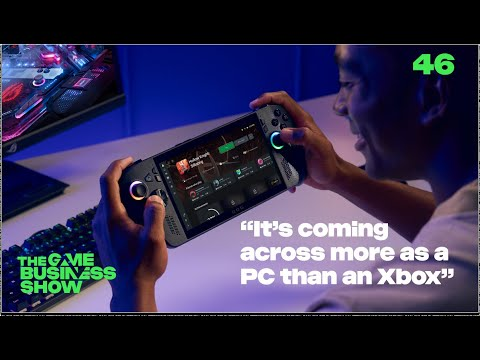
but it's this generation. So people are still playing as you pointed out though are still playing older generations of machines because of the games they're playing. Um AMP actually expect Switch 2 to fall short of Switch one as well. Um here's the thing though as well. What even is a console? Like the lines are now so blurry. Um the new Xbox handhelds, they're PCs. out there have a PC or an Xbox launcher on it. Um Nintendo Switch, it's a handheld. That's right.
It's a um I mean the do these definitions even matter anymore? Uh I I will say I do I do value a living room
device and I think a living room device has different requirements and people have more interest in playing different things on a living room device than they are on a on a on a console device. But it's um um I do I do there's an element of of the industry is changing in a way that even thinking about it in in terms of console mobile and and PC perhaps isn't as fluid as it should be thought. There was a hint with the release of Genchin Impact and its success a few years ago that the console mobile kind of uh platform uh com combination cuz because that game played on an iPhone as well as on a PS4 um when it when it launched that that might show that phones could displace or at least exist alongside consoles in providing the very kind of experience that you might have still thought you needed a console to have, right? It was kind of understood, you know, even a few years ago that you want a more casual something to play while you're waiting online at supermarket kind of thing. You know,
phones were the phones were the device of choice, but then if you wanted something to really sink your teeth into, maybe you still needed a console or a PC. And something like Genchin Impact hinted at, well, the expectations on graphics versus the capabilities of the devices, you know, are all converging to a point where you could satisfy both. But what we've seen since then is actually that a lot of attempts to create the so-called more hardcore experiences on phones aren't really that successful. We've seen the retreat by some of the biggest publishers that thought they were going to bring their their big console franchises to mobile not doing that or trying to do that and not succeeding.
And so mobile has remained more casual um to not use that projoratively um and with and so you wind up still with this kind of game that exists on the console. And I think it's the question of is that kind of game a kind of game that as many people aspire to playing? And that's where I go back to some of our discussion of Nintendo. Like I love Zelda games. Does there come a point where it's like archaic to want to
play a Zelda game? Like I don't know if we've seen that.
Is it But is that is that a mad thing to say when the last two Zelda games are the two most successful Zelda games ever released? I know what you're I know what you're saying. We're we're talking about what could happen next and interestingly we did have some data around mobile and I will talk about mobile AAA games. Um my thing with mobile AAA games is I don't think it's a play for today. So games like Genchin Impact and even PUBG and stuff they do very well in markets where there isn't a PC and console audience
and when you've got things like Resident Evil Village, Resident Evil 2, the new Hitman game that's just come out um coming out on phones. They're coming out on phones that actually aren't that prolific in those markets because they're the top range most expensive phones. um they are um and I do wonder if a lot of this stuff is is a bit like when people got on VR very early it's just to work it out what's the what's is there a way to monetize these what can we get the experience right so that maybe we're further down the line when these tries like India are no longer pre-monetization and have slightly more
powerful devices could these games sort of uh succeed in that space you know it's worth noting like you know Resident Evil 2 and Resident Evil Village for instance they didn't do Great. And they still had like 1.3 million people downloaded village according to app um app is it app magic? Yeah, that's that's app magic data. Um and um and stuff like that. But then it didn't generate very much like 0.35 35 cents an install basically. But it it it it's it's I always feel they have a little bit more. I have a debate with Neil Long at mobile game mobile gamer.biz about this where he's sort of like these games don't work. And I know what he's saying because if you look at Destiny, was it Destiny uh Rising that's just got off a strong start according? Yeah, App Magic says that 1.9 million installs nearly 2 million now. Generated about 5 million in revenue. Netis game built for the platform, right? It's not Destiny. It is the game built for that audience and for that platform done very well. But I I don't know. I still think the jury's out on whether or not AAA
games could do something on the platform. I don't think anyone's going to replace console on PC, but maybe there's a way of reaching audiences in different markets. Maybe.
Yeah, the um the mad statement I made about Zelda I may prove foolish. We'll find out when the next Zelda comes out. I don't expect it to to flop. I just do think a lot about the kind of experiences that people are playing on one platform versus the other. And what it what I feel like we're seeing what what what what the numbers are telling us, the numbers around Monopoly Go, the numbers around Roblox, the numbers around anything that is booming, has a simplicity to it, has a focus. Even the indie games that have flourished this year, um, they have a focus and we could look at some of the successes in console. We could look at Clare Obscure Expedition 33 that people remember thought was going to get mauled because it was coming out at the same time as the Oblivion remake, but that actually both games seem to do do well commercially, you know, relative to
their budgets
and and and their market. So there are, you know, successes in the more traditional, again, to use archaic terminology and adjectives, hardcore games, but I see the numbers that are really, you know, breaking the charts are ones that involve much more casual experiences. And by the way, you look at Nintendo's greatest successes, they are the Wii, they are the DS, and they are defined by Wii Sports, Nintendo Dogs, games of a simplicity and of a casual play. That that's part of what I think also is worth looking for in a future direct. They got one of those because that is also the kind of thing that helps these these
It's worth remembering that when they did Labo which was aimed at a broad audience they didn't put it in a direct they did it separately. So there's an element of who's the audience for the direct and I will actually say this this I'll conclude on this because I I I talked about this a little bit before
games industry has become so broad now and so much more complicated and there's so many different audiences but I actually don't think it's okay. Yes, those big mainstream sort of simplistic games are doing huge huge numbers. Then we're also seeing these really big complicated games doing huge numbers. We're seeing retro games doing re huge numbers. Remasters doing huge numbers. We're seeing lots not as well by the way. We're seeing a lot of failure. But my point is I don't think there's actually one way to do games anymore. They before it was always chasing a trend. I just think there's too many trends and it's
good. The more the more variety the better. Um you know and you you know you you see the silk song shows a different way of making a game as well, right? taking forever to make a game and and generating buzz and having having huge success. Um, Expedition 33 to go back to Clare Obscure, you know, a game that uh has a barely uh hard to remember, hard to pronounce name uh for many and it is yet doesn't get marketed that heavily and is a is is a beloved potential game of the year winner. You have a lot of different avenues to pursue and to your point, a lot of a lot of potential for
failure. Um, the risks probably are higher than ever before because the old way of doing business is not guaranteed. You can't just plug in, okay, we're going to make a game for X million with this known franchise and it's automatically going to sell. Look at Star Wars Outlaws last year as an example. Open world Star Wars game and uh it became a a debacle for its for its publisher. So unpredictable. I do I will say though I'm not going to launch a console. I was planning on launching a console but Chris this conversation put me off. There will be no game file station box.
Uh gamedev hero is always the goal, isn't it? To become a platform holder by the end of that. Uh oh, we are we are very much approaching time. Um uh and so thank you Stephen for joining us. It's absolutely delightful having you on. And where can people find Gamefile if they need to uh read more read about this capital piece?
You can read Gamefile at gamefile.news and you can read it on the Substack app. You can read it on a website. you can
get it emailed to you. You can also when you sign up for Gamef File, also sign up for the game business or vice versa and and enjoy having both sent to you uh and and and read all about it. Some of Gamefile is free, some of it you just get a taste for free, but hopefully enough that people will have a great time following it and following my journalism. And always a pleasure, Chris, talking to you and congratulations again on how terrific the game business has been and what you've been building this year has been great to see, too.
Thank you. Thank you very much. Um, for everyone, that's it for today's episode of The Game Business. We'll be back next week with more news, interviews, and analysis, plus the launch of our new subscriptions here, so stay tuned for that. Um, we're also live in London next month if you'd like to come to see me interview Peter Moore on stage at London Excel. It's free to come along and the passes also include access to Comic-Con. You do need to be an industry person to get a pass. More details about that you can find in our newsletter. That's it for me. Until next time, thank you for tuning in.
Auto-generated captions from YouTube — names and numbers may be misheard.















Comments