AI reports and market data
Documents

Gametech: How Video Games are Seriously Changing the World
The video game industry has evolved into a foundational architect of modern technological infrastructure, serving as a primary engine for innovation that transcends traditional entertainment.
- The video game industry has transitioned into a foundational architect of global technological infrastructure, with its R&D in AI, cloud gaming, 5G, and game engines driving innovation across healthcare, manufacturing, education, and film.
- Cloud gaming is projected to reach over 500 million users in Asia by 2025, highlighting the region's role as a primary hub for the rapid scaling of gaming-derived technologies.
- Gaming-derived tools such as digital twins, virtual reality simulations, and advanced networked communication are now essential components in industrial supercomputing, space exploration, and public service delivery.

Pocket Gamer Connects Helsinki 2023
Pocket Gamer Connects serves as a central hub for the global games industry, facilitating professional networking and knowledge exchange across mobile, PC, console, XR, web3, and AI sectors.
- Pocket Gamer Connects has facilitated over $1 billion in business deals across its decade-long history.
- The event series has hosted 42 conferences in 11 countries, attracting a total of more than 35,000 delegates.
- The conferences serve as a cross-sector hub for the mobile, PC, console, XR, web3, and AI gaming industries.

AI GAMING REVOLUTION: Shaping the Future of Play with Pieter Kooyman
The integration of generative AI is fundamentally reshaping the gaming industry, enabling a transition from bloated, specialized production models toward lean, agile development.
- Generative AI enables a shift from large, specialized production models to lean, multi-disciplinary teams that can reduce development timelines from years to months.
- The industry is moving toward integrated, multi-step AI workflows that allow smaller studios to produce high-quality, multiplayer-capable titles at a fraction of traditional blockbuster costs.
- Competitive advantage in the new landscape will belong to organizations that successfully bridge the gap between manual craftsmanship and automated production.

NAVIGATING GAMING MARKET: TRENDS, TRIUMPHS & TROUBLES with Tom Wijman, Newzoo'a Lead Analyst
The global gaming market is undergoing a period of stabilization and strategic recalibration as it moves past the post-pandemic volatility of recent years.
- The global gaming market is shifting from rapid expansion to stabilization, with 2023 growth primarily driven by console hardware availability and a backlog of major title releases.
- Publishers are pivoting toward live-service models and subscription platforms to combat slowing player base growth and intense competition for limited consumer time.
- Mobile gaming revenue is stagnating in mature markets due to privacy-related monetization challenges, forcing developers to target growth in Southeast Asia, the Middle East, and Latin America.

AI and Player Psychology
The integration of artificial intelligence into game development is currently transitioning from basic procedural generation toward the creation of personalized, narrative-driven experiences rooted in human psychology.
- The game industry is shifting from basic procedural generation toward AI-driven, personalized narrative experiences that leverage human psychology.
- Significant shifts in large-scale, AI-integrated game design are expected to materialize within the next three to five years.
- Developers are moving beyond surface-level behavioral metrics to utilize adaptive psychometric assessments that identify enduring psychological profiles rather than transient player behaviors.

AI x Games: What’s the Path Forward?
Artificial intelligence is fundamentally transforming the gaming industry by serving as both a tool for operational efficiency and a catalyst for disruptive creative experiences.
- AI is shifting from experimental research to production-ready applications, specifically enabling dynamic, player-driven narratives through adaptive NPC 'brains' and proactive, AI-managed community moderation.
- The industry is moving toward enterprise-level scalability, prioritizing multi-modal capabilities that integrate voice, image, and behavioral data into core game design.
- Studios are adopting modular integration strategies, such as AI-driven DLCs and self-serve tools, to ensure seamless adoption of complex models into major gaming titles.

Here's What Mobile Developers Should Keep in Mind When Using AI tools
The integration of generative AI into mobile game development requires a balanced approach that prioritizes professional expertise over the uncritical adoption of new tools.
- Generative AI should be used to automate repetitive tasks, allowing developers to focus their expertise on the 20 percent of creative work that defines a game's unique quality.
- Developers must maintain foundational knowledge of core systems like game economy balancing and code architecture, as AI models can produce inconsistent or mathematically incorrect results.
- Generative AI does not replace traditional machine learning, which remains the industry standard for predictive analytics, A/B testing, and LTV modeling.

Creative Future with Artificial Intelligence
The game industry is currently undergoing a fundamental shift where the traditional reliance on technical tool proficiency is being challenged by the rise of generative artificial intelligence.
- The game industry is shifting from technical tool proficiency to high-level creative intent, as generative AI automates baseline production tasks.
- Developers should pivot toward storytelling, composition, and unique problem-solving to differentiate their work from commoditized AI-generated output.
- AI acts as a force multiplier by automating administrative burdens like code refactoring, meeting documentation, and asset indexing to accelerate iteration cycles.

How to write a good prompt to generate assets for a mobile game?
Effective asset generation for mobile games relies on a structured approach to prompting that prioritizes the subject, followed by context, environmental details, artistic style, and lighting.
- Effective asset generation requires a structured prompt hierarchy: prioritize the subject first, followed by context, environmental details, artistic style, and lighting.
- Developers can maintain stylistic consistency across game assets by utilizing image-to-image generation, which allows existing assets to serve as reference points.
- PicFinder has generated over 190 million images in its first six months, functioning as a high-speed search engine for rapid prototyping and brainstorming.

Inworld AI Raise / Playtika Acquires Youda / EA Earnings / BattleBit Remastered
The gaming industry is currently undergoing a structural transformation characterized by the rapid integration of artificial intelligence, the consolidation of legacy assets, and a definitive shift toward digital-only distribution.
- Inworld AI has reached a $500 million valuation, highlighting a significant industry-wide investment in generative AI tools to enhance NPC development and operational efficiency.
- The gaming industry is shifting toward a digital-only distribution model, effectively ending the viability of physical media as retailers prioritize shelf space for more profitable goods.
- The market is increasingly bifurcated into a barbell structure: high-budget, IP-driven blockbusters on one end and agile, low-fidelity hits like BattleBit Remastered on the other.

How can AI help simplify the lives of mobile developers?
Artificial intelligence serves as a transformative tool for mobile developers, offering significant efficiencies across the game development lifecycle, from initial ideation to self-publishing.
- AI functions as a force multiplier for small teams by accelerating prototyping, asset generation, and coding, but it cannot replace essential human expertise in creative direction and product strategy.
- The market is becoming increasingly saturated with medium-quality content due to the low barrier to entry for AI tools, making competitive advantages derived solely from production volume fleeting.
- Developers must prioritize clean, scalable code from the start of development to prevent technical debt, which is critical for long-term live operations and working effectively with publishers.

Enhancing Photorealism Enhancement
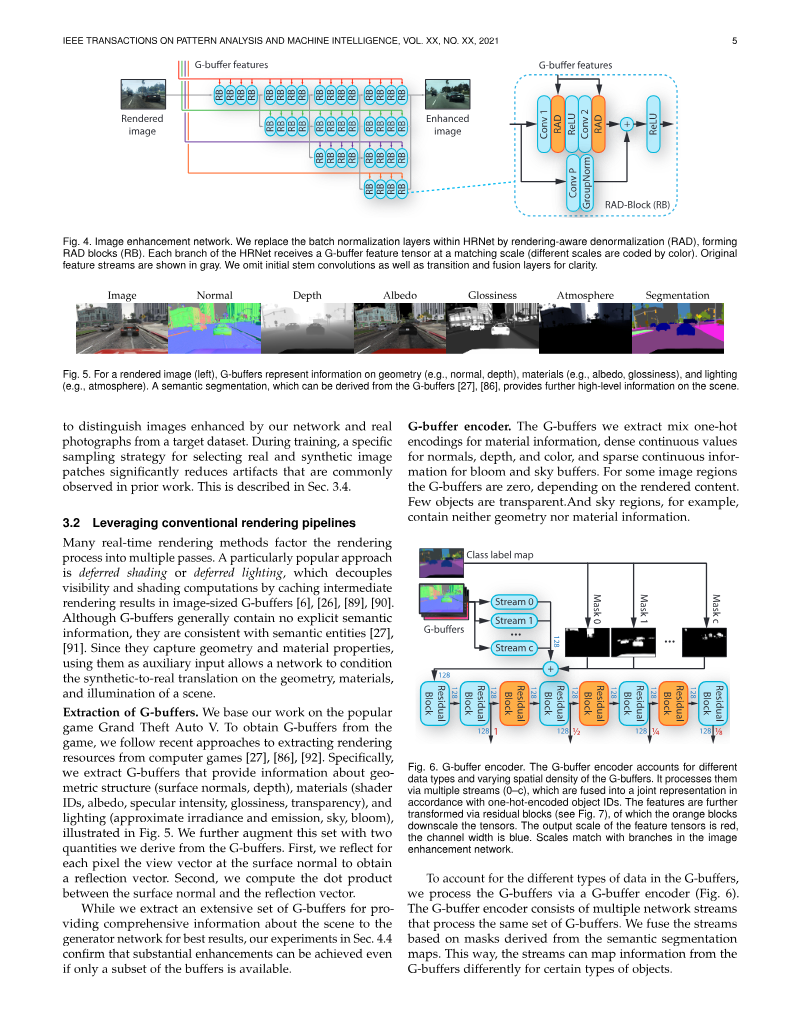
Advancing the photorealism of synthetic imagery requires a sophisticated deep learning framework that bridges the gap between rendered data and real-world visual fidelity.
- A new rendering-aware denormalization network improves synthetic-to-real image translation by integrating geometry, material, and lighting buffers to ensure high-fidelity visual output.
- The framework utilizes a multi-discriminator training protocol and patch-matching sampling to prevent GAN-related hallucinations and maintain semantic consistency between synthetic and real datasets.
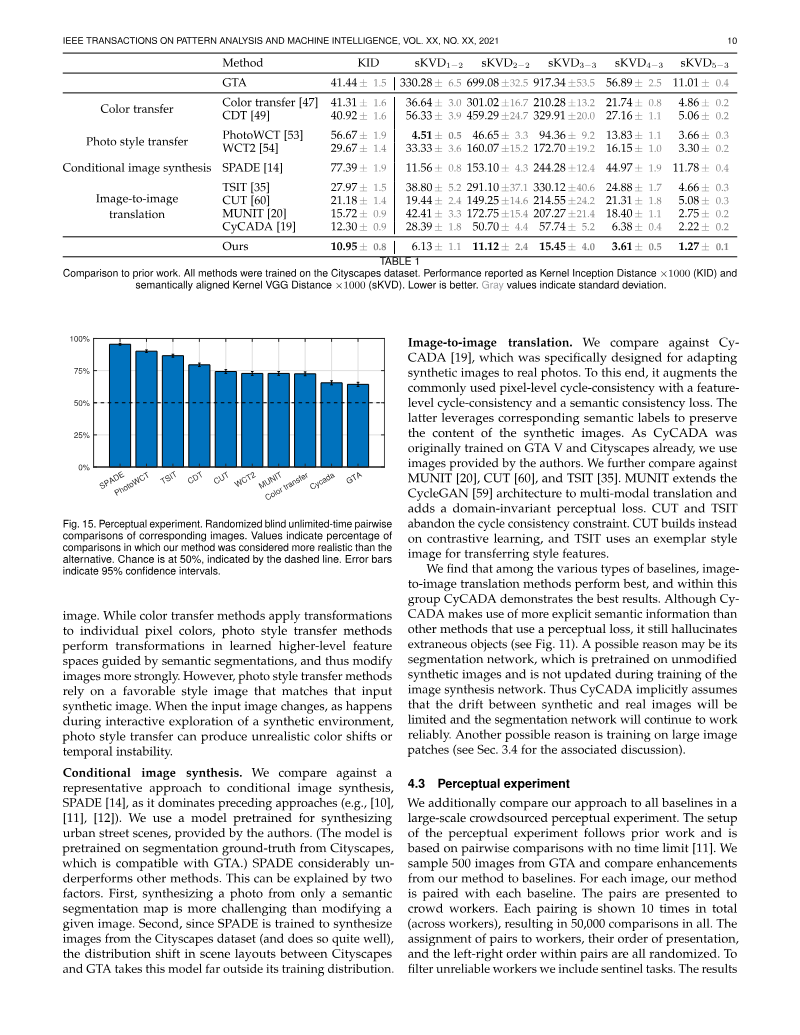
- The semantically aligned Kernel VGG Distance metric provides a more accurate assessment of perceptual realism than traditional metrics like the Kernel Inception Distance, which prioritize semantic structure over visual quality.