VideoDeconstructor of Fun
NAVIGATING GAMING MARKET: TRENDS, TRIUMPHS & TROUBLES with Tom Wijman, Newzoo'a Lead Analyst
12 Sept 202373 min video
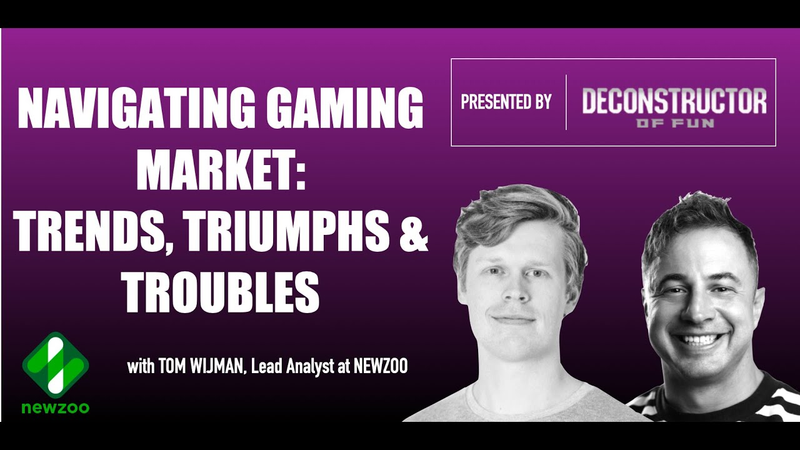
[Music] everything welcome welcome everybody to the deconstructor of fun podcast I'm your host Michigan today my guest is Tom Wyman lead game analyst from New Zoo who's been at nuzu for past no over six years and Tom you're behind these magnificent report one came out last week um can you please introduce yourself a little bit more other than that you're from from Holland and you're probably really really tall yeah hi uh thanks for the intro yeah good day everyone six foot three nice to be exact so I am really tall just my fellow country man um so my name is Tom um I've been the uh I work at nuzu I've been lead game channels over at news you for the past six years and for all of those six years I am the lead author and analyst behind our Global games market reports
um which I assume many of the listeners are familiar with I hope I'd say all I'd say all I'd say oh yeah hopefully you know that's what I like to tell myself yeah but maybe there's someone out there if you haven't read it yet you can it's uh free to download you have a huge impact on the industry with your reports everybody reads them they are in pretty much all the presentations with uh with Executives with Founders uh with Venture capitalists with Bankers with you know anybody who's after or giving money is is using your reports but can you can you a little bit open up what else new Zoo does except these these uh widely accepted reports right so the reports we do is one thing um we're a specialized games uh Market intelligence firm and we do three pillars of what we do basically business units we have um our consumer research study which is uh what we've done the longest actually
not the reports uh interestingly enough um so we do consumer research about gaming game Behavior preferences motivation in 37 countries every year um then we've more recently started a tracking platform around PC and console engagement and Revenue data so we track all the common metrics maudu retention overlap churn as well as revenues for two countries right now we're hoping to expand that so we've been doing that since 2020 and it's been exciting to see that grow and then the third thing we do and that's what we're here to talk about today is Market sizing and forecasts for the global games market and you do Consulting as well right yes so whenever the fourth one yeah yeah so basically the the way that works is whenever one of our products um actually there's two ways that works whenever one of our products doesn't quite fit uh what a client needs we will
always talk about whether we have a customer a Consulting solution that might answer that specific question but what's also really exciting is because as you said you know our reports are widely read we make quite an impact on the markets firms approaches both endemic non-endemic firms for approaches for our expertise in the markets um and that leads us to some uh very exciting Consulting projects and we're very open to do those as well nice and what does an endemic mean before we jump into it I uh this is maybe yeah jargon from our company that I'm saying when we talk about endemic we're talk basically talking about game developer or publisher oh God or maybe a platform that's specifically for gaming um but then as gaming has grown over the past years um we've seen our client base shifts out the majority of clients that we work with that still are game developers or the Publishers but more and more that's also spreading to
um Brands consumer brands that are coming in of course from a finance uh industry we get a lot of interests Automotive Foods you you know it's it's our clients have really Diversified over the last five years and that's you know excite yeah I guess yeah it is it is exciting it is cool but what's even more exciting right now is the the global gaming market trends so you've spent probably how long did it take you to uh to get this report done um building the actual report is about a process of two months okay I'd say uh maybe three months if you include like around it's the way we work them up we're at right around when all the full year results from companies because that's a very important input from us uh for us which is around April is when we get China as well they yeah a little bit later when they release their reports um that's when we start but first we
start with crunching the numbers um getting a model right and then building a report would say I'd take another six weeks so we start around April and then our first launch is um June July so last the last six weeks or you know even longer you've been heads down on this this yearly content Cadence of yours and can you talk a little bit about the other three big ones mobile console and PC like I mean you can talk about the uh the web as well that's that's maybe a part of it would be really really curious too like what's the high level View and when what are what are the kind of key takeaways from the gold like gaming market trends of course so the high highest level view I guess is the good news is we're returning to growth um last year was um a decline in the revenues for the market the first time that we've reported on it at least and we've done this since 2012 but you know given what happened two years before I hope most
people weren't shocked um that there was a bit of a correction last year but this year we're returning to growth um interestingly in the first one to point out I guess is um that the growth this year really is driven by console gaming um and uh well we've all seen the amount of games that are coming out this year the amount of and that there's more coming starfield's just around the corner uh Zelda hogwart's Legacy um Resident Evil there's been so many games also games that happened delayed from the past two years and and all of that is coming together this year where it's also a year where finally you're able to purchase a PlayStation 5 and an Xbox series in in stores again which was also a problem that was sort of um limiting the growth potential console in the past few years so all of that is sort of coming together in a perfect situation for console growth and that's really what is driving through this year
is it so that the console wasn't like when we compare the previous years is the growth driven by the fact and I don't know if this is a fact that there's so many games launching that and and you know you can actually get your hands on PS5 uh whereas in previous years um there were delays whether they are in supply chain delays that didn't allow you to purchase the device or just delays and development where a lot of these games like you mentioned Hogwarts Zelda and and all the other ones weren't just available I mean they were delayed it really is both um so uh yeah the fact that it was more difficult to purchase a new console in the past years but and then the fact that many of those titles that were supposed to be selling these consoles because that's ultimately what people upgrade for to play these these new titles were also due to
development delays uh launched this year and maybe not 2022 or even in some cases 2021 so it's the combination of those two factors that really drives console up this year yeah and was there a lot of like when you did the study where there's a lot of development delays or or compared to previous years yes um but it's not so much about the quantity of delays um but it's really about the the quality or the impact of the games that were delayed so we're really talking about um those you mentioned in addition Final Fantasy 16 like these are games and franchises or you know Hogwarts who's new but in the Harry Potter franchise which are selling billions yeah literally yeah not in Revenue so that that does make a large difference got him got it um and and those two so impacted both console and PC so the delays and games
and delays and devices more so console than PC um PC a little bit but PC much more so than console is a live service Market where majority of Revenue comes from uh existing games that have been out for in some cases five ten years that we still see Counter-Strike in the top 10 game by Revenue every month or 20 sometimes but and that game has been around for more than a decade uh Valor and fortnite you know these these big live service titles that are really driving PC Revenue and there is a market for premium games on PC as well but for the most part it is console where the most of those sales are and then there's there's a section segments of PC as well do you do you think that there's a like in your in your studies do you see the trend of console warning what the PC has meaning like it would be great to have a Counter-Strike A League of Legends a valorant or a fortnight basically a game
that you can just just that you run and you don't have to ship constantly a new version every every year every second year like you have to deal with Call of Duties and then the fifas of the world is that sort of a games as a service Trend visible in your report yeah absolutely yeah uh it's one of the first trends that we highlight as well in the report is this this push development push for Life Services on console and um they're there but they haven't quite made the impact [Music] um but when you see the the strategy of a Sony and Microsoft and the big guys on on Console it's it's going in that direction and it's what it looks to be at least from the outside is that they're gonna try and do both so you have these very big franchises on console that you know Assassin's Creed Last of Us Horizon that they're now games and development um that are supposed to be these live services or that have a multiplayer
element that have this staying power and on top of that you'll get your Cadence of um Standalone releases within the franchise that really bring in this Revenue but then in the in the time between those you know you have this game that people can keep playing and keep engaging with and you keep pushing out content for I mean that sounds all Dandy and then good but when you kind of zoom out and and start looking at at the console Market as a as a as a whole a couple of questions first of all they keep pushing subscription services so like you have a subscription and now you have a games as a service those two are contradicting in my opinion then um I don't know what's happening with a player base is the player base growing or not because not only you have two business actually three business models you have paid games you have subscription and now you're attempting to do games as service and then you have a set player base and of course the player base is much smaller due to the entry cost and the requirements to to be
a console player versus for example a mobile player I don't know how it compares to PC like what is what is this all leading towards it sounds like uh like the market is very um like going into different directions and it feels like if you go to multiple directions at the same time you'll get nowhere uh exactly and and I I actually quite I love that you brought this up because this is this is a real risk um so it let to impact some of that um I I think you hit a good point where you said the player base isn't growing as fast and we're projecting it not to grow as fast as it has in the in the past five to ten years um and and to how I see that these that is part of what is driving this trend um these companies they see that projection um or they see other projections about the player base they see it in their own numbers probably and then they're like
oh well if we're not going to get into as many new players then we need to to keep these growth rates that we have we need to do better with the players we have how do we do that we look at mobile we look at PC let's try live surfaces um but you're right because they're also trying subscriptions and and subscription is a bit of a um we're we're not as bullish on subscriptions as we might have been in the past um well first of all because the reports confirm that uh in some cases the numbers have missed targets and the the user base for subscriptions haven't quite matched the projections that were internal um you also see it in the content that is coming to uh to these subscriptions it's not coming at the same Pace as it might have in the past
and for the same reason we see if you're pushing live Services you're pushing these premium games but you're also trying to do subscriptions like at some point one of these have has to give there's a limit to not even well there is a limit to how much people can spend on games but I think the first limit that we're going to reach is just the time that people have to play and and particularly when you go for these engagement based models which is live service where you prioritize engagement over Revenue um well you put engagement first uh at that point you're actively pushing two completely different uh ideas um so it's a very very real risk I would say that this Market we're reaching saturation and saturation in in terms of the amount of play time people have and and where they can put that yeah and also the uh the paid game so the uh the big Blockbuster ones the Uncharted the God of War yeah uh the uh what's the sorry the Microsoft game Star
Starfield star field I don't know if that's paid or not but um but it feels like probably both like like yeah that's that's the interesting part right it's it's paid it's definitely paid but it's also going to be in Game Pass of course um of course it has to be and it will have microtransactions as well I don't know I don't know yeah yeah probably maybe probably not on launch and then a month after all of a sudden hey look I purchase more no that's that's the exactly the thing right because starfield's now coming to Game Pass and it is a paid game and I don't know how that's and these people are going to play it yeah and these paid games are not only you know some of them are true blockbuster hits but they're also much bigger than in the previous generation so there's more time put in the quality is better but there's more time where you know that they allow you to play that game so it's just like uh yeah sounds crazy what's happening with uh with console they're going in all
directions at once yeah so far though at least this year it's it's leading to growth like I don't want to sound like it's it's um it's a bad Outlook it's not at all um and even these paid games these premium games like they're selling freaking records in terms of sale like the install base for console was bigger than it's ever been so it's it's definitely a market that is set for growth but at the same time I think we can question like all of these ideas that are happening at the same time and some of them are not going to work but that's also natural I I guess um yeah interesting that's an interesting point and when when a console game doesn't work that's an expensive mess because that's a very expensive Miss very much very much so you know with all the money they only come yeah they only come every three years yeah in a franchise and and that's broadening like it's five six years between uh between a
release is not even that crazy at this at this point and does PC have similar types of problems I mean when I think about PC I think about steam I think about epic store uh you know um um unless so because uh premium is just not as much of a market on PC as it is on console and definitely not the Blockbuster premium style that that console is known for so there's more games a lot of PC revenues also carried by double A and even indie games um I think because the amount of titles that are launched the amount of times that are purchased on platforms like steam EGS are are more Diversified that means that this what we were talking about the console is less of a risk at the same time the concentration of revenues on PC is very much in those top performing live service titles as well um but there's no reason to assume why they
would all of a sudden start declining because they have been at the top for so long and there are things that are carrying but when it comes to PC though um maybe let's let's briefly we can briefly touch upon on web browser uh browser to re to repair is is a segment that's been in Decline for so many like it's it's hanging on by the threat would you call it would you call it mice nuts at this point yeah uh well it's it's still there's still somewhat of a market but most of that is China like if you see our number in the report and you see oh that that's that's bigger than I would thought then realize that probably half of that browser market right now is China yeah um and then a significant Chunk in in South Korea and then the rest is spread uh all over the rest of the world interestingly going back a few years but there was a short browser Resurgence during covet it was a a very low entry low barrier to entry type of game and we
have one year where browsing revenues were more or less flat yeah and year and and after that it went decline again but that is you know in terms of PC it's it's mice nuts as you put it and but the rest of the market is just uh yeah download games yeah one more one more thing about console and PC so is there a trend of big console games being also like these paid games or or paid plus micro transaction games being launched on on PC as well like our console games also trying to because you know the user base is what it is they're trying five different business models at the same time but are they also pushing on PC to kind of get a little bit of a new players from there as well but there's two things at play here I would say one of the things is that there is an ongoing Trend about being cross-platform just cross-platform is a bit of a hype term with the way I put it you want to be on the platform that your players are so if your player is at that point on a PC
um or on a complimentary device that runs like a PC you want your game to be there at that time as well so that's part of it it's also like we just discussed you know we're stretching the console player base uh at least in in the western markets so you want to tap into the PC audience but I will say that that Trend this year or the past 12 months somewhat slowed down because I think a lot of developers Publishers have realized that it is not so easy to Port your game to PC and have it work and there were quite a few disappointing failures where failure sounds hard but like games that just didn't optimize well for PC that didn't run as well and that got quite a bit of negative feedback and we see that that's somewhat cooled down the um we've got to get all our games on PC as well appetite optimized for console first for many of these console version games
get an audience there have that work you know do your seasonal content your microtransactions Etc if all of that works and you've sort of maxed out there maybe then look at what the pce audience is but if you're trying to do all of these things at the same time and the very real risk is that the port doesn't work that might upset your places there yeah yeah it's the meta score and everything and brings a bad sentiment and people start associating that with the with the console version and and all all that jazz um I'm gonna Focus actually on on Console mostly because it seems like they are the ones that are growing and they are the ones that are making most of the moves whether it's the business um business models or whether it is expansion to other platforms so kind of going back to to these console developers that are experiencing this this tremendous growth right now um what is going on with handheld devices because there was the steam deck uh then there was um what was well Nintendo's of course they announced the new device and and
there seem seems to be doing great with the uh with the subpar device that they have in terms of just specifications okay I have it it's like worse than my phone like five times worse Sony just released PlayStation just released a new new handheld device which is like a different take on everything what's going on with the handheld Market is it growing is it is it stable is it declining uh why are these companies going after handheld devices uh yeah that there's there's again there's a lot to unpack there um it's certainly a very interesting Market to keep a look at um the way we see handheld for the most and and I think you know there's there's an there's a semantics argument you we can have here about whether steam deck is a console or a PC um but the way we classify these um and then I'm leaving switch out for the second but that's they're really complementary devices um looking at steam deck and then uh
Asus Rog Ally there's a Logitech thing that try to do Cloud but I think we'll get to that at some point let's just leave it leave it towards the end let's leave that for now I know Chris is listening to this yeah he will burn a fuse grabbing his desk now here we go let's leave that um and then indeed the PlayStation device that is again going a different route um but we classify most of these as what you call complementary devices and again they're they're in that train of thought of I want my game or I want my platform to be where my players are at the time and I think if you're a PC Gamer um if you have a large library on steam or or whatever is PC platform one of the frustrations that you might run into as a player is that if you're on the move if you're on a flight or you're on a
commuting to work then you can't play these games if you're somewhere else you're on vacation you're in a hotel you can't play these games and a steam Deck The Ally they fix that you know you can take these I have a steam deck I haven't played and bought as many PC games in years since I got that I have a one and a half hour commute to office I don't go every day but I find myself excited to commute to the office because it means you know I'm a parent as well so gaming time is very limited but that's three hours of uninterrupted gaming time that's guaranteed on that day so for me anecdotally it works great like it's the perfect device and actually I had a switch too but I never played it because I didn't grow up with Nintendo so I don't have that Nostalgia Factor um and I I switched it for a steam deck and but it is really like especially these devices the value ads the the
um the unique selling point of it is if you already have built up that library of games on PC um if you're already a PC Gamer because if you're not I don't think that you're gonna buy that maybe at some point in a few years from now when these devices get even better like we get a steam deck V2 and they're really a replacement for a gaming PC um I would say right now though they're additive complementary and that's also when we look at revenues and in terms of players these devices aren't necessarily growing the PC player base and I wouldn't even say that these games are um bringing in much additional revenues for the segment but it is some of the one of the trends that sustains the PC market and you're able to track the additive sale uh through these handheld devices or because sometimes when I look at the the graph that shows handheld devices and and in the latest uh data Ai
and IDC report actually show the decline in it I'm just wondering are they showing the uh the value of the market as the device sales or are they showing the additive value that that these devices generate bye-bye players actually buying more games I can't really speak into their methodology because I don't have that Insight but my my best guess would be that it's the additive value of selling games got it um I think IDC in the past has always had an um uh different category for when it came to hardware sales got it got it and we would do the same we would look at like we would be able to track what devices people used to play um so that's where we could get some of this info perfect so so we got we got console PC especially like uh having this added to sale we have console the console um well Microsoft and uh and Sony having devices that allow you to to play
uh their games on handheld devices but Sony has proprietary device and then Microsoft I think is just offering the uh the cloud exports yeah it's the ability to stream yeah these games to your to your mobile phone got it um but it's the it's roughly like it's a different it's I would say I don't know how the experience compares but I would say the idea of this being uh a device that will help you to take your console or PC games on the go got it um and whether you do that through streaming or whether you do that through um a local Remote Play which is what I think the the Sony um PlayStation portal I think it's called um we'll work off already it's really with the dedicated your native handheld gaming device such as Steam deck or rgli the idea is just to bring your existing library and take it with you on the go
perfect perfect so just increasing engagement as as we talked about with uh yeah without elements now uh let's let's switch gears a little bit and talk about mobile we can start off with with just mobile market as a whole and but we also have to touch Point again on these console developers really focusing on mobile like we've seen Microsoft making a case the whole acquisition of Activision is really about mobile like that's that's a very bold statement uh but that's that's kind of shows the uh uh the sentiment whether that is correct or not uh well we have to take it as correct since it's a official company statement that mobile is very important for them so can you talk a little bit why this is so what's happening in Mobile uh sure so maybe to start at the market itself um we do um forecast a very small increase in Mobile revenues this year but just 0.8 year and Year and that follows a um rather significant decline from last
year um so we're we're still going to end up below the level of mobile revenues that we had 2021 and of course um but again you know part of that I think has been discussed many times like the uh removal of idfa and everything that followed after that fingerprinting all these other solutions that might or might not work or might it might not work as effectively um in the context of um Microsoft and what console developers are seeing in this market though it it's really audience when we talk about player audience mobile is a fact or two and a half over PC audience and in factor four almost over console audience if not more and it is where interestingly enough it's very growth is as well because we are you know when we're talking about the global market and what is driving growth then of
course it's the the major mature markets we're talking North America Western Europe China Japan South Korea that the term and you know they have a very big influence on whether the global market grows so if those markets are not growing as fast as they have in the past or maybe even declining at some point then a new Global picture you will see a decline but if you're an individual mobile publisher or developer and you're looking like okay where can I capture growth a lot of that is still in Mobile but not in these massive markets but in the smaller region or the emerging regions um South Asia southeast Asia maina Middle East Northern Africa Latin America and if you want to grow in those markets their mobile first Regions they're the player base is going to be on mobile the the growth in revenues is on mobile and that's not necessarily to do with
well of course content has to be there but what unlocks growth in these markets is people getting access to cheaper smartphones better internet infrastructure adoption of local payment methods adoption of local payment processors and if you include the if those get added to or if those are get integrated into how people play games and you all of a sudden get the ability to pay for them that is what's driving a lot of growth so even though on the global picture mobile might not look like the the market to to focus on if you're you know you dive a bit deeper into the data and you look at where on a market level you can still find growth there's there's quite a bit of opportunity in Mobile I find it always confusing because I analyze mobile market a lot when you kind of bundle all the mobile market together and what I like to do personally is I always remove Japan Korea and China because they have such a strong influence on the overall Market but they're also extremely concentrated markets where
China you can't enter let's start with there and go Korea maybe you could enter it but technically you can technically you can exactly exactly it's unlikely you might you know Clash a class or that kind of a game might do it if you set up your own operations there Japan kind of same thing but you're not going to be big in Japan like let's be honest there's nothing that will that it doesn't matter how big of a game you have in the west or in the rest of the uh the world it's not going to be big in Japan it could be okay in Japan and even that will require significant investment so anyways I tend to leave those out and then start looking at the market and really start looking at the different genres and audiences so to summarize kind of like what you said mobile is pretty much stable um what's keeping it stable is lack of growth in key markets those who are very matured where players have been playing these mobile games for about a decade they have their favorite games they keep playing Candy Crush they keep playing Clash of Clans uh they are getting their
hands on maybe the the latest titles the big ones the other mihoyos games the uh the uh the the blizzard games the Activision games and then so forth and the uh the the other thing that is keeping the uh the revenue down is the fact that you can't hunt for whales anymore with the restrictions through coming through privacy it's much harder to find people who pay and through that those key genres that we're able to have relatively small audiences but well monetizing are are suffering through that and then you're saying that the uh the growth should be looked at geographical levels and then this is where I have a question so you said Mina you said you said um um southeast Asia as the growth of player base is in Latin America as the growth of player base is is growing do you see also growth in spending in in those regions yeah slowly and first of all I think a very good job summarizing what I just
tried to explain all the points you said we're totally fair and that's exactly how we look at the market and and yeah so to answer your question it is both um but it is player growth is um growing still growing faster than the average spend and the average pen per player is still much lower than um it is in some of these mature mobile markets but that is partly also an opportunity right there's there is room for growth because the economics simply in these markets show that you know they are growing markets like the economy is improving um disposable income is growing and with that average Bend per player or per payer rather is is growing um but not as fast as the player base the player base still expanding faster than the average event is going up but both are going up and that's why um there is growth in these regions yeah and as we're talking about growth and
seeking for growth it's also important to understand the macroeconomical factors that are at play the interest rates are up people have less disposable income the inflation is higher much higher than we've accustomed to so all these elements of course have an impact on the disposable income and then we have to take into account especially on mobile is that or overall in in people's spending is that there are sort of a new sinks that that people will focus on rather that they didn't have let's say a decade or in 2008 2009 when we had a recession and that is of course all the subscription services that we're using all the streaming platforms like Netflix is the last to go like you'd rather not spend on microtransaction in certain game but you're going to have your Netflix because the value the entertainment per dollar is such a dominant it you know compared to almost any other form of of entertainment yeah um that that's that's very fair but it's also something that we are we are
closely keeping an eye on because I feel like many of these questions aren't necessarily answered yet um uh because like you said the last time we went through a recession like this there wasn't that many subscription but also a microtransaction itself free to play mobile was barely a nation barely coming up just coming up around that um arguably you could say not the whole free to play model crew because of that because you all of a sudden had all of these entertainment that your fingertips without having to pay for it I don't know if that's true but you know yeah that could be it could have been a factor um and and now we're looking at this situation and and there's this question as to where we don't know yet like our microtransactions logically you think yeah I mean you're not required to purchase them so maybe in times where the economic situation is not great um and you're you get pressure on your household income
um then you drop the micro turns I can spend the other thing that could happen is that people say well I'm not um subscribing to these three subscription services or I'm not going to take a vacation like now but I might spend down and you know take maybe you know treat myself to a new character or buy you extra lives because well I didn't make that major purchase and the thing is we don't really know yet and and we can only I think once you know in a few years look back and then learn and see oh this is this is basically how microtransactions and and that whole Market acts in a in a in a situation where the economics don't work yeah um so I've this we spent quite a bit of time on trying to unpack this and how this may happen but the the answer we kept coming back to is like well part of it is just wait and see yes yeah I've seen some data actually from Google where that shows that uh the correlation between
growth of inflation and decrease of spending on microtransaction and there was also um subscription spending that wasn't affected by the growth of inflation so one went down one went up and one stayed steady which kind of uh made the hypothesis of that the subscription whether it's your Tinder profile again I have no idea what Tinder is even but I assume that it's very hard to get get off with the bumbles or whatnot uh and then the other netflixes and the Disney pluses and whatnot like first certainly some of them will go like the ones that you've released but it seems like like some of these are such a powerful um subscriptions that you're just gonna you know get your Spotify and that's it it's like you're not gonna get rid of it because you need your daily dose of Joe Rogan and that's that's that's pretty much it so anyways uh maybe that's me but uh but let's let's uh let's move on kind of to the um uh to to kind of like
two questions what is working and what isn't working so okay where do you want to start do you want to start it what is not working because we can start easy we can start web three and just kind of hit like a home run from there yeah keep going yeah maybe let's do whip three right away okay we haven't talked about we haven't talked about web3 in the report this year and I think that says all we need to say about that okay okay so the web three uh got it let's not even talk about it how about um what are the things are not working that that were previously maybe working or we were kind of like um teethering there things like VR AR Esports uh yeah yeah maybe this is a difference between news and deconstrative I would have never I think it's harsh to say they're not working at all because they are working for certain people of course um but well AR I think we started AR it's not working um I haven't seen any AR game be
successful examples yeah or Pokemon go but you know what do you use this AR on that game uh no um so we will say not right now right not right now that's very good yes but not right now in five years in ten years might be the biggest thing since sliced bread but not right now not right now no no and then VR um it's very much a niche market um so uh it there's there's an install base like uh there's a millions of people have VR device at home but they don't use it well that's that's yeah exactly um but that is that is a real issue and we we talked about this internally quite extensively there's just a um I think the the there's the disconnect between the fantasy of what VR is and what it is actually now
um and like the whole idea of um going into a different world and freely exploring like the the highest amount of immersion you can get um that is what this sounds like maybe it sounds a bit arrogant but that's why people think they want VR but then the games that are actually successful are successful uh within that market are high action games that are you know not like a fancy world where you can freely explore because the device doesn't actually allow you to do that and there are things like super hot which is very active way of playing and that that sort of thing worked but the you know there's still I think there's there's part of it is a disconnect between what is being made and what the device is actually for the other thing is that it's it's always going to be a niche thing just because it's it asks so much of you as a player yeah so maybe
maybe not for games maybe for utilities down the line that's at least how apple is positioning it as well yeah possibly I mean I think there's always going to be somewhat of an interest to play games do VR but no it's not a main major segment and and I don't see it becoming one Perfect all right um and then when we're talking about what's working what's not it's more like what is um is it is it is it a true to the hype is it what it was expected so if if we're you know based on investments that meta has been doing in VR is it reaping the benefits no no it's not um how about Esports like Esports has been there for a long time it's been hyped uh there's you know football team and and and basketball teams have all set up their Esports organizations it was like so hot yeah years ago and then covet came and then reality set over where are we right now um yeah pastat uh for sure
um Esports again it depends on what you would argue is it working is it working in the sense that you can pour a lot of money in and expect to get a return on your Investments unless you're a game publisher with an active Esports scene then probably the answer is going to be no thus esport work as a retention and engagement model for very competitive titles absolutely like there is an audience for people to watch the best players compete versus each other um and and yeah but it's it's a it's a marketing channel essentially um and if you approaches as that and not a pillar of the business that's supposed to generate Revenue in itself and I know I've read the riot statement from a few months back but they they said they were going to do the just stats and maybe it works out and we turn out to be wrong but in terms of an audience in terms of
viewership yes it's there there's people that are interested in this there's people that are watching this um but not in terms of a business where you as an outside investor will get a return in your Investments perfect so got it so it's a it's an investment at best and uh and a sink at worst uh again it depends on where you're coming from with this um but yeah and and yeah no I think that's all we need to say on this all right all right let's let's talk about some other other interesting stuff so we talked about handheld device let's talk about ai ai is the hottest thing right now yeah everybody's using AI you cannot like even LinkedIn has AI right now it's impossible to get out of AI I think this whole show is just done by two AI characters right now so I'm not actually here yeah me neither so don't hold me accountable uh so so what what's going on with AI is it that you know is it working is it not working
I would say it's working for now um comparatism of the trends we covered just now um there's a very real use case for AI in games and you know earlier in this podcast we were talking about this increasing development time uh increasing development budgets and and AI absolutely already plays a role in in you know trying to limit that even maybe bringing it down at some point uh AI is a tool that can help smaller teams um bring out games faster uh than they are doing right now and there's already some examples on that like high on life um which was launched last year uh used uh some AI tools to generate voices to generate background art so and that there's plenty of examples like this already so AI is definitely working um but there are also some uh questions or
um potential issues that need to be solved and that's that surround the the copyright cases uh mostly and what type of content you can use and what type of tools you can use to generate Ai and and knowing what these AI tools have learned from um and and that's you know part of where there's probably a need for regulation or at least some kind of control or transparency um but in general sense whether AI is is doing what uh um but at least now we're we're setting we're hoping it will do which is to to in speed up game developments then yes I would say that that is working still I'm staying away from the idea that you know AI in the future might even uh be incorporated into the games itself that may happen um I don't know why it wouldn't but uh
that's not really the impact that we're seeing now so so the role of AI what's working is is that it's streamlining the development and through that helping to control and many and in some cases even decrease the cost of development that have been steadily Rising across actually pretty much all platforms mobile is a little bit of a dichotomy there's always the uh the games that are made fast quickly but there's also games that are you know of AAA quality these days and and AI can help there um in your report did you touch upon the point that there's as with AI in all Industries whether we're talking about you know entertainment or or um Tech or whatnot there's always people that are very anti-ai because they are afraid that this could take their jobs essentially uh did you touch upon that element in your report and what do you think is going to be effect of it yeah we do um so in the report we do uh
talk about the the pros and cons of AI and one of the things that we address in there indeed is the the very real risk I would say that AI um takes part of the work out of current developers hands and with that the potential you know this is a very real risk I would say that if you know there's a reason to be worried I don't want to sound like a prophet of Doom here but yeah it's it's how this goes if certain tasks or certain things can get handled by AI that were handled by developers before then lots of jobs is a very risk as it is in any other industry and we can be hopeful that as AI takes over the mer mundane tasks um you know replicating a in-game art assets 50 times in slightly different coloring or slightly different formats that you know it leaves the developers to be more creative and to you know
spend more time creating new art yeah but realistically that's not always how it's going to be used yeah there's a there's a sentiment that I'm that I'm seeing a lot where executives are sort of a soothe giving a soothing talk of like no this just means that we don't need to grow the organization as much we can have who we have right now and have more efficiency which is for sure 100 true but nevertheless when I'm seeing how AI is being used by startups by games that are the startups that are developing games they are getting very fast progress by you know either not hiring people for certain tasks especially artists especially narrative designers and those kind of people uh but but or just having like one person who's able with the help of AI produce significantly more and at a significantly faster pace so I think what you're saying is is very objective
and I think that type of a sentiment is something that executives are afraid to say because that will lead to your art team your narrative designer team uh potentially in future engineering teams kind of being against the use of AI because it would mean that they would maybe see the loss of colleagues if they truly embrace it yes but then you could argue what do you have to gain by resisting um yeah well we're we're just we're just biased so there's a huge component to this all and we're just looking at from the side so we can always say you know like back in the days when cars were coming in like why are you resisting cars they will win eventually why would you have horses it doesn't make any sense they poop everywhere uh you know it's like uh it's easy for us to say the uh the downside because we're not actually actually we're not impacted yeah we don't have horses you know yeah so exactly so so so we're we're looking
from the side but there's a very legit human component to this and I think that will be something that that the industry will have to cope with uh but but it's gonna it's gonna hurt some people I think I think uh yeah I think I think that is unavoidable at this stage I I I'm afraid so yes that it is unavoidable that and and it's it might be uh um a temporary thing you know where people in studios learn to work with AI and learn to incorporate that and in the short term that yeah May unfortunately affect some people um yeah but then once we incorporate like typically again if you've learned from all these technology advancements usually we as humans find a way to be productive or busy elsewhere so yeah hopefully uh fingers crossed the yeah I think it's unavoidable that there's a at
least an impact in the near term yeah oh well you know so embrace it be uh be a sort of like uh you know first mover to understand what the AI does and what it doesn't so that you can position yourself that that you're not you know redundant like we will be because this podcast will be fully produced by AI uh all the reports all the reports reports where we're down there so we're done we're gonna be Baristas too so it doesn't it doesn't matter um let's talk about trans media that has been something in the news all the time you got Mario that did Super well Barbie just you know to some extent yes because even though that's not a game but there's plenty of Barbie games and then Barbie has been then Incorporated with a lot of different games whether it's a stumble guys or or some other ones I don't know if that's maybe just the use of an IP to lower it but um PlayStation has been really going going into into transmedia Last of Us I think there's um there's there's a GT there's a lot of different shows coming
in based on these beloved franchises so transmedia is it working is it not what are whether what is the data saying uh the data saying is saying yes so oh it's yes uh yeah no it what we did for the reports I think is if we wanted to explore a bit of a different angle because like you said we've seen much in media and all these shows and movies have been very successful and that's kind of a showcase that the storytelling that we're doing in games is strong and and very good and it can lead to compelling stories it's a even outside of the gaming uh medium and that's very exciting but what we try to impact for this report is okay but does it also work the other way around like if you do a game or if you if there is a show about a game or about a franchise does that also compel people to play that again and um the answer again was yes I mean we're not talking double numbers of Mau or double Revenue but there is a very
real like we looked across I think 27 franchises where in the past couple of years there's been some sort of media so whether that be a TV show and even the anime like animated shows like a movie yeah exactly and the cyberpunk as well and like do we see around those beats when these shows are announced so three months before release during release and after release like do we actually see the gaming engagement and increases and the answer again was yes like we were talking on average like an eight to ten percent increase in Mau for uh all these franches is combined and the other thing that was very interesting because we also wanted to know like okay are these players that are coming back or are these new uh players and and we did see like the meaningful change in a new amount of players that were coming to these franchises while these shows are running so I think the the good thing about transmedia and that we sort of try to prove with this analysis that we've done is that it really benefits both sides it
benefits the the movie and show and like the entertainment industry because they get the content from games but it also is beneficiary for game developers and Publishers that are giving out this this IP rights or maybe doing it in-house but they're they're putting their IP out there and this you know translates into new players and higher engagements and again yes on average it does that's that's good to hear that's uh so we'll see we'll be probably seeing more and more transmedia happening then because there is a proven effect and your clients are so big that they're probably following this and your report will encourage them to invest more into transmedia yeah although again here's the um the the the warning is that it doesn't always work it wasn't always the case that increased and there is you know if you a thoughtful um mix between if the medium and the type of show and the audience that you're going for matches with what you're trying to do with your game
then yeah you can see this positive effect but if there's disconnected it seems not genuine in one way or another then it's not guaranteed yeah it's still exciting it's still exciting it very much for Developers for executives to be working with Hollywood having those meetings with the Hollywood execs meaning the actors getting your movie out like all those things would be I've never you know been in those circles but that sounds like a lot of fun so yeah it must be right yeah seeing your work your story your ideas yeah on the big screen or like and also just going to these Galas like you know we we have game development guys but those kind of suck we don't have like that we don't have the Venice film festivals like like going there putting your like number one suit on and just going so that sounds amazing suit yeah it's even worth that even if it's like Roi zero zero like it's not a cost but at least you can go to like can film festival or Venice or I
don't know which I I don't know many Film Festival like that now Sundance like any of this would be fun so yeah so let's let's uh let's knock off the the last one which is of course cloud game oh like where are we with cloud gaming uh working or not uh well yeah this is this is this is an interesting one right yeah if yes or no like cover your ears yes all right uh but again it depends if you're you're you when we talked about this before you said you know is cloud gaming something that lives up to the hype lives up to the promise it kind of depends on what you're looking at like if we go back to 2019 when you know we were at GDC you're sitting in a main stage Google comes up and he announced a little stadia and you get sucked up into get this out of my phone
that's that level of hype you know if we go by that as the base case no probably not that we didn't get to where where we may have thought we were going there um but then on the other hand cloud gaming is growing um we see more users more paying users um and more being spent for these Services every year um and I think one thing that is that is good to do um separate here is that we've you know there's one very high profile case where it didn't work which we talked about then there's another you know Amazon Luna as well stepped into cloud gaming and again there's the idea the that this is Amazon behind it so you know this has to be big within no time and it hasn't it hasn't it hasn't done they also made
they also made a phone so let's not forget that yeah exactly so these big tech companies step into something and then the expectation is that it grows rapidly and becomes the next big thing and it hasn't become that but we talked through many of the um smaller on the background cloud gaming providers um whether that you know they might be working with uh TV manufacturers Telecom providers internet providers Ott companies and all of them tell us the same things like we're seeing more P users coming in they're spending more um and they're reporting growth so and that is even true for like an in a video as well GeForce now but again there's also some you know sorry we're research firms so we'll always have the upside and the downside you know that's how we look at things there's there's there's realistic
questions you can ask about cloud gaming and and the cost side and uh how that's associated then one of the things that we're also seeing while talking to all of these companies they may have started or they may their idea may have started as a pure play God gaming service so you know we build up this infrastructure we have these remote Services we put in uh gaming ready uh devices in there and then that's that's how we are going to grow but um now many of that is Diversified and cloud gaming is one of the things that they do um but the amount of pure play cloud gaming Services is not as many as there were right around that stadia time or right after that announcement of stadia and clouds because these the same servers that I build up are um can be used to develop games while remote you know you can open these up to game developers as well and have them work remote effectively have them you know being able to test build while they
are in different areas of the world it unlocks some capabilities in terms of development that you wouldn't have at a home setup because you know there's hypothetically at least realistically no but hypothetically there's infinite processing power when you're using a cloud a remote server um and yes they're also stepping into AI a little bit because again with these very powerful remote devices you can increase that processing speed to increase that learning speed by a lot so there's some dirt diversification happening at the same time we do hear that the number of users paying users is going up uh in context of the total market and some of these segments that we were talking about that will start then cloud gaming is very much a niche market yeah so it is working it is growing but compared to the size of investment it's not there
it's not where you would expect it to be and only time will tell whether it grows so it's like in an early invest stage and we're at least seeing traction on like a web three that we didn't even talk about there was investment there was no traction and we're not even talking about it so in this case there's a lot of investments from all the top players some of the players have even uh removed removed themselves like Google or Amazon but Amazon is still active by the way yeah okay they actually for the first time in the it was quiet for a long time to the point where we we're just waiting for the announcements yeah uh but then they announced not too long ago I think half a year ago maybe that they are expending the country so for a long time they're only available in the US and now they're they're moving elsewhere makes sense with AWS and all their infrastructures we have the infrastructure and then the Prime with the subscriptions but but yes the clients but um but and then Google is still kind of in the game up through a white label so or maybe not that was that was not the uh
your face Google's not in the game with this one so it was just not in game it's not in game um but but overall there's growth there's tremendous amount of Investments and we'll see over the next five years whether the uh the growth will outpace the investment and there will be actually a payback and and on a conceptual level it makes sense with the cloud gaming like it just makes sense that you don't have to have Hardware devices and everything can be um accessed through different screens um and I think that is the future but it's definitely not today it's not next year it's not year after that could have been in 5 10 most likely yeah yeah and and then I would say also definitely within that it's not the only future yeah um so the way we look at Cloud as well is that it's another method of delivering games to play years yes accessibility exactly and um in with that logic then yes there's a
future yeah there's there's value proposition there and especially with with uh let's say even the supply chain issues where you can get the newest Hardware device but through Cloud technically that would be possible in the future all right last thing if you so not if I know you're working with a lot of Finance Bros whether they're private Equity or other types of a capital as well as as Publishers uh what are the trends that you would suggest them to keep an eye out for like what are the sort of a hot things uh that would stand out when you take a slide out of a new Zoo report and that kind of almost guarantees you a check from uh from an investor or an limited partner or uh or any kind of a any kind of money bag oh uh um I'm not a financial advisor yes yeah uh now I would say so what are the things um if you are in ugc right now that's a
very good place to be ugc boom yeah that's uh because ugc as well as you know giving these tools Creator tools to players it is also a very good answer to going back to what we talked about in the beginning the very beginning of this podcast you know console creating all this content where is that coming from you know why not players or some of that exactly ugc plus AI that that's a yeah that's a that's a great bet like if you put those two in your pitch deck and uh boom all right you are a financial advisor so UDC plus AI strong cell uh or strong buy uh what else what else are we talking about what else how about uh if I'm if my company like with my company I'm just I'm just an example how about if I'm targeting uh Mina uh yeah that's that so media is is the market where we are
um forecasting the most growth this year in terms of Revenue so if you have established or you have somewhat traction there that's that's typically a good sign like Mina is right around that time where you know the economy is improving players are coming in they get more opportunities more access and then therefore the you know especially this year but also next year that really that region is really set for strong growth so you can do even Esports events there there's plenty of stadiums yeah um how uh what else cloud now hold on cloud uh what what what are the what other Trends would would I would you keep an eye on how about our privacy changes um a lot of the pictures that we're seeing right now is the investors are asking the same questions how are you going to grow ugc is a great way and AI is a great way to um to produce content also in some
terms viral Mina is is a growth platform because there's a growing base but regarding privacy that is the number one questions that that investors are asking um people who are seeking funding for example in Mobile it's like how is it going to grow so what's your take on on privacy um well some of the things that we're seeing um to get around that uh and we come back to use of ipe right now um licensing uh gamer non-game IP um an example that recently popped up like scopely and monopolico everyone knows Monopoly so if you have that IP then you know all of a sudden these targeting issues might not be so much of an issue for you anymore so working with IP working with franchise is having that recognizability you know trying different approaches to marketing maybe more traditional forms of game marketing that all of a sudden become viable again because you know targeting is just user targeting is just
not as effective so if you you kind of try and diversify how you want to reach your audience and you have a good story about why your game whether that be franchise whether it be marketing strategy might do well so if I would put in IP plus broad appeal games plus brand marketing plus influencers you'd give a thumbs up well maybe you know a bit more detail about how yeah but those are those are the columns let's just say those are some of the strategies that we've observed mobile game developers that have managed to be successful in the past year years um employed so yeah and what what are the uh the other Trends should I should we be looking at how the subscription model evolves should we be looking at games as a service model evolving uh what what are they what are the other trends that we should be looking at to to react towards
I think all of those are are viable bets as well like life Services we we talked again we talked about some of the the potential issues or bottlenecks that we're facing but you know the situation right now is that it's still a very good bet and that's why probably why we see so much investment going towards that also from like the very top Publishers in terms of Revenue in terms of player base um But realize that if you're going for a live service you're getting into a market that's more and more constricting and there is you know going to be very very big players and franchises entering that market as well so you know just be mindful of what you're getting into and even now when we see all these games that are being announced like summer game Fest uh game many of these are not going to not going to be as successful as they hope they will be and that's just an inevitability because of the model that they employ yeah
so overall yes the live Services markets or rather you know microtransactions downloadable content that is going to grow but because the competition is increasing and it's more of a you know zero-sum Market where you know you're all asking for time and that's a limited resource there's no guarantee that you as an live service developer are going to be successful if you chase that Trend true but having my finance bro hat on I would naturally be focusing on the companies that provides tools for the content developers to succeed in games of the service and the tool providers are not as you know hurt whether that game succeeds or not because they have several other companies that they're working with and helping them to succeed so there's there's many ways to read these Trends and there's many players in an industry other than just pure content creators so so that's fair that's very important to understand because you know in terms of startups there's other startups than just the game studios
um anything else Tom I think we covered it well thank you so much Tom Lyman as always a must read report uh we'll we'll have link uh you don't even Link in description if you haven't read it go to New Zoo you can download the other report there it is a very interesting one I read it you know back to back uh a lot of uh a lot of insights and really helps because a lot of our audience is very mobile focused it helps us to zoom out and look at the industry as a whole and understand for example what are these console players doing and why what could be the future uh what are the elements that that you know financial institutions are looking at what are the trends geographically uh technology wise um user Behavior wise so very very great report and thank you so much for always publishing these uh every year you're very welcome thank you for having me on and I can only agree go to youtube.com
download the reports and if you're interested to learn more then just reach out to us all right on that note everybody thank you for listening thank you Tom thousand times for uh for joining the podcast [Music] thank you for listening to the whole episode if you like this podcast please do leave a comment and share the episode if you want to access the deconstruct of a fun Community with hundreds of Senior Games folk go to our website and apply to the slack group and if you want to get notified of all the new content we have coming out every week do subscribe to the weekly deconstructor of fun newsletter finally do remember we love you guys and we appreciate you guys catch you next time foreign
Auto-generated captions from YouTube — names and numbers may be misheard.
The global gaming market is undergoing a period of stabilization and strategic recalibration as it moves past the post-pandemic volatility of recent years. Growth in 2023 is primarily anchored by the console sector, where the improved availability of hardware and a robust pipeline of delayed major titles have revitalized consumer spending. However, the industry faces a structural challenge regarding player time and engagement. As the total player base growth slows, publishers are increasingly pivoting toward live-service models and subscription platforms to maximize retention. This shift has created a fragmented landscape where developers must navigate the high costs of cross-platform optimization and the risks of market saturation, as players struggle to balance their limited time across an ever-expanding array of premium and service-based offerings.
Mobile gaming, once the primary engine of industry expansion, is currently experiencing stagnation in mature markets due to privacy-related monetization hurdles and saturation. While global revenue growth has cooled, emerging regions such as Southeast Asia, the Middle East, and Latin America present viable expansion opportunities supported by improved local infrastructure. In these markets, successful strategies are shifting away from traditional user acquisition toward brand-led marketing, influencer partnerships, and the leverage of established intellectual property. Meanwhile, speculative sectors like VR and cloud gaming have failed to achieve the transformative disruption once predicted, with both now relegated to niche roles or long-term infrastructure investments rather than immediate profit drivers.
Technological and creative integration remains a critical focus for long-term sustainability. Artificial intelligence is increasingly utilized to streamline development workflows and manage rising production costs, though it faces ongoing scrutiny regarding copyright and labor impacts. Simultaneously, transmedia strategies have emerged as a proven method for driving engagement, with successful film and television adaptations consistently yielding an 8% to 10% increase in monthly active users for associated game franchises. As the industry matures, the focus is shifting toward user-generated content and AI-driven efficiency to maintain relevance in an environment where traditional growth metrics are becoming increasingly difficult to sustain.

Deconstructor of Fun · 2026

Deconstructor of Fun · 2026

Deconstructor of Fun · 2026

Deconstructor of Fun · 2026

Deconstructor of Fun · 2026

Deconstructor of Fun · 2026

Deconstructor of Fun · 2026

Deconstructor of Fun · 2026

Deconstructor of Fun · 2026

Deconstructor of Fun · 2026

Deconstructor of Fun · 2026

Deconstructor of Fun · 2026

Deconstructor of Fun · 2024

Konvoy · 2024
Deconstructor of Fun · 2023

Newzoo · 2026

Deconstructor of Fun · 2026

Newzoo · 2026
Naavik · 2026

The Game Business · 2026
The Game Business · 2026
Aream & Co · 2026
Epyllion · 2026
Deconstructor of Fun · 2025
Comments