Key insights
6 slides
Measurement gap
Traditional metrics fail to accurately assess perceptual realism.
Metrics like Kernel Inception Distance prioritize semantic structure over genuine visual quality, providing an insufficient measure of photorealism.
1 / 6
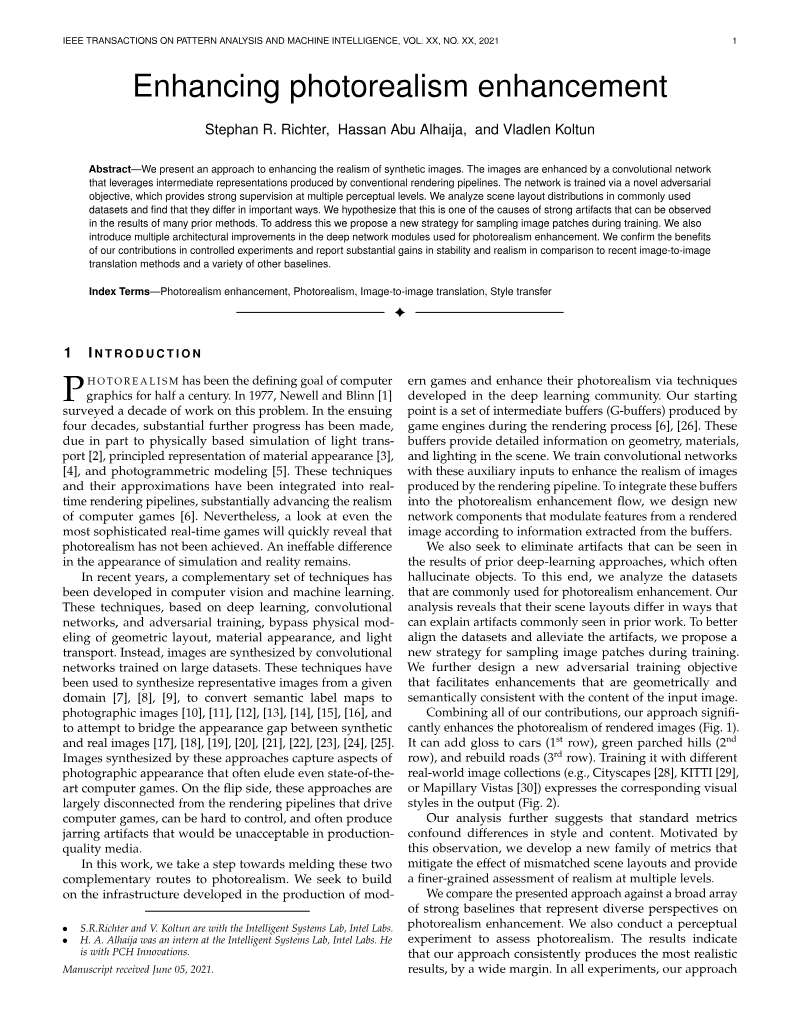
- 01A new rendering-aware denormalization network improves synthetic-to-real image translation by integrating geometry, material, and lighting buffers to ensure high-fidelity visual output.See it on page 1
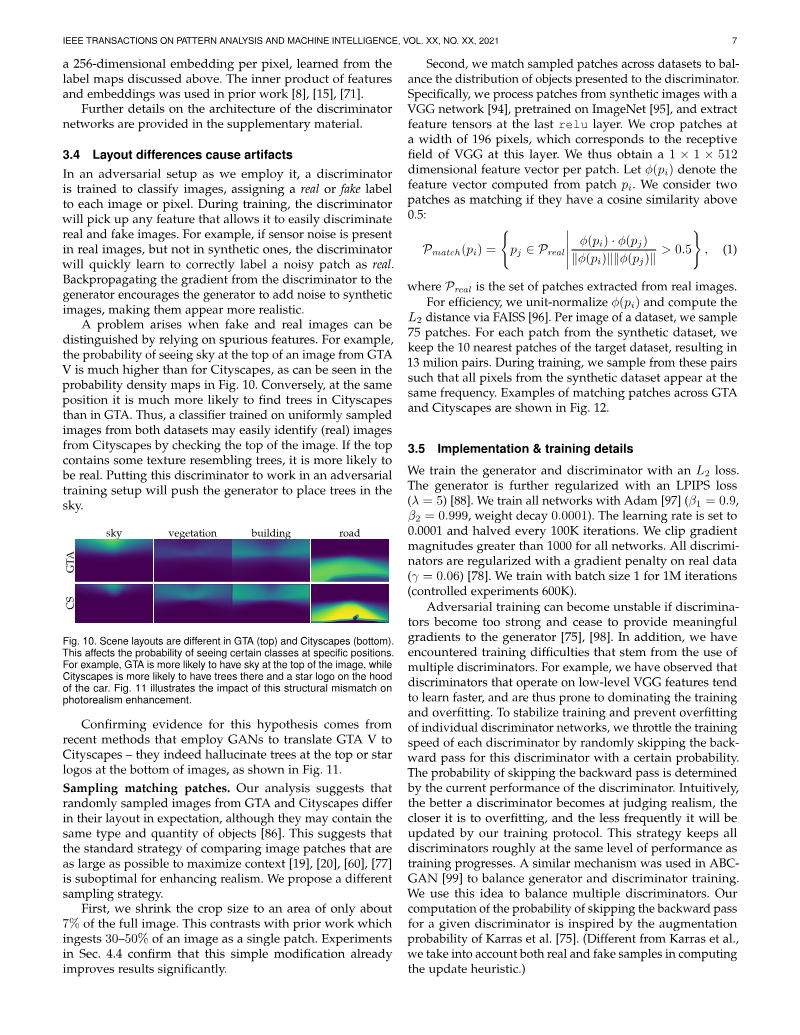
- 02The framework utilizes a multi-discriminator training protocol and patch-matching sampling to prevent GAN-related hallucinations and maintain semantic consistency between synthetic and real datasets.See it on page 7
- 03The semantically aligned Kernel VGG Distance metric provides a more accurate assessment of perceptual realism than traditional metrics like the Kernel Inception Distance, which prioritize semantic structure over visual quality.See it on page 8
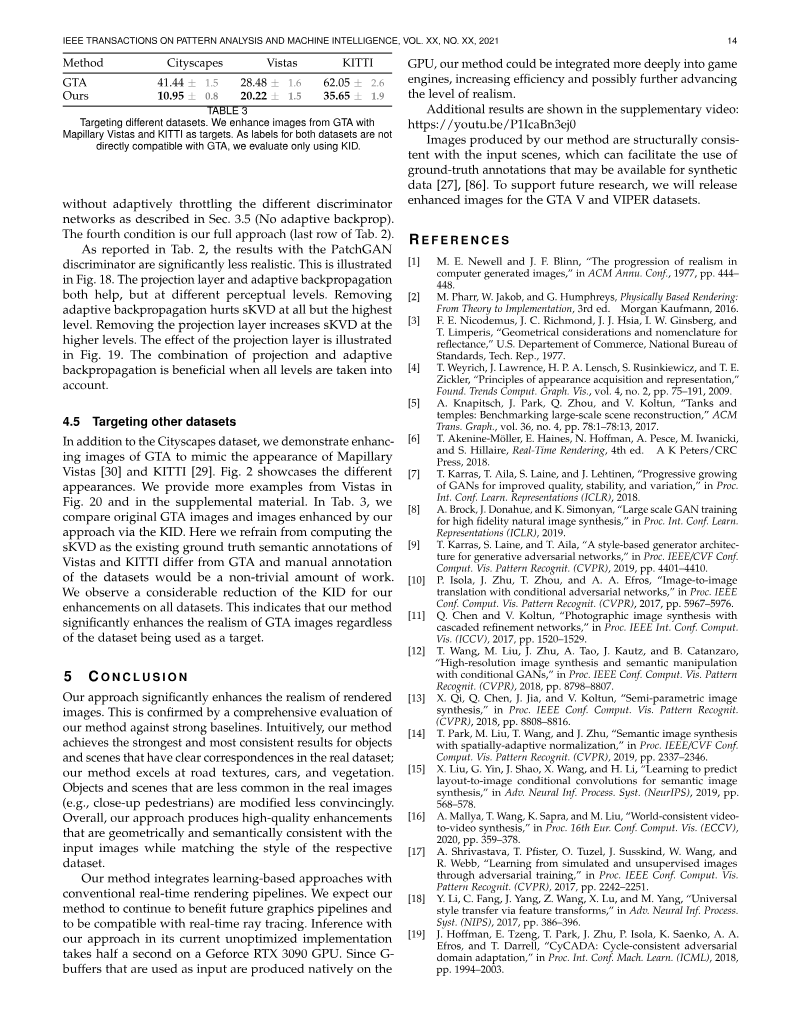
- 04The methodology has been successfully validated using synthetic environments from the Grand Theft Auto series adapted to real-world datasets including Mapillary Vistas and KITTI.See it on page 14
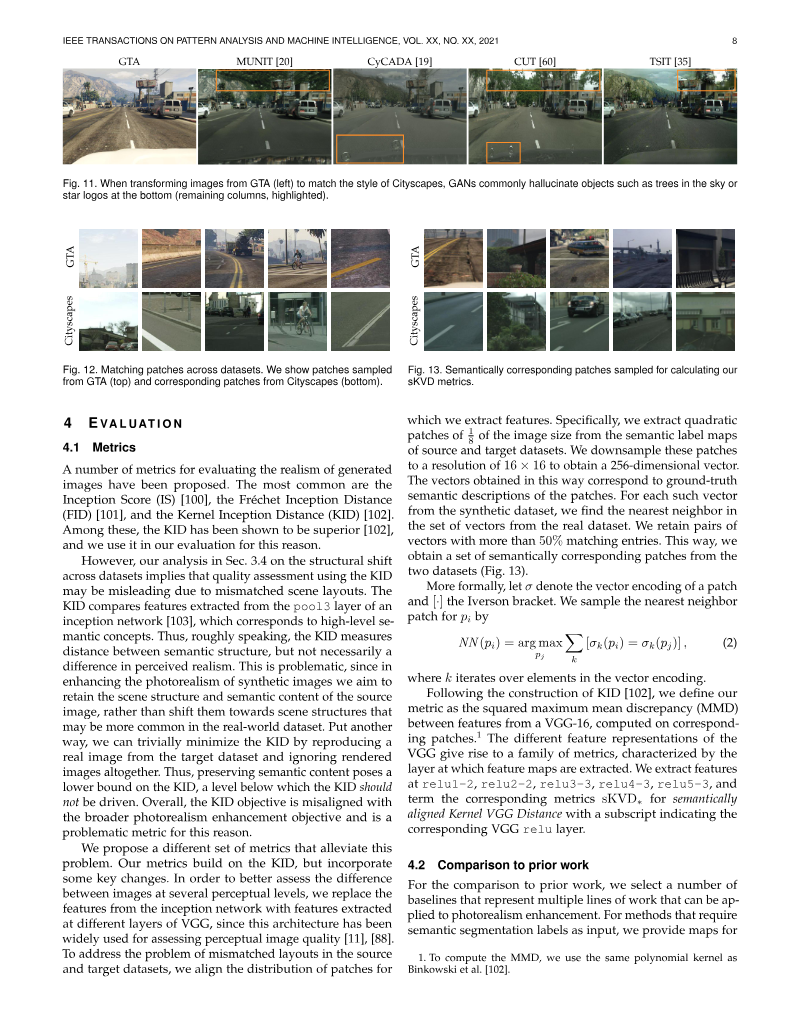
- 05The model demonstrates superior performance in refining complex textures such as road surfaces, vegetation, and vehicle details compared to standard image-to-image translation and style transfer baselines.See it on page 1
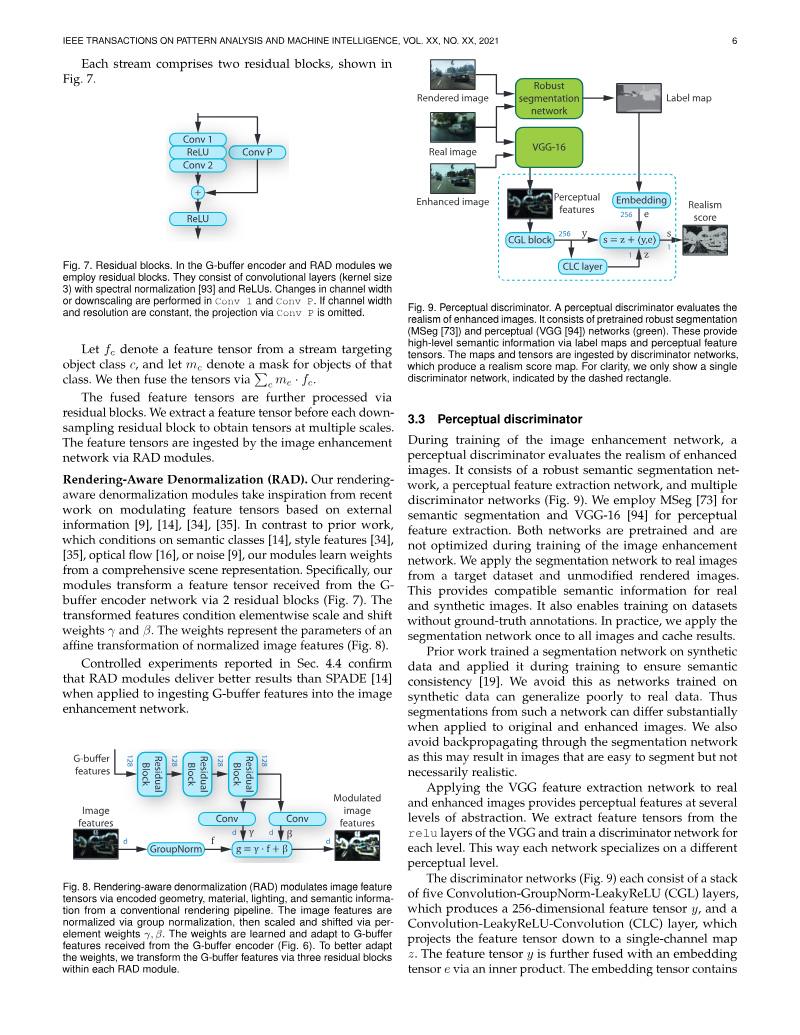
- 06The integration of perceptual discriminators with semantic embedding projections allows this framework to be implemented directly into existing rendering pipelines for advanced computer vision applications.See it on page 6
Ask AI about this report
Summary
Advancing the photorealism of synthetic imagery requires a sophisticated deep learning framework that bridges the gap between rendered data and real-world visual fidelity. By integrating intermediate rendering buffers—specifically geometry, material, and lighting data—into a rendering-aware denormalization network, it is possible to transform synthetic outputs into high-fidelity representations. This approach effectively mitigates the common pitfalls of generative adversarial networks, such as the hallucination of semantically incorrect objects, by utilizing a multi-discriminator training protocol and a specialized patch-matching sampling strategy that corrects structural layout mismatches between synthetic and real datasets.
The research establishes that traditional evaluation metrics like the Kernel Inception Distance are insufficient for measuring photorealism because they prioritize semantic structure over genuine visual quality. To address this, the introduction of the semantically aligned Kernel VGG Distance provides a more accurate assessment of perceptual realism. Controlled experiments and human-centric perceptual studies confirm that this metric, combined with the proposed architectural innovations, consistently outperforms standard image-to-image translation and style transfer baselines.
This methodology demonstrates significant efficacy when applied to synthetic environments, such as the Grand Theft Auto series, by successfully adapting them to real-world datasets like Mapillary Vistas and KITTI. The model excels at refining complex textures, including road surfaces, vegetation, and vehicle details, while maintaining geometric and semantic consistency. By leveraging perceptual discriminators with semantic embedding projections, the framework integrates seamlessly into existing rendering pipelines. These findings represent a substantial improvement in synthetic-to-real translation, offering a robust solution for generating high-quality, photorealistic imagery suitable for advanced computer vision applications.