Advertising reports and market data
Documents

💥 Creative THEFT era has begun. Direct 1:1 stolen ads perform 4-5x better. Would you run them?
The mobile gaming industry has entered a transformative phase characterized by the widespread adoption of direct creative replication, a practice often termed Creative Theft 2.0.
- Direct replication of high-performing ads is now a dominant strategy, with copied creative assets frequently outperforming original content by a factor of 4 to 5.
- Major industry titles, including Last War and Royal Kingdom, are actively utilizing near-identical copies of successful ad concepts to drive significant revenue growth.
- The mobile gaming industry is shifting toward a model where the ability to identify and rapidly deploy proven trends is prioritized over original creative innovation.

💰 8 Tips to Boost Your Q4 Ad Revenue by Felix Braberg
Mobile game developers can optimize Q4 ad revenue by shifting focus from the traditional late-December "Q5" period to the high-traffic Black Friday and Cyber Monday weekend.
- Prioritize the Black Friday and Cyber Monday window over the late-December 'Q5' period, as eCPM rates typically surge by 15% to 55% during this time.
- Increase ad supply by reducing interstitial cooldown periods by 15% to 20% and shortening banner refresh rates to five or ten seconds.
- Optimize ad demand by setting bid floors at 4% to 5% of average eCPM for banners and 7% to 10% for interstitials to drive higher auction prices.

Mastering Creative at Scale: How PokPok Builds Ads That Work
Effective creative scaling in the digital children’s entertainment sector relies on a highly structured, hypothesis-driven framework that prioritizes data integrity over high-volume, unorganized experimentation.
- PokPok scales creative through a hypothesis-driven framework that prioritizes data integrity and systematic iteration over high-volume, unorganized experimentation.
- To ensure actionable insights, the team uses centralized asset management, strict naming conventions, and granular tracking codes rather than relying on misleading data from low-cost secondary market testing.
- The production strategy balances AI-assisted brainstorming and B-roll generation with authentic user-generated content, which remains essential for longer-format engagement.

🧠 Sudoku Master Review: The 6,000-Ad War Between Hungry Studio & Miniclip
Hungry Studio is aggressively challenging established market leaders like Miniclip in the mobile puzzle genre by applying a high-velocity, data-driven growth model to its title, Sudoku Master.
- Hungry Studio has scaled Sudoku Master to 600,000 daily active users by prioritizing high-velocity creative iteration over genre innovation.
- Success in the saturated puzzle market is driven by the ability to deploy thousands of ad variations per month to combat the rapid decay of ad performance.
- The studio’s growth model relies on a war of attrition in user acquisition, where the frequency of A/B testing and creative deployment determines market share against incumbents like Miniclip.

Creative optimisation 101: Creative chaos solved by Matej Lancaric
The provided content outlines a modern approach to creative optimization in mobile user acquisition (UA), emphasizing the transition from manual, spreadsheet-heavy reporting to automated, data-driven decision-making.
- Shift from manual spreadsheet reporting to centralized dashboards that integrate data from Meta, TikTok, Google, and AppLovin to prioritize ROAS and lifetime value over vanity install metrics.
- Implement AI-powered frame-by-frame tagging to categorize ad elements—such as characters, themes, and gameplay hooks—to identify the specific 'DNA' of high-performing creative assets.
- Mitigate creative fatigue by monitoring the age and performance trends of advertisements to trigger timely content refreshes before performance declines.
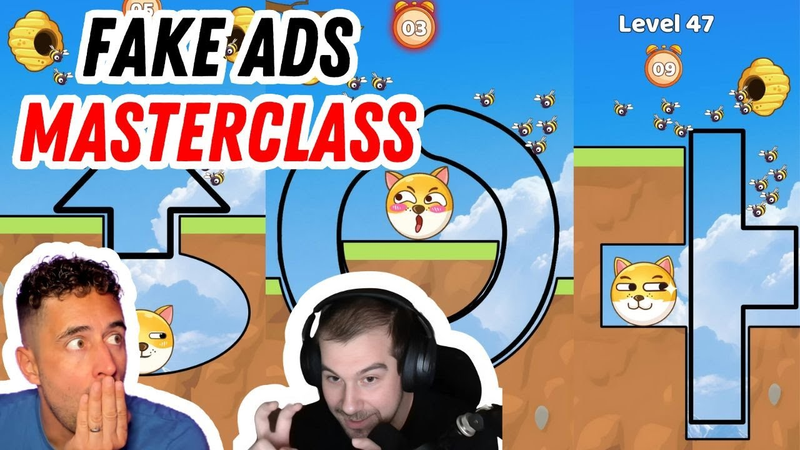
🐶 X-Clash: The Fake UA funnel & Fake Ads Masterclass. How to 10x your revenues?
Chinese studio Binuang Network and developer Glacier Games have successfully scaled titles like X-Clash by leveraging aggressive, misleading user acquisition funnels.
- Glacier Games and Binuang Network scaled X-Clash by using 'fake ads' that feature viral mini-game mechanics like 'Save the Dog' to drive downloads for a core 4X strategy game.
- The studio maintains a massive library of over 9,000 unique creatives to combat creative fatigue and sustain high-volume user acquisition on Google and YouTube.
- This strategy effectively bridges the gap between casual players and the high-value monetization loops typical of the 4X strategy genre.
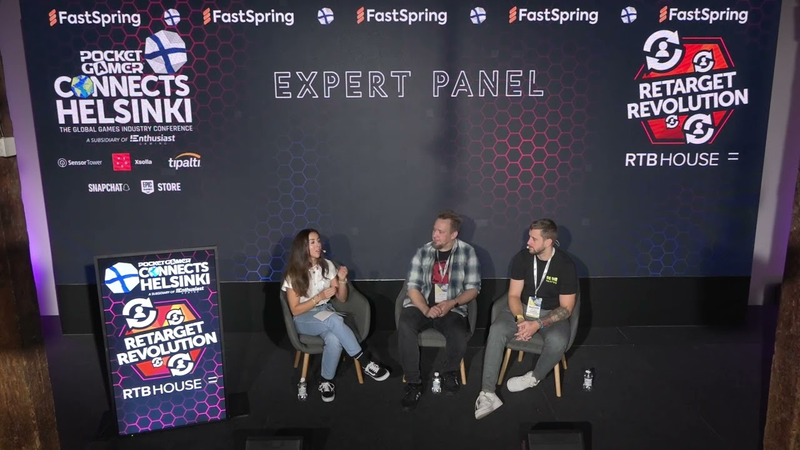
Panel: Future Of Retargeting - Hopes & Expectations.
Retargeting in the mobile gaming industry has evolved into a complex, non-evergreen strategy necessitated by increasing audience fragmentation and stringent privacy regulations.
- Retargeting strategy has shifted from broad outreach to granular, data-driven engagement that leverages in-game monetization metrics to identify and target high-value users.
- Industry focus is moving away from simple Return on Ad Spend (ROAS) toward measuring true incrementality to validate retargeting as a cost-effective alternative to rising user acquisition costs.
- Artificial intelligence is now essential for scaling re-engagement, specifically for automating audience segmentation and predicting individual player preferences in privacy-restricted environments.
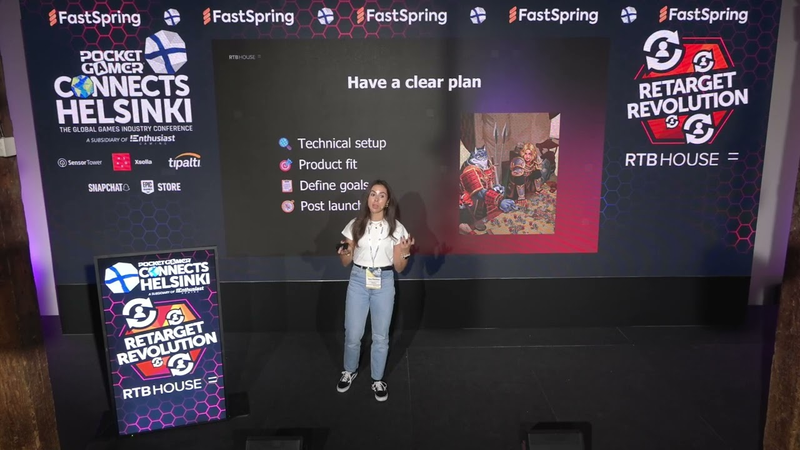
Session: Successful Retargeting - The Essentials -Vera Manhoso, RTB House.
Retargeting serves as a critical, yet underutilized, strategy for mobile gaming studios to combat high user churn.
- User retention is a critical challenge for mobile gaming, as 77% of users are lost within three days of installation and 90% churn before reaching day 30.
- Retargeting campaigns should be segmented into two distinct strategies: retaining recent installs from user acquisition efforts and re-engaging lapsed users who have not played for an extended period.
- Technical readiness for retargeting requires an MMP (Mobile Measuring Partner) integration, consistent tracking of postback events, and a clear data-sharing agreement with partners to ensure user data remains secure and siloed.

🎮💰 Triumph’s Story: From Brick Breaker to the $100Mil
Triumph has successfully scaled a skill-based gaming platform to over $100 million in total payouts by focusing on a high-velocity, fee-based model.
- Triumph has achieved over $100 million in total player payouts by operating a skill-based real money gaming platform featuring 13 mini-games.
- The platform targets a core demographic of 21–35-year-olds, with users typically making their first cash deposit within five minutes of downloading the app.
- User acquisition strategy relies heavily on 'trust-based' advertising, utilizing celebrity endorsements and influencer livestreams to build credibility for the withdrawal process.

Week in Mobile Games E68 - The Top 50 Mobile Game Makers, and crisis in the EU's games industry
The mobile gaming industry is currently defined by a stark dichotomy between the commercial success of established live-service titles and an increasingly hostile regulatory environment.
- Supercell CEO Ilkka Paananen has warned that the European Commission's proposed 'Digital Fairness Act' could severely damage the regional games industry by imposing restrictive regulations on free-to-play mechanics.
- The SEC is investigating AppLovin over allegations that the company breached platform partner agreements regarding data collection practices, specifically concerning the use of children's data.
- PocketGamer.biz released its 'Top 50 Mobile Game Makers 2025' list, which ranks Tencent at number one, followed by Take-Two Interactive and DeNA in the top three.

STOP Making These 4 Ad Monetization Mistakes | A Guide to Higher CPMs
Game studios frequently experience stagnant revenue despite traffic growth due to inefficient ad stacks and hidden technical fees that erode net margins.
- Prioritize the net dollar amount received from ad networks over negotiated revenue-share percentages, as contracted splits often do not reflect actual payouts.
- Adopt in-app header bidding as the primary monetization strategy to reduce operational overhead, as it requires significantly less manual maintenance than traditional waterfall setups.
- Optimize ad frequency and placement based on the specific game genre and player journey rather than industry averages, as casual games can support higher ad loads than creative or lifestyle-focused titles.
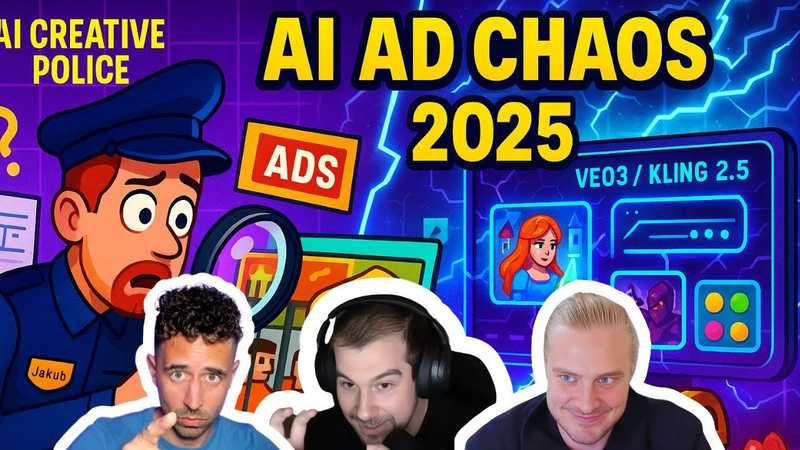
🤖 Ignore AI Ads now, regret it in 2026: AI creative trends
Mobile game marketing is undergoing a fundamental transformation as studios shift from using artificial intelligence for minor creative tasks to adopting it for end-to-end production.
- By late 2026, projections indicate that 50% of all mobile game advertisements will be produced using generative AI systems.
- Studios are transitioning from using AI for minor tasks to end-to-end creative production, driven by advanced models like Kling 2.5 and VEO3.
- AI tools enable rapid global localization by allowing developers to generate region-specific ad variants through simple adjustments to character demographics and language prompts.