Advertising reports and market data
Documents
📊 Creative Optimization Masterclass: Creative ROI & Scaling Across Networks
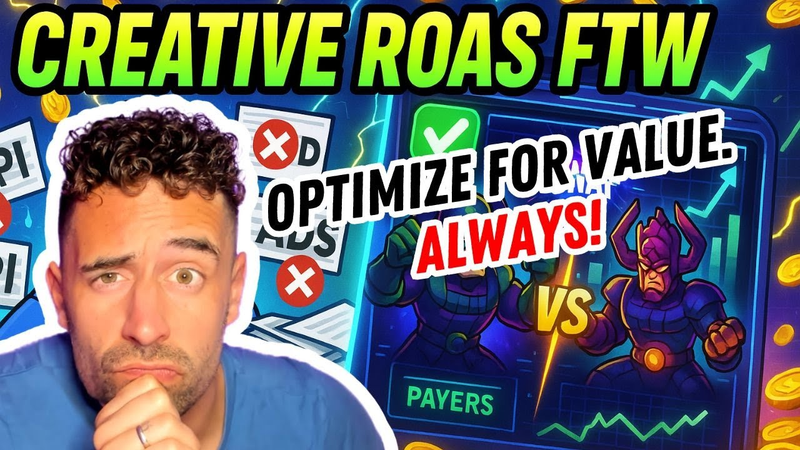
The primary objective of modern user acquisition (UA) is to shift focus from vanity metrics, such as install volume and click-through rates, toward creative-level return on investment (ROI) and lifetime value (LTV).
- Shift user acquisition focus from vanity metrics like install volume and click-through rates to creative-level ROI and long-term ROAS.
- Evaluate campaign success based on high-quality user milestones, such as tutorial completion or reaching level 15, rather than cost-per-install (CPI).
- Implement unified dashboards to map creative assets directly to in-app events and revenue data across networks including Facebook, TikTok, Google, AppLovin, and Moloco.


Digital Marketing Index Report: Q4 2025
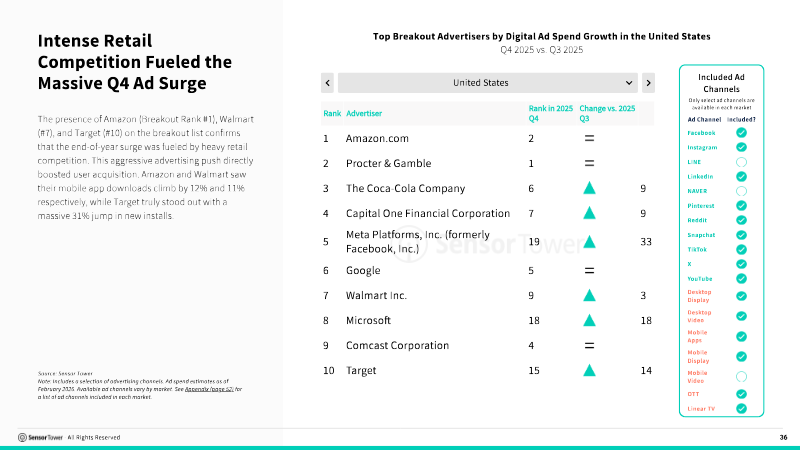
The analysis evaluates global digital-marketing dynamics for the final quarter of 2025, emphasizing shifts in channel performance, the rise of generative-AI as a discovery source, and the concentration of retail-media reach among dominant platforms.
- India was the only major global market to record positive overall digital marketing growth in Q4 2025, while other leading economies experienced stagnation or decline.
- Generative AI referrals surged by 133% year-over-year in the US, UK, and France, signaling their emergence as significant discovery engines despite currently accounting for less than 1% of total traffic.
- US retail-media impressions grew 13% quarter-over-quarter to 123 billion, with Amazon capturing the entire volume and delivering six times the impressions of Walmart.

Masters of Publishing 4: One Viral Ad Won’t Save You (Karen Levy, Creative Operations)
Sustainable growth in the hybrid casual gaming sector relies on a sophisticated, data-driven approach to user acquisition that prioritizes long-term retention over short-term traffic spikes.
- Integrating creative teams into the early development process allows for marketability testing that can reduce cost-per-acquisition by 30% to 40%.
- Sustainable growth in hybrid casual gaming requires aligning marketing creative with authentic gameplay to ensure long-term retention and higher lifetime value.
- Successful user acquisition relies on a dual-track methodology that balances high-volume, AI-assisted testing with high-quality production.

📊 Creative Optimization Masterclass: The Secret DNA of winning ads
The primary challenge for user acquisition (UA) managers in the mobile gaming industry is the inability to determine why specific advertisements succeed or fail.
- Transitioning from manual, spreadsheet-based analysis to AI-powered, frame-by-frame creative dissection is essential for identifying the specific drivers of ad performance.
- UA managers can move beyond file-name tracking by tagging creative assets based on granular variables such as tone, format, scene, and character appearance.
- Automated creative optimization allows teams to isolate and compare the effectiveness of specific visual styles and elements to determine what consistently drives conversions.

Gaming Meets Beauty: Inside Henkel’s First Brand Activation
Henkel’s recent collaboration between its Schwarzkopf got2b hair color line and the Final Fantasy XIV franchise serves as a strategic case study for non-endemic brands entering the gaming space.
- Henkel’s Schwarzkopf got2b brand entered the gaming market by partnering with Square Enix to launch limited-edition hair colors inspired by Final Fantasy XIV character aesthetics.
- The campaign strategy focused on bridging physical self-expression with virtual identity, targeting the gaming community’s emphasis on character customization.
- Success was driven by a hybrid model that combined offline product launches with strategic online influencer partnerships to reach the target demographic.
📊 Creative Optimization Masterclass: All your ads in ONE Dashboard?!
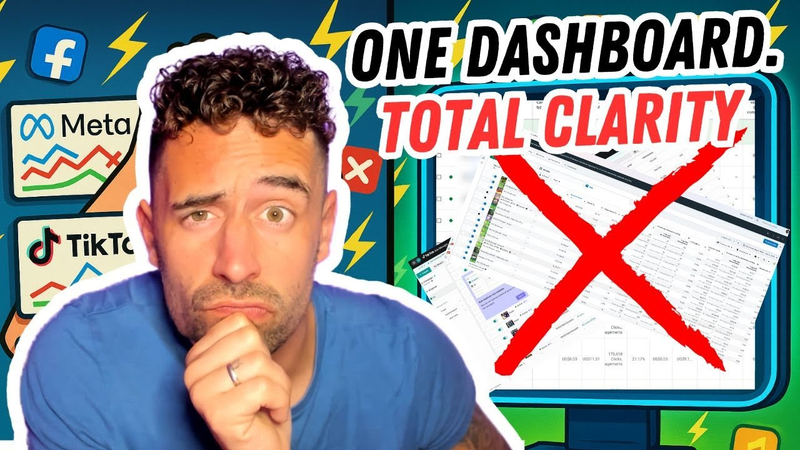
The primary challenge for User Acquisition (UA) managers in the mobile gaming industry is the fragmentation of performance data across multiple advertising networks, such as Meta, Google, TikTok, and AppLovin.
- Unifying performance data from Meta, Google, TikTok, and AppLovin into a single dashboard eliminates operational friction caused by disparate naming conventions and inconsistent reporting metrics.
- Automated creative optimization tools group assets by visual similarity, allowing for accurate performance tracking across networks and regions regardless of inconsistent file naming.
- Centralized dashboards enable real-time monitoring of key performance indicators, including CTR, CPI, and ROAS, from day zero through day 30 across all geographic markets.

Game of Phones: Alex Merutka on the Battles Shaping Mobile Gaming’s Future
Mobile gaming currently functions as the primary laboratory for user acquisition and advertising technology, where the competitive landscape is defined by a relentless pursuit of marginal monetization gains.
- AppLovin has established a dominant market position by focusing on performance-based ad tech and monetization, creating a 'data moat' that makes it difficult for competitors like Unity to challenge them.
- Playable ads have become the industry standard for user acquisition because they allow users to qualify themselves through interaction, providing deeper behavioral data that compensates for the loss of precise targeting capabilities.
- The mobile gaming ad ecosystem is shifting toward dynamic, context-aware creative that adapts in real-time to variables like weather, time of day, and user environment to improve engagement.


Digital Market Index: Q2 2025
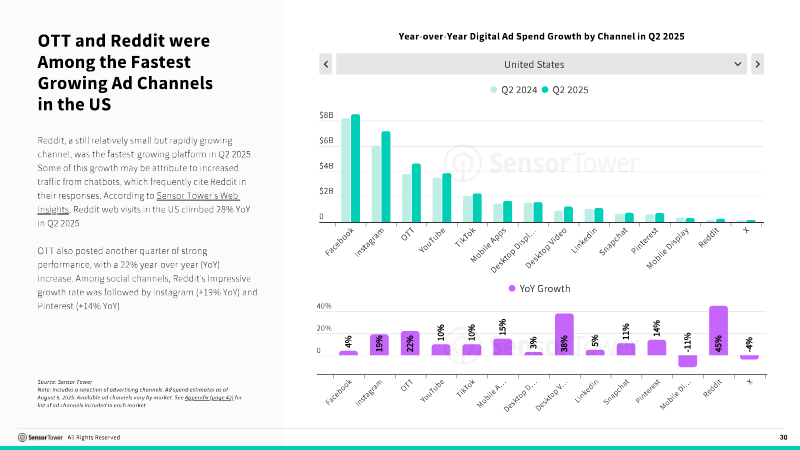
The global digital landscape reached a significant milestone in the second quarter of 2025, as in-app purchase revenue hit a record $40 billion.
- In Q2 2025, non-gaming applications surpassed mobile games for the first time, accounting for 52% of the record $40 billion in total in-app purchase revenue.
- Global mobile gaming downloads contracted by 6.8% year-over-year, while Strategy titles replaced RPGs as the highest-grossing gaming category with a 23% increase.
- ChatGPT became the fastest application to reach one billion downloads and secured a top-five position in global revenue, signaling a major shift toward AI-driven utility.

What Makes a Winning Growth Marketing Team in Today?
Modern growth marketing organizations are undergoing a fundamental structural shift driven by the rise of automated machine learning platforms and the necessity of operating within an efficiency-focused economy.
- Creative output is now the primary lever for growth, requiring teams to build high-velocity machines that generate and test diverse concepts at scale.
- Growth marketing teams must shift their focus from manual campaign management and spreadsheet maintenance to creative pipeline management and cross-functional strategy.
- Organizations should eliminate redundant business intelligence and manual reporting roles, as these functions are now effectively handled by AI and automated software.

Google Ads for Mobile Games: Best Practices for Apps with Hybrid Monetization
Hybrid mobile game studios must align their bidding strategies with the specific lifecycle stage of their applications to achieve sustainable growth.
- Hybrid monetization success requires integrating ad revenue data with in-app purchase signals to enable accurate value-based bidding for Google’s algorithms.
- Studios must transition bidding strategies from volume-focused install campaigns during launch to action-based or ROAS-focused bidding as the application matures.
- Campaigns require a daily budget of $50 to $100 to successfully exit the algorithm's learning phase and avoid premature scaling issues.

Is User Acquisition Really Broken in 2025?
User acquisition in 2025 remains a robust and essential growth engine for the mobile gaming industry, despite widespread perceptions that the sector is in decline.
- AppLovin currently dominates the user acquisition ecosystem by leveraging its MAX mediation platform integrated with the Axon 2 machine learning engine to create a superior data flywheel.
- Modern user acquisition has shifted from aggressive growth hacking to a model defined by incremental profitability, product quality, and sophisticated value optimization.
- Unity is attempting to challenge AppLovin’s market position with its Vector engine, which seeks to utilize in-app purchase data, though it currently faces significant technical and operational scaling hurdles.

Pushing value into a digital ad ecosystem - Ben Jeger from Moloco
Moloco, a demand-side platform (DSP) specializing in user acquisition and ad monetization, has established itself as a significant player in the global gaming ecosystem.
- Moloco’s monetization SDK, launched in early 2024, became one of the fastest-growing in industry history, leading the company to temporarily pause onboarding new publishers to focus on product development.
- Moloco differentiates its monetization offering by leveraging its existing position as a major buyer on ad exchanges, allowing it to drive value to advertisers without acting as a traditional middleman.
- The gaming industry has experienced a recent revenue flattening, with stagnation more prominent on Android while iOS continues to show growth, particularly among high-value payers in the US.