Report15 pages
Association Canadienne du Logiciel de Divertissement Rapport Annuel 2024
The 2024 annual review presents a comprehensive assessment of Canada’s video‑game sector, emphasizing its expanding regulatory influence, economic contribution and strategic diversification. Central to the analysis is the successful negotiation of two key exemptions—removal of the industry from the Streaming Act levy and exclusion from the Online Harms Act—demonstrating the sector’s growing political clout. The accession of major global publishers, notably Epic Games, Roblox and Tencent, further amplifies the association’s reach and underscores Canada’s emergence as a hub for gaming innovation and talent.
A worldwide survey of 13 000 players across twelve nations reveals that 74 % of Canadian gamers prioritize fun, while 43 % cite mental stimulation and 28 % value exploration, highlighting a multifaceted consumer motivation profile that informs product development and marketing strategies. High‑impact initiatives such as exclusive Unreal Engine‑driven studio tours in Montreal, the second Geneva Day of the Global Video Game Coalition securing United Nations‑level recognition, and the Ottawa “Jeux vidéo sur la Colline” summit collectively reinforced the sector’s cultural, social and economic significance, quantified at a $5.5 billion contribution to national GDP.
Financially, the Canadian Entertainment Software Association achieved its first full pre‑pandemic budget while operating virtually, generating cost efficiencies that funded supplemental programs including “Le pouvoir du jeu” and an overhaul of parental‑control video resources. Membership growth, driven by the inclusion of Roblox and Epic Games, propelled revenues beyond forecasts and validated the association’s diversification strategy.
Looking ahead, the organization intends to retain its virtual‑first operating model and continue advocacy for regulatory, economic and security policies that sustain industry expansion, while deepening diversity, equity and inclusion efforts through partnerships such as QueerTech and a cross‑industry equity working group. The report thus positions Canada’s interactive entertainment ecosystem as a resilient, globally connected, and policy‑savvy contributor to the broader digital economy.
- The Canadian video game sector contributed $5.5 billion to the national GDP in 2024, supported by a resilient, virtual-first operational model.
- The industry successfully secured exemptions from the Streaming Act levy and the Online Harms Act, signaling significant growth in its regulatory and political influence.
- Major global publishers including Epic Games, Roblox, and Tencent joined the association, driving revenue beyond forecasts and expanding the sector's reach.
- A global survey of 13,000 players identified that 74% of Canadian gamers prioritize fun, 43% seek mental stimulation, and 28% value exploration.
- The association achieved its first full pre-pandemic budget, allowing for increased investment in initiatives like 'Le pouvoir du jeu' and updated parental-control resources.
ESAC – Entertainment Software Association of CanadaJan 2024
Report76 pages
Big Games Industry Employment Survey 2024: Salaries, Compensation Trends and State of the Games Sector in Europe
The European games industry in 2024 is characterized by significant volatility and structural transformation, with 15% of the workforce experiencing layoffs and 10% exiting the sector entirely. This instability disproportionately affects junior professionals, nearly a third of whom have left the industry over the past year. While 44% of those who switched jobs secured career gains, a notable 24% accepted lower pay or seniority to remain employed. Job satisfaction and employee loyalty follow a U-shaped trajectory, typically bottoming out between three and five years of experience before rebounding as professionals prioritize stability and mature corporate processes.
Technological integration and workplace culture are central to current industry shifts. AI adoption has surged by 17% year-over-year, with 54% of professionals now utilizing these tools. Despite this modernization, the sector struggles with persistent systemic issues, including a gender pay gap driven by a lack of female representation in leadership and technical roles. Discrimination remains prevalent, as 32% of respondents reported personal experiences with gender-based bias and 26% cited ageism. Furthermore, a significant gap in professional development exists; 55% of workers received no formal training in the past year, forcing 65% of those seeking advancement to self-fund their education.
Operational pressures continue to impact well-being, with 28% of the workforce reporting stagnant career development and 7% working overtime almost daily. High dissatisfaction is closely linked to professional burnout, poor management, and a lack of work-life balance. However, certain segments show resilience; the outsourcing sector saw a significant rise in employee net promoter scores, and hybrid work models remain a primary driver of retention. While free-to-play studios generally offer higher compensation than premium developers, long-term stability perks and profit-sharing remain the most effective tools for maintaining a committed workforce in an increasingly precarious market.
- The European games industry faces significant instability, with 15% of the workforce experiencing layoffs and 10% leaving the sector entirely, disproportionately impacting junior professionals.
- AI adoption has surged by 17% year-over-year, with 54% of industry professionals now integrating these tools into their daily workflows.
- Systemic workplace issues persist, as 32% of respondents reported gender-based bias and 26% cited ageism, contributing to a gender pay gap rooted in a lack of female leadership and technical representation.
- Professional development is stagnating, with 55% of workers receiving no formal training in the past year, forcing 65% of those seeking career advancement to self-fund their education.
- While 44% of job switchers achieved career gains, 24% were forced to accept lower pay or reduced seniority to maintain employment in the current market.
+1
InGameJobJan 2024
Report10 pages
Toxicity and the Bottom Line: The Impact of Hate and Harassment on Player Retention and In-Game Purchases
Toxicity and harassment in online gaming environments significantly impact player retention and monetization, creating a direct financial incentive for studios to prioritize trust and safety. Research based on a representative survey of 2,408 active gamers across various age groups, genders, and ethnicities indicates that three out of four players consider safety from hate and harassment a high priority. Despite this, approximately 10% of players report feeling actively unsafe, with this figure rising to 23% among bisexual players and 18% among Asian players, highlighting the disproportionate impact on marginalized communities.
The data establishes a clear link between toxic behavior and lost revenue. Approximately 19% of players report spending less money in gaming communities to avoid harassment, while 21% have reduced their overall playtime. Engagement is further eroded by defensive player behaviors: 31% of participants have abandoned matches already in progress, 27% have left lobbies before a match began, and 44% have disabled voice chat entirely to mitigate exposure to abuse. These actions not only decrease individual player lifetime value but also degrade the experience for the broader player base.
Demographic analysis reveals that younger players, particularly those aged 18 to 24, are the most sensitive to these issues. This cohort is the most likely to feel unsafe and the most prone to disengaging or reducing spending in response to toxicity. Because these players represent a core demographic with long-term growth potential, their tendency to "vote with their wallets" suggests that safer gaming environments are fundamentally more profitable. The findings conclude that traditional moderation is currently insufficient, necessitating more robust community guidelines and integrated safety tools to protect both players and the industry's bottom line.
- Toxicity directly suppresses revenue, as 19% of players spend less money and 21% reduce their overall playtime to avoid harassment.
- Safety is a critical player priority, with 75% of the 2,408 surveyed gamers identifying protection from hate and harassment as a high priority.
- Harassment causes significant engagement loss, with 44% of players disabling voice chat, 31% abandoning active matches, and 27% leaving lobbies to avoid abuse.
- Marginalized groups face disproportionate risks, with 23% of bisexual players and 18% of Asian players reporting that they feel actively unsafe in gaming environments.
- The 18-to-24 age demographic is the most sensitive to toxicity, showing the highest propensity to disengage or reduce spending, which threatens long-term industry growth.
+2
Take ThisJan 2024
Report37 pages
State of the Game Industry 2024
The global game industry entered 2024 in a state of profound volatility, defined by a painful market correction following post-pandemic overexpansion. This period of instability is marked by widespread layoffs affecting one-third of the workforce and a surge in studio closures linked to rapid corporate conglomeration. While North America remains the primary hub for development and PC continues to be the dominant platform, the workforce is increasingly preoccupied with job security and the ethical implications of emerging technologies. Generative AI has seen rapid adoption, with nearly half of developers utilizing these tools, yet 84% express deep concern regarding copyright infringement and the potential for further job displacement.
Labor dynamics are shifting as developers react to economic pressures and perceived corporate mismanagement. Support for unionization has climbed to 57%, with particularly high enthusiasm among younger professionals aged 18 to 24 who are grappling with inflation and precarious employment. This desire for collective bargaining coincides with a growing rejection of mandatory return-to-office policies and a decline in confidence regarding corporate diversity and sustainability initiatives. Furthermore, the technical landscape is fracturing; significant dissatisfaction with Unity’s recent policy changes has led one-third of developers to consider switching engines, often favoring open-source alternatives like Godot.
Business models remain centered on digital premium downloads, favored by 51% of the industry, even as marketing strategies face disruption due to overwhelming negative sentiment toward major social media platforms like Twitter/X. Despite the internal turmoil, there is a measurable increase in the implementation of accessibility features, which now appear in nearly half of all projects. However, the industry’s demographic makeup remains largely stagnant, continuing to be predominantly White and male. Ultimately, the current landscape reflects a workforce caught between the necessity of financial stability through consolidation and a growing demand for systemic reform to address ethical, technical, and labor-related grievances.
- The industry is undergoing a severe market correction characterized by widespread layoffs affecting one-third of the global workforce and a surge in studio closures.
- Support for unionization has reached 57%, driven largely by younger professionals (ages 18–24) facing economic instability and dissatisfaction with corporate management.
- While 49% of developers have adopted generative AI, 84% of the workforce reports significant concerns regarding copyright infringement and potential job displacement.
- Technical infrastructure is shifting, with one-third of developers considering engine migrations—often toward open-source options like Godot—following recent policy changes at Unity.
- Digital premium downloads remain the primary business model for 51% of the industry, even as marketing strategies struggle with declining sentiment toward major social media platforms.
+3
Game Developers ConferenceJan 2024

Report106 pages
Llibre Blanc d’Accessibilitat per al Desenvolupament de Videojocs
The central thesis is that video‑game accessibility must be embedded from the earliest design stages, using a standardized, non‑subjective evaluation framework, to achieve universal inclusion while avoiding the steep costs of retro‑fitting. Drawing on the European EN 301 549 ICT‑accessibility standard and the Ga11y portal launched in July 2022, the analysis provides a comprehensive catalogue of functional measures that map directly to specific disability profiles.
The market context is global, with more than three billion gamers worldwide, roughly 400 million of whom have a disability, and an estimated 18 million regular players in Spain. Despite growing awareness since 2014 and heightened industry focus from 2018, major publishers often omit disclosure of the accessibility features they implement. The work outlines 28 “star‑rated” guidelines, ranging from simple one‑star options such as clear iconography, customizable audio mixes, and control‑swap mechanisms, to complex five‑star solutions like sign‑language interpretation and AI‑driven navigation assistance. Each measure is linked to visual, auditory, motor, speech or cognitive impairments, and the guidance stresses that low‑complexity features can be integrated early with minimal technical effort, delivering broad, cost‑effective support.
A parallel emphasis is placed on the expanding hardware ecosystem. Commercial adaptive controllers—from the modular Sony Access Controller to eye‑tracking solutions like Tobii Eye Tracker 5—are complemented by low‑cost 3‑D‑printed accessories that enable bespoke adaptations. Collaboration between industry bodies such as AEVI and the Fundación ONCE underpins the push for mandatory, inclusive design practices across the European development landscape, positioning accessibility as a strategic imperative rather than an optional add‑on.
- Accessibility must be integrated during early design phases to avoid the high costs of retrofitting, utilizing the European EN 301 549 ICT-accessibility standard as a foundational framework.
- The global gaming market includes over three billion players, with approximately 400 million individuals living with a disability and 18 million regular players in Spain.
- The Ga11y portal, launched in July 2022, provides a catalogue of 28 star-rated accessibility guidelines that map specific technical solutions to visual, auditory, motor, speech, and cognitive impairments.
- Low-complexity features, such as customizable audio mixes and control-swap mechanisms, can be implemented with minimal technical effort to provide broad, cost-effective support.
- Hardware accessibility is expanding through a combination of commercial adaptive controllers like the Sony Access Controller and Tobii Eye Tracker 5, alongside low-cost, 3D-printed bespoke accessories.
+2
AEVIJan 2023
Report106 pages
Libro Blanco de Accesibilidad para Desarrolladores
The core thesis emphasizes that video‑game accessibility must be embedded from the earliest design stages, rather than added later, because retro‑fitting dramatically inflates development time and cost. Drawing on the European EN 301 549 standard and the Ga11y catalogue, the work presents a systematic methodology for evaluating both closed platforms (consoles) and open platforms (PC and mobile) and supplies developers with a practical reference for implementing auditory, visual, motor and cognitive options.
Globally, roughly three billion people play video games, of whom about four hundred million experience some form of disability. Within the Spanish ecosystem, industry bodies such as AEVI and Fundación ONCE have positioned universal accessibility as a strategic priority, encouraging adoption of the outlined standards across the period 2018‑2023, when systematic measures began to emerge after an initial appearance in 2014.
A tiered catalogue of more than thirty accessibility measures is detailed, ranging from basic 1‑star options—identifiable icons, joystick swapping, sound‑mix controls and puzzle‑skip functions—to advanced 5‑star features such as sign‑language interpretation, voice‑to‑text and text‑to‑voice for multiplayer. Each measure is mapped to specific disability profiles (partial or total vision loss, colour‑vision deficiency, hearing loss, motor impairments and cognitive challenges) and is recommended for early integration with configurable settings. A self‑assessment matrix forces developers to verify compliance for every mandatory feature, underscoring that true inclusivity also depends on compatible adaptive peripherals.
The analysis of hardware solutions lists the principal adaptive controllers and accessories available for major consoles, including the Xbox Adaptive Controller, Hori Flex, PlayStation Access Controller, QuadStick, Tobii Eye Tracker 5, the Ford Adapta racing simulator and the OWO haptic jacket, together with their price ranges. It concludes that while commercial peripherals are expanding, gaps remain, making coordinated software‑hardware strategies essential for delivering fully inclusive gameplay across the global market.
- Accessibility must be integrated during the earliest design stages to avoid the significant cost and time inflation associated with retrofitting features.
- Approximately 400 million of the 3 billion global gamers live with some form of disability, making inclusive design a critical market consideration.
- The framework categorizes over 30 accessibility measures into a 5-star system, ranging from basic joystick swapping and puzzle-skipping to advanced sign-language interpretation and text-to-voice features.
- Developers should utilize the European EN 301 549 standard and the Ga11y catalogue to systematically map accessibility features to specific visual, auditory, motor, and cognitive disability profiles.
- Industry bodies like AEVI and Fundación ONCE have established universal accessibility as a strategic priority within the Spanish ecosystem since 2018.
+2
AEVIJan 2023
Report15 pages
Annual Report 2023: Canada
The 2023 annual review underscores a year of extraordinary expansion for Canada’s video‑game industry, positioning the nation as a pre‑eminent global hub for development talent and creative output. Canadian studios not only captured a record share of international awards and critical praise, but also deepened export revenues, reinforcing the sector’s contribution to the broader digital economy. Concurrently, the industry association intensified its advocacy agenda, securing more favourable regulatory frameworks and advancing diversity, equity and inclusion initiatives that aim to broaden participation across the workforce.
Financial analysis reveals that the Canadian Entertainment Software Association (ALD) concluded the fiscal year with a substantial surplus, reflecting both robust membership growth and effective cost management. The surplus enabled the organization to maintain flat membership fees for existing constituents while expanding its full‑time staff, thereby enhancing service delivery and policy‑making capacity. This fiscal stability signals confidence among stakeholders and provides a solid foundation for future strategic investments.
Geographically, the findings pertain to the Canadian market, encompassing all provinces and territories, and cover the calendar year 2023. The scope spans development studios, publishing entities, and ancillary service providers within the interactive entertainment ecosystem, as well as the association’s governance and advocacy functions.
Overall, the data illustrate a thriving, financially sound industry that is both internationally competitive and increasingly inclusive, supported by an association that leverages its surplus to reinforce member value and influence public policy.
- Canada’s video game industry experienced extraordinary expansion in 2023, solidifying its status as a global hub for development talent and creative output.
- Canadian studios achieved record-breaking international award recognition and critical acclaim throughout the 2023 calendar year.
- The sector deepened its export revenues in 2023, significantly increasing its contribution to the national digital economy.
- The Canadian Entertainment Software Association (ALD) ended the 2023 fiscal year with a substantial financial surplus resulting from robust membership growth and cost management.
- The ALD utilized its fiscal surplus to increase full-time staffing and enhance policy-making capacity while maintaining flat membership fees for existing constituents.
+1
ESAC – Entertainment Software Association of CanadaJan 2023
Report36 pages
State of the Game Development Industry 2023: Workplace Health & HR Culture, Mental Trends
The global game development industry entered a period of profound instability throughout 2023, characterized by widespread layoffs affecting 28% of the workforce and a pervasive crisis of employee loyalty. This volatility is reflected in a negative Employee Net Promoter Score of -19%, signaling deep-seated dissatisfaction across the sector. While economic recalibration and management failures are the primary drivers of this distress, only 3% of job losses are currently attributed to AI automation. Instead, the workplace is increasingly defined by "quiet hiring" practices, where 37% of employees take on expanded responsibilities without additional compensation, often coupled with unpaid overtime and insufficient severance packages.
Despite these hardships, remote and hybrid work models have become the industry standard, with 80% of professionals operating outside traditional office environments. Job seekers now prioritize salary, remote flexibility, and skill development above all else. However, a significant disconnect exists between employer expectations and worker reality. While 88% of firms prioritize industry expertise and portfolios over formal education, they simultaneously struggle to fill high-level specialist roles. This talent gap is exacerbated by a competitive market where 50% of professionals find suitable opportunities scarce, particularly entry-level candidates and marginalized groups who face heightened barriers to entry.
The most critical factor for improving retention and workplace culture is managerial mindfulness, specifically ethical leadership and empathy. Despite its statistical importance to employee satisfaction, only 13% of companies provide leadership training in these areas. As 70% of professionals report general dissatisfaction and 34% of companies have scaled back hiring, the industry faces a structural imbalance. Success in the current landscape requires a shift away from traditional recruitment and toward fostering supportive environments that address the mental health and professional growth of a demoralized workforce.
- The game industry experienced significant instability in 2023, with 28% of the workforce affected by layoffs and an Employee Net Promoter Score of -19% indicating widespread dissatisfaction.
- Economic recalibration and management failures are the primary drivers of industry distress, while AI automation currently accounts for only 3% of total job losses.
- Workplace culture is suffering from 'quiet hiring' practices, where 37% of employees are absorbing expanded responsibilities without corresponding increases in compensation.
- Remote and hybrid work models have become the industry standard, with 80% of professionals now operating outside of traditional office environments.
- A structural talent gap persists as 50% of professionals report a scarcity of suitable opportunities, despite 88% of firms prioritizing portfolios and expertise over formal education.
+1
80 LevelJan 2023
Report34 pages
State of the Game Industry 2023
The global game development landscape in 2023 is characterized by a return to established platforms and a growing skepticism toward speculative technologies. PC remains the primary focus for the majority of developers, while the PlayStation 5 has emerged as the preferred console for both current projects and future interest. Conversely, enthusiasm for blockchain and the metaverse has waned significantly, with a vast majority of studios reporting no interest in the former and nearly half of the workforce doubting the long-term viability of the latter. This shift coincides with a workforce demographic that is increasingly concentrated in smaller indie studios and composed of professionals with a decade or less of experience.
Operational priorities are shifting toward social responsibility and internal structural reform. Diversity, equity, and inclusion initiatives, alongside sustainability and accessibility measures, have become standard considerations for more than half of the industry. However, significant labor tensions persist, evidenced by a majority of developers supporting unionization and widespread concern regarding the impact of large-scale studio acquisitions on the market. While hybrid work models have become the norm, the industry continues to struggle with self-imposed pressure to work extended hours and a reliance on traditional discovery methods, such as word-of-mouth and storefront promotions, over emerging social media platforms.
The industry also faces critical challenges regarding workplace safety and demographic representation. Player harassment remains a pervasive issue, affecting 40% of the workforce and disproportionately impacting community managers and marginalized groups. While most companies have issued statements addressing these incidents, developers are calling for more robust enforcement policies and mental health resources. Demographically, the industry remains largely white and male, though a significant 20% of respondents identify as LGBTQ+. These findings suggest an industry in a state of transition, balancing technological pragmatism with a heightened focus on cultural and structural accountability.
- The industry is pivoting toward technological pragmatism, with PC as the primary development focus and PlayStation 5 as the preferred console, while interest in blockchain and the metaverse has significantly declined.
- Workplace culture is under scrutiny as 40% of the workforce reports experiencing player harassment, with community managers and marginalized groups being the most affected.
- Labor tensions are rising, characterized by majority support for unionization among developers and widespread concern regarding the market impact of large-scale studio acquisitions.
- Diversity, equity, and inclusion, alongside sustainability and accessibility, have become standard operational considerations for over 50% of the industry.
- The workforce is increasingly composed of professionals with ten years or less of experience, with 20% of respondents identifying as LGBTQ+ despite the industry remaining predominantly white and male.
+1
Game Developers ConferenceJan 2023
Report14 pages
Female Gamers in Asia: Version for Women in Games Asia Panel
Female gamers represent a primary engine of growth within the Asian interactive entertainment market, accounting for 35% of the region's 1.46 billion total gamers as of 2021. This demographic is expanding at a faster rate than the general gaming population, with a year-over-year growth of 7.6% compared to the total market increase of 5.0%. The scope of this analysis covers China and the Asia-10 markets, which include Chinese Taipei, India, Indonesia, Japan, Korea, Malaysia, Philippines, Singapore, Thailand, and Vietnam. Data was derived from a 2021 survey of over 6,500 randomized respondents who identified as active gamers across mobile, PC, and console platforms.
Mobile gaming is the dominant platform for this demographic, utilized by 95% of female gamers, while 60% engage with PC games and 17% use consoles. In terms of genre, female players in Asia show a strong preference for role-playing, racing, and strategy games. Discovery of new titles is primarily driven by social recommendations from friends, followed by the visual quality of graphics and core gameplay mechanics.
Monetization trends indicate that female gamers are highly engaged with in-game economies, with 84% of those willing to spend making in-game purchases. They are particularly inclined toward purchasing cosmetic items and participating in gacha mechanics. In 2021, female gamer spending reached $13.07 billion in China and $5.52 billion across the Asia-10 for mobile titles, while PC game spending reached $9.70 billion and $3.93 billion in those respective regions. These findings suggest that gender inclusivity and targeted development for diverse interests are essential for capturing the full economic potential of the Asian games industry.
- Female gamers in Asia represent 35% of the region's 1.46 billion total gamers, with a year-over-year growth rate of 7.6% that outpaces the 5.0% growth of the general gaming population.
- In 2021, female gamer spending on mobile titles reached $13.07 billion in China and $5.52 billion across the Asia-10, while PC spending reached $9.70 billion and $3.93 billion respectively.
- Mobile is the primary platform for this demographic, with 95% of female gamers playing on mobile devices, compared to 60% on PC and 17% on consoles.
- Female players in Asia demonstrate high engagement with in-game economies, as 84% of those willing to spend make in-game purchases, specifically favoring cosmetic items and gacha mechanics.
- New title discovery for this demographic is driven primarily by social recommendations from friends, followed by visual graphics quality and core gameplay mechanics.
+1
Niko PartnersOct 2022
Report31 pages
State of the Game Industry Report: 2022
The global game development landscape in 2022 reflects a period of significant structural and cultural transition. PC remains the primary development platform, while the PlayStation 5 maintains its position as the leading console choice. Conversely, mobile development has experienced a decade-long decline in developer interest. Emerging hardware like the Steam Deck and PlayStation VR2 continues to capture attention, yet the industry remains deeply skeptical of speculative technologies such as the metaverse, cryptocurrency, and NFTs. These concerns are rooted in anxieties regarding environmental sustainability, ethical business practices, and the long-term viability of blockchain-based models.
Workplace culture and labor dynamics have emerged as central themes, marked by a measurable improvement in work-life balance as 60 percent of developers now maintain a 40-hour work week or less. Despite this progress, the industry struggles with systemic issues, as a majority of studios have failed to adequately address internal reports of misconduct and toxicity. This environment has fueled a growing movement toward collective bargaining, with 55 percent of developers supporting unionization and nearly one-quarter of workplaces engaging in active discussions regarding labor organization.
The industry continues to prioritize accessibility, with a record 39 percent of developers integrating inclusive design features into their projects. However, broader efforts toward diversity and social activism remain inconsistent across various studios. Furthermore, the workforce remains predominantly male and early-career, highlighting a demographic imbalance that persists alongside ongoing tensions between developers and major platform holders. As evidenced by the 34 percent of developers who support Epic Games in its legal conflict with Apple, there is a clear desire for greater autonomy and a shift in the power dynamics that currently govern the digital distribution ecosystem.
- Labor organization is gaining significant momentum, with 55 percent of developers supporting unionization and nearly 25 percent of workplaces actively discussing collective bargaining.
- Work-life balance has improved, as 60 percent of developers now report working 40 hours per week or less.
- Despite progress in working hours, a majority of studios have failed to effectively address internal reports of workplace toxicity and misconduct.
- Developers are increasingly seeking autonomy from platform holders, evidenced by 34 percent of the industry supporting Epic Games in its legal battle against Apple.
- Accessibility is a growing priority, with 39 percent of developers incorporating inclusive design features into their projects.
+5
GDCJan 2022
Report81 pages
2022 European Video Games Industry Insight Report
By European Game Developers Federation (EGDF) Supported by Video Games Europe European Video Games Industry Data 5 Number of game developer studios 7 Number of service providers 8 Number of people working in the video games industry 9 Percentage of women working in the industry ...
- France and Germany have a significant number of game development service providers, with 261 companies reported in 2022, indicating their importance in the industry.
- Poland had 494 game developer studios in 2022, a notable increase from 412 in 2018, and its industry employed 15,000 people in 2022, up from 9,710 in 2018.
- Spain's video game industry has shown consistent growth, with 447 developer studios in 2022, an increase from 375 in 2018, and employed 9,621 people in 2022, up from 6,900 in 2018.
- Italy had 160 game developer studios in 2022, a rise from 90 in 2018, and its industry employed 2,400 people in 2022, up from 1,100 in 2018.
- Estonia's game development sector in 2020 comprised 37 studios, employed 304 people, and generated 37.2 million euro in turnover.
+2
European Games Developer FederationJan 2022
Report69 pages
Dutch Games Monitor 2022
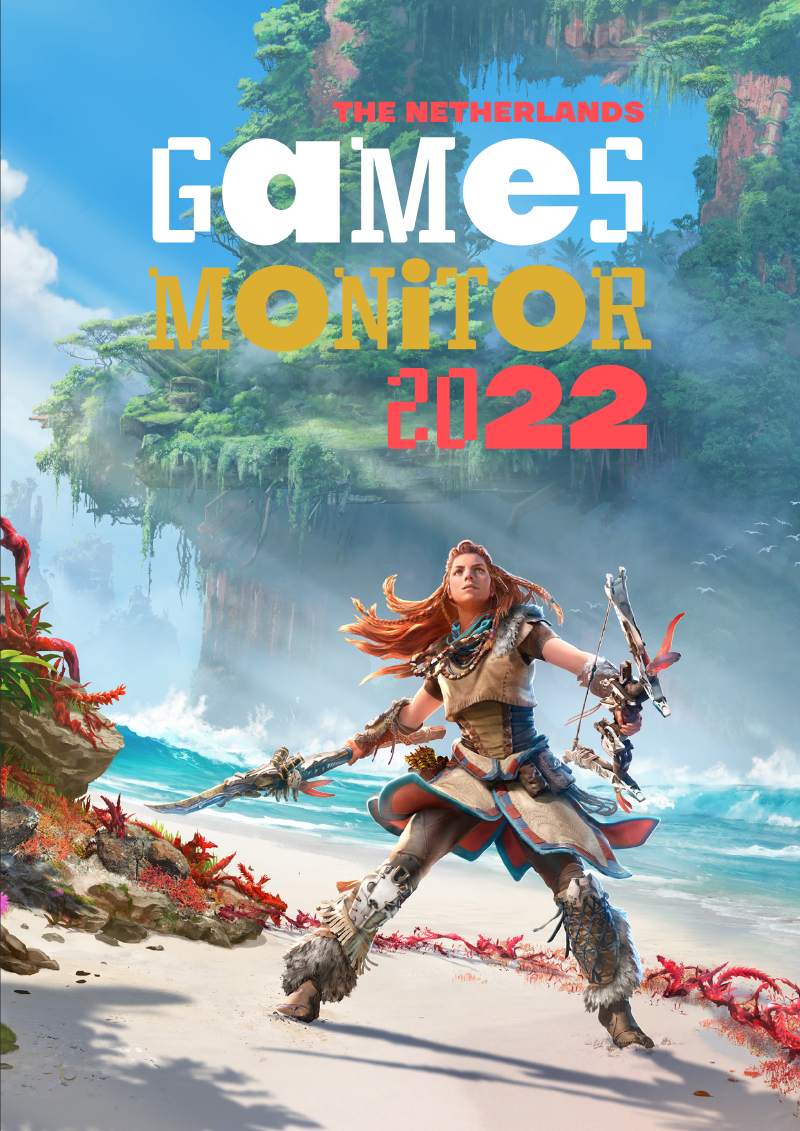
TEXT AND ANALYSIS DESIGN All rights reserved NEO Observatory COVER IMAGE This publication is made possible with Walter Manshanden Horizon Forbidden West the support of Province of Utrecht, by Guerrilla Games Gemeente Utrecht, HKU: University of PROOFREADING AND the Arts Utrecht, Breda University of GENERAL SUPPORT SPECIAL THANKS TO Applied Sciences (BUAS), Hanze Marilla Valente ...
- The Dutch video game industry generated €420-€440 million in revenue in 2021, growing almost 18% annually between 2018 and 2021. The number of companies with over €1 million in revenue increased from 18% in 2018 to 24% in 2021.
- The industry employs 4560 people across 630 companies, with approximately 700 graduates annually. Companies with more than 50 employees doubled from 6 to 12 between 2018 and 2021, indicating significant scaling.
- The Dutch games industry is maturing, with a majority of companies having existed for over 7 years. The largest potential for scaling up is seen in companies with 4 to 12 years of experience.
- Dutch game developers utilize a multi-platform, multi-distribution, and multi-monetization strategy. While Unity remains the most popular game engine, Unreal Engine's usage grew significantly from 8% in 2018 to 25% in 2021.
- Growth is expected across various market segments, with the console/PC market (68% agree/strongly agree) and subscription services showing the most positive outlook. Expectations for the VR market are also more positive than three years ago.
+2
Dutch Games AssociationJan 2022
Report6 pages
Dutch Games Monitor 2022: Factsheet
The Dutch Games Monitor 2022 provides a comprehensive analysis of the Netherlands' video game industry, covering the period from 2018 to 2021. The primary objective is to evaluate the sector's growth, maturity, and structural evolution. The research methodology incorporates desk research, roundtable discussions, and a survey of approximately 500 companies, yielding nearly 200 responses. The analysis focuses on two distinct domains: entertainment games and applied (serious) games, which serve sectors such as healthcare and education.
The industry demonstrates significant maturation, characterized by a shift from an initial increase in the number of companies to a more recent surge in revenue and employment. By the end of 2021, the sector comprised 630 companies, generating between €420 million and €440 million in annual revenue. This represents an average annual revenue growth of nearly 18%, outpacing global industry averages. Employment also expanded, reaching 4,560 jobs with an annual growth rate exceeding 5%. This job creation is particularly concentrated in larger organizations, with the number of scale-ups employing over 50 people doubling to 12 companies over the three-year period.
Geographically, the Greater Amsterdam region leads in total employment, while Utrecht maintains the highest concentration of applied game developers. Although the number of dedicated game education programs has slightly decreased, the industry is seeing a rise in diversity, with the percentage of women in the workforce reaching 23% by 2021. Furthermore, the sector is increasingly characterized by international expansion, a rise in external investments, and a growing number of mergers and acquisitions, signaling that the Dutch games industry is successfully transitioning into a more mature and globally competitive market.
- The Dutch games industry generated between €420 million and €440 million in annual revenue by the end of 2021, achieving an average annual growth rate of nearly 18%.
- Total employment in the sector reached 4,560 jobs by 2021, reflecting an annual growth rate of over 5%.
- The industry is scaling up, with the number of companies employing more than 50 people doubling to 12 firms between 2018 and 2021.
- The sector comprised 630 companies by the end of 2021, with the Greater Amsterdam region leading in total employment and Utrecht hosting the highest concentration of applied game developers.
- Workforce diversity has improved, with women accounting for 23% of the industry's employees by 2021.
+2
Dutch Games AssociationJan 2022
Report146 pages
Construyendo un Sector del Videojuego en Igualdad
The Spanish video‑game market now serves more than 18 million players, with women representing 48 % of the audience, yet women occupy only about 20 % of development roles across Europe’s roughly 90 000‑person sector. This persistent gender gap, amplified by the COVID‑19 pandemic and Brexit‑related uncertainties, motivates a coordinated push for equality that links industry associations, NGOs such as Women in Games, and policy makers. The central thesis is that genuine gender parity requires systemic change across recruitment, workplace culture, product design, and community moderation, supported by transparent data and legally anchored standards.
Key findings show that inclusive branding, gender‑neutral job ads, transparent salary bands and multi‑reviewer hiring processes can increase women’s entry and retention, while mentorship programmes, employee‑representative groups, regular engagement surveys and equitable parental‑leave schemes produce measurable improvements in pay‑gap closure and promotion rates. Companies that have instituted unconscious‑bias training, “inclusion nudges,” and data‑driven KPIs—such as Wooga—report higher retention and greater representation of women in senior positions. Community‑level interventions, including robust codes of conduct, verified‑identity requirements and AI‑enhanced chat filters, have already cut toxic messages by 5 % in pilot environments, demonstrating the effectiveness of proactive moderation.
The analysis covers the European context, drawing on data up to 2022 from Spain,
- Women comprise 48% of the 18 million players in the Spanish market, yet they hold only 20% of development roles within the 90,000-person European industry.
- Systemic hiring reforms—including gender-neutral job advertisements, transparent salary bands, and multi-reviewer processes—are essential to increasing the entry and retention of women in development roles.
- Companies such as Wooga have achieved higher retention and increased female representation in senior leadership by utilizing unconscious-bias training, inclusion nudges, and data-driven KPIs.
- Proactive community moderation, including verified-identity requirements and AI-enhanced chat filters, has successfully reduced toxic messaging by 5% in pilot environments.
- Internal workplace initiatives like mentorship programs, employee-representative groups, and equitable parental-leave schemes are proven to improve pay-gap closure and promotion rates for women.
+2
AEVIJan 2022
Report148 pages
Campo da Gioco Equo
The guide argues that gender equity is both a commercial necessity and a social responsibility for the European video‑game sector, which employs roughly 90 000 people while women constitute only about 20 % of developers despite half of Europe’s population being gamers. It frames equitable hiring, compensation, and workplace culture as strategic imperatives that can unlock talent, improve product relevance, and enhance profitability across development, publishing, and community‑management functions.
Key findings reveal a persistent 14.1 % gender‑pay gap within the EU and a pronounced promotion disparity linked to biased “potential” assessments. Transparent salary bands, gender‑bias‑checked job descriptions, and data‑driven monitoring are shown to narrow these gaps, as illustrated by Outplay’s partnership with InGAME, which produced a policy kit aligning compensation, career growth, and flexible work with equity goals. Hybrid‑flexible work models, mental‑health support, and targeted health initiatives—such as menopause pledges—further sustain inclusion, with Wooga’s five‑year parity programme cited as a successful example.
The document outlines concrete actions for building inclusive cultures: senior‑leadership commitment, merit‑based hiring, regular employee surveys, and zero‑tolerance harassment policies. Effective employee‑resource groups, exemplified by Take‑Two’s “Women in Gaming” ERG, amplify under‑represented voices and drive mentorship, innovation, and retention. Community‑safety measures, including AI‑enhanced moderation and diversified moderator teams, reduced toxic chat by 5 % in a pilot, demonstrating the impact of proactive, data‑driven interventions.
Education and pipeline initiatives span Europe, from the AWS GetIT programme that has reached over 23 000 students to national diversity pledges in France, Germany, Spain, Sweden, and the UK. These efforts aim to address the projected need for 500 000 software engineers and double girls’ interest in technical careers through early exposure and role‑model visibility. The guide stresses that measurable KPIs, positive‑action hiring practices, and compliance with EU legal frameworks are essential for tracking progress and ensuring lasting gender‑parity across the games industry.
- Women currently represent only 20% of the 90,000-person European video-game workforce, despite comprising half of the continent's gaming population.
- A persistent 14.1% gender-pay gap exists within the EU gaming sector, exacerbated by promotion disparities rooted in biased assessments of employee potential.
- Proactive, data-driven interventions—such as AI-enhanced moderation and diversified teams—successfully reduced toxic in-game chat by 5% in pilot programs.
- Industry-wide pipeline initiatives, such as the AWS GetIT programme, have reached over 23,000 students to address a projected demand for 500,000 software engineers.
- Companies like Outplay and Wooga have demonstrated that formalizing salary transparency, flexible work models, and long-term parity programmes effectively narrows gender gaps and improves retention.
+1
IIDEA – Italian Interactive Digital Entertainment AssociationJan 2022
Report64 pages
Game Developer Index: Sweden 2022
The Swedish games industry underwent a period of rapid expansion in 2021, characterized by a 22% increase in domestic revenue to €2.7 billion and a 43% surge in global revenue to €5.8 billion. This growth was fueled by a record-breaking year of international acquisitions, with 81 public transactions led by major groups such as Embracer and Stillfront. By late 2022, Swedish-owned entities operated 197 studios across 49 countries, employing approximately 28,000 people worldwide. This international footprint is reflected in consumer reach, as an estimated one in four players globally has engaged with a Swedish-developed title, and Swedish-associated games accounted for 6% of all Twitch watchtime in 2021.
The domestic workforce grew by 17% to nearly 8,000 employees, with women representing 22.1% of the total staff and 26% of new hires. While gender diversity is improving—evidenced by 29 companies achieving at least 50% female representation—the industry continues to struggle with a severe domestic skills shortage. This talent gap has forced Swedish firms to expand their foreign subsidiaries aggressively, with over 11,000 staff members now based abroad. Although regional hubs in Stockholm and Skåne remain dominant, growth is increasingly supported by specialized educational clusters and post-secondary programs designed to cultivate local talent.
Despite its commercial success and cultural influence, the sector faces structural hurdles that could impact future scalability. Critical challenges include complex work permit processes for international recruits and a lack of early-stage financing compared to other global markets. Methodological shifts in industry tracking now prioritize national group turnover to ensure better comparability with other sectors, revealing a robust ecosystem of 785 active companies. While the industry remains a powerhouse of the Swedish economy, its long-term sustainability depends on addressing recruitment barriers and maintaining the momentum of its global acquisition strategy.
- The Swedish games industry experienced significant financial growth in 2021, with domestic revenue rising 22% to €2.7 billion and global revenue surging 43% to €5.8 billion.
- Driven by 81 international acquisitions led by groups like Embracer and Stillfront, Swedish-owned entities now operate 197 studios across 49 countries, employing approximately 28,000 people globally.
- Swedish-developed titles maintain a massive international reach, with an estimated one in four global players engaging with these games and Swedish-associated content accounting for 6% of all Twitch watchtime in 2021.
- The domestic workforce grew by 17% to nearly 8,000 employees, though the industry faces a severe skills shortage that has forced firms to employ over 11,000 staff members through foreign subsidiaries.
- Gender diversity is gradually improving, with women representing 22.1% of the total workforce and 26% of new hires, while 29 companies have achieved at least 50% female representation.
+1
Swedish Games IndustryJan 2022
Report32 pages
Gaming in Europe: Key Facts 2022
The European video game industry demonstrated significant economic resilience and social expansion in 2022, generating €24.5 billion in revenue and achieving a 5% year-on-year growth rate. This sector now engages approximately 126.5 million people, representing 53% of the population aged 6 to 64. Demographic shifts indicate a maturing and diversifying market, as women now comprise nearly 47% of the player base and the 45-64 age group has emerged as the largest playing demographic. While engagement has stabilized at an average of 8.8 hours of weekly playtime, the industry’s economic footprint is bolstered by a workforce of over 110,000 employees, which saw a 12% increase in staffing levels.
Despite this robust growth, the industry faces a critical talent shortage that threatens future expansion. Projections suggest a widening digital skills gap, exemplified by Sweden’s anticipated deficit of 25,000 developers by 2031. To sustain its trajectory, the sector is increasingly focusing on workforce diversity—where women currently hold 23.7% of roles—and the implementation of comprehensive social responsibility frameworks. These include the expansion of the PEGI rating system and the deployment of advanced parental control tools to ensure a safe environment for the evolving player base.
Environmental sustainability has also become a central pillar of the European gaming landscape. Through collaborative efforts like the Games Consoles Voluntary Agreement, the industry achieved a reduction of 54TWh in energy consumption across previous console generations. Major publishers and trade associations across 18 countries are now prioritizing carbon neutrality, with sector-wide initiatives successfully offsetting significant carbon footprints. These combined economic, social, and environmental strategies reflect a maturing industry that is balancing rapid commercial growth with long-term ecological and demographic responsibilities.
- The European gaming industry generated €24.5 billion in revenue in 2022, marking a 5% year-on-year growth rate and supporting a workforce of over 110,000 employees.
- The player base has reached 126.5 million people, with the 45-64 age group now representing the largest demographic and women accounting for 47% of all players.
- A critical talent shortage threatens future expansion, highlighted by a projected deficit of 25,000 developers in Sweden alone by 2031.
- Industry staffing levels grew by 12% in 2022, though women remain underrepresented in the workforce, currently holding only 23.7% of roles.
- Environmental initiatives, such as the Games Consoles Voluntary Agreement, have successfully reduced energy consumption by 54TWh across previous console generations.
+2
European Games Developer FederationJan 2022
Report31 pages
State of the Game Industry 2022
The global game development landscape in 2022 is defined by a tension between technological tradition and evolving labor standards. PC remains the primary platform for 63% of developers, while the PlayStation 5 has established itself as the leading console for both current and future development cycles. Despite the industry’s technical foundations, there is profound skepticism regarding decentralized technologies; over 70% of studios express no interest in cryptocurrency or NFTs, and a third of professionals believe the metaverse concept will fail to materialize. Conversely, accessibility has reached a critical milestone, with 39% of developers now integrating features for impaired players, marking the first time such initiatives have outpaced non-implementation.
Labor dynamics are undergoing a significant transformation as professionals increasingly prioritize social activism and workplace equity. While a record 60% of developers now work 40 hours or less per week, the industry continues to struggle with systemic cultural issues. Approximately 62% of companies failed to formally address widespread reports of toxicity and misconduct, and the workforce remains predominantly male and relatively inexperienced, with over half of all professionals having ten years or less in the field. Furthermore, the rise of unionization discussions, reported by 23% of professionals, suggests a growing movement toward formal collective bargaining.
The industry’s geographic footprint remains heavily concentrated in the West, with 54% of developers based in the United States and 16% in Western Europe. Although remote work has become more prevalent, this shift has not yet decentralized the industry’s core hubs, as regions like Asia, Canada, and South America each represent 6% or less of the global workforce. This distribution reflects a Western-centric bias in current industry data and highlights the continued dominance of North American and European studios in shaping global development trends and labor standards.
- PC remains the primary development platform for 63% of developers, while the PlayStation 5 is the leading console for current and future project cycles.
- Industry interest in decentralized technologies is low, with over 70% of studios expressing no interest in cryptocurrency or NFTs and one-third of professionals predicting the metaverse will fail.
- Workplace culture remains a critical challenge, as 62% of companies have failed to formally address reports of toxicity and misconduct, despite 60% of developers now working 40 hours or less per week.
- Accessibility has reached a milestone with 39% of developers now integrating features for impaired players, marking the first time such initiatives have outpaced non-implementation.
- The industry remains heavily concentrated in the West, with 54% of developers based in the United States and 16% in Western Europe, while Asia, Canada, and South America each represent 6% or less of the workforce.
+1
Game Developers ConferenceJan 2022
Report52 pages
Swedish Games Industry 2021
The Swedish games industry experienced a transformative period of growth in 2020, reaching a record revenue of EUR 3.3 billion. This 43% increase significantly outpaced global market trends, marking the sector's twelfth consecutive year of profitability. The landscape is increasingly defined by corporate consolidation and international expansion, with 667 active companies and 19 listed entities commanding a combined market capitalization of EUR 10.7 billion. Major players such as Embracer Group, King, and Mojang have transitioned Sweden from a target for foreign acquisition into a dominant global investor, with Swedish-owned firms now employing more personnel abroad than domestically across 126 international studios.
Despite this commercial success, the industry faces a critical bottleneck regarding skilled labor. While domestic employment rose to over 6,500 positions, a severe talent shortage and a cumbersome work permit process hinder further expansion. These systemic issues are compounded by a lack of early-stage financing and tax incentives for smaller developers, who must also navigate digital regulations often tailored for larger tech platforms. Furthermore, while Swedish-developed titles like Minecraft and Candy Crush have achieved over six billion downloads, the sector continues to grapple with internal demographic challenges. Women currently represent only 21% of the workforce, and over 100 companies remain entirely male-operated, prompting a surge in diversity initiatives aimed at leveling the playing field.
Geographically, while Stockholm remains the primary hub with over 4,000 employees, regional development clusters and educational programs are expanding throughout Sweden to support the growing ecosystem. The industry is also pivoting toward long-term sustainability, addressing workplace culture and the environmental implications of energy-intensive cloud gaming. As the sector matures, its primary challenges have shifted from achieving market viability to managing rapid globalization, securing specialized talent, and fostering a more inclusive and sustainable professional environment.
- The Swedish games industry reached a record revenue of EUR 3.3 billion in 2020, marking a 43% growth rate and the sector's twelfth consecutive year of profitability.
- Sweden has shifted from an acquisition target to a global investor, with 19 listed entities commanding a combined market capitalization of EUR 10.7 billion and Swedish-owned firms operating 126 international studios.
- A severe talent shortage and restrictive work permit processes are critical bottlenecks, despite domestic employment rising to over 6,500 positions.
- The workforce faces significant demographic imbalances, with women representing only 21% of employees and over 100 companies remaining entirely male-operated.
- Stockholm remains the primary industry hub with over 4,000 employees, though development clusters are expanding regionally to support the growing ecosystem.
+1
DataspelsbranschenOct 2021