The Swedish games industry experienced a transformative period of growth in 2020, reaching a record revenue of EUR 3.3 billion. This 43% increase significantly outpaced global market trends, marking the sector's twelfth consecutive year of profitability. The landscape is increasingly defined by corporate consolidation and international expansion, with 667 active companies and 19 listed entities commanding a combined market capitalization of EUR 10.7 billion. Major players such as Embracer Group, King, and Mojang have transitioned Sweden from a target for foreign acquisition into a dominant global investor, with Swedish-owned firms now employing more personnel abroad than domestically across 126 international studios.
Despite this commercial success, the industry faces a critical bottleneck regarding skilled labor. While domestic employment rose to over 6,500 positions, a severe talent shortage and a cumbersome work permit process hinder further expansion. These systemic issues are compounded by a lack of early-stage financing and tax incentives for smaller developers, who must also navigate digital regulations often tailored for larger tech platforms. Furthermore, while Swedish-developed titles like Minecraft and Candy Crush have achieved over six billion downloads, the sector continues to grapple with internal demographic challenges. Women currently represent only 21% of the workforce, and over 100 companies remain entirely male-operated, prompting a surge in diversity initiatives aimed at leveling the playing field.
Geographically, while Stockholm remains the primary hub with over 4,000 employees, regional development clusters and educational programs are expanding throughout Sweden to support the growing ecosystem. The industry is also pivoting toward long-term sustainability, addressing workplace culture and the environmental implications of energy-intensive cloud gaming. As the sector matures, its primary challenges have shifted from achieving market viability to managing rapid globalization, securing specialized talent, and fostering a more inclusive and sustainable professional environment.
Dataspelsbranschen · 2026
Dataspelsbranschen · 2026
Dataspelsbranschen · 2026
Dataspelsbranschen · 2025
Dataspelsbranschen · 2025
Dataspelsbranschen · 2025
Dataspelsbranschen · 2025
Dataspelsbranschen · 2024
Dataspelsbranschen · 2024
Dataspelsbranschen · 2024
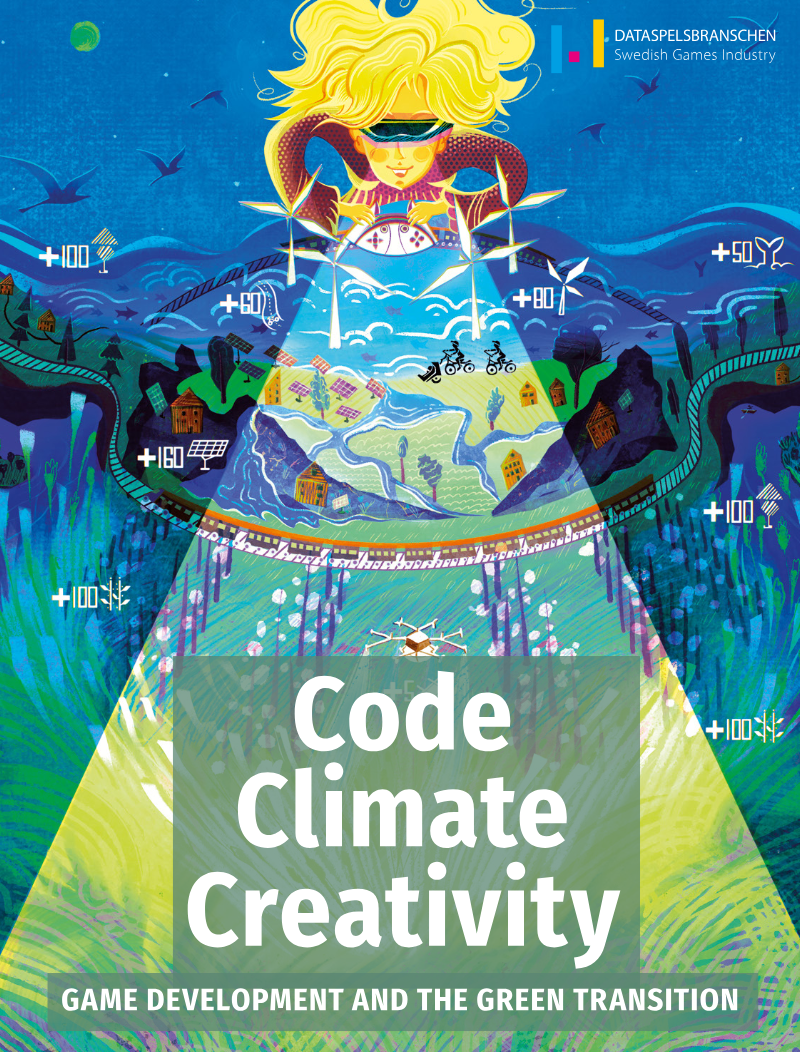
Swedish Games Industry · 2024
Dataspelsbranschen · 2024
Swedish Games Industry · 2022
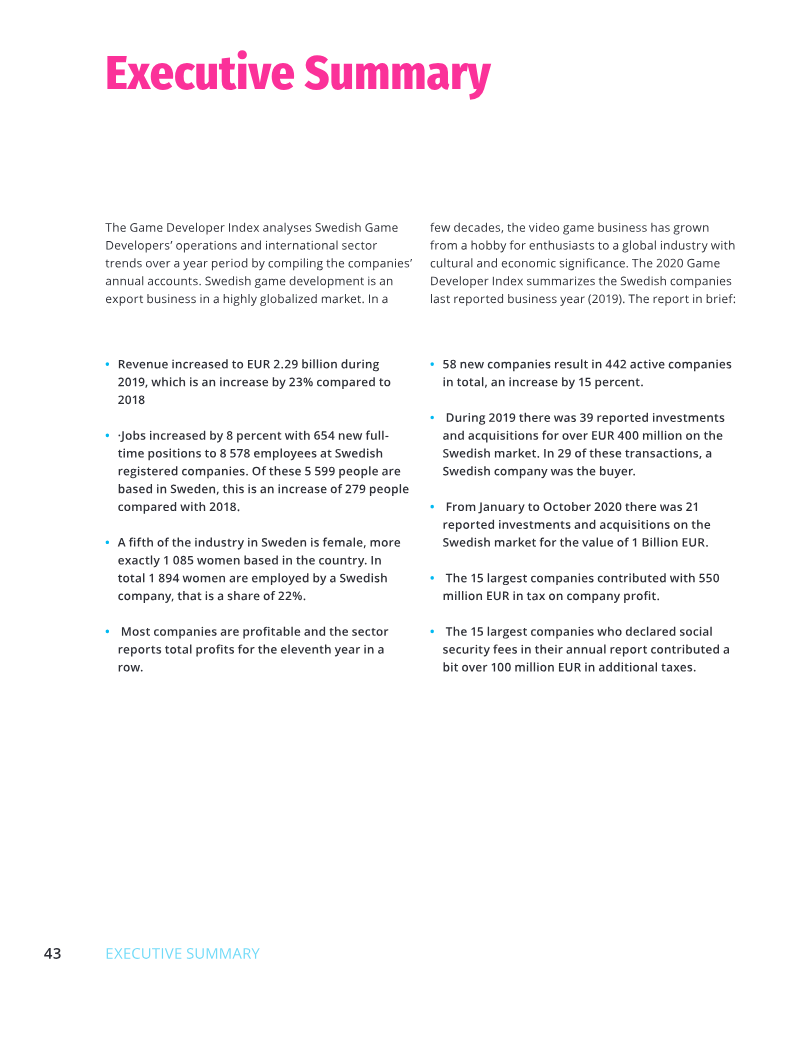
Dataspelsbranschen · 2020

Swedish Games Industry · 2019
Dataspelsbranschen · 2018
Duamentes Gaming · 2025
CESA – Computer Entertainment Supplier's Association · 2025
Kreativ Sektor · 2025
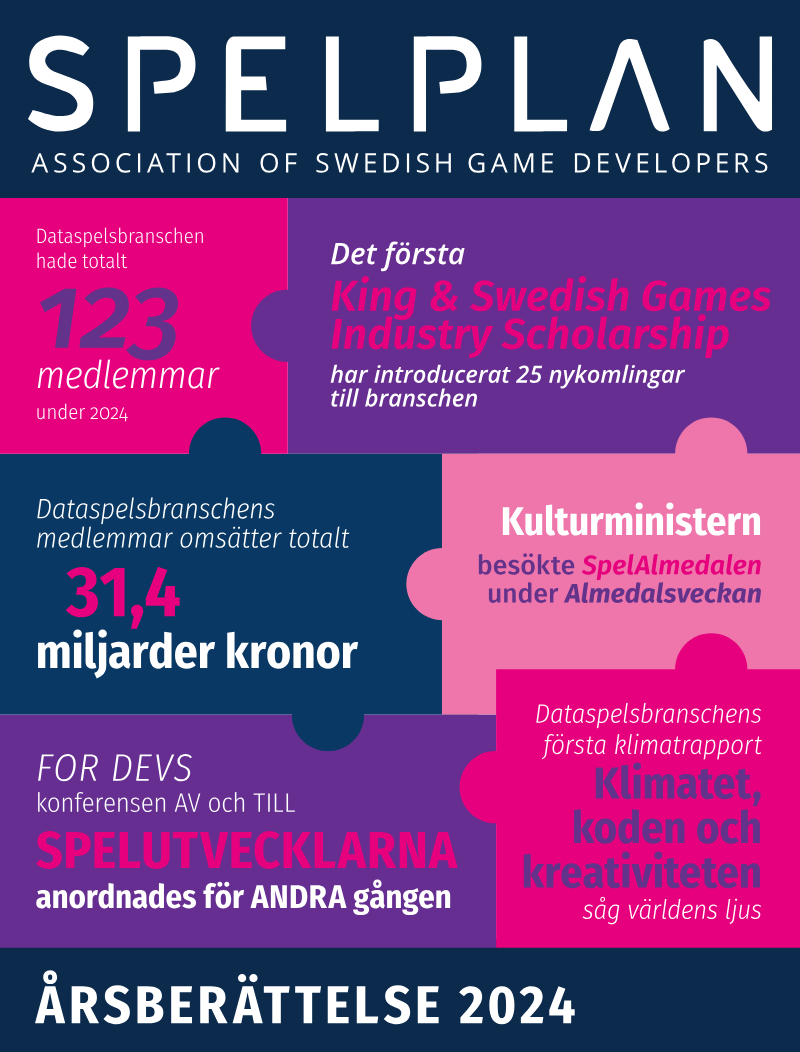
Spelplan-ASGD · 2025
Dataspelsbranschen · 2024
The Swedish Games Industry · 2024
Swedish Games Industry · 2024
Neogames Finland · 2024