Key insights
8 slides
Work-life balance
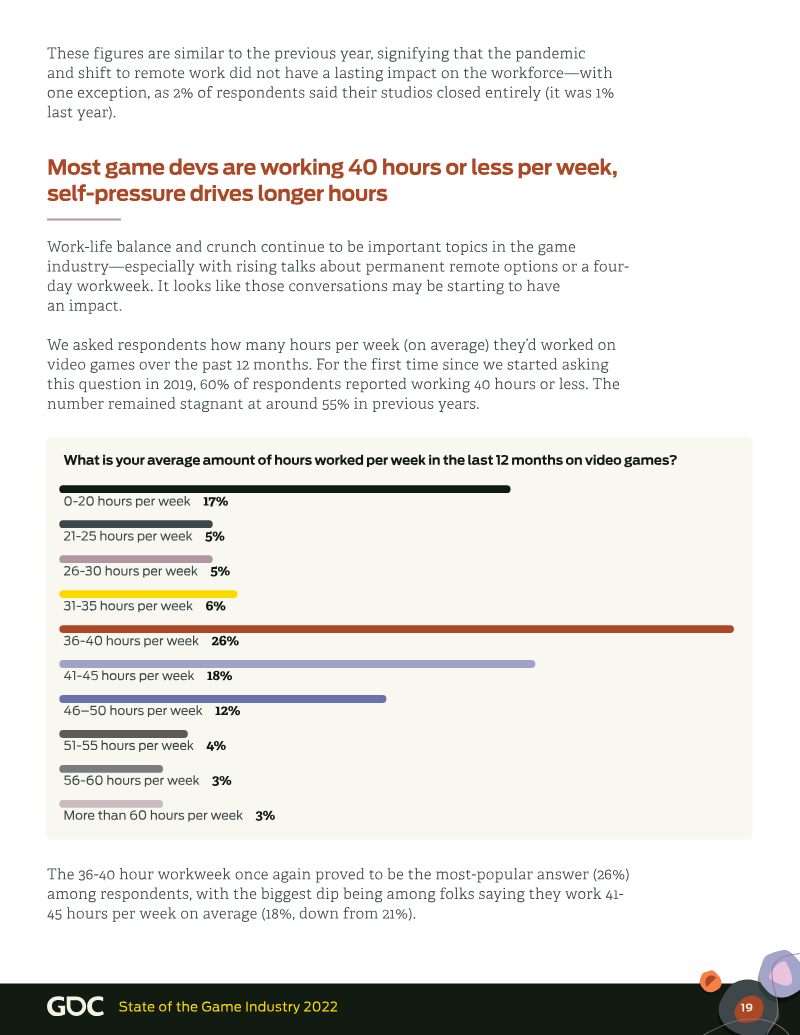
60 percent of developers now work 40 hours or less.
Work-life balance has improved in the game industry.
Hours improved. 60 percent of developers now report working 40 hours per week or less.
Collective bargaining
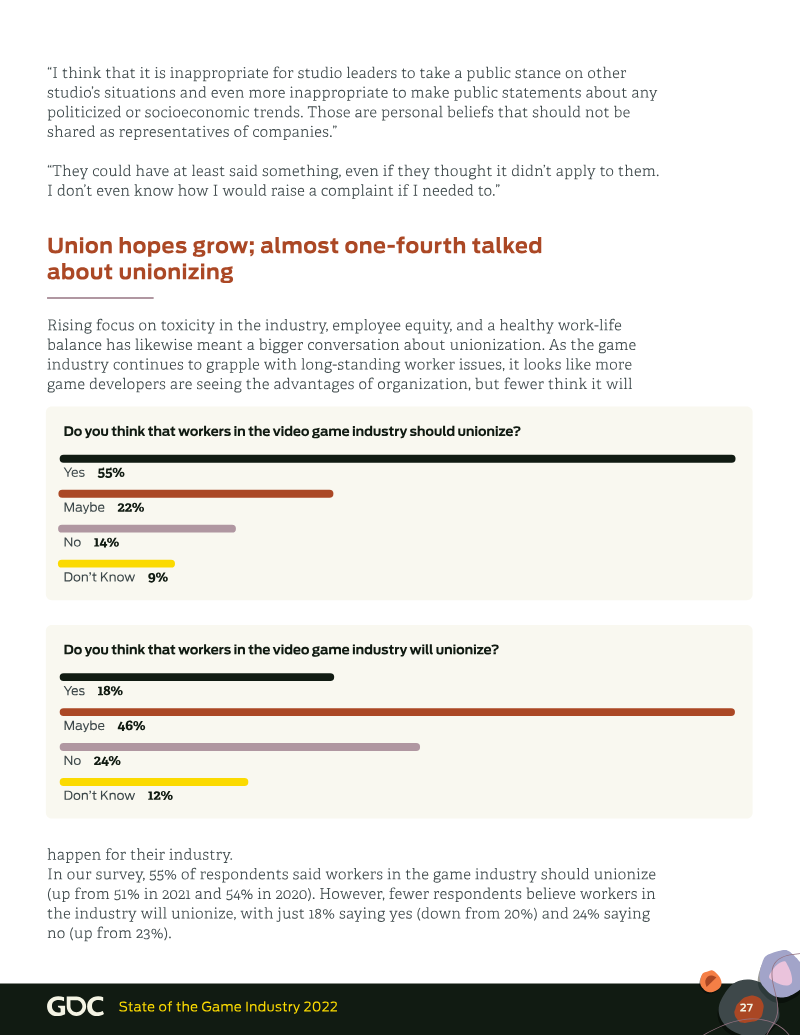
55 percent of developers support unionization.
Labor organization is gaining significant momentum in the industry. Nearly 25 percent of workplaces are actively discussing collective bargaining.
Systemic issues
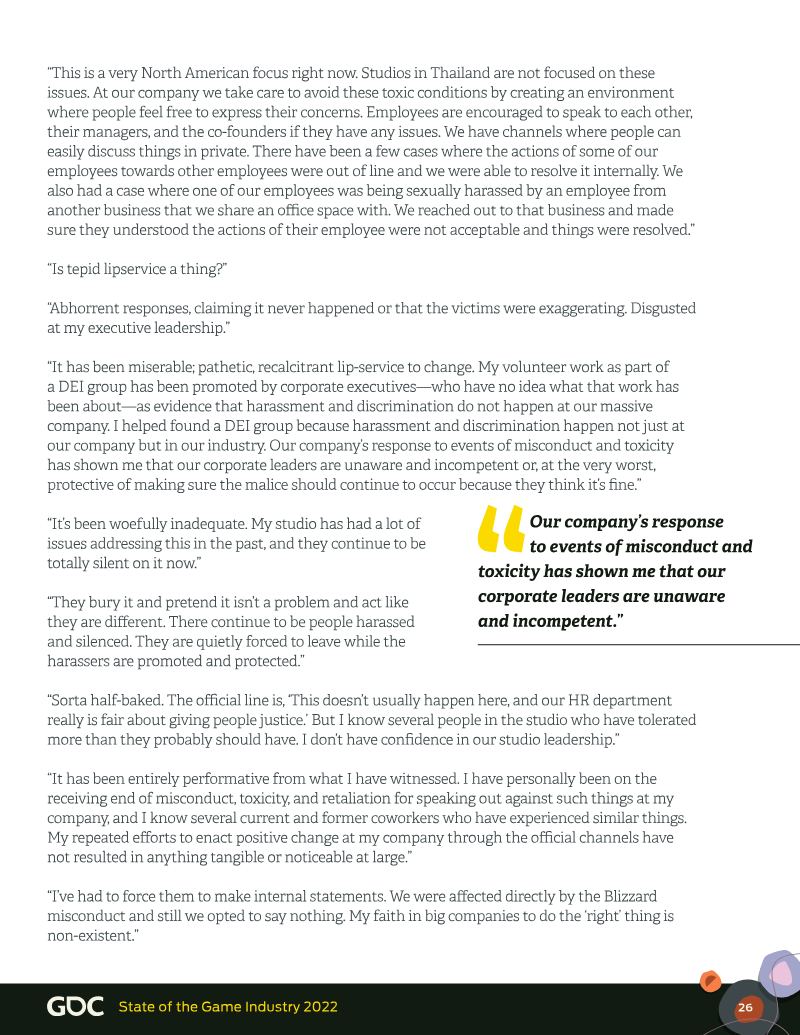
A majority of studios failed to address misconduct reports.
Despite progress in working hours, the industry struggles with systemic issues. A majority of studios have failed to adequately address internal reports of misconduct and toxicity.
Platform autonomy
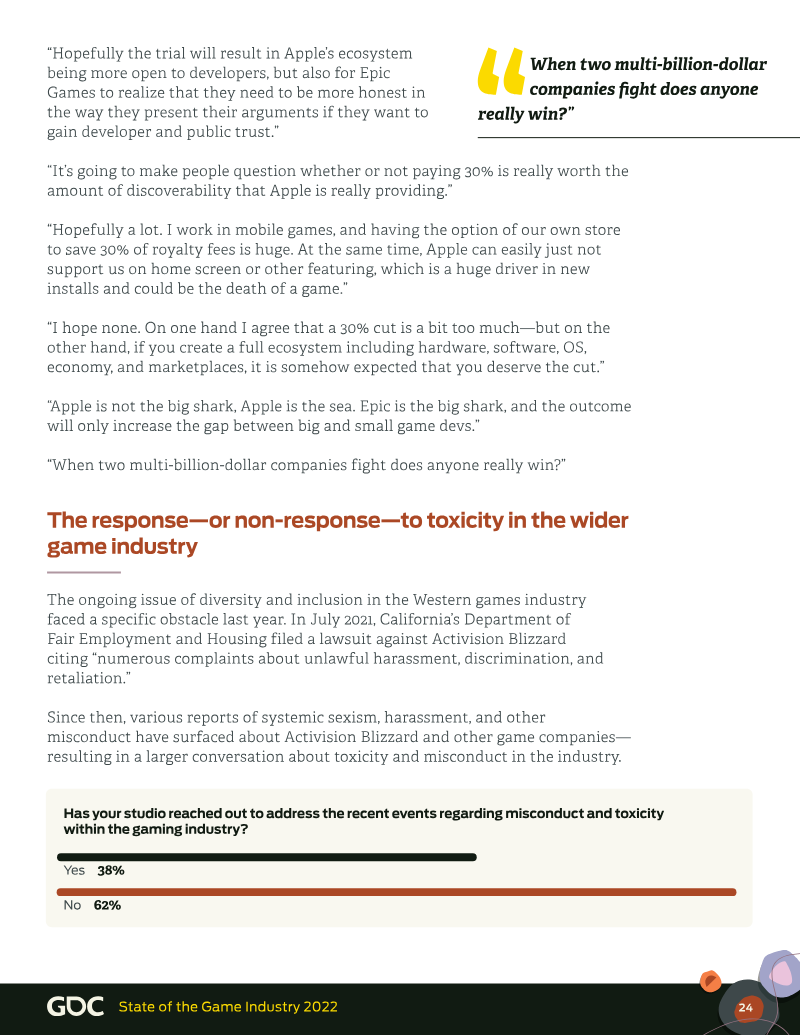
34 percent of developers support Epic Games against Apple.
Developers are increasingly seeking autonomy from platform holders. This is evidenced by 34 percent of the industry supporting Epic Games in its legal battle against Apple.
Inclusive design
39 percent of developers integrate inclusive design features.
The industry continues to prioritize accessibility. A record 39 percent of developers are incorporating inclusive design features into their projects.
Speculative tech
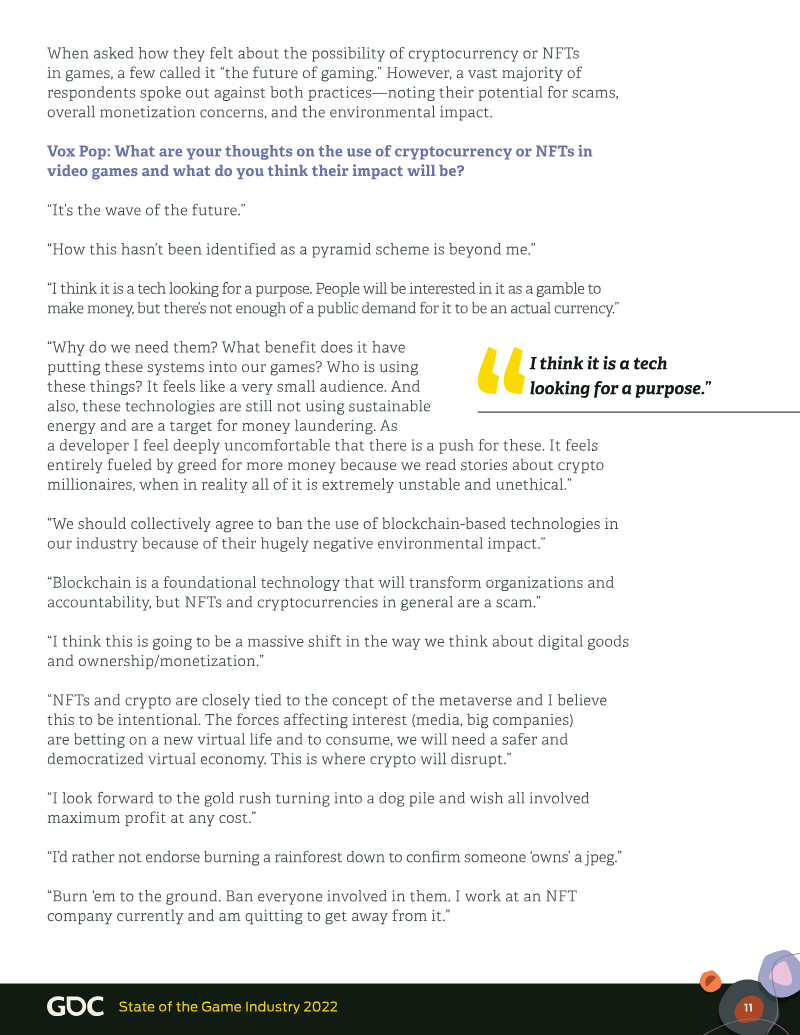
Interest in metaverse, crypto, and NFTs remains low.
The industry remains deeply skeptical of speculative technologies. Concerns are rooted in environmental sustainability, ethical business practices, and long-term viability.
Platform shifts
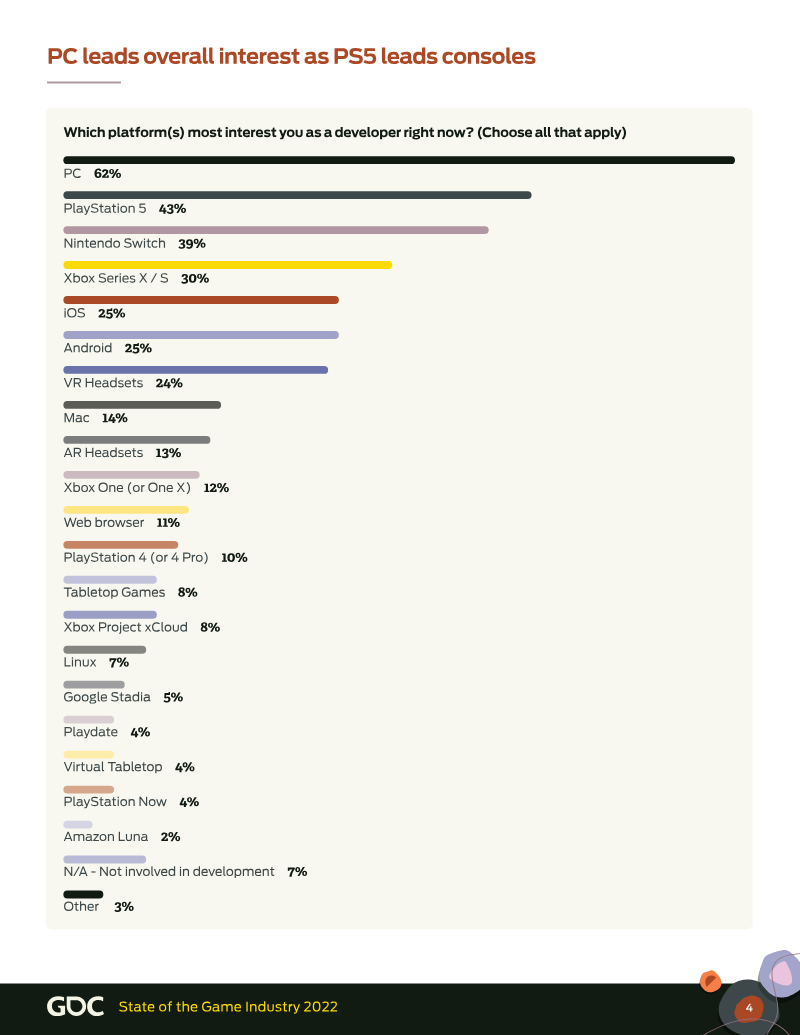
PC remains primary, while mobile interest has declined.
PC remains the primary development platform, and the PlayStation 5 is the leading console. Mobile development has experienced a decade-long decline in developer interest.
Demographic imbalance
The workforce remains predominantly male and early-career.
The industry's workforce remains predominantly male and early-career. This demographic imbalance persists alongside ongoing tensions between developers and major platform holders.
1 / 8
Ask AI about this report