
Zen Match
GameBy Good Job Games · Released Aug 1, 2021
A nature inspired match-3 game with relaxing music. Unlock tiles and backgrounds as you progress. Also collect tokens to decorate rooms and create your own zen spaces.
Connections
Each row is a game or company named alongside Zen Match, each column a document, oldest first. A mark means that document names it. Select a row to see those documents.
About the game
- Released
- Aug 1, 2021
- Developer
- Good Job Games
- Genres
- Puzzle
- Platforms
- iOS
Game data from IGDB.com
Key figures from the reports
Moon Active acquired Zen Match for up to $150 million in late 2022, but the title has since faced stagnating performance, record-low user acquisition, and declining revenue.
Deconstructor of Fun, 2023 · The Zen Match Case: How a First Mover Fell Behind
Good Job Games, a hypercasual studio, successfully transitioned into the casual puzzle market with Zen Match, which reached the top 20 grossing puzzle games globally in H1 2022 with $36M in revenue.
Naavik, 2022 · Zen Match: Hypercasual Made Casual
Documents about Zen Match
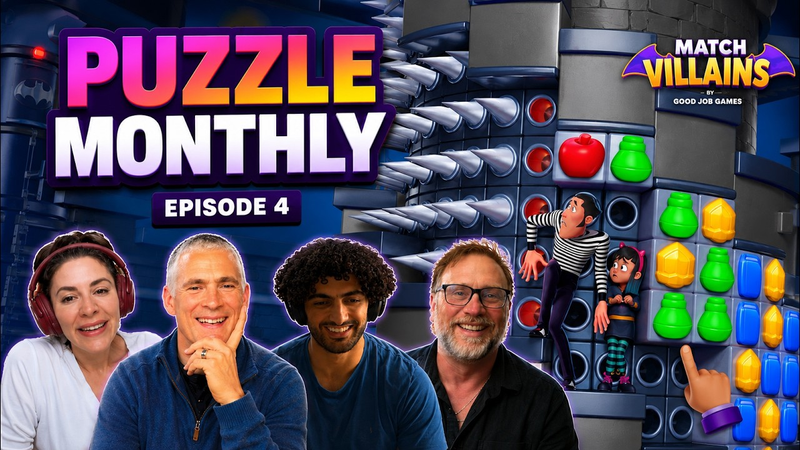
Puzzle Monthly #4: $60M Marketing, $65M Revenue, What Happened to Good Job Games?
Good Job Games represents a cautionary case study in the mobile puzzle market, illustrating the limitations of prioritizing rapid asset exits and visual polish over sustainable, player-centric design.
- Good Job Games' title Match Villains generated $65 million in lifetime revenue but likely operated at a loss, as marketing expenditures for the project reached $83 million.
- The studio's failure to compete with industry leaders like Royal Match stems from a reliance on aggressive, punishing level design that prevents the retention of high-value users.
- Match Villains suffered from flat revenue-per-download metrics and an over-reliance on lower-tier geographic markets, preventing the game from achieving necessary scale.

Red Dead Redemption, Moon Active, Playtika, Liftoff, 2025's top games, data, jobs and more
This analysis examines the state of the mobile games industry as of early 2026, focusing on performance metrics, corporate restructuring, and market trends.
- The mobile gaming market is dominated by a few high-earning titles, led by Honor of Kings ($1.68B in China), Last War ($1.57B), and Roblox ($1.5B) in 2025.
- Strategy games remain the industry's most lucrative genre, generating $13 billion in total market revenue during 2025.
- Playtika is restructuring its operations by laying off 500 employees to pivot toward AI-driven automation and a leaner corporate model.

Analyst Bulletin: Mobile Game Market Review January 2025
The "Analyst Bulletin: Mobile Game Market Review January 2025" provides a focused analysis of key trends and performance indicators within the global mobile gaming sector during January 2025.
- Summoners War saw a massive revenue spike following its January 10 Demon Slayer collaboration, with daily revenue increasing by over 1600% in the US iOS market compared to 650% in Japan.
- Love and Deepspace reached #9 in the US iOS grossing rankings in January, driven by a first-anniversary update that included a high-engagement gacha system and new minigames.
- Pokémon TCG Pocket's long-awaited trading system launched with restrictive mechanics—including Trade Tokens and Trade Stamina—leading to widespread player dissatisfaction.


Five Years of the Rising Gaming Empire: Turkiye
Turkiye's gaming sector has become one of the most dynamic emerging ecosystems globally, and this analysis tracks its funding and exit activity from 2020 through early 2025.
- Turkiye’s gaming sector generated $2.9 billion in cumulative M&A exit value between 2020 and 2025, driven by major acquisitions like Peak Games ($2.1 billion) and Gram Games ($250 million).
- The ecosystem secured $935 million in private investment across 132 rounds from 2020 to early 2025, representing 5.8% of global gaming venture capital and corporate deal volume.
- Investment activity peaked in 2022 with $441 million raised, establishing a trend of high-value fundraising for mobile-focused studios such as Dream Games.
2024 Casual Gaming Apps Report
Mobile gaming is emerging from its post-pandemic slump, with consumer spend rebounding and the casual segment reshaping itself.
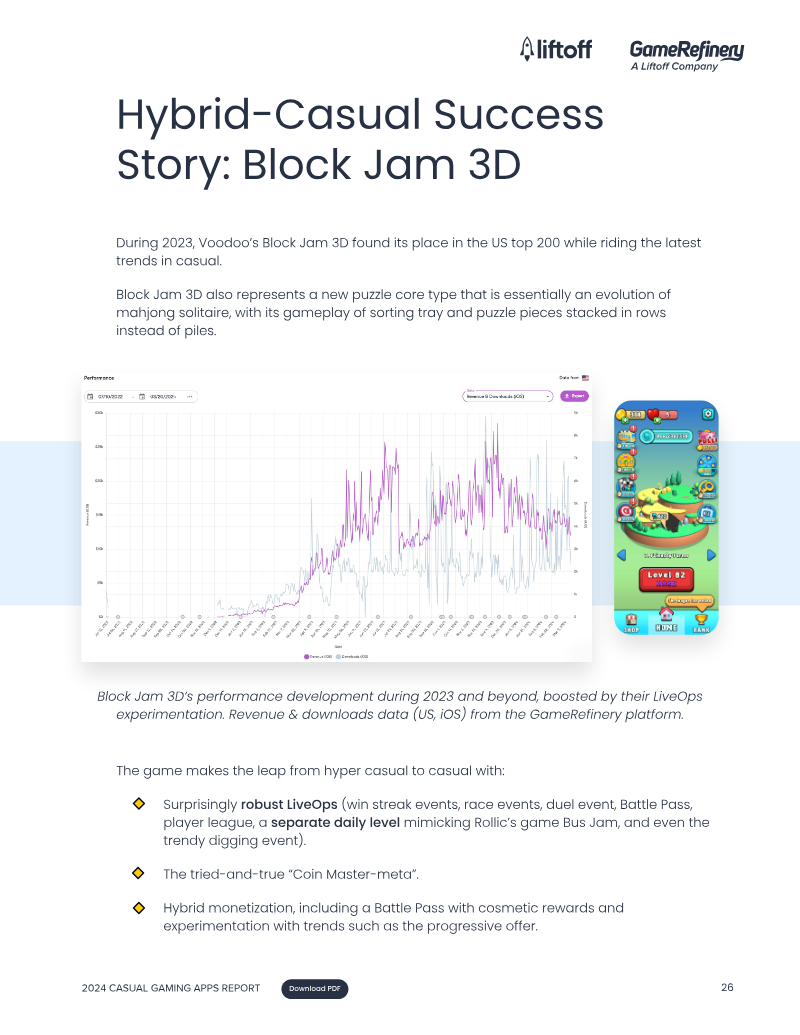
- The casual gaming market is shifting from hyper-casual titles toward hybrid-casual and 3D match models, with 3D Match category market share on US iOS increasing fivefold between April 2023 and April 2024.
- Developers are increasingly bypassing app store fees by adopting proprietary web stores and engagement-linked offers, a strategy now utilized by 70% of top-performing US casual games.
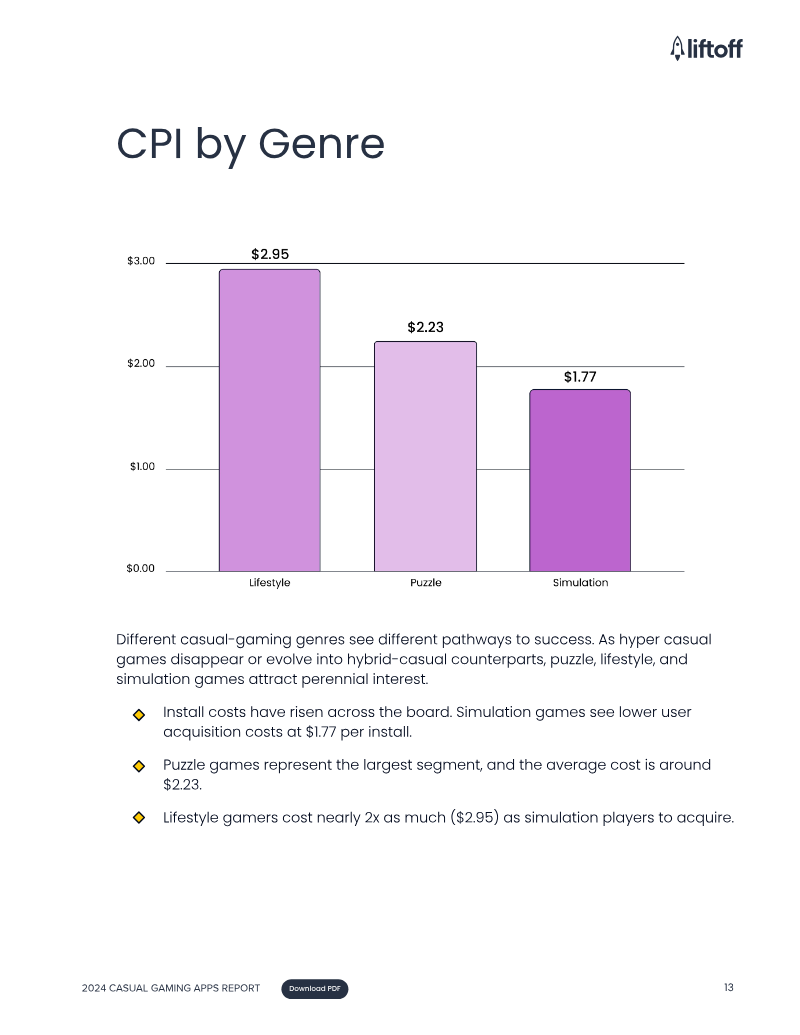
- User acquisition costs are highly bifurcated, with iOS installs averaging $4.83 compared to $0.65 on Android, though iOS maintains a superior Day 7 return on ad spend.
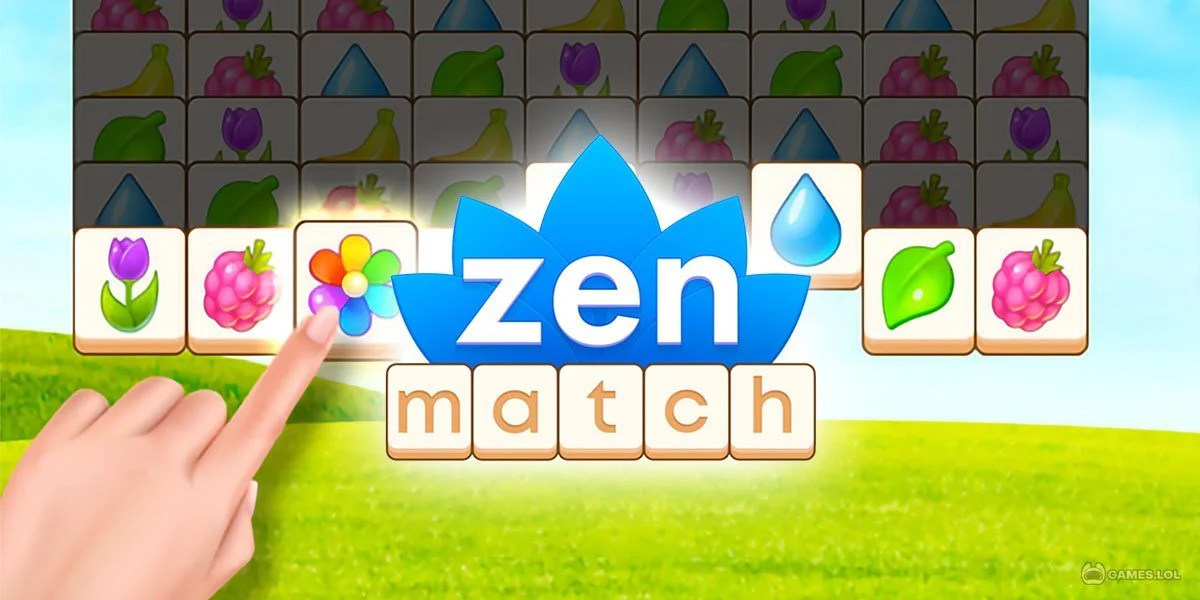
The Zen Match Case: How a First Mover Fell Behind
The analysis examines the trajectory of Zen Match, a pioneering Tile Match genre game, focusing on its performance before and after its acquisition by Moon Active for $100-150 million in late 2022.
- Moon Active acquired Zen Match for up to $150 million in late 2022, but the title has since faced stagnating performance, record-low user acquisition, and declining revenue.
- Zen Match is suffering from the Innovator’s Dilemma, where adherence to original design mechanics prevents the game from meeting shifting player expectations.
- Competitors like Tile Busters are capturing market share by integrating complex Match-3 inspired mechanics and obstacles that outperform Zen Match’s simpler design.
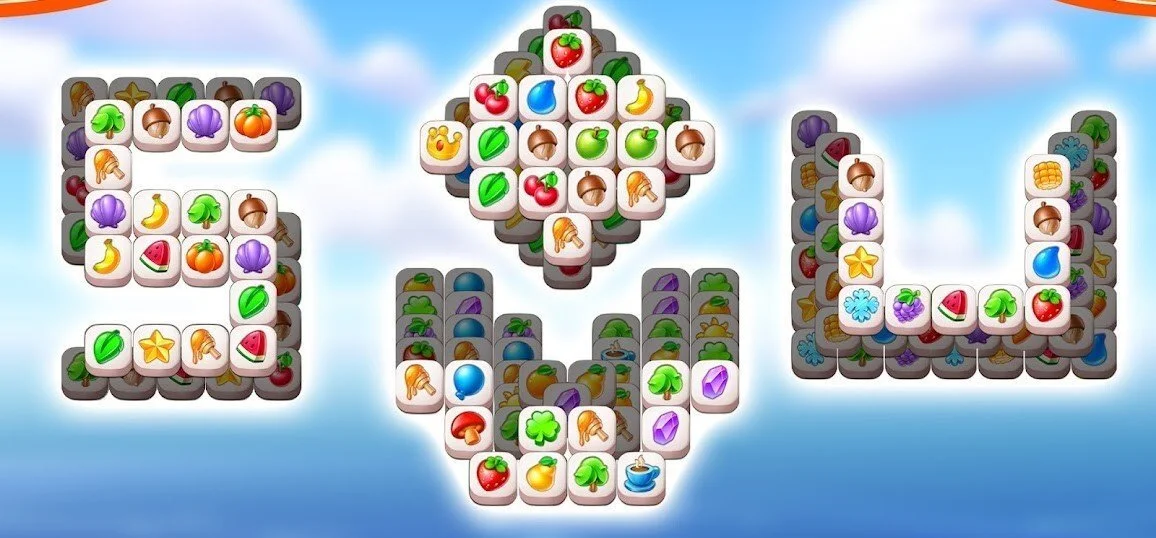
Tile Match: The New Match-3 or the New Merge?
This analysis explores the Tile Match genre, examining its mechanics, history, market performance, and future potential within the mobile gaming landscape.
- Tile Match is a growing mobile puzzle subgenre generating $60 million in annual in-app purchase revenue, significantly outperforming the $25 million generated by Mahjong Solitaire.
- While Tile Match is currently a niche compared to the $5 billion annual revenue of the broader Match-3 category, it shows potential to surpass the Merge genre in the coming years.
- Tile Match gameplay relies on deterministic, strategy-focused mechanics and a collection rack, contrasting with the high-luck, cascade-heavy nature of traditional Match-3 games.

The Player’s Journey: A Call to Adventure
The document, "The Player’s Journey: A Call To Adventure," published by Naavik on September 7, 2023, outlines a framework for game design focused on player engagement and long-term retention in free-to-play mobile games.
- The 'Player's Journey' framework requires defining a grand aspiration for the player and breaking it into a clear, manageable sequence of short-, medium-, and long-term goals to prevent churn.
- Royal Match outperforms Zen Match in retention by curating customization options and providing a clear progression path, whereas Zen Match initially overwhelmed players by exposing all options at once.
- Effective game design uses 'weenies'—large visual showpieces like Genshin Impact’s open-world vistas or Brawl Stars’ Trophy Road—to pique player interest and provide a tangible vision of future progress.
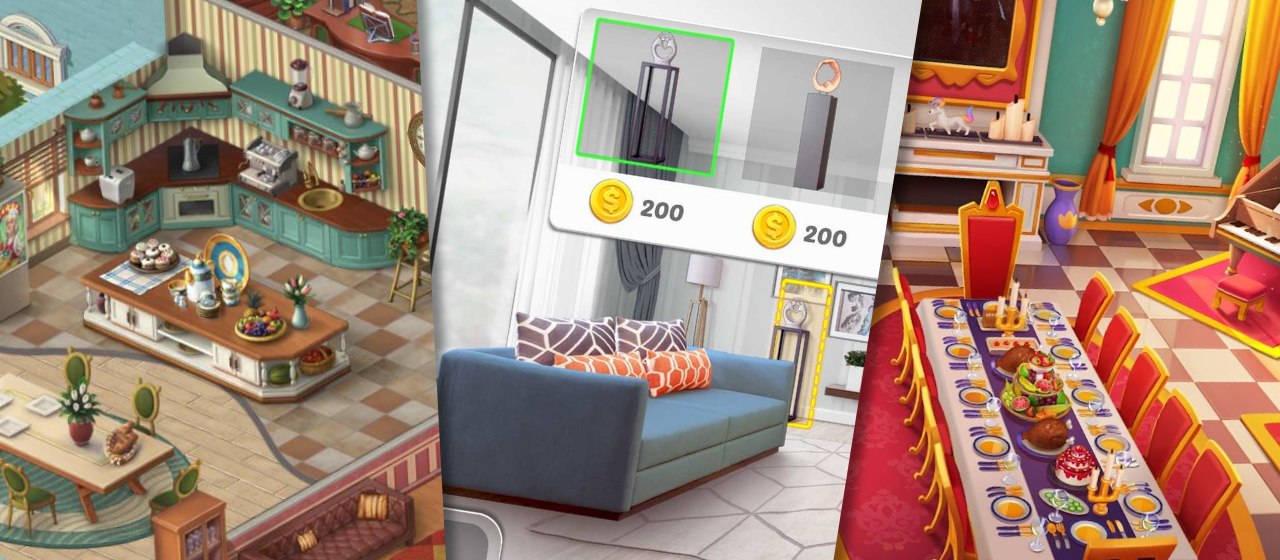
Why Renovation and Construction Elements Are Becoming More Popular in Casual Games
This document analyzes the increasing popularity of renovation and construction meta-elements within casual mobile games, particularly focusing on their ability to enhance player engagement and retention.
- Approximately 20% of top-grossing casual iOS games now incorporate meta-elements such as renovation and construction to drive player engagement.
- Renovation and construction features are particularly prevalent in the Match3 genre, appearing in 42% of the top 20% grossing titles.
- These mechanics directly leverage core player motivations of mastery (completing milestones) and expression (customization and decoration).

Zen Match: Hypercasual Made Casual
Zen Match, a mahjong-style tile-matching puzzle from Turkish hypercasual studio Good Job Games, shows how a hypercasual developer can build a durable casual hit, though its hypercasual roots also cap its potential.
- Good Job Games, a hypercasual studio, successfully transitioned into the casual puzzle market with Zen Match, which reached the top 20 grossing puzzle games globally in H1 2022 with $36M in revenue.
- Zen Match achieved 21 million downloads in H1 2022, outperforming established titles like Royal Match (18M) and matching the download volume of Playrix’s Gardenscapes (20M).
- The game scales by utilizing hypercasual-style User Acquisition creatives that emphasize high-intensity gameplay, effectively driving a 100% growth in downloads during H1 2022 compared to H2 2021.

Global Video Game Market Report 2027
The global video game market is projected to approach $300 billion by 2027, according to a ResearchAndMarkets.com forecast reported in April 2022, with mobile accounting for more than half of that total.
- The global video game market is projected to reach nearly $300 billion by 2027, growing from $180.3 billion in 2021 at a compound annual growth rate (CAGR) of 9.3%.
- Mobile gaming remains the primary driver of industry growth, expected to reach $153.5 billion by 2027 with an 11.5% CAGR, accounting for over half of total market revenue.
- Console gaming is forecast to grow at a 9.2% CAGR through 2027, while the PC games market is expected to see more modest growth at a 5.1% CAGR.
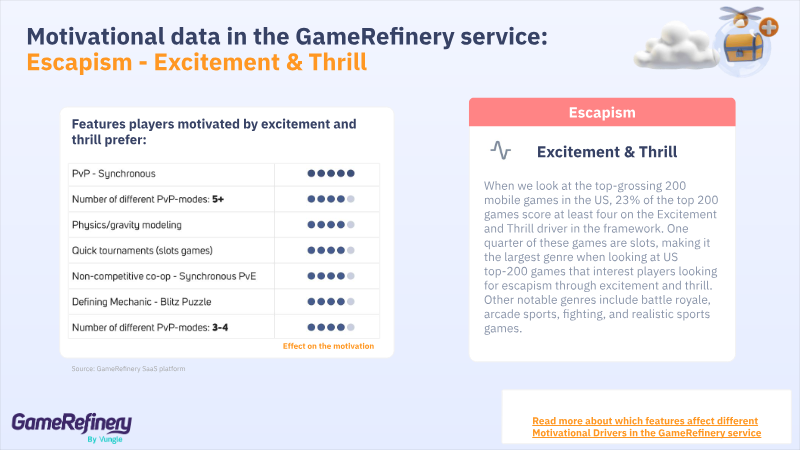
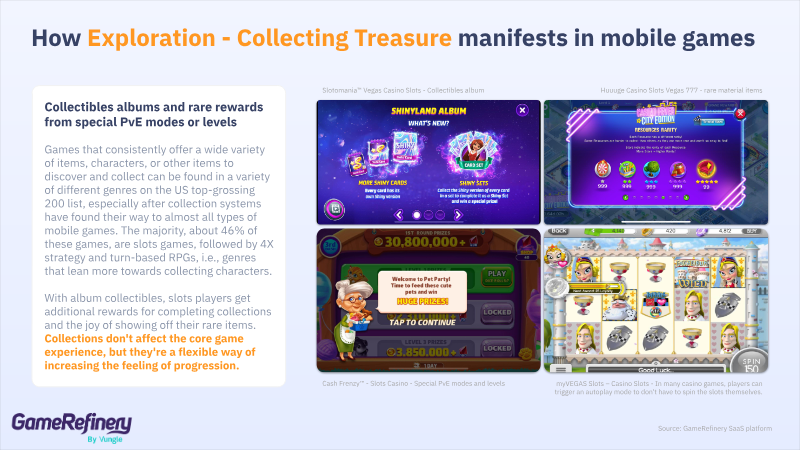

Motivations and Demographics Snapshot Report: The Motivations Driving Top Mobile Games, February 2022
Player motivation, rather than genre alone, explains who plays top mobile games and why they spend.
- Gender and age are primary indicators of genre preference, with women comprising 63% of the audience for Match3 and Hidden Object games, while men make up 76% to 84% of the audience in 4X strategy and synchronous PvP titles.
- Every top-grossing casual game released between 2020 and 2022 has integrated renovation and customization elements to increase player expression and broaden market appeal.
- Motivational drivers are demographic-specific; younger males prefer high-sensomotoric challenges like Battle Royales, while players aged 45 and older seek similar thrills through low-sensomotoric experiences like Slots.
Companies behind it

As the documents state it.