Vector
Game
Documents about Vector

AppLovin vs. Unity: How AppLovin Has Been Winning It All
The mobile advertising landscape has undergone a significant shift since the failed merger between AppLovin and Unity in August 2022, resulting in AppLovin’s emergence as the dominant force in the market.
- AppLovin has achieved dominance in the mobile advertising market by capturing approximately 80% of the mediation market through its MAX platform, creating a significant customer lock-in effect.
- AppLovin’s competitive advantage is driven by its ability to leverage granular, first-party data to improve ad-ROAS, which has effectively marginalized competitors since the failed merger with Unity in August 2022.
- Unity has struggled to compete due to poor operational execution, internal fragmentation, and weak algorithmic performance following its acquisition of IronSource.

"Unity's AI AD Platform Vector is Total Vaporware"
Unity’s recent announcement of its new artificial intelligence advertising platform, Vector, is characterized as a strategic misdirection intended to distract investors from poor quarterly guidance.
- Unity’s 'Vector' AI advertising platform is characterized as a strategic misdirection intended to stabilize stock prices following poor quarterly guidance rather than a functional technological breakthrough.
- Unity significantly trails industry leader AppLovin, which successfully captured market share by leveraging fingerprinting techniques after the deprecation of IDFA.
- The platform faces a 'garbage in, garbage out' data deficit because major third-party developers are unlikely to grant Unity access to the proprietary user data required to train competitive AI models.

TWIG #320 Unity’s Fate, Fake Ads, Loot Boxes & GTA’s UGC Revolution
Hasbro’s digital gaming division has achieved notable success through a licensing-heavy strategy, exemplified by the $112 million contribution from Monopoly Go, which fueled a 22% year-over-year growth.
- Hasbro’s digital gaming division grew 22% year-over-year, driven largely by a $112 million contribution from the licensed title Monopoly Go.
- The Epic Games Store generates $1.1 billion in annual revenue, though this figure is primarily sustained by Fortnite integration rather than third-party game sales.
- Unity is struggling to pivot to its Vector ad-tech platform due to the sunsetting of IronSource, loss of key architectural talent, and persistent data quality issues.

Mr. Beast, Tesla AI Day, and the Future of Game Development: Small Vector Creation is Coming!
The primary thesis posits that the gaming industry is entering a transformative era where the marginal cost of development will approach zero due to advancements in artificial intelligence.
- Artificial intelligence is poised to drive the marginal cost of game development tasks toward zero, mirroring historical trends where internet-based services reduced business costs.
- The 'small vector' concept suggests that as AI lowers the capital and resource requirements for development, the industry will see a surge in diverse, smaller-scale startup opportunities similar to the 2010-2011 tech boom.
- Successful game development on platforms like Roblox already demonstrates a shift toward ad-hoc, fluid team structures that bypass traditional corporate hierarchies until after a product is launched.
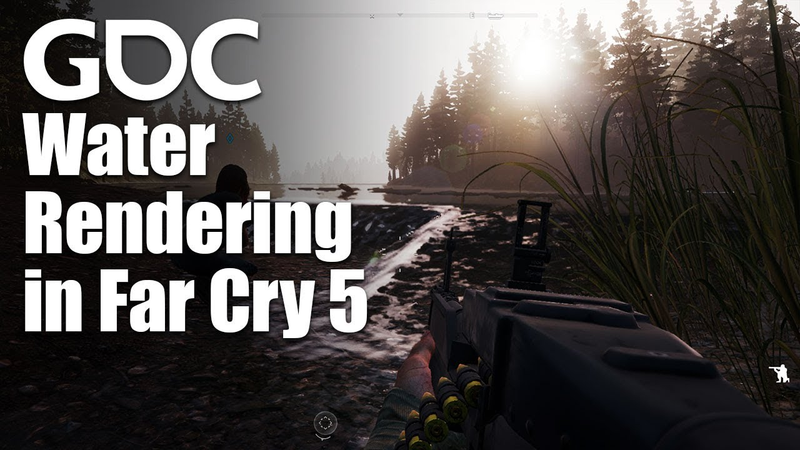
Water Rendering in Far Cry 5
The modernization of water rendering in Far Cry 5 centers on transitioning from manual, sector-based placement to a procedural, spline-based architecture.
- Far Cry 5 utilizes a unified water system that replaces previous fragmented methods with a single engine function, handling water quadtrees, streaming height maps, and dynamic water levels for rivers, lakes, and waterfalls.
- The rendering pipeline employs screen-space tessellation using a 16x16 tile grid, where constant density is achieved by mapping instance IDs to draw calls via an indirect arguments buffer.
- To optimize performance, the team implemented a distance-based Level of Detail (LOD) approach for surface shape calculations, reducing texture fetches from nine per pixel for nearby water to three per pixel for distant water.
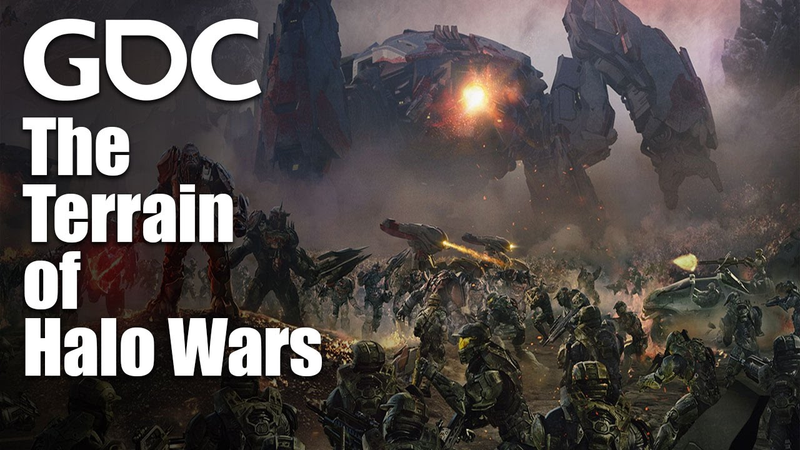
The Terrain of Halo Wars
The development of Halo Wars marked a significant technical evolution in real-time strategy design, driven by the need to transition from legacy engine architectures to a custom environment capable of running on Xbox 360 hardware.
- The development team utilized Vector Field Terrain to enable per-vertex displacement across three axes, allowing for complex organic structures like overhangs and bridges that traditional height-field systems could not support.
- To maintain performance on Xbox 360 hardware, the engine decoupled high-fidelity visual terrain from a low-resolution, CPU-optimized height field to ensure efficient physics calculations and ray casting.
- Memory usage was restricted to a 14MB footprint by leveraging DXT compression and a custom GPU-based virtual texturing cache.

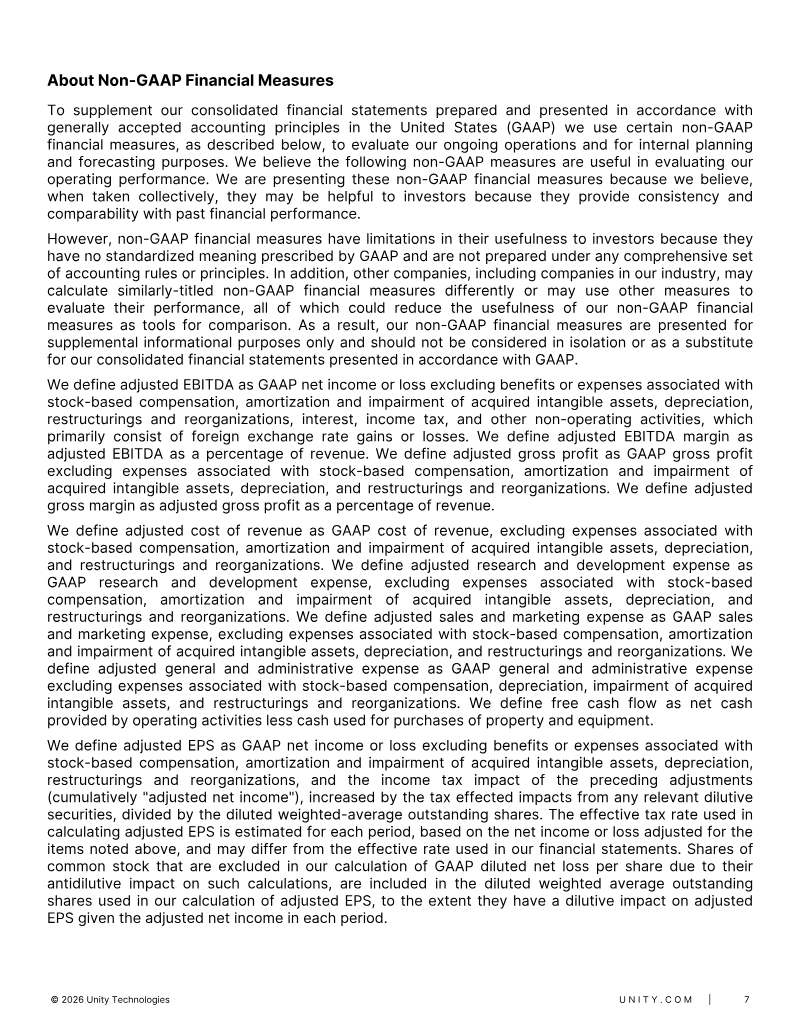

Unity Reports Second Quarter 2026 Financial Results
Unity reported its second quarter 2026 financial results, marking a period of significant growth and operational improvement for the company.
- Unity reported Q2 2026 total revenue of $546 million, a 24% year-over-year increase driven by the success of the Unity Vector AI tool.
- Adjusted EBITDA reached $160 million with a 29% margin, up from 21% in Q2 2025, while net loss narrowed to $23 million from $107 million.
- Strategic revenue grew 38% year-over-year to $486 million, significantly outpacing the 2% growth in Create Solutions revenue, which totaled $158 million.
Companies behind it

As the documents state it.