Vector
Game
Documents about Vector

The Most Important Number in Unity’s D2C Launch Is Zero
Unity has introduced a new direct-to-consumer (D2C) infrastructure within its IAP SDK, enabling game developers to bypass traditional app store billing by establishing proprietary web shops.
- Unity has launched a free direct-to-consumer (D2C) webshop solution that allows developers to integrate payment providers like Stripe and Coda without paying Unity any additional fees.
- The primary value proposition of D2C is not margin improvement, but the ability to own the direct relationship with players and gain granular data on purchase journeys that platform stores do not provide.
- Unity’s IAP product acts as an abstraction layer, enabling developers to run platform-based and D2C purchasing flows side-by-side and route users between them.

That DLSS 5 Reveal Will Have Long Lasting Damage for Games
The recent unveiling of Nvidia’s DLSS 5 represents a critical inflection point in the gaming industry, signaling a deepening divide between aggressive corporate AI integration and the expectations of developers and consumers.
- Nvidia’s DLSS5 release has faced significant backlash for applying unwanted AI-driven post-render effects that alter facial features, lighting, and artistic intent, resulting in a video demonstration with over 100,000 dislikes compared to only 16% likes.
- The DLSS5 technology is currently criticized for technical failures including inconsistent facial alignment, waxy skin textures, and lighting discrepancies, with industry experts noting that it is not yet feasible to run on a single GPU.
- The controversy has forced a public realization among gamers that DLSS functions as a form of generative AI, potentially damaging consumer trust and driving interest toward competitors like AMD, whose hardware powers current and next-generation consoles.

Podcast: Understanding Unity’s Vector
The discussion centers on the strategic evolution of Unity’s advertising infrastructure, specifically the implementation of Vector, an AI-powered growth and user acquisition platform.
- Unity’s Vector platform achieved a 72 percent year-over-year revenue increase as of January 2026 by utilizing engine-level gameplay data for user acquisition.
- Vector improves predictive modeling by replacing fragmented SDK signals with high-fidelity, sequential runtime data to better identify causal relationships in player behavior.
- The platform shifts mobile advertising from manual, fragmented approaches to a unified machine learning architecture capable of continuous learning across gameplay and monetization signals.
On Product Velocity
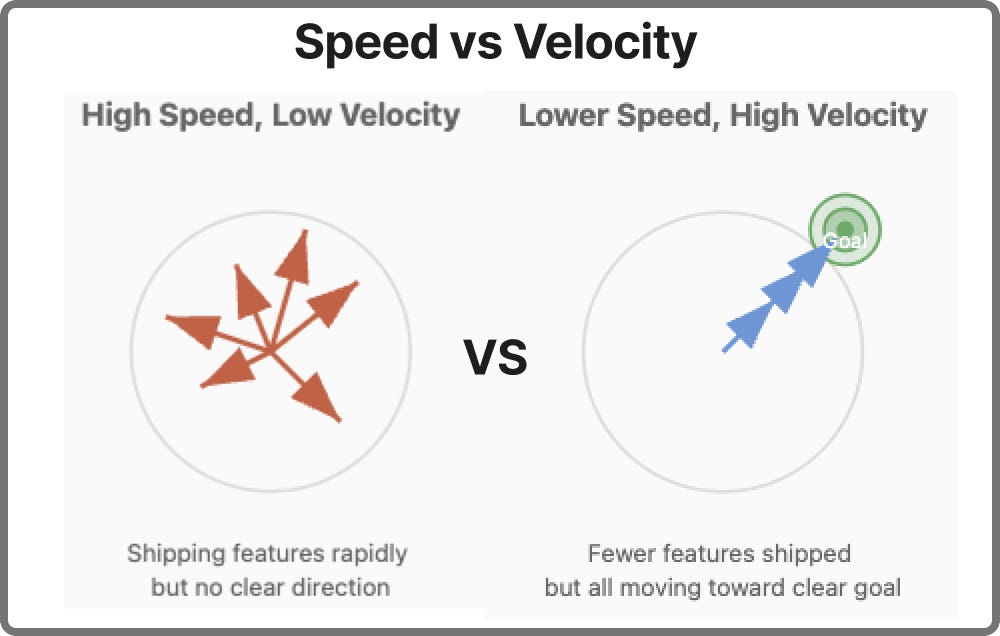
Product velocity in the video game industry is defined as a vector requiring both speed and correct strategic direction.
- Product velocity is defined as a vector requiring both speed (execution) and direction (strategy); teams must optimize both to achieve success.
- Improving development speed requires mapping the iteration cycle to identify bottlenecks, measuring cycle time from start to deployment, and being willing to replace personnel who cause delays.
- The gaming market is shifting from hypercasual to hybridcasual, with in-app purchase revenue in the sector growing by 67% year-over-year.
Unity's Vector Daydreams vs. AppLovin's Cash-Printing Reality
The mobile gaming industry is currently defined by a stark divide between the aggressive, data-driven monetization strategies of AppLovin and the struggling, aspirational development efforts of Unity.
- AppLovin continues to dominate mobile monetization through aggressive first-party data harvesting, exemplified by the success of titles like Royal Match, which generates $1 billion in annual revenue.
- Unity's 'Vector' initiative is characterized as a late-stage attempt to regain competitiveness in the advertising market, while critics argue AppLovin's AI-driven advertising model relies on questionable practices like clickjacking and backdoor installs.
- LiveOps strategies remain highly effective, with data from Honkai: Star Rail showing that character updates drive revenue spikes ranging from 100.3% to 1,156.7%, with an average increase of 300%.
AppLovin vs. Unity: How AppLovin Has Been Winning It All
The mobile advertising landscape has undergone a significant shift since the failed merger between AppLovin and Unity in August 2022, resulting in AppLovin’s emergence as the dominant force in the market.
- AppLovin has achieved dominance in the mobile advertising market by capturing approximately 80% of the mediation market through its MAX platform, creating a significant customer lock-in effect.
- AppLovin’s competitive advantage is driven by its ability to leverage granular, first-party data to improve ad-ROAS, which has effectively marginalized competitors since the failed merger with Unity in August 2022.
- Unity has struggled to compete due to poor operational execution, internal fragmentation, and weak algorithmic performance following its acquisition of IronSource.

Mr. Beast, Tesla AI Day, and the Future of Game Development: Small Vector Creation is Coming!
The primary thesis posits that the gaming industry is entering a transformative era where the marginal cost of development will approach zero due to advancements in artificial intelligence.
- Artificial intelligence is poised to drive the marginal cost of game development tasks toward zero, mirroring historical trends where internet-based services reduced business costs.
- The 'small vector' concept suggests that as AI lowers the capital and resource requirements for development, the industry will see a surge in diverse, smaller-scale startup opportunities similar to the 2010-2011 tech boom.
- Successful game development on platforms like Roblox already demonstrates a shift toward ad-hoc, fluid team structures that bypass traditional corporate hierarchies until after a product is launched.
Companies behind it

As the documents state it.