Unreal
Game
Documents about Unreal
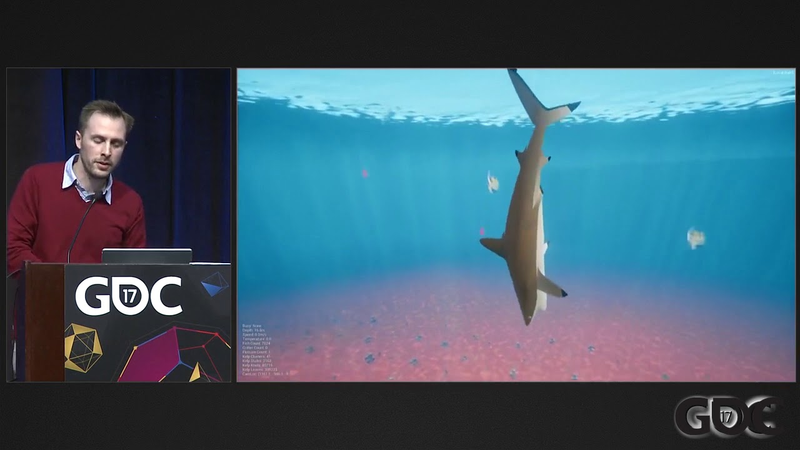
Creating the Art of ABZU
The development of the underwater adventure game Abzu by Giant Squid Studios highlights innovative technical solutions for rendering high-density environments with a small team.
- Giant Squid Studios utilized a custom static mesh instancing system in Unreal Engine 4 to render up to 10,000 interactive fish on-screen simultaneously.
- By replacing traditional skeletal rigging with vertex animation and material shaders, the team bypassed the performance limitations that would have restricted skeletal rigs to only a few dozen entities.
- The development team, consisting of only ten people, completed the project over a three-year cycle by prioritizing efficient, performance-friendly rendering techniques.
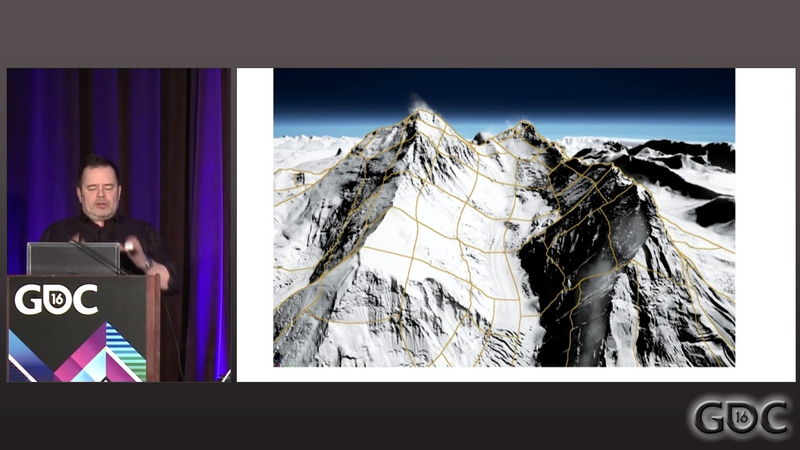
Magical Realism: The Art of Creating Everest in Your Living Room with VR (presented by NVIDIA)
The development of Everest VR serves as a blueprint for achieving deep emotional immersion in virtual reality through the synthesis of photorealistic graphical fidelity and psychological sensory manipulation.
- Achieving photorealistic VR immersion requires processing over 1.5 trillion polygons using stereo photogrammetry and Unreal Engine.
- Performance optimization for high-fidelity VR is maintained through custom mesh patching, advanced texture streaming, and NVIDIA’s Multi-Res shading.
- Motion sickness is mitigated by utilizing black box framing techniques and prioritizing vertical movement over horizontal traversal to ground the user.



Square Enix Holdings 3Q FY2017/3 Financial Results Briefing
Square Enix Holdings reported financial results for the nine-month period ending December 31, 2016, reflecting a period of high-profile releases balanced by significant development cost amortization.
- Square Enix reported 1-3Q FY2017/3 net sales of ¥190.1 billion and operating income of ¥21.5 billion, with operating income declining year-over-year despite a sharp rise in Digital Entertainment sales.
- Final Fantasy XV reached 6 million units in shipments by early 4Q, with development costs fully amortized in 3Q, allowing future downloads and repeat sales to contribute directly to earnings.
- The Digital Entertainment segment experienced a ¥1.4 billion decline in operating income due to lower MMO expansion disk sales compared to the previous year and the heavy amortization of FFXV development costs.

The Importance of Nothing: Using Negative Space in Level Design
Negative space serves as a foundational pillar in level design, functioning as a strategic tool to enhance visual clarity, guide player focus, and optimize gameplay flow.
- Negative space is a critical design tool used to reduce cognitive load, improve visual clarity, and guide player focus in complex 3D environments.
- Excessive visual detail in modern games often obscures navigation and combat targets, leading to sensory overload and degraded player experiences.
- Designers can evaluate environmental noise and map playability using analytical techniques such as squinting, blurring, and color histogram evaluation.

Why is Amazon getting into the game engine business?
Amazon Web Services has entered the game development market with the launch of Lumberyard, a free, open-source game engine.
- Amazon launched Lumberyard, a free, open-source game engine based on CryEngine, to integrate game development directly into its existing cloud and streaming infrastructure.
- The engine’s primary value proposition is its native integration with Amazon GameLift, which simplifies backend management for multiplayer session-based games.
- Lumberyard features deep Twitch integration, allowing developers to build mechanics that enable streamers to invite viewers directly into live gameplay sessions.

GuiltyGearXrd's Art Style : The X Factor Between 2D and 3D
The transition of the Guilty Gear franchise from traditional 2D sprites to a 3D framework represents a significant technical and aesthetic milestone in fighting game development.
- The Guilty Gear Xrd development team achieved a 2D aesthetic in 3D by rejecting standard rendering conventions like normal maps and global lighting, which they identified as causes of a generic digital appearance.
- The workflow prioritizes manual artist intervention over automated rendering, utilizing Unreal Engine 3 and Softimage to treat each frame as a hand-posed keyframe.
- Visual consistency is maintained by manipulating vertex-based data—specifically vertex colors, surface normals, and lighting vectors—rather than relying on resolution-dependent textures.

DICE and Massive founders on Nordic gaming scene
The Nordic gaming industry has evolved from a nascent collection of hobbyist projects into a robust, global epicenter of game development.
- The Nordic gaming industry evolved from a 1990s hobbyist demo scene into a global development hub, catalyzed by the mid-1990s success of titles like Battlefield.
- The industry has transitioned from a landscape of isolated studios to a diverse ecosystem anchored by major companies and a dense network of spin-off developers.
- The democratization of development tools, specifically Unity and Unreal Engine, has significantly lowered entry barriers and reduced reliance on traditional publisher-led models.

Four Realistic Predictions - What the Future Holds for Games - Extra Credits
The gaming industry is currently undergoing several subtle yet significant structural shifts that are reshaping development and distribution.
- The gaming industry is shifting toward the widespread adoption of third-party licensed engines like Unreal and Unity to reduce the high costs and training burdens associated with maintaining proprietary, in-house technology.
- Studios are increasingly maximizing return on investment by aggressively reusing digital assets, such as models, textures, and audio, across spin-offs, mobile titles, and back-catalog projects.
- AAA developers are redesigning game structures to accommodate shorter, more satisfying play sessions, reflecting a strategic response to modern players who have less time for long, uninterrupted gaming blocks.

Some trends from GDC 2015
The 2015 Game Developers Conference (GDC) in San Francisco served as a primary venue for major engine providers to refine their market strategies and for industry leaders to re-evaluate player engagement terminology.
- Epic Games transitioned Unreal Engine 4 to a free-to-access model, shifting its monetization to a 5% royalty fee on live product revenue.
- Unity Technologies introduced a tiered pricing structure, offering a free Personal Edition alongside a professional subscription service priced at $75 per seat per month.
- Major engine providers are aggressively targeting mobile developers by lowering barriers to entry and increasing the accessibility of high-performance development tools.

Mailbag 1 - Questions About the Game Industry - Extra Credits
This overview addresses common inquiries regarding the state of the video game industry as of late 2010.
- The dominance of first-person shooters in 2010 is driven by the commercial success of the genre and the availability of standardized development engines like Unreal, which lower entry barriers for mid-tier studios.
- The perceived decline of the JRPG genre is not a lack of innovation, but rather an over-reliance on a small number of major publishers like Square Enix.
- PC gaming remains a robust market segment when accounting for the growth of MMOs, social gaming, and indie titles, despite challenges related to high technical requirements and costs compared to consoles.
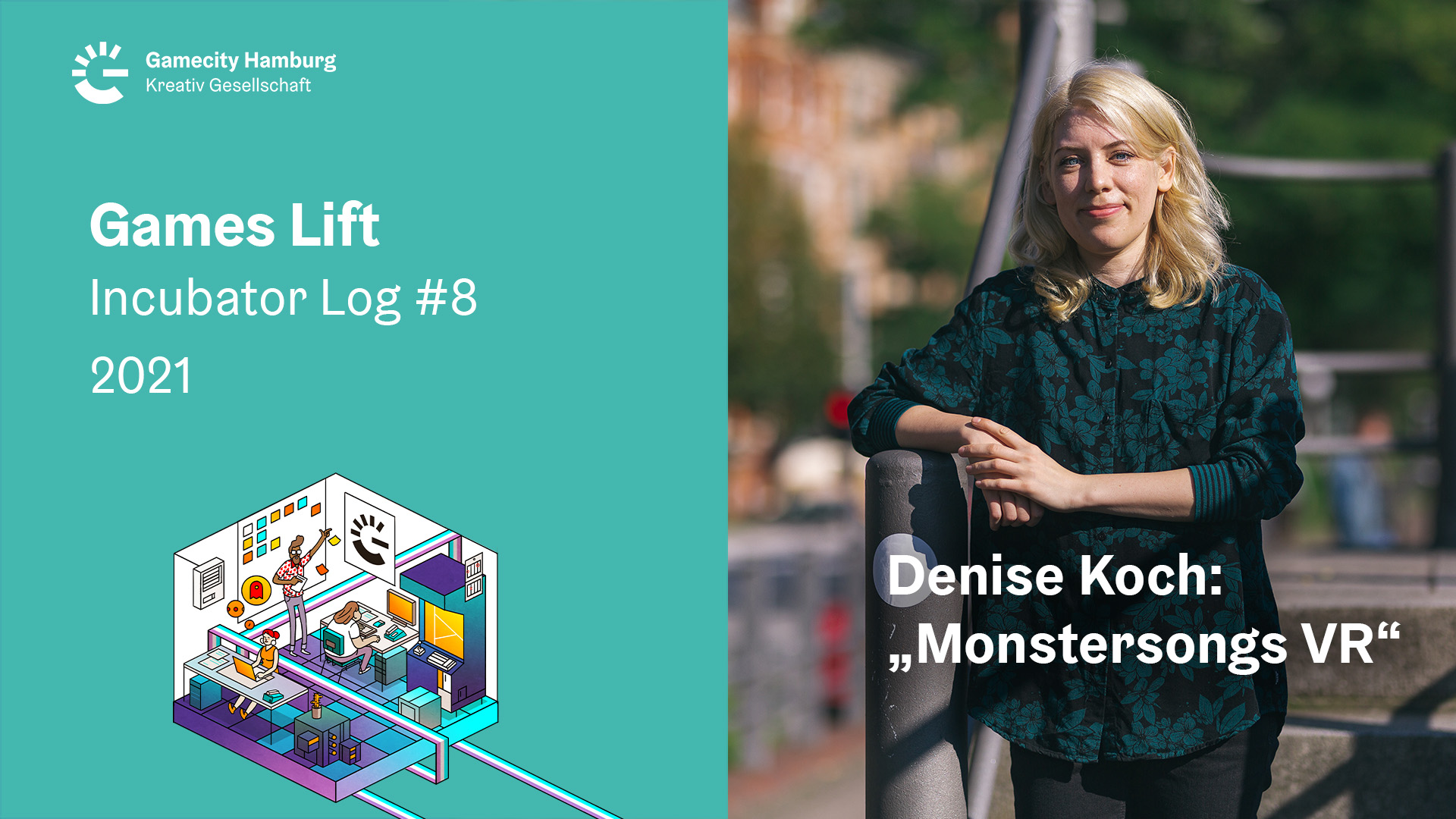
Games Lift: Denise Koch and Her Wicked Plans
The Games Lift Incubator, an initiative based in Hamburg, Germany, serves as a professional development platform designed to support independent game developers in refining their projects and business strategies.
- The Games Lift Incubator in Hamburg provides independent developers with financial support, mentorship, and structured workshops to transition projects from conceptualization to market-ready products.
- The program focuses on overcoming technical and communication barriers, specifically assisting developers with pitch deck refinement and navigating complex development cycles.
- Denise Koch is utilizing the incubator to develop 'Monstersongs VR,' a narrative-driven project that adapts a rock musical into an immersive virtual reality experience.
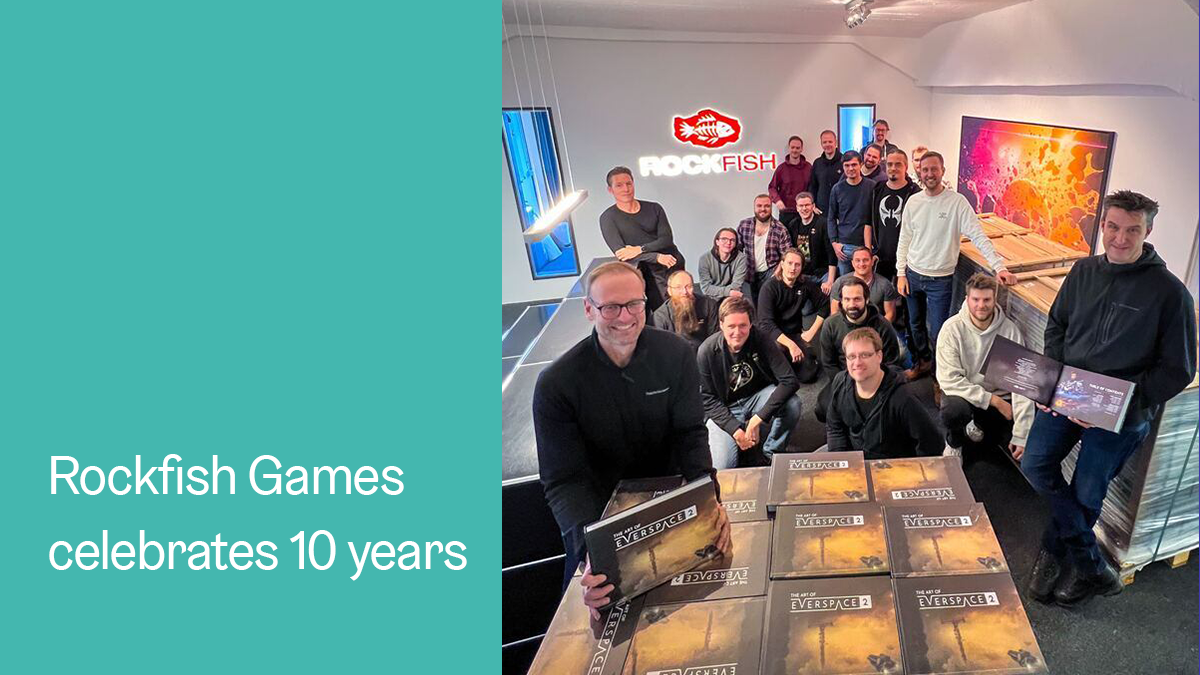
Everspace Developer ROCKFISH Games Celebrates Its Tenth Anniversary
Founded in 2014 by Michael Schade and Christian Lohr, Hamburg-based studio ROCKFISH Games has reached its ten-year anniversary, establishing itself as a significant fixture in the German game development landscape.
- ROCKFISH Games, a 25-person studio based in Hamburg, has reached its ten-year anniversary since its 2014 founding by Michael Schade and Christian Lohr.
- The Everspace franchise serves as the studio's primary growth engine, successfully transitioning from a roguelike shooter in 2017 to a semi-open world action RPG with the sequel.
- Everspace 2 achieved significant commercial traction during its Steam Early Access phase, selling 200,000 copies and maintaining a 90% positive review rating.