Unreal
Game
Documents about Unreal
Fortnite Is the Future, but Probably Not for the Reasons You Think
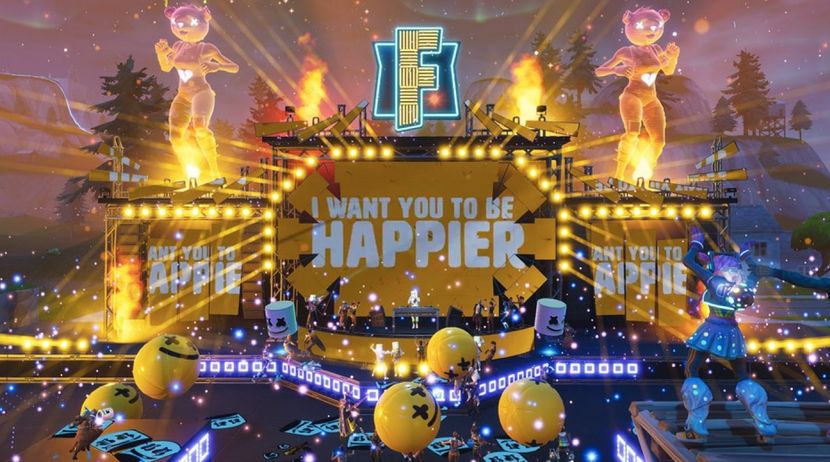
Fortnite represents a pivotal shift in the digital landscape, transcending its origins as a battle royale title to function as a foundational ecosystem for the future of entertainment.
- Fortnite is evolving from a traditional game into a persistent social platform and 'metaverse' infrastructure, prioritizing user engagement and social interaction over specific gameplay mechanics.
- Epic Games is leveraging Fortnite’s massive user base and its proprietary Unreal Engine to build a broader ecosystem, including the Epic Games Store, to challenge existing platform distribution models and 30% commission structures.
- Fortnite’s revenue model, while highly successful, is not unprecedented in the free-to-play market, with peers like Honor of Kings and Fate/Grand Order generating significant income through similar monetization strategies.

Real Time Rendering for Feature Film: Rogue One
The integration of real-time rendering into the production of Rogue One: A Star Wars Story represents a pivotal shift in visual effects workflows, proving that high-fidelity game engine technology can meet the rigorous aesthetic standards of feature film production.
- The Advanced Development Group successfully integrated Unreal Engine into the production of 'Rogue One' to render the character K-2SO, proving game engine technology can meet high-end feature film aesthetic standards.
- The workflow utilized open standards like Alembic and Material X to import complex ILM assets into a real-time environment without requiring custom rebuilding.
- By employing custom solutions for geometry caching and temporal super-sampling, the team achieved film-quality beauty renders at 9K resolution.

5 Steps To Start Making Games
Game development is a viable career path that can be pursued through self-directed learning rather than formal education.
- Independent game development is a viable career path that prioritizes self-directed learning and disciplined, daily study over formal degree programs.
- Aspiring developers should commit to a consistent routine of three hours of daily practice to master the technical and creative aspects of production.
- The launch phase requires a significant marketing investment of 40 hours per week for one month, focusing on trailer production and outreach to journalists and influencers.

How To Make A Game ALONE (5 Secrets)!
Solo game development is increasingly viable due to significant advancements in software accessibility and industry shifts toward smaller, high-quality projects.
- Solo game development is now a sustainable career path due to the accessibility of modern engines like Unity and Unreal, which have replaced complex low-level coding with user-friendly interfaces.
- Market demand is shifting toward shorter, narrative-driven experiences that can be completed in one to two hours, favoring the limited production capacity of individual developers.
- Limiting project scope to a development cycle of five months to a year significantly increases the likelihood of project completion and prevents developer burnout.
Going global: Bringing giant games from South Korea to the West
Netmarble’s strategy for expanding South Korean mobile titles into Western markets centers on deep cultural localization and iterative adaptation.
- Netmarble's 'Lineage 2: Revolution' achieved over 30 million downloads and exceeded $1 billion in accumulated revenue by leveraging the Unreal 4 engine to bring high-spec, 50-versus-50 real-time guild battles to mobile.
- Successful global expansion requires significant localization beyond translation, such as adjusting leveling difficulty, UI layouts, and PvE/PvP content ratios to align with Western player preferences.
- When localizing 'Everybody's Marble' for Western markets, Netmarble delayed the launch by six months to overhaul character designs and simplify complex tutorials that were deemed unsuitable for non-Asian audiences.
Terra Virtua – The consumer VR platform
Terra Virtua is a consumer-facing virtual reality entertainment platform designed to serve as a centralized hub for immersive gaming, live events, and social interaction.
- Terra Virtua functions as a centralized VR ecosystem that uses a proprietary blockchain-based token to unify fragmented gaming experiences, currencies, and digital asset trading.
- The platform offers developers an 80/20 revenue split in favor of the creator and utilizes blockchain technology to bypass traditional 60-day payment cycles with immediate settlements.
- The 'Terraformer' toolset, built on the Unreal Engine, enables users to develop, host, and monetize their own VR experiences within the platform.
Unreal Engine and the future of mobile games
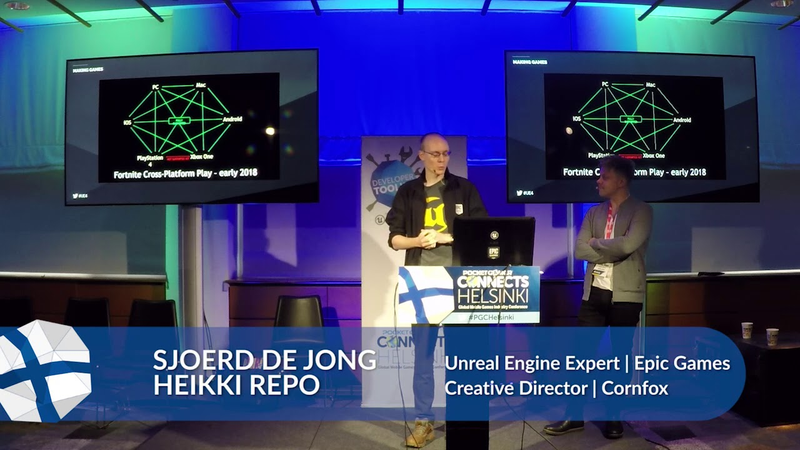
The future of mobile gaming is defined by the transition toward high-fidelity, cross-platform experiences that provide players with seamless connectivity across consoles, personal computers, and mobile devices.
- Mobile gaming is shifting toward high-fidelity, cross-platform experiences that offer seamless connectivity between mobile devices, PCs, and consoles.
- Unreal Engine enables developers to deploy console-quality titles on mobile hardware by overcoming previous technical limitations and democratizing high-end development.
- Optimization for mobile hardware requires addressing strict memory and draw-call constraints through automated level-of-detail generation, material instancing, and platform-specific texture compression.
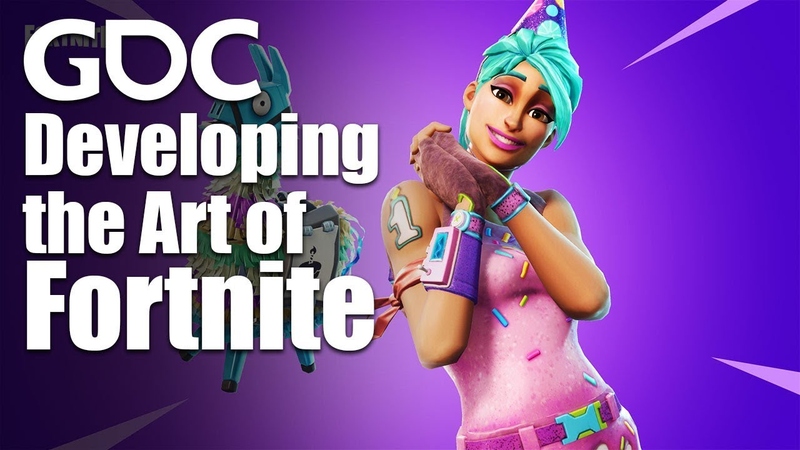
Developing the Art of Fortnite
Fortnite originated as a gritty, realistic survival horror title before undergoing a fundamental artistic pivot toward a vibrant, stylized aesthetic.
- The Fortnite art team transitioned from a realistic, high-fidelity aesthetic to a stylized approach to better support long-term, live-service, free-to-play requirements.
- To maintain gameplay clarity, the team prioritized exaggerated, expressive shape language over realism, ensuring that character silhouettes and weapon designs remained readable during third-person combat.
- The team utilized a modular, grid-based building system but integrated gestural, stylized forms into individual assets to maintain a cohesive visual identity despite the rigid structural constraints.

Write a Game Engine? - WHY and HOW.
Developing a custom game engine is a complex undertaking that offers significant advantages in architectural control, specialized functionality, and educational depth, though it carries substantial risks and development overhead.
- Custom engine development is primarily recommended for those pursuing careers in engine engineering or hobbyists prioritizing technical mastery over the rapid production of games.
- The primary advantages of proprietary engines include total architectural control, the ability to tailor systems to unique project requirements, and the avoidance of restrictive licensing agreements associated with commercial engines like Unity or Unreal.
- Building a custom engine requires significant investment in 'invisible work,' such as creating boilerplate code for window initialization, graphics API setup, and developing custom toolchains like level editors and asset importers.
Your Indie Game on Console: A Practical Guide to Porting
Bringing an indie game to console platforms is a complex, multi-month undertaking that demands rigorous technical planning and administrative foresight.
- Porting an indie game to console is a complex process typically requiring three to six months, with projects involving intricate online networking often needing extended timelines.
- Success depends on early integration of platform-specific requirements, including dev kit acquisition, age ratings, and backend configuration for achievements, well before the final submission phase.
- Developers must replace simplified local storage with robust, platform-compliant save systems to meet console-specific technical standards.
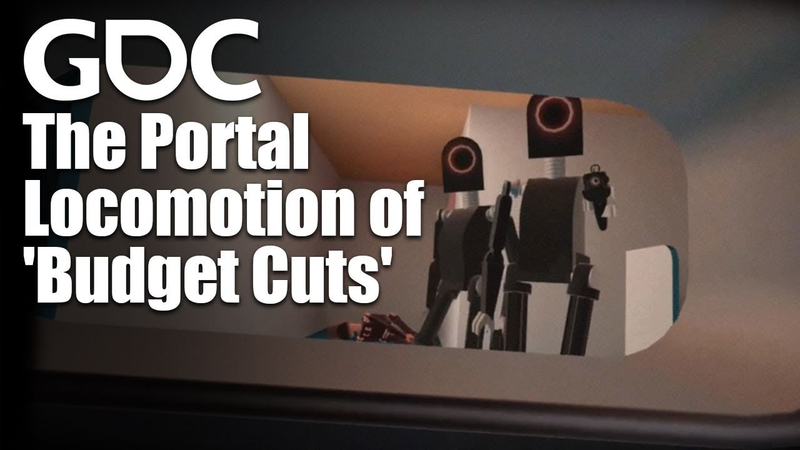
The Portal Locomotion of Budget Cuts
The development of the portal-based locomotion system for the virtual reality stealth game Budget Cuts focused on solving the inherent challenges of VR movement, specifically motion sickness, navigation predictability, and gameplay pacing.
- The Budget Cuts locomotion system uses a physical translocator beacon to naturally constrain movement speed and distance, avoiding the disorientation associated with traditional point-and-click teleportation.
- To mitigate motion sickness, the game employs a portal window that previews the destination and uses spherical linear interpolation (slerp) to provide a smooth, consistent transition regardless of player head orientation.
- The team optimized performance by replacing resource-heavy render-target techniques with Z-buffer manipulation, which renders only the necessary geometry within the portal to reduce GPU load.

Dear YoYo Games...
The current business model for GameMaker Studio 2 faces significant criticism for its restrictive free-tier limitations, which threaten the engine's long-term competitiveness against industry rivals like Unity and Unreal Engine.
- GameMaker Studio 2’s current business model, which imposes a $40 fee to remove object and sprite count limitations, creates significant friction that discourages new users.
- The engine’s restrictive free-tier model is causing beginners to migrate toward competitors like Unity and Unreal Engine, which offer more robust free versions for experimentation.
- By prioritizing short-term revenue over user acquisition, GameMaker risks alienating the youth demographic, which serves as the primary pipeline for future professional developers.