Unreal
Game
Documents about Unreal
Superstar Session: Azure PlayFab Party Showcase
Azure PlayFab Party serves as a comprehensive networking and communication solution designed to enhance multiplayer gaming experiences by fostering social connectivity, inclusivity, and cross-platform interaction.
- Azure PlayFab Party provides a cross-platform networking and communication solution for Windows, Xbox, PlayStation, Nintendo Switch, iOS, Android, and Google Stadia.
- The service secures multiplayer traffic against DDoS attacks by routing data through geo-distributed cloud relays instead of peer-to-peer connections.
- Integration includes built-in accessibility and communication features such as real-time voice-to-text and translation across more than 70 languages via Azure Cognitive Services.

IL Gigante: Michelangelo's David in VR
This presentation details the technical development of a virtual reality experience featuring Michelangelo’s David, utilizing a high-fidelity, billion-polygon laser scan dataset originally captured by Stanford University in 1998.
- The project successfully converted a 1998 Stanford University billion-polygon laser scan of Michelangelo’s David into a real-time, interactive VR experience within Unreal Engine 4.
- Engineers achieved quarter-millimeter resolution, allowing users to inspect fine historical details like chisel marks and structural repairs from a virtual scaffold.
- The development team overcame the lack of UV mapping and non-aligned scans in the raw dataset by using a multi-stage workflow involving ZBrush, Instant Meshes, and Wrap3 for non-rigid mesh alignment.
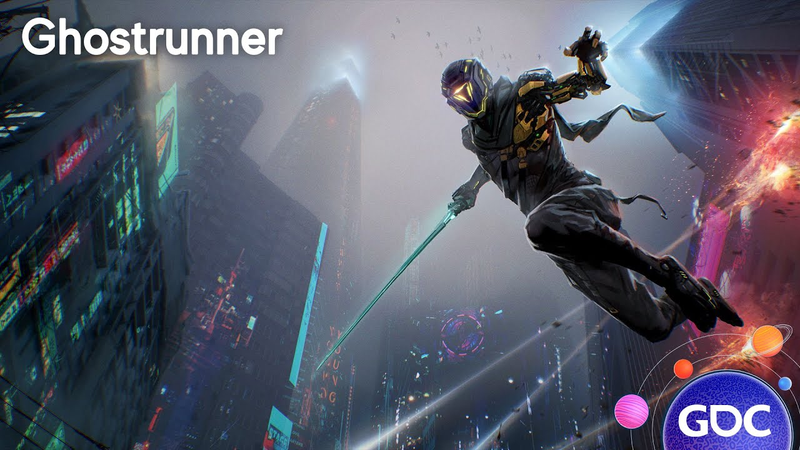
GDC Plays Ghostrunner with One More Level
The development of Ghostrunner represents a strategic shift toward high-fidelity, first-person action, moving away from the studio’s previous top-down design roots.
- Ghostrunner centers on a 'one-hit, one-kill' mechanic, which the developers adapted into a first-person perspective to differentiate the title from traditional action games.
- To maintain gameplay momentum, the developers designed levels to be 'waterproofed'—ensuring fluid movement and navigation while allowing for multiple player-chosen routes without stopping the action.
- Narrative exposition is delivered primarily through in-game dialogue rather than face-to-face interactions, utilizing quieter, non-combat platforming sections to ensure players can absorb the story without interrupting the game's pace.

Workshop : How to Implement Video Chat into Unreal Engine
Integrating real-time video communication into Unreal Engine projects requires a structured technical workflow centered on the Agora SDK.
- Integrating real-time video into Unreal Engine projects is primarily achieved by utilizing the Agora SDK, which provides the framework for managing communication channels.
- The implementation requires initializing the Agora engine with a unique App ID and creating custom actor blueprints and UI widgets to render local and remote video feeds.
- Developers must configure specific callback events to manage connection states and bind video streams to dedicated video holder blueprints within the game environment.
Panel: New Ad Formats - The Next Generation
The modern gaming industry is undergoing a fundamental shift toward non-intrusive, context-aware monetization strategies that prioritize player retention alongside revenue generation.
- The gaming industry is shifting from disruptive interstitial ads to non-intrusive, context-aware formats like rewarded videos, audio ads, and dynamic in-game product placements to prioritize player retention.
- The deprecation of traditional tracking identifiers like IDFA has forced a transition toward privacy-compliant, contextual advertising models that do not rely on deep individual behavioral tracking.
- Developers are utilizing cross-platform SDKs for Unity and Unreal to maintain consistent monetization strategies across mobile, PC, and web environments.

State of the Industry 2020 & Beyond with Brad Hart and Johan Karlsson | Episode 234
The global game development industry underwent a fundamental transformation in 2020, characterized by a permanent shift toward remote and distributed work models.
- Investment success is increasingly tied to leadership quality and business execution plans rather than product concepts, as 41 percent of studios currently struggle to secure capital.
- The industry has permanently shifted toward remote and distributed work models, proving that high-fidelity development is sustainable outside of centralized offices.
- Technological advancements in 5G, cloud streaming, and mobile hardware are positioning mobile platforms as primary destinations for AAA-quality gaming.

Epic Games Lawsuit vs. Apple Court Hearing | Lawyers Explain! (Fortnite Mobile Killed)
The legal challenge initiated by Epic Games against Apple and Google represents a fundamental assault on the prevailing 30% commission structure and restrictive payment policies governing mobile app ecosystems.
- The Epic Games litigation challenges the industry-standard 30% commission structure and restrictive payment policies enforced by Apple and Google on mobile app ecosystems.
- Epic Games aims to dismantle the closed-loop nature of mobile platforms by legally classifying app stores as essential facilities, though this remains a high-burden antitrust argument.
- A judicial intervention prevented Apple from terminating Epic’s developer accounts and restricting access to the Unreal Engine, citing disproportionate harm to third-party developers.
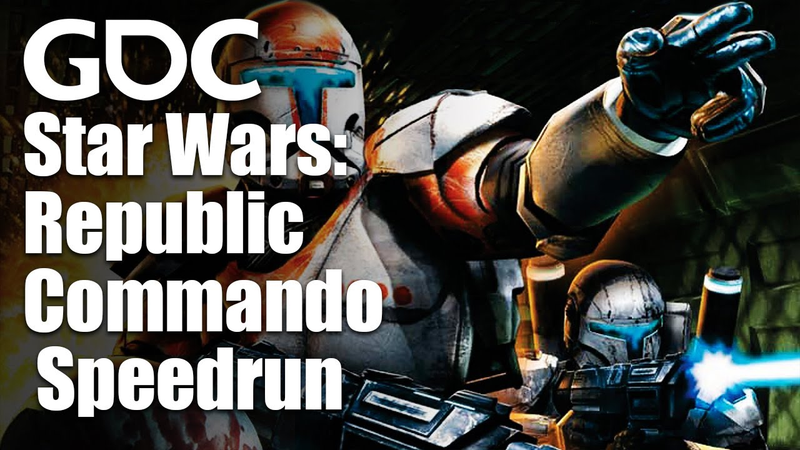
GDC Summer Dev Speedrun - Star Wars: Republic Commando With Harley Baldwin
The development of Star Wars: Republic Commando, released in 2005, serves as a case study in balancing ambitious squad-based mechanics with the severe hardware constraints of the original Xbox.
- To address player feedback that the game did not feel like a squad-based experience, the development team implemented a simple code change that defaulted the squad to 'search and destroy' behavior whenever the player entered a new area, ensuring the AI remained visible and active.
- Technical limitations in Unreal Engine 2 and the hardware of the era forced level designers to use short hallways to connect large arenas, as the engine struggled to render expansive environments alongside the necessary connective geometry.
- Early prototypes for vehicle-based or moving-platform gameplay were abandoned because the physics simulation costs were prohibitively expensive for the hardware available at the time of development.

How Film, Games & Social Media are Merging Using AR PG Connects Digital #2
The convergence of film, gaming, and social media is being driven by the rapid advancement of augmented reality (AR) and real-time rendering technologies.
- The convergence of film, gaming, and social media is driven by the adoption of shared real-time rendering tools like Unreal Engine and Unity, which enable high-fidelity interactive experiences across all three sectors.
- Virtual production is replacing traditional green-screen workflows by using LED walls and real-time ray tracing to allow filmmakers to manipulate environments instantaneously.
- The democratization of mobile computing power has enabled social media users to create professional-grade visual effects, while digital twins provide the high-resolution scanning necessary to bridge physical and virtual worlds.

The Evolution of Dynasty Games PG Connects Digital #2
Toplitz Productions is redefining the simulation genre by integrating deep narrative and life-management mechanics into traditional functional gameplay.
- Toplitz Productions is evolving the simulation genre by blending traditional functional tasks like farming and logging with deep narrative, social interaction, and decision-tree mechanics.
- The 'Dynasty' series, specifically 'Medieval Dynasty' built on the Unreal 4 engine, serves as the primary example of combining open-world sandbox structures with survival and village-building progression.
- The studio utilizes an incremental development philosophy, breaking complex projects into manageable layers to refine foundational mechanics based on direct community feedback.
T1000’s, Trex’s & Eyebrow Mites PG Connects Digital #2
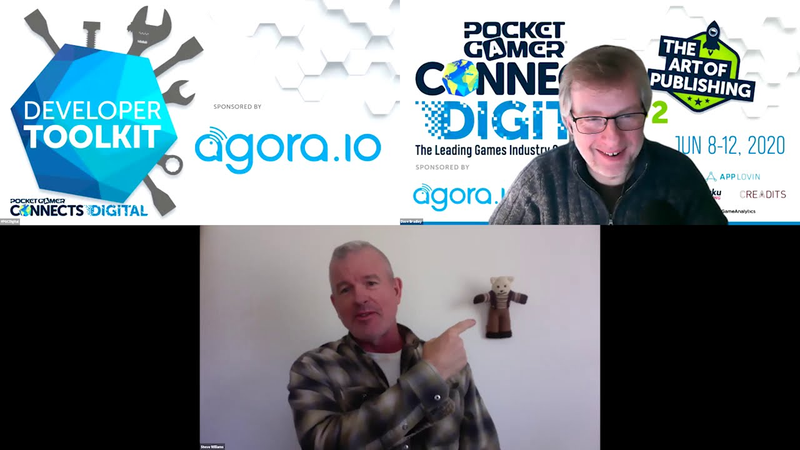
Steve Williams, a veteran computer graphics pioneer and former chief animator at Industrial Light & Magic (ILM), provided an analytical retrospective on the evolution of computer-generated imagery (CGI) during his session at Pocket Gamer Connects Digital #2 in June 2020.
- The transition from stop-motion to digital assets in films like Jurassic Park proved that CGI could replicate physical realism—such as breathing and weight—that was previously deemed impossible by industry experts.
- Technological breakthroughs in visual effects are driven by a synergy between creative curiosity and the inevitable progression of hardware capabilities.
- Modern real-time rendering, exemplified by Unreal Engine and productions like The Mandalorian, represents the next phase of visual evolution where any imagery is theoretically possible given sufficient computational power.
Working Smart - Machine Learning in Art Asset Creation for the Games Industry PG Connects Digital #2
The integration of machine learning into art asset creation offers a transformative approach to game development, primarily by accelerating production timelines and automating complex workflows.
- Digital twinning utilizes CT scanning and automated platforms to convert physical objects into game-ready assets, bypassing traditional manual modeling and CAD-based workflows.
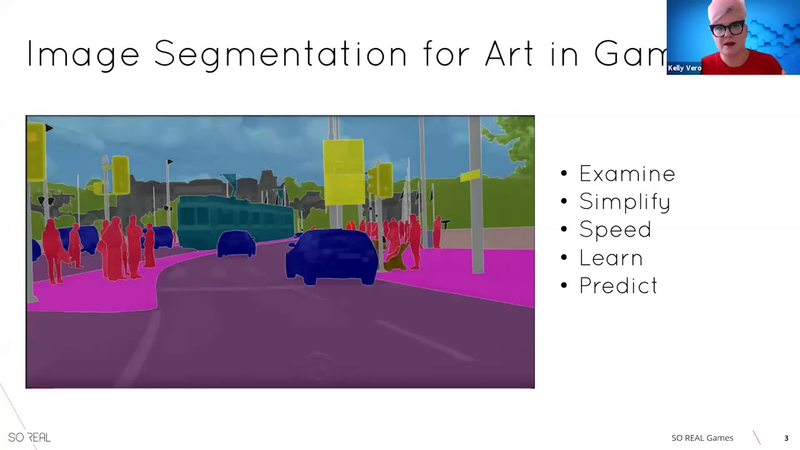
- Machine learning algorithms use image segmentation techniques—including thresholding, histogram analysis, and the Otsu method—to automate the reconstruction of complex objects by clustering vertices and structural data.
- Automating the art pipeline through algorithmic checks for vertex counts and file storage significantly reduces the need for human intervention in quality assurance and project management.