Super Mario
Game
Documents about Super Mario

Fiscal Year Ending March 2021: Corporate Management Policy Briefing
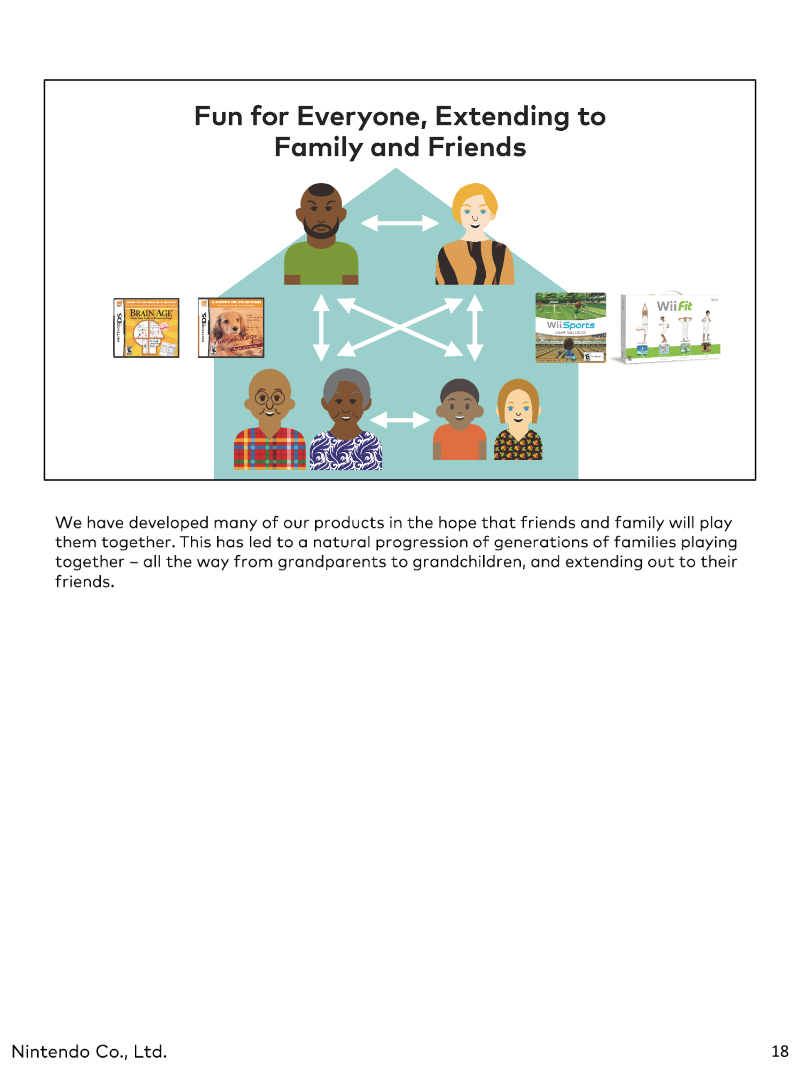
Nintendo maintains a core business philosophy centered on the integration of proprietary hardware and software to deliver intuitive, tactile entertainment experiences.
- Nintendo’s core strategy centers on integrating proprietary hardware and software to drive a virtuous cycle of engagement, anchored by iconic intellectual property like Super Mario.
- The Nintendo Account program has reached a scale of over 200 million users across 164 countries, serving as the primary digital infrastructure for platform loyalty.
- Digital software sales reached approximately 50 percent of total volume during the fiscal year ending March 2021, reflecting a significant shift in consumer purchasing behavior.
Nintendo Mobile Games Reach $1 Billion in Lifetime Player Spending
Nintendo has surpassed $1 billion in lifetime gross revenue across its mobile gaming portfolio, according to data from Sensor Tower Store Intelligence.
- Nintendo’s six mobile titles have generated over $1 billion in lifetime gross revenue across the App Store and Google Play, supported by 452 million total downloads.
- Fire Emblem Heroes is the primary revenue driver, accounting for 61% ($656 million) of total lifetime mobile earnings despite representing only 4% of total downloads.
- Japan is the most significant market for Nintendo’s mobile revenue, contributing $581 million (54% of the total), followed by the U.S. at $316 million (29%).

Nintendo Financial Results Briefing: Six Months Fiscal Year Ending March 2020
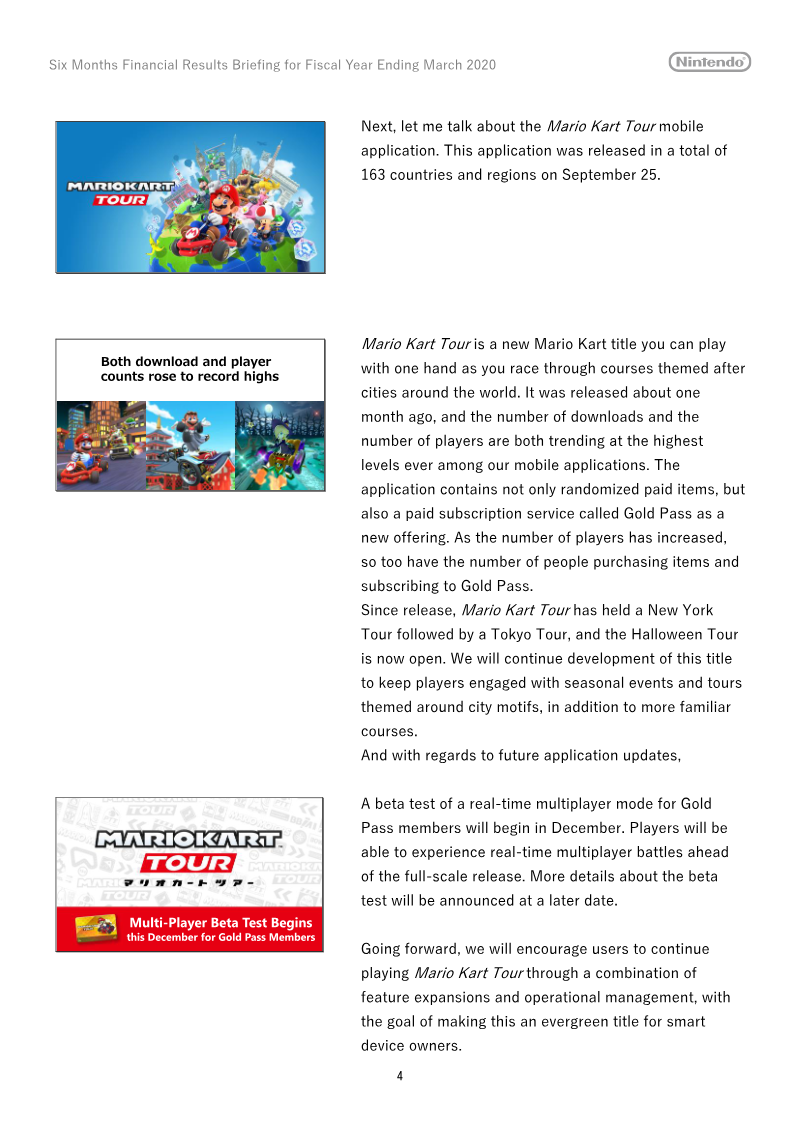
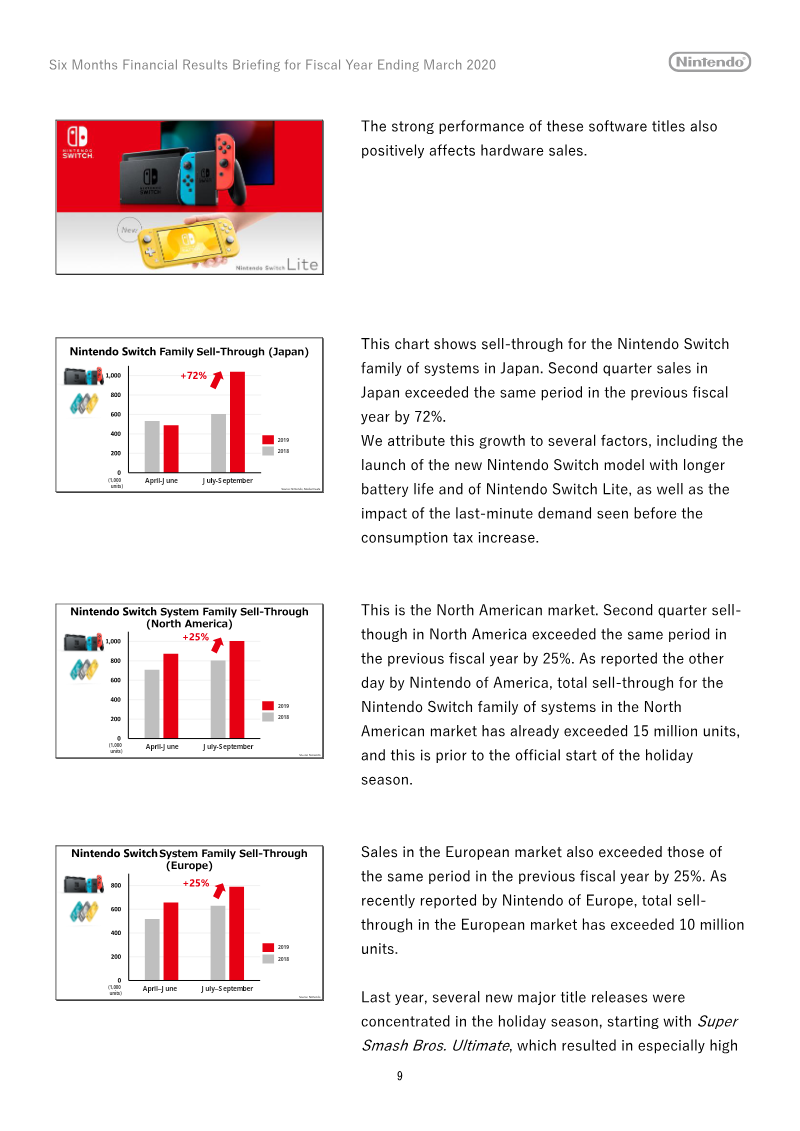
The Nintendo financial results briefing for the first half of the fiscal year ending March 2020 highlights strong momentum for the Nintendo Switch platform, driven by the successful launch of the Nintendo Switch Lite and a robust software library.

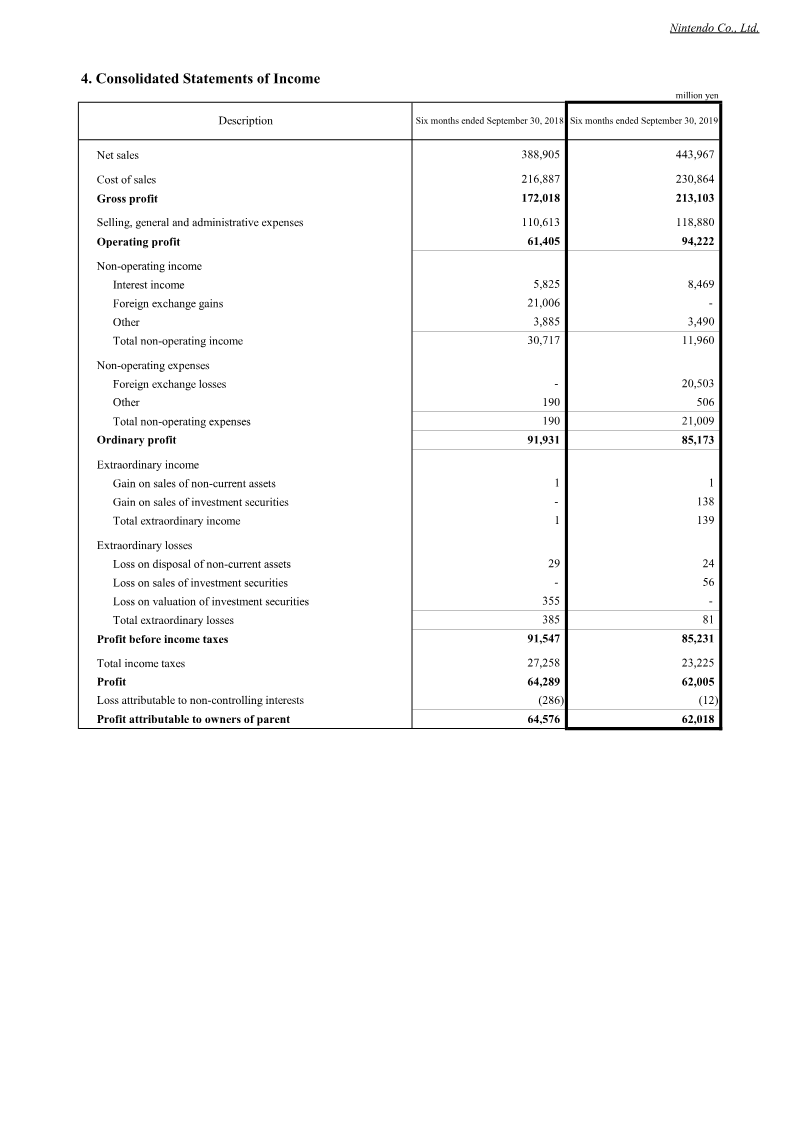
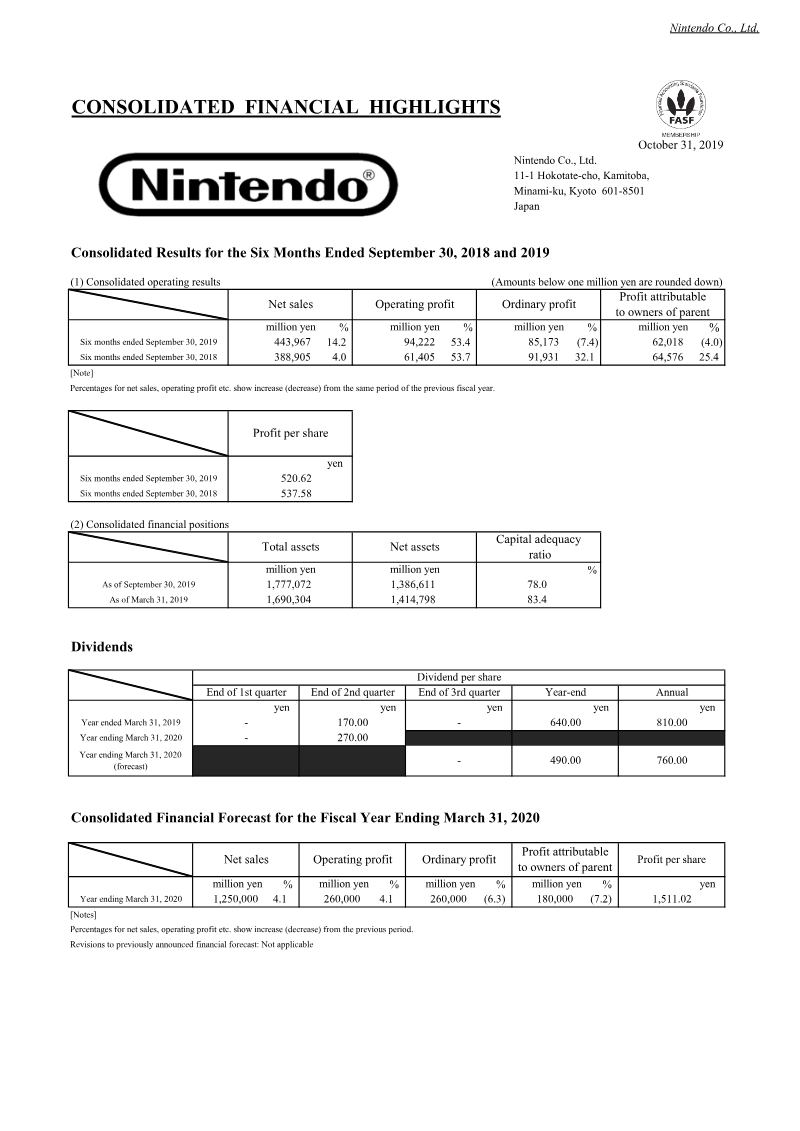
Nintendo Consolidated Financial Highlights: Six Months Ended September 30, 2019
Nintendo’s consolidated financial results for the six-month period ending September 30, 2019, demonstrate strong growth driven primarily by the expansion of the Nintendo Switch platform.
- Nintendo’s operating profit grew 53.4% to 94.2 billion yen, while net sales increased 14.2% to 443.9 billion yen for the six months ending September 30, 2019.
- Nintendo Switch hardware sales rose 36.7% to 6.93 million units, and software sales increased 38.8% to 58.49 million units, driven by new hardware models and key titles like Super Mario Maker 2.
- Digital business revenue surged 83.0% year-on-year to 71.6 billion yen, bolstered by strong performance in downloadable software and the Nintendo Switch Online service.
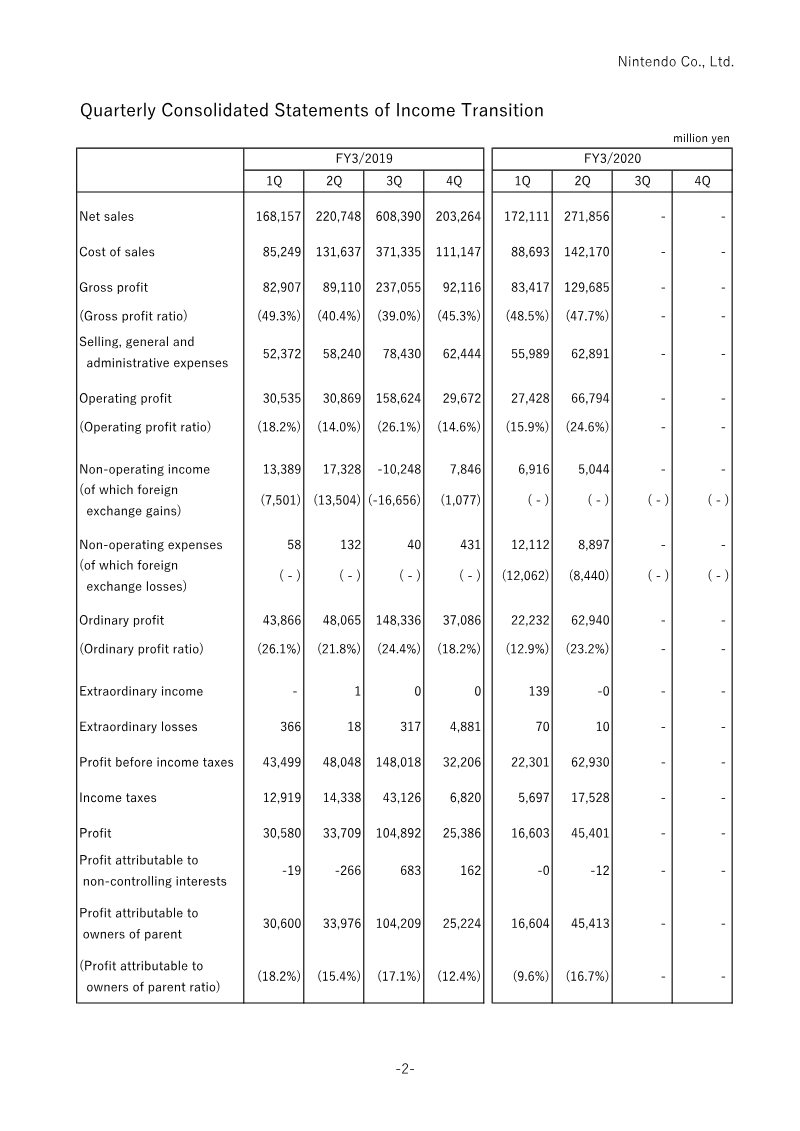
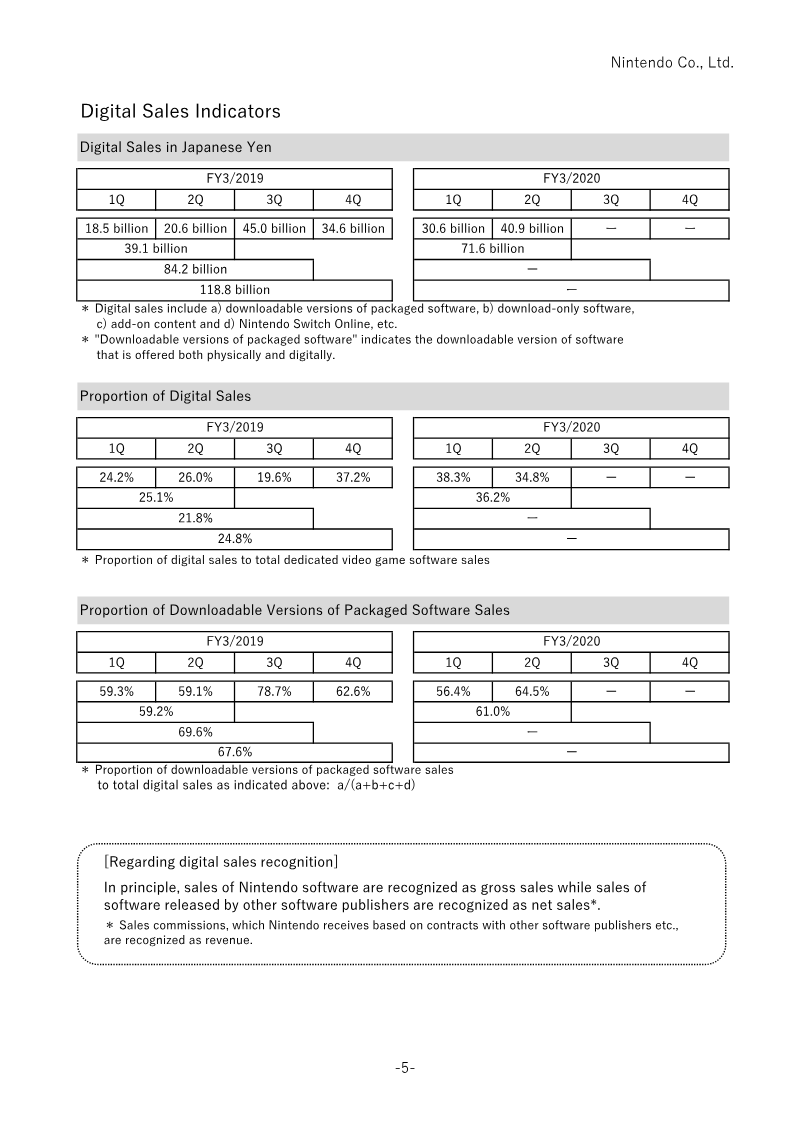

Nintendo Earnings Release: Supplementary Information (September 2019)
The financial results for the six-month period ending September 2019 demonstrate significant growth for Nintendo, characterized by a substantial increase in net sales and operating profit compared to the same period in the previous fiscal year.
- Nintendo reported strong financial growth for the six-month period ending September 2019, achieving 443.9 billion yen in net sales and 94.2 billion yen in operating profit.
- The company maintains a high operating profit ratio of 21.2%, driven by robust performance in both hardware and software sales.
- International markets are critical to Nintendo's financial health, with overseas sales consistently accounting for more than 75% of total revenue.

Why Sound Design is Crucial for Your Game
Sound design serves as a fundamental pillar in game development, acting as a primary driver for player immersion, emotional resonance, and functional feedback.
- Sound design is a primary driver of player immersion and emotional resonance, often proving more effective than visual fidelity at creating a sense of presence within a game world.
- Auditory cues serve as essential functional feedback, signaling critical gameplay mechanics such as menu navigation, item collection, and combat interactions.
- High-quality ambient sound and sound effects can construct a compelling atmosphere even in projects with limited graphical resources, demonstrating that melodic content is not a requirement for deep engagement.

Supplementary Information for Earnings Release: June 2019
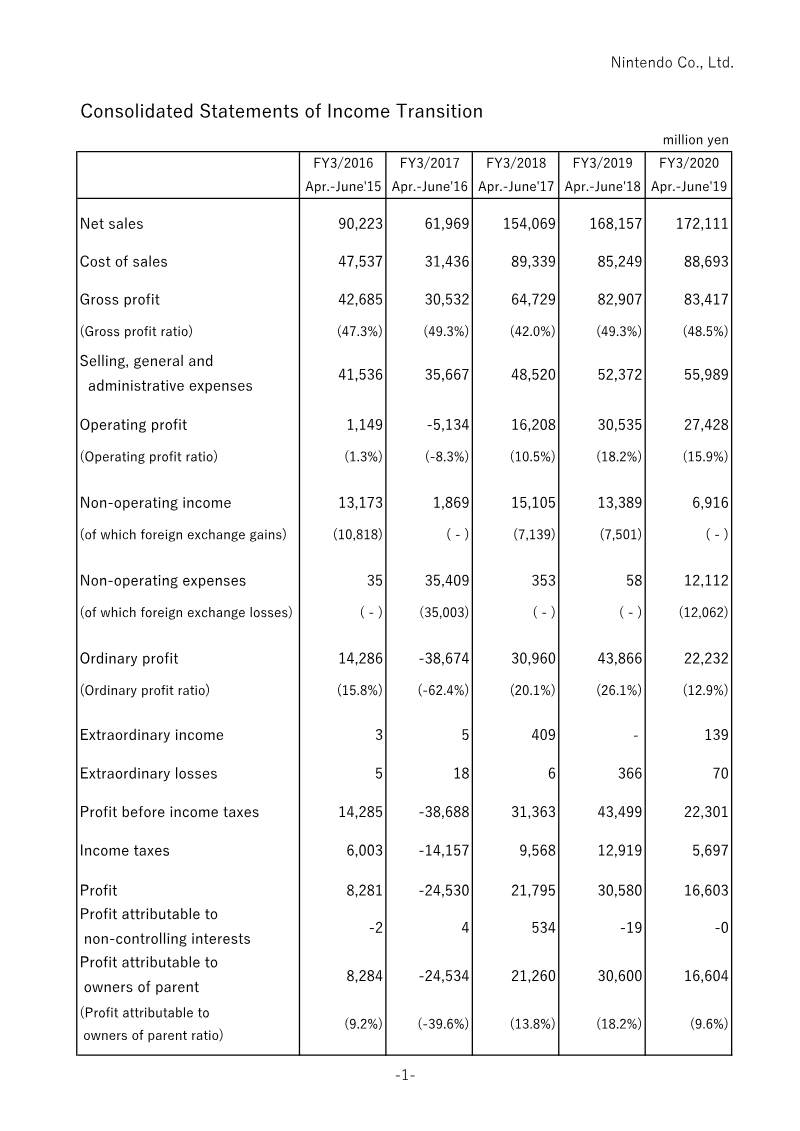
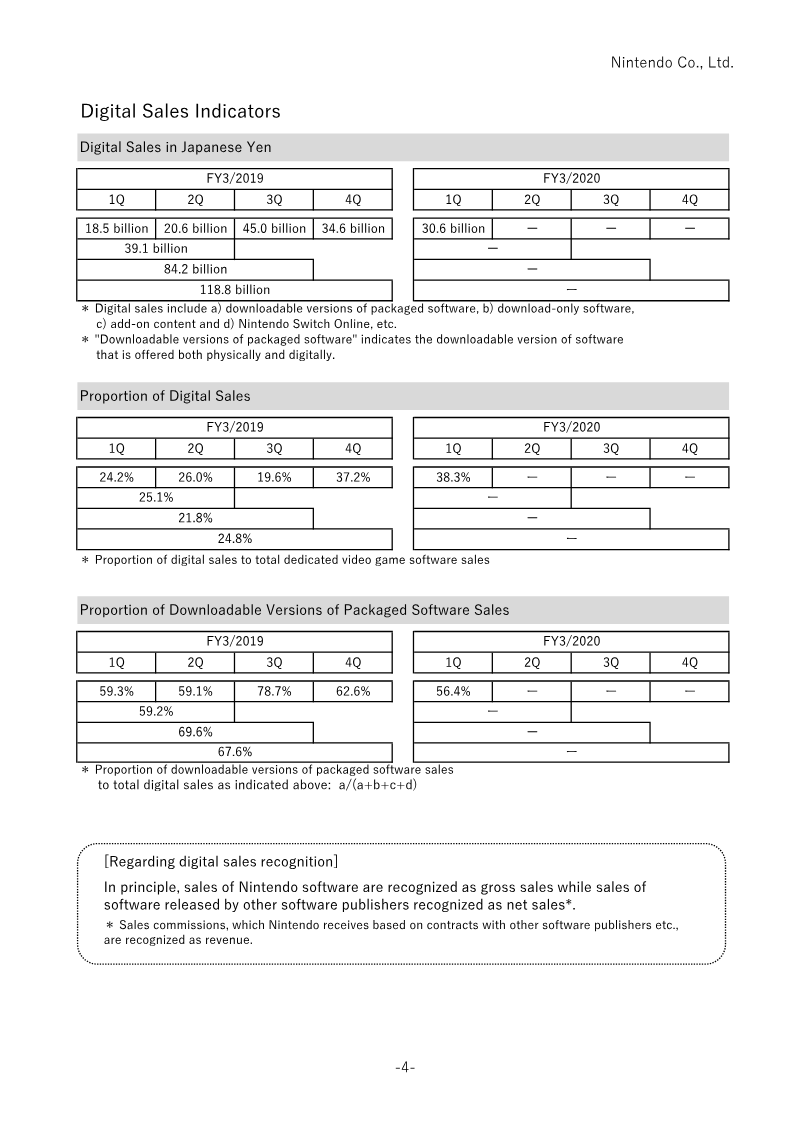
This supplementary information provides a detailed financial and operational overview of Nintendo Co., Ltd. for the first quarter of the fiscal year ending March 2020, covering the period from April to June 2019.

The Disappointing Final Level - Making Better Endings For Better Games - Extra Credits
The game industry frequently struggles to produce satisfying conclusions, often treating the final level as an afterthought due to development time constraints, resource allocation, and the difficulty of playtesting content that requires a full playthrough to experience.
- Game endings must be treated as a critical, planned component of the development cycle rather than an afterthought to ensure they validate the player's time investment.
- A successful conclusion requires the integration of three distinct layers: the narrative ending for emotional resolution, the mechanical ending for skill mastery, and the ethos ending for thematic reflection.
- Developers should prioritize early planning of the final level to avoid the common pitfalls of rushed development, resource depletion, and the difficulty of playtesting content that requires a full playthrough.

Building Mario Levels with Machine Learning
Procedural content generation in the Super Mario Bros. franchise has evolved significantly between 2012 and 2019, transitioning from rigid, hand-crafted rule systems to sophisticated machine learning models capable of autonomous design.
- Researchers have moved beyond simple procedural generation to using machine learning models—including Markov Chains, LSTMs, and GANs—to infer the design logic and tile-grouping patterns of Super Mario levels.
- Dr. Steve Dahlskog’s research utilized evolutionary computation to generate levels based on 200 vertical slices, though early iterations struggled to replicate the natural pacing and flow of human-designed levels.
- Adam Summerville improved level generation by combining Markov Chains with Monte Carlo Tree Search (MCTS) to ensure that generated levels are not only structurally sound but also playable.
Using Narrative as Context - Balancing Gameplay and Story Elements - Extra Credits
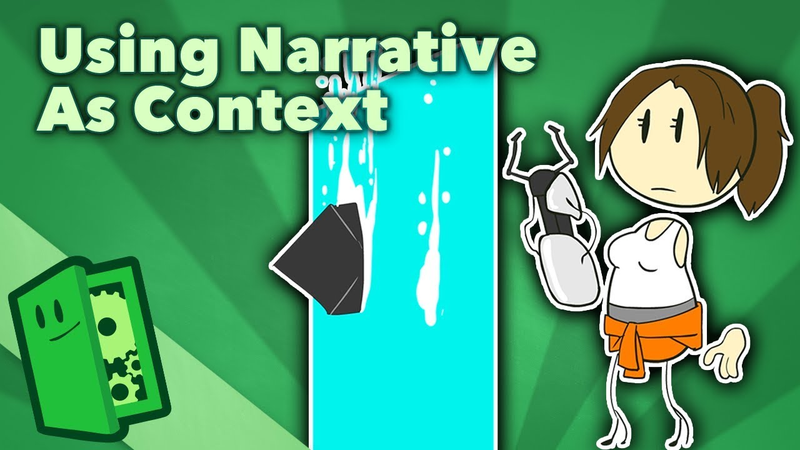
Effective game design does not require a choice between deep narrative and mechanical focus; rather, narrative serves as a vital tool for providing context, setting tone, and fostering player engagement.
- Narrative functions as a critical tool to provide context and meaning, transforming abstract mechanical obstacles into a cohesive player journey.
- Integrating narrative elements helps mask technical limitations by framing engine constraints as intentional, immersive world-building choices.
- Thematic storytelling acts as a necessary bridge to maintain player retention in repetitive genres, such as sports simulations or tile-matching games, by providing emotional stakes.
Nintendo's Mobile Revenue: Q1 2019 Analysis
Nintendo’s mobile gaming division experienced a period of moderate growth in the first quarter of 2019, generating approximately $85 million in worldwide gross revenue across the Apple App Store and Google Play.
- Nintendo's mobile gaming revenue reached $85 million in Q1 2019, marking a 6% year-over-year increase from $80 million in Q1 2018.
- Fire Emblem Heroes remained the top performer with $46.6 million in revenue, though this figure represents a 30% decline compared to Q1 2018.
- Dragalia Lost generated $23.4 million in Q1 2019, a 55% quarter-over-quarter decline that nonetheless prevented an overall year-over-year revenue drop for the company.
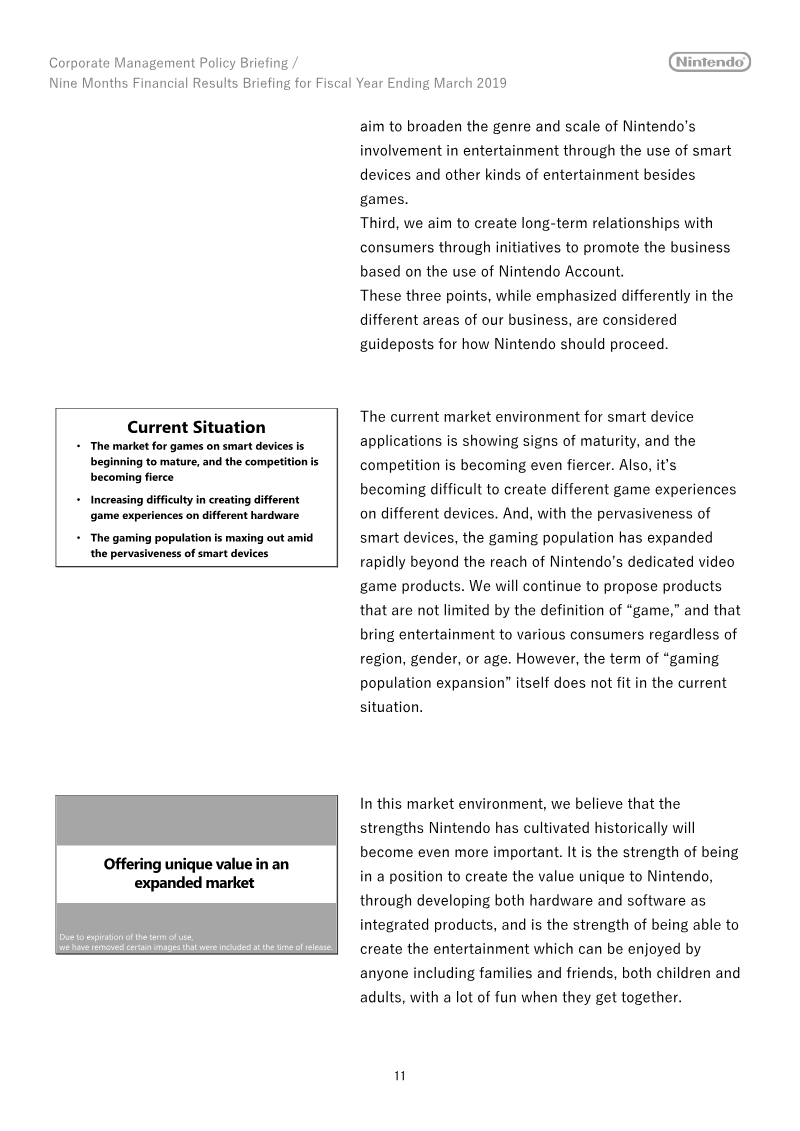
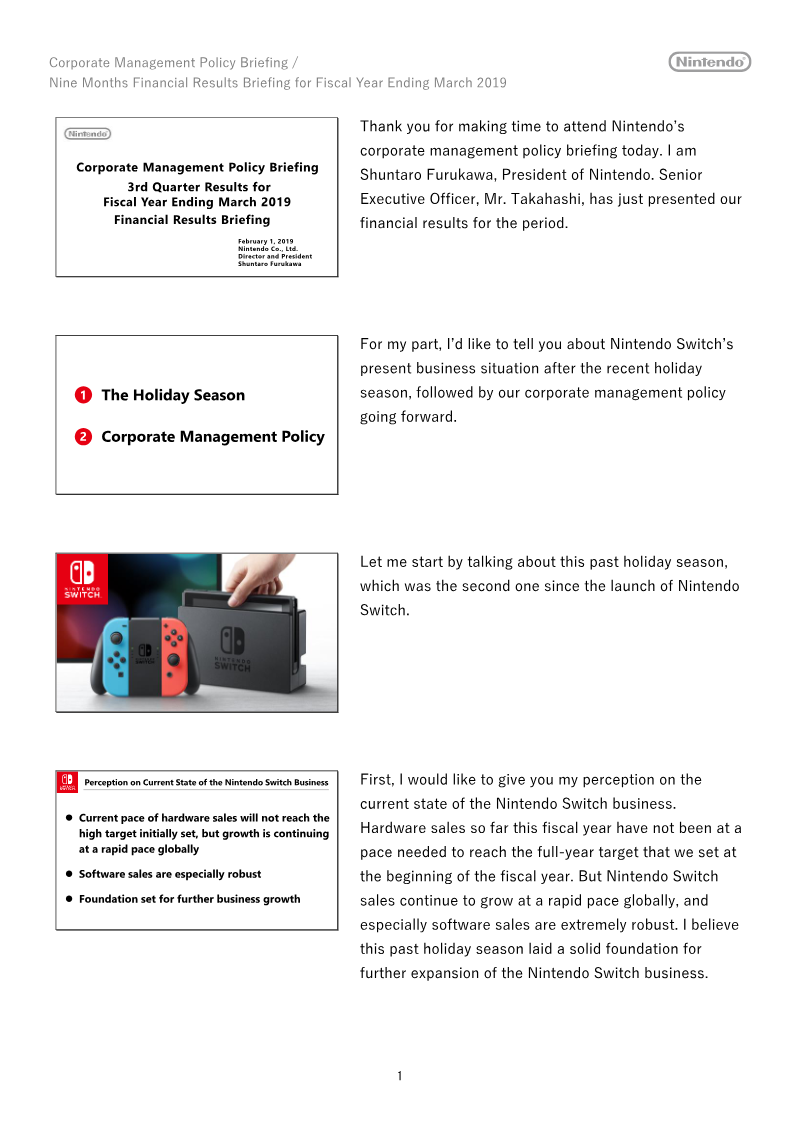
Corporate Management Policy Briefing: 3rd Quarter Results for Fiscal Year Ending March 2019
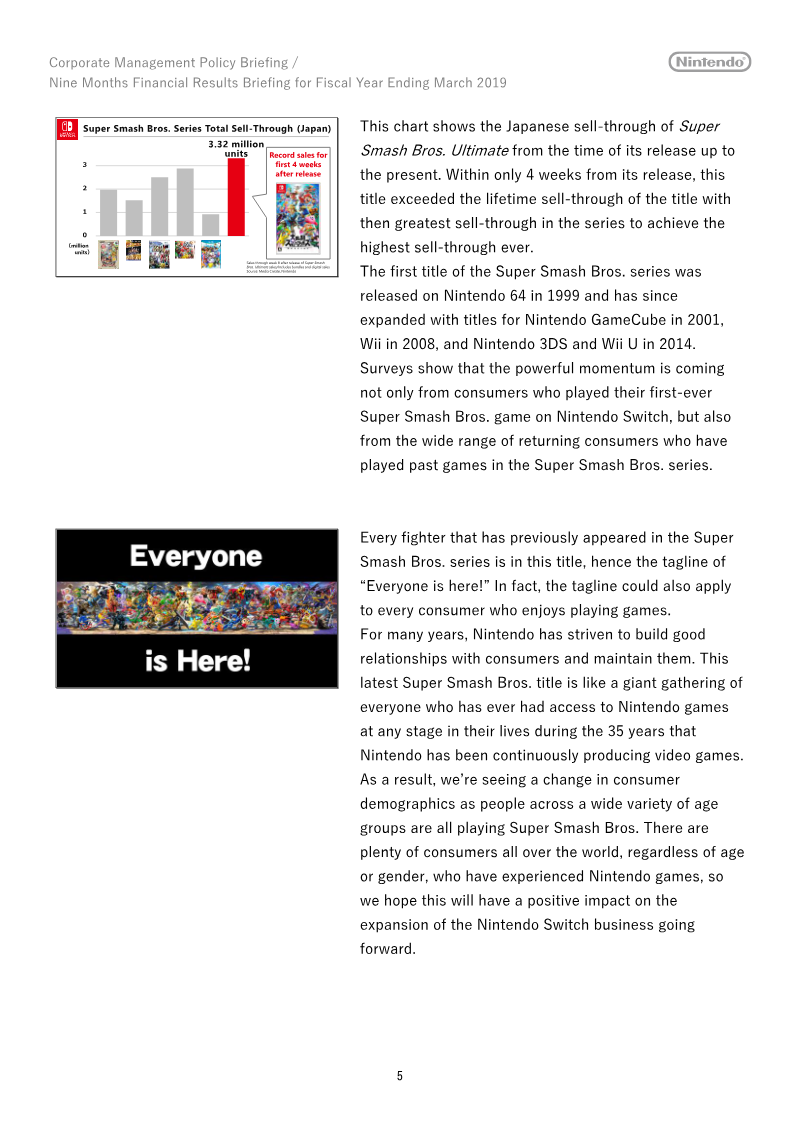
Nintendo is navigating a transitional period in the fiscal year ending March 2019, prioritizing the long-term expansion of its intellectual property and the strengthening of its digital ecosystem.