
League of Legends
GameBy Riot Games · Released Oct 27, 2009
Documents about League of Legends
League of Legends Player Count, Revenue, & Stats
League of Legends maintains a dominant position in the global multiplayer online battle arena market, leveraging a massive, cyclical player base to drive consistent financial performance.
- League of Legends maintains a PC player base of approximately 2.88 million monthly active users and 304,000 daily active users as of early 2025.
- The PC title generates over $271 million in total revenue, yielding an average revenue per daily active user (ARPDAU) of $0.47.
- New player retention remains a critical challenge for the PC version, with only 4% of users remaining active after the first month.
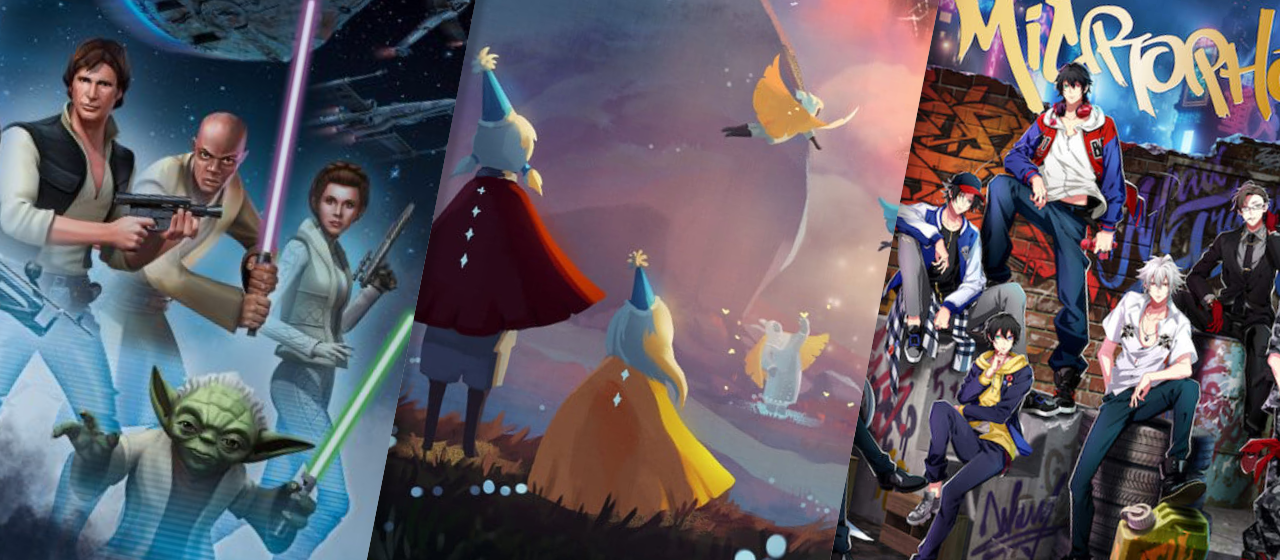
Analyst Bulletin: Mobile Game Market Review March 2021
The March 2021 mobile game market review provides a comprehensive analysis of industry trends, feature updates, and new title performances across the United States, China, and Japan.
- The Battle Pass model continues to gain traction as a primary tool for boosting retention and monetization, with games like House of Fun: Casino Slots 777 and The Seven Deadly Sins: Grand Cross implementing or revamping these systems in March 2021.
- Major mobile titles are increasingly integrating complex, multi-stage event mechanics, such as Genshin Impact’s Windblume Festival, which combined storyline quests, cutscenes, and mini-games, and Star Wars: Galaxy of Heroes’ two-week Conquest mode.
- Collaborations remain a high-impact strategy for driving engagement, exemplified by Two Dots’ word-puzzle event with Chobani and Kotodaman’s trivia-based collaboration with the Demon Slayer anime franchise.
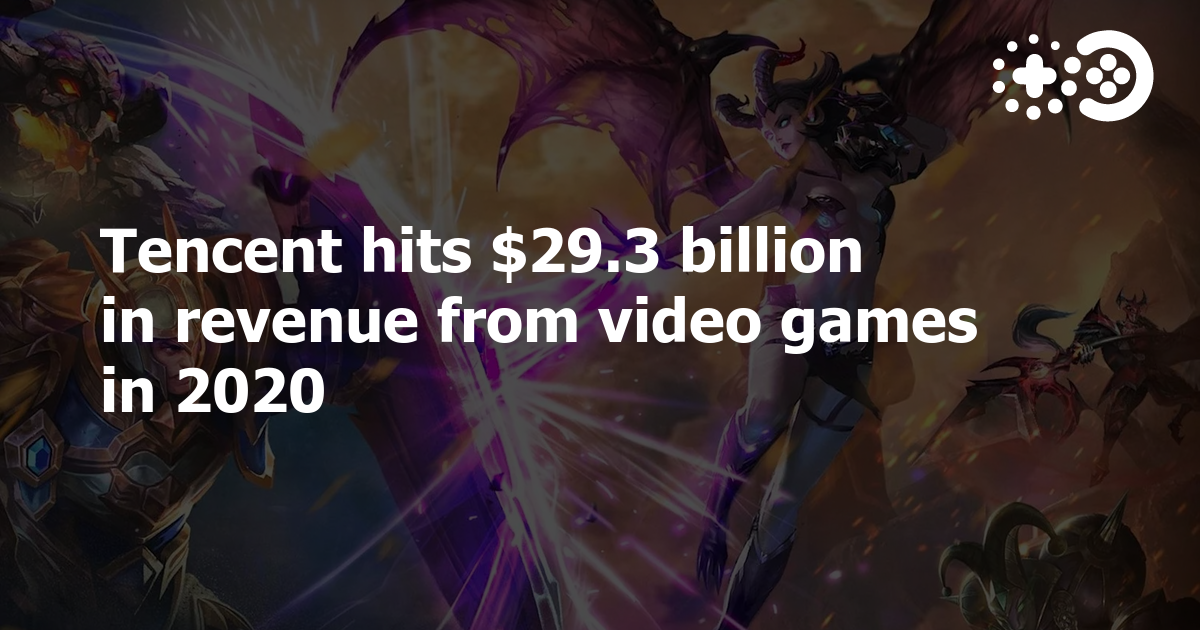
Tencent 2020 Video Game Revenue Results
Tencent demonstrated significant financial growth during the 2020 fiscal year, driven by a robust portfolio of domestic and international video game titles.
- In 2020, Tencent generated $29.3 billion in video game revenue, representing a 35.5% year-over-year increase and nearly half of the company's $73.8 billion total annual revenue.
- Tencent's international gaming revenue grew by 43% year-over-year in Q4 2020, reaching $1.5 billion as part of a broader strategy of global expansion and increased M&A activity.
- Tencent led an $18 million investment round in W4 Games in 2026 to accelerate the development of corporate solutions for the Godot engine and scale its adoption in Asian markets.
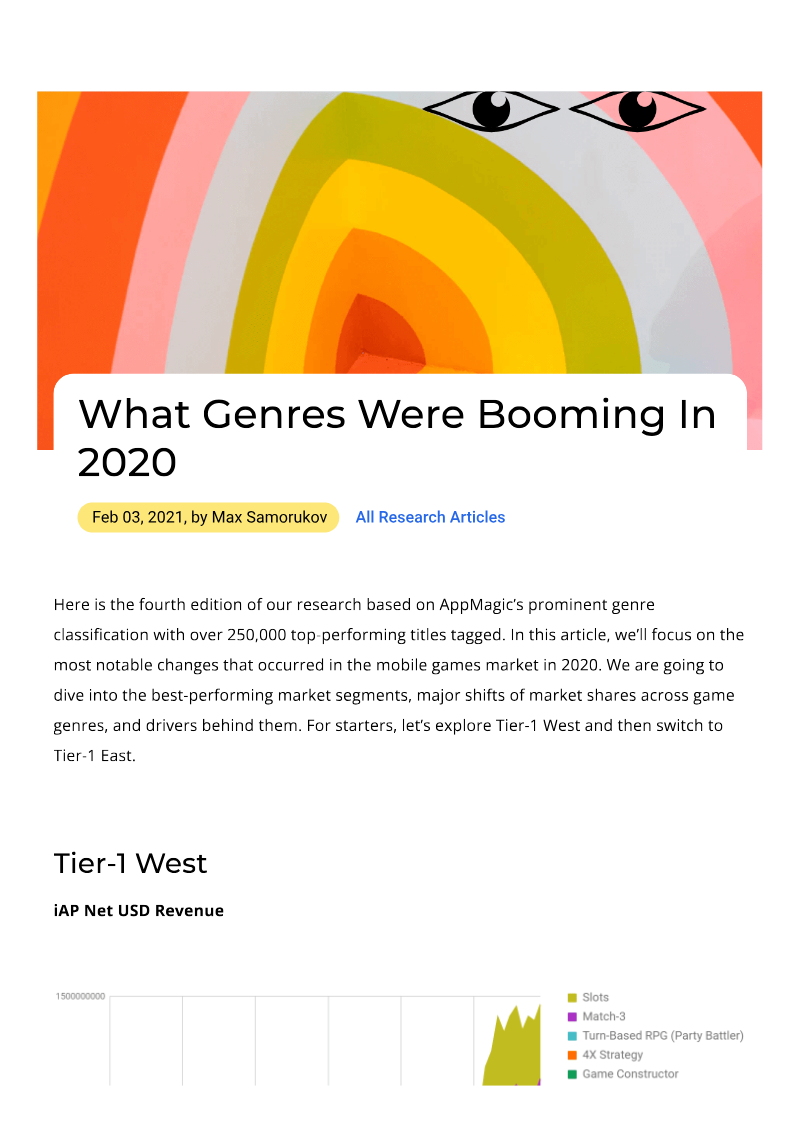
What Genres Were Booming in 2020
This analysis examines the mobile gaming market landscape in 2020, focusing on revenue and download trends across Tier-1 Western and Eastern markets.
- The mobile gaming market in 2020 remained highly sensitive to blockbuster releases, exemplified by Genshin Impact generating $520 million in its first four months and PUBG Mobile reaching $3 billion in lifetime revenue.
- Among Us experienced viral growth in 2020, recording a 735% surge in monthly downloads by September.
- Tier-1 Eastern markets saw sharp revenue spikes in the Battler subgenre, while Third-Person Shooters maintained dominance through established titles like PUBG Mobile.
Top Mobile Games Worldwide: December 2020
The mobile gaming landscape in December 2020 was defined by significant growth in download volume, led by titles that experienced massive year-over-year surges.
- Among Us was the most downloaded mobile game worldwide in December 2020 with 41.2 million installs, representing a growth of more than 36 times compared to December 2019.
- Join Clash 3D secured the second spot with approximately 29 million installs, marking a significant increase of over 2,680 times compared to the previous year, with 39.7% of downloads originating from India.
- Call of Duty: Mobile achieved its highest download volume since November 2019 with 16.6 million installs, driven by a successful late-December launch in China that accounted for 58.5% of its monthly downloads.
League of Legends: Wild Rift – Soft Launch Deconstruction & Competitor Analysis
This analysis evaluates the soft launch of League of Legends: Wild Rift, assessing its competitive positioning against established mobile multiplayer online battle arena (MOBA) titles.
- League of Legends: Wild Rift successfully replicates the core 5v5 MOBA gameplay and polished feel of the original PC title for mobile, utilizing virtual joysticks and a simplified UI.
- The mobile MOBA market is currently dominated by Honor of Kings and Mobile Legends: Bang Bang, with few new titles successfully entering the top-grossing 200 list in recent years.
- Wild Rift's monetization currently relies on direct purchases and fixed price points for champions and skins, lacking the aggressive gacha systems, battle passes, and progressive IAP-reward events found in its primary competitors.
Gaming Web 3: Following a Third Rail Toward Revolution
This analysis explores the polarized landscape of Web3 integration in gaming, arguing that the current discourse is trapped between uncritical crypto-enthusiasts and reactionary skeptics.
- The NFT market is highly concentrated, with the top 10% of traders accounting for 85% of all transaction volume.
- Speculative utility is low, as 75% of NFTs sell for under $15 and only 20% of assets ever reach a secondary market.
- Major publishers like Sony are shifting toward multi-tiered subscription models to compete with Microsoft’s Game Pass, establishing subscriptions as the primary metric for consumer loyalty.
Does Tencent Hate Riot?
Tencent’s internal development strategy is defined by a competitive, Darwinian model often described as a shark womb, where internal studios are encouraged to compete against one another to produce the most successful titles.
- Tencent operates with a 'shark womb' strategy, where internal studios like TiMi and Quantum/Lightspeed compete directly against each other, and Tencent prioritizes the success of the overall portfolio over the protection of individual franchises.
- Tencent’s internal rivalry strategy was exemplified by the launch of two competing mobile versions of PUBG, where the company released both to market and allowed real-world data to determine the winner.
- TiMi’s Honor of Kings has remained China’s top-grossing app for nearly five years, despite initial internal conflict with Riot Games over the use of League of Legends branding in marketing materials.
In-Game Banner Ads 2.0: Democratization of an Art Form, or a Poor Player's Tax?
This analysis examines the strategic challenges and emerging monetization trends within the global video game industry during the second quarter of 2020.
- Tencent has committed to a $70 billion infrastructure investment plan, while Huya reported a 48% year-over-year revenue growth to $341 million in Q2 2020.
- Riot Games is professionalizing in-game advertising by integrating sponsored banners into League of Legends esports broadcasts to capture brand demand.
- Large tech conglomerates like Amazon and ByteDance face significant challenges in gaming, evidenced by the failure of Amazon’s Crucible, which highlights the difficulty of substituting distribution power for creative culture.

Riot Games Starts Second Act with Valorant: Can One of the Biggest Game Makers Catch Lightning Again
Riot Games is attempting to transition from a single-title developer into a multi-franchise publisher, a move that represents a significant shift for a company that has historically relied almost exclusively on League of Legends.
- Riot Games is shifting from a single-title developer to a multi-franchise publisher to diversify its portfolio, which currently accounts for approximately 10% of Tencent’s total gaming revenue.
- The pivot to titles like Valorant is a reactive strategy to address cooling monthly active user numbers for its flagship game, League of Legends.
- Riot’s current strategy prioritizes scale and volume by entering established, saturated genres, a departure from the secretive and deliberate development models used by competitors like Supercell.
Is Twitch Losing the Live Streaming Wars?
This analysis examines the competitive pressures facing Twitch and the broader live-streaming and cloud gaming landscape as of early 2020.
- Twitch underperformed in 2019, generating approximately $300 million in revenue against internal projections of $500 million to $600 million.
- YouTube is aggressively challenging Twitch’s dominance in esports by securing exclusive broadcast rights for Activision Blizzard’s Overwatch and Call of Duty Leagues.
- Twitch’s market position is threatened by a lack of a clear 'second act' and a heavy reliance on ad monetization and a limited number of core titles like League of Legends.
Microsoft Xbox: All Technology Ultimately Becomes a Toaster
The video game industry is undergoing a fundamental transition from hardware-centric business models to service-oriented ecosystems.
- The gaming industry is shifting from hardware-centric sales to service-oriented ecosystems, where dedicated consoles are increasingly treated as commoditized 'toasters' rather than primary drivers of value.
- Microsoft is transitioning the Xbox business model toward recurring revenue and subscription-based access, utilizing lease-style programs like Xbox All Access to lower entry barriers and ensure long-term consumer commitment.
- Microsoft is pivoting its exclusivity strategy away from software titles toward human talent, specifically recruiting high-profile streamers to anchor its platform and drive user engagement.
Companies behind it
 Riot Gamesdeveloper, publisher, owner316
 Overwolfowner24
 Tencent Holdingspublisher695
- Riotowner319
- NAVERowner2
As the documents state it.