Overwolf
Technology53 documents
UGC gaming platform. Publishes insights on creator economy, in-game modding, and user-generated content trends in gaming.
Documents
Article
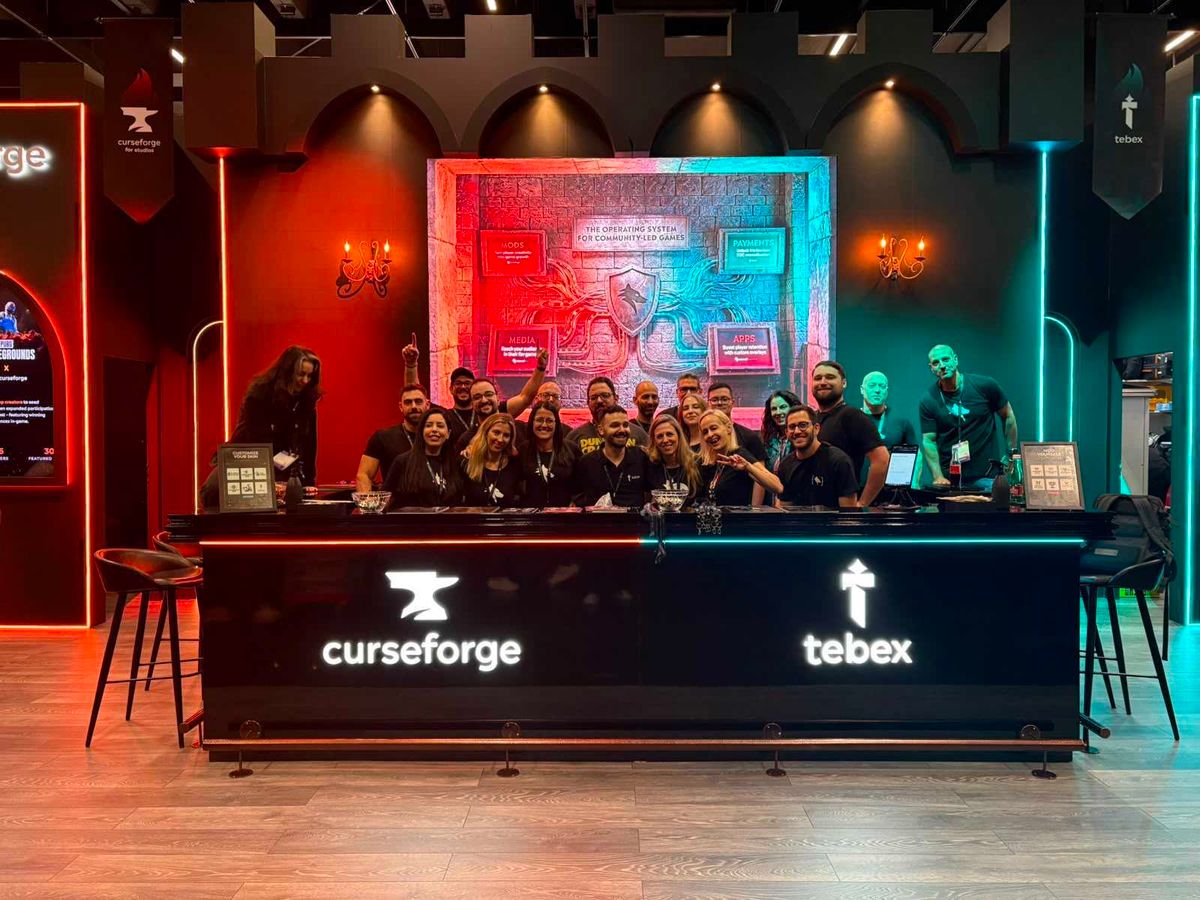
Gamescom 2026: Real Conversations, Stronger Partnerships
Gamescom 2026 served as a strategic venue for Overwolf to engage directly with its ecosystem of app creators and partners. The primary objective of these interactions was to facilitate collaborative discussions regarding product roadmaps, user acquisition, monetization strategies, and brand partnerships. By hosting dedicated meetings, a developers' dinner, and networking happy hours, the company aimed to strengthen professional relationships and gather actionable feedback to guide future development.
The event highlighted the evolving nature of the Overwolf ecosystem, with partners noting the benefits of consolidating advertising and payment discussions within a single, integrated framework. Participants, including representatives from Tracker Network, Counterwatch, and Hone, emphasized the value of face-to-face engagement in aligning technical support with their specific growth objectives. These conversations provided the company with concrete insights and next steps for ongoing collaboration, reinforcing the importance of direct communication in maintaining a robust developer community.
Beyond the immediate networking outcomes, the event underscored broader industry trends and company initiatives. Recent developments, such as the launch of the In-Game Audience Map and upcoming reductions in Tebex transaction fees—from 15% to 5%—reflect a concerted effort to enhance monetization and reach for developers. These updates, alongside the commitment to future Gamescom participation in 2027, illustrate a focus on providing developers with the tools and data necessary to navigate the competitive gaming landscape effectively.
- Tebex is reducing its platform fees from 15% to 5% starting in October 2026 to incentivize developer adoption and increase revenue.
- Overwolf launched an In-Game Audience Map that allows brands to track target demographics across more than 5,000 major game titles.
- Industry data indicates that while 67% of Americans play games weekly, only 2.4% of total media spend is currently allocated to the gaming sector.
- Overwolf utilized gamescom 2026 to facilitate direct consultations between developers and their internal product, monetization, and developer relations teams.
- The company confirmed its intent to return to gamescom in 2027, with further details regarding their presence scheduled for release in early 2027.
+1
OverwolfSept 2026
Article
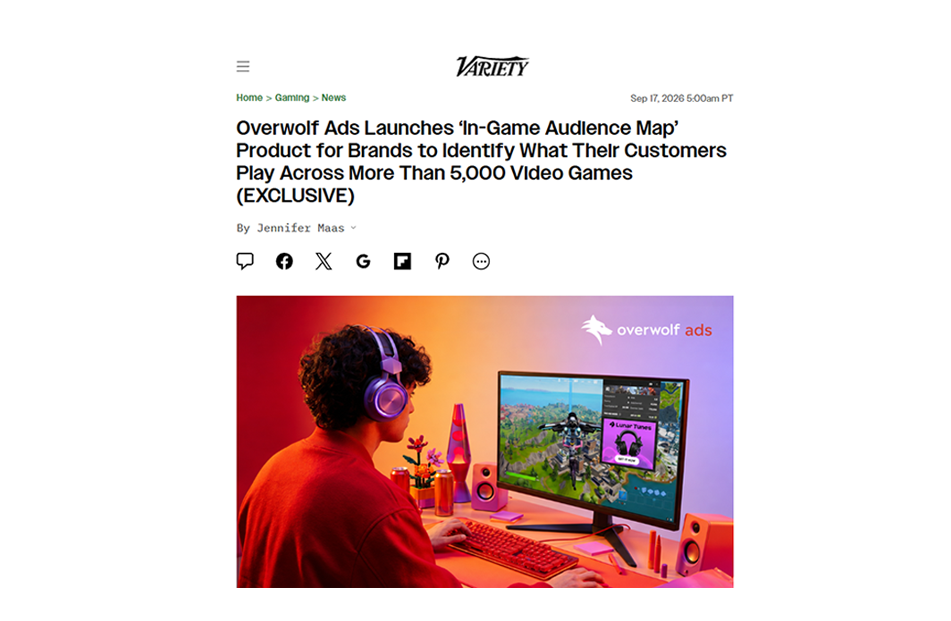
Overwolf Ads Launches the In-Game Audience Map
Overwolf Ads has introduced the In-Game Audience Map, a free tool designed to help brands identify and reach specific consumer segments within the gaming ecosystem. The platform addresses a significant industry disparity where gaming captures 67% of weekly American attention but receives only 2.4% of total media spend. By providing granular insights into where target audiences play, the tool aims to bridge the gap between high-attention gaming environments and effective media investment.
The tool leverages deterministic first-party data from Overwolf’s Gamer Grid, which aggregates signals from over 113 million monthly active players. By analyzing variables such as specific game titles, hardware usage, purchase history, and session duration, the map provides actionable audience profiles. For example, the data can identify niche consumer behaviors, such as high purchase intent for mortgages or vehicles among specific demographic groups, which traditional demographic-based planning often overlooks.
The launch responds to a growing demand for better measurement and targeting capabilities within the gaming sector. Overwolf reports a 32% year-on-year increase in direct brand deals, with major corporate partners including McDonald’s, Samsung, and Universal Pictures. By enabling media planners and programmatic buyers to map specific audience segments to over 5,000 gaming titles, the initiative seeks to normalize gaming as a standard, data-driven channel for global advertising campaigns.
- Overwolf has launched the In-Game Audience Map, a free tool that allows brands to identify where specific target audiences play across more than 5,000 games.
- The tool utilizes deterministic first-party data from Overwolf’s Gamer Grid platform, which tracks hardware, purchases, playtime, and game-specific behavior across 113 million monthly active players.
- The initiative aims to address the industry's 'attention-investment mismatch,' where gaming captures 67% of American weekly engagement but receives only 2.4% of total media spend.
- Overwolf reported a 32% year-on-year increase in direct brand deals, with 2026 renewals including major companies such as McDonald's, Samsung, Amazon, and Universal Pictures.
- The platform provides actionable consumer insights beyond demographics, such as identifying that parents of children aged 0–3 are 1.9 times more likely to be in-market for a minivan than the average U.S. consumer.
+2
OverwolfSept 2026
Article
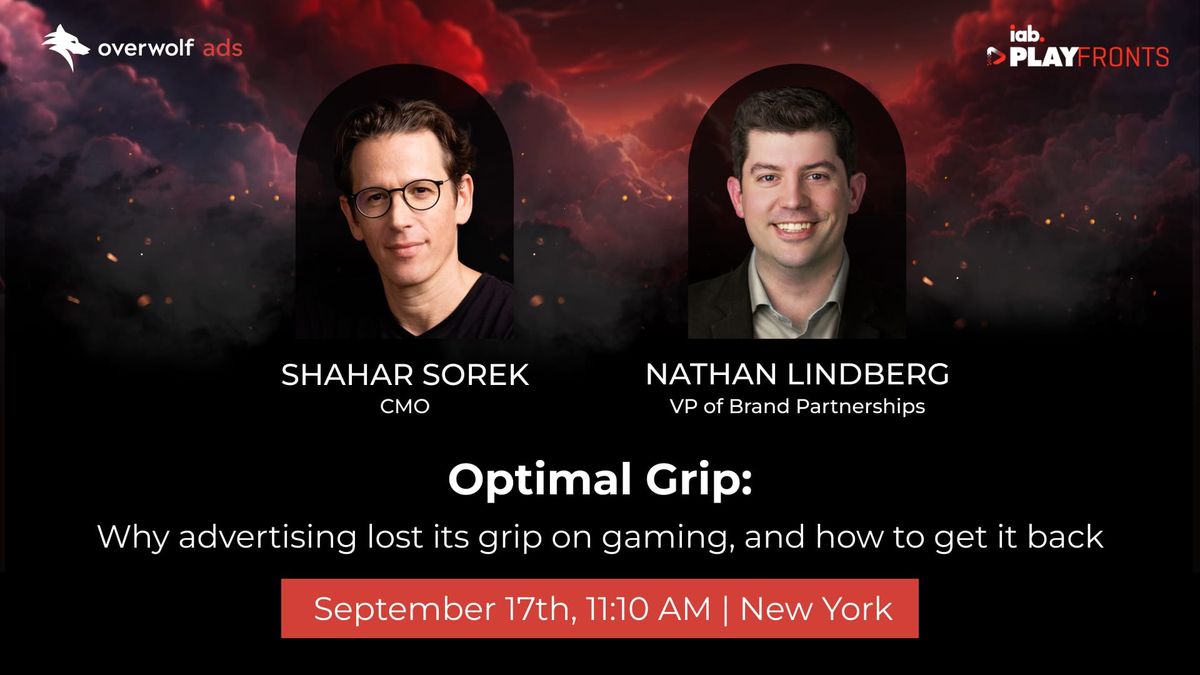
IAB PlayFronts 2026: Optimal Grip
The advertising industry faces a significant disconnect between consumer behavior and media investment within the gaming sector. Despite 67% of Americans engaging with gaming on a weekly basis, the medium captures only 2.4% of total media spend. This disparity stems from a perception that gaming is overly complex to navigate or that existing social media strategies provide sufficient reach, leading brands to prioritize channel legibility over actual audience attention.
To address this, the Optimal Grip framework provides a strategic roadmap for brands to integrate gaming into their broader media plans. Developed through two quarters of research and the analysis of over 100 campaigns, the framework offers actionable moves for brands to effectively engage gamers. The methodology involved pressure-testing these strategies across a diverse range of stakeholders, including holding companies, independent agencies, and various brand decision-makers, to ensure the approach is scalable and practical for modern marketing teams.
The initiative emphasizes that when gaming is held to the same performance standards as other established media channels, it offers significant untapped potential. As part of this effort, a new In-Game Audience Map has been introduced to help brands identify and understand their target demographics across more than 5,000 major gaming titles. By providing clearer data and a structured planning approach, the industry aims to bridge the gap between gaming's massive reach and its current share of advertising budgets, ultimately allowing brands to capture the attention of a highly active, global audience.
- Despite 67% of Americans playing games weekly, the gaming sector receives only 2.4% of total media spend.
- Overwolf launched an 'In-Game Audience Map' at IAB PlayFronts 2026 to help brands identify and target audiences across more than 5,000 games.
- The 'Optimal Grip' framework, developed by Overwolf, provides a strategic approach to gaming advertising based on research from over 100 campaigns and industry decision-makers.
- Many advertisers currently underinvest in gaming due to perceived complexity or the assumption that existing social media strategies, such as those on Meta, provide sufficient reach.
- Overwolf is a major gaming ad-tech player, ranked by Comscore as the second-largest US gaming property and reaching 113 million monthly gamers.
+2
OverwolfSept 2026

Article
The New Tebex: New Fees, New Features
Effective October 2026, Overwolf is implementing significant updates to its Tebex monetization platform for in-game app developers. The primary objective of these changes is to enhance developer revenue and provide more robust tools for managing subscription-based business models. The most notable adjustment is a reduction in standard platform fees from 15% to 5%, a change that will be applied automatically to all applicable transactions.
The update introduces several functional improvements designed to increase global accessibility and conversion rates. Developers can now utilize regional pricing to tailor costs to specific geographic markets. Furthermore, the platform has expanded its payment infrastructure to support recurring subscriptions for five major regional payment methods: AliPay in China, UPI in India, PIX in Brazil, Line Pay in Thailand, and Naver Pay in South Korea. These methods previously supported only one-time transactions.
Additional feature enhancements include the introduction of flexible subscription tiers, which allow for upsells between different plans, and the implementation of customizable free trials ranging from 1 to 30 days. To streamline administrative overhead, a new centralized subscription management portal has been launched, enabling end-users to independently handle billing history, cancellations, and payment method updates. These tools are currently available for configuration within the Tebex dashboard, aiming to reduce support bandwidth for developers while improving the overall user experience for gamers.
- Starting in October 2026, Tebex will reduce its standard platform fee for Overwolf apps from 15% to 5%.
- Tebex has expanded recurring subscription support to five additional regional payment methods: AliPay (China), UPI (India), PIX (Brazil), Line Pay (Thailand), and Naver Pay (South Korea).
- Developers can now implement tiered subscription models with upsell capabilities, allowing users to move between different plan levels.
- New platform features include support for regional pricing and customizable free trials ranging from 1 to 30 days.
- A new centralized subscription management portal at portal.tebex.io has been launched to allow users to handle their own billing history and subscription changes.
+2
OverwolfSept 2026
Article
Why CTR Is Gaming's Worst Metric
The gaming advertising industry faces a significant challenge in measuring campaign effectiveness, specifically regarding the over-reliance on click-through rate (CTR). Industry experts argue that CTR provides a false sense of accomplishment and fails to capture the true impact of gaming-based marketing. Instead, advertisers are encouraged to prioritize accountability and measurable outcomes that align with deeper consumer engagement, such as hardware ownership and behavioral shifts.
A key case study highlights the limitations of traditional metrics by demonstrating that a campaign executed by the agency DEPT® achieved hardware ownership lifts significantly higher than initial expectations. This result underscores the necessity of breaking gaming audiences into specific behavioral sub-segments, particularly for tech brands, rather than relying on broad, superficial engagement data. By shifting focus toward these tangible performance indicators, brands can better justify their presence within the gaming ecosystem.
The broader context of this discussion reveals a persistent disconnect between gaming consumption and advertising investment. While 67% of Americans engage with gaming on a weekly basis, only 2.4% of total media spend is currently allocated to the sector. To bridge this gap, industry stakeholders are increasingly adopting advanced tools, such as in-game audience mapping, to identify where target demographics play across thousands of titles. This transition toward more sophisticated, data-driven strategies is essential for brands aiming to improve the accountability and efficacy of their gaming advertising investments.
- Click-through rate (CTR) is considered an ineffective metric for gaming advertising because it provides brands with a false sense of accomplishment rather than measuring actual impact.
- Gaming remains significantly undervalued in media planning, with only 2.4% of total media spend reaching the gaming sector despite 67% of Americans playing games weekly.
- Campaigns analyzed by DEPT® demonstrated that gaming advertising can drive tangible results, such as hardware ownership lift that significantly exceeded initial expectations.
- Effective gaming advertising requires moving beyond generic metrics toward segmenting audiences into specific behavioral sub-audiences, particularly for tech brands.
- Overwolf provides access to an audience of over 113 million monthly gamers across hundreds of major gaming titles and websites.
+1
OverwolfAug 2026

Article
Take-Two CEO Strauss Zelnick Joins Overwolf Ads for GamesBeat NY Event
The GamesBeat Insider Series: Brands & Games event, presented by Overwolf Ads, is scheduled for September 16, 2026, in New York City. This invite-only salon is designed for 100 senior executives, including CMOs and agency leaders, to address the integration of gaming into mainstream media planning. The event coincides with IAB PlayFronts week and occurs shortly before the November 2026 launch of Grand Theft Auto VI, a title expected to be a significant cultural and economic milestone for the industry.
The primary objective of the gathering is to move beyond the debate regarding whether gaming constitutes a legitimate advertising channel. Instead, the focus shifts to execution, measurement, and the development of authentic brand integrations that resonate with players. Key themes include the role of gaming in the broader business landscape, the mechanics of successful brand activations, and the implementation of deterministic data and attention-based metrics to satisfy corporate financial requirements.
The event features high-profile industry figures, including Take-Two Interactive CEO Strauss Zelnick, former Nintendo of America President Reggie Fils-Aimé, and representatives from major agencies and platforms like Ogilvy and The Trade Desk. Overwolf Ads, which reports reaching over 113 million monthly consumers across 1,500 titles, positions this event as a critical forum for professionalizing gaming as an "always-on" media channel. By convening these leaders, the event aims to bridge the gap between traditional advertising budgets and the high-engagement, long-session environments characteristic of modern gaming.
- Take-Two Interactive CEO Strauss Zelnick and former Nintendo of America President Reggie Fils-Aimé will headline an invite-only executive salon on September 16, 2026, in New York City.
- The event is strategically timed to precede the November 2026 launch of Grand Theft Auto VI, a title anticipated to be a major economic and cultural milestone for the gaming industry.
- Overwolf Ads, which currently reaches over 113 million monthly consumers across 1,500 titles, is hosting the event to professionalize gaming as an 'always-on' media channel.
- The primary objective is to shift industry focus from debating gaming's legitimacy as an ad channel to executing, measuring, and scaling authentic brand integrations.
- Key discussions will center on implementing deterministic data and attention-based metrics to align gaming environments with corporate financial requirements.
+1
OverwolfAug 2026

Article
Why Gaming Is Winning the War for Gen Z Attention
Gaming has emerged as a superior channel for capturing Gen Z attention, outperforming major social media platforms like Instagram, TikTok, and Facebook on third-party attention metrics. While social platforms excel at generating raw reach, they are structurally designed for rapid, passive scrolling. In contrast, gaming environments foster high-intent, task-locked focus, which leads to significantly higher recall and engagement. Despite this, gaming remains substantially under-indexed in global media budgets, accounting for less than 5% of total investment even as nearly 60% of the U.S. population engages with digital games.
The effectiveness of gaming as an advertising medium is supported by data indicating that 41% of U.S. gamers respond positively to reward-based advertisements, a format that aligns with the active, goal-oriented nature of gameplay. By utilizing deterministic data—such as session length, hardware specifications, and genre preferences—advertisers can target audiences with greater precision than the interest-based inferences typically used on social media. This approach allows brands to move beyond mere impressions and secure meaningful, high-quality attention.
For media planners, the most successful strategies involve integrating gaming alongside social and connected TV rather than treating it as a siloed alternative. By shifting a portion of budgets from reach-heavy social channels to high-attention gaming inventory, brands can improve campaign performance in terms of both recall and conversion. Ultimately, the industry is shifting toward a model where attention quality is prioritized as a critical metric, positioning gaming as an essential component of a modern, data-backed media strategy for reaching younger demographics.
- Gaming currently accounts for less than 5% of global media investment, despite nearly 60% of the U.S. population engaging in digital gaming as of 2026.
- Gaming platforms outperform social media giants like Instagram, TikTok, Facebook, and LinkedIn on Adelaide’s Attention Unit (AU) score, which measures the likelihood of capturing genuine user focus.
- Approximately 41% of U.S. gamers respond positively to reward-based advertisements, significantly higher than the 20% who report a general dislike for ads.
- Unlike social media feeds designed for rapid scrolling, gaming provides a 'task-locked' environment that protects attention by eliminating second-screen distractions.
- Overwolf reaches over 113 million monthly active players across more than 1,500 titles, offering targeting based on deterministic gameplay and hardware data rather than inferred interest from social media behavior.
+2
OverwolfAug 2026

Article
How to Use Affiliations to Grow Your Overwolf App
The Overwolf Developers Console provides a specialized campaign-attribution tool known as Affiliations, designed to help developers track the performance of their app promotion efforts. The primary purpose of this tool is to connect specific acquisition campaigns—such as those driven by influencers, social media, or search engines—to tangible outcomes including installs, active user counts, and revenue generation. By generating unique, UTM-tagged URLs for each source, developers can move beyond simple download volume to evaluate the long-term quality and profitability of their traffic sources.
Effective use of the platform requires creating distinct URLs for every individual placement or influencer to ensure granular data collection. The system allows developers to monitor key performance indicators such as uninstalls and average revenue per daily active user, providing a comprehensive view of user retention and monetization. These insights enable developers to make data-driven decisions regarding which campaigns to scale, deactivate, or archive.
In addition to external attribution, the platform supports the use of house ads to optimize in-app inventory. When programmatic ad slots remain unfilled, developers can utilize these spaces to promote internal features, tutorials, or community channels. These house ads can be configured globally or targeted to specific regions, and when paired with affiliation URLs, they facilitate effective app-to-app promotion within a developer's portfolio. By leveraging these tools, developers can maximize the utility of their existing ad inventory while gaining a clearer understanding of the user acquisition funnel.
- Overwolf's Affiliations tool allows developers to track the performance of specific acquisition campaigns by generating unique, UTM-tagged URLs for influencers, social media, and search engine traffic.
- The platform enables granular monitoring of key performance indicators, including install volume, active user counts, uninstall rates, and average revenue per daily active user (ARPDAU).
- Developers can use data-driven insights from the Affiliations tool to determine which traffic sources to scale, deactivate, or archive based on long-term user quality and profitability.
- Unfilled programmatic ad inventory can be repurposed as house ads to promote internal features, tutorials, or community channels.
- House ads can be configured globally or targeted to specific regions to optimize in-app inventory utilization.
+1
OverwolfAug 2026

Article
How Do You Prove Gaming Drove Incremental Lift, Not Just Impressions?
The gaming industry faces a persistent challenge in proving the causal impact of advertising spend, often relegating it to experimental budgets due to a lack of rigorous measurement. The primary thesis is that gaming media must move beyond raw impression tracking toward incrementality testing—specifically geo holdout experiments—to align with the analytical standards of CTV and social media. By isolating test and control markets, brands can determine whether advertising drives genuine incremental sales or merely captures existing demand.
Data indicates that while incrementality testing is a powerful tool, only 39% of organizations currently integrate it into their broader measurement models. When executed correctly, these tests are highly effective; a dataset of 225 experiments revealed a median incremental return on ad spend of 2.31, with 88.4% of tests achieving statistical significance. These results are essential for calibrating Marketing Mix Models (MMM), providing a real-world anchor that corrects historical projections.
Historically, gaming has been difficult to measure due to fragmented inventory across various publishers and platforms, which complicates the creation of clean control groups. To address this, consolidated operational infrastructures allow brands to manage reach across thousands of titles and websites through a single point of control. This centralization minimizes the risk of cross-channel contamination during holdout tests.
To successfully integrate gaming into a modern measurement stack, media planners should treat it with the same rigor as other digital channels. This involves running quarterly geo holdout tests, ensuring high-quality inventory through verified viewability and completion metrics, and utilizing deterministic audience-targeting technologies. By adopting these standardized practices, brands can validate gaming as a high-attention, performance-driven channel rather than an experimental line item.
- Only 39% of organizations currently integrate incrementality testing into their broader media measurement models, according to the IAB’s State of Data 2026 report.
- A dataset of 225 geo and holdout experiments in gaming media yielded a median incremental return on ad spend (ROAS) of 2.31, with 88.4% of tests achieving statistical significance.
- To prove causal impact, brands should conduct quarterly geo holdout tests—where gaming spend is paused in specific markets—to calibrate Marketing Mix Models (MMM) and correct predictive coefficients.
- Gaming inventory fragmentation has historically hindered clean holdout testing, but consolidated platforms like Overwolf allow for unified geo-targeted exclusions across 1,500+ titles and 500+ websites to prevent control-group contamination.
- Overwolf Ads reports average viewability exceeding 90% and video completion rates between 85% and 88%, providing the high-quality inventory baseline necessary for valid incrementality measurement.
+2
OverwolfAug 2026
Article
How Do Brands Reach Gen Z Through Overwolf Ads?
The primary objective of this analysis is to outline effective strategies for brands to engage Gen Z audiences within the gaming ecosystem. The central thesis posits that because Gen Z gamers frequently utilize ad blockers and reject intrusive advertising, brands must shift toward contextual, non-disruptive messaging that aligns with natural gameplay pauses to achieve meaningful engagement.
The gaming landscape serves as a critical channel for reaching this demographic, as nine in ten Gen Z respondents identify as gamers, spending between 6 and 12 hours per week playing. However, traditional advertising faces significant resistance, with 67% of Gen Z users skipping ads that lack relevance and 63% citing intrusive formats as the primary driver for installing ad blockers. To counter this, the platform utilizes a proprietary infrastructure that monitors in-game events—such as respawns, level completions, and wins—to trigger brand messaging at moments of peak player attention. This approach is supported by a network reaching over 113 million monthly gamers across popular titles like Minecraft, Fortnite, and League of Legends.
Methodologically, the platform functions as an owned-and-operated ad tech network, leveraging first-party data to segment audiences based on hardware specifications, geographic location, and session behavior. By offering diverse formats, including rewarded achievements, branded mods, and gamified activations, the platform transforms advertising into a value-add experience rather than an interruption. The sustainability of this ecosystem is reinforced by significant financial investment in the creator community, which totaled $300 million in 2025 to support the development of the apps and mods that facilitate these ad placements. Ultimately, the findings suggest that successful brand integration in gaming requires respecting player focus by aligning promotional content with high-emotion, native gameplay milestones.
- Gen Z gamers are highly resistant to traditional advertising, with 67% skipping irrelevant ads and 63% using ad blockers specifically to avoid intrusive formats.
- Brands can effectively reach the 90% of Gen Z who identify as gamers by triggering ads during natural gameplay pauses, such as respawns, level completions, and wins.
- The platform reaches over 113 million monthly active users across major titles including Minecraft, Fortnite, and League of Legends.
- To maintain ecosystem sustainability and content quality, $300 million was invested in the creator community in 2025 to support the development of apps and mods.
- The platform utilizes first-party data to segment audiences based on hardware specifications, geographic location, and session behavior for targeted delivery.
+2
OverwolfAug 2026

Article
Connect Your AI Coding Assistant to the Overwolf Docs
The integration of the Overwolf documentation with AI coding assistants via the Model Context Protocol (MCP) aims to improve the accuracy and relevance of AI-generated code for Overwolf developers. By connecting tools like Claude Code to the official Overwolf documentation server, developers can ensure that AI assistants provide solutions grounded in current API signatures and framework-specific requirements rather than relying on potentially stale or generic training data.
The primary technical solution involves configuring a project-level CLAUDE.md file and connecting an MCP server to the development environment. This setup allows the AI to dynamically query documentation, verify API existence against local type definitions, and distinguish between standard Electron patterns and Overwolf-specific implementations. Key use cases for this integration include managing Game Events Provider lifecycles, initializing overlay packages, and debugging errors within the Ads SDK.
This approach addresses the common issue of AI assistants hallucinating non-existent methods or applying incorrect framework patterns. By providing the AI with direct access to authoritative documentation and project-specific context, developers can reduce the time spent correcting generic code suggestions. The methodology emphasizes a structured workflow where the AI is instructed to cite documentation sources and local type definitions, ensuring that all proposed code is verifiable and compliant with the current Overwolf environment. This development tool is intended for use by software engineers building applications within the Overwolf ecosystem, specifically targeting those working with OW-Electron or Native projects.
- Integrating Overwolf documentation with AI coding assistants via the Model Context Protocol (MCP) prevents AI hallucinations by grounding code generation in current, authoritative API signatures.
- Developers can connect tools like Claude Code to the official Overwolf documentation server to ensure AI suggestions align with framework-specific requirements rather than generic training data.
- The technical implementation requires configuring a project-level CLAUDE.md file and connecting an MCP server to the local development environment.
- This integration enables AI to dynamically verify API existence against local type definitions and distinguish between standard Electron patterns and Overwolf-specific implementations.
- Key use cases for this workflow include managing Game Events Provider lifecycles, initializing overlay packages, and debugging errors within the Ads SDK.
OverwolfAug 2026
Article
How to Build a Business Case for Adding Gaming to a Media Plan
The primary objective is to provide a strategic framework for marketing professionals to justify the inclusion of in-game advertising within broader media plans. The thesis posits that gaming should transition from an experimental budget line item to a core channel by shifting the conversation from speculative enthusiasm to data-driven proof. By addressing specific requirements for incremental reach, attention quality, and measurable performance, marketers can effectively secure budget approval from finance and leadership teams.
The industry context highlights a significant disparity between consumer behavior and advertising investment. While the average US consumer spends over an hour daily on digital gaming, in-game advertising accounts for only 2.3% of total US digital ad spend. Despite this, the market is expanding rapidly, with US gaming ad revenue projected to exceed $10 billion by 2029. To bridge this gap, the framework emphasizes four pillars: demonstrating that gaming reaches unique, incremental audiences; proving high-quality attention during active gameplay; providing credible campaign performance benchmarks; and establishing a rigorous measurement plan using media mix modeling or geo-holdouts.
The analysis suggests that gaming platforms, such as Overwolf, facilitate these requirements by offering large-scale reach—over 113 million monthly players—and third-party attention validation. Standardized media formats allow for easy integration with existing programmatic workflows, while custom activations, such as branded mods, provide specific, high-impact results like purchase-intent lifts. By prioritizing these evidence-based arguments and aligning them with standard corporate budgeting frameworks, marketers can successfully position gaming as a reliable, high-performance component of a modern media strategy.
- US gaming ad revenue is projected to exceed $10 billion by 2029, yet currently accounts for only 2.3% of total digital ad spend despite consumers spending over an hour daily on gaming.
- To secure budget approval, marketers must shift gaming from an experimental line item to a core channel by proving incremental reach, attention quality, and measurable performance.
- Platforms like Overwolf provide the necessary scale for media planning, reaching over 113 million monthly players with third-party attention validation.
- The business case for gaming should be built on four pillars: unique audience reach, high-quality active attention, credible performance benchmarks, and rigorous measurement via media mix modeling or geo-holdouts.
- Standardized in-game ad formats allow for seamless integration into existing programmatic workflows, while custom activations like branded mods can drive specific purchase-intent lifts.
+2
OverwolfAug 2026